-
-
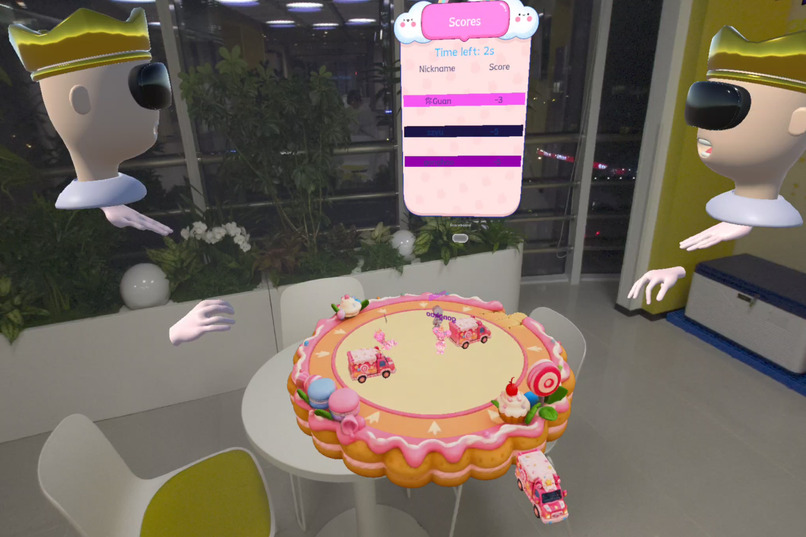
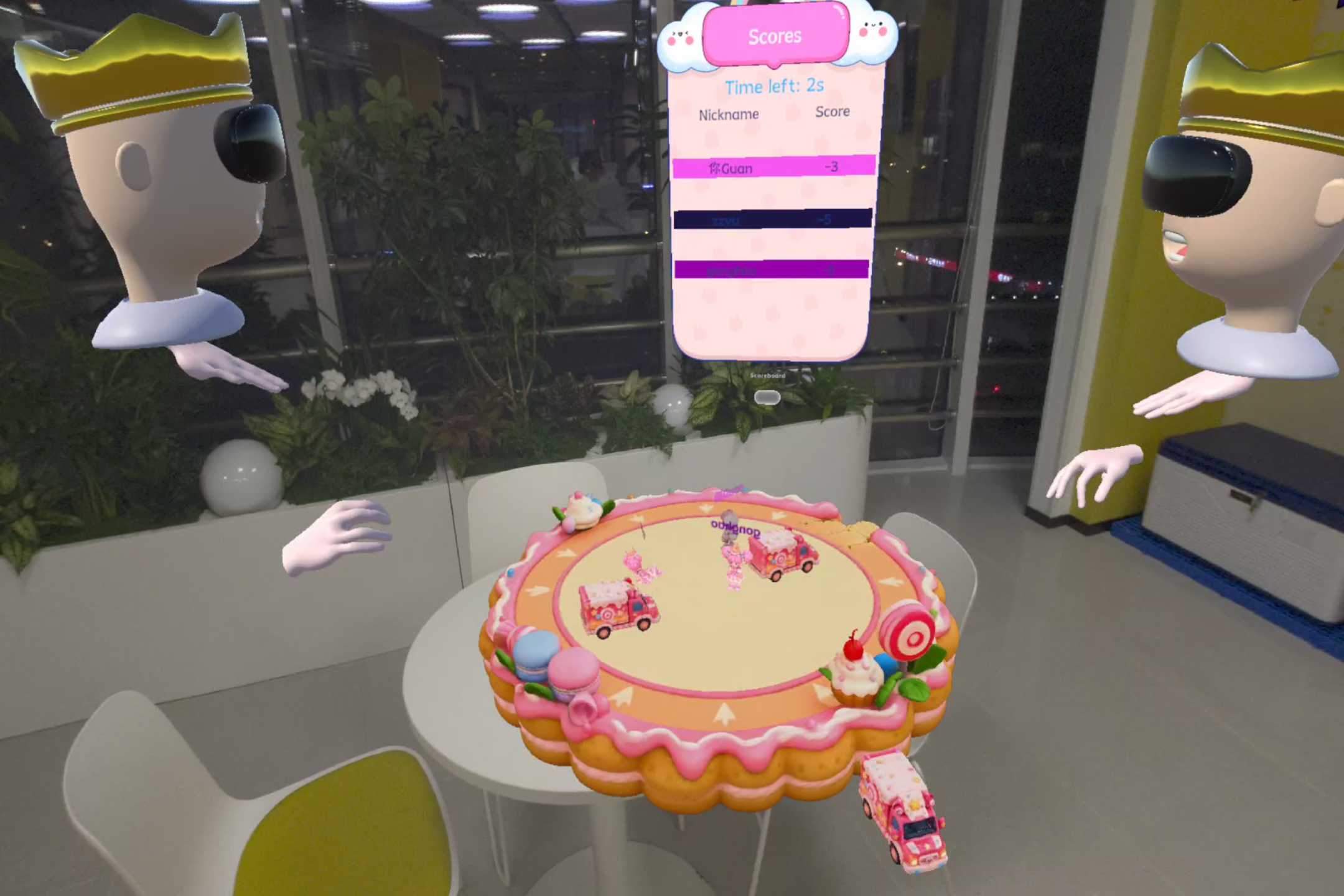
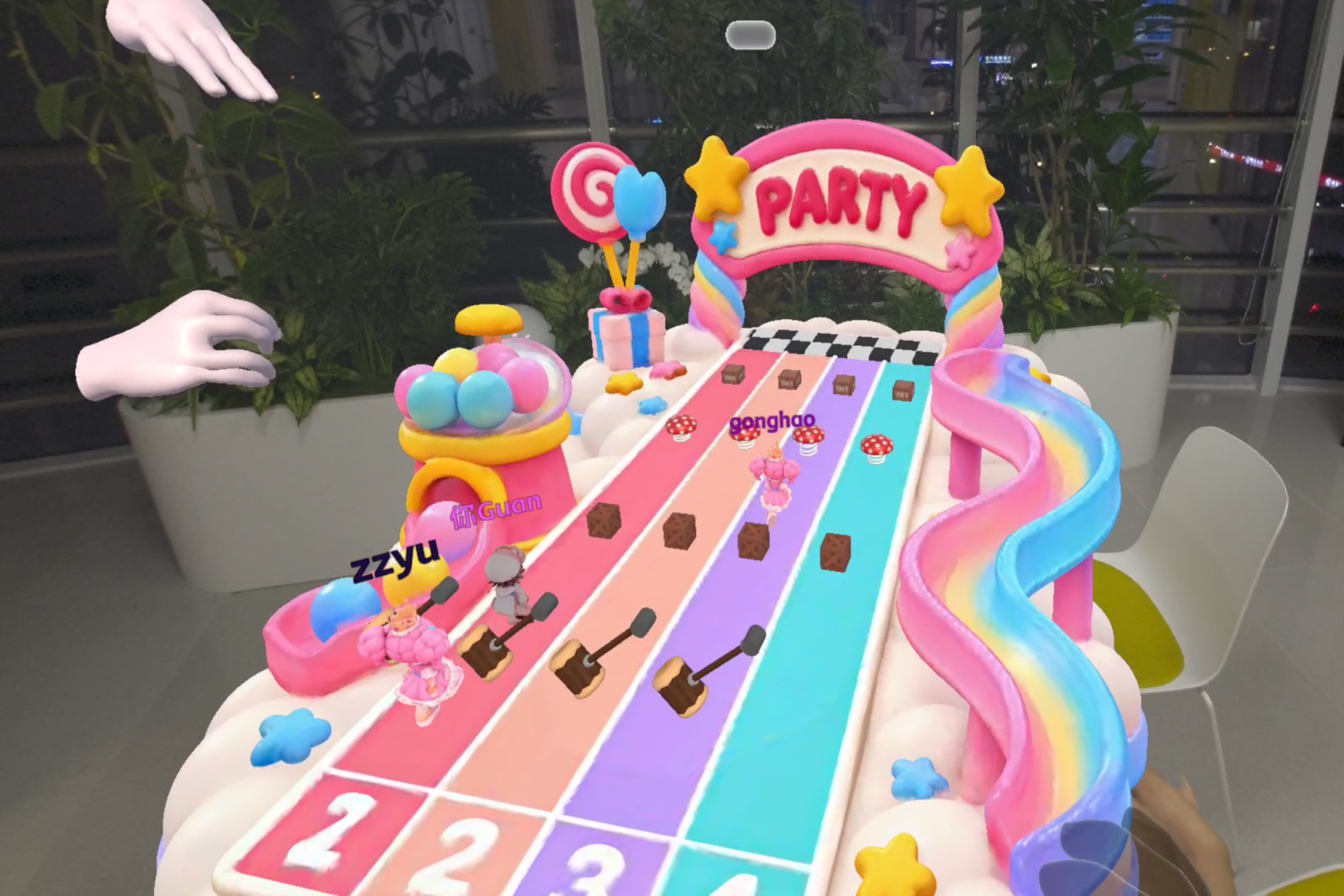
Minigame: Truck Dodge
-
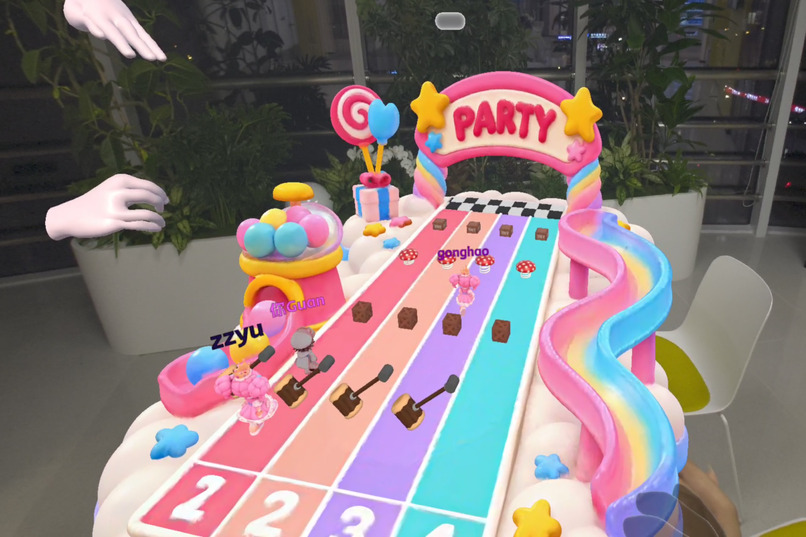
Minigame: Voice Sprint — the player with the loudest sound wins the championship. >
-
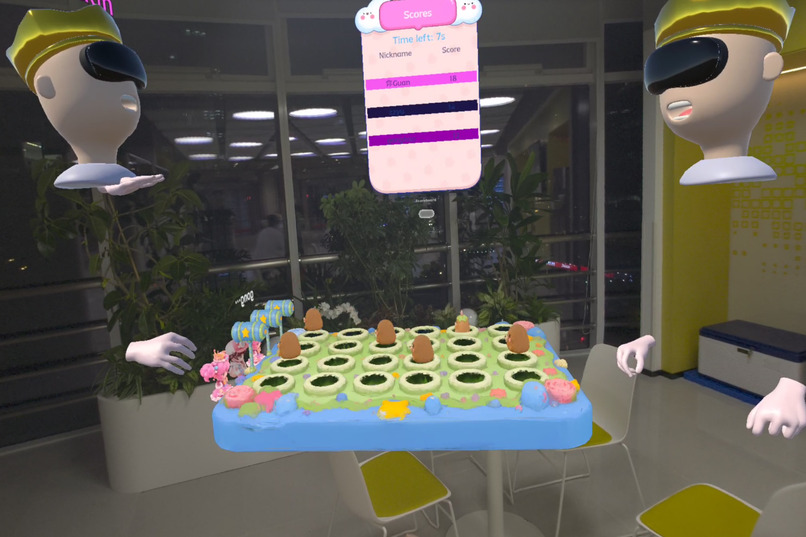
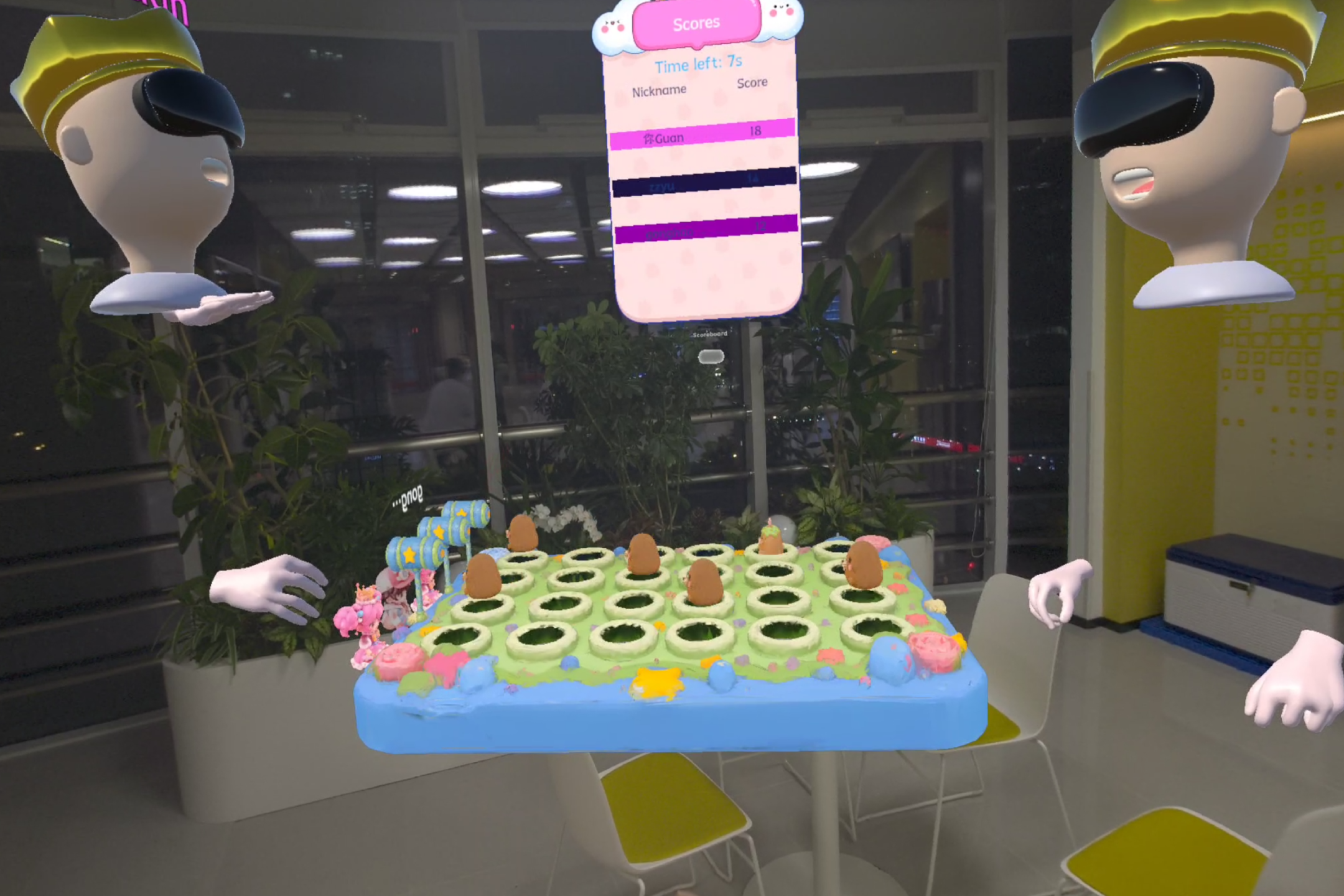
Minigame: Whack-a-Mole Contest
-
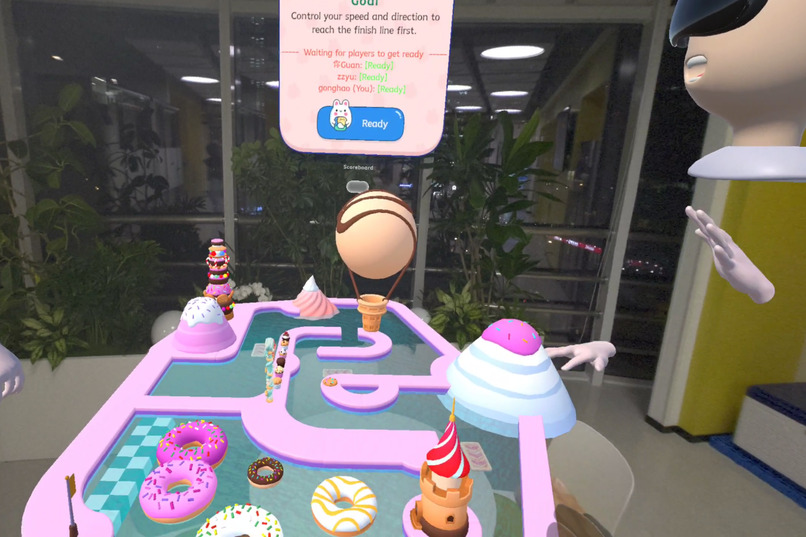
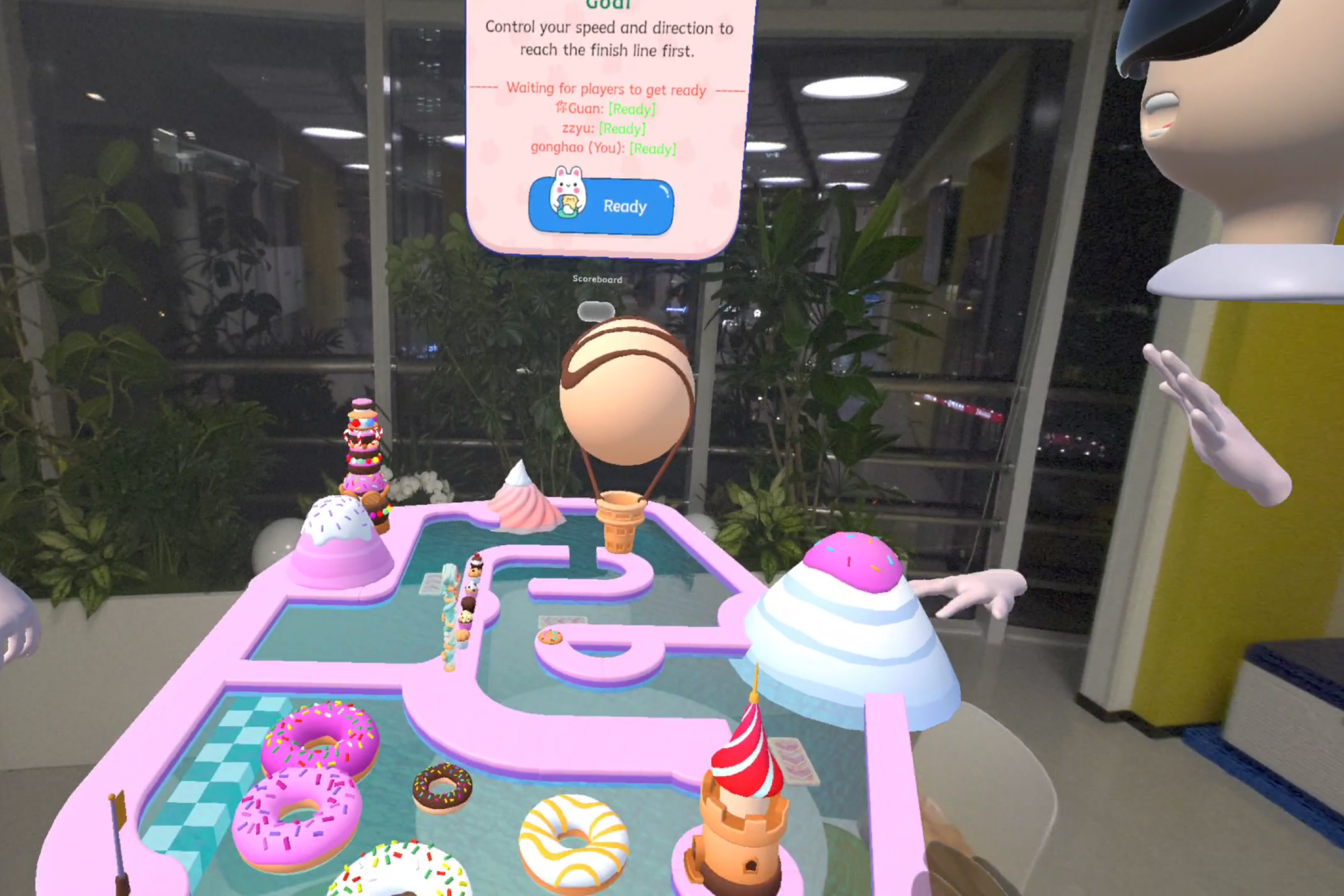
Minigame: Swimming Race -
-
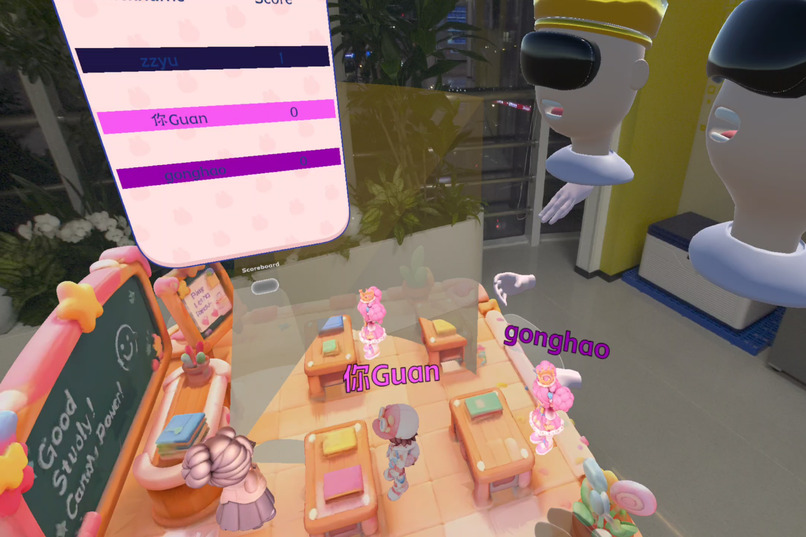
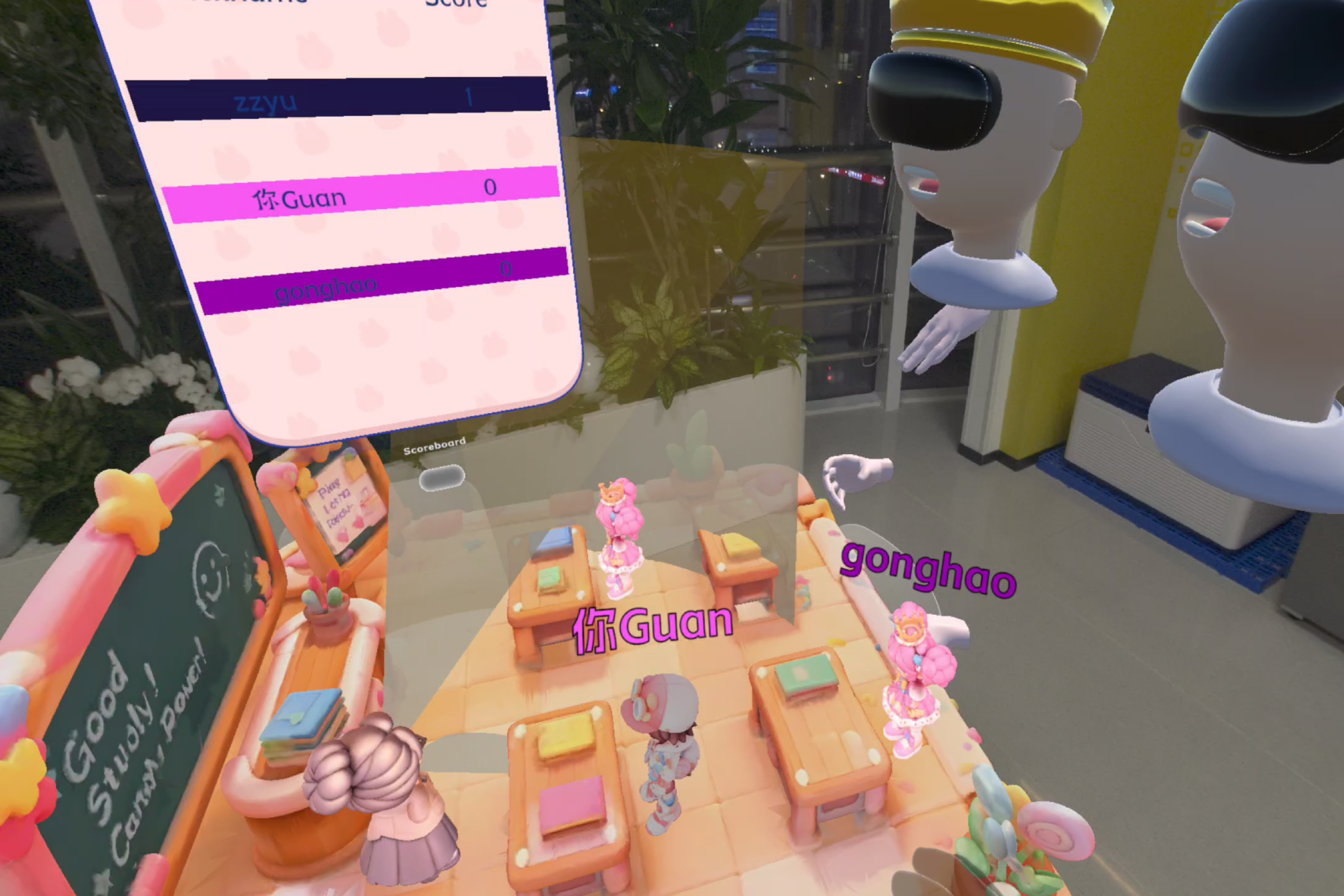
Minigame: Class Mischief — seize your chance to mess around while outside the teacher’s field of view.
-
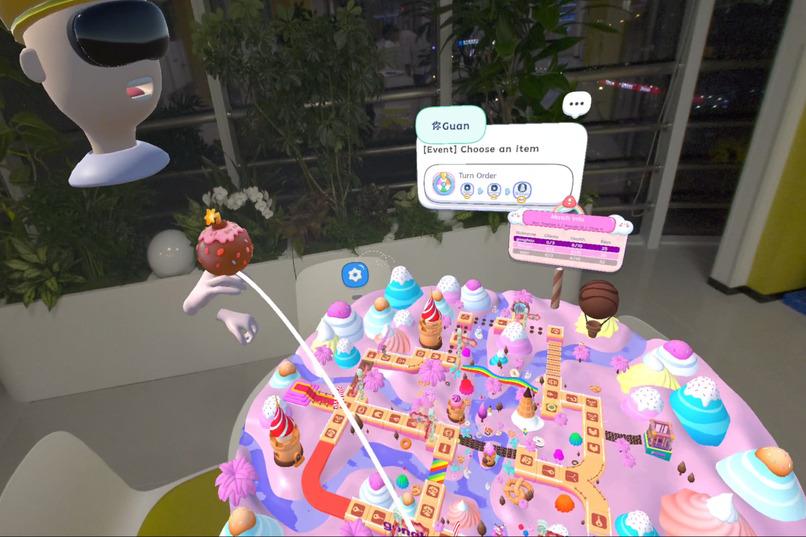
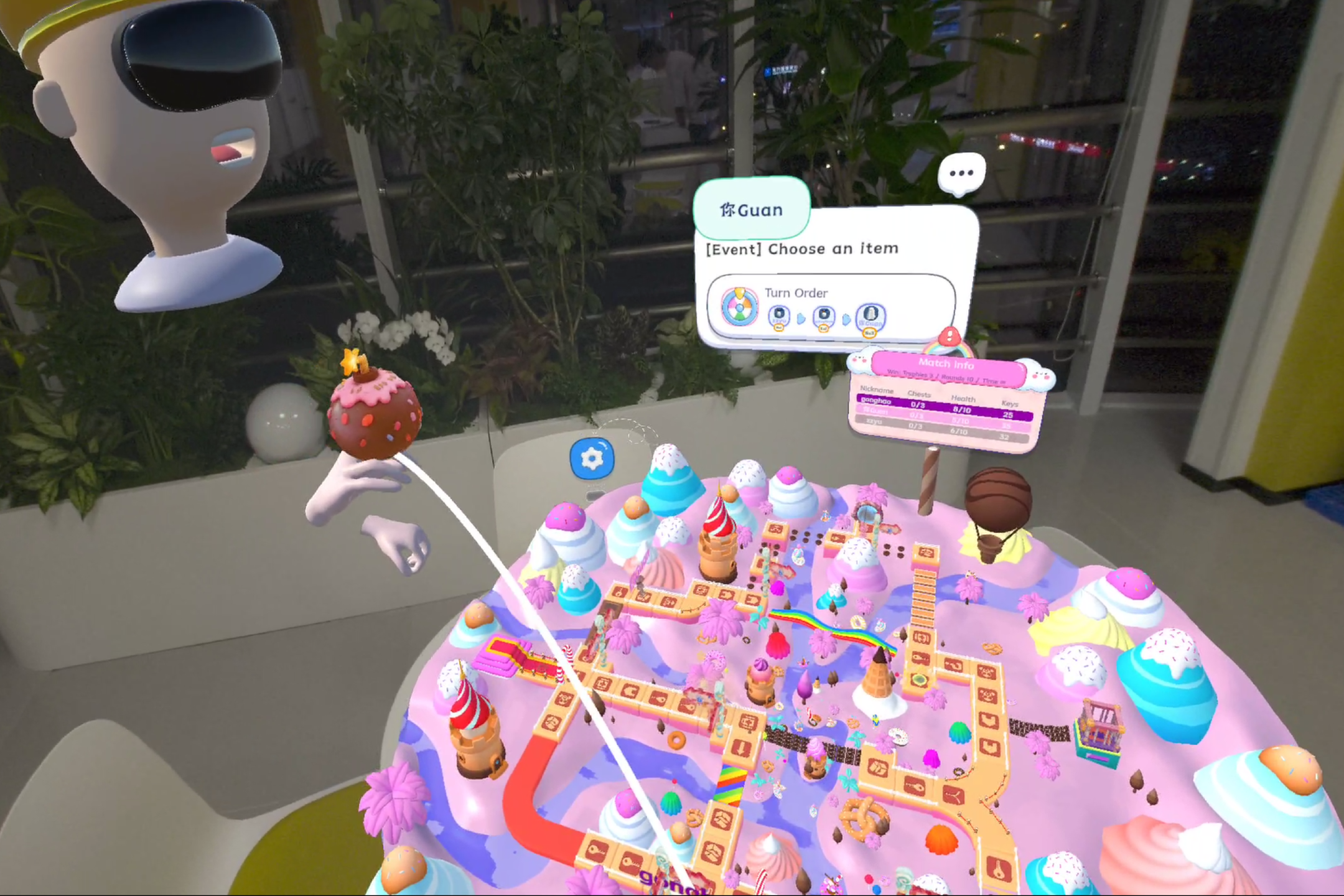
The main stage features a Monopoly-style board with a wide range of usable props. -
-
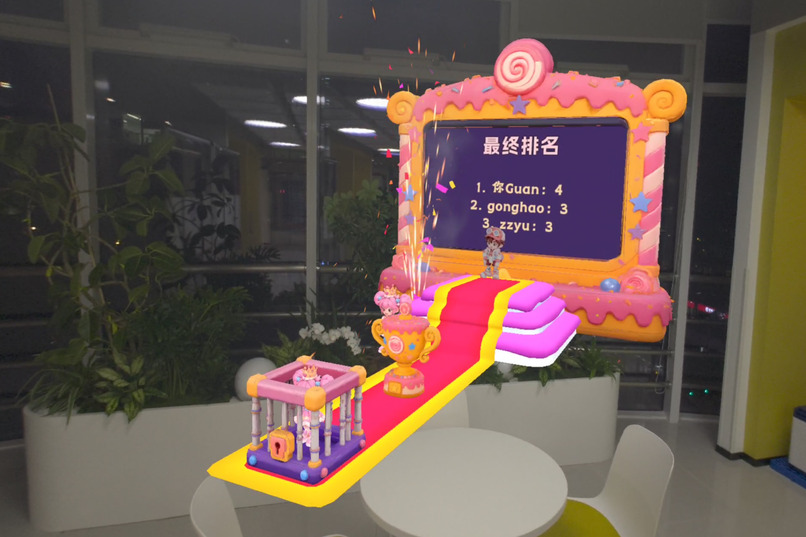
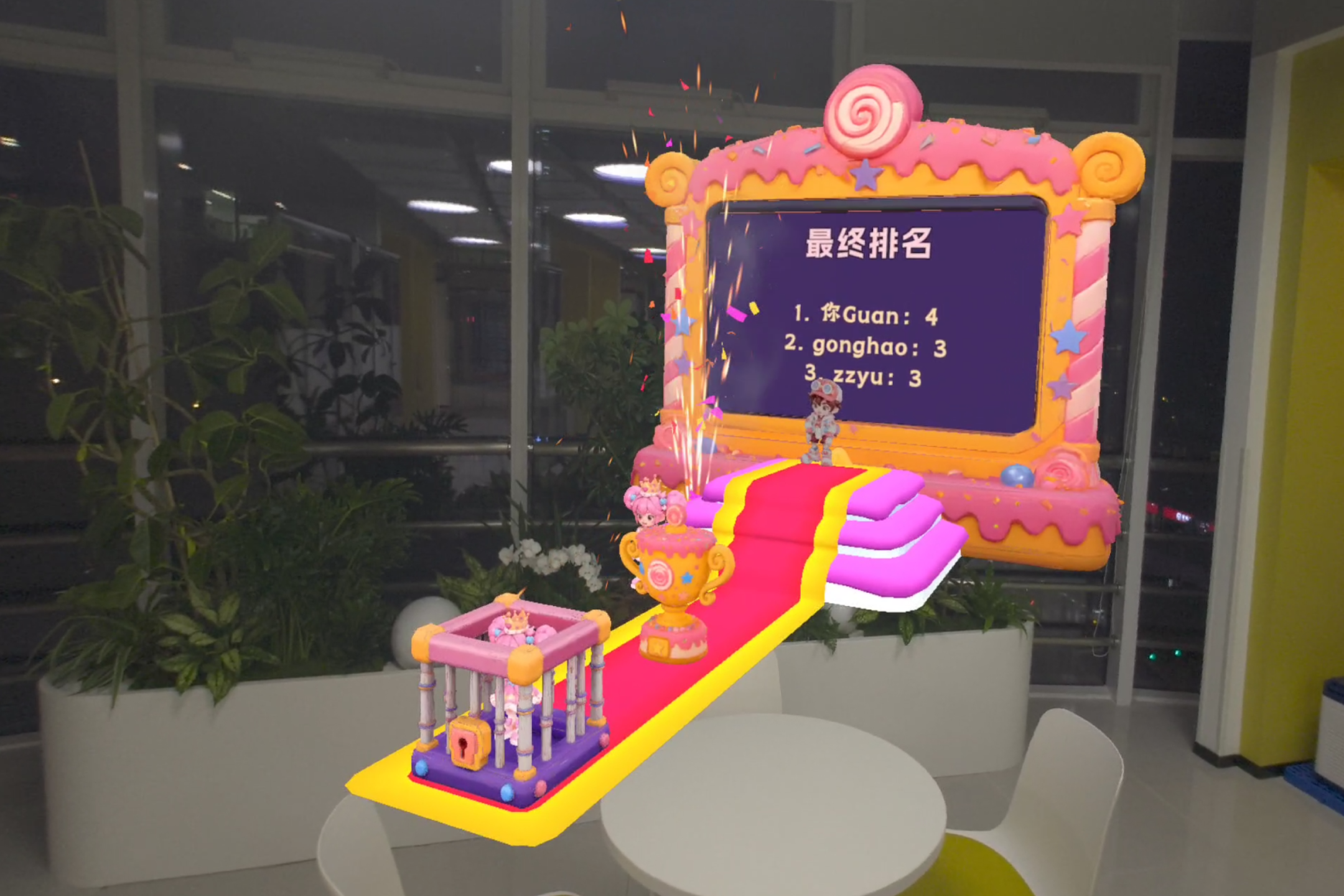
Each match ends with an award ceremony, bringing a strong sense of ritual to the gameplay.
Candy Party — A Shared Living Room for XR Party Gaming
Inspiration
The best part of a party game is not simply winning or losing. It is the people around you — laughing together, teasing each other, celebrating a victory, or watching the entire match suddenly turn upside down.
However, when friends are physically far apart, much of that feeling disappears. Traditional online games connect people through screens and voice chat, but they rarely recreate the feeling of actually being together in the same room.
That inspired us to create Candy Party, a multiplayer XR party game built around one core concept: the Shared Living Room.
Our goal is to use XR to break down physical distance and create a virtual place where friends can meet as Avatars, talk naturally, play together, compete, and celebrate as if they were gathering around the same game board in one living room.
Break the Distance. Share the Joy. Party Together in XR.
What it does
Candy Party combines XR social interaction, board-game strategy, playful item competition, and a wide variety of motion-based mini-games inside a colorful candy-themed world.
Players meet as Avatars in a shared XR space and gather around the same virtual board. During each round, they roll dice, move across different paths, collect keys, open treasure chests, earn trophies, and make strategic decisions.
Players can also collect items such as bombs, rockets, shields, healing items, curses, and position-swapping abilities. These items introduce playful strategy and chaos: players can protect themselves, interrupt the current leader, save powerful items for the perfect moment, or simply create funny situations for their friends.
Between board-game rounds, players enter different XR mini-games. We designed the mini-game collection around varied physical and cognitive interactions, including:
- Racing and obstacle challenges
- Charge-and-jump platforming
- Two-handed rowing
- Rhythm-based whack-a-mole
- Slingshot target shooting
- Catching and collecting falling objects
- Claw-machine challenges
- Magic cup memory challenges
- Puzzle solving
- Spot-the-difference challenges
- Two-handed balancing and rolling-maze gameplay
Each mini-game is designed to be understood within seconds while offering a different form of interaction.
Most importantly, players are not simply represented by usernames. They can see their friends' Avatars, head movement, hand movement, gestures, and reactions in the same shared space.
Pointing at the board, celebrating a victory, watching a friend struggle with a balance challenge, or reacting when someone uses a bomb becomes part of the experience.
This turns “playing an online game with friends” into “having a game night with friends inside XR.”
The experience also ends differently from a traditional party game.
After the final round, everyone enters the Candy Awards Ceremony. Trophies earned during the board game are counted first, but additional trophies are awarded based on performance throughout the entire match, including:
- Most mini-game victories
- Most keys collected
- Most items used
- Most damage dealt
- Most deaths
Because these awards can change the final ranking, the winner may remain uncertain until the very last moment. Even a player who is behind can make an unexpected comeback during the ceremony.
How we built it
Candy Party was built in Unity as a modular multiplayer XR party-game framework.
The project uses technologies including:
- OpenXR
- XR Interaction Toolkit
- XR Hands
- Spatial interaction
- Hand tracking
- Avatar interaction
- Multiplayer game-state synchronization
- World-space UI
- Physics-based interaction
The overall gameplay architecture can be summarized as:
Shared XR Space
       ↓
Avatar & Hand Interaction
       ↓
Board Game System
       ↓
Keys / Items / Treasure Chests
       ↓
MiniGame Manager
       ↓
XR Mini-Games
       ↓
Awards Ceremony & Final Results
The board game acts as the main gameplay loop, while each mini-game is implemented as an independent module with its own interaction logic, timer, scoring system, and result state.
This architecture allows us to add new mini-games without rebuilding the core board-game system.
We also created a consistent interaction language across the experience:
Point → Pinch → Grab → Move → Release
Individual mini-games then extend this interaction vocabulary with physical actions such as pulling, swinging, aiming, rowing, catching, and balancing.
This was an important design decision because players constantly switch between different mini-games. Keeping the fundamental interactions consistent reduces learning time and allows players to focus on having fun.
AI-assisted development
AI was integrated throughout the development workflow rather than being used for only one part of the project.
We used AI to assist with:
- Gameplay ideation
- Unity C# development
- Debugging and code review
- System architecture
- Mini-game prototyping
- UI/UX exploration
- Game Design Document creation
- Technical documentation
- 3D concept design
- Three-view model reference sheets
- Logo and presentation design
- Sound-effect ideation
For many 3D assets, the process began with a gameplay requirement. We then used AI to rapidly explore shapes, colors, and candy-themed visual directions and produce reference sheets before creating or refining the final assets for Unity.
This AI-assisted workflow allowed a solo developer to explore a much larger design space within a limited development period while maintaining a consistent visual identity.
Challenges we ran into
One of our biggest challenges was designing XR interactions that were simple enough for a party game.
It is easy to create complicated gestures simply because XR supports them. However, complex gestures quickly become frustrating when players need to learn a new interaction every few minutes.
Through experimentation, we found that familiar physical actions — pointing, pinching, grabbing, pulling, swinging, catching, and balancing — worked much better.
This led to one of our most important design principles:
Players should understand how to play a mini-game within a few seconds.
Another challenge was making a large collection of very different mini-games feel like parts of the same experience rather than unrelated prototypes.
Rowing, puzzles, shooting, whack-a-mole, claw machines, and balance challenges require very different interactions. We addressed this by establishing a consistent candy-themed visual language, standardized mini-game introductions, shared UI patterns, scoring logic, sound feedback, and transition systems.
Multiplayer synchronization was another major challenge. XR players constantly move their heads and hands while interacting with shared objects, board states, physics, and mini-games.
We therefore had to distinguish between frequently updated Avatar pose data and authoritative gameplay events such as item usage, board movement, scoring, and match results. This helped us balance responsiveness, consistency, and network performance.
Finally, standalone XR hardware created strict performance constraints. A colorful party environment with multiple Avatars, props, effects, and mini-games can quickly become expensive to render.
We adopted a stylized, rounded, low-poly visual direction and optimized scene complexity, models, materials, and effects. Interestingly, these technical limitations eventually became part of Candy Party's visual identity.
Accomplishments that we're proud of
We are especially proud that Candy Party was independently developed as a complete XR party-game experience, rather than as a single interaction prototype.
The project brings together several systems that normally exist independently:
- XR social interaction
- Avatar presence
- A complete board-game loop
- Strategic item gameplay
- More than ten different mini-game experiences
- Natural hand-based interaction
- Multiplayer synchronization
- A dynamic final awards system
We are also proud of the diversity of the mini-games. Instead of repeating the same interaction, the game explores racing, observation, puzzle solving, rhythm, shooting, catching, precision control, and two-handed balance.
Another accomplishment is the Candy Awards Ceremony. Rather than ending with a static leaderboard, the game turns the final results into another social moment. Different play styles are recognized, bonus trophies can change the ranking, and every player has a reason to stay engaged until the final announcement.
Most importantly, we were able to turn the original idea of a Shared Living Room into a playable experience where the board game, Avatars, physical mini-games, social interaction, and final celebration all support the same goal: making people feel that they are playing together rather than simply being connected online.
What we learned
The biggest lesson from developing Candy Party is that the real value of XR is not simply placing a traditional game inside a headset.
XR becomes much more interesting when it changes how players interact with the game and with each other.
A board game feels different when players can physically gather around it.
A mini-game feels different when players use their real hands and bodies to row, aim, swing, grab, or balance.
And multiplayer feels different when you can see a friend's gestures and reactions instead of only hearing their voice.
We also learned that accessibility is more important than interaction complexity in an XR party game.
Some of our most successful interactions were technically simple. Their strength came from the fact that players immediately understood what to do.
AI-assisted development also taught us an important lesson: AI is extremely effective for exploration, prototyping, debugging, and concept development, but it does not replace real XR testing.
AI-generated code still needs engineering review. AI-generated visual concepts still require artistic judgment and optimization. Most importantly, an interaction that looks good on paper may feel completely different when tested with real hands in XR.
The final quality still depends on continuous human iteration and real-device testing.
What's next for CandyParty
Candy Party was designed from the beginning as an expandable XR party platform rather than a fixed collection of mini-games.
Next, we plan to expand the experience with:
- More physical and body-based XR mini-games
- Additional board-game maps
- New candy-themed environments
- More strategic and chaotic items
- Additional random events
- Richer Avatar expressions and social interactions
- Improved remote multiplayer experiences
- More shared-space interactions
- Player customization and cosmetic content
- More cooperative and team-based mini-games
We also want to continue exploring the Shared Living Room concept.
Our long-term goal is not simply to build more mini-games. We want to explore how spatial computing can create a new kind of remote social experience — one where friends do not feel like they are looking at each other through screens, but instead feel like they have entered the same place.
Ultimately, Candy Party asks a simple question:
What if distance no longer mattered when friends wanted to get together?
With XR and spatial computing, we believe the living room no longer has to be only a physical place.
It can become a space we share.


Log in or sign up for Devpost to join the conversation.