-
-
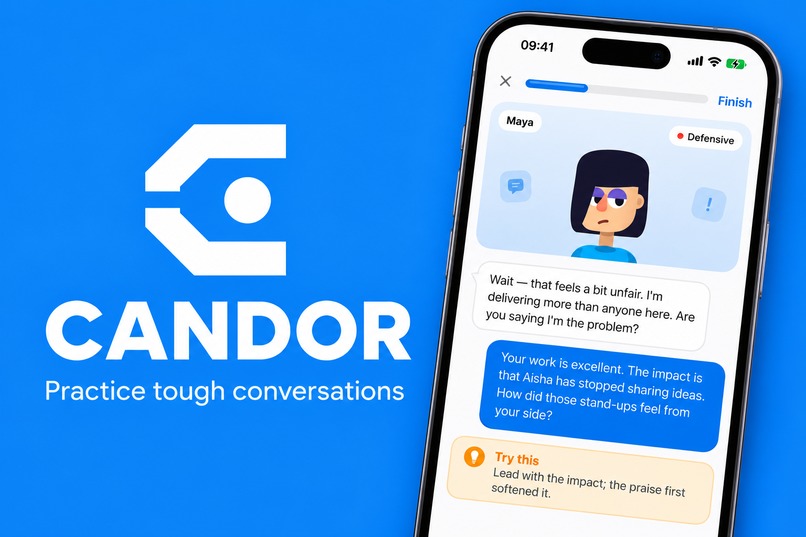
Candor is a rehearsal room for new managers: practise the hard conversation before it is real.
-
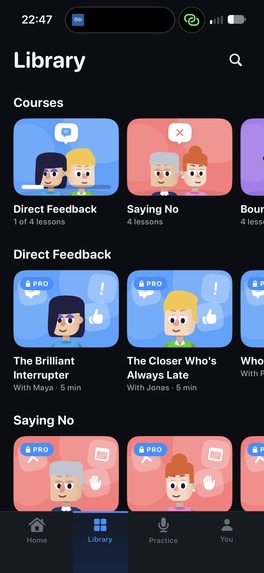
12 realistic situations, four each for feedback, saying no and boundaries.
-
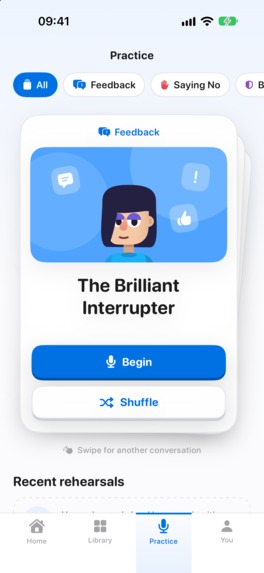
Pick a situation. Maya, your top performer, keeps talking over the juniors.
-
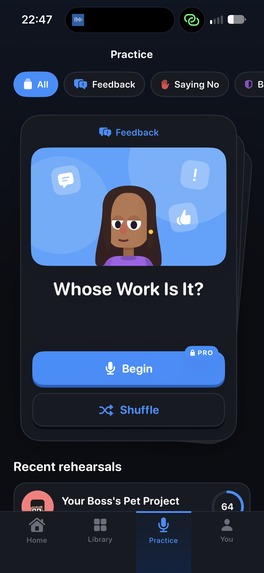
Not this one? Swipe to another: credit-taking, missed deadlines, a boss's pet project.
-
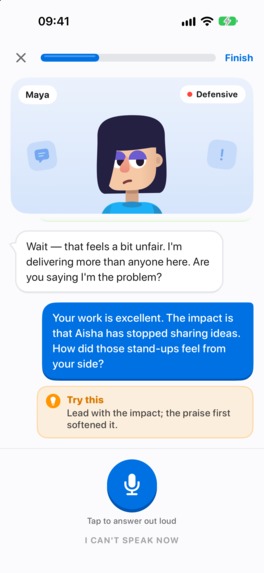
Say it out loud or type it. Maya pushes back, and a tip shows what to try next.
-
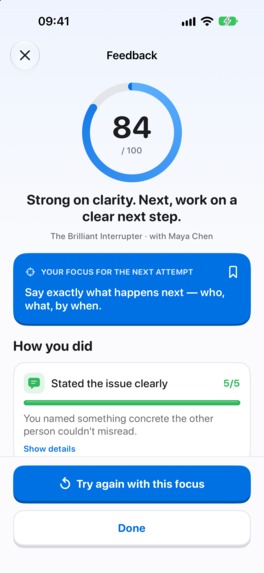
The report shows what landed, what to work on and one focus for your next attempt.
-
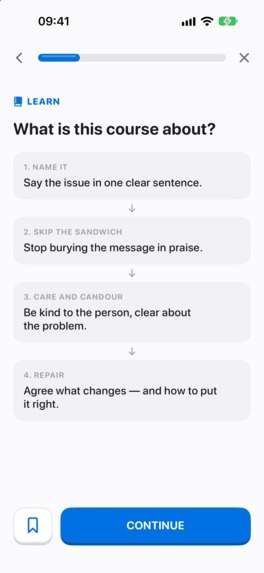
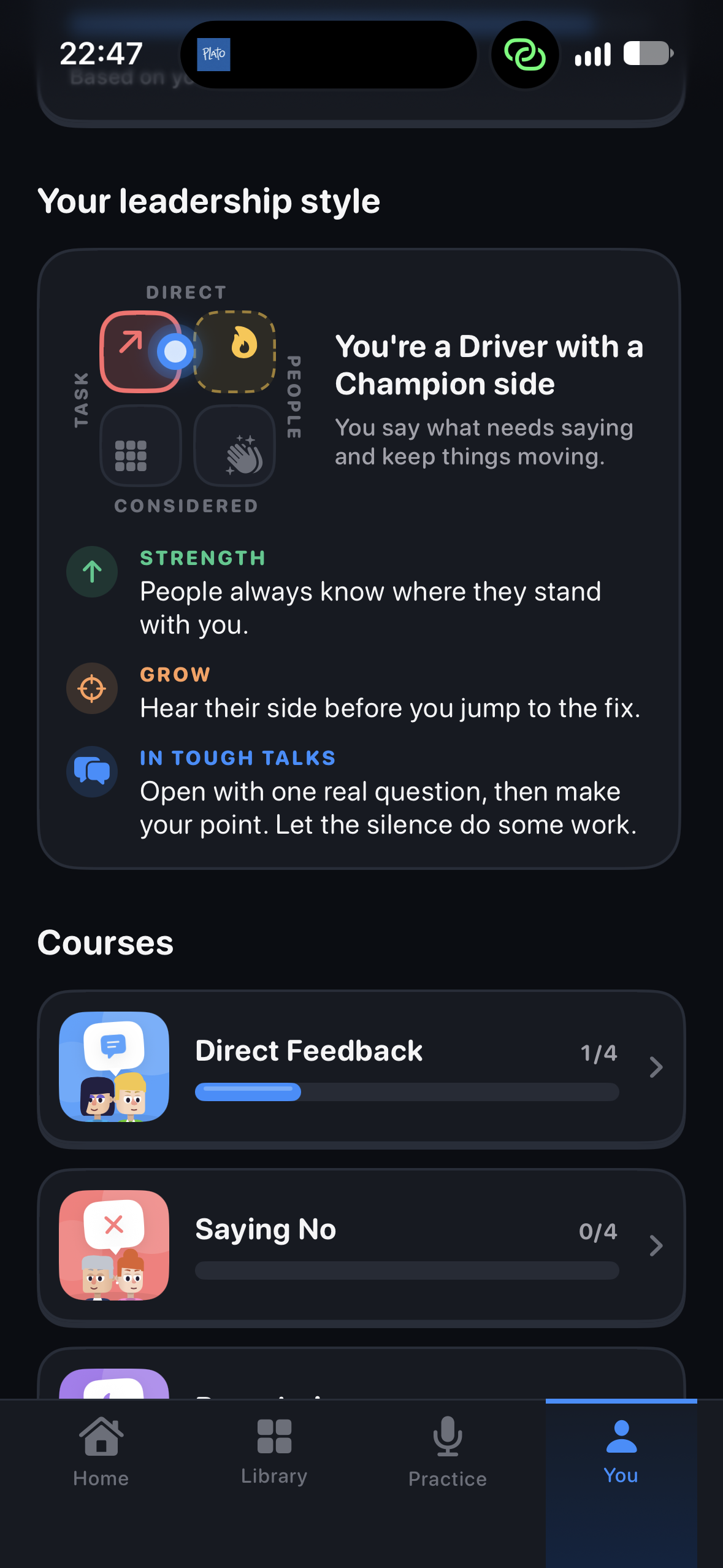
Five-minute lessons turn advice into steps: name the issue in one sentence, skip the sandwich.
-
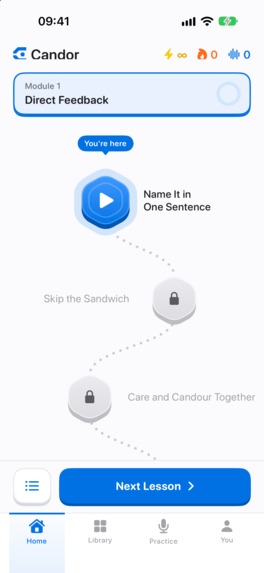
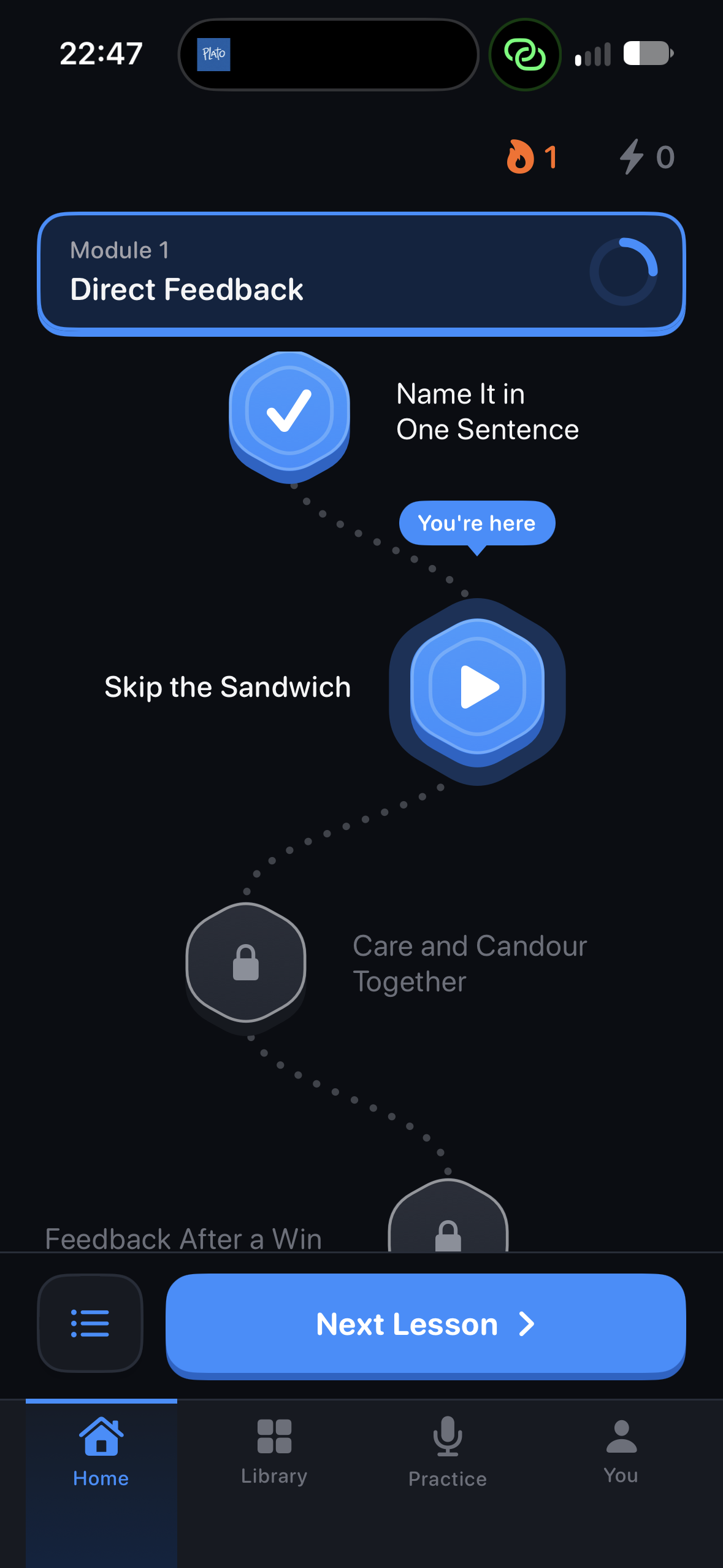
A learning path for direct feedback, saying no and boundaries.
-
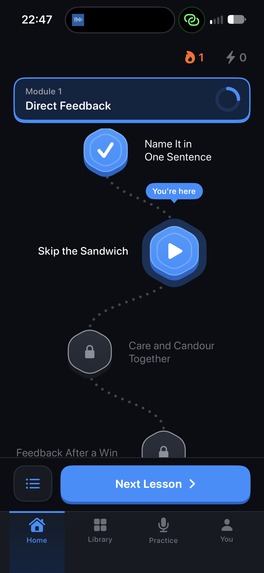
Each lesson unlocks the next, so the skill builds up step by step.
-
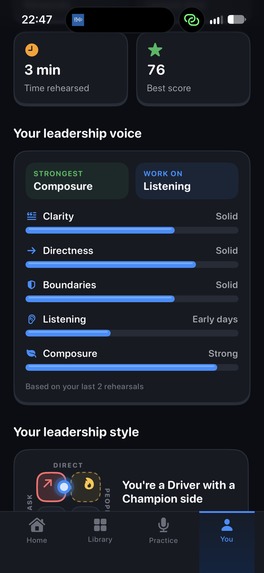
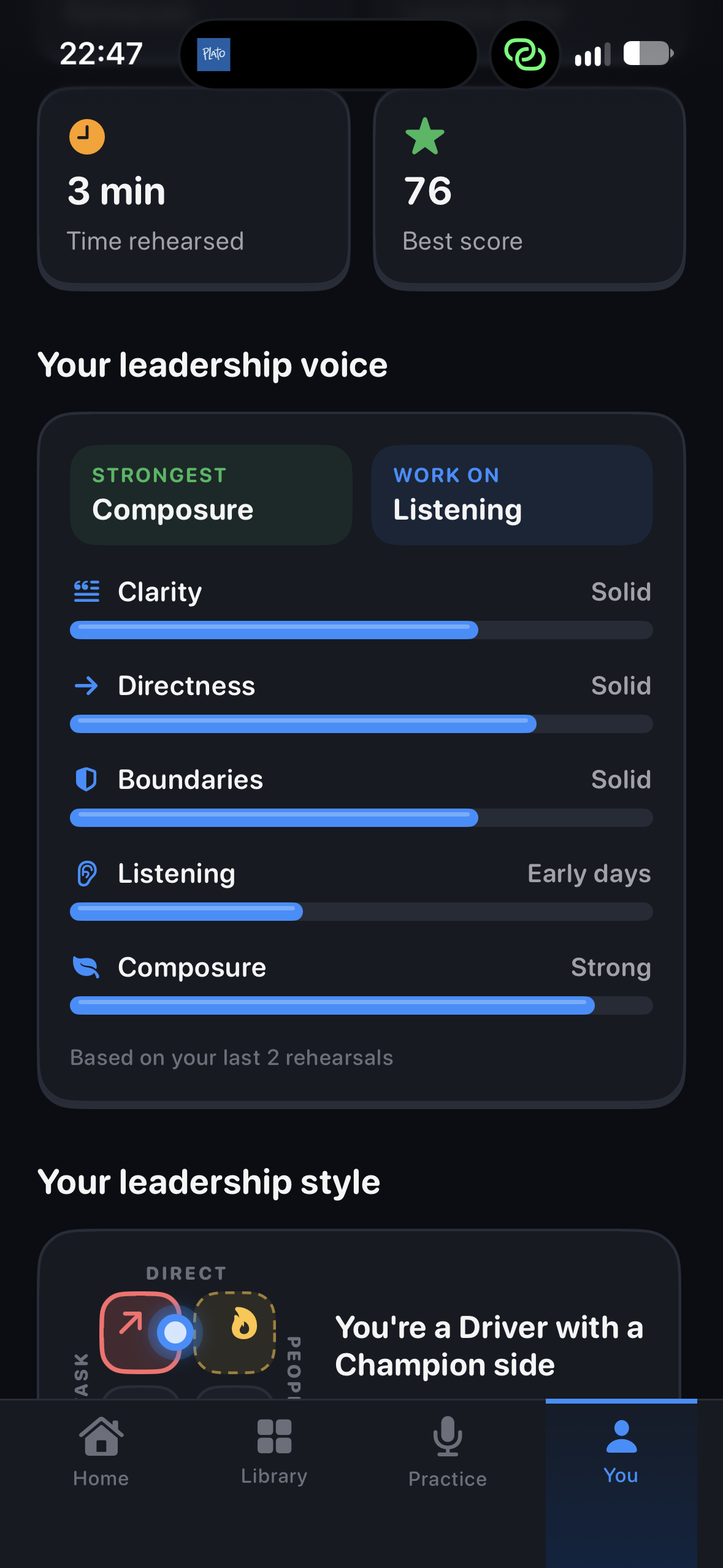
Track clarity, directness, boundaries, listening and composure across sessions.
-
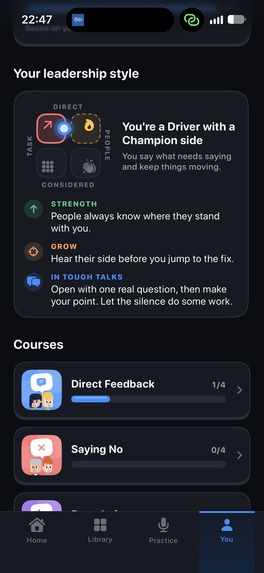
See your leadership style, your strengths and what to practise next.
-

Candor app icon.
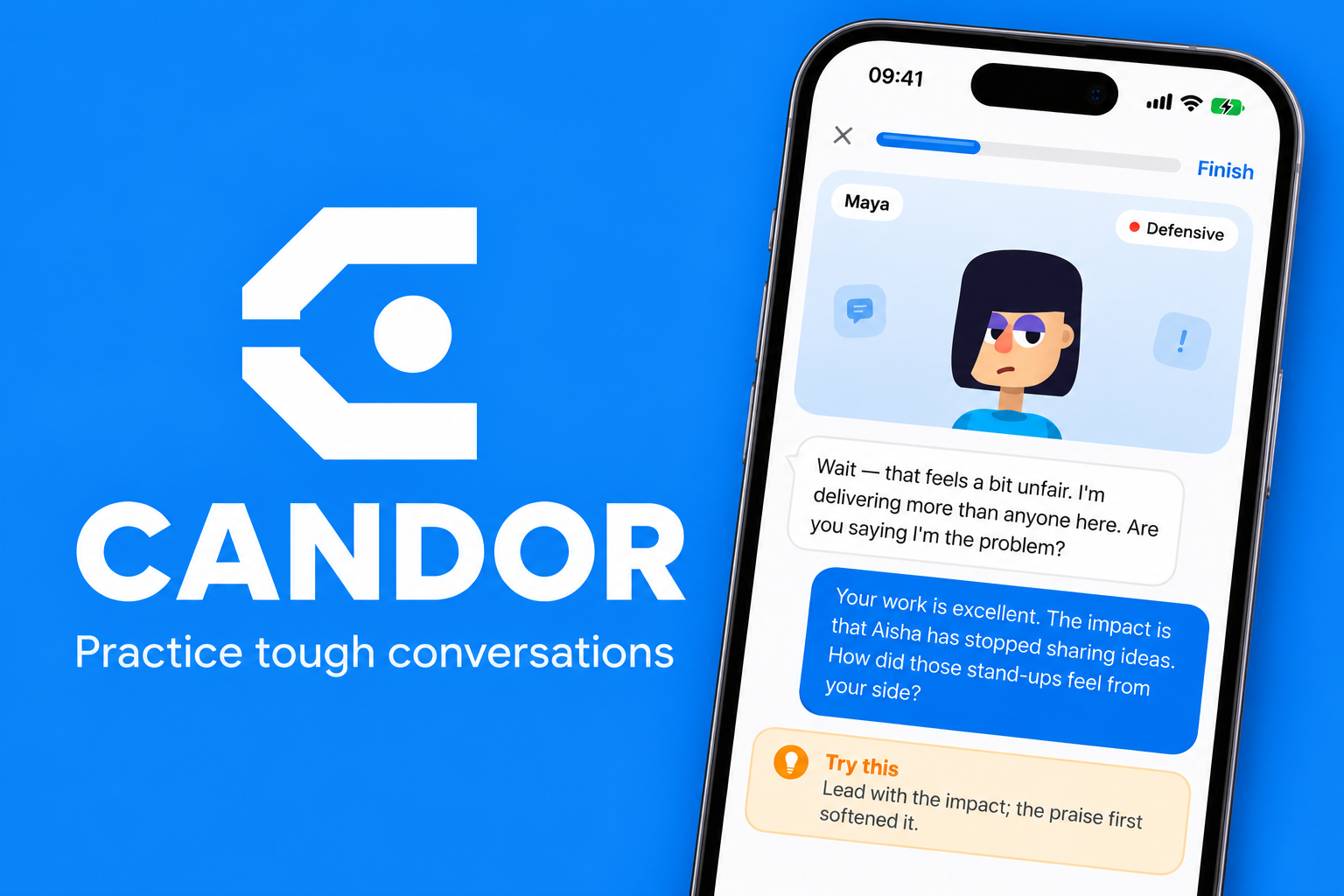
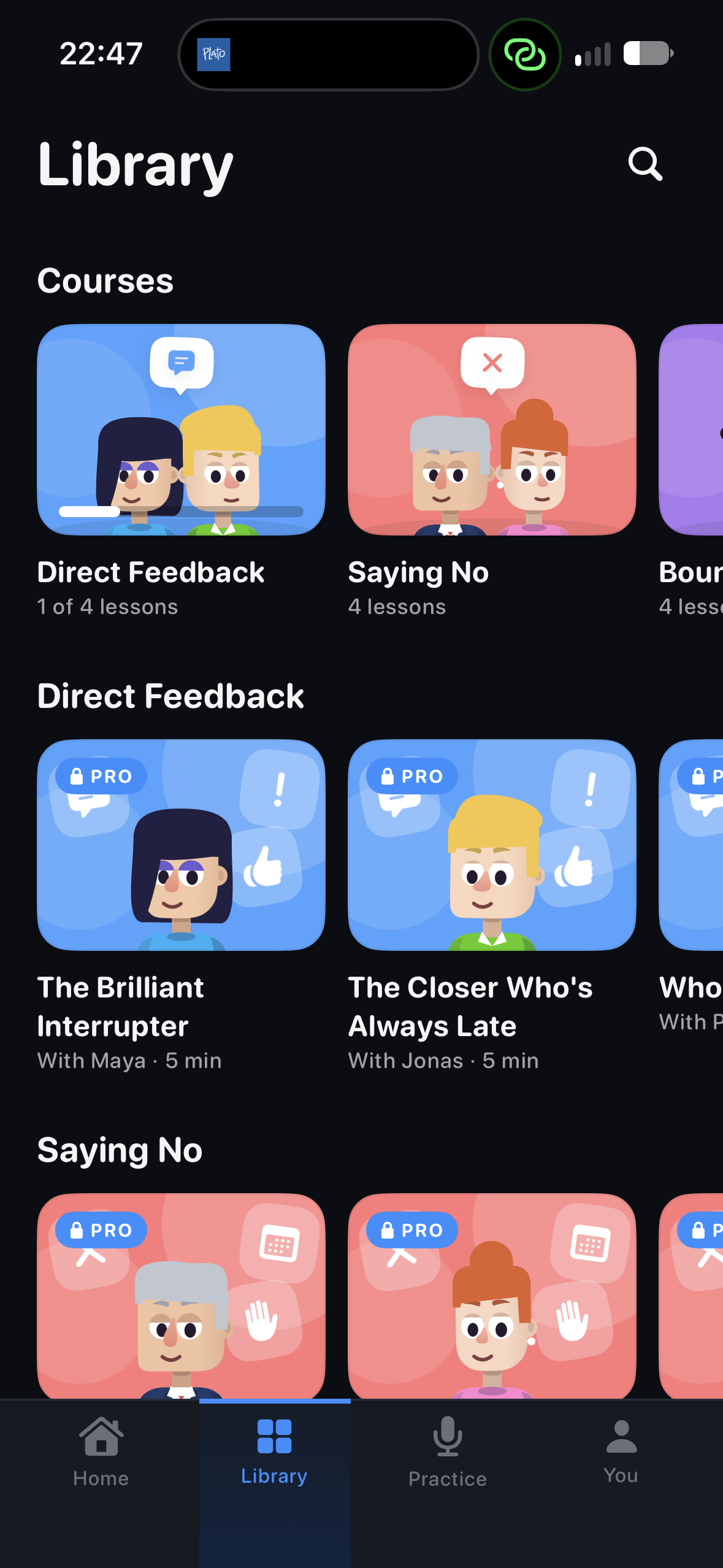
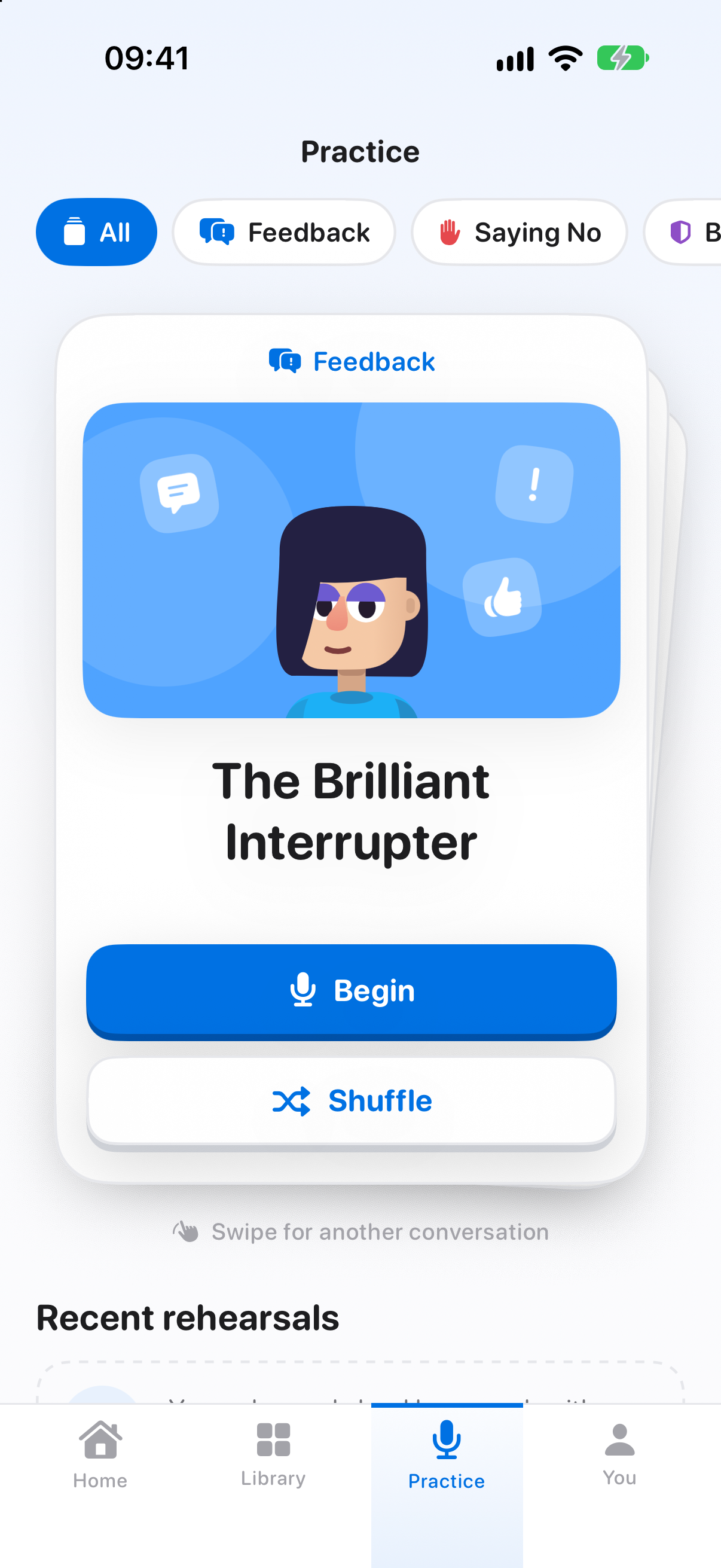
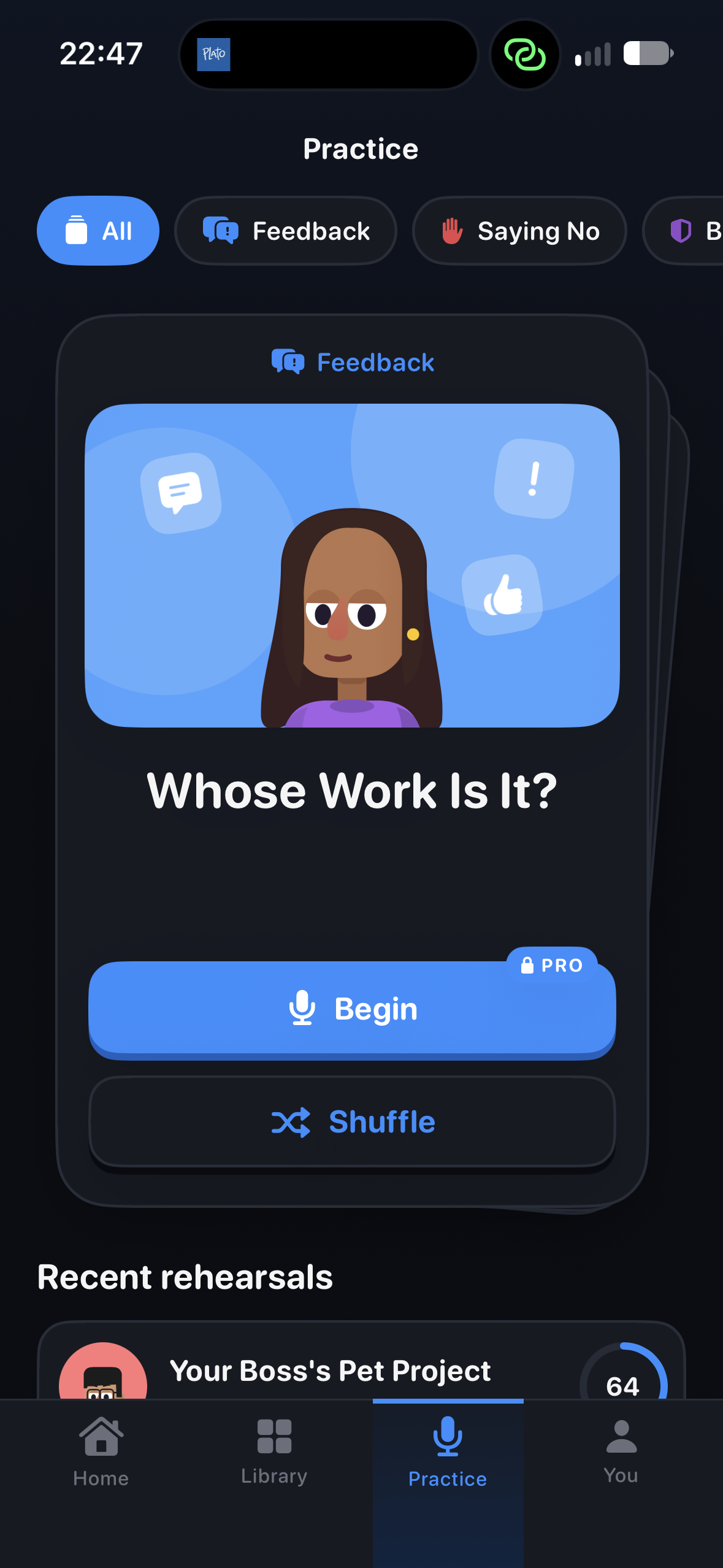
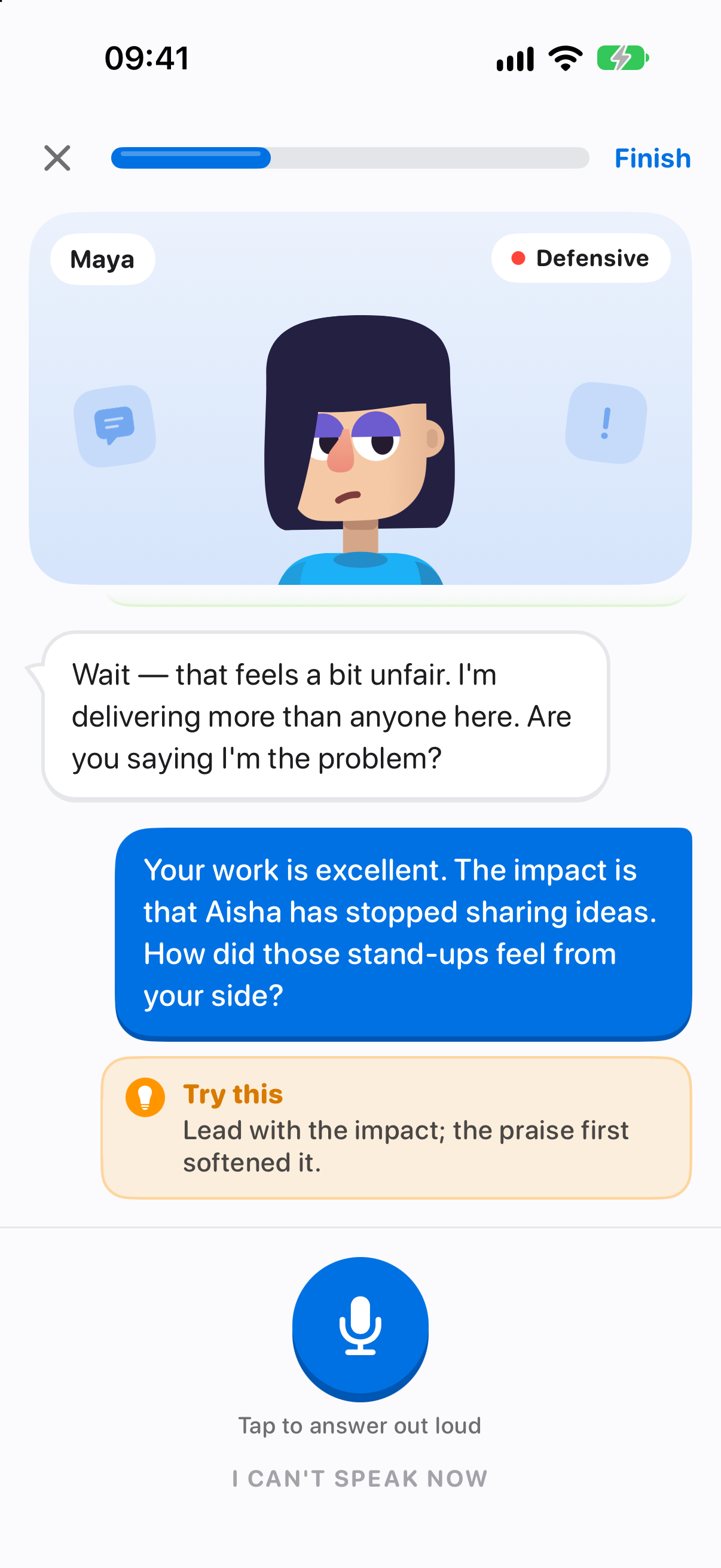
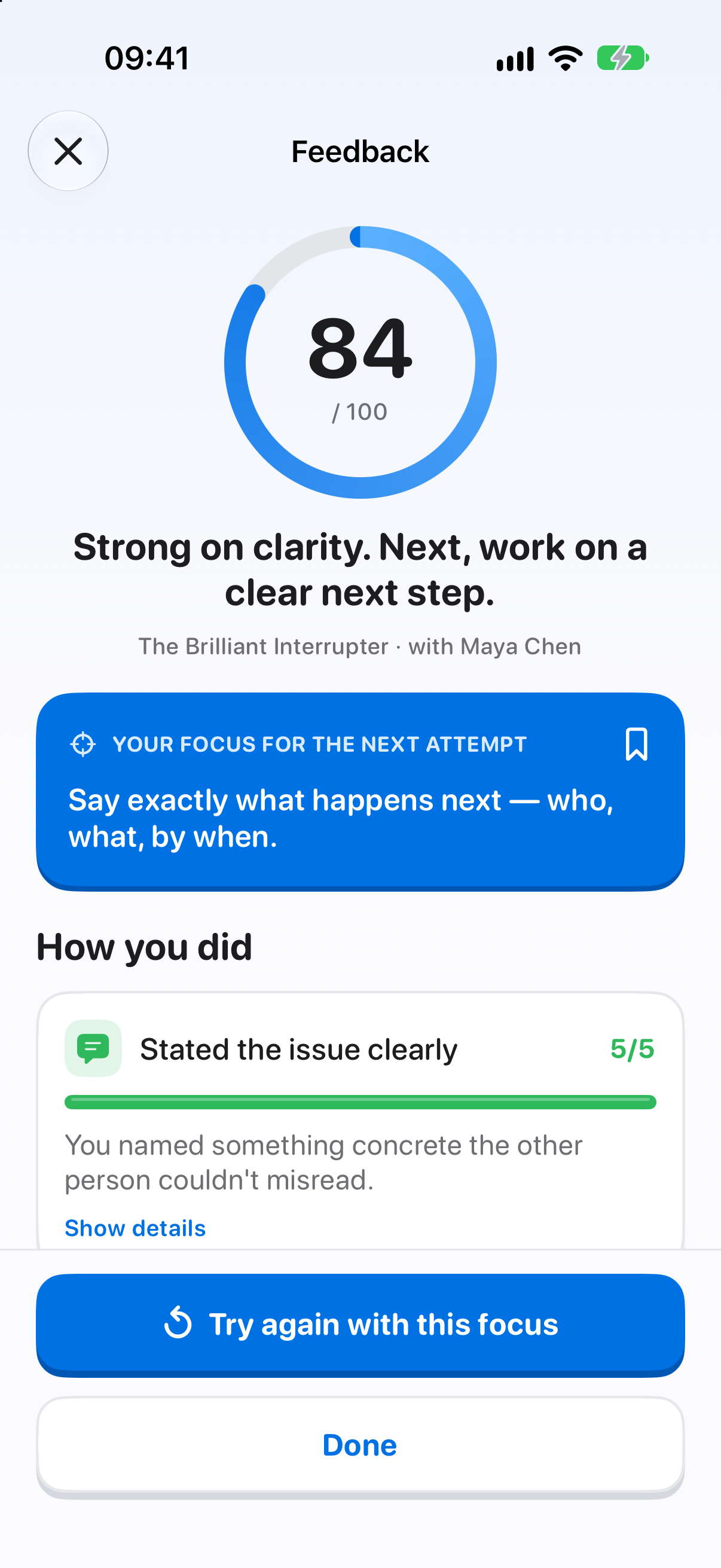
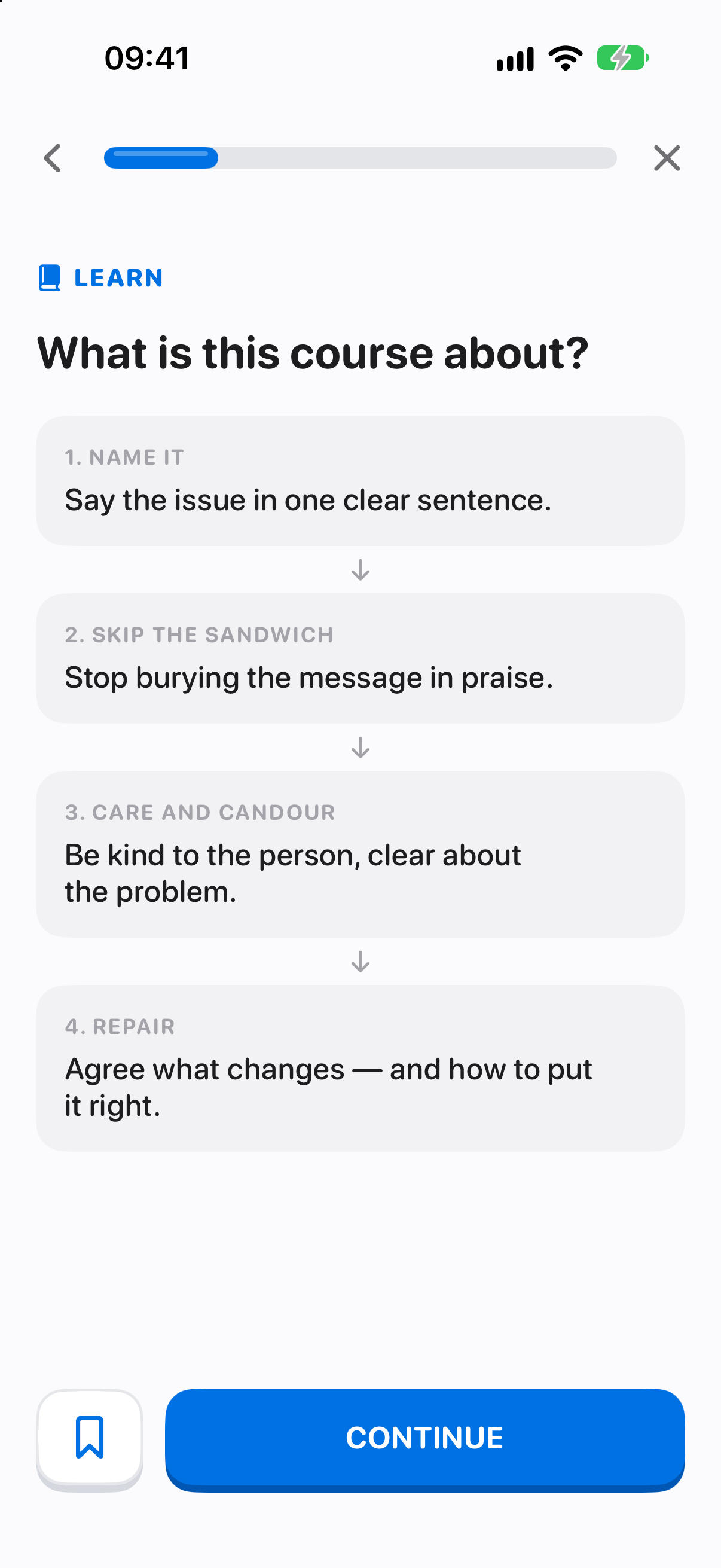
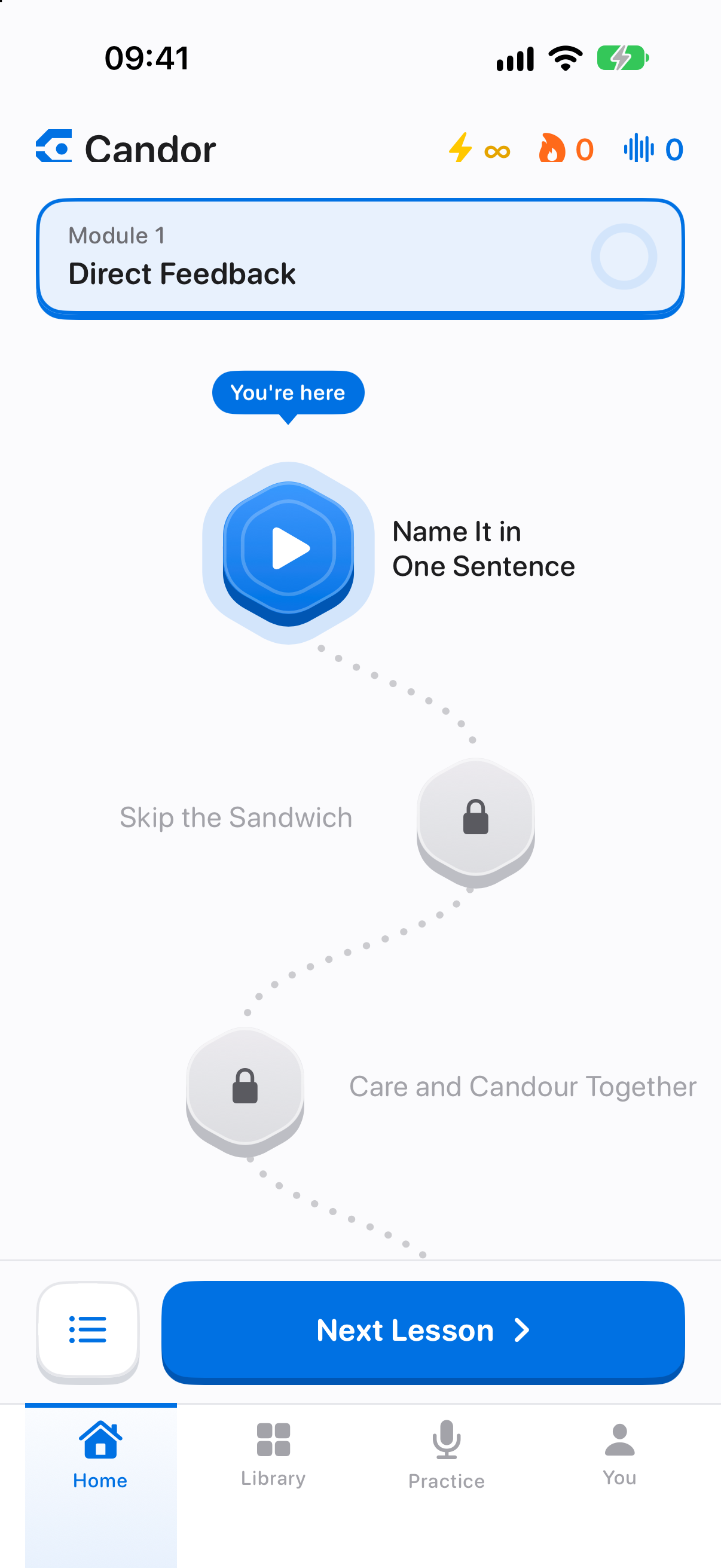

Candor is a rehearsal room for new managers. Pick a hard conversation (giving feedback, saying no or holding a boundary), say what you would actually say, and handle a counterpart who pushes back. Then see what landed and what didn't, and try again with a stronger opening.
I kept wishing for this kind of hands-on training in my day job. I could read advice about feedback or boundaries, but I couldn't rehearse the awkward moment when the other person pushes back. Candor gives me a simple place to do that, and I use it myself now.
Realistic scenarios
There are 12 situations that new managers actually run into, with four each for feedback, saying no and boundaries:
- Feedback: a top performer who talks over the juniors, a star seller who misses every deadline, a lead who presents the team's work as her own, a once-reliable engineer whose quality is slipping.
- Saying no: a sales lead who promised a prospect a custom demo in four days, scope creep in the middle of a sprint, your boss's "on the side" pet project, a client who wants the team to work on Saturday.
- Boundaries: messages at 11 PM, a former peer who now reports to you, a colleague who keeps handing you her hard calls, a 1:1 that has turned into weekly venting.
Every counterpart has a name, a role and a reason for behaving the way they do. They react to how you open the conversation. If you only hint, they deflect. If you are clear and curious, they open up. You practise the exchange instead of memorising a script.
Practice and feedback
- Speak your reply or type it when you can't talk.
- During the conversation you get a short note when a line works and a tip when it doesn't.
- At the end, a report rates clarity, directness, boundaries, listening and composure. It shows what landed and what to work on, and gives you a stronger opening for the next attempt.
Confidence before the real conversation
- Five-minute lessons break each skill into small steps before you rehearse.
- Your skill profile and leadership style show progress across sessions, so you can see yourself getting better.
- Practice cards, a daily streak and an optional reminder help you keep practising between meetings.
The goal is simple: by the time you walk into the real meeting, you have already said the hard sentence out loud once.
How I built it
The iPhone app is built in SwiftUI and the Android app in Kotlin. Supabase edge functions run the coach, and RevenueCat handles Pro: a free plan with daily energy, plus monthly and yearly subscriptions. Speech is recognised on the device. The app asks before it sends rehearsal text to its AI providers. If you decline, or the server can't be reached, an on-device coach takes over.
The hardest part was making each reply feel connected to what the user actually said, without making the product complicated or stressful.
Candor is live on Google Play and the App Store. App Store review took longer than expected, so I also built the Android version in Kotlin to ship in time. The iOS version was approved just before the deadline.
Candor isn't a substitute for talking to your team. It is a rehearsal room for arriving at that conversation a little more prepared.
Built With
- kotlin
- openai
- revenuecat
- supabase
- swift
- swiftui

Log in or sign up for Devpost to join the conversation.