Inspiration
The inspiration for this project comes from the urgent need to improve diagnostic accuracy and efficiency in detecting kidney stones. Kidney stones are a common and painful condition that can lead to severe complications if not diagnosed and treated promptly. By leveraging the power of machine learning and cloud computing, I aim to develop a tool that can assist healthcare professionals in early detection, thus improving patient outcomes. The availability of comprehensive datasets on Kaggle and the robust capabilities of IBM Cloud provided the perfect foundation for this project.
What it does
This project involves a machine learning model designed to detect kidney stones from medical data. The model analyzes input data—comprising various medical parameters and imaging features—and outputs a prediction indicating the presence or absence of kidney stones. With high accuracy, the model serves as a valuable tool to assist medical professionals in their diagnostic processes, aiding them in making more informed and timely decisions.
How I built it
- Data Collection: The dataset was sourced from Kaggle, providing labeled data with features necessary for kidney stone diagnosis.
- Data Preprocessing: The data was cleaned, normalized, and split into training and test sets to ensure the model could generalize well to new data.
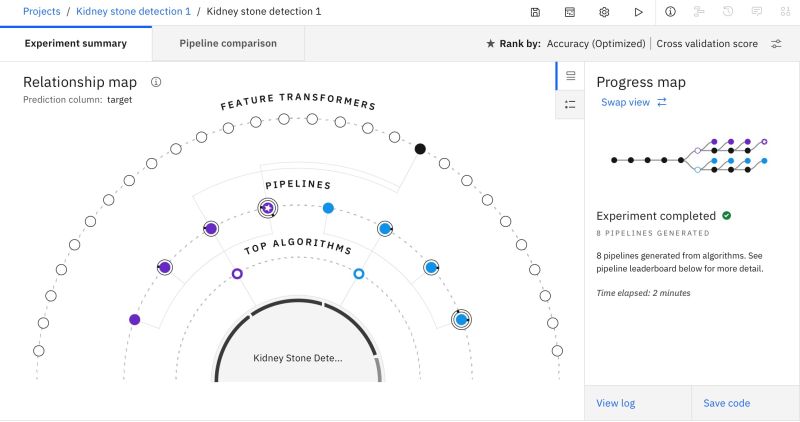
- Model Selection: Multiple machine learning algorithms were evaluated, and the best-performing model was chosen based on performance metrics.
- Training: The selected model was trained on the preprocessed data using IBM Cloud's machine learning capabilities.
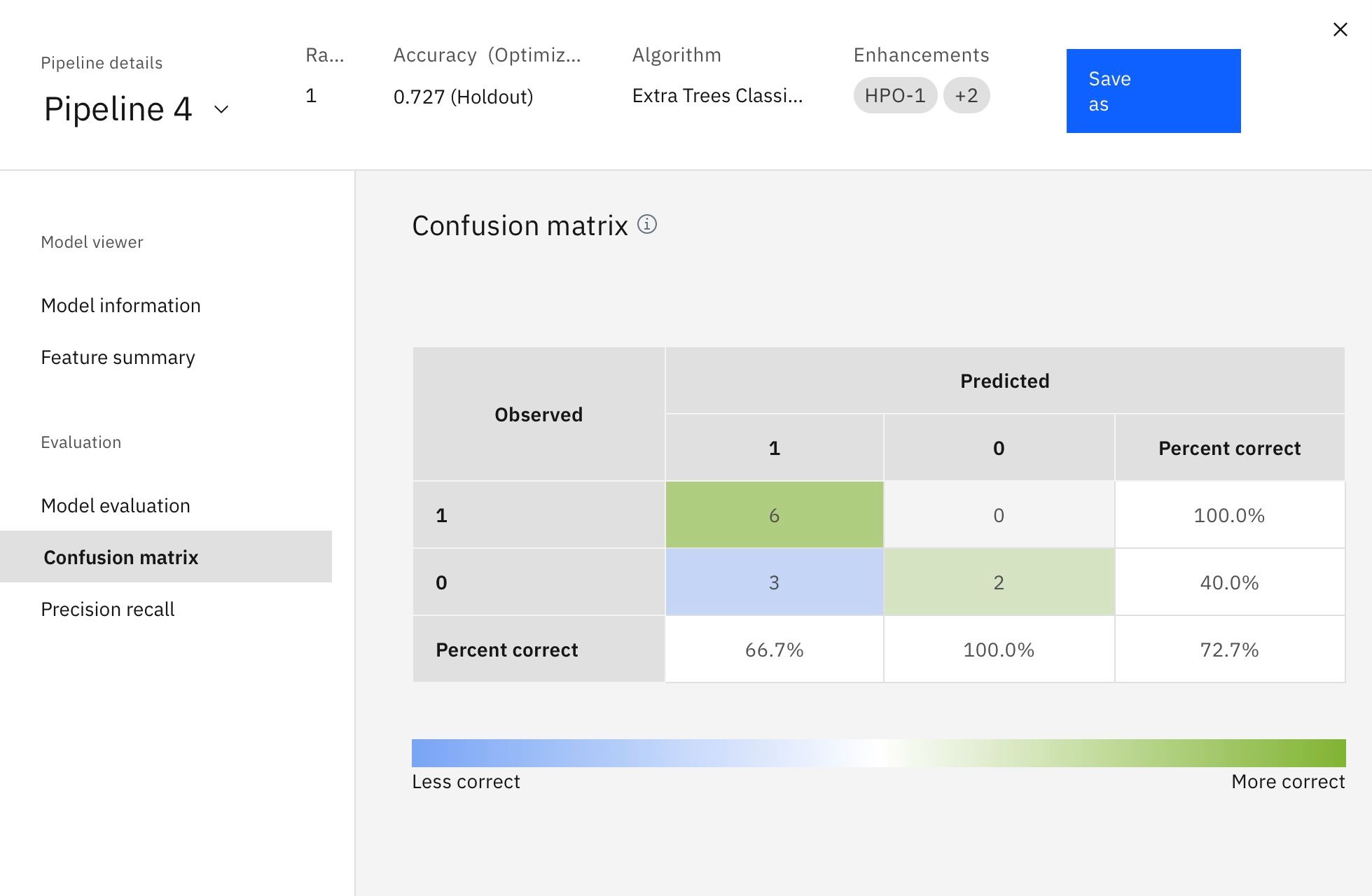
- Evaluation: The model's performance was assessed using accuracy and other relevant metrics, achieving notable accuracy.
- Deployment: The trained model was deployed on IBM Cloud, making it accessible for real-time predictions.
Challenges I ran into
- Data Quality: Ensuring the dataset was clean and free from anomalies required significant effort.
- Model Selection: Balancing complexity and performance while choosing the right algorithm was challenging.
- Resource Management: Efficiently utilizing IBM Cloud resources for training and deployment while managing costs and computational limits was a learning curve.
- Interpretability: Ensuring the model's predictions were interpretable to healthcare professionals to build trust in the AI's decisions.
Accomplishments
- High Accuracy: Achieving high accuracy is a significant milestone, demonstrating the model's reliability and potential impact.
- End-to-End Solution: Successfully building and deploying an end-to-end machine learning pipeline on IBM Cloud.
- Practical Impact: Creating a tool with the potential to assist in early kidney stone detection, contributing to improved healthcare outcomes.
What I learned
- Machine Learning Techniques: Gained in-depth knowledge of various machine learning algorithms and their applicability to healthcare data.
- Cloud Computing: Learned how to leverage IBM Cloud for machine learning tasks, including data storage, model training, and deployment.
- Data Science Workflow: Understood the complete data science workflow from data preprocessing to model evaluation and deployment.
- Collaboration and Problem-Solving: Enhanced problem-solving skills and the ability to collaborate effectively, crucial for tackling real-world challenges.
What's next for Kidney Stone Detection
- Model Improvement: Continuously improve the model's accuracy and robustness by exploring advanced algorithms and techniques.
- Feature Expansion: Incorporate additional data features, such as patient history and advanced imaging data, to enhance the model's predictive power.
- Real-World Testing: Collaborate with healthcare institutions to test the model in real-world scenarios and gather feedback for further refinement.
- User Interface: Develop a user-friendly interface for medical professionals to easily interact with the model and interpret its predictions.
- Educational Outreach: Share the findings and methodologies with the broader AI and medical communities to encourage similar innovations and improvements in kidney stone detection.
Built With
- ibm-cloud
- kaggle

Log in or sign up for Devpost to join the conversation.