Inspiration
The Problem
School canteens are often built around a simple system: students wait in line, decide what they want, place their order, and wait again. During busy breaks, this can lead to long queues, rushed decisions, and overcrowding.
At the same time, canteen staff have to estimate how much food to prepare without knowing what students will actually buy. Preparing too much can result in food waste, while preparing too little can leave students without their preferred meals.
We wanted to explore whether a simple digital system could solve both problems at once.
The Idea
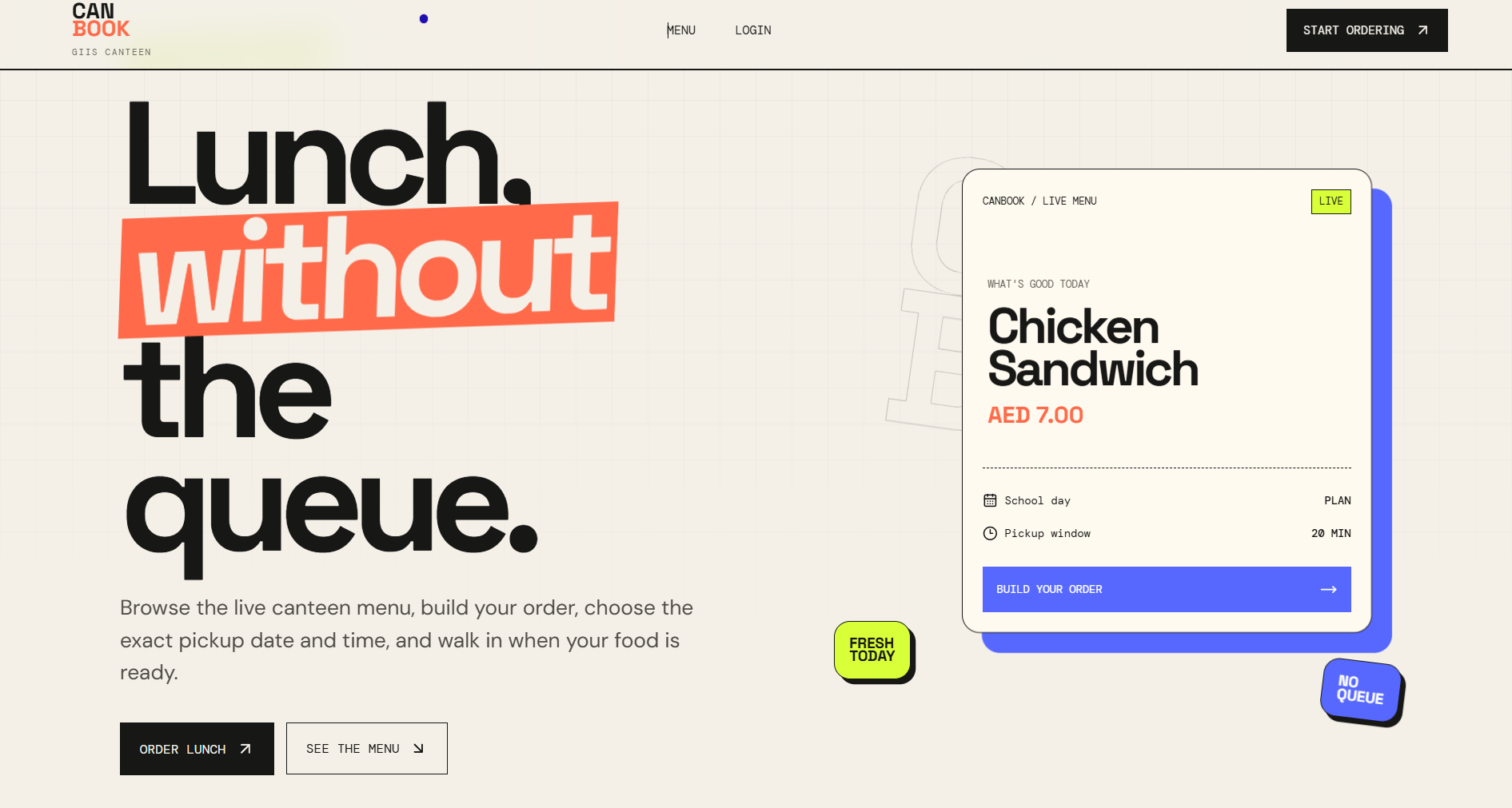
Canbook is a school canteen pre-ordering and demand management system.
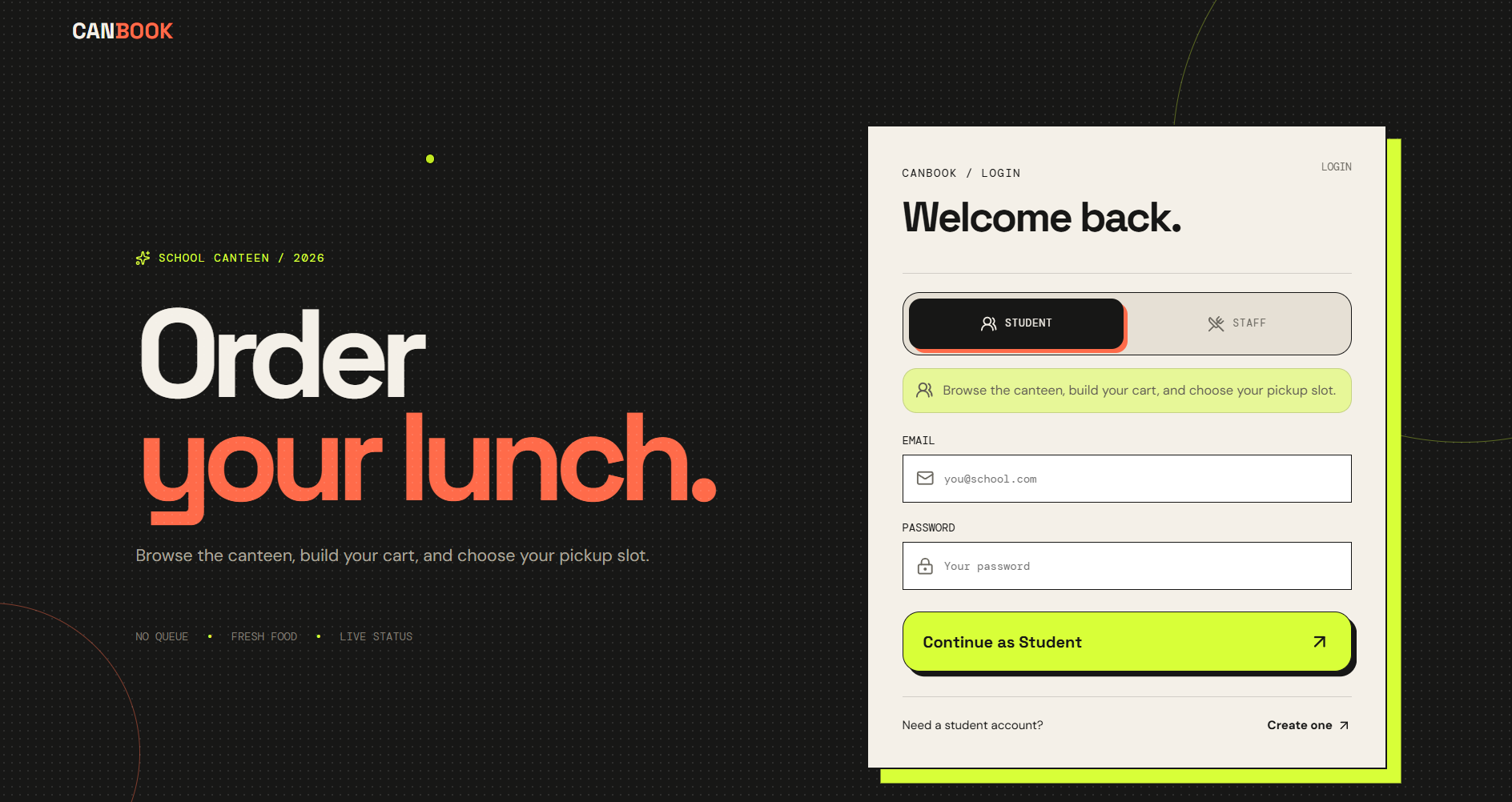
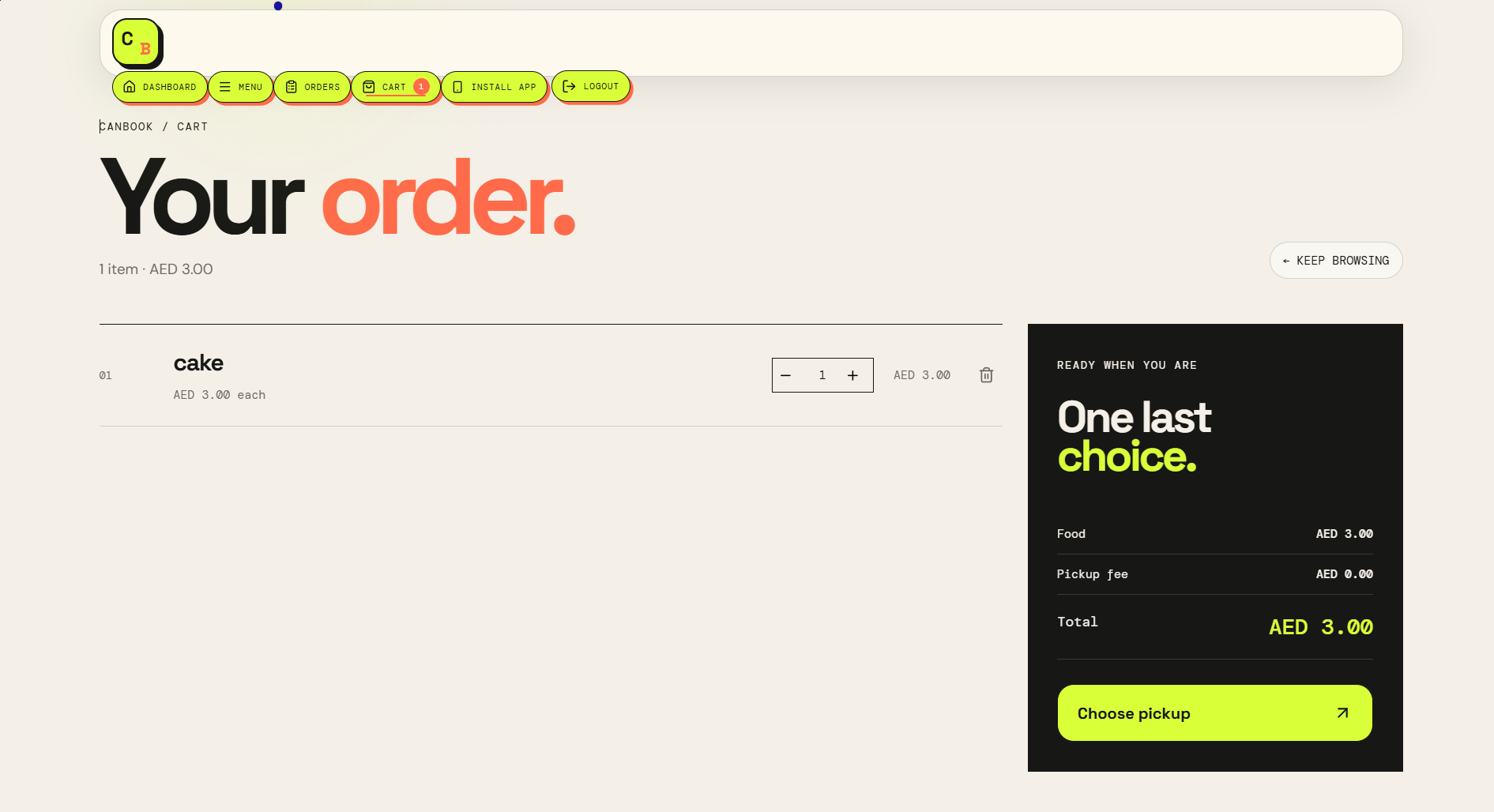
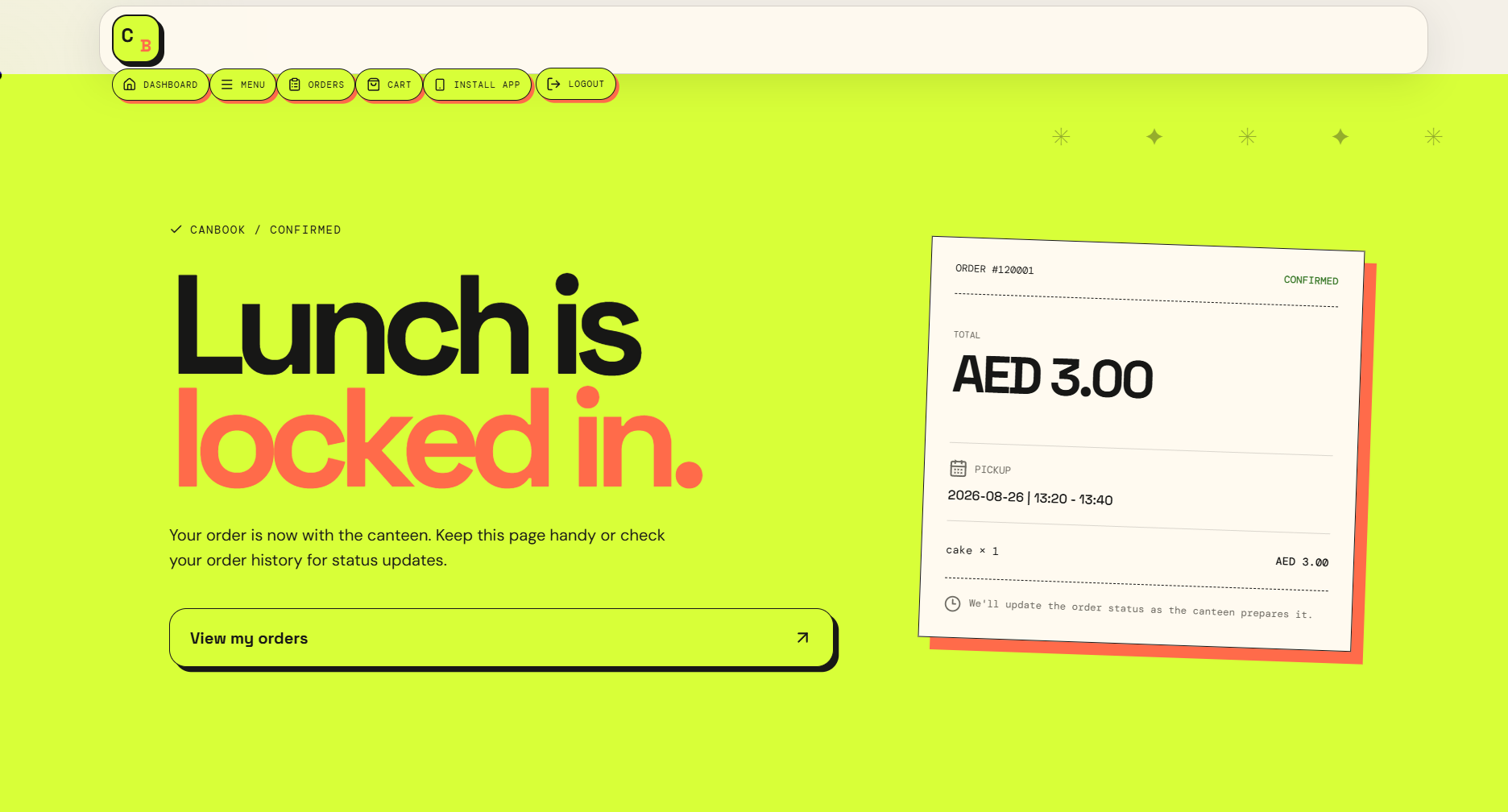
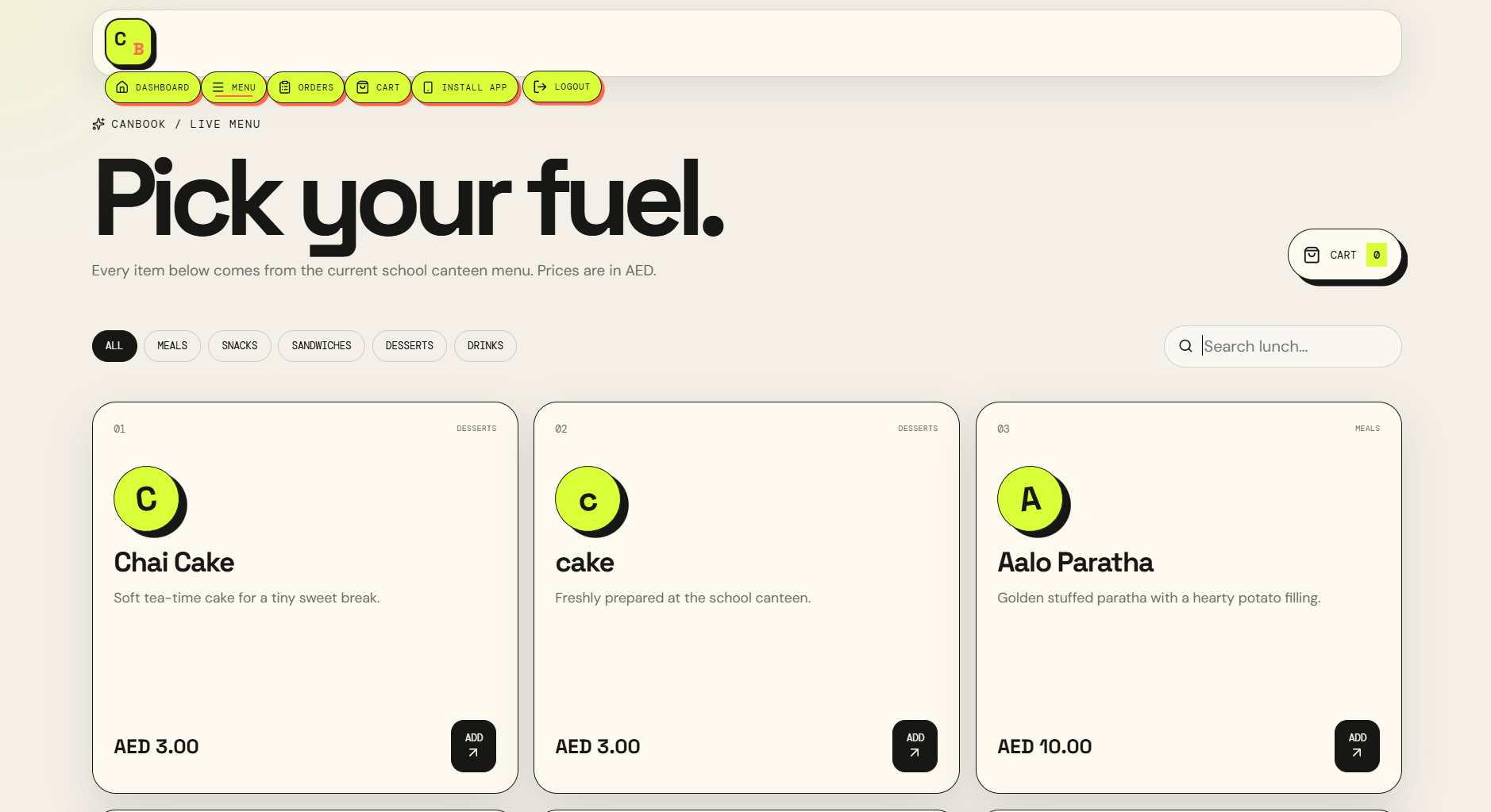
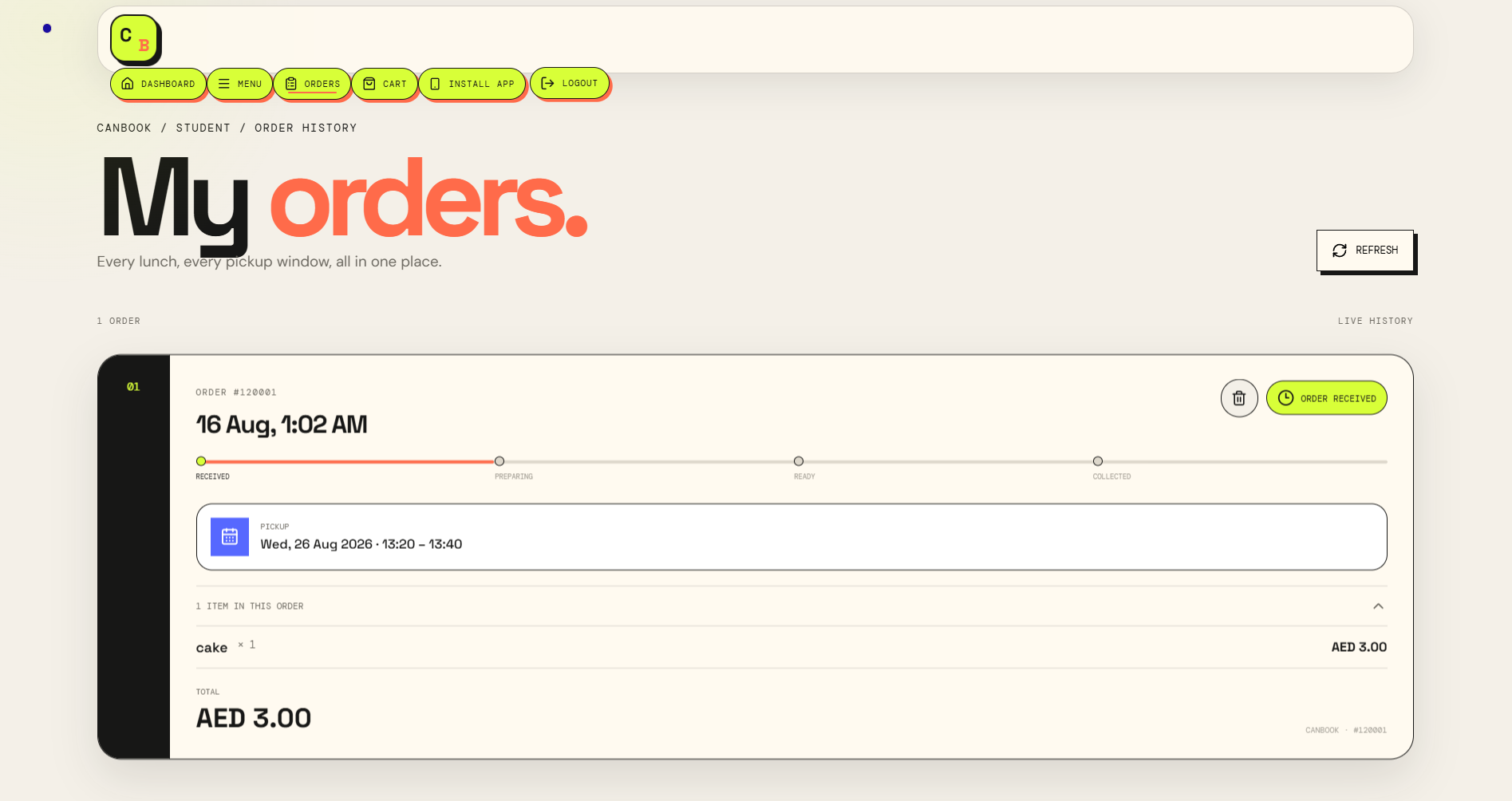
Students can browse available food, place their orders in advance, and collect them without spending their entire break waiting in a queue.
For canteen staff, Canbook turns those orders into useful demand information. Instead of relying entirely on guesswork, they can see what students have ordered and plan preparation accordingly.
The goal isn't simply to make ordering digital. It is to connect student convenience with better canteen planning.
What Inspired Us
The idea came from a problem that is easy to overlook because it happens every day: the school canteen queue.
We realized that a few minutes lost during every break can add up, while the canteen is simultaneously trying to predict demand with limited information. That made us think about whether the same system that helps students order faster could also help the canteen make better decisions.
That became the foundation for Canbook.
How We Built It
We designed Canbook as a web-based system with separate functionality for students and canteen management.
The project uses a database to store information such as menu items and orders, allowing the system to process orders and turn them into useful demand information.
We focused on making the interface straightforward enough for students to use quickly while still providing the canteen with the information needed to manage incoming orders.
Challenges
One of the biggest challenges was designing a system that solves more than just the visible problem of long queues.
A pre-ordering system can move the queue online without actually improving the canteen's operations. We therefore had to think about the canteen's perspective as well: how orders are organized, how demand can be understood, and how the system could help staff prepare more effectively.
Another challenge was balancing functionality with simplicity. Since students would use the system during short breaks, the ordering process needed to be quick and intuitive rather than overloaded with unnecessary features.
What We Learned
Building Canbook taught us that solving a real-world problem is not just about writing code. It requires understanding the people who will use the system, identifying the underlying problem, and designing technology around that problem.
We also learned how a database-backed application can turn individual user actions—in this case, food orders—into information that can support better decisions.
What's Next
Canbook is designed as a foundation that could be expanded beyond basic pre-ordering. Future versions could include stronger demand forecasting, analytics for canteen staff, order-status tracking, and integration with school payment systems.
Ultimately, we want Canbook to make the school canteen experience faster for students, more predictable for staff, and less wasteful overall.


Log in or sign up for Devpost to join the conversation.