-
-
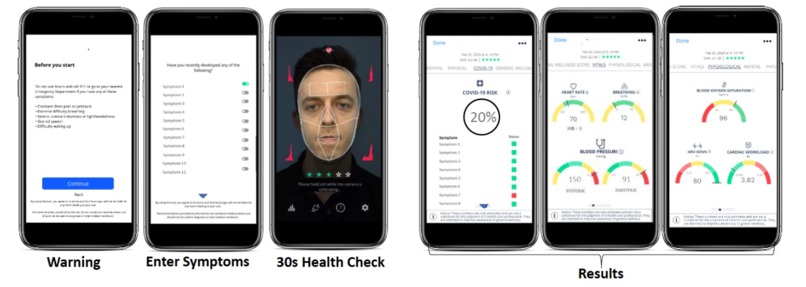
Canary Anura app
Inspiration I was speaking to a friend of mine, who works for the National health service as part of their 111 triage helplines one evening. She mentioned that one of the biggest problems they were having was the absence of real-time key vitals and physiological biometrics like heart rate variability, body temperature, oxygen saturation, respiration rate etc. this also includes qualitative such as the emotional state. This was leading to bad decisions on their part regarding the risk score of each person calling in and so often times many high-risk people were falling through the cracks. Those who were isolating or in quarantine were also not getting the medical service they needed. She also mentioned that primary care staff were scared to make contact with individuals coming into surgeries so were misdiagnosing the severity of the infection. Hidden symptoms were also being missed out on because the wrong questions were being asked. They needed a non-contact system that would enable them to correctly determine the risk score based on the person's vital signs.
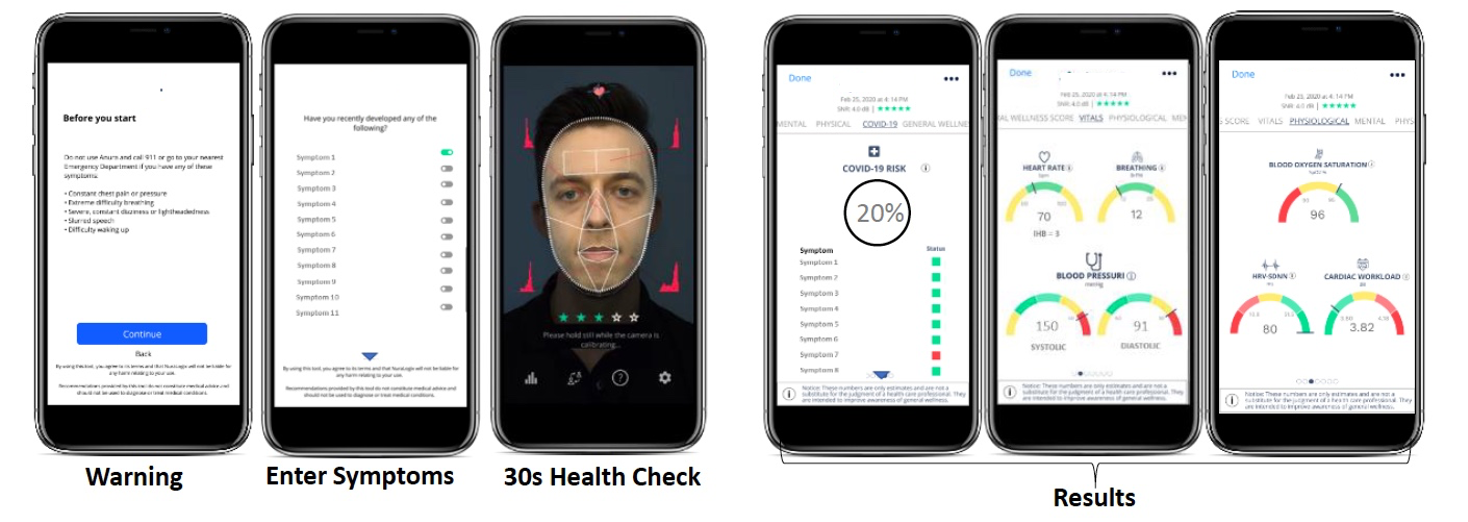
What it does The Canary Anura system is a video-based triage system that uses an approach called Transdermal optical imaging to measure blood flow in certain areas of the face in real-time using a smartphone or laptop camera. The system measures the following parameters using machine learning models
▪ Heart rate variability ▪ Irregular Heartbeat ▪ Respiratory Rate ▪ Mental Stress ▪ Blood Pressure* ▪ BMI ▪ Cardiovascular Workload ▪ Vascular Capacity ▪ CVD Risk ▪ Stroke Risk ▪ Heart Attack Risk ▪ Emotions The values are scored against the level of risk. The individual data points or metadata can be viewed as well. This information is transmitted in real-time with the user and the assessor. The doctor on the other end can asses the user in real-time via a video conferencing call seeing their scores during the discussion. In case the triage is not real-time, the user can be prompted to download our Android or IOS app, where he takes a selfie video sand receives his score promptly. This information can be sent directly to the individual's electronic health record database or clinician. The chatbot is then evoked to ask more qualitative triage questions that are also added to the report. The triage can be done as many times as needed on remote and virtually. Our algorithms create risk scores using this data which can also be used as an input for those who are self-assessing for symptoms. If they are in the red, then they are advised to seek medical health immediately. This feature will also increase the effectiveness of resource planning for front line workers and decrease the need for contact.
Our AI model has been trained on real COVID 19 patient data from Wuhan. Assessments are based on symptoms + measurement of key vitals and physiological biometrics with >90% Prediction Accuracy.
We will be adding a passive dynamic monitoring wearable device (like a Fitbit form factor: smart band) to our platform that measures the key vitals including body temperature. It will be in the 30 euros price point as we want the system to be accessible to everyone, especially those in care homes and low-income communities as they have been hot most badly. This will become a dynamic input into our triage system. In addition to COVID related symptoms, we will also measure other conditions and detect falls. Our objective is to make each canary sentinel capable of learning the unique bio-metric footprint of each person. Therefore becoming a proactive and predictive hyper-personalised early warning system.


Log in or sign up for Devpost to join the conversation.