-
-
Swap.Share.Sustain
Inspiration
The idea for CampusSwap came from observing how frequently students buy new items every semester—textbooks, lab equipment, and even hostel furniture—while many usable items go to waste. This cycle of overconsumption directly contradicts the principles of sustainable living.
Inspired by Sustainable Development Goal 12 (Responsible Consumption and Production), I wanted to create a solution that promotes a circular economy within the campus itself. The goal was simple: make sharing and reusing easier than buying new.
What it does
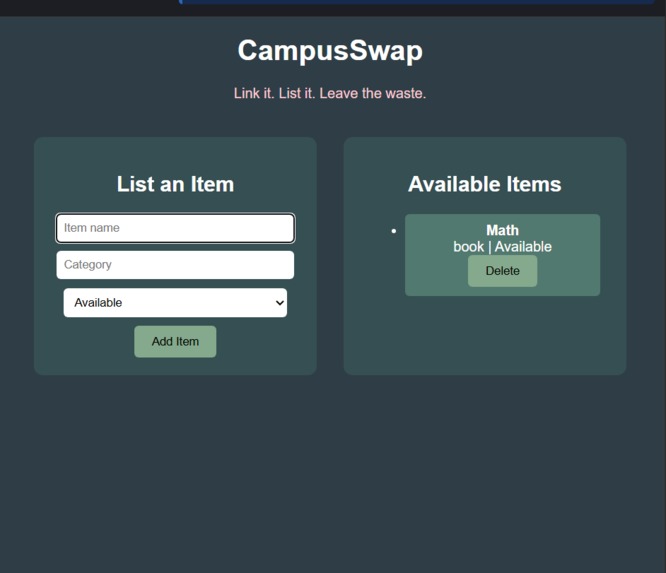
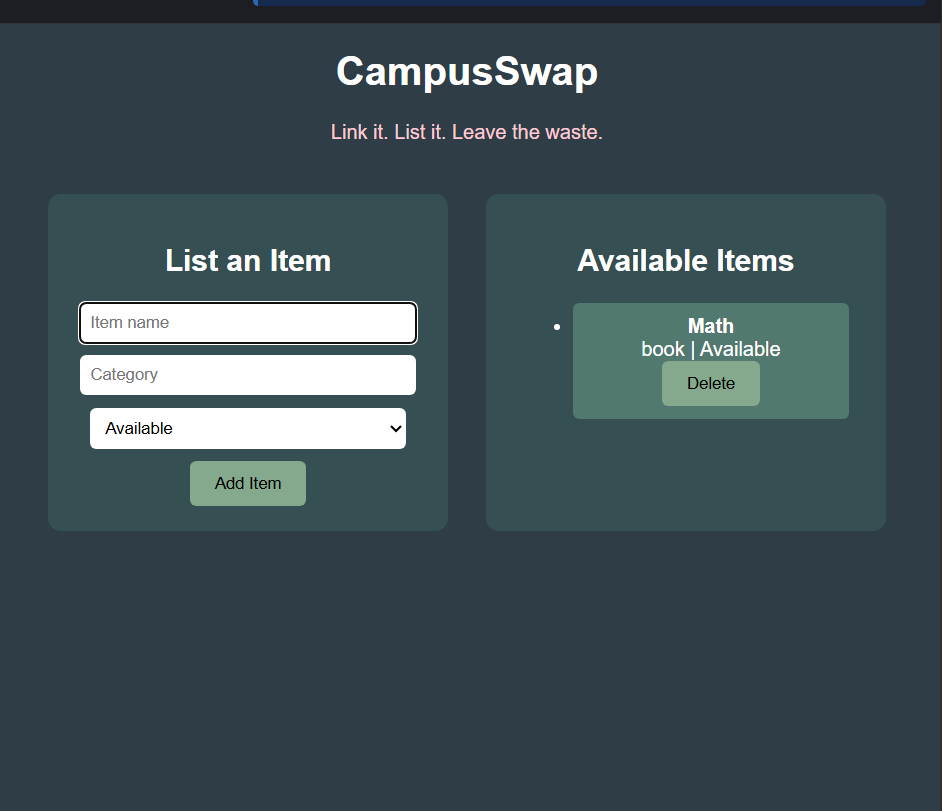
CampusSwap is a campus-exclusive digital marketplace that enables students to exchange, rent, or give away items like textbooks, lab equipment, and furniture. Users can list items with categories and status tags such as "Available", "Reserved", or "Gone".
The platform simplifies peer-to-peer sharing, making it easier for students to reuse resources instead of buying new ones, promoting a culture of sustainability on campus.
How we built it
We built CampusSwap using a simple and efficient full-stack approach:
- Frontend: HTML, CSS, JavaScript for a clean and user-friendly interface
- Backend & Database: Firebase for real-time data storage and updates
The application allows users to post listings, browse items, and see live availability updates. The focus was on minimal design and ease of use to encourage adoption among students.
Challenges we ran into
One major challenge was designing a system that remains simple while still being functional and scalable.
Handling real-time updates for item availability without overcomplicating the backend was another hurdle. Additionally, we had to think carefully about user behavior—ensuring the platform feels intuitive enough for students to actually use regularly.
Accomplishments that we're proud of
- Successfully built a working prototype that demonstrates real-world usability
- Created a platform aligned with Sustainable Development Goal 12
- Designed a clean and accessible interface for quick adoption
- Transformed a common campus problem into a practical digital solution
What we learned
- How to integrate frontend with real-time databases like Firebase/Supabase
- The importance of user-centric design in building impactful products
- How technology can directly contribute to sustainability
- Breaking down a real-world problem into a scalable digital solution
What's next for Campuswap
- Add user authentication and profiles
- Introduce a rating/review system for trust and safety
- Build a mobile-friendly or app-based version
- Enable in-app chat between users
- Expand to multiple campuses for a larger impact
