Inspiration
As a UCI student, I see campus buildings shift between crowded, half-used, and empty throughout the day. Energy systems often do not adapt that quickly. CampusPulse explores how student builders can use Python, sensor-style data, and a clear dashboard to help universities spot preventable energy waste.
What it does
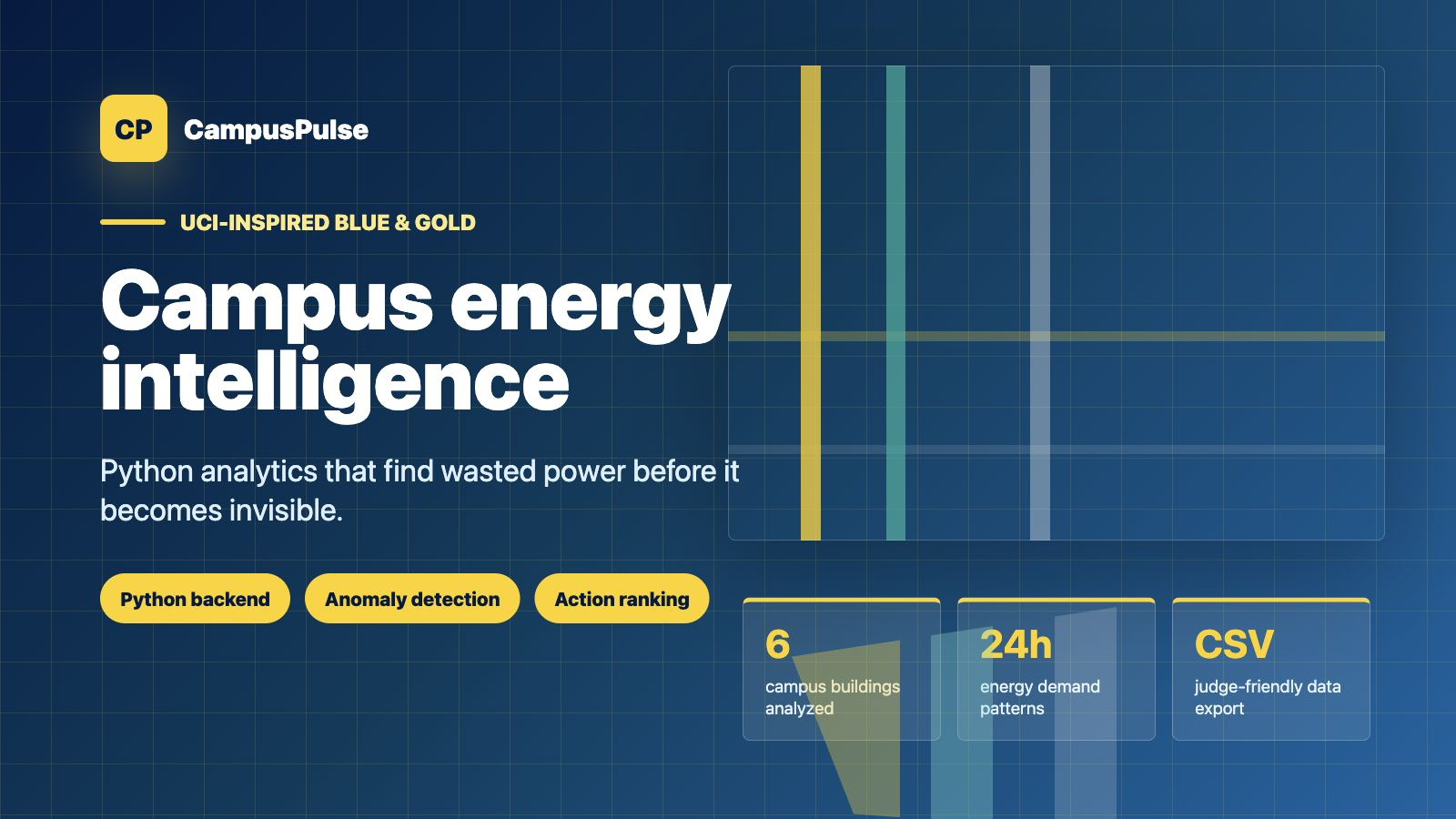
CampusPulse analyzes simulated campus occupancy and energy readings across six university buildings. It detects abnormal energy spikes, ranks inefficient building periods, estimates potential kWh and emissions savings, and recommends operational actions such as tuning HVAC schedules during low-use periods.
How we built it
The project uses a Python standard-library backend in app.py to generate the dataset, calculate trends, detect anomalies, estimate savings, and serve API endpoints. The dashboard is built with HTML, CSS, and JavaScript so judges can open and use it immediately without installing packages.
How Python is used
Python powers the core product logic: synthetic campus sensor data generation, hourly aggregation, building comparisons, anomaly detection using z-score and energy-per-person intensity, recommendation ranking by avoidable kWh, and JSON/CSV API serving.
Challenges we ran into
The main challenge was making the project feel like a real product while keeping it easy for judges to run. I chose a dependency-free Python backend so the submission remains reliable, transparent, and easy to inspect.
Accomplishments that we're proud of
CampusPulse turns raw readings into a useful product flow: summary metrics, building comparisons, anomaly explanations, downloadable data, and action recommendations. The result is both technically explainable and easy for a non-technical campus sustainability team to understand.
What we learned
I learned how much product clarity matters in data tools. A model or chart is only useful if the user can immediately see what changed, why it matters, and what action to take next.
What's next for CampusPulse
CampusPulse could connect to real IoT meters, room booking data, weather APIs, or campus facilities dashboards. It could also support student sustainability challenges where teams measure the impact of behavior and scheduling changes over time.
Built With
- css
- csv
- html
- http.server
- javascript
- python
- python-standard-library

Log in or sign up for Devpost to join the conversation.