Inspiration
Let's be honest: the inspiration for CampusPilot AI came from pure, unadulterated panic. As engineering students under the RGPV curriculum, we know the drill. It’s 72 hours before the mid-semester exam, the WhatsApp groups are flooded with blurry PDFs of handwritten notes, nobody actually knows what the current syllabus is, and the math looks terrifying. We realized that mathematically, our situation always looked like this:$Stress = \lim_{t \to 0} \left( \frac{\text{Syllabus}}{\text{Time Left}} \right) \rightarrow \infty$We realized students don't need more study materials; there is plenty of that. What we desperately need is an intelligent strategy. We wanted to build something that curates the chaos, tells us exactly what to study when time is running out, and preps us for the scariest part of the semester: the external Viva examiner. We built this to fix our own problems.
What it does
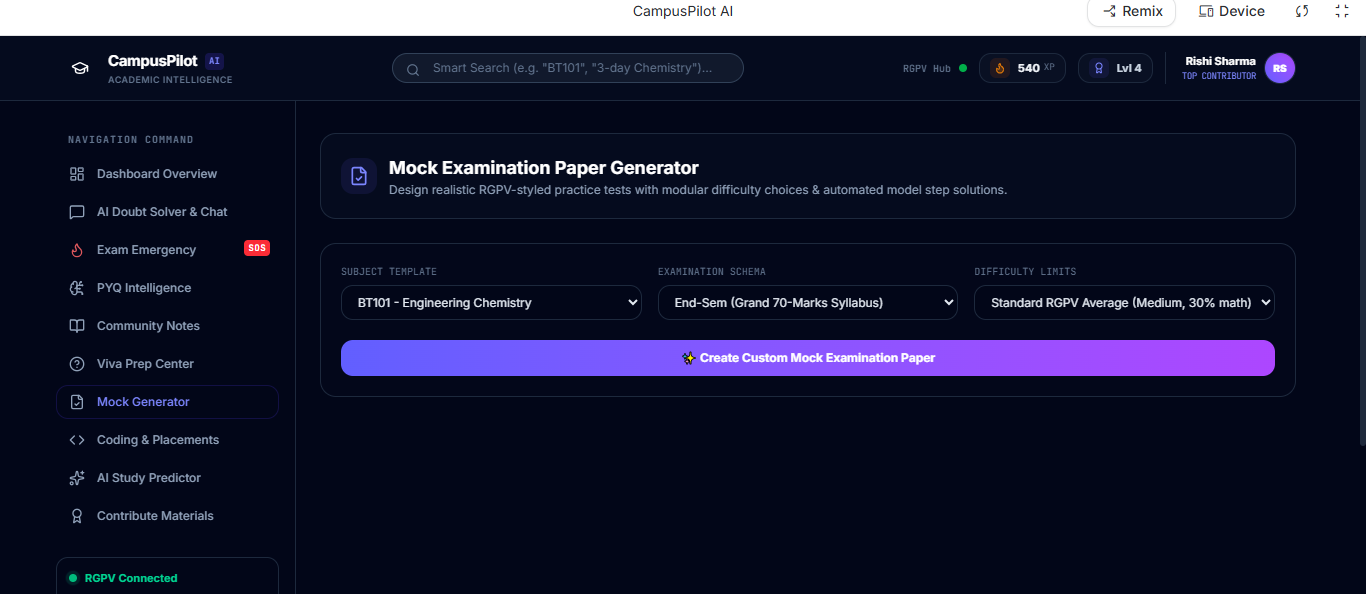
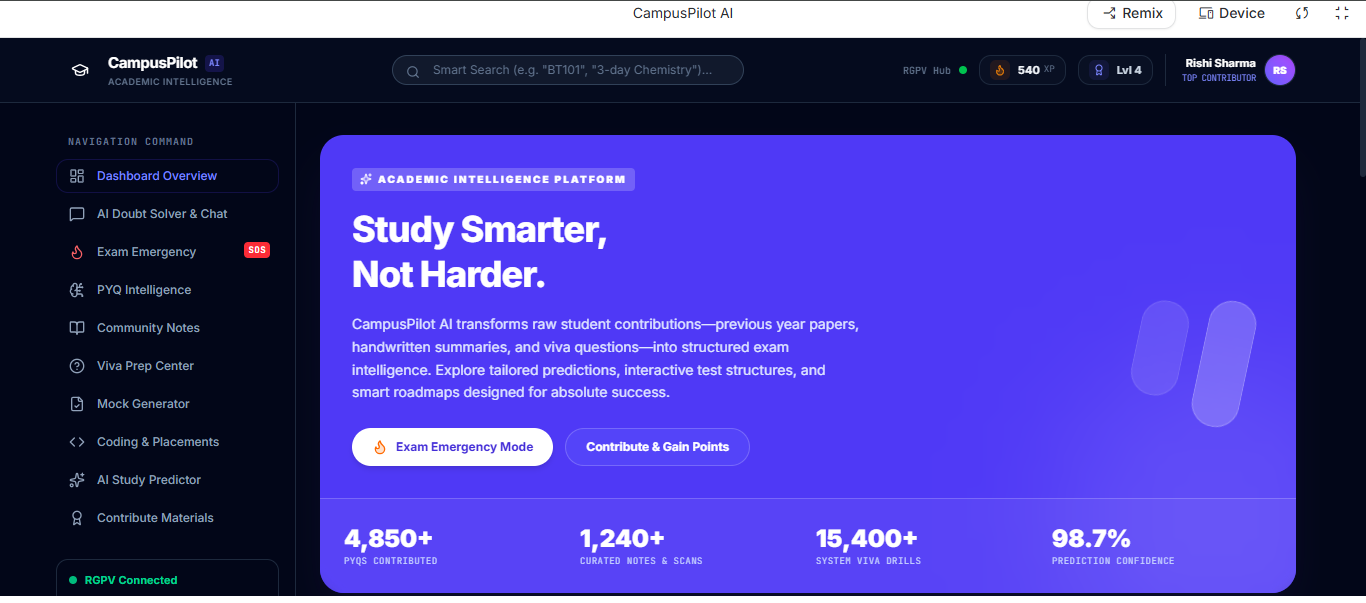
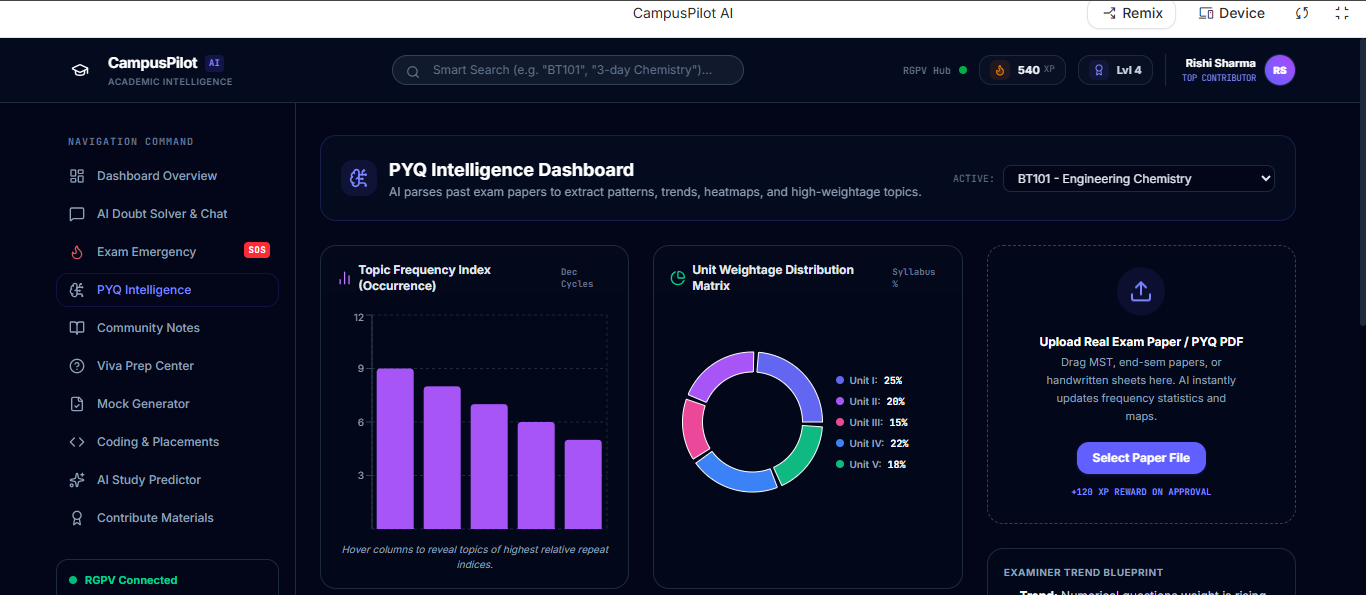
CampusPilot AI is essentially a survival copilot for university academics and placements. It’s split into a few core "Intelligence Suites":
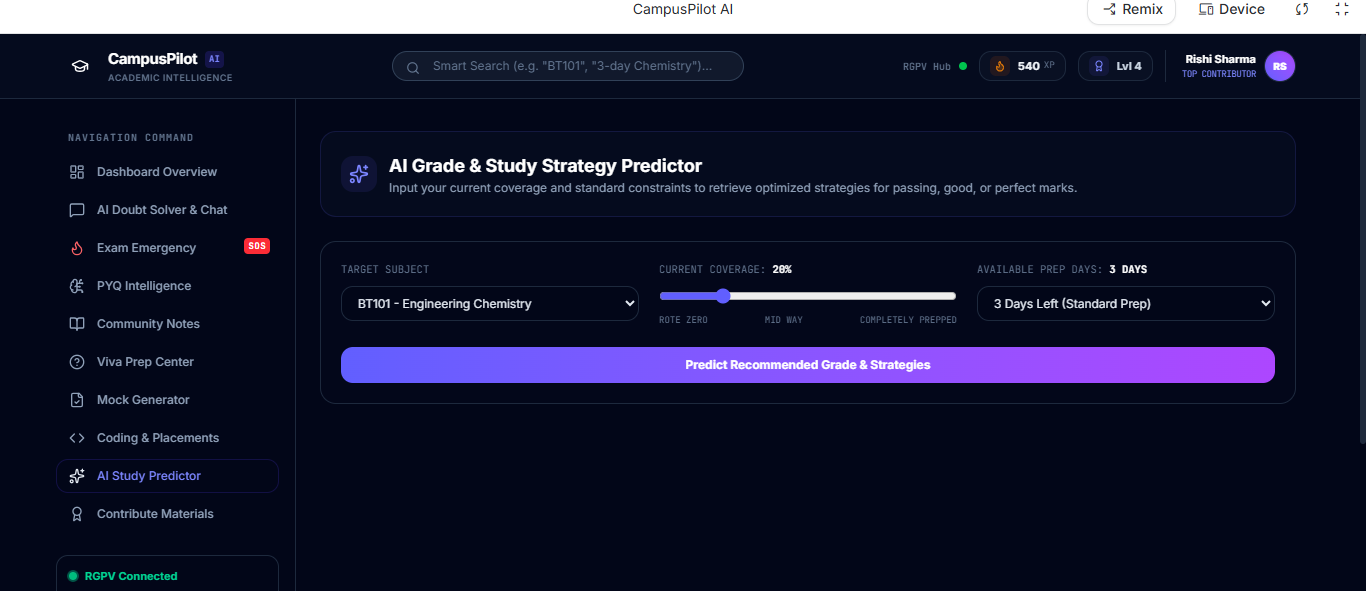
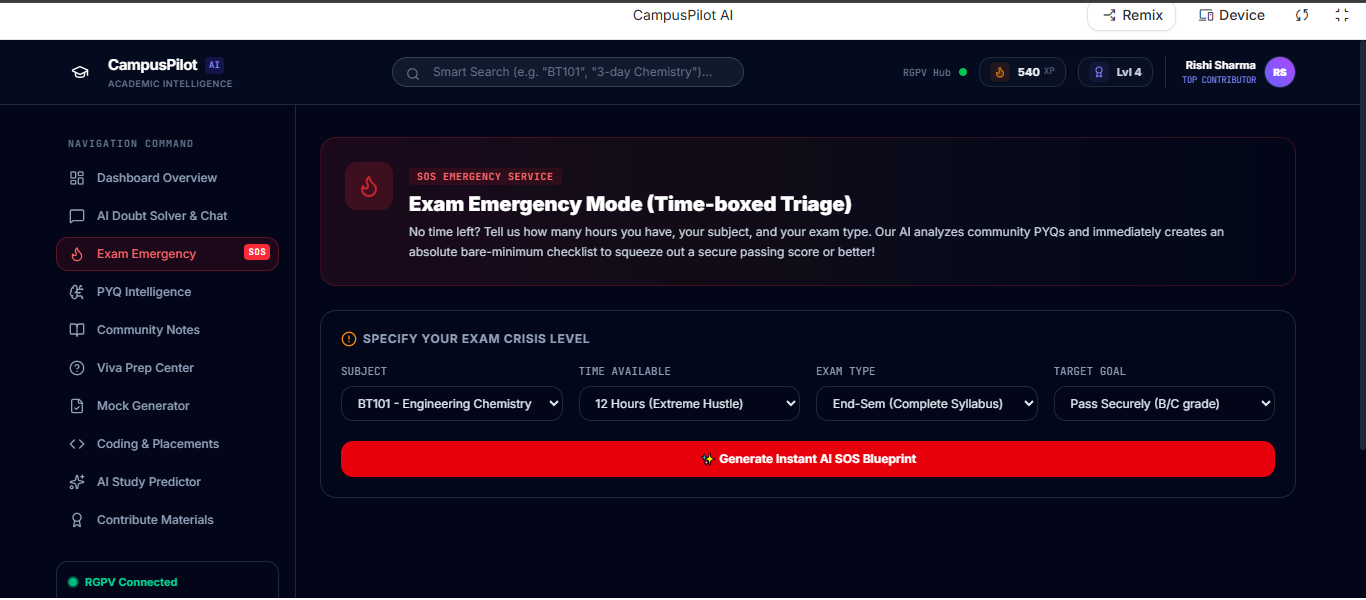
Exam Emergency Mode: You tell it you only have 12 hours left and 0% of the syllabus covered. It doesn't judge you; instead, it triages your syllabus and generates a high-intensity, hour-by-hour roadmap of the highest-weightage topics.
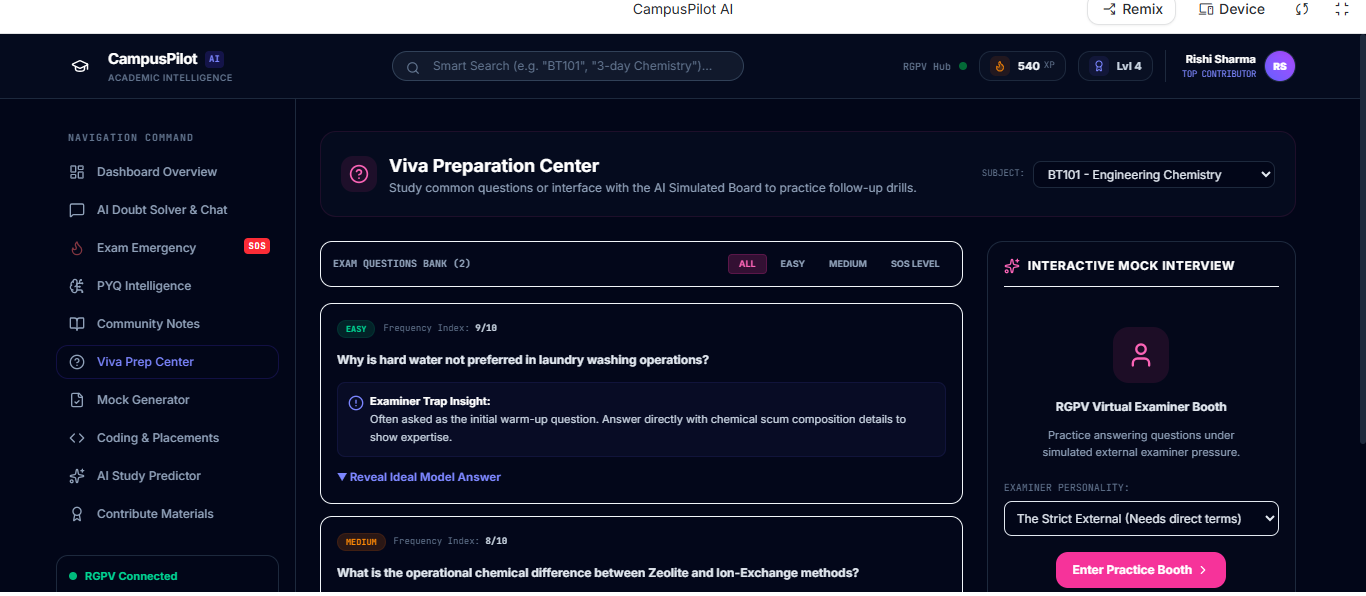
Viva Prep Center: A mock oral exam simulator that acts like a strict professor. It asks you a question, grades your answer out of 10, and dynamically adjusts the difficulty based on your responses.
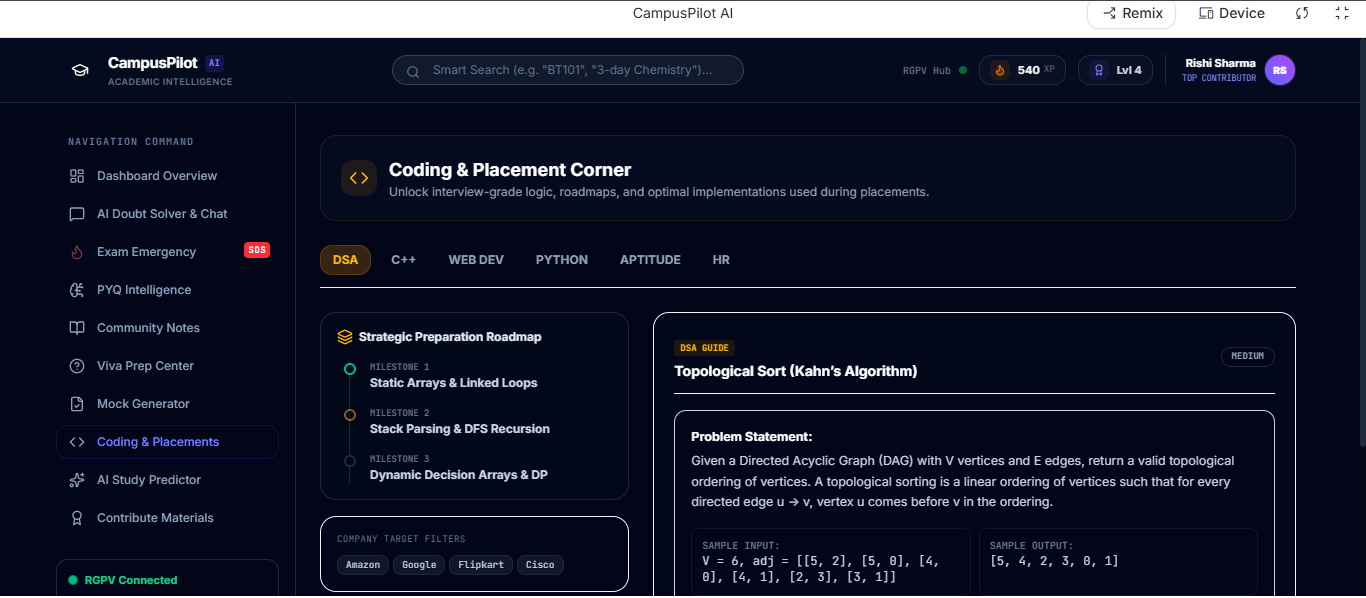
Coding & Placements Corner: A structured roadmap for tech placements, filtering preparation material by target companies like Amazon or Cisco.
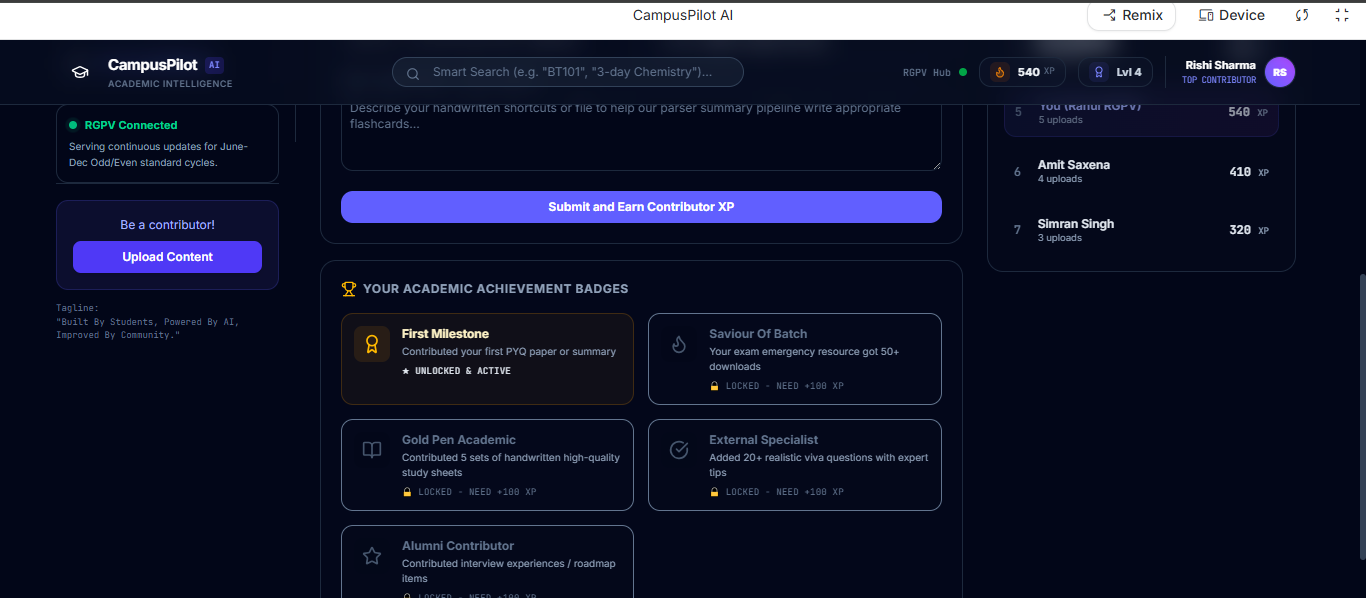
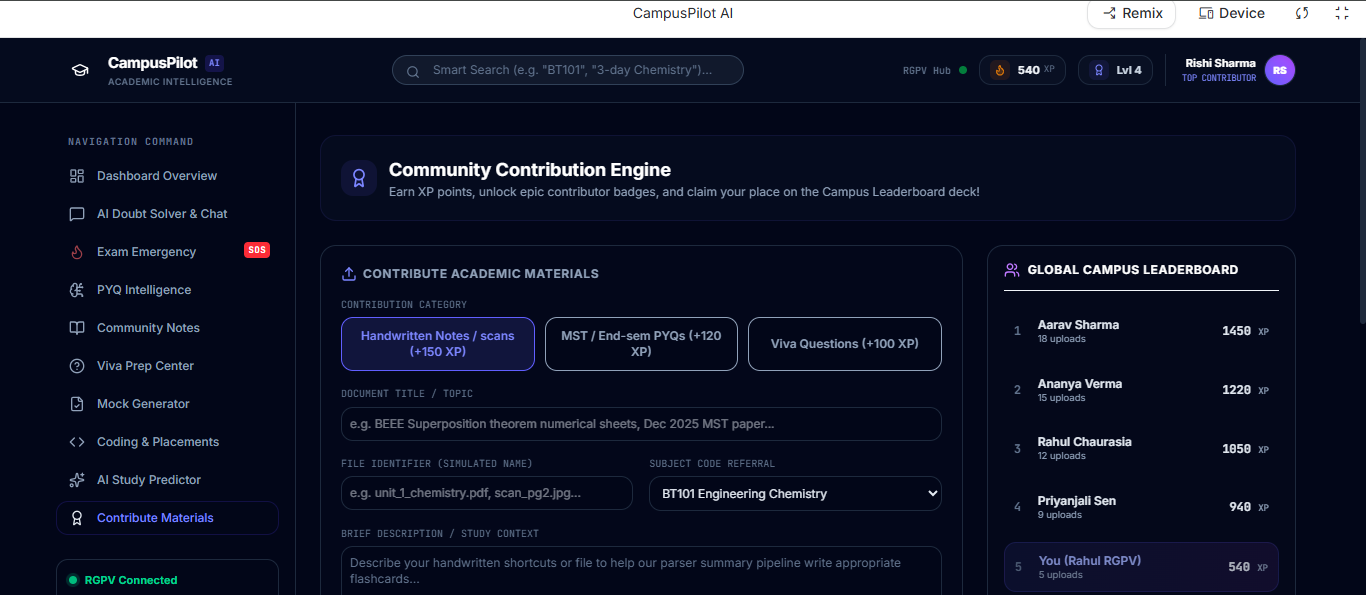
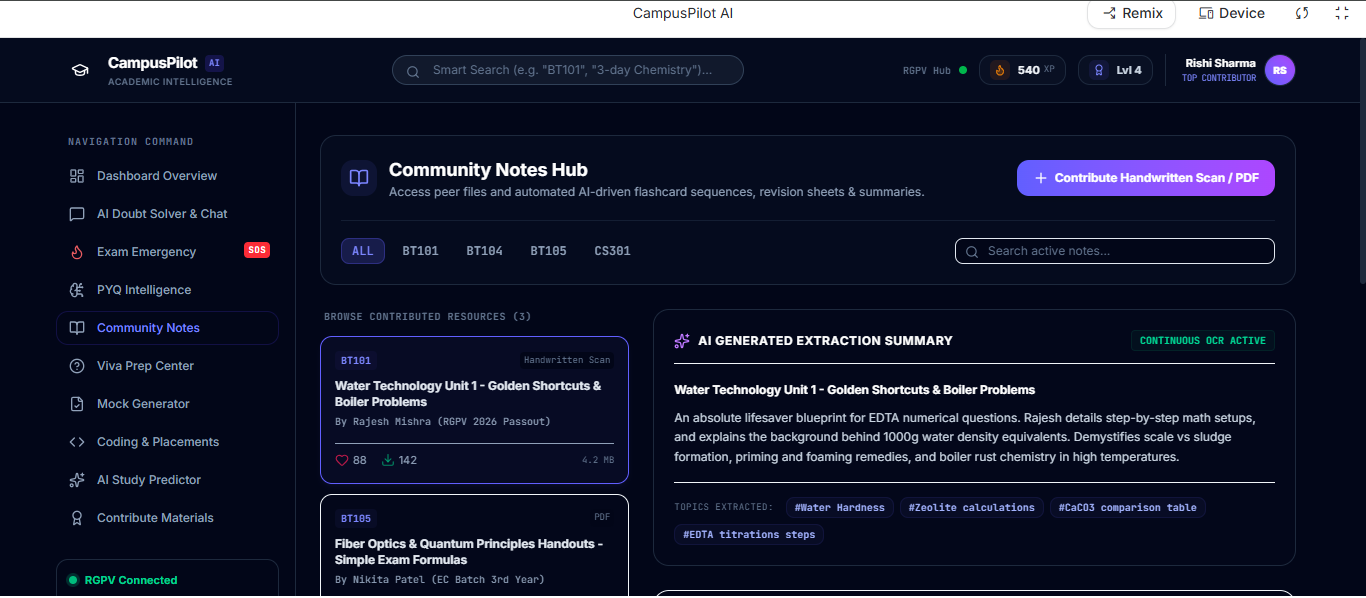
Community Notes Hub: A gamified platform where students upload those blurry handwritten notes, and our system parses them into clean, interactive flashcards, rewarding the uploader with leaderboard XP.
How we built it
We wanted this to be lightning-fast, so we built the frontend using React and Vite, writing everything in TypeScript to catch errors early (because nobody wants a crash during a live demo). For the backend, we used an Express server, bundled down with esbuild into a single, lightweight CommonJS file for incredibly fast cold starts.
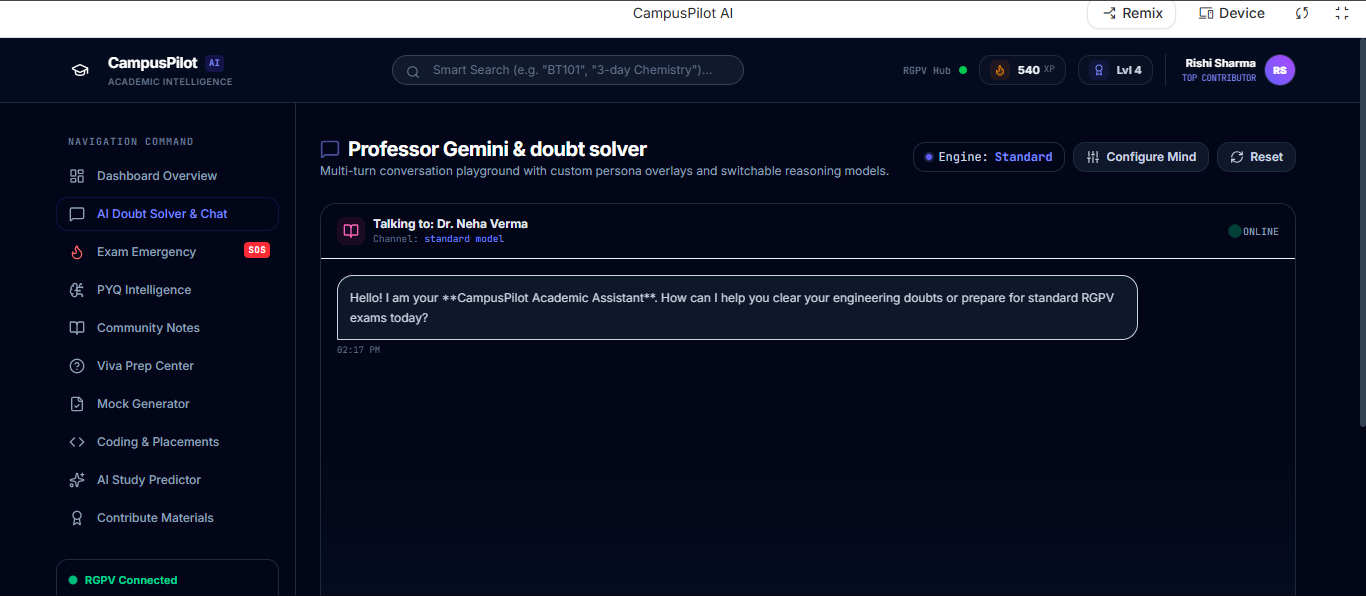
The real magic is the brain. We integrated the server-side Google Gemini SDK, but we didn't just use one model. We dynamically route tasks:
We use Gemini 3.1 Flash-Lite for the Viva chat because it needs sub-second latency to feel like a real conversation.
We use Gemini 3.1 Pro (with High Thinking levels) for complex engineering math routing, forcing the AI to double-check its chain-of-thought before giving an answer.
We plugged in Google Search Grounding so the app can live-check university dates and syllabus changes without hallucinating.
Challenges we ran into
The biggest nightmare was dealing with AI hallucinations. In an academic tool, giving a student the wrong formula or making up a fake algorithm is a massive failure. Getting the model to strictly adhere to university marking rubrics took dozens of iterations of prompt engineering and structured JSON enforcement.
Our second biggest hurdle was the reality of campus life: internet drops and rate limits. If 500 students log in the night before the Chemistry exam, we can't afford for the app to crash if the API maxes out. We had to architect a "Dual-Layer Fallback" mechanism. If the AI connection drops, the app intercepts the error and seamlessly falls back to a local database of standard RGPV patterns so the student isn't left staring at a blank loading screen.
Accomplishments that we're proud of
We are incredibly proud of the "Community Contribution Engine." Getting college students to do extra work (like uploading notes) is notoriously hard. By tying it to a gamified XP system, leaderboard rankings, and achievement badges, we created an actual incentive loop.
Also, the Viva Prep Center is surprisingly intimidating. Getting the AI to mimic the slightly grumpy, unpredictable nature of an external examiner was hilarious and highly satisfying to pull off.
What we learned
We learned that building a basic AI chat wrapper is easy, but building a highly structured, reliable AI engine is incredibly difficult. We learned how to manipulate context windows, how to enforce strict JSON outputs from LLMs, and how crucial it is to use the right model for the right task to balance latency and cost. On the frontend, we leveled up our state management to handle complex, multi-turn AI interactions smoothly.
What's next for CampusPilot AI
First, we want to launch this to our actual batchmates for the upcoming exam cycle to stress-test it in the wild. Long term, we plan to expand the OCR pipeline to handle heavily complex, diagram-heavy PDFs better. We also want to build out the Placements Corner to include voice-based mock HR interviews. We want this to be the default homepage for every engineering student from their first day of classes to their final placement interview.
Built With
- esbuild
- express.js
- gemini-flash
- gemini-pro
- google-gemini
- google-search-grounding
- node.js
- react
- typescript
- vite


Log in or sign up for Devpost to join the conversation.