-
-
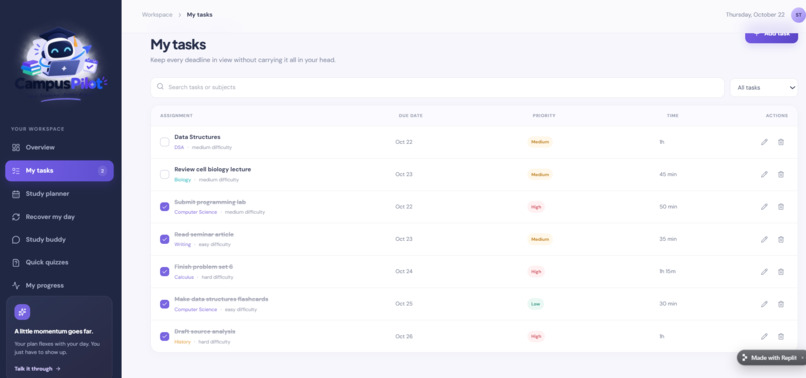
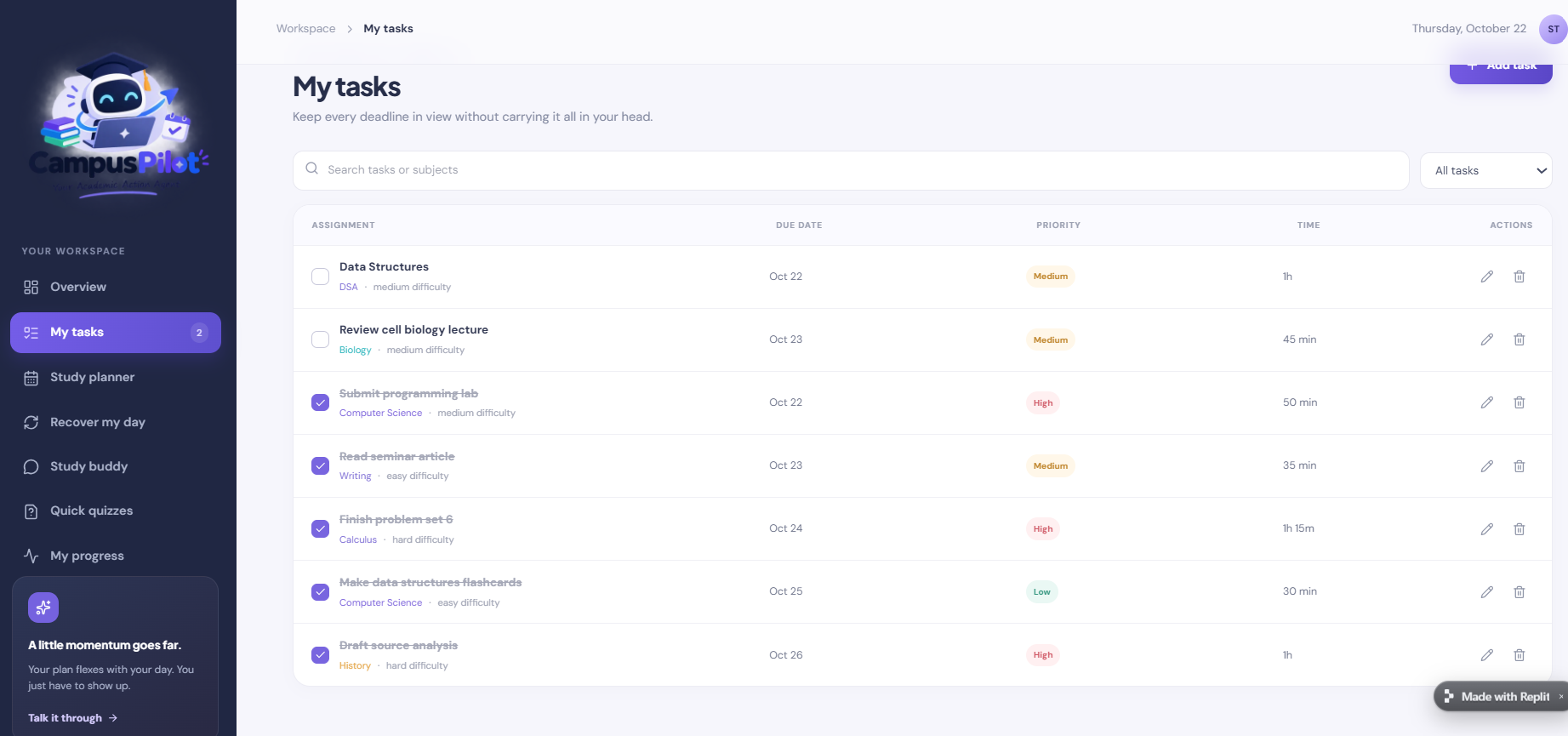
MY TASKS
-
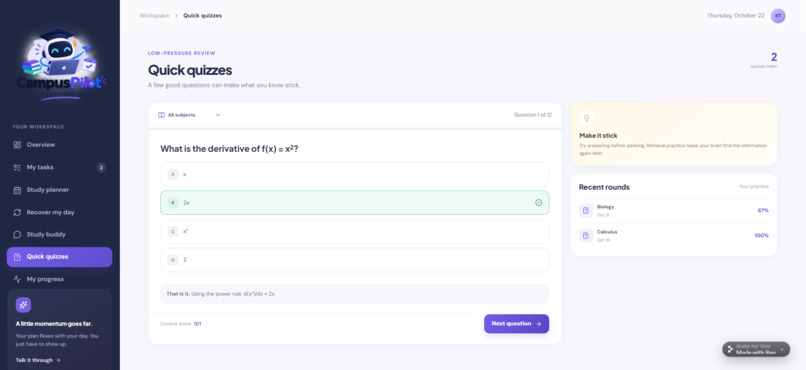
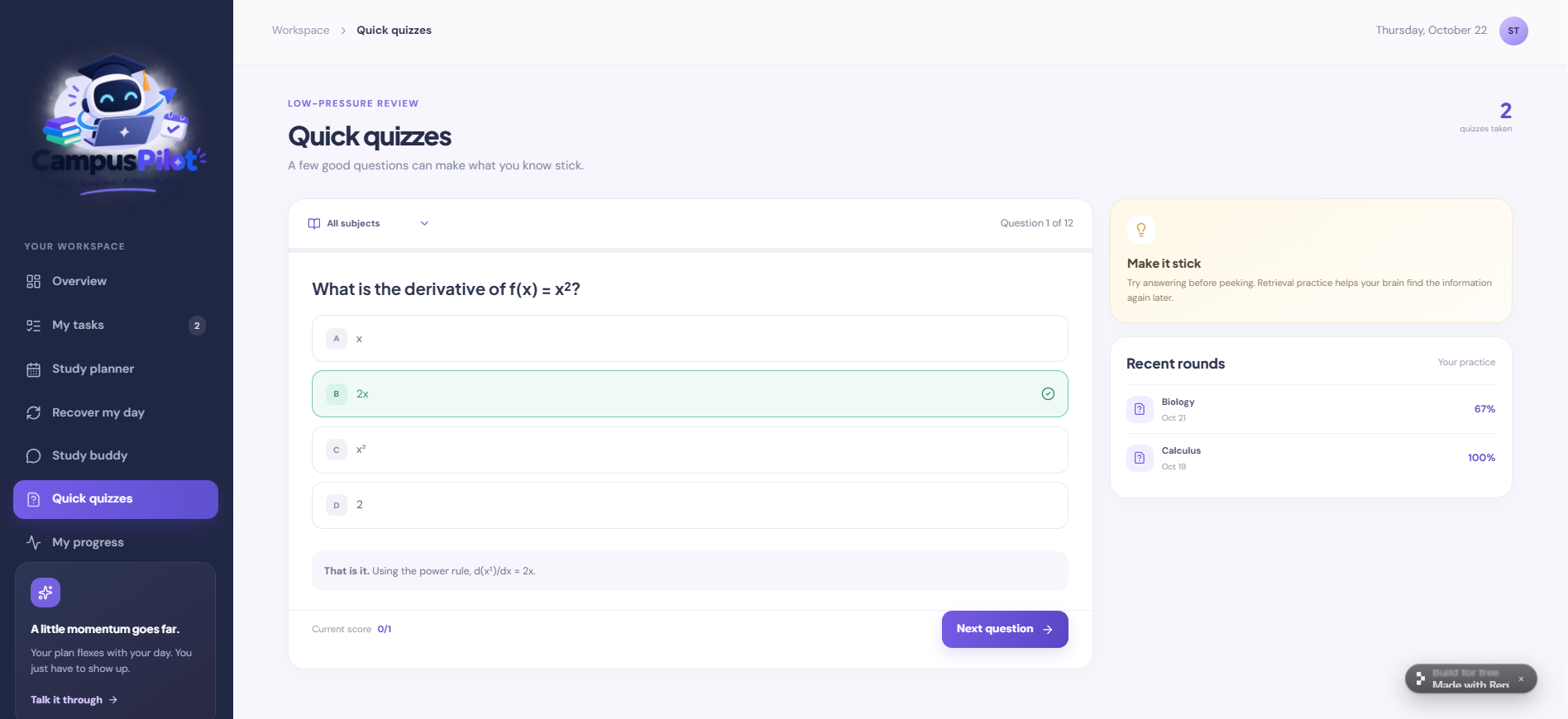
QUICK QUIZZES
-
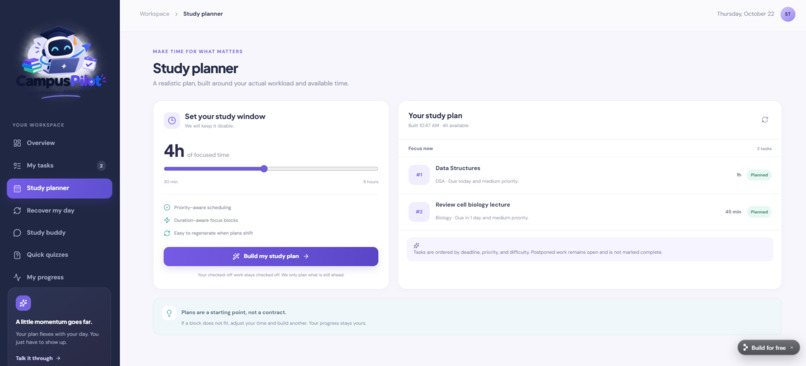
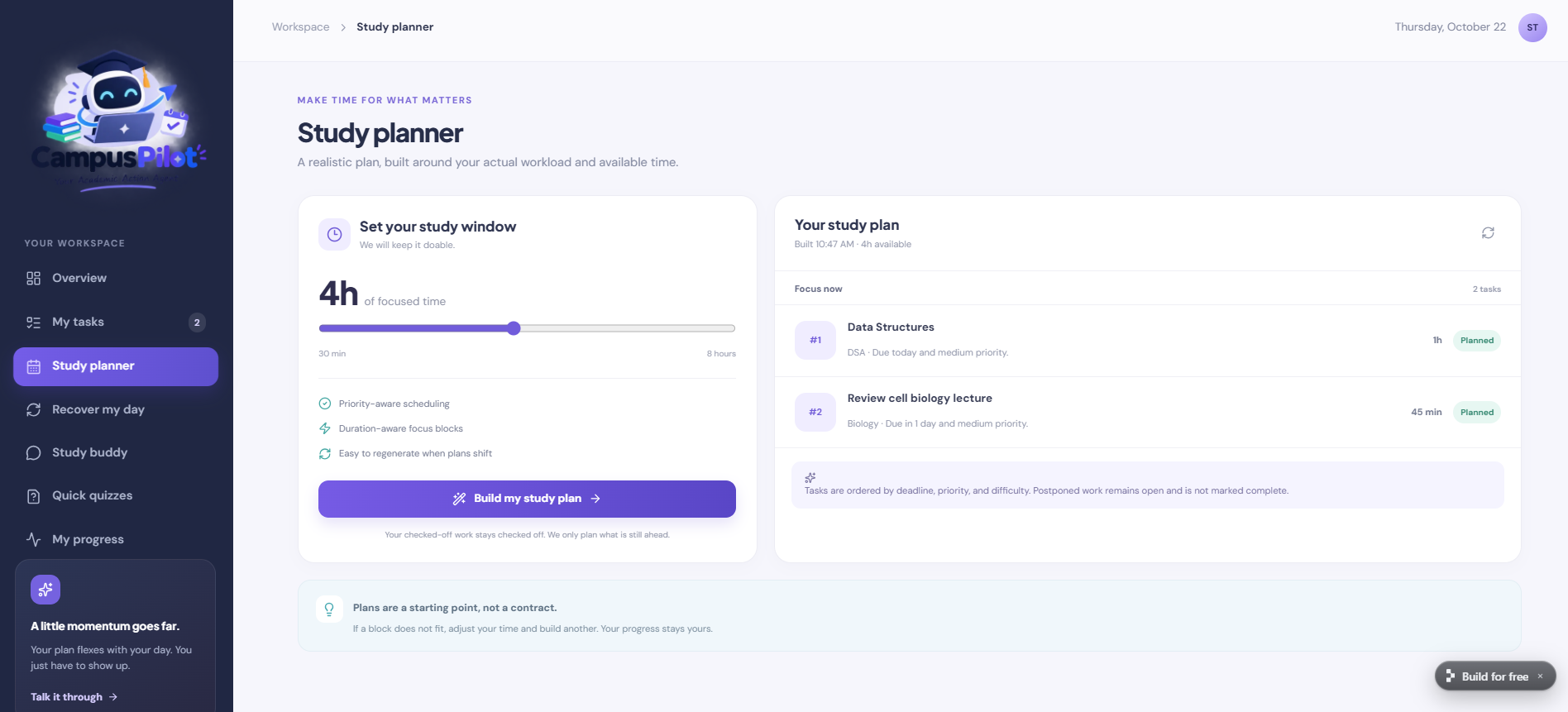
STUDY PLANNER
-
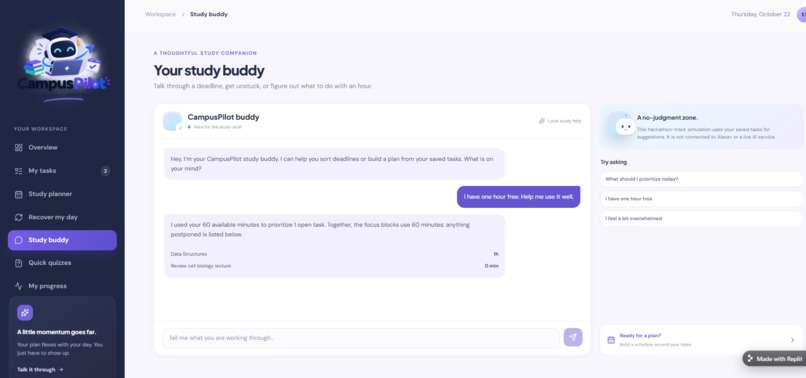
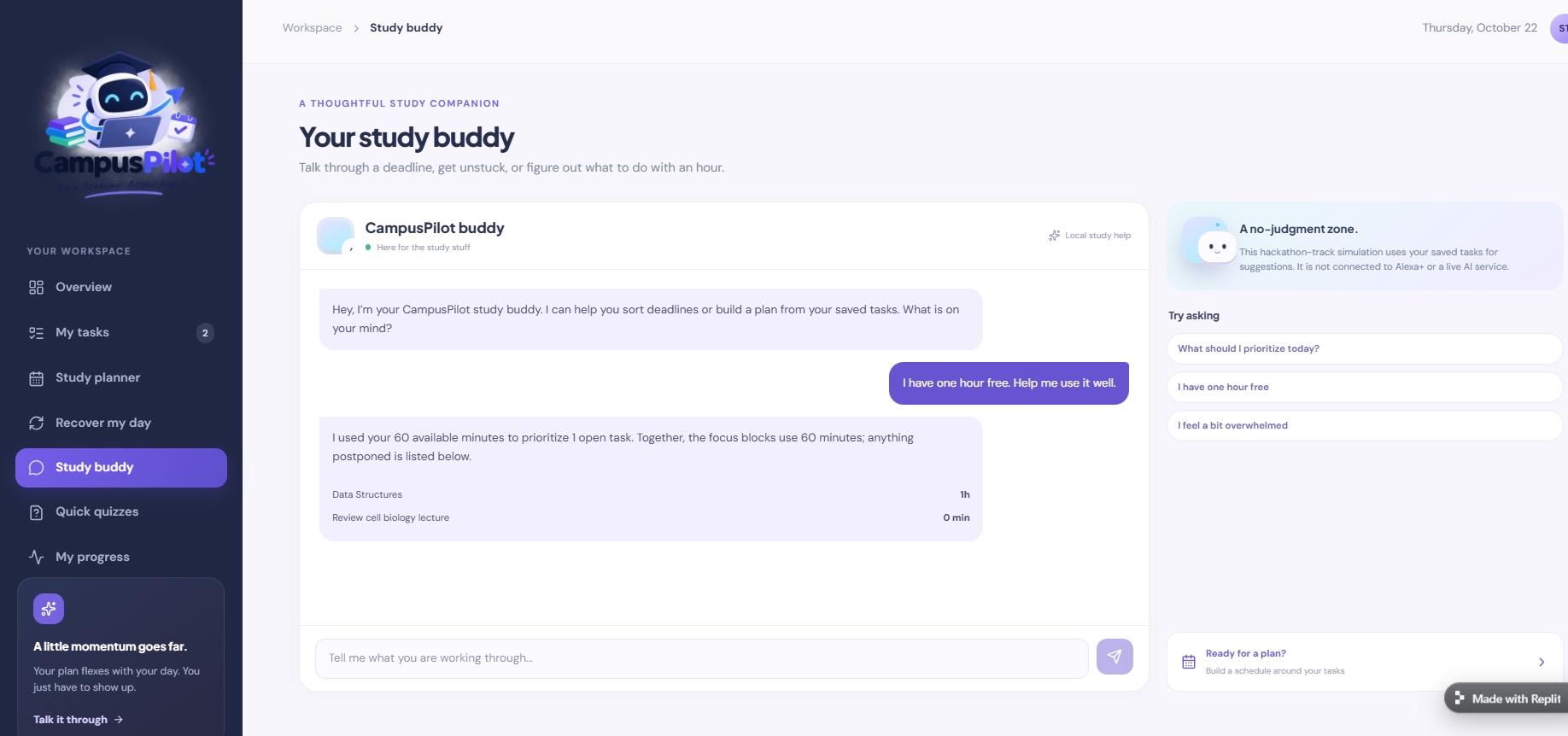
YOUR STUDY BUDDY AI
-
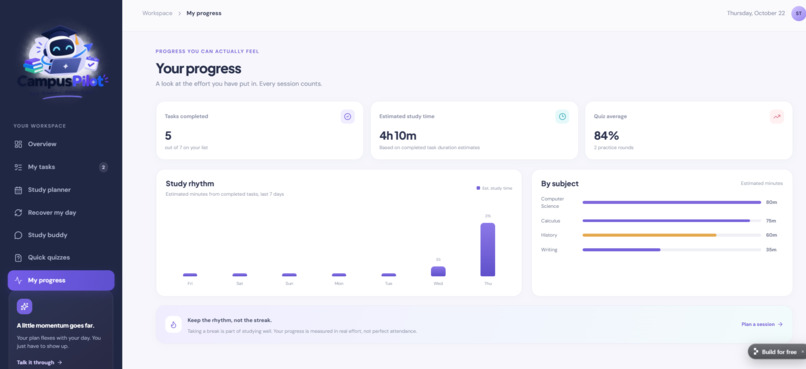
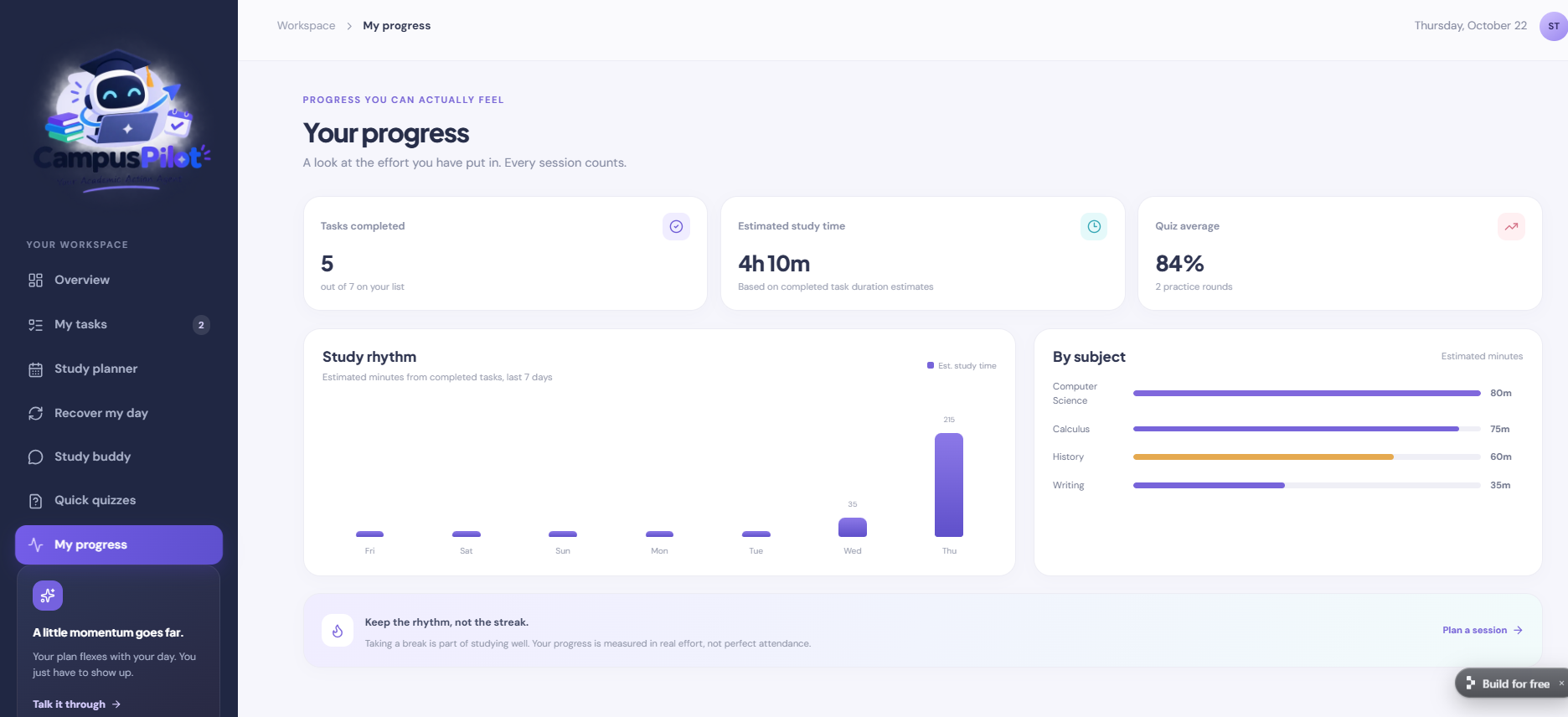
YOUR PROGRESS
-
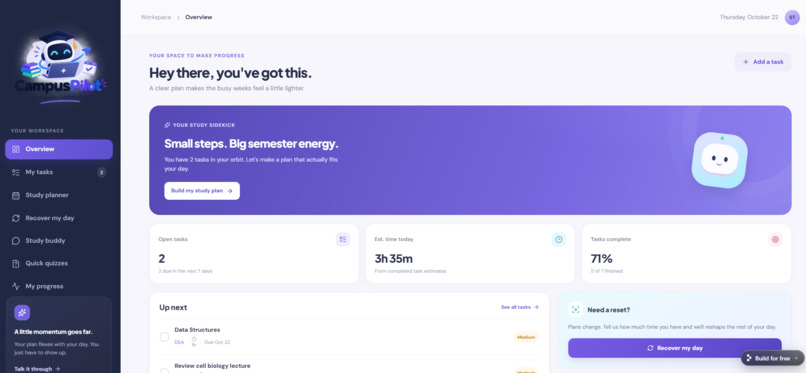
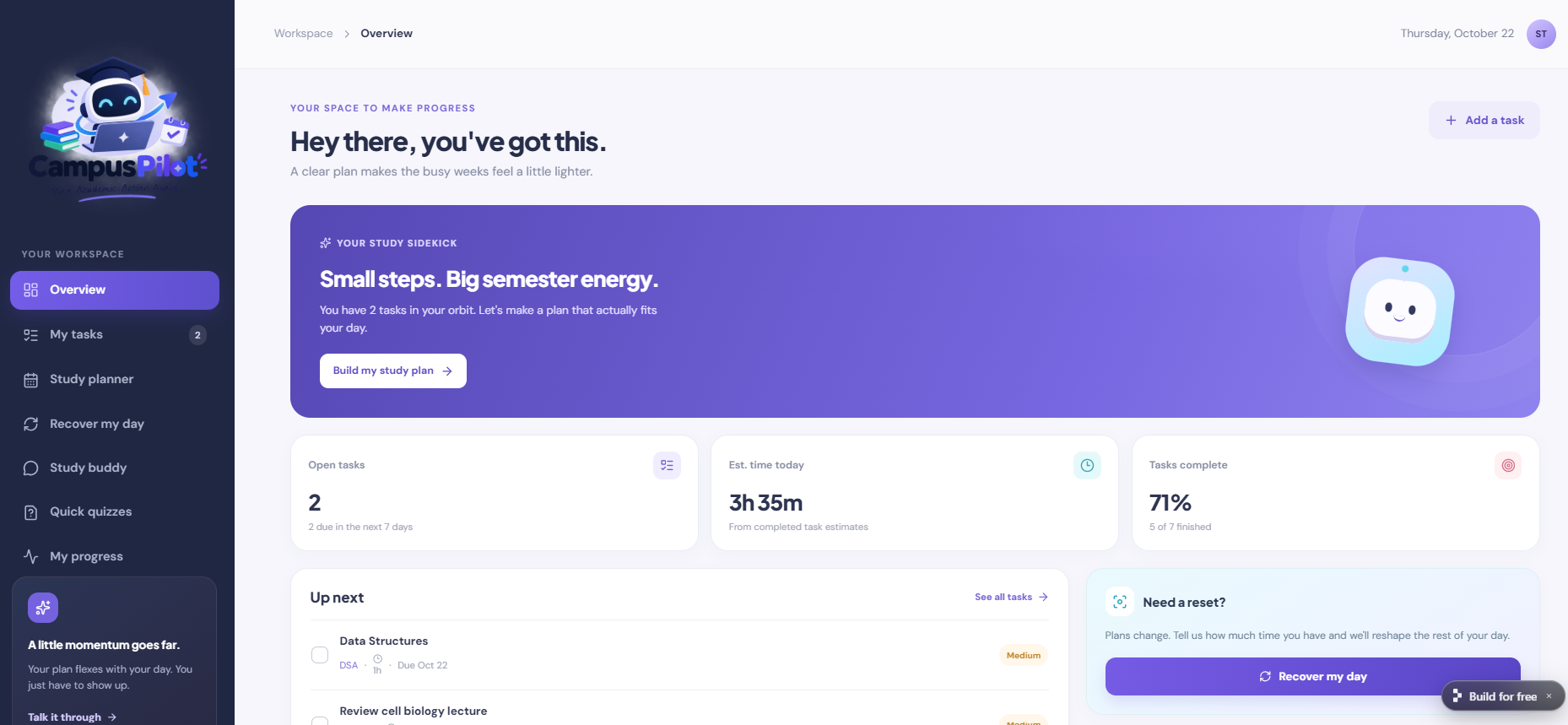
DASHBOARD
Inspiration
About CampusPilot
Inspiration
As a computer science student, I understand how difficult it can be to balance college lectures, assignments, practicals, exams, and personal time. Students often create study timetables with the best intentions, but one missed session or an unexpected deadline can disrupt the entire plan.
The real problem isn't just creating a schedule—it's knowing how to recover when things don't go as planned.
This inspired me to build CampusPilot, an academic action agent that helps students turn overwhelming to-do lists into realistic, achievable plans.
Our core idea is simple: A missed plan shouldn't mean a wasted day.
What It Does
CampusPilot helps students organize academic tasks, manage deadlines, plan study sessions, track progress, and practice through revision quizzes.
Its signature feature, Recover My Day, is designed to help students adapt when they miss a study session or have less time available than expected. It recalculates the remaining study plan using task priorities, deadlines, and estimated durations, helping students decide what to complete first and what can be postponed.
Instead of following a rigid timetable, students can adapt their plans to real-life situations and focus on their next meaningful action.
How I Built It
I approached CampusPilot as a practical solution to a problem students experience every day. The project combines academic task management, study planning, progress tracking, and an assistant-style conversational experience in one application.
A key design decision was to make the core scheduling logic rule-based and deterministic, allowing essential planning features to work without requiring a paid AI API. The planner considers task urgency, importance, and estimated duration to help generate a more realistic schedule.
I also focused on creating a modern, student-friendly interface with clear navigation, progress indicators, and an approachable visual identity. My goal was to build something that is not only visually appealing but also useful in everyday student life.
What I Learned
Through this project, I explored how to turn a real-world problem into a software solution, organize information effectively, and design scheduling logic around practical constraints.
I also learned that an intelligent application is not just about adding AI features. It must provide useful results, respond meaningfully to changing circumstances, and make its decisions understandable to users.
CampusPilot strengthened my interest in building AI-powered applications and taught me the value of combining reliable core logic with an intuitive user experience.
Challenges I Faced
One of the main challenges was designing a study planner that remains useful when a student's available time suddenly changes. Simply rearranging tasks is not enough; a useful planner must consider deadlines, priorities, durations, and the time actually available.
Another challenge was balancing an assistant-style experience with accessibility and limited development resources. By prioritizing reliable core functionality and rule-based planning, I aimed to make the essential features useful without depending on expensive AI services.
I also had to focus on the features that solve the main problem instead of adding unnecessary complexity.
What's Next?
I envision CampusPilot evolving into a more personalized academic companion with improved conversational task management, adaptive recommendations, and integrations with productivity tools.
Through the Amazon Developer Hackathon, I want to explore how an assistant-style experience can help students move from asking "What should I study now?" to taking a concrete, achievable next step.
CampusPilot is built around one belief: A productive day isn't a perfect day—it's a day you can recover, adapt, and keep moving forward.
Built With
- amazon
- artificial-intelligence
- education-technology
- javascript
- react
- typescript
- web-development

Log in or sign up for Devpost to join the conversation.