Inspiration
College students struggle every day to manage their assignments, lectures, and schedules across different platforms. While Canvas LMS is a powerful tool for managing coursework, it often becomes cluttered and disorganized, making it difficult for students to track deadlines or balance their academic and personal lives. We wanted to create something that could simplify this chaos, a single assistant that could unify Canvas data with the productivity tools students already use. Our inspiration came from imagining a future where managing schoolwork doesn’t mean endless clicking through tabs, but instead having one system that intelligently understands and organizes your academic life for you.
What it does
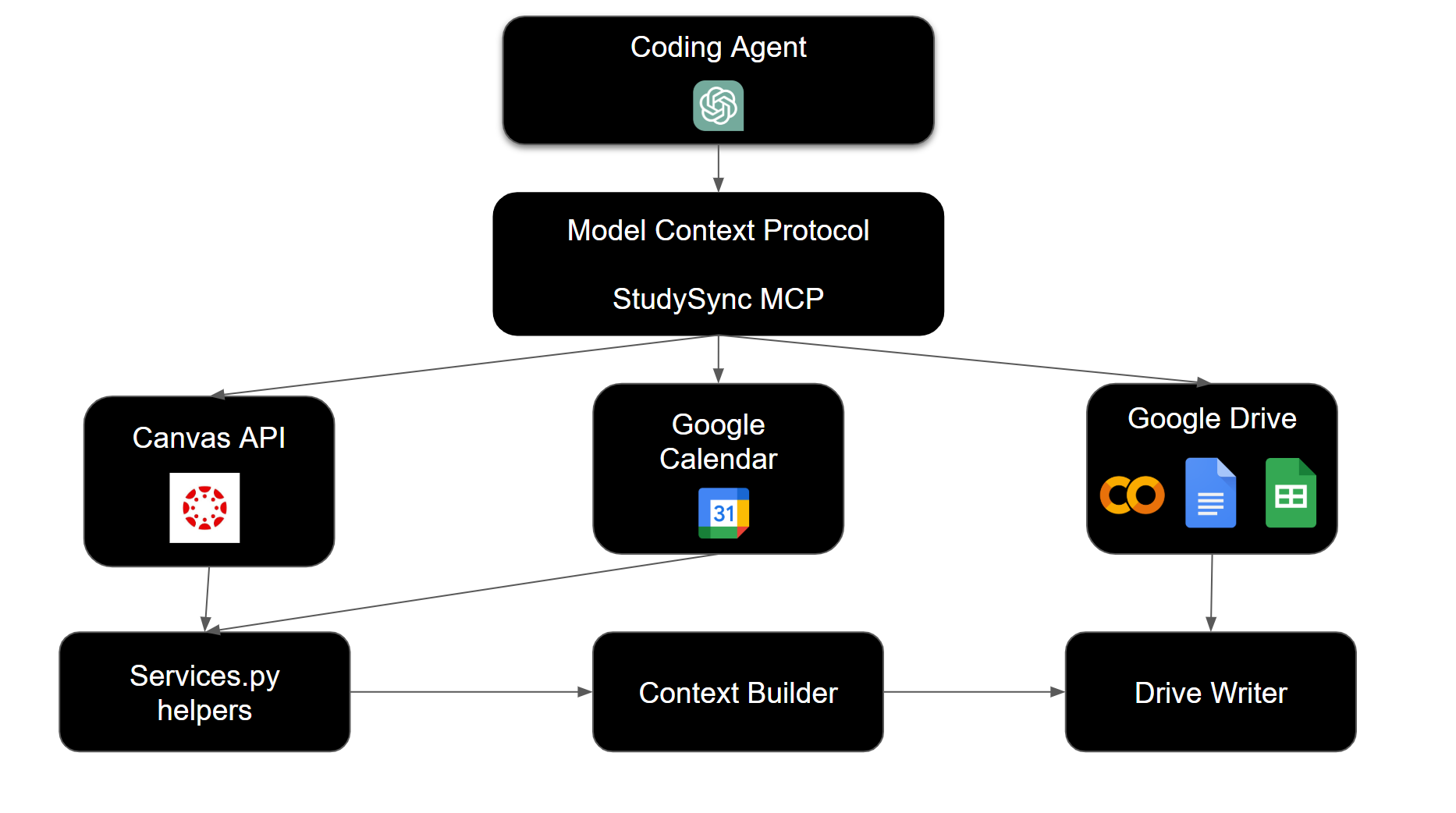
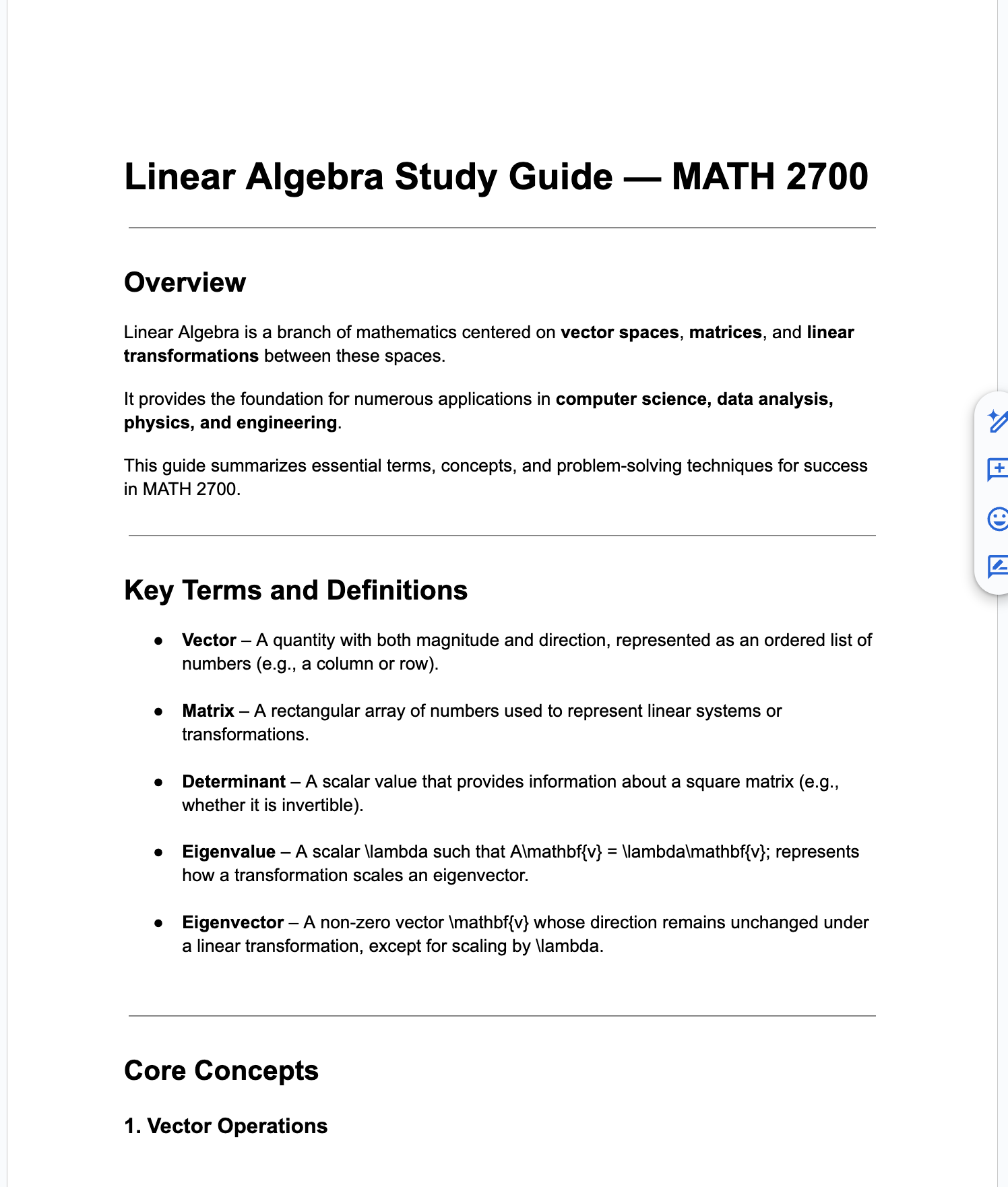
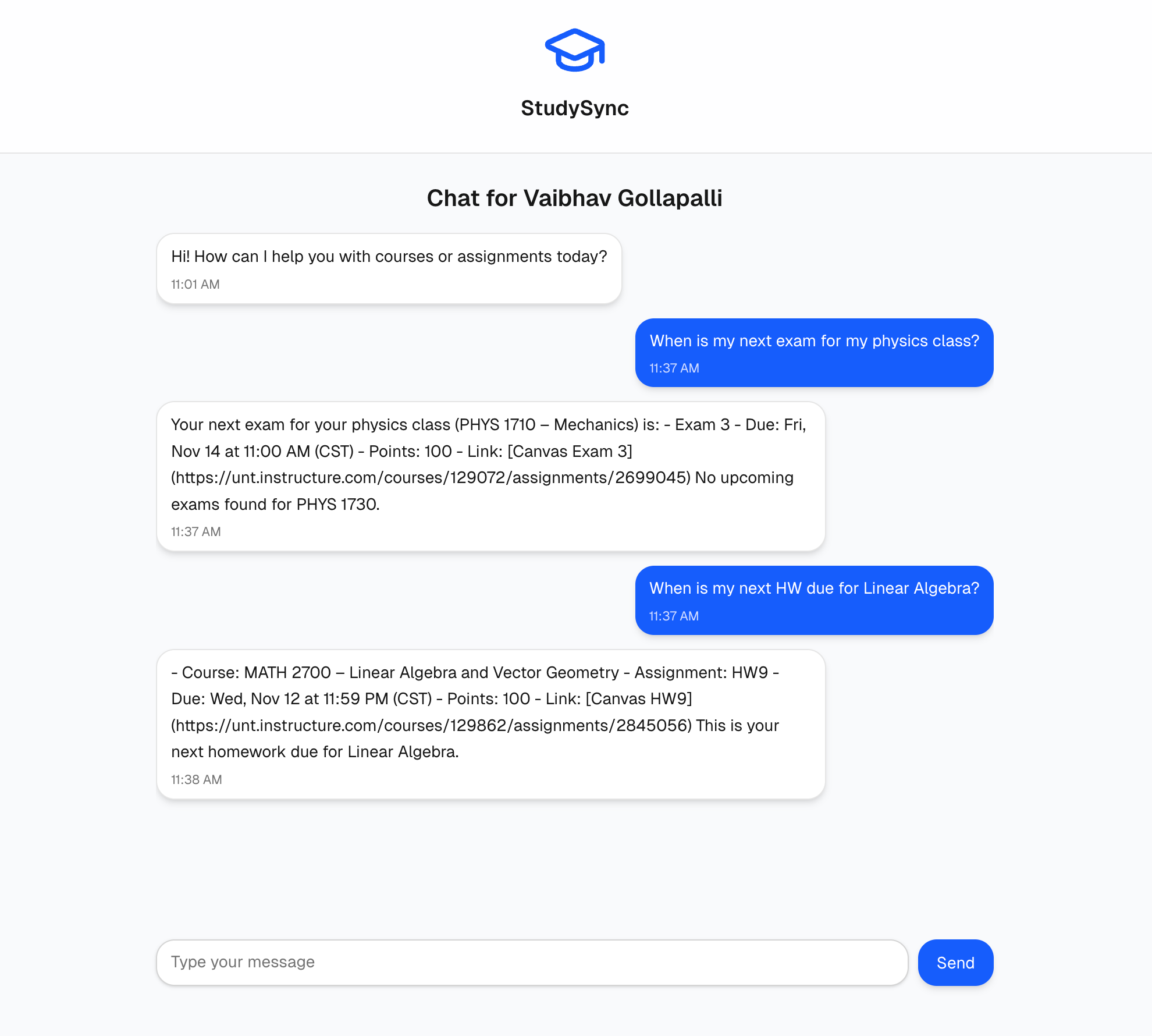
We decided to build an app powered by the Model Context Protocol (MCP) that integrates Canvas LMS with Google Workspace tools to streamline the academic experience. The app retrieves student information from Canvas, such as grades, lecture slides, due dates, and more. Users can interact with the StudySync chatbot and prompt it to do anything: from adding due dates to Google Calendar to making full fledged cheat sheets in Google Docs. In essence, our project acts as a bridge between learning and productivity, helping students stay organized and proactive without the stress of manual planning.
How we built it
We developed the frontend using React.js and the Next.js framework to ensure a fast, modular, and responsive user interface. Tailwind CSS provided a simple yet powerful way to design a clean, cohesive visual style that matched the minimal aesthetic we envisioned. On the backend, we used Python’s FastMCP and FastAPI to build a robust MCP server capable of processing natural language requests and turning them into real-world actions through API calls. We integrated the Canvas LMS API, Google Calendar API, and Google Drive/Docs API to handle data retrieval, organization, and manipulation. The system was designed with asynchronous handling and careful token management to ensure efficiency and security. Our final architecture allowed the chatbot to act as an intelligent intermediary — converting student requests into actionable tasks across different apps in real time.
Challenges we ran into
Setting up the FastMCP server was one of the most difficult parts of the project. We had to learn how to correctly define endpoints that could interpret queries from the chatbot and execute specific actions across multiple APIs. Many times, the OpenAI agent we had would pull too little or too much information, so we had to figure out how to make the best endpoints for information querying. Another challenge was managing the integration between Canvas, Google Calendar, and Google Drive, as each had to have their data sorted in a very specific manner.
Accomplishments that we're proud of
We’re proud of how we came together as a team to turn an ambitious idea into a working product. None of us had previously built a full MCP server or attempted to merge this many APIs into one cohesive system, yet we managed to design and deploy a functioning prototype that exceeded our expectations. We’re especially proud of how fluidly our chatbot interacts with the integrated services. It's crazy that a user can speak in natural language and have all services work together -> Canvas, Calendar, Drive, etc.
What we learned
Throughout this project, we learned how powerful and flexible the Model Context Protocol can be when connecting multiple platforms to create a seamless experience for users. We gained a deeper understanding of API authentication flows, especially when handling OAuth tokens for services like Canvas and Google Calendar. Setting up FastMCP taught us how to structure efficient endpoints that convert natural language queries into actionable commands.
What's next for StudySync
We want to continue integrating even more campus-related services into StudySync to create a richer and more personalized experience for users. Future updates could include functionality to search for clubs, research labs, and campus events directly within the chatbot, helping students get involved beyond the classroom. We also plan to add features that track academic progress, recommend study times based on workload predictions, and connect with student wellness tools. As we expand, our goal is to make StudySync not just a productivity assistant, but a complete digital companion that empowers students to thrive academically, socially, and personally.
Built With
- fastapi
- fastmcp
- framer-motion
- html
- python
- react
- runner
- tailwind
- typescript


Log in or sign up for Devpost to join the conversation.