
Inspiration
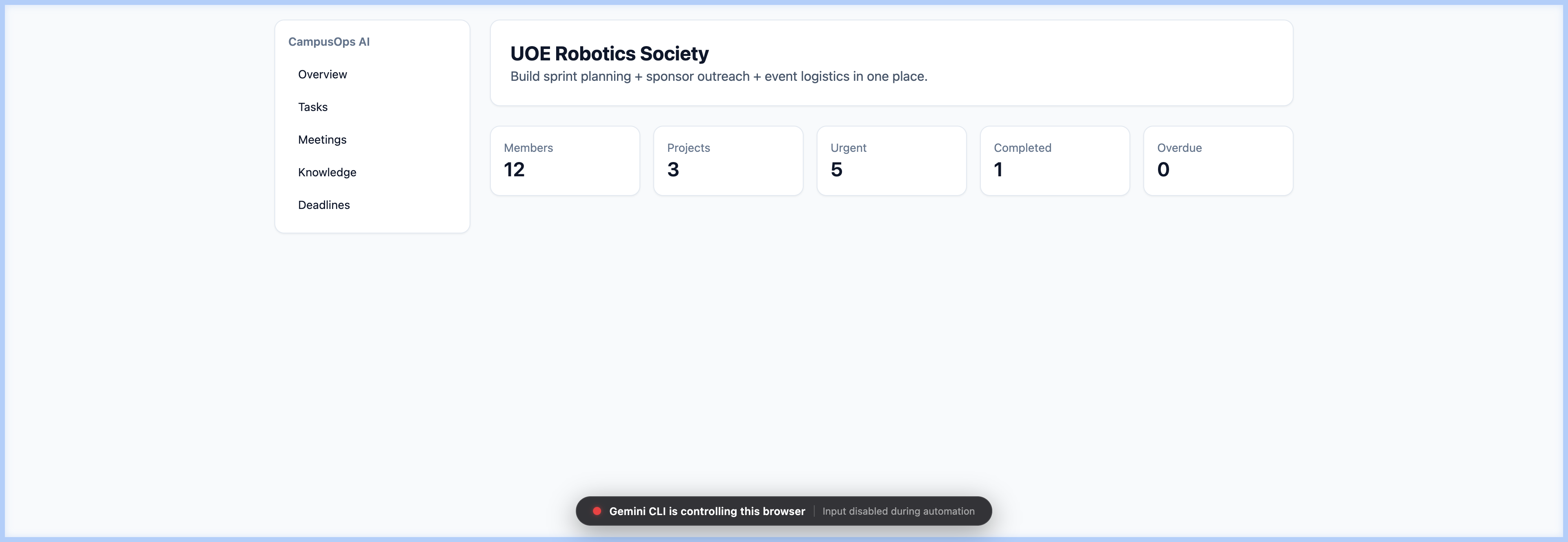
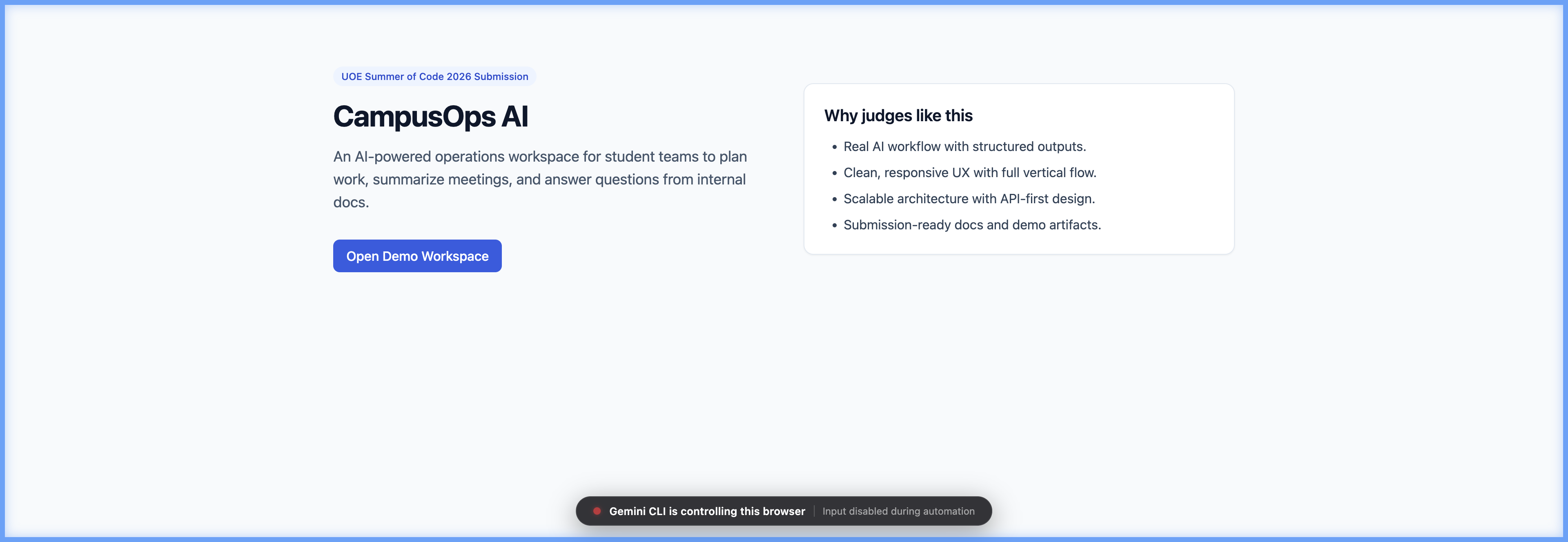
CampusOps AI was born from the realization that student organizations, despite their passion, often lack the professional infrastructure to manage operations. We observed leaders drowning in fragmented data—meeting decisions lost in chat threads, action items forgotten, and institutional knowledge locked in inaccessible documents. We wanted to build a centralized "AI-first" workspace that lets leaders focus on their mission rather than administrative coordination.
How we built it
We architected CampusOps AI as a modern Next.js 16 application, utilizing Tailwind CSS for a clean, professional interface. The core AI logic is powered by NVIDIA NIM (LLaMA 3.1 70B). We implemented semantic search and RAG (Retrieval-Augmented Generation) to ground the AI in the user's actual document history, with state management handled by a persistent Zustand store.
Challenges we ran into
The primary challenge was ensuring the AI returned consistent JSON objects for action items and risk analysis. We overcame this by crafting strict system prompts and implementing robust TypeScript interfaces coupled with runtime Zod schema validation to handle edge-case responses seamlessly.
What we learned
Building this required balancing AI model latency with real-time UI responsiveness. We learned that for AI to be a reliable "copilot," it must output structured, deterministic data. Leveraging Zod for schema validation taught us how to bridge the gap between unstructured LLM responses and rigid database structures.
Built With
- localstorage
- lucide
- nvidia
- tailwind
- typescript
- vercel

Log in or sign up for Devpost to join the conversation.