-
-
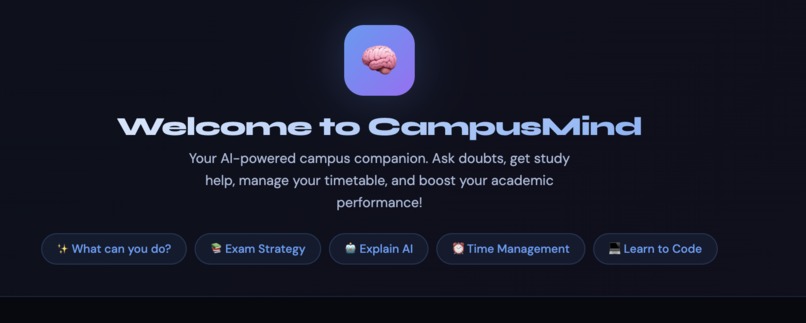
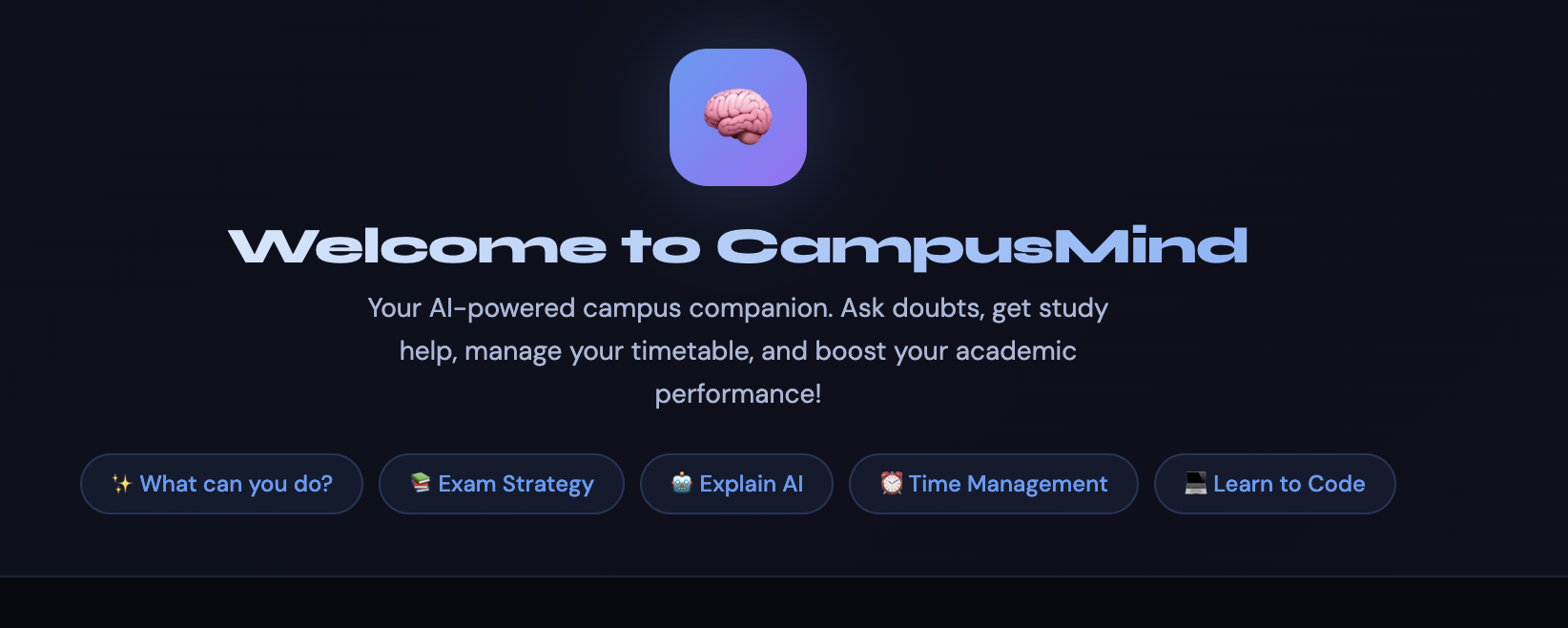
opening page of our project
Inspiration
In today’s fast-paced academic and professional environments, people are overwhelmed with large volumes of files—notes, reports, datasets, and documents. Extracting meaningful insights from them is time-consuming and inefficient. We were inspired to build a solution that transforms passive file storage into active, intelligent understanding using AI. CampusMind was created to help users quickly analyze and gain value from their files in seconds.
What it does
CampusMind is an AI-powered platform that allows users to upload multiple file types such as PDFs, DOCX, CSV, TXT, images, and media files. Once uploaded, users can instantly analyze their files and receive structured outputs including:
- Summary
- Key Insights
- Recommended Actions
It provides a seamless drag-and-drop experience, real-time upload tracking, and an interactive analysis panel, making it simple and efficient for anyone to use.
How we built it
We built CampusMind using modern web technologies:
- Frontend: React.js with custom UI components for a smooth and interactive user experience
- Styling: CSS with modern design principles for a clean and responsive interface
- AI Integration: Groq API with LLM models to generate intelligent analysis from file content
- File Handling: Browser-based file processing with support for multiple formats
The system reads text-based files directly and uses contextual metadata for other formats to generate insights.
Challenges we ran into
- Handling multiple file formats efficiently in the browser
- Ensuring smooth drag-and-drop UX with real-time feedback
- Managing API key security and integration with AI services
- Limiting file content size for AI processing while maintaining meaningful output
- Debugging API errors such as invalid keys and model compatibility
Accomplishments that we're proud of
- Successfully built a fully functional AI-powered file analysis tool
- Designed a modern and intuitive UI/UX with smooth animations
- Enabled multi-format file support in a single platform
- Achieved real-time upload simulation and analysis workflow
- Created a scalable foundation for future AI-powered document tools
What we learned
- How to integrate AI APIs effectively into real-world applications
- Importance of secure API handling and backend architecture
- Building responsive and user-friendly interfaces
- Managing asynchronous operations like file uploads and API calls
- Problem-solving under time constraints during development
What's next for CampusMind
- Move AI processing to a secure backend (Vercel API routes)
- Add advanced parsing for PDFs, DOCX, and images (OCR support)
- Enable cloud storage integration (Google Drive, Dropbox)
- Introduce real-time collaboration and team workspaces
- Improve AI accuracy with fine-tuned prompts and models
- Add export options (PDF reports, summaries download)
CampusMind aims to evolve into a complete AI-powered knowledge assistant for students, professionals, and organizations.
Built With
- css3
- github
- groqapi
- html5
- javascript
- llm
- react.js
- vercel


Log in or sign up for Devpost to join the conversation.