-
-
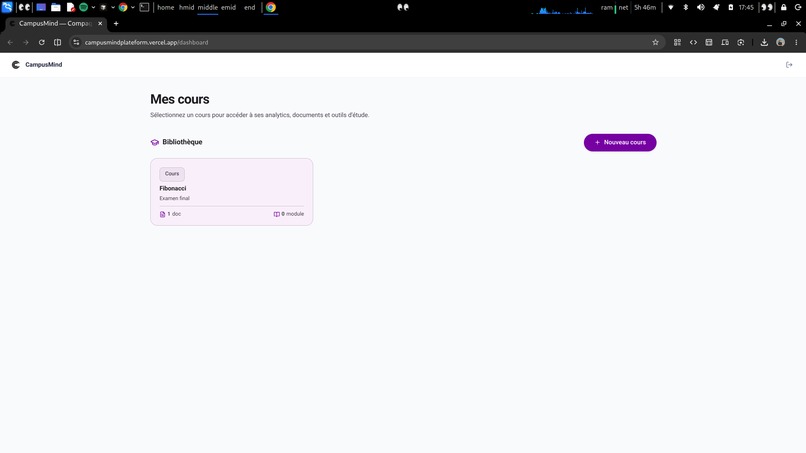
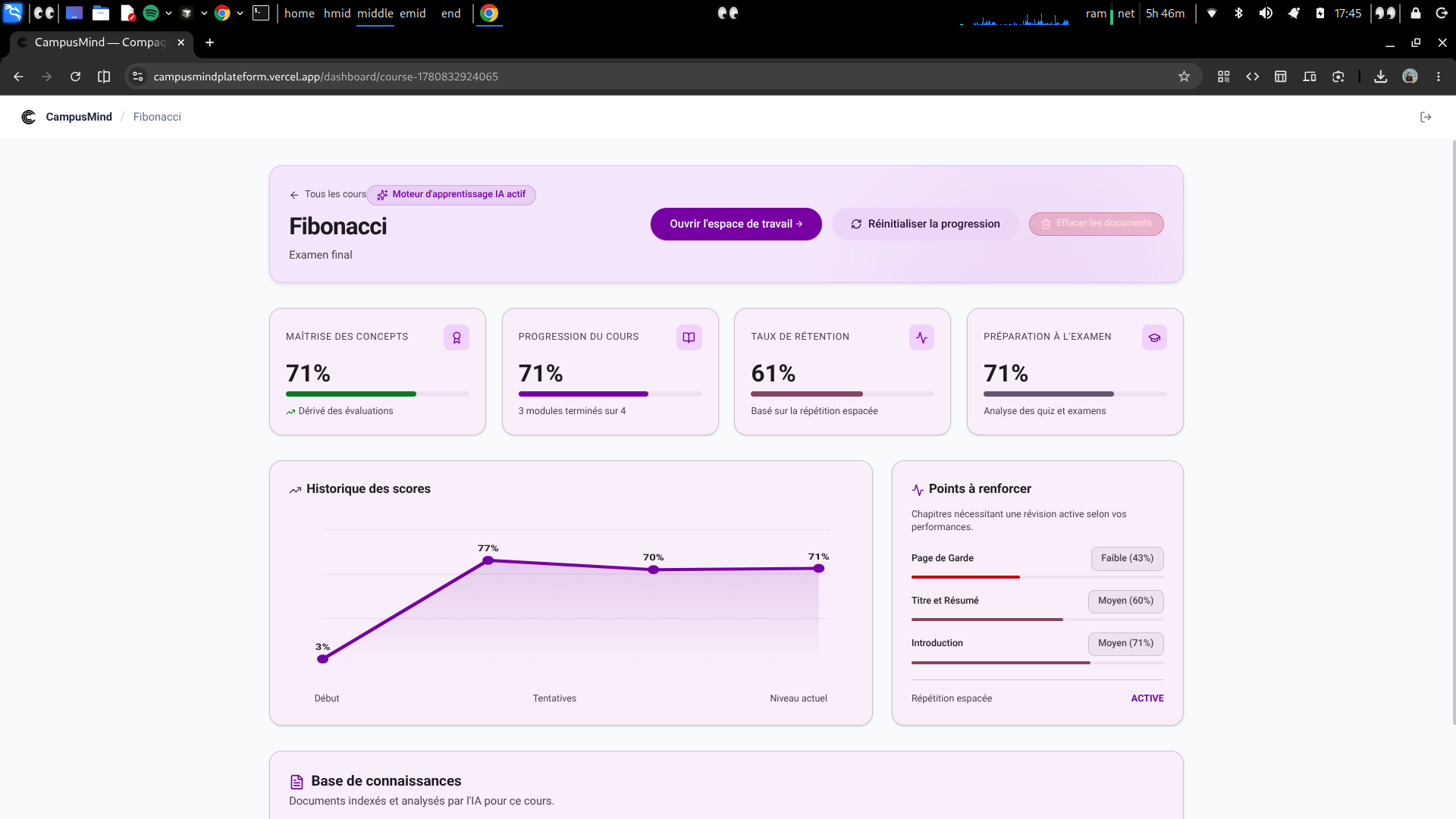
Curses screen
-
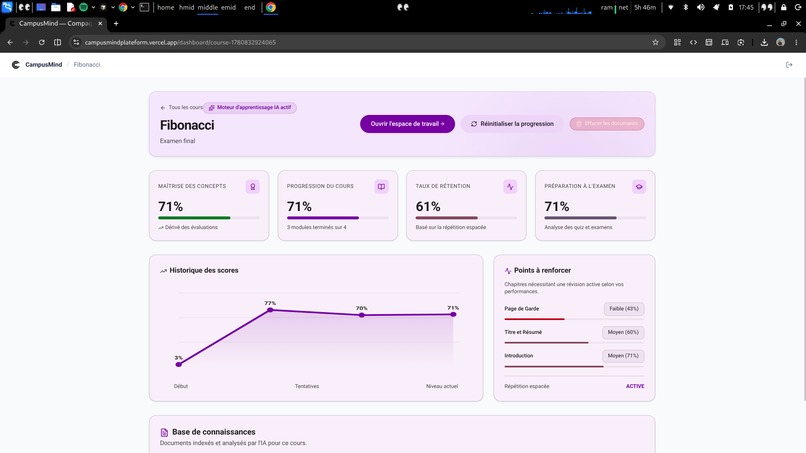
Selected curse overview of the student progress
-
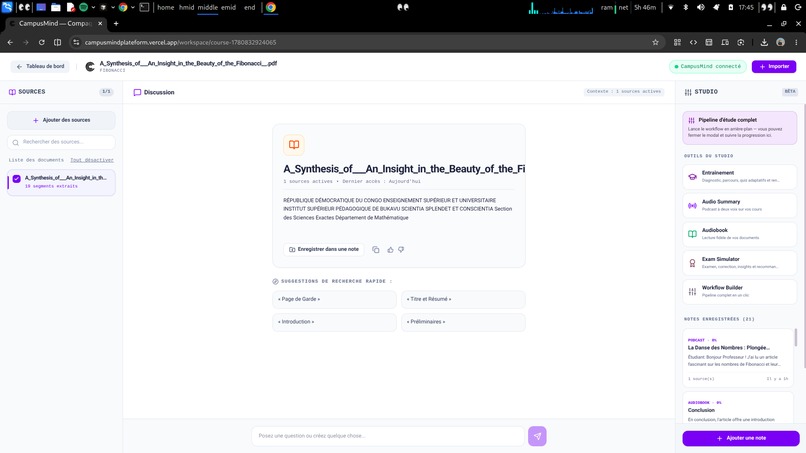
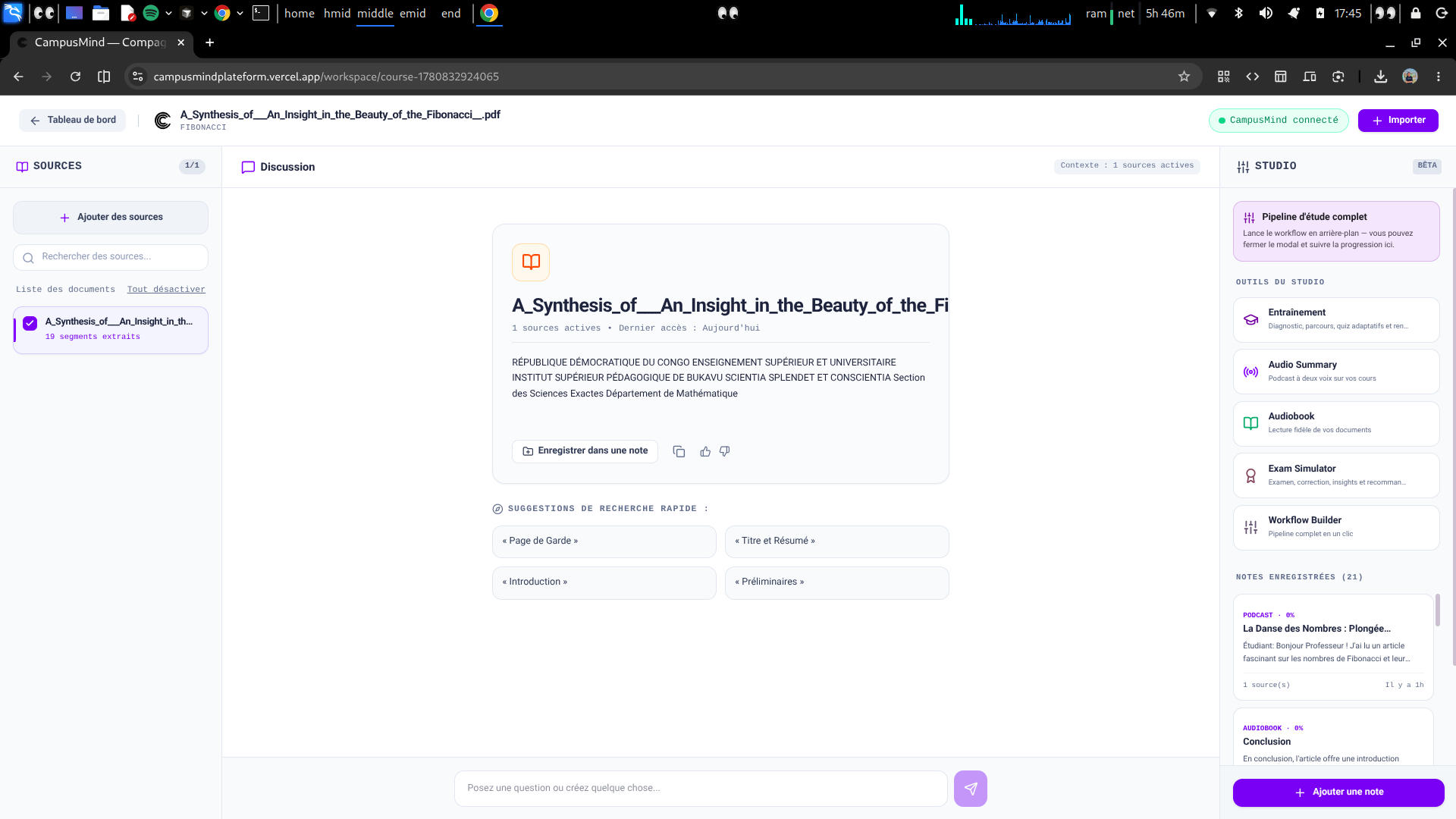
The ai workspace of with sources/discussion/studio parts
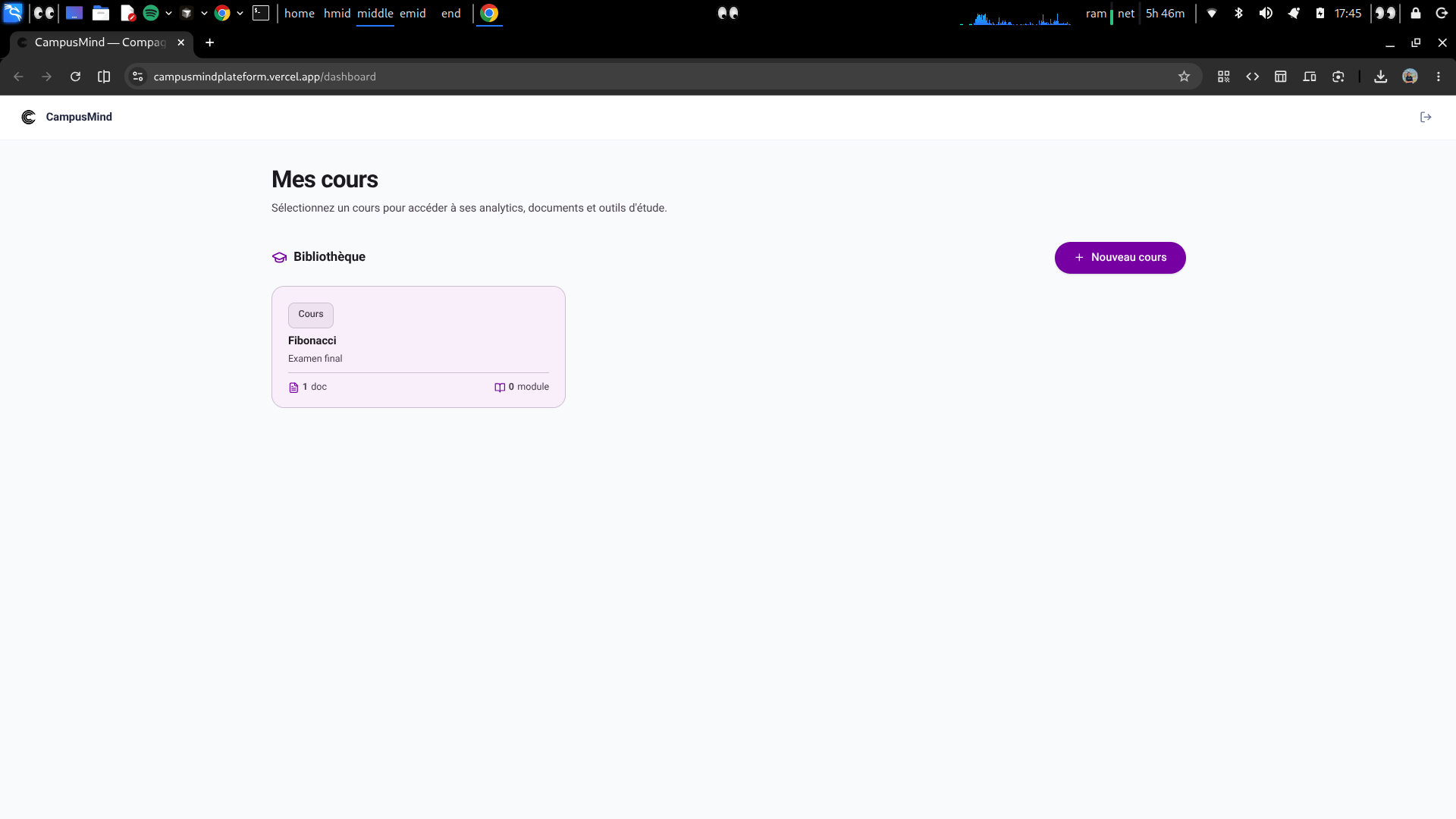
CampusMind
Inspiration
As students, we often accumulate PDFs, lecture slides, handwritten notes, and course materials without having an effective way to transform them into real learning. Most study tools focus on searching documents or generating summaries, but they do not actively help students learn, practice, and prepare for exams.
We wanted to build something beyond a document chatbot: an AI-powered academic companion that turns passive course materials into personalized learning experiences.
Our inspiration came from tools like NotebookLM, adaptive learning platforms, and the daily challenges students face when preparing for exams under time pressure.
What it does
CampusMind is an AI-powered learning platform that transforms academic documents into personalized study journeys.
Students can upload:
- PDF documents
- PowerPoint presentations
- Word documents
- Scanned notes
- Images
CampusMind then:
- Extracts and indexes knowledge from the documents
- Creates a searchable knowledge base
- Allows students to chat with their course materials using AI
- Generates AI-powered podcast summaries
- Creates audiobooks from academic content
- Builds personalized learning programs
- Simulates realistic exams
- Provides performance analytics and study recommendations
The platform combines Retrieval-Augmented Generation (RAG) with specialized AI agents to help students understand, practice, and retain information more effectively.
How we built it
Knowledge Processing Pipeline
- Document Upload
- OCR and text extraction
- Semantic chunking
- Embedding generation
- Vector database indexing
- Retrieval-Augmented Generation (RAG)
AI Components
We used the Gemini API as the intelligence layer behind multiple educational workflows.
CampusMind is organized around specialized AI agents:
- Assessment Agent
- Curriculum Agent
- Quiz Agent
- Performance Agent
- Reinforcement Agent
- Exam Generator Agent
- Recommendation Agent
These agents collaborate to evaluate student knowledge, identify weaknesses, create personalized learning paths, and generate adaptive assessments.
Technology Stack
- Gemini API
- Next.js
- React
- TypeScript
- Tailwind CSS
- Firebase
- Vector Database
- Google Cloud
Challenges we ran into
One of our biggest challenges was designing a system that goes beyond simple document Q&A.
We had to determine:
- How to measure student understanding
- How to personalize learning paths
- How to generate meaningful exam simulations
- How to coordinate multiple AI agents effectively
Another challenge was balancing ambitious features with the limited time available during the hackathon.
We focused on building a strong educational workflow instead of adding unnecessary complexity.
Accomplishments that we're proud of
- Creating a complete AI learning workflow from a simple document upload
- Designing a multi-agent educational architecture
- Integrating AI into practical learning activities instead of simple chat interactions
- Building a platform that can adapt to individual student needs
- Creating a solution that directly addresses a real problem faced by students
What we learned
During this project, we learned:
- How to design multi-agent AI systems
- How Retrieval-Augmented Generation improves reliability
- How educational workflows can benefit from adaptive AI
- How to structure AI products around user outcomes rather than individual features
- How to rapidly prototype AI applications using Gemini and modern web technologies
What's next for CampusMind
Future versions of CampusMind will include:
- Spaced repetition scheduling
- Collaborative study groups
- AI-generated flashcards
- Interactive mind maps
- Voice-based tutoring
- Learning analytics dashboards
- Mobile applications
- LMS and university integrations
Our vision is to transform CampusMind into a complete AI Academic Operating System that helps students learn more efficiently and achieve better academic outcomes.
Built With
- firebase
- gemini
- google-cloud
- next.js
- react
- tailwindcss


Log in or sign up for Devpost to join the conversation.