-
-

Logo
-
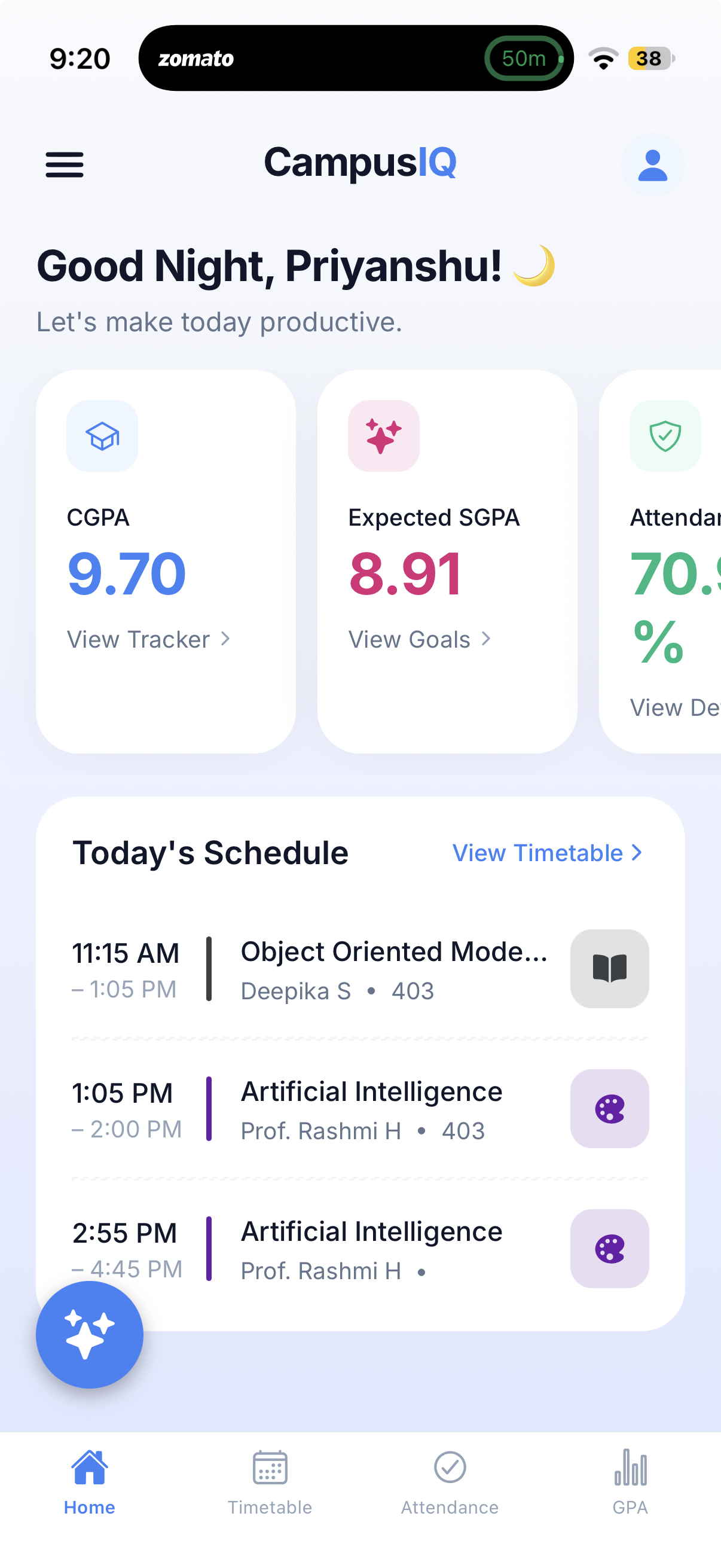
home-screen-light
-
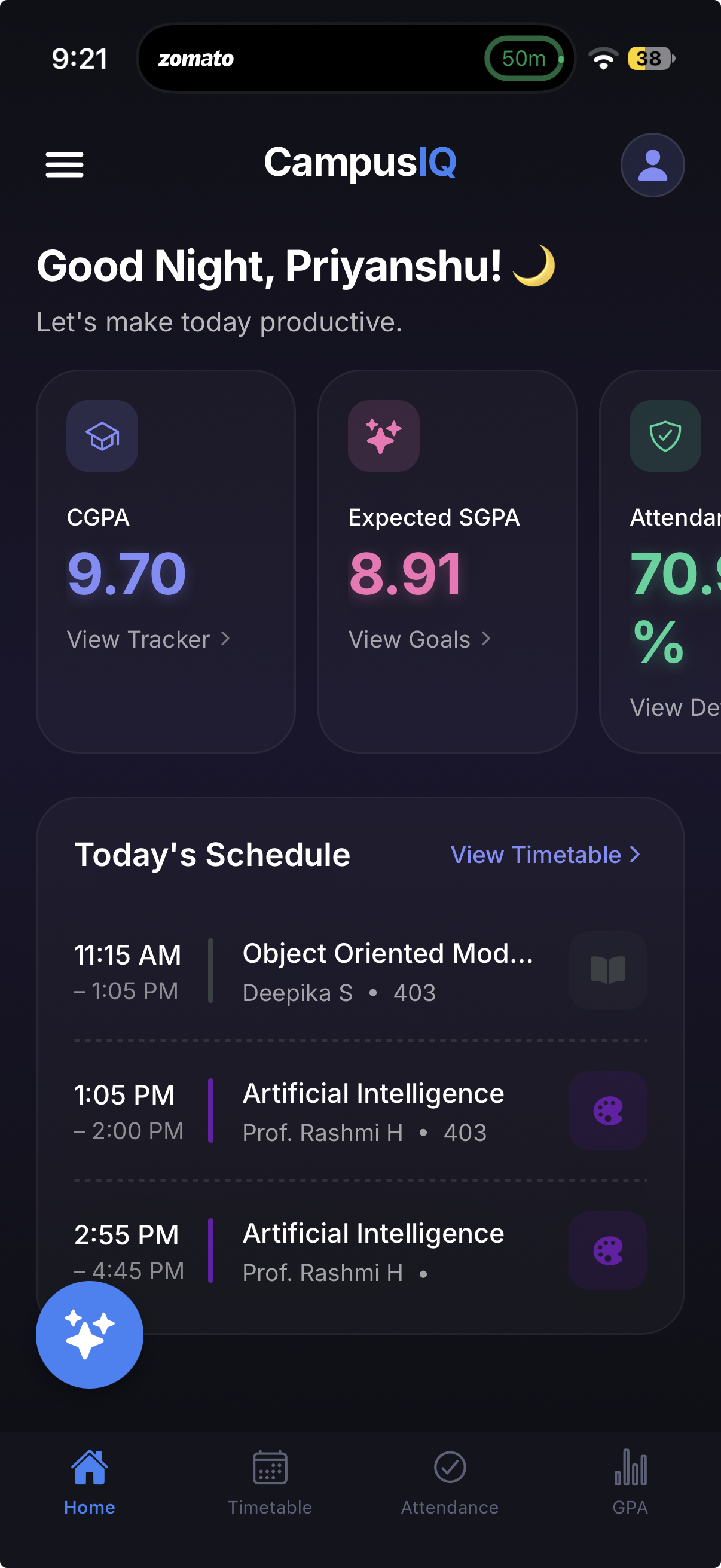
home-screen-dark
-
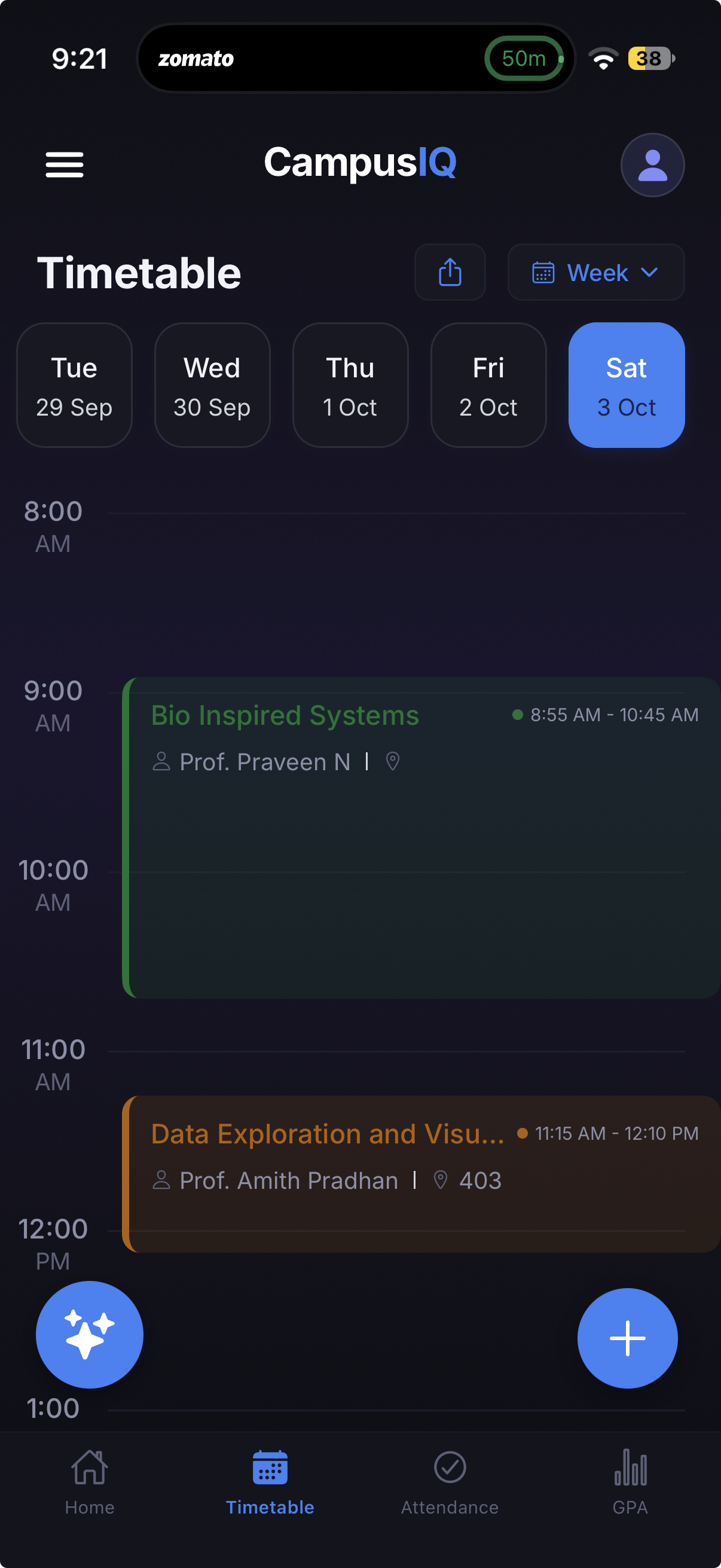
timetable
-
premium-revenuecat-campusIQ
-
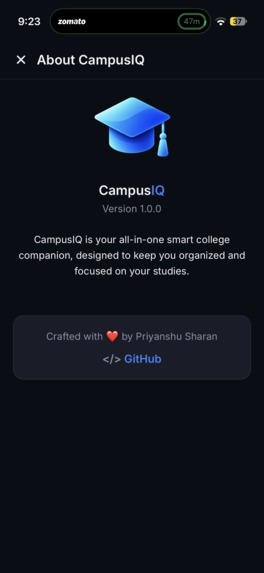
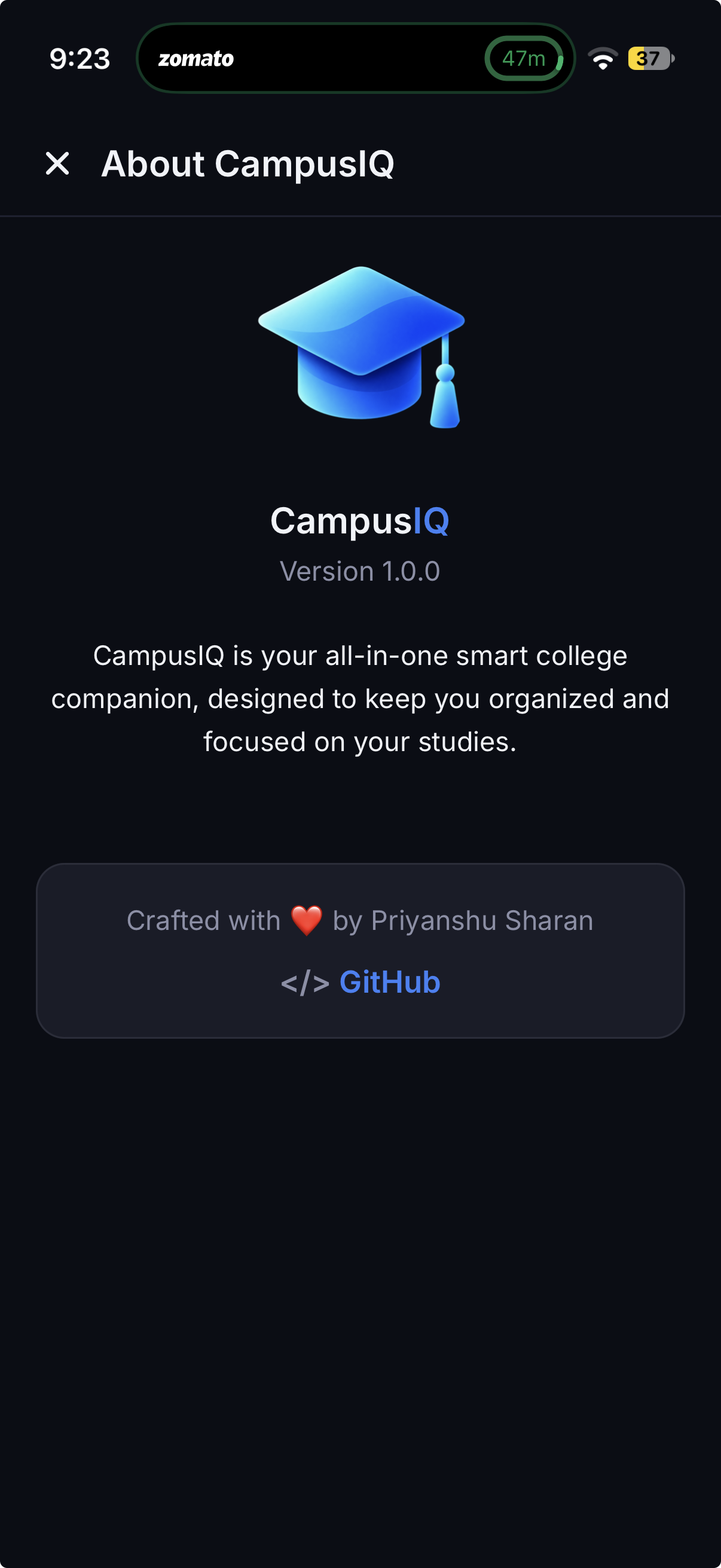
about-us-screen
-
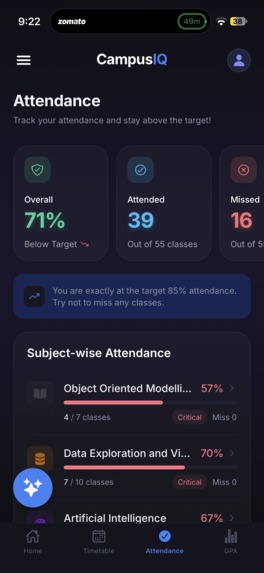
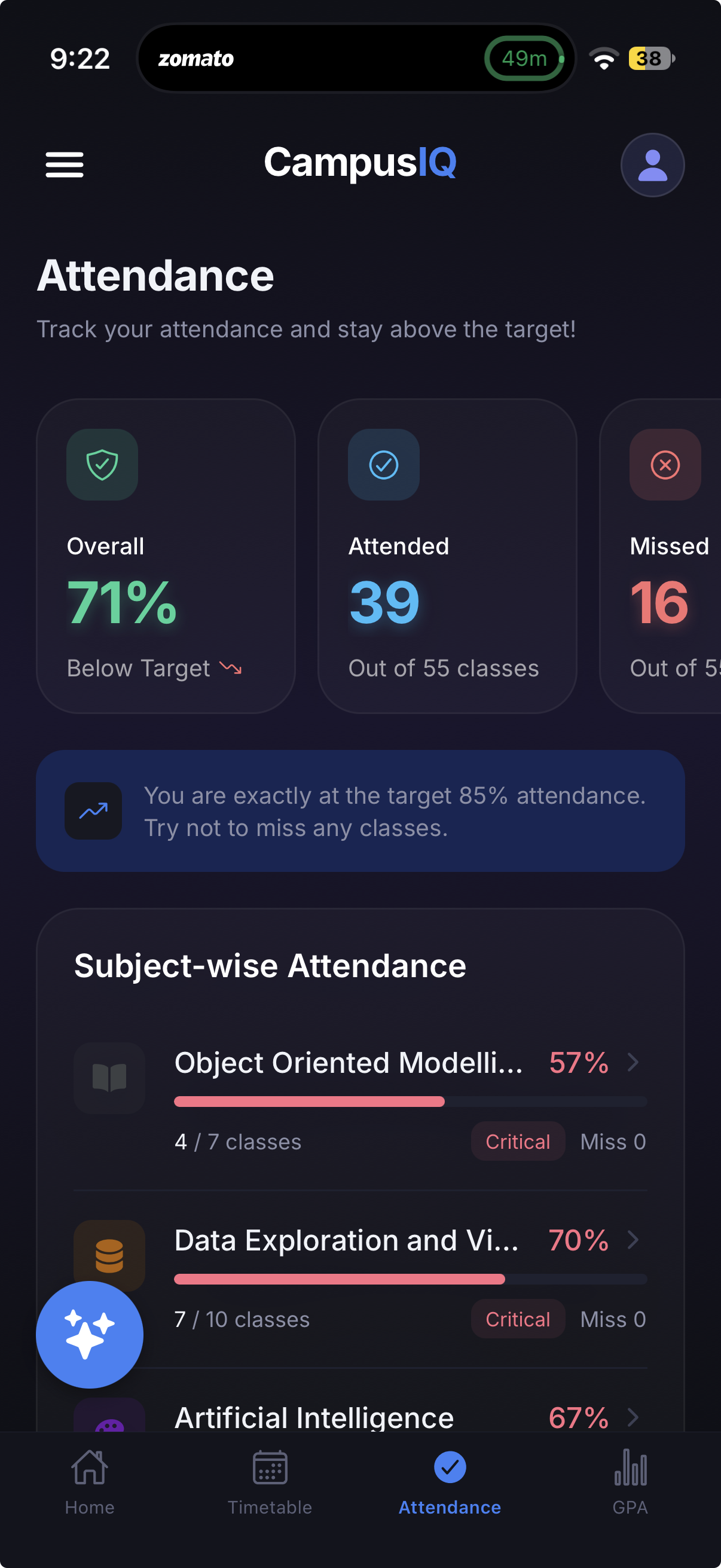
subject-wise-attendance
-
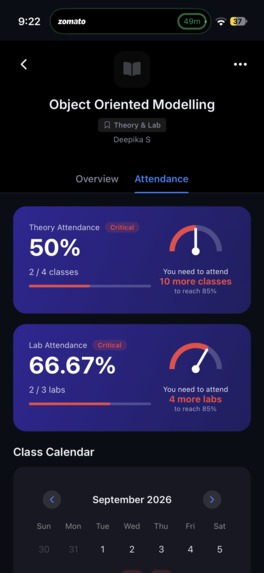
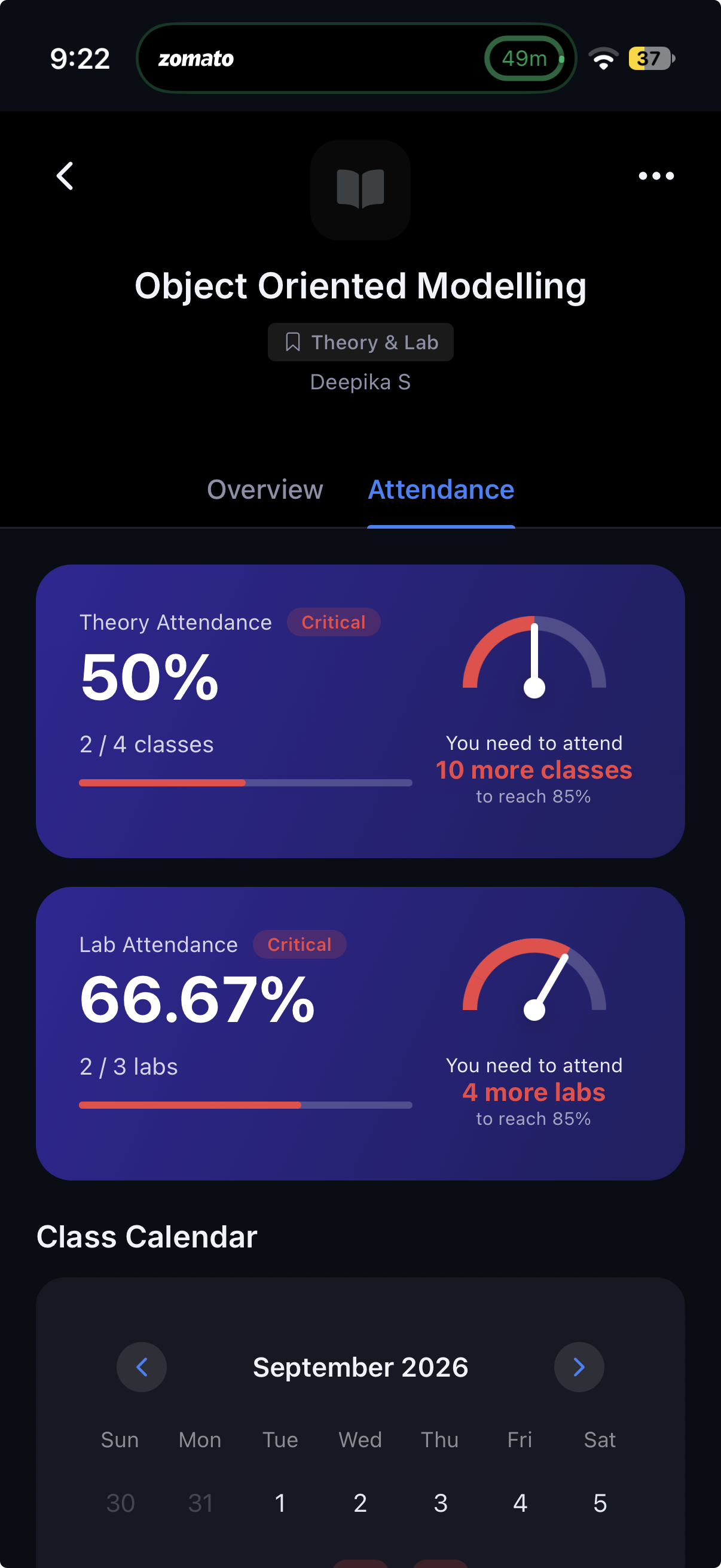
subject-attendance-detail
-
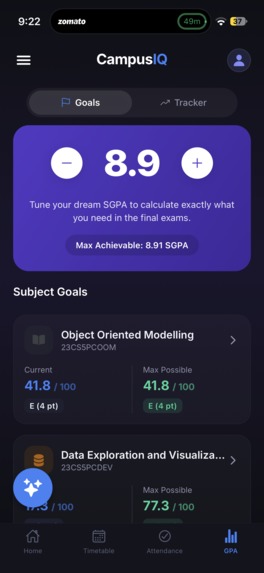
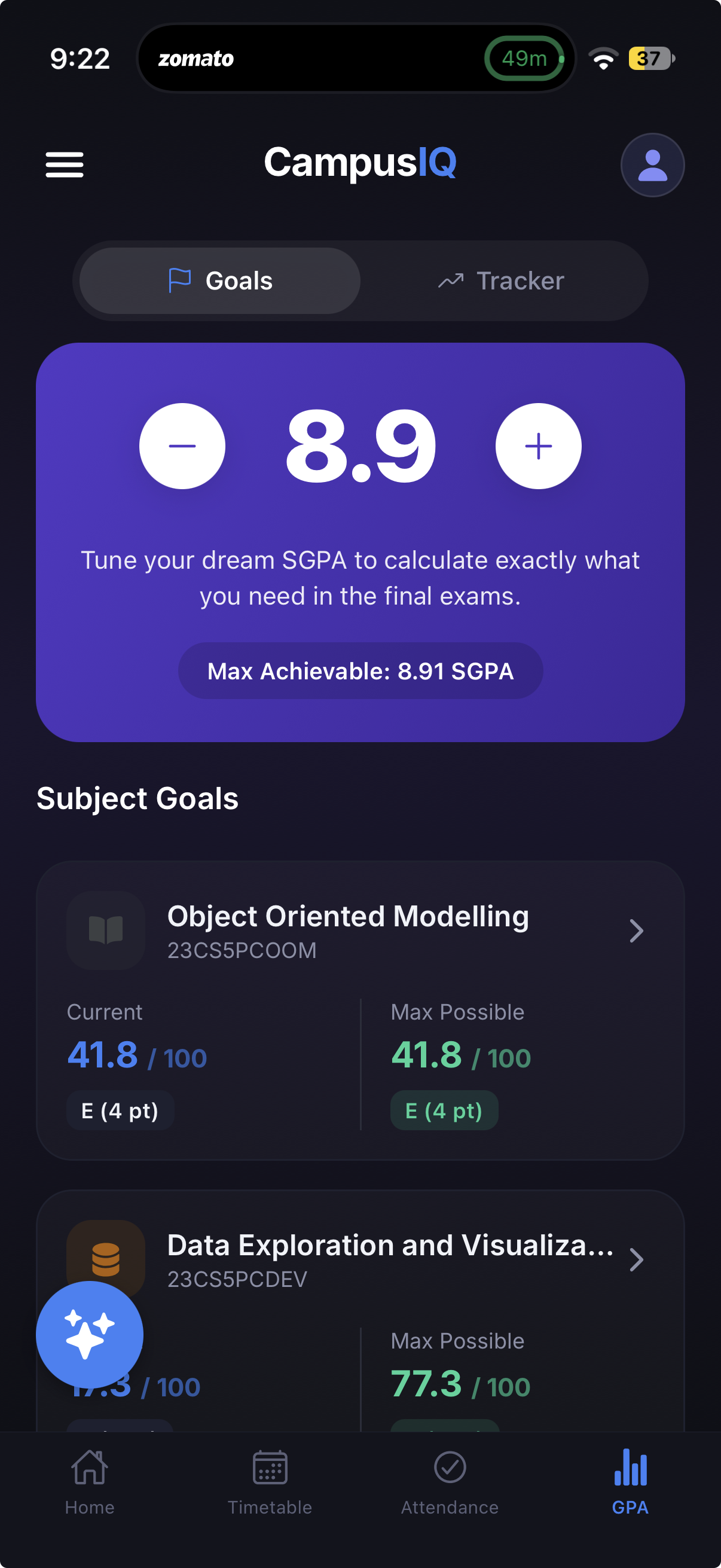
current-sem-expected-sgpa
-
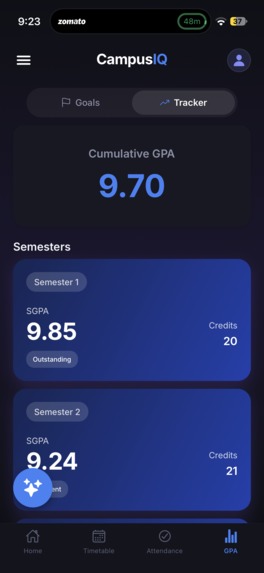
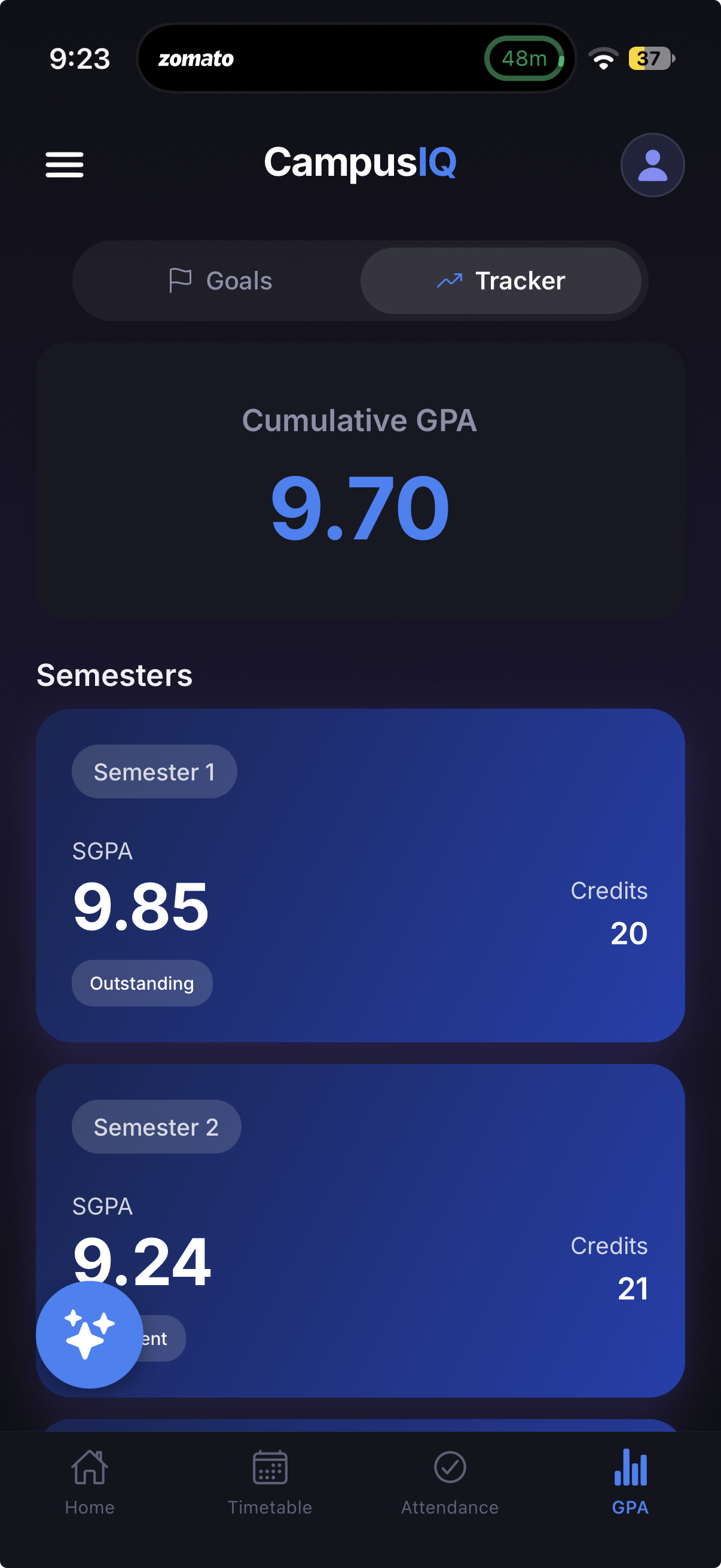
cgpa-tracker-all-sem

Inspiration
College students often use several different apps, spreadsheets, portals, and notes just to keep track of classes, attendance, grades, and academic goals. I built CampusIQ to bring those things together into one intelligent mobile companion.
The goal is simple: instead of only showing students their academic data, CampusIQ should help them understand it and make better decisions with it.
What it does
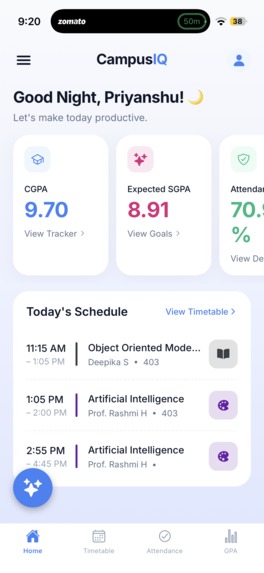
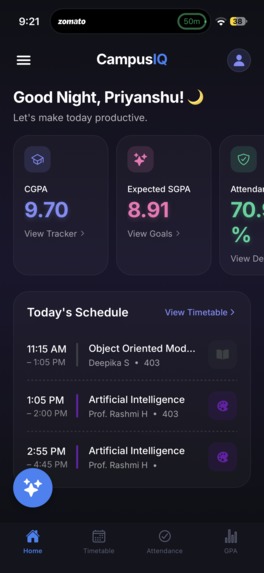
CampusIQ is an AI-powered college companion that brings academic planning into one place.
Students can:
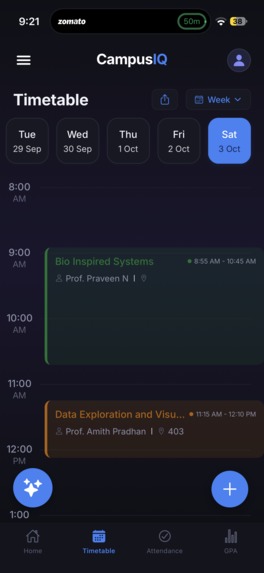
- View their daily and weekly timetable
- Track overall and subject-wise attendance
- View attendance history and trends
- Understand how many classes they can safely miss
- Track grades and assessment components
- Set SGPA goals and estimate academic outcomes
- View semester-wise SGPA history
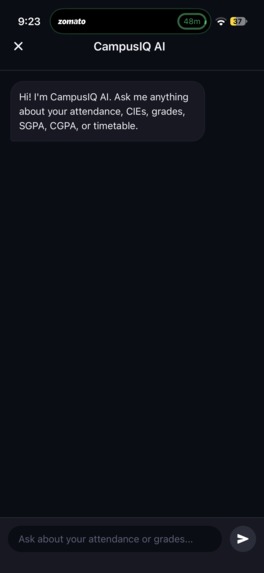
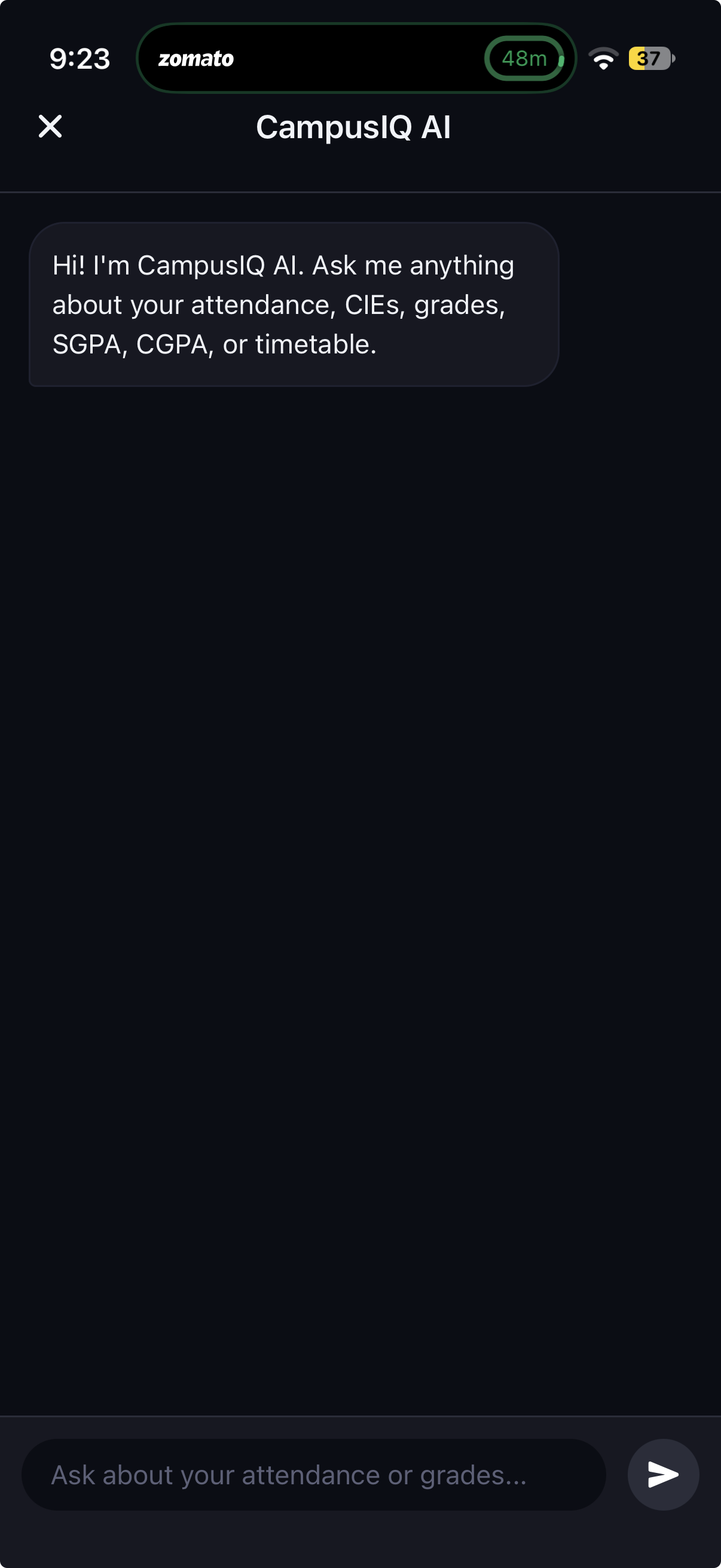
- Ask CampusIQ AI questions based on their academic data
- Customize appearance, reminders, and AI preferences
CampusIQ AI
CampusIQ AI turns academic data into useful, personalized insights.
For example, instead of manually calculating attendance percentages, a student can ask:
"How many classes can I miss?"
CampusIQ AI can use the student's attendance information to provide subject-level guidance and highlight courses where attendance may be at risk.
RevenueCat Integration
CampusIQ uses RevenueCat to power its premium subscription experience.
The app includes a CampusIQ AI premium plan and a RevenueCat-powered paywall. After a successful purchase, premium AI functionality is unlocked inside the app.
The demo shows this complete flow using the RevenueCat Test Store, from the premium paywall through purchase to successfully unlocking CampusIQ AI.
How I built it
CampusIQ is built as a cross-platform mobile application using React Native and Expo, with TypeScript for the application code.
The interface was designed around a dashboard-first experience so students can quickly understand their academic situation without navigating through complicated college portals.
RevenueCat's SDK handles the premium purchase and entitlement flow, while the AI layer provides personalized academic assistance.
Challenges I ran into
One of the biggest challenges was bringing very different types of academic information—attendance, timetables, assessments, SGPA predictions, and AI insights—into a single interface without making the app feel overwhelming.
Another challenge was designing the premium flow so that purchasing CampusIQ AI feels like a natural part of the application rather than a disconnected paywall.
Building AI responses around a student's actual academic context also required thinking carefully about how information should be structured and presented in a useful way.
What I learned
Building CampusIQ taught me a lot about cross-platform mobile development, designing data-heavy interfaces, integrating RevenueCat into a real application, managing premium entitlements, and building AI features around structured user data.
It also showed me that AI can be much more useful when it understands the context behind a student's question instead of behaving like a generic chatbot.
What's next for CampusIQ
I want to expand CampusIQ with deeper academic analytics, smarter attendance predictions, assignment and exam planning, notifications, and more personalized AI insights.
The long-term goal is to make CampusIQ a single intelligent companion that helps students understand, organize, and improve their college life.
Built With
- ai
- asyncstorage
- expo.io
- express.js
- node.js
- openrouter
- react-native
- revenuecat
- typescript

Log in or sign up for Devpost to join the conversation.