-
-
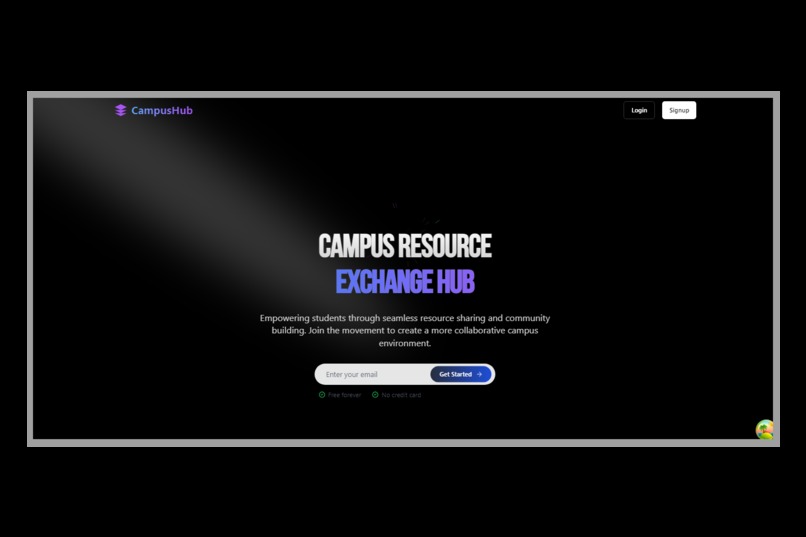
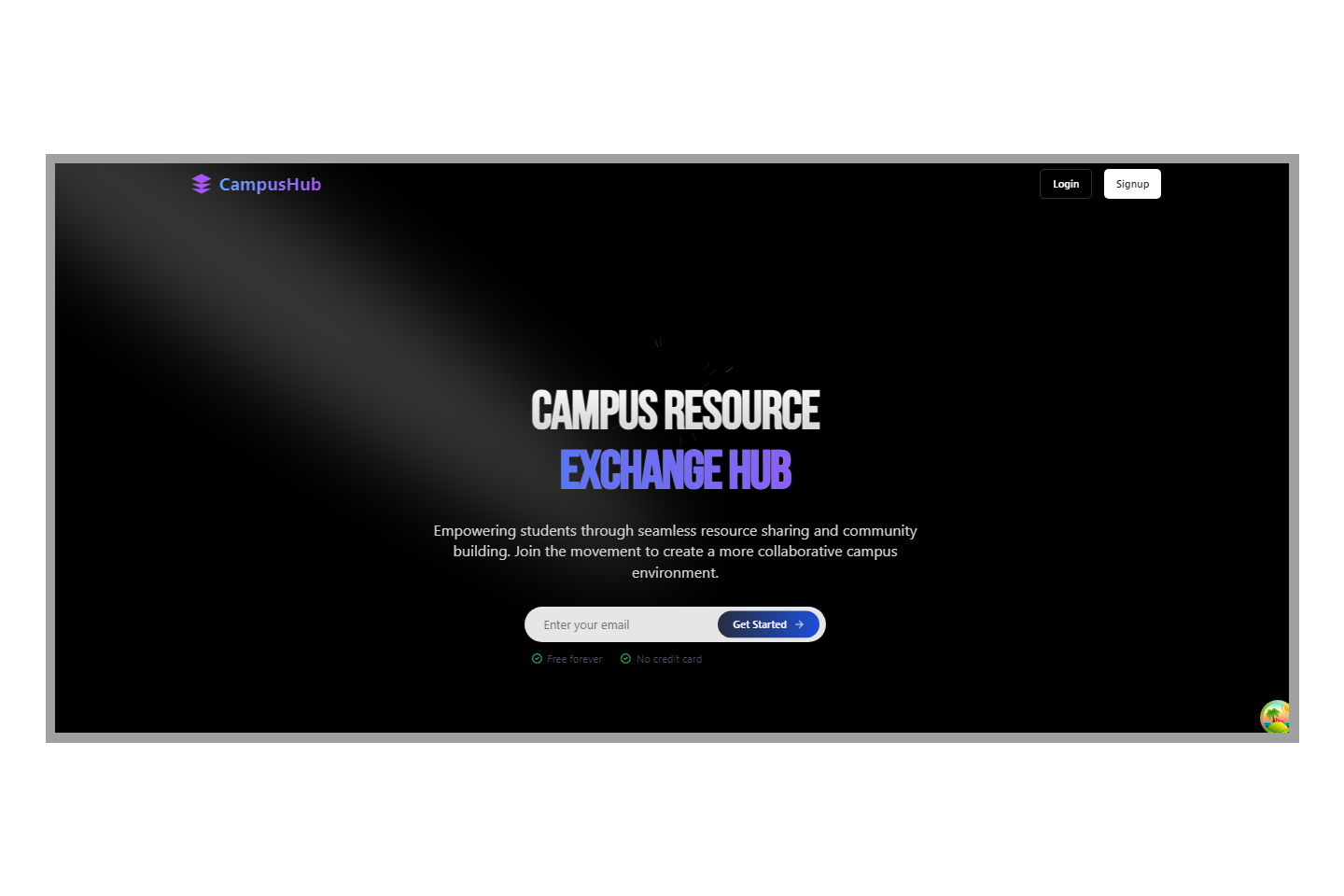
Landing Page
-
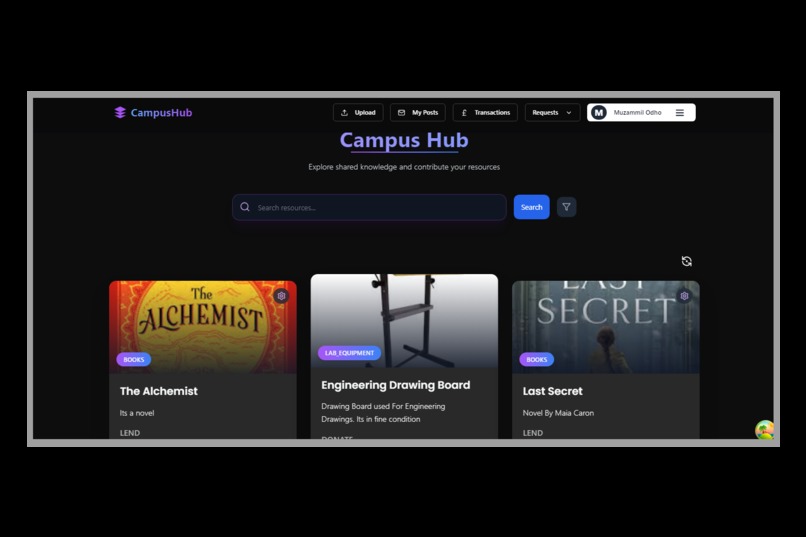
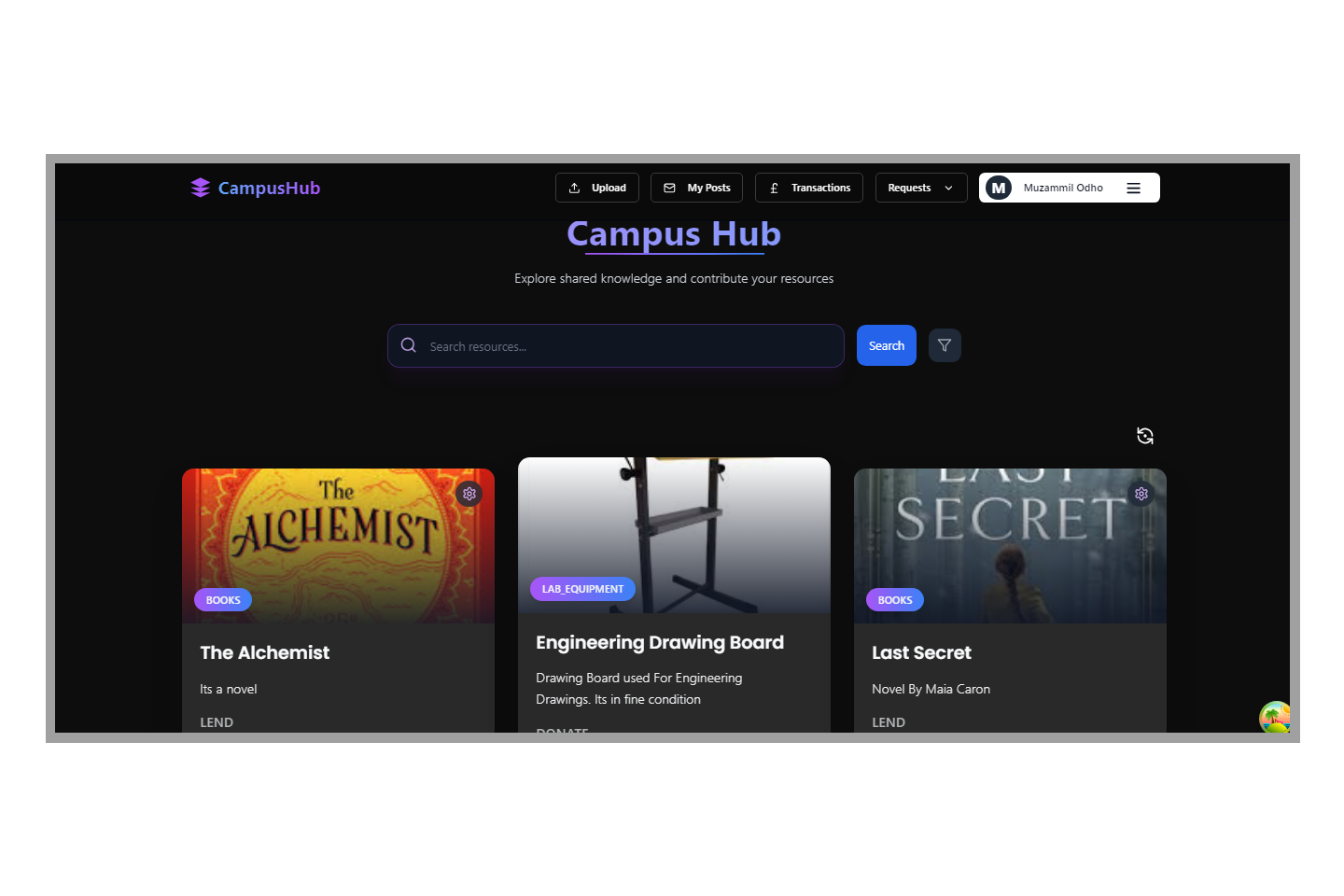
Home Page- where users can find all the listed resource
-
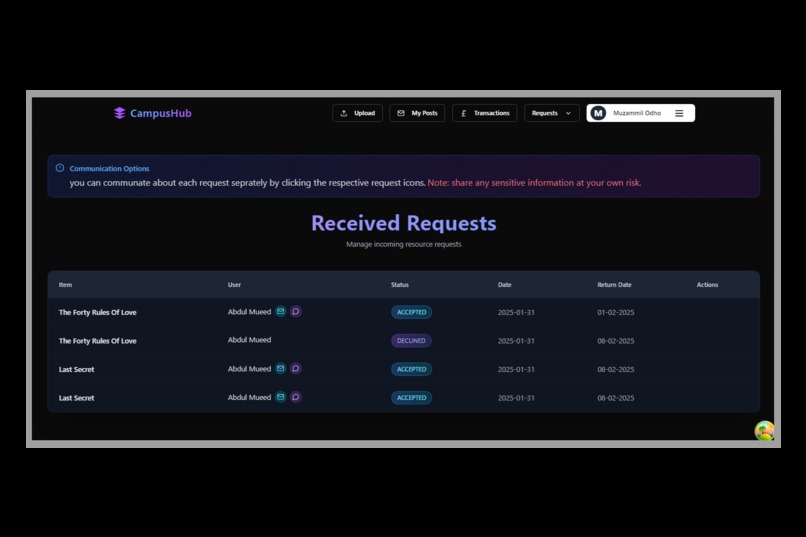
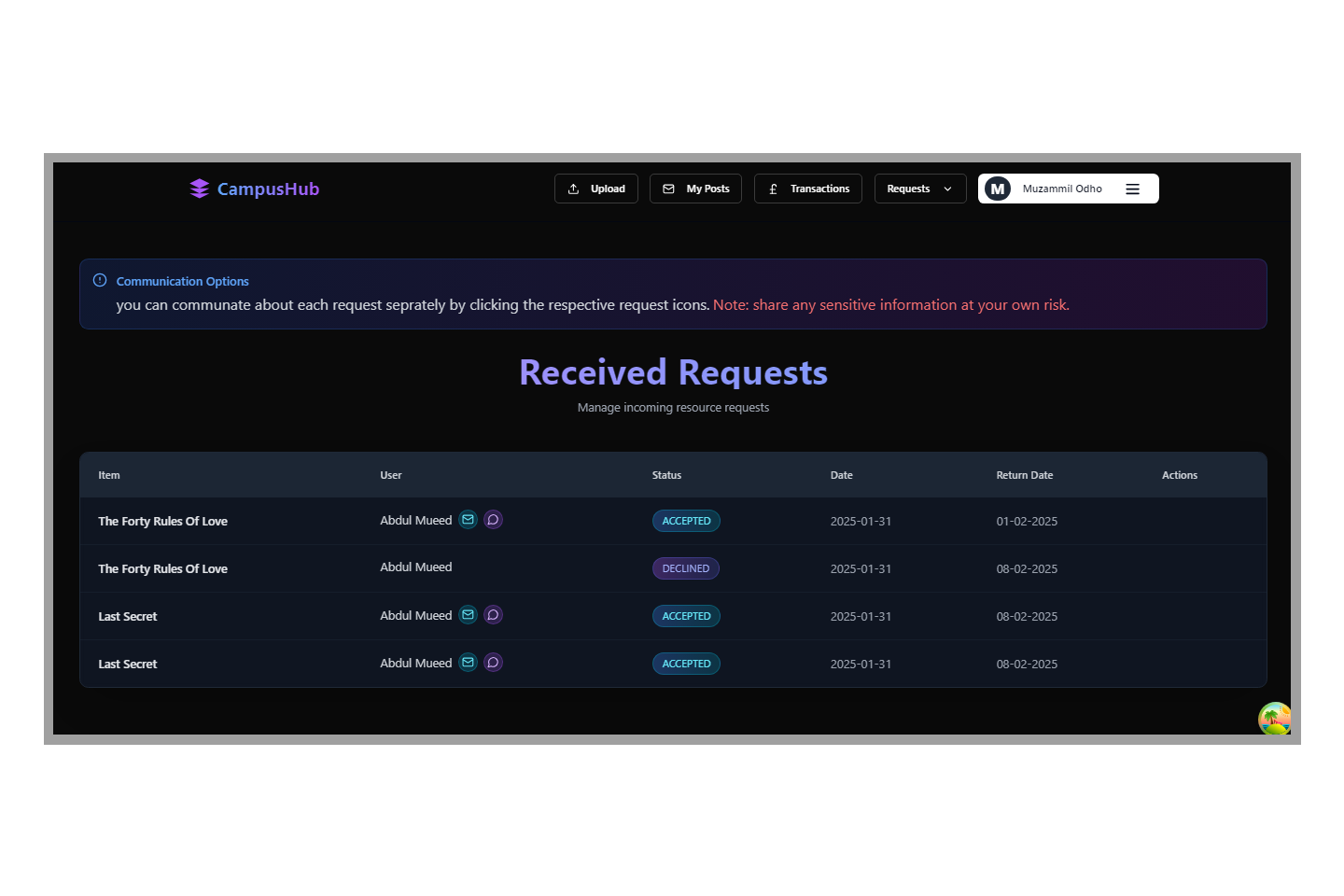
Request Page - Users will recieve request for the resources
-
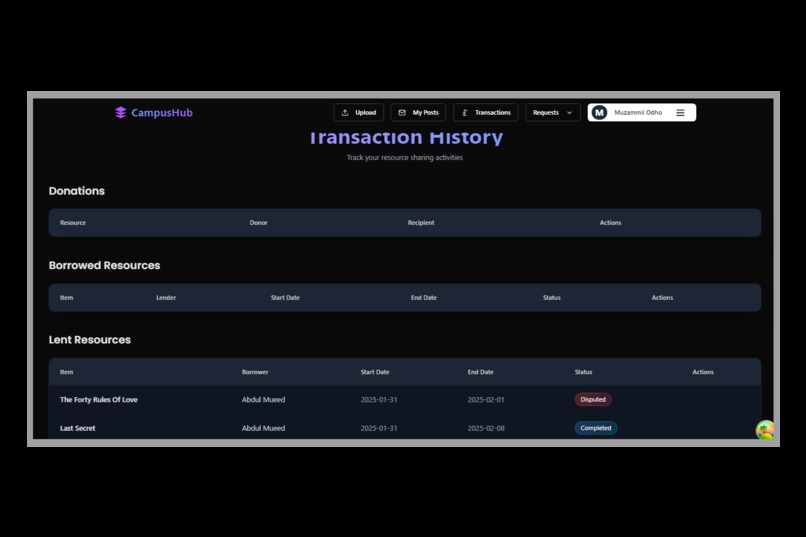
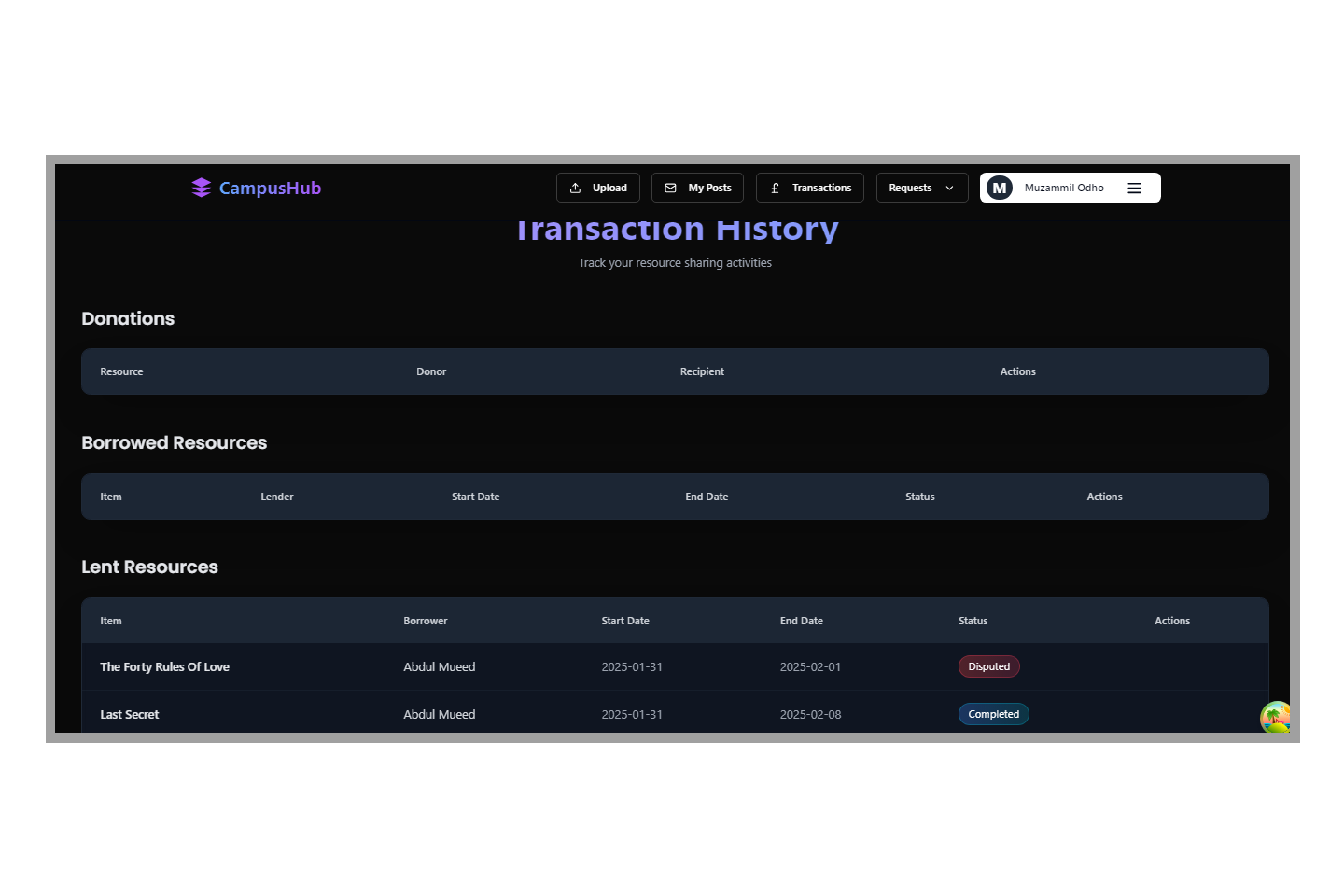
Transaction Page- User can manage and track their transactions
The Story of CampusHub
The Inspiration
It all started during our first year at Mehran University. We noticed how freshers struggled to afford expensive lab equipment like drawing boards and sheets—items they’d only use for a semester or two. Meanwhile, seniors had these resources sitting unused in their rooms, gathering dust. On top of that, the university library lacked non-subject books like novels and fictional works, leaving students with limited options for leisure reading.
One day, while brainstorming ideas for a project, we thought: What if there was a way for students to share resources with each other? This simple idea sparked the creation of CampusHub, a platform designed to make education more affordable, sustainable, and collaborative.
What CampusHub Does
CampusHub is a resource-sharing platform built exclusively for Mehran University students. It allows users to:
- Share Resources: Lend or donate unused lab equipment, books, and other materials.
- Borrow Resources: Access affordable or free resources from peers.
- Track Transactions: Monitor active and completed resource-sharing activities.
- Manage Requests: Send, receive, and handle borrowing requests efficiently.
The platform is secure, with sign-up restricted to university emails (@student.mehran.edu.pk or @faculty.mehran.edu.pk), ensuring it remains a trusted space for students.
How We Built It
Building CampusHub was both exciting and challenging. Here’s how we brought it to life:
Frontend:
We chose React JS for its flexibility and ease of use. The frontend was designed to be intuitive and responsive, with features like resource sharing, request management, and transaction tracking. Every button, form, and page was crafted to make the user experience as smooth as possible.Backend:
For the backend, we used Spring Boot to handle the heavy lifting—business logic, API endpoints, and user authentication. Implementing JWT-based authentication was a milestone, ensuring that only authorized users could access the platform.Database:
We relied on MySQL to store all the data—user profiles, resources, transactions, and requests. Designing the database schema was tricky, but we eventually created a system that could handle complex relationships efficiently.
Challenges We Faced
The journey wasn’t without its hurdles:
- Authentication: Implementing a secure and scalable JWT-based authentication system took countless hours of testing and debugging.
- Database Design: Figuring out how to structure the database to handle relationships between users, resources, and transactions was a major challenge.
- User Experience: Balancing functionality with simplicity was harder than we thought. We went through multiple design iterations based on user feedback.
- Scope Management: Keeping the project focused on Mehran University while leaving room for future expansion required careful planning.
Accomplishments We’re Proud Of
Despite the challenges, we’re incredibly proud of what we’ve achieved:
- Building a fully functional platform that solves real problems for students.
- Creating a secure and user-friendly system that simplifies resource sharing.
- Receiving positive feedback from peers and faculty during initial testing.
- Learning how to work as a team, delegate tasks, and iterate based on feedback.
What We Learned
This project taught us so much:
- Technical Skills: We deepened our knowledge of React JS, Spring Boot, and MySQL.
- Problem-Solving: We learned how to tackle complex challenges like database design and authentication.
- Teamwork: Collaborating as a team improved our communication and task management skills.
- User-Centric Design: We realized the importance of listening to users and iterating based on their feedback.
What’s Next for CampusHub
CampusHub is just the beginning. Here’s what we’re planning next:
- Real-Time Chat System: Integrate a chat feature so students can communicate easily.
- Moderation Tools: Add tools for departmental authorities to resolve disputes.
- Scalability: Expand the platform to other universities or institutions.
- Mobile App: Develop a mobile version for easier access and usability.
- Gamification: Introduce rewards or points for active participation to encourage more users to share resources.
CampusHub isn’t just a project—it’s a step toward a more collaborative and sustainable campus community. We’re excited to see how it grows and makes a difference in the lives of students!
Built With
- java
- javascript
- mysql
- react
- springboot


Log in or sign up for Devpost to join the conversation.