
Inspiration
Campus life is full of small gaps of time between lectures, studying sessions, and daily movement across campus. At the same time, students often need quick help with small tasks like picking up items, printing documents, or getting academic assistance. We noticed there was no simple, trusted, and real-time system that connects students who need help with students who want to earn money during these short windows of time.
CampusGigs was inspired by the idea of turning “idle campus time” into an opportunity economy where students can help each other instantly in a trusted environment.
What it does
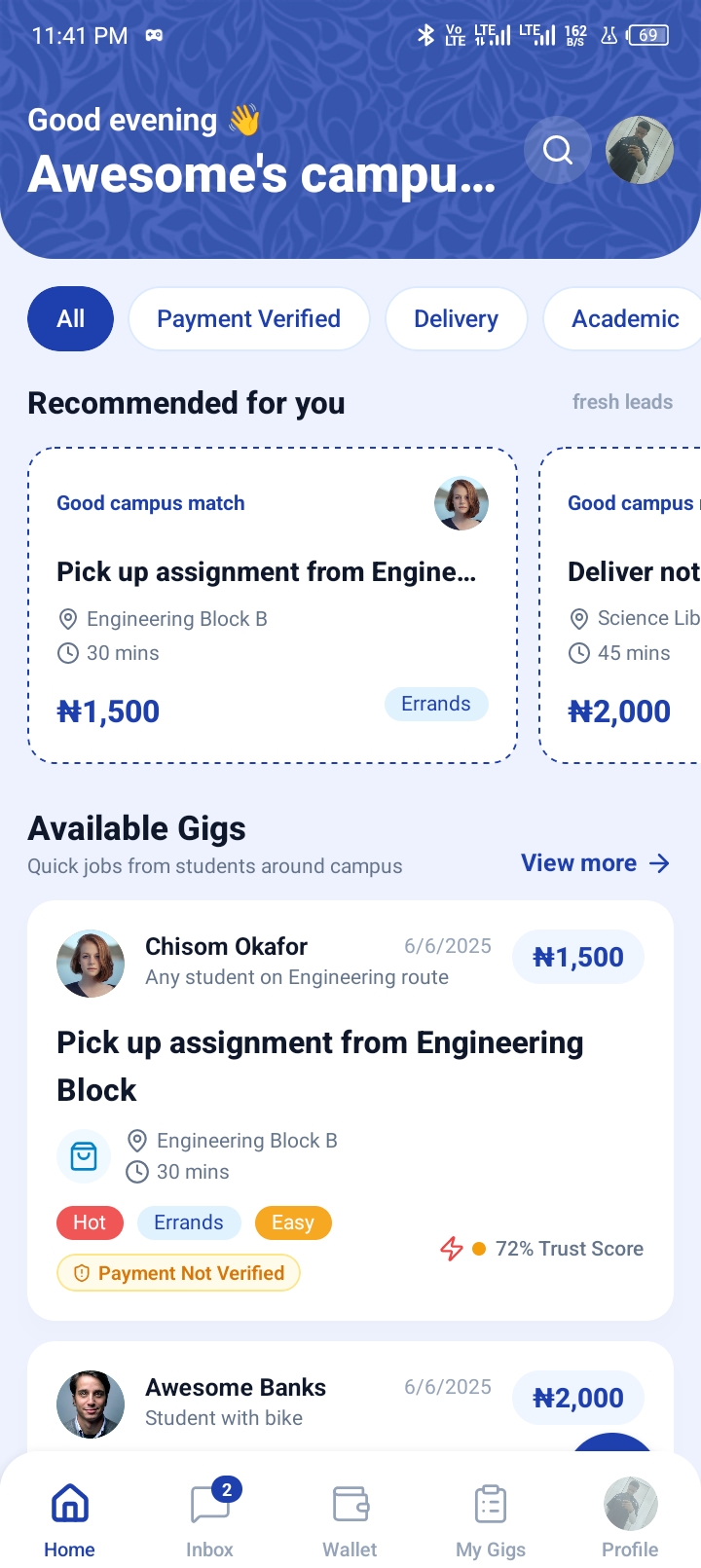
CampusGigs is a hyper-local campus marketplace that connects students who need quick help with students who want to earn money.
Users can:
- Post micro-tasks (gigs) with escrow payment
- Accept and complete gigs in real time
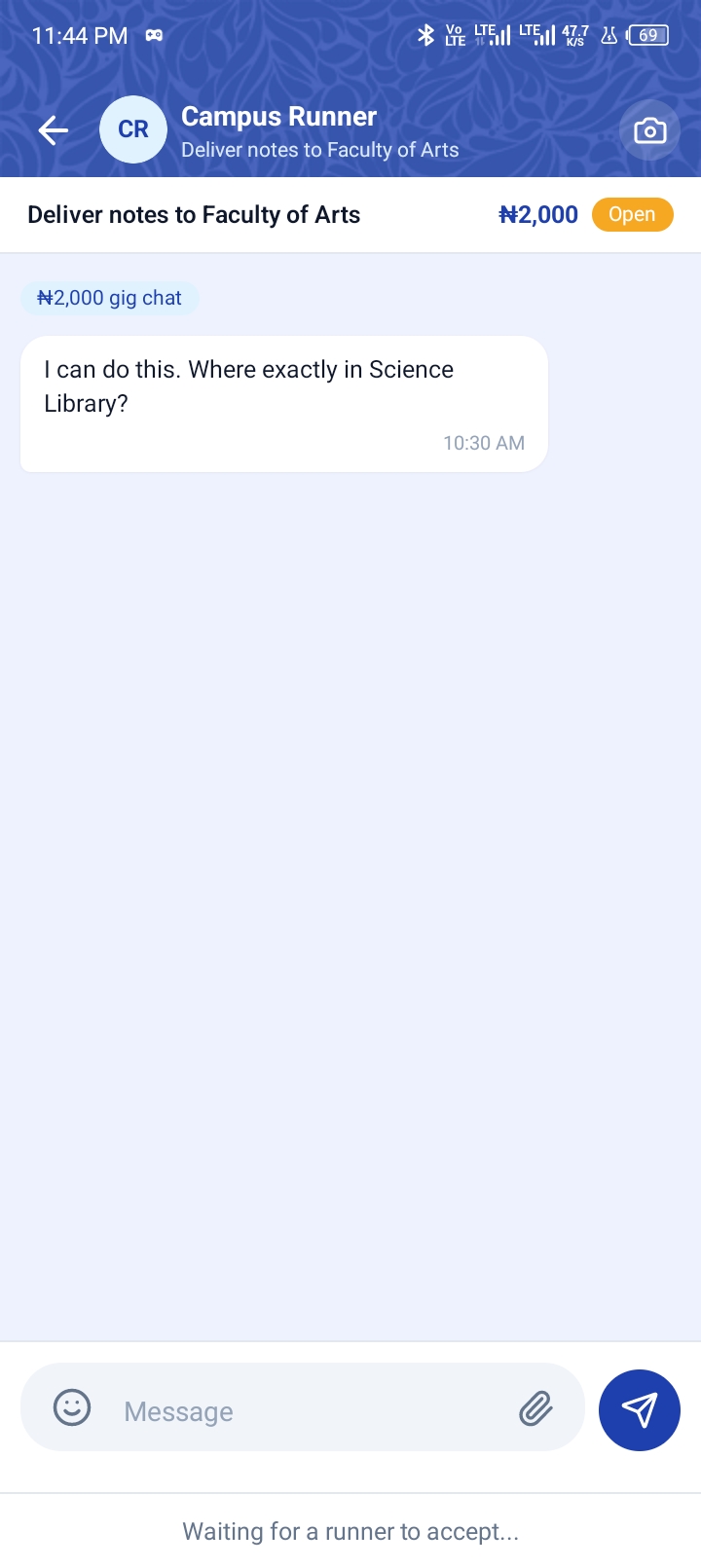
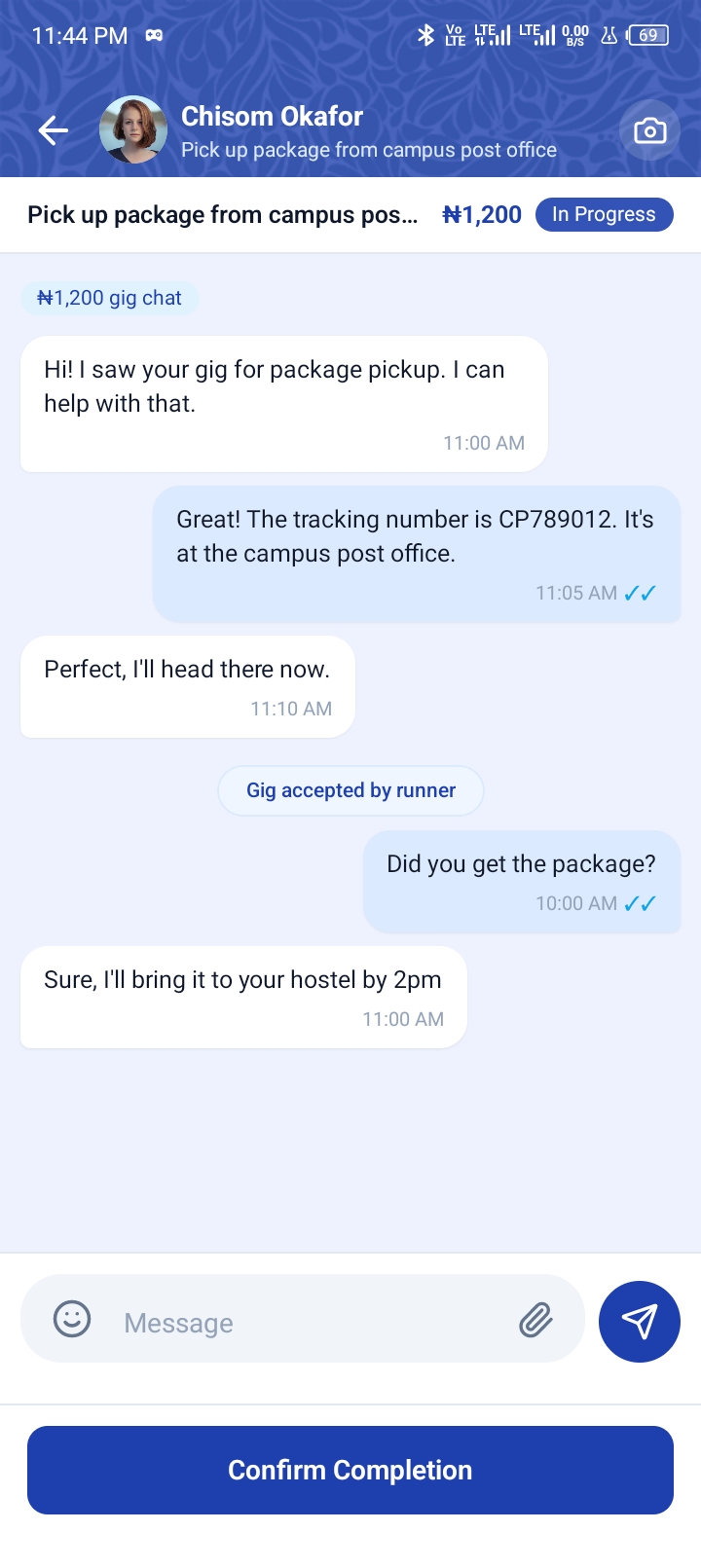
- Chat instantly to coordinate tasks
- Earn money for completing tasks around campus
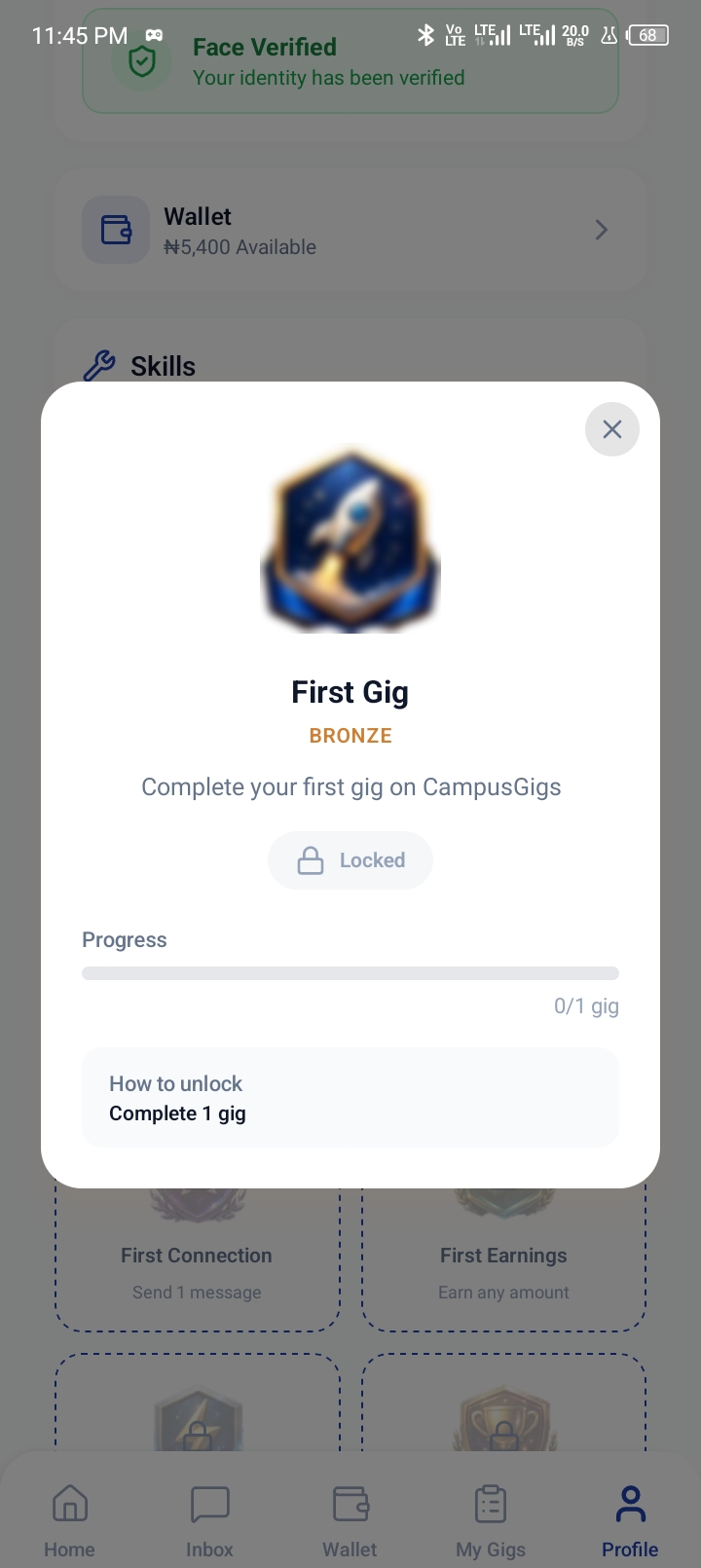
- Build trust scores and reputation
- View gigs based on routes they are already taking
It also introduces a payment verification system where users can optionally deposit funds before a gig starts, improving trust between strangers.
How we built it
We built CampusGigs using a mobile-first architecture focused on speed and real-time interaction.
The frontend was built using React Native with Expo, styled using NativeWind for a clean and modern UI system. Navigation was handled using Expo Router to create a structured multi-screen flow.
For state management, we used Zustand to manage user sessions, gigs, and chat state efficiently.
Firebase was designed as the backend layer for authentication, database storage, and file handling. Firestore models were structured around users, gigs, and messages to support real-time updates.
The app logic was designed as a flow system:
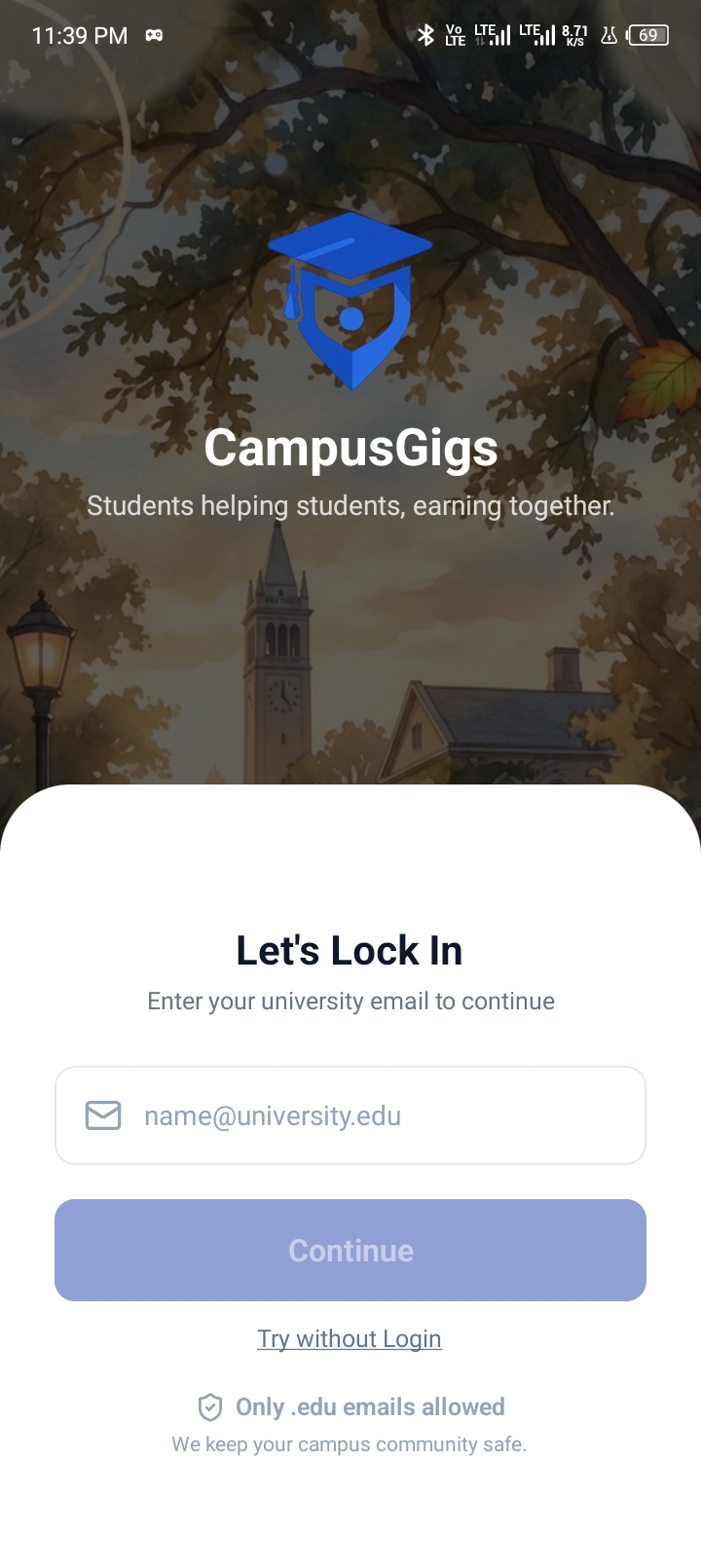
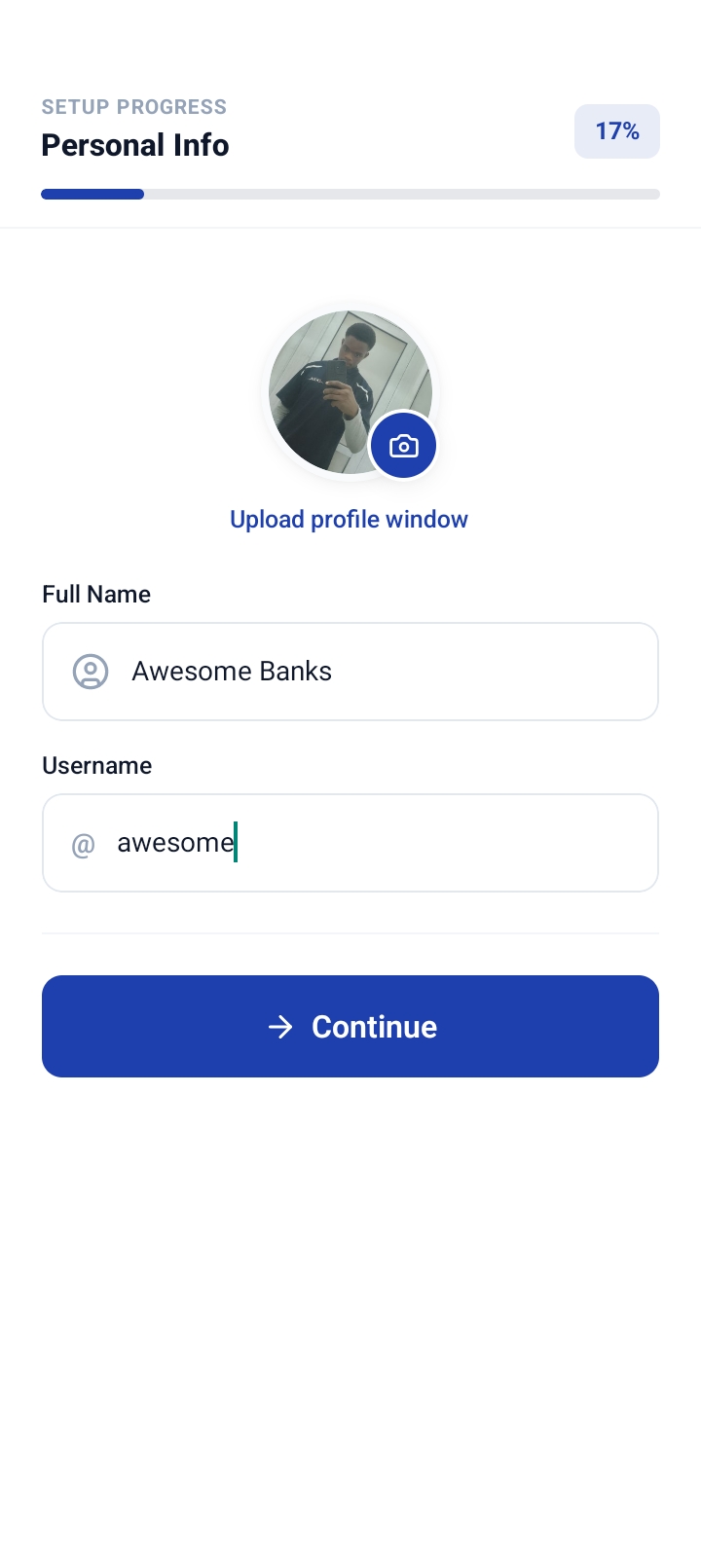
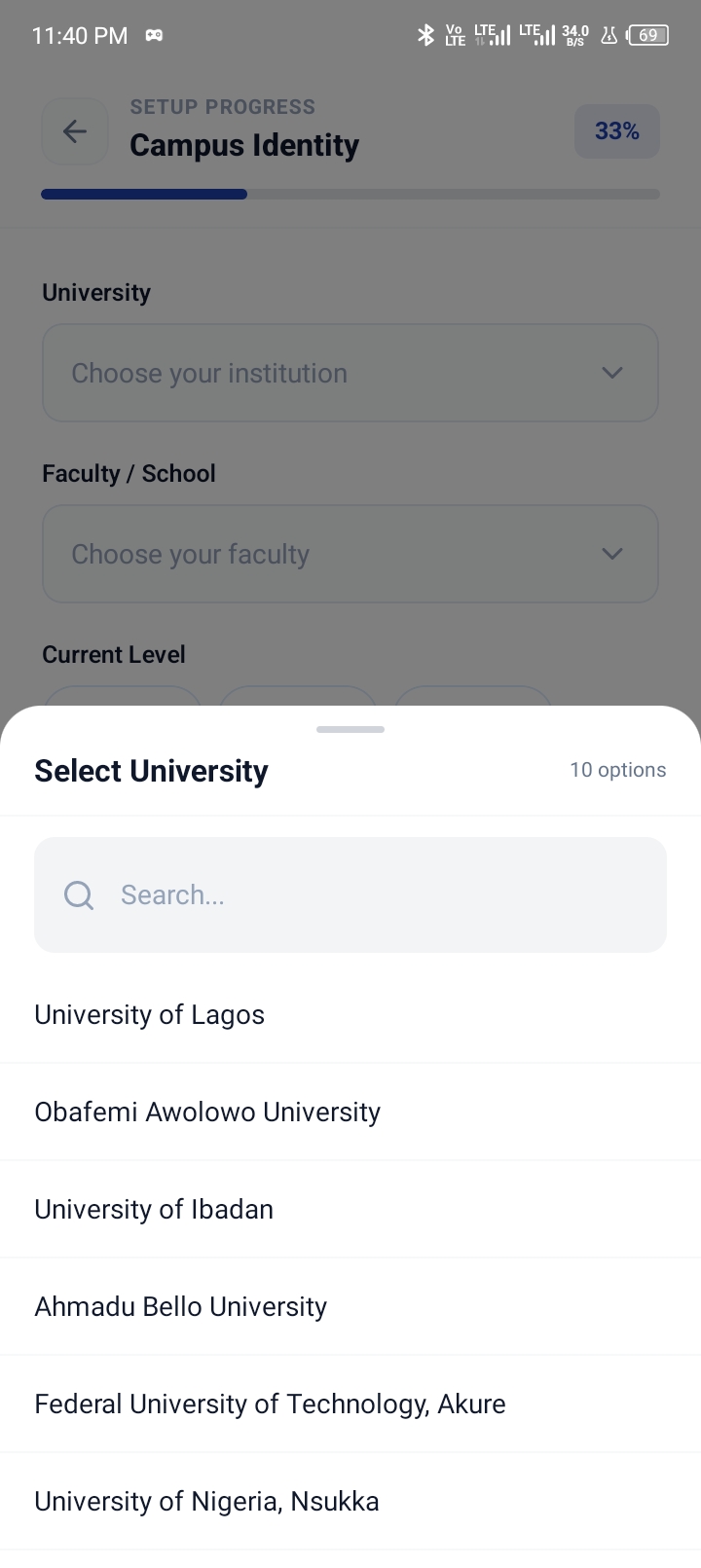
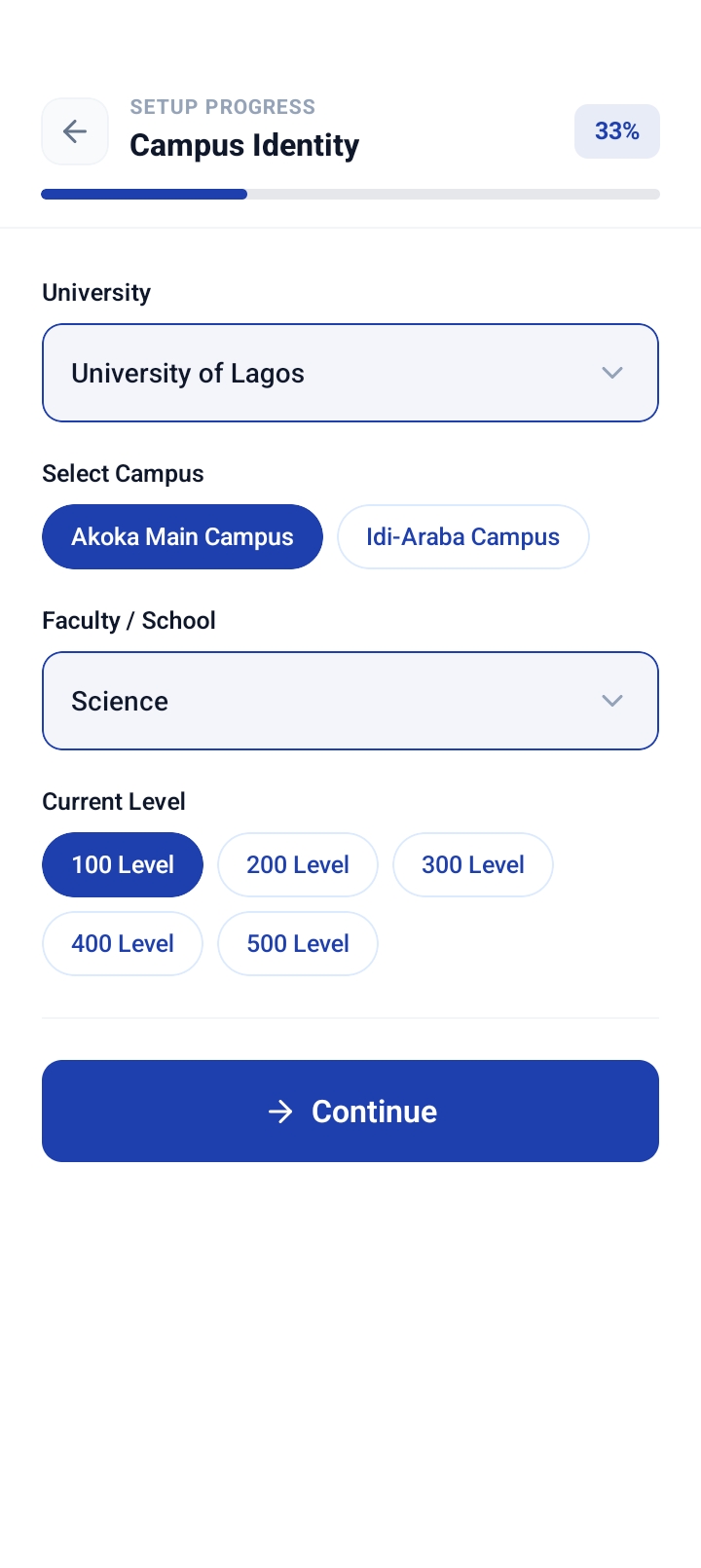
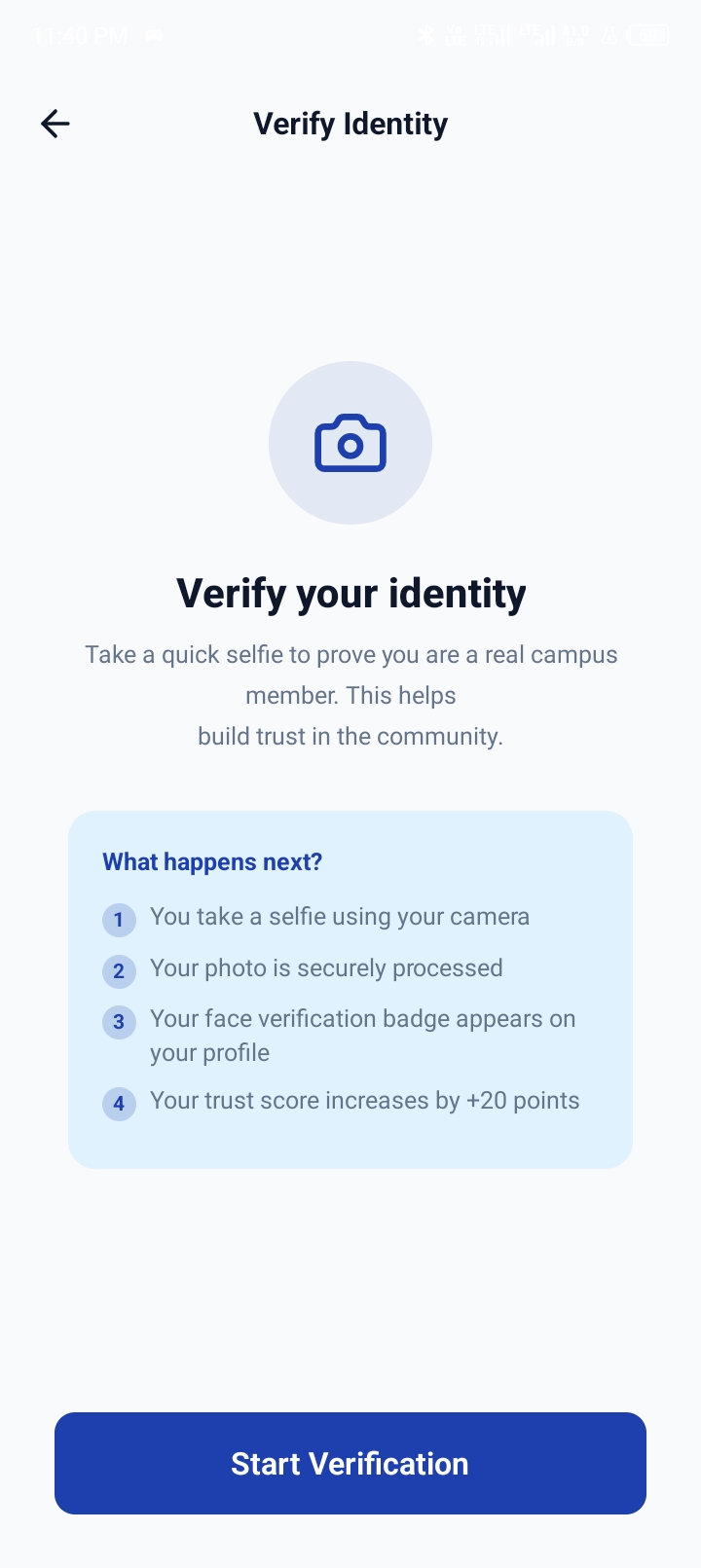
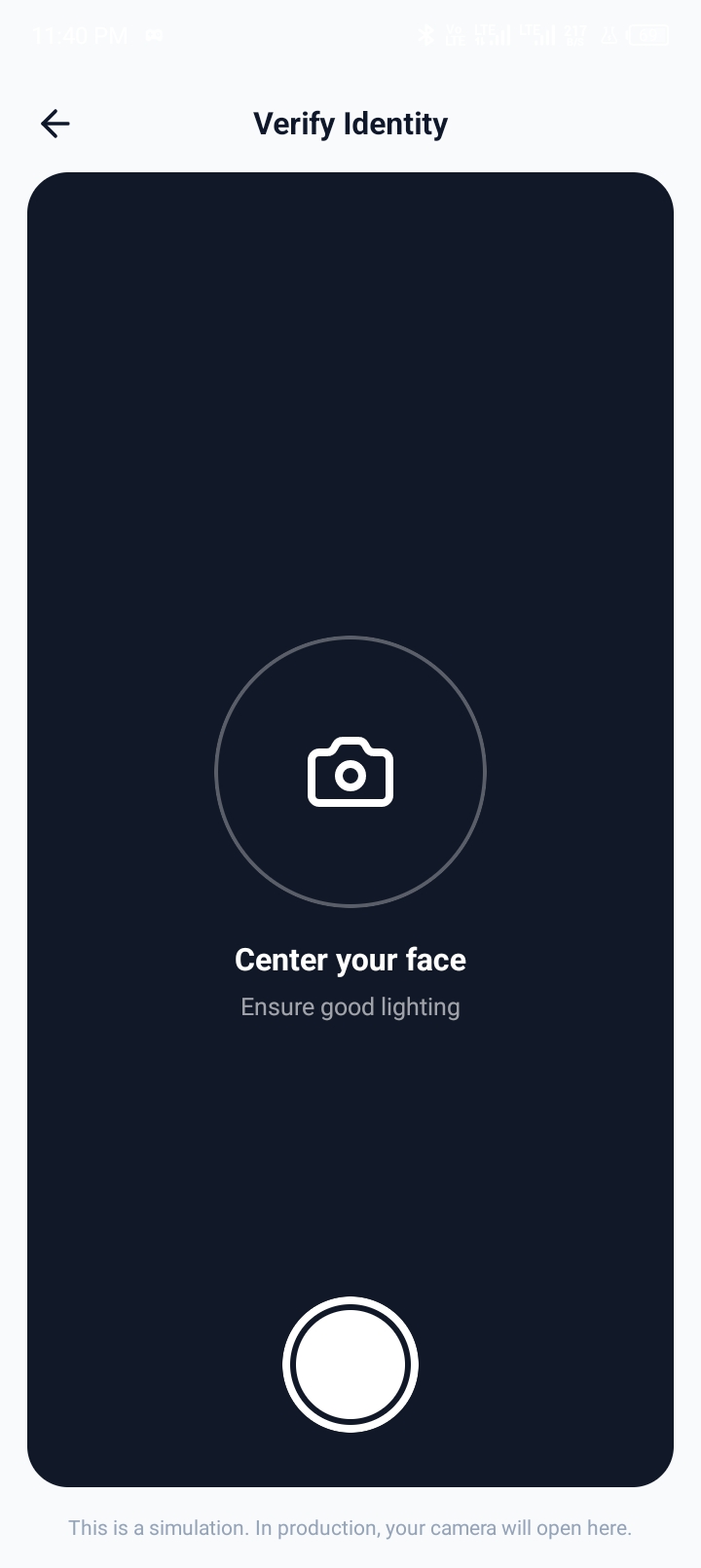
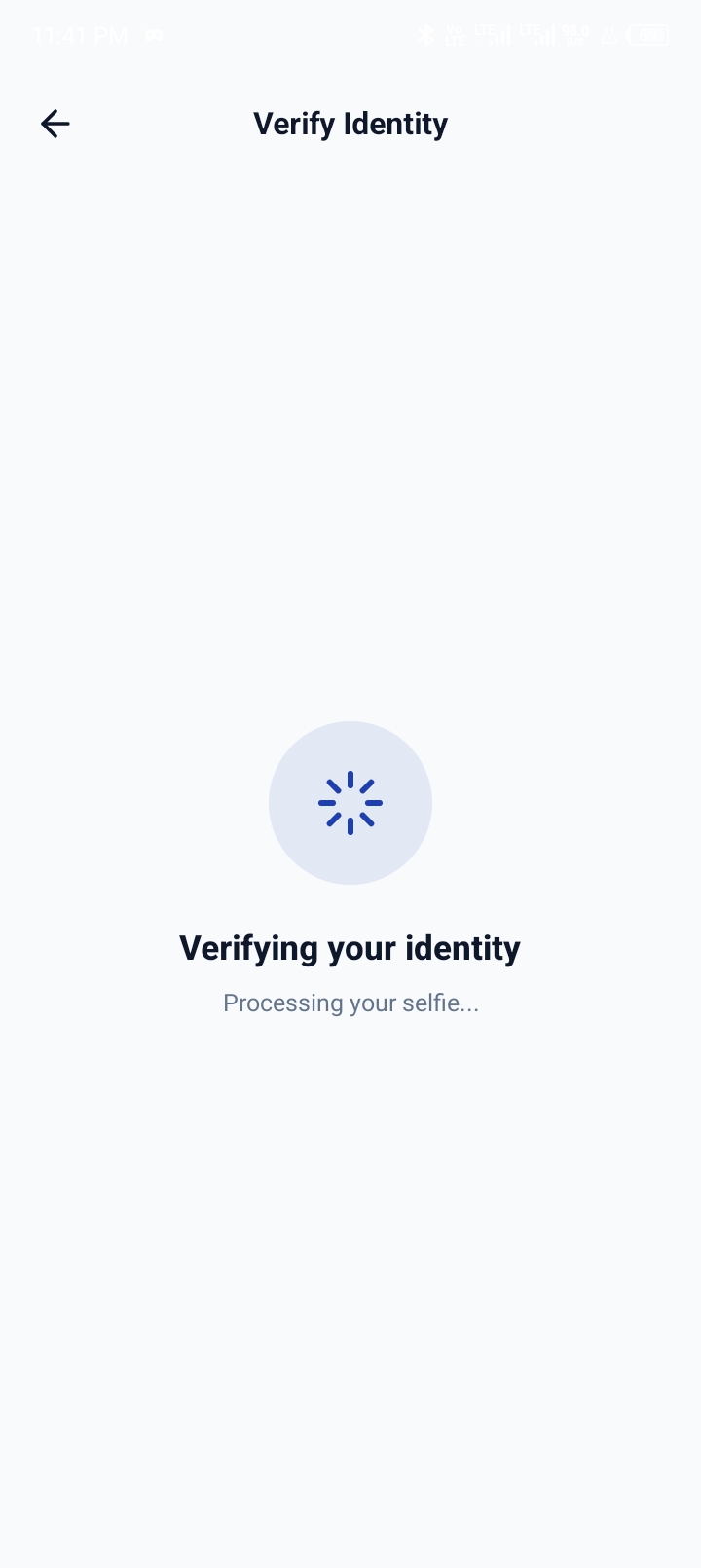
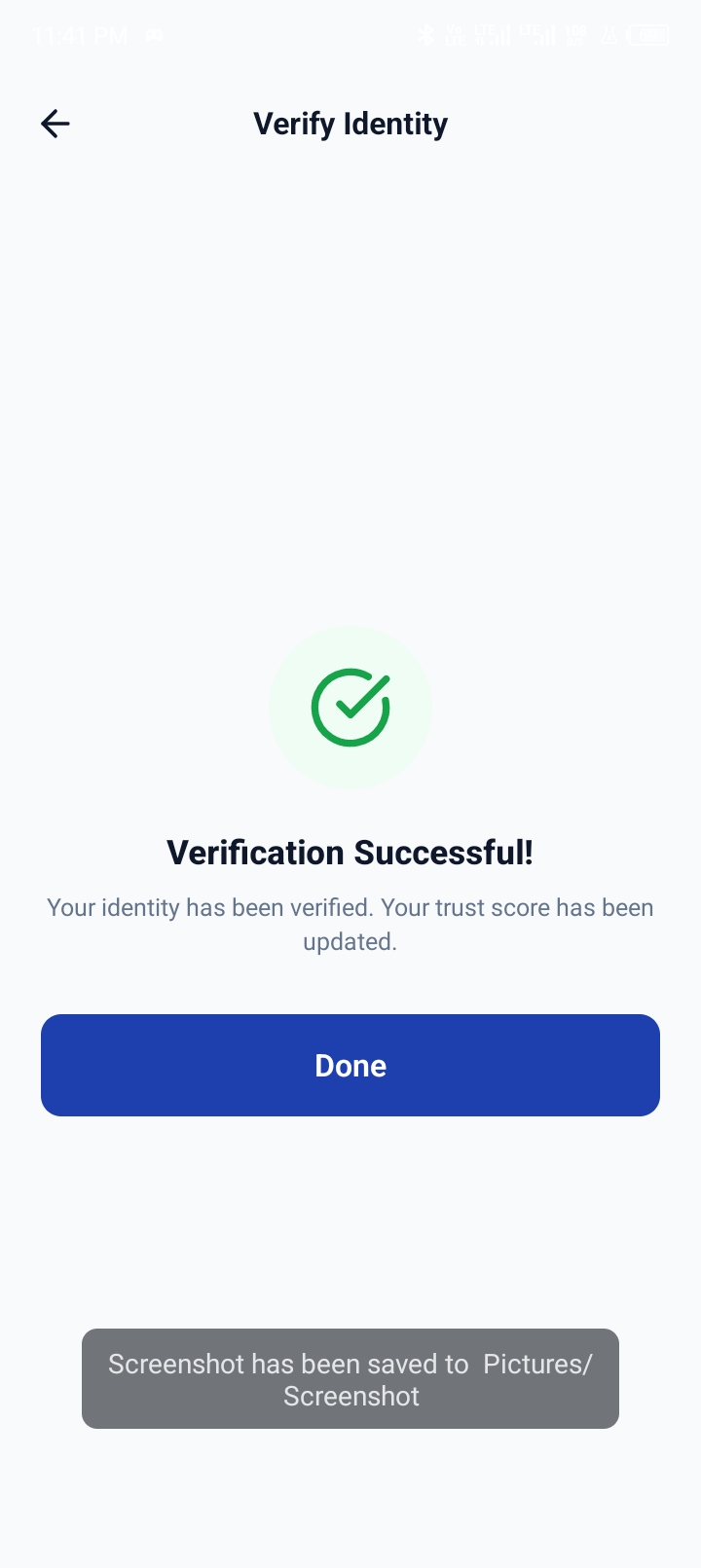
Auth → Onboarding → Facial Verification → Feed → Gig Flow → Chat → Profile System
Most features were implemented using mock data and state-based logic to simulate real-world behavior while maintaining full UI interaction.
Challenges we ran into
One of the biggest challenges was designing a trust system that would make strangers on campus feel safe interacting with each other.
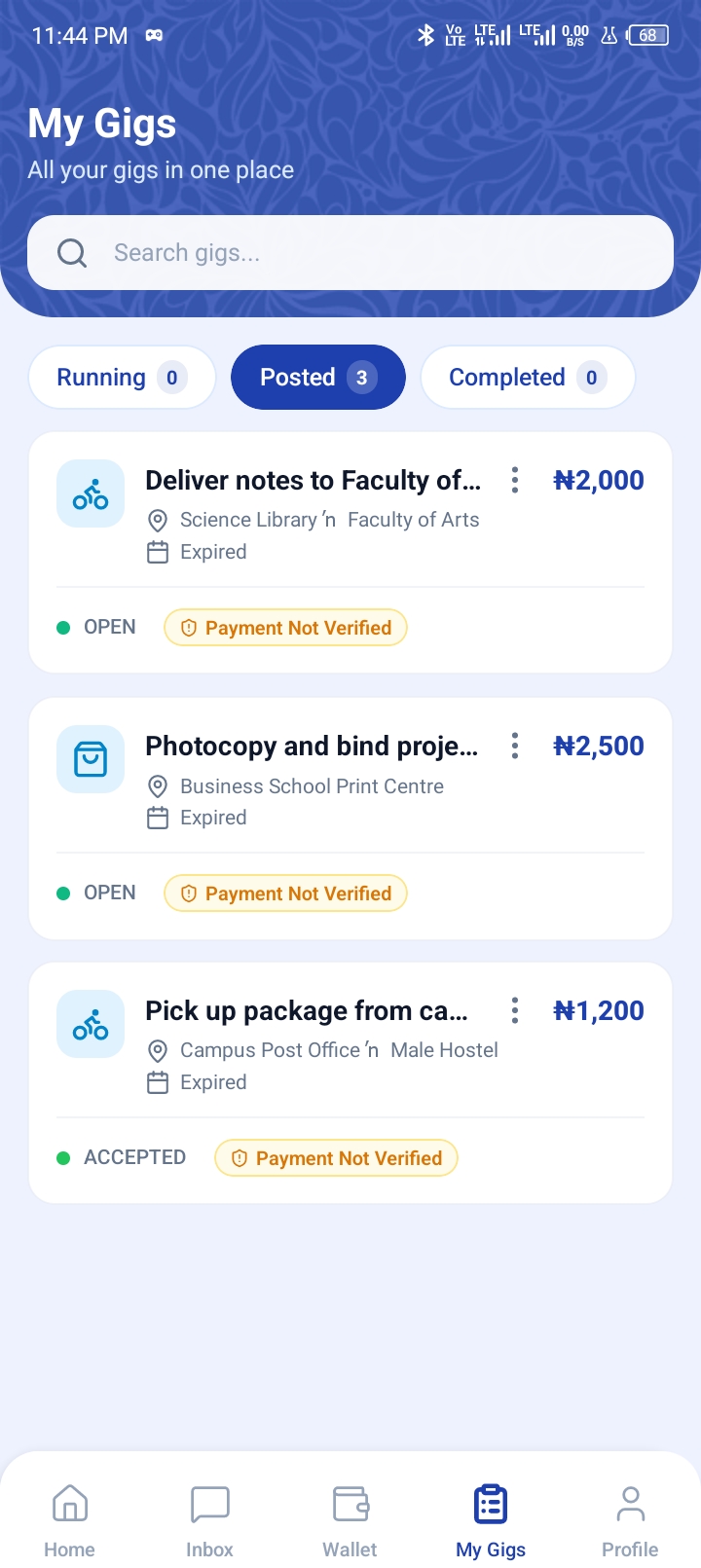
Another challenge was structuring the gig lifecycle system, especially managing states like:
- Open
- Accepted
- In Progress
- Completed
- Payment Verified
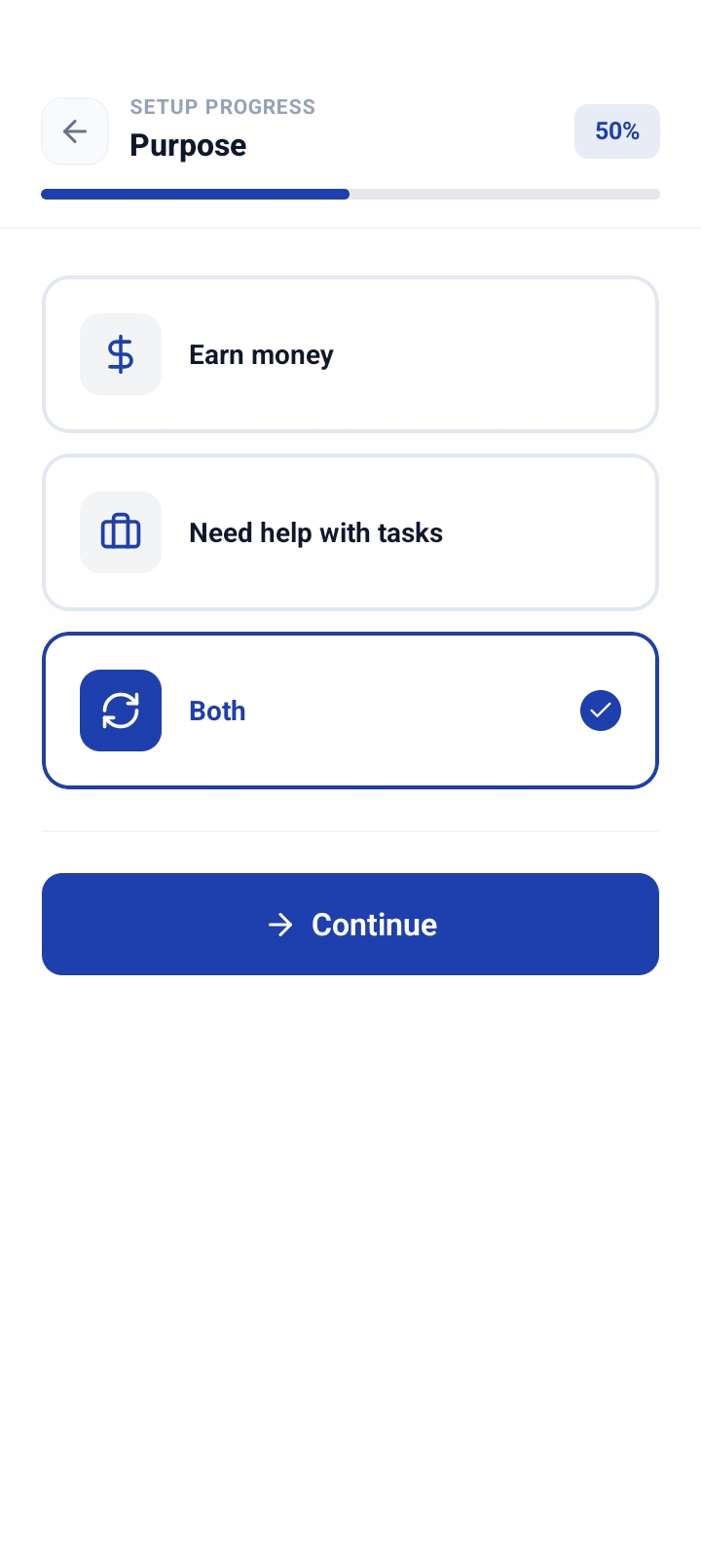
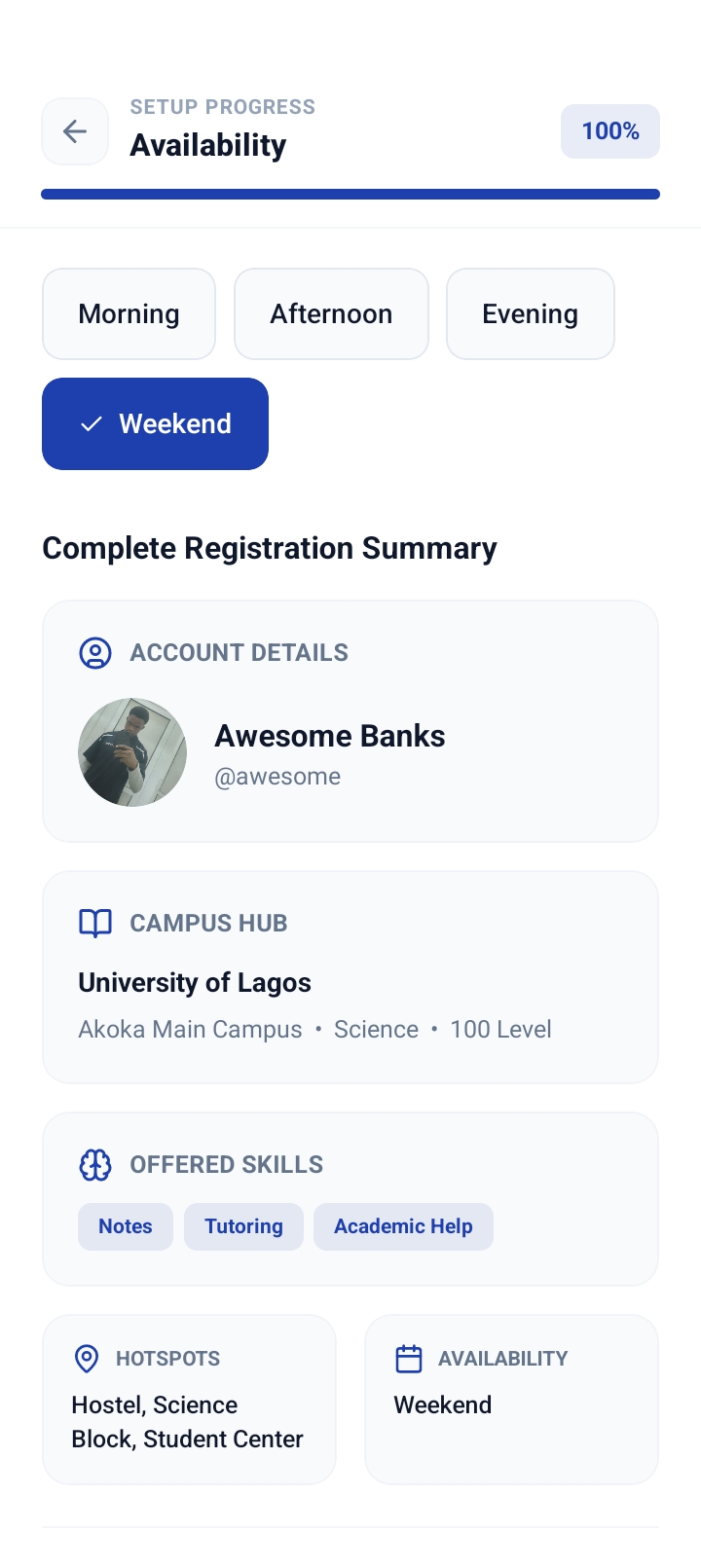
We also had to carefully design the onboarding flow to collect enough user data without overwhelming users during signup.
Balancing complexity with simplicity was a constant challenge since the app needed to feel powerful but still easy to use.
Accomplishments that we're proud of
We successfully designed a full end-to-end system that simulates a real-world gig economy within a university environment.
Key accomplishments include:
- A complete gig lifecycle system from creation to completion
- A trust score and badge system to encourage reliability
- A route-based gig recommendation concept
- A payment verification model inspired by professional freelance platforms
- A clean and scalable UI system designed for real users
- A full onboarding system that personalizes the experience
What we learned
We learned how important system design is when building marketplace-style applications. Even without a fully functional backend, a well-structured frontend system can clearly communicate complex ideas.
We also learned how trust, identity, and verification are the foundation of any peer-to-peer economy.
Technically, we improved our understanding of:
- Component-based architecture in mobile applications
- State management for multi-flow user experiences
- Designing scalable data models for real-time systems
- UX design for trust-heavy applications
What's next for CampusGigs
The next step is to fully integrate backend and replace all mock data with live persistent data.
We also plan to implement:
- Real payment integration with escrow functionality
- Advanced AI-based gig matching
- Real-time notifications
- Liveness detection for user verification
- Campus-wide expansion beyond a single university system
- Stronger fraud detection and reputation scoring models
Eventually, CampusGigs aims to become a full campus economy platform where students can earn, learn, and collaborate in real time and also become an international product.
Built With
- expo-router
- expo.io
- firebase-authentication
- firebase-firestore
- firebase-storage
- lucide-react-native
- nativewind
- react-hook-form
- react-native
- react-query
- typescript
- zod
- zustand

Log in or sign up for Devpost to join the conversation.