-
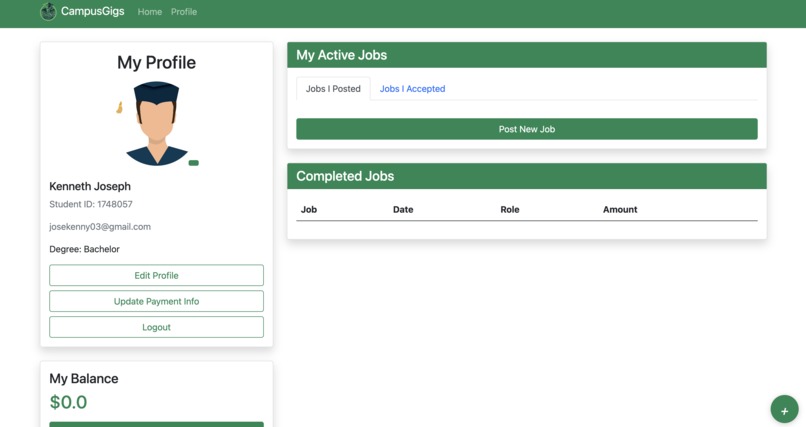
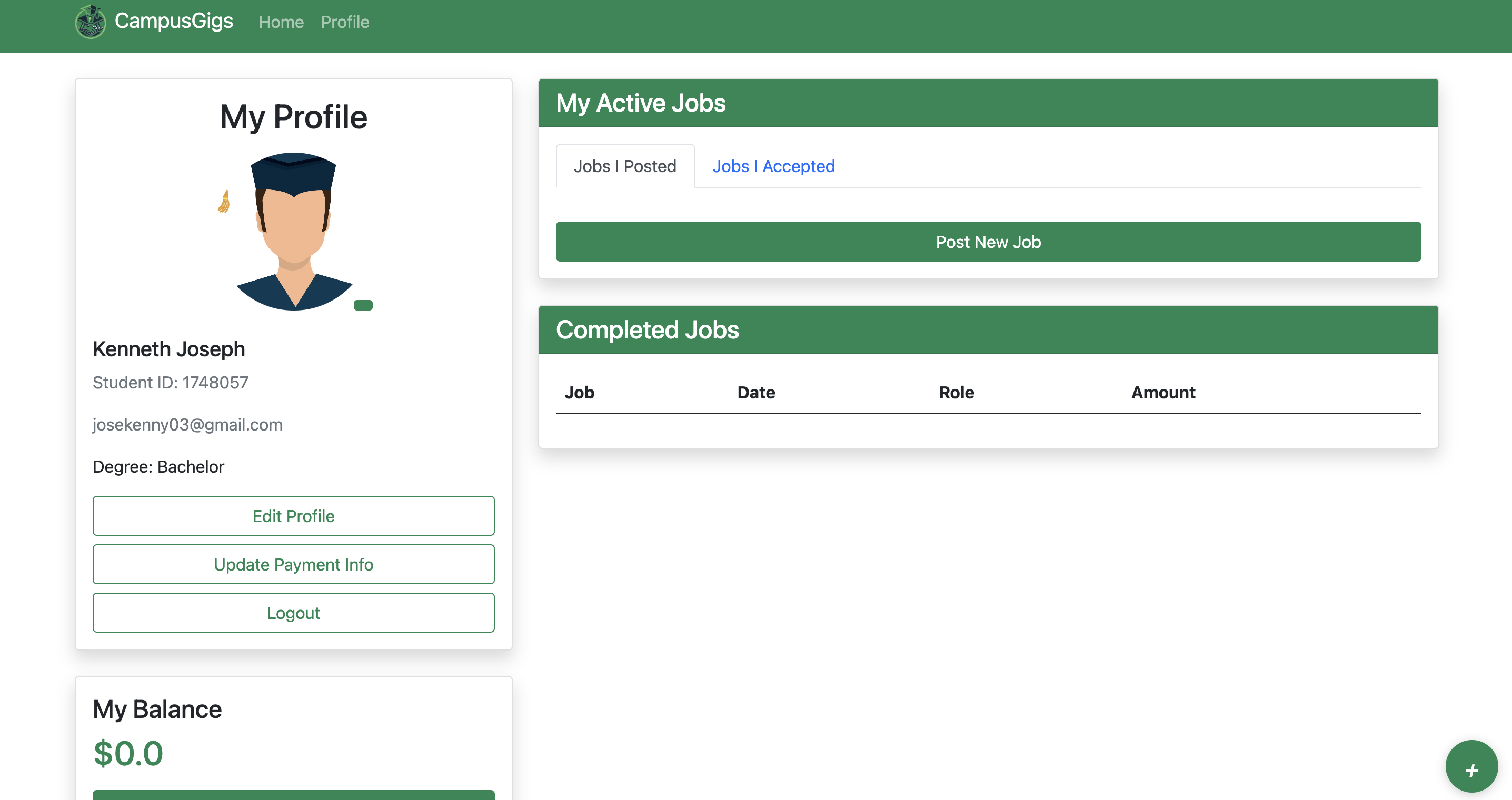
Dashboard
-
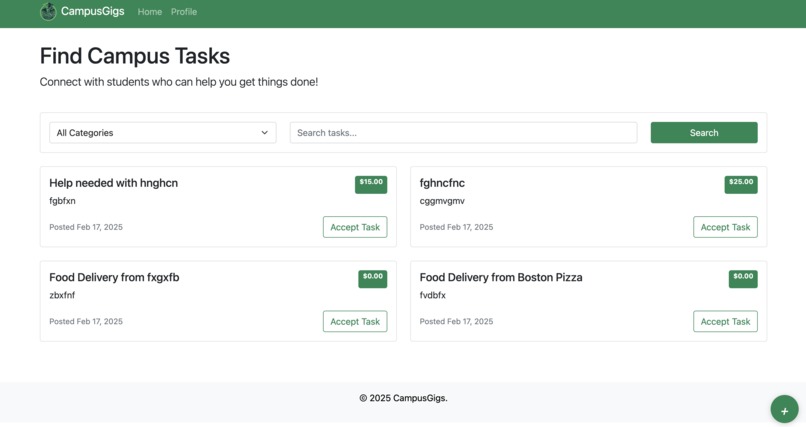
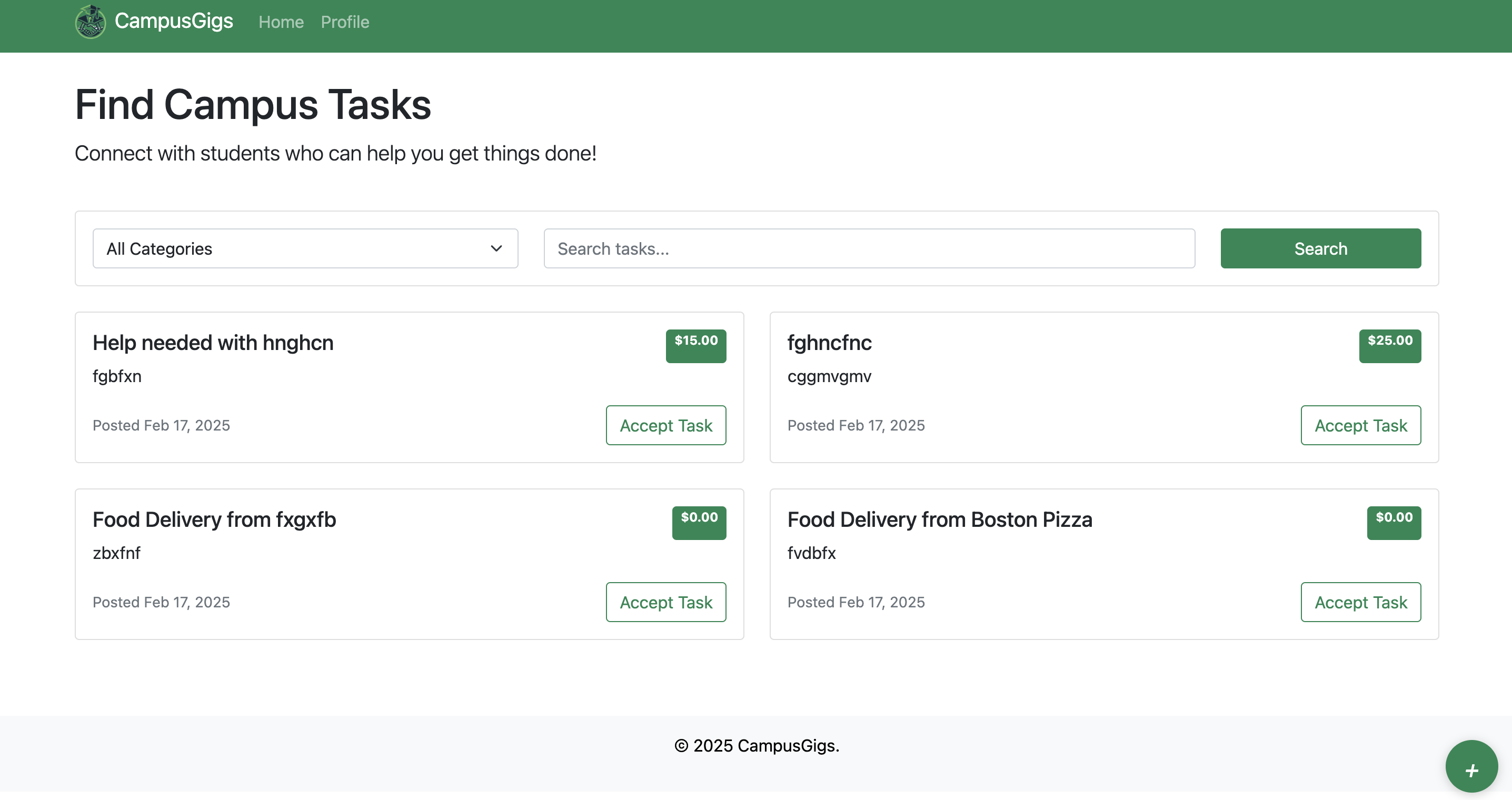
Home Page where users can find tasks
-
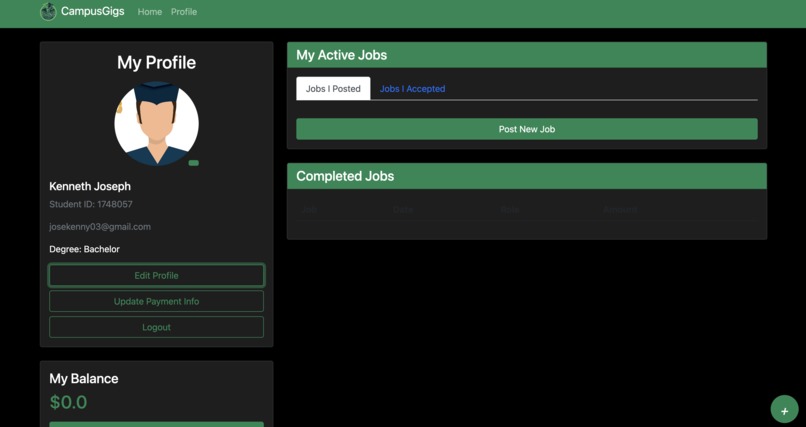
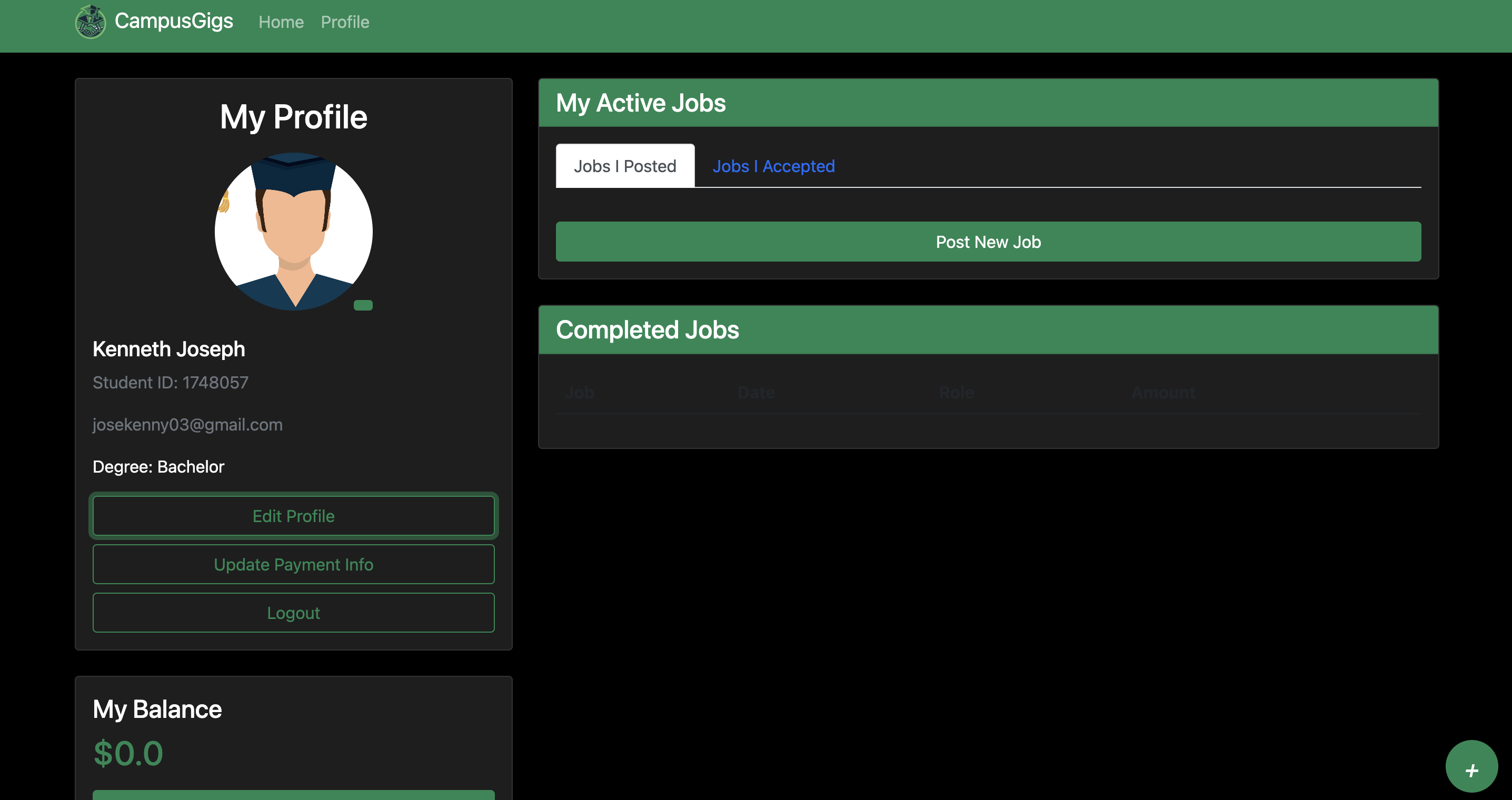
dark mode
-
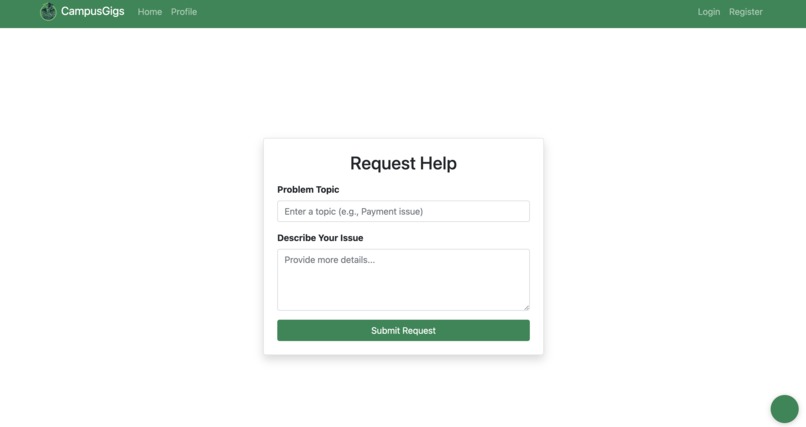
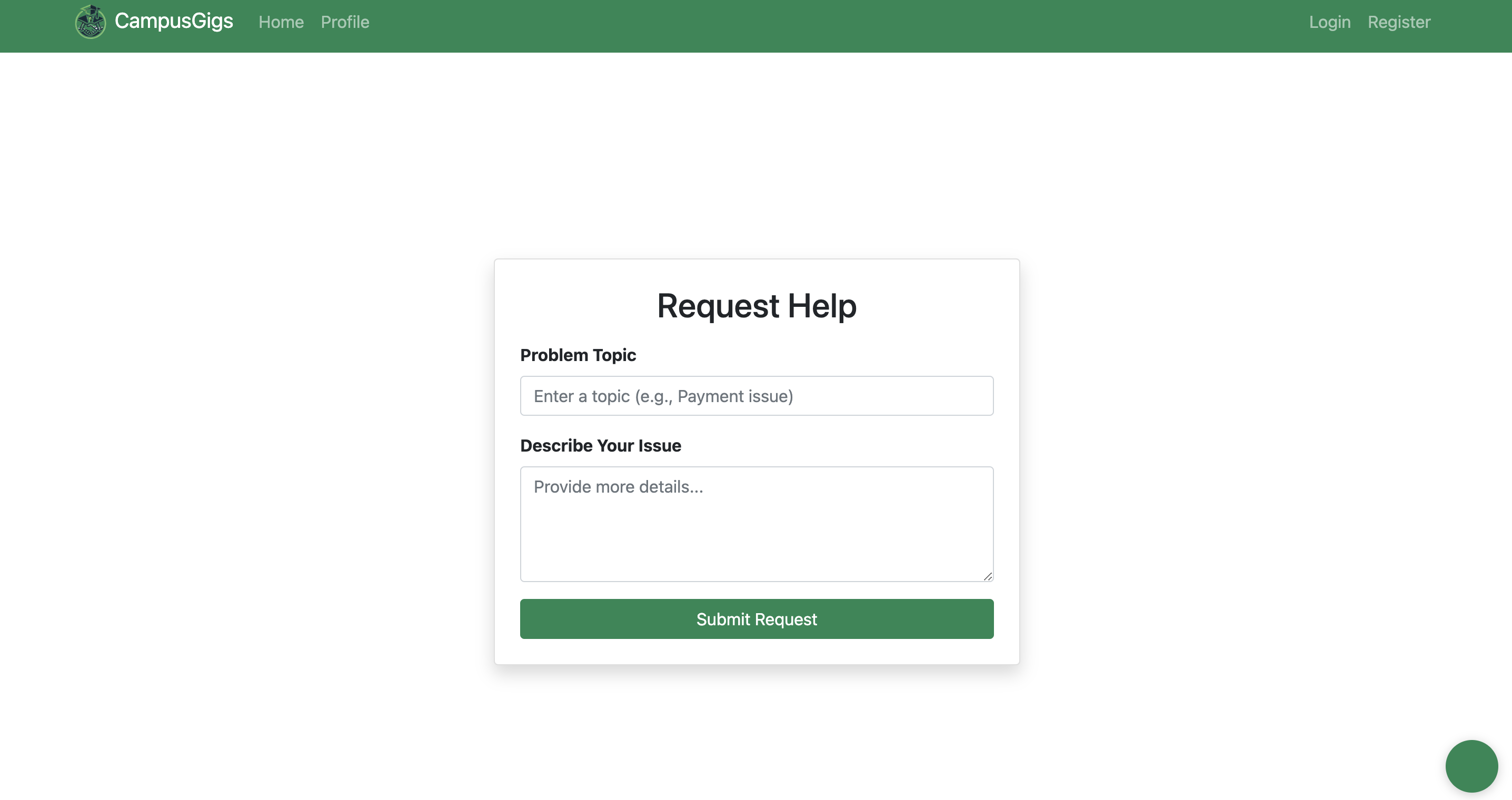
help page
-
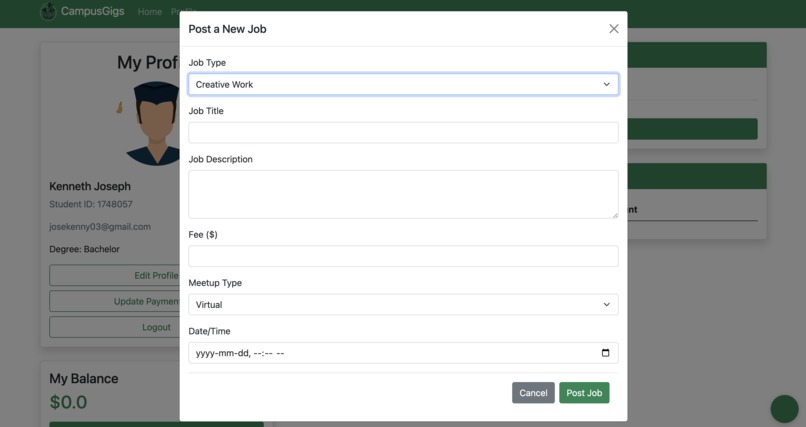
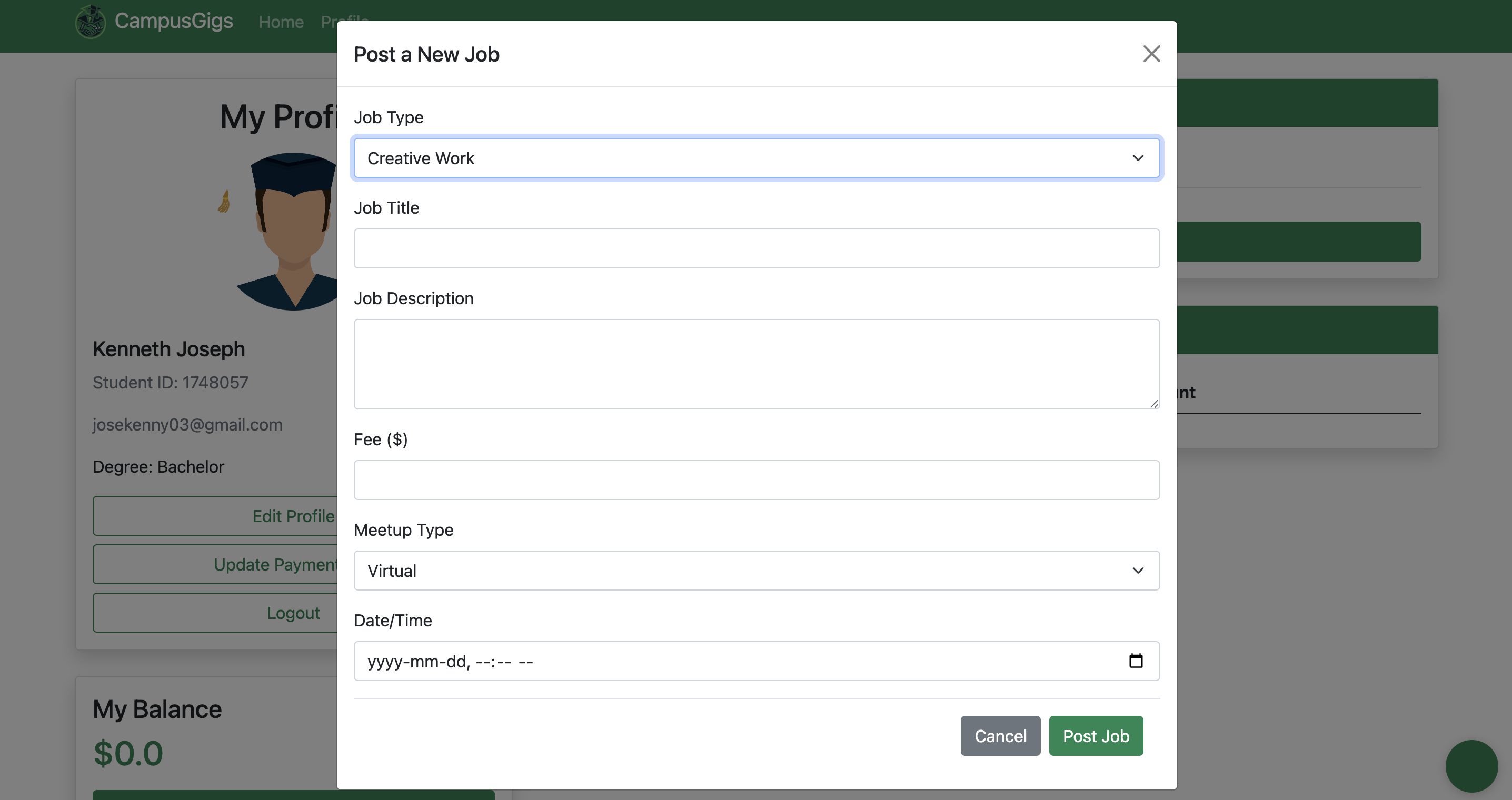
post a job
Inspiration
Our team initially envisioned a student-run food delivery service, similar to UberEats, but designed by students, for students. The idea was to create a non-profit platform where students could earn passive income by delivering food between buildings on campus.
As we explored the idea further, we identified three major inconveniences that students face:
- Getting food delivered conveniently on campus
- Finding academic assistance quickly
- Accessing creative services (design, content creation, etc.)
This led to CampusGigs, a student-only job posting forum where students can find and offer short-term gigs without fixed pricing constraints—operating on a free-market system.
What it does
CampusGigs connects students by offering a flexible gig marketplace where users can:
Post jobs in one of three categories:
Food Delivery – Students request food pickups and deliveries within campus. Academic Help – Tutoring and subject guidance. Creative Work – Graphic design, video editing, and content creation. Set their own pricing – There’s no fixed fee structure. Students can negotiate and adjust pricing based on demand.
Open market job acceptance –
Other students request to accept jobs, and the job poster selects the most suitable applicant. If no one accepts a job within a set timeframe, the poster can increase their offer to attract more interest. Exclusive to students – Every user must register and verify their student status to create a trusted, campus-only job market.
By removing price restrictions, promoting flexibility, and keeping it student-exclusive, CampusGigs fosters a free-market system where students set their own rates, accept jobs that fit their schedule, and build valuable connections within their university.
How we built it
Back-End We built the back end using Flask and PyMongo, integrating it with MongoDB Atlas to handle data storage securely and efficiently. The database stores:
User profiles (including authentication and verification). Job postings (active and completed tasks). Transaction history (tracking earnings and payments).
Front-End Our front-end is designed for a seamless user experience, using:
HTML, CSS, and JavaScript to create an intuitive interface. Bootstrap for a clean, responsive design. AJAX for dynamic updates without full-page reloads.
- Users register and verify as students before accessing job postings.
- Job posts are stored in MongoDB Atlas, categorized by type (Food Delivery, Academic Help, Creative Work).
- A free-market pricing system allows job posters to set their own rates.
- Users can accept jobs, and job posters choose who fulfills the request.
- Transactions and balances are tracked directly within the platform.
Challenges we ran into
As we developed our idea into a fully-fledged platform, we encountered ethical concerns regarding job verification and payment transfers. A major issue was the risk of job disputes, where an acceptor claims a job is complete, but the poster disagrees.
To address this, we implemented a photo verification system. When a job is accepted, CampusGigs acts as a third party, temporarily holding the payment from the job poster. Once the acceptor uploads a confirmation photo proving the job is done, the funds are released to them. This ensures trust and accountability within the platform.
One of our key challenges was selecting the right database solution that would scale with user growth. We initially chose MongoDB Atlas with PyMongo, as it provided flexibility and fast data handling for a free-market gig platform. However, as we progressed, we realized that a hybrid approach, incorporating SQL for transactional integrity (e.g., payments & user balances), would be more sustainable for long-term scalability.
Managing multiple contributors working on different files simultaneously led to Git conflicts that eventually broke our project. At one point, we had to spend two hours fixing the repository due to merge conflicts and uncoordinated commits.
To improve workflow, we: Divided responsibilities – Two members focused on front-end, two on back-end, and one handled logistics & integration. Implemented better Git practices – Used feature branches, regular commits, and structured merge strategies. Maintained a working build – Ensured that every major push resulted in a functional version of the project.
Accomplishments that we're proud of
We’re proud of how we built strong chemistry as a team, combining our ideas, skills, and creativity to develop a platform that students like us can genuinely use. From brainstorming to execution, we worked towards a shared vision, turning our concept into reality. While we encountered challenges along the way, we collaborated, problem-solved, and innovated, ultimately building something we could see ourselves using—a platform designed by students, for students.
What we learned
Dispute resolution is critical in gig-based platforms, and verification mechanisms (like photo uploads) can help mitigate fraud. Scaling requires flexibility – While MongoDB is great for fast development, a hybrid SQL approach might be needed for robust financial transactions. Effective team collaboration is key – Clear task divisions, Git discipline, and regular communication prevent major breakdowns in a project.
What's next for CampusGigs
As we reflect on what we’ve built, we see exciting opportunities for growth and improvement. Here’s what’s next:
Enhancing Trust & Verification Implementing student ID verification to ensure secure and authentic transactions. Adding a rating & review system so users can build reputation and reliability.
Expanding Payment & Security Features Exploring secure escrow-based payments to further protect both job posters and acceptors. Integrating multiple payment options, including campus-based payment systems.
Improving Job Matching & User Experience Developing AI-powered job recommendations based on user preferences and history. Optimizing the interface to make job posting and searching even more seamless.
Scaling to More Campuses Expanding beyond a single university, allowing students from different campuses to participate. Partnering with student organizations and university networks to grow the community.
Hybrid Database Approach for Better Performance Exploring a hybrid SQL + NoSQL approach to optimize financial transactions & data storage. Improving backend efficiency for handling high user traffic.
CampusGigs has the potential to revolutionize student gig work, and we’re excited to continue building, refining, and expanding. The journey doesn’t stop here—we’re just getting started!

Log in or sign up for Devpost to join the conversation.