-
-
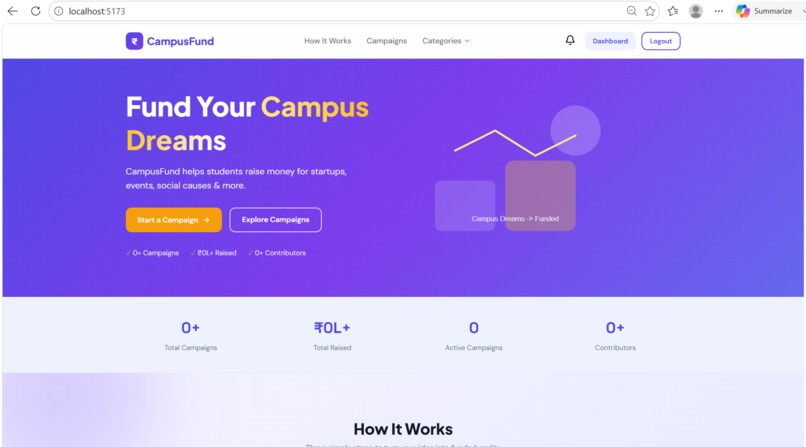
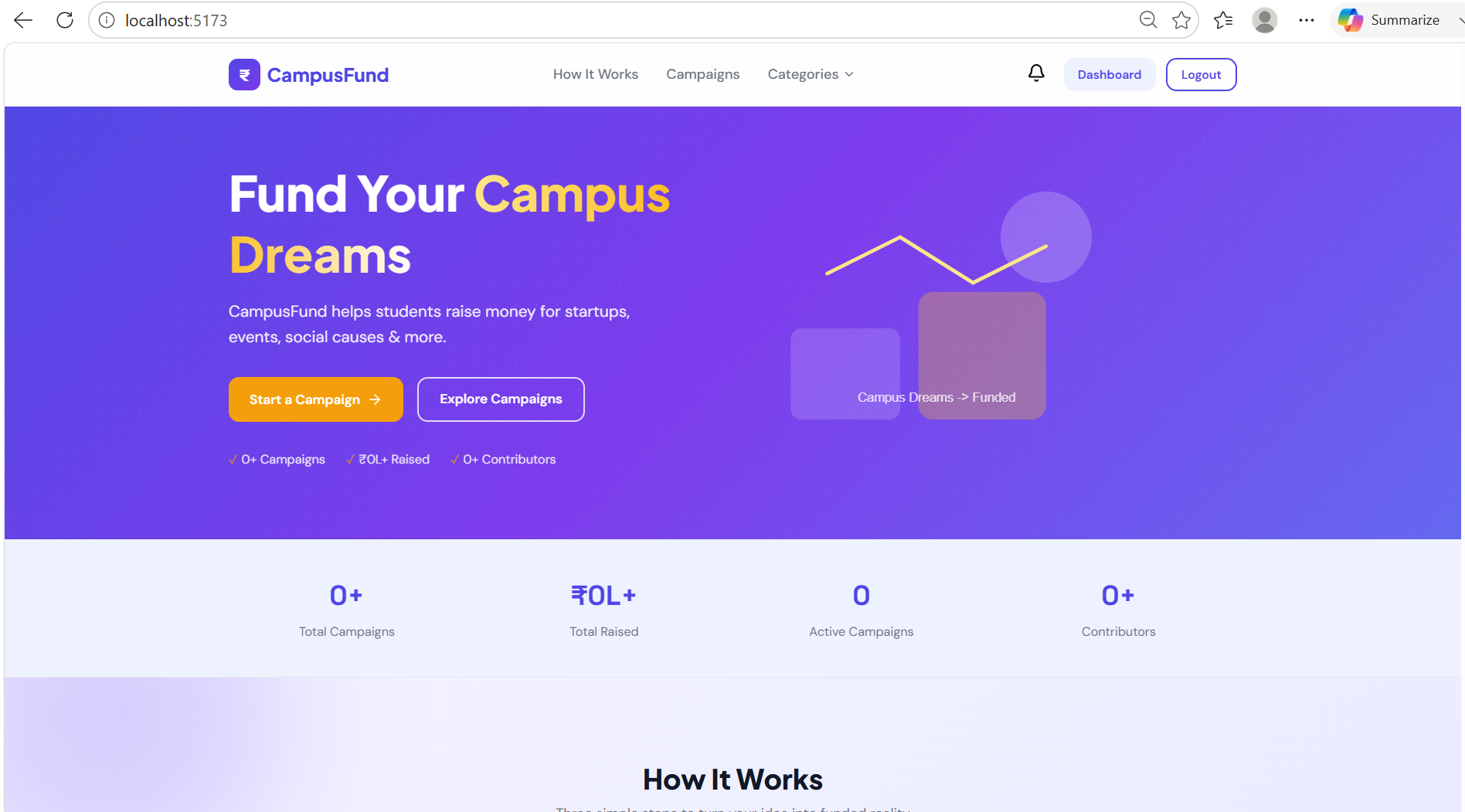
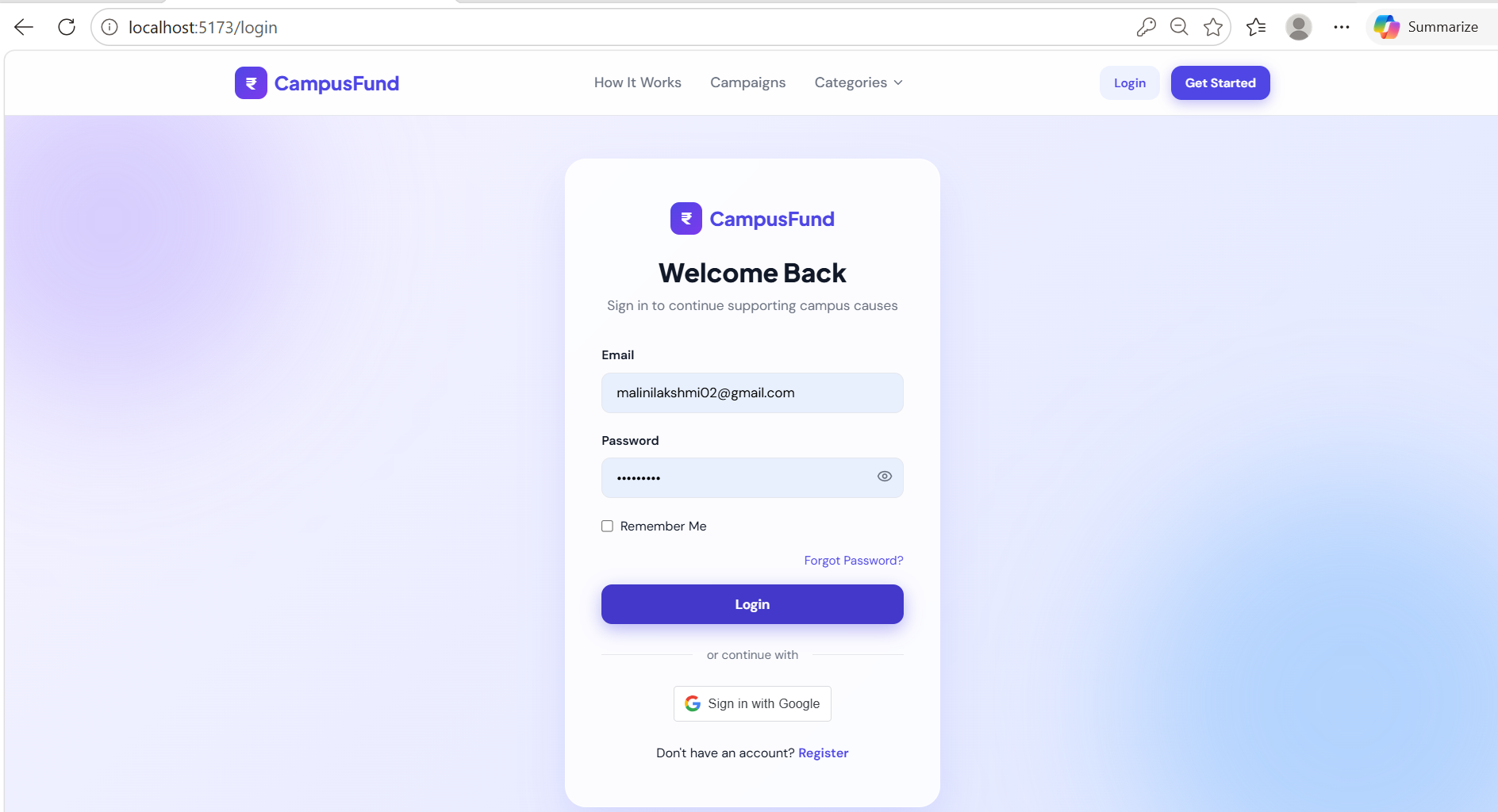
"Welcome to CampusFund! A clean, student-friendly interface we designed from scratch using React."
-
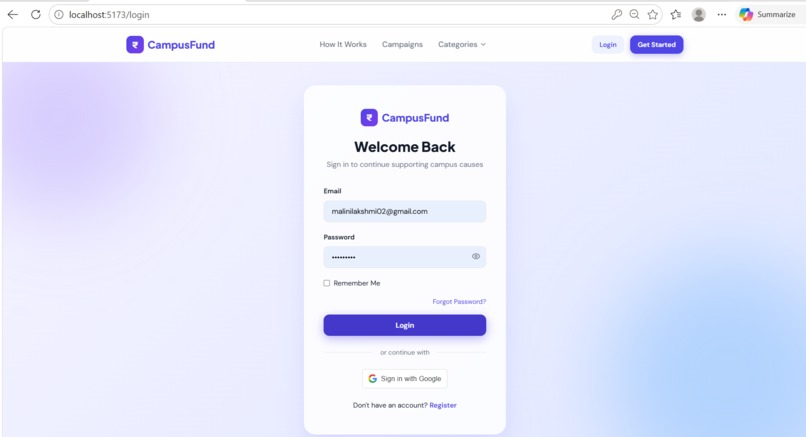
"Security first! We integrated Google OAuth so students can log in securely with just one click."
-
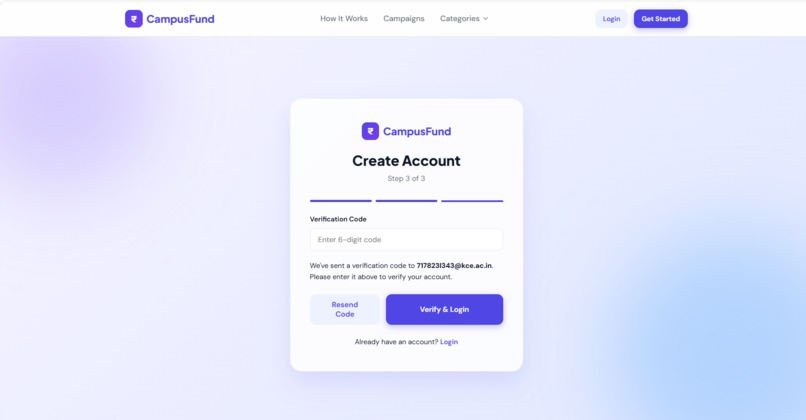
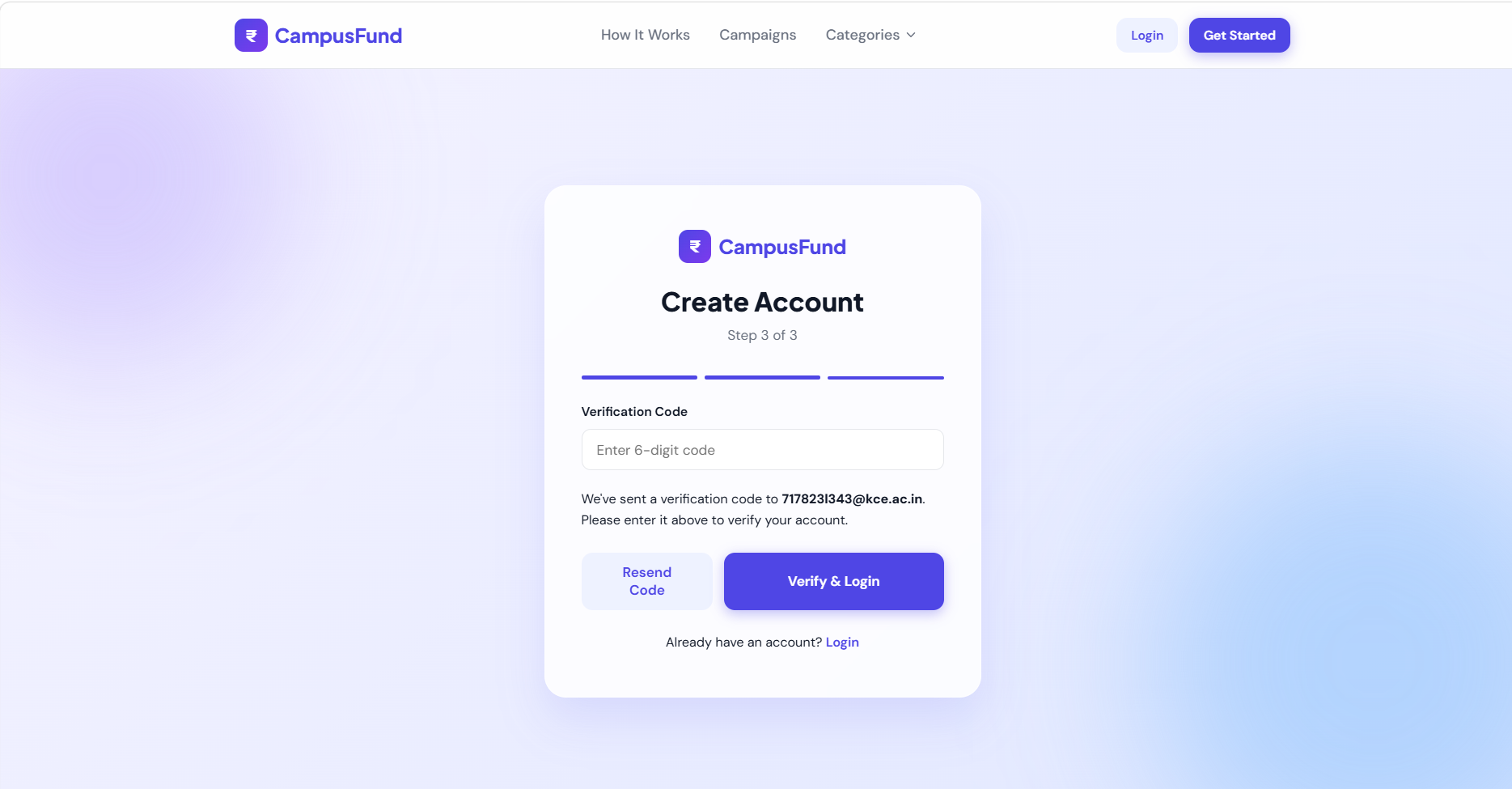
"Keeping our campus safe! A 6-digit email verification code ensures every user is genuine."
-
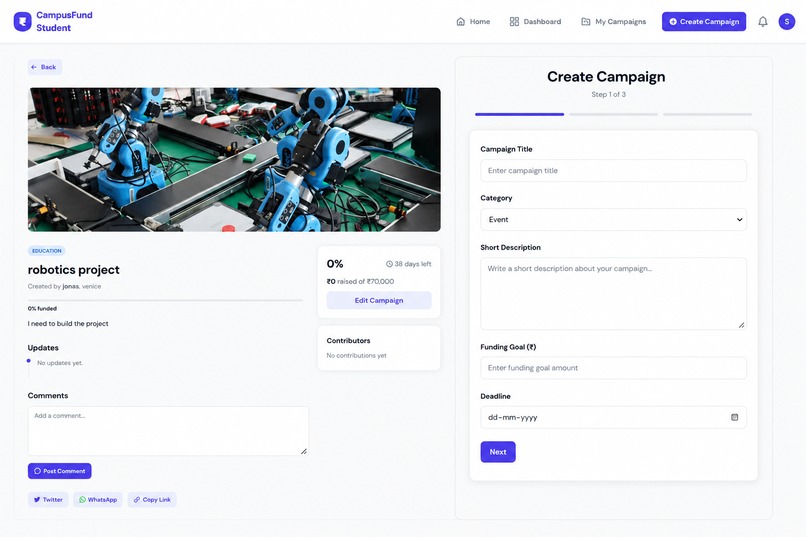
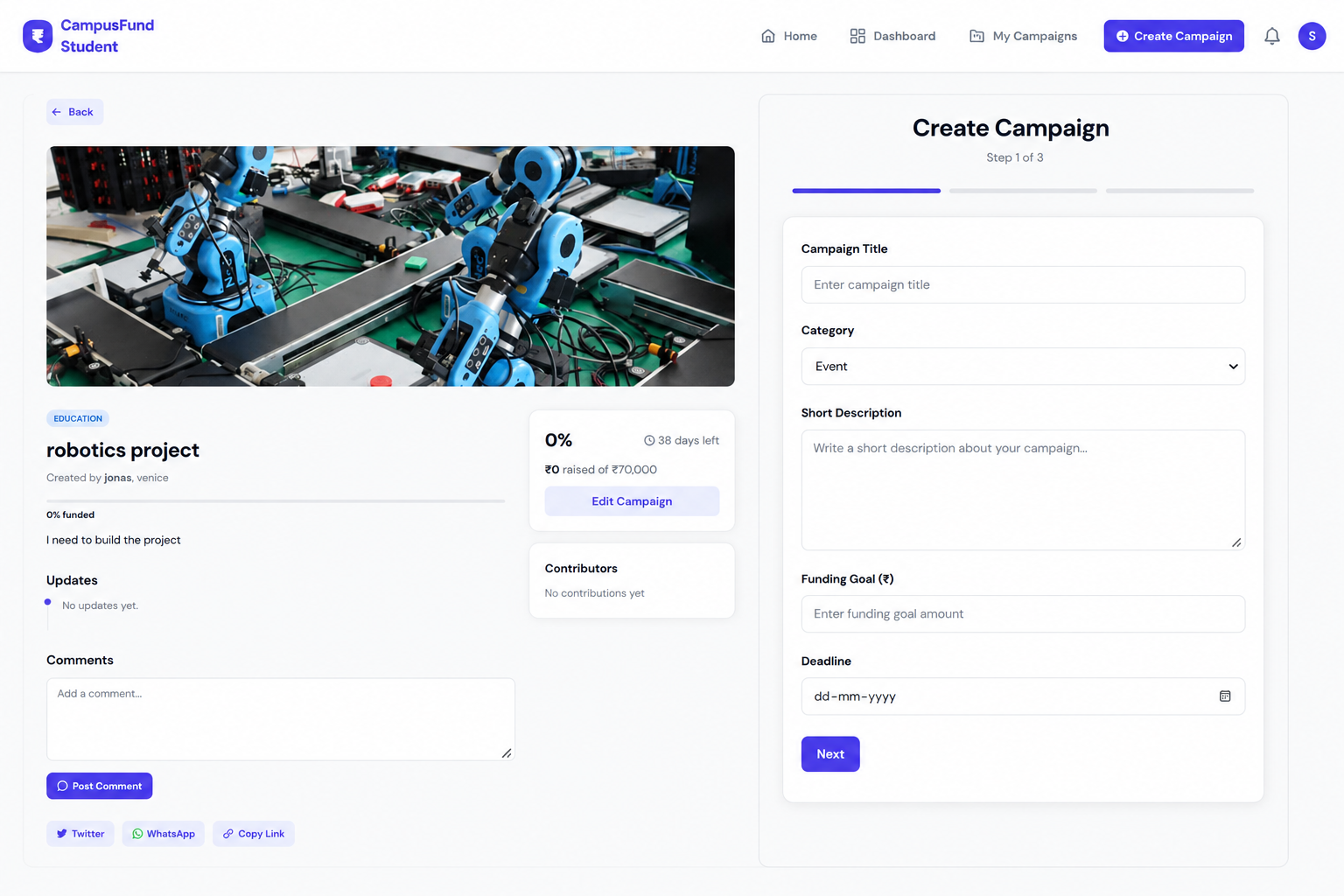
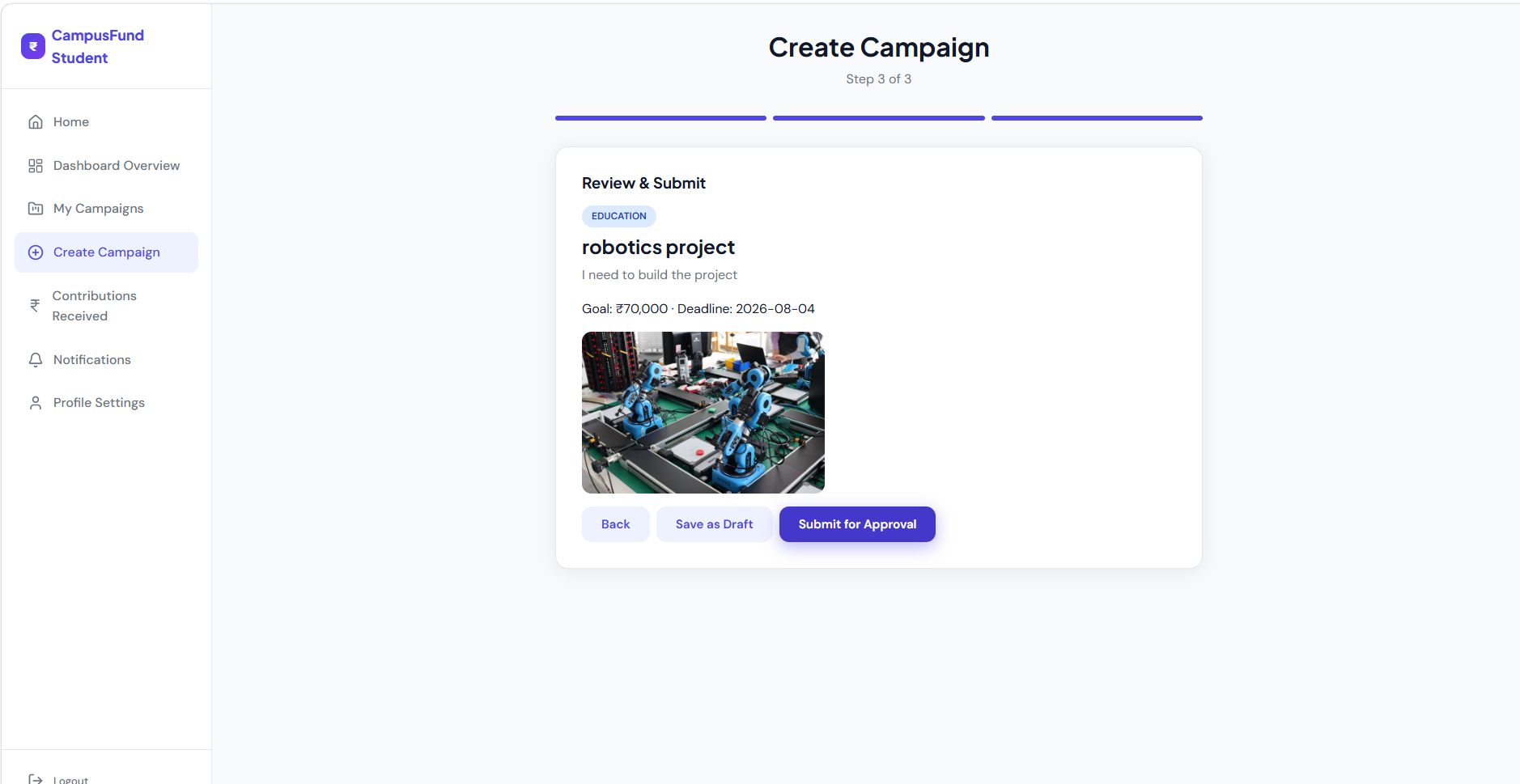
"Where it all begins. A student bringing their prototype idea to life by creating a funding campaign."
-
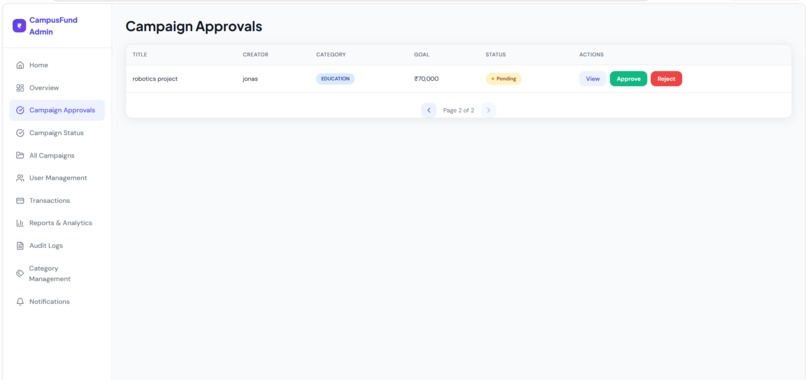
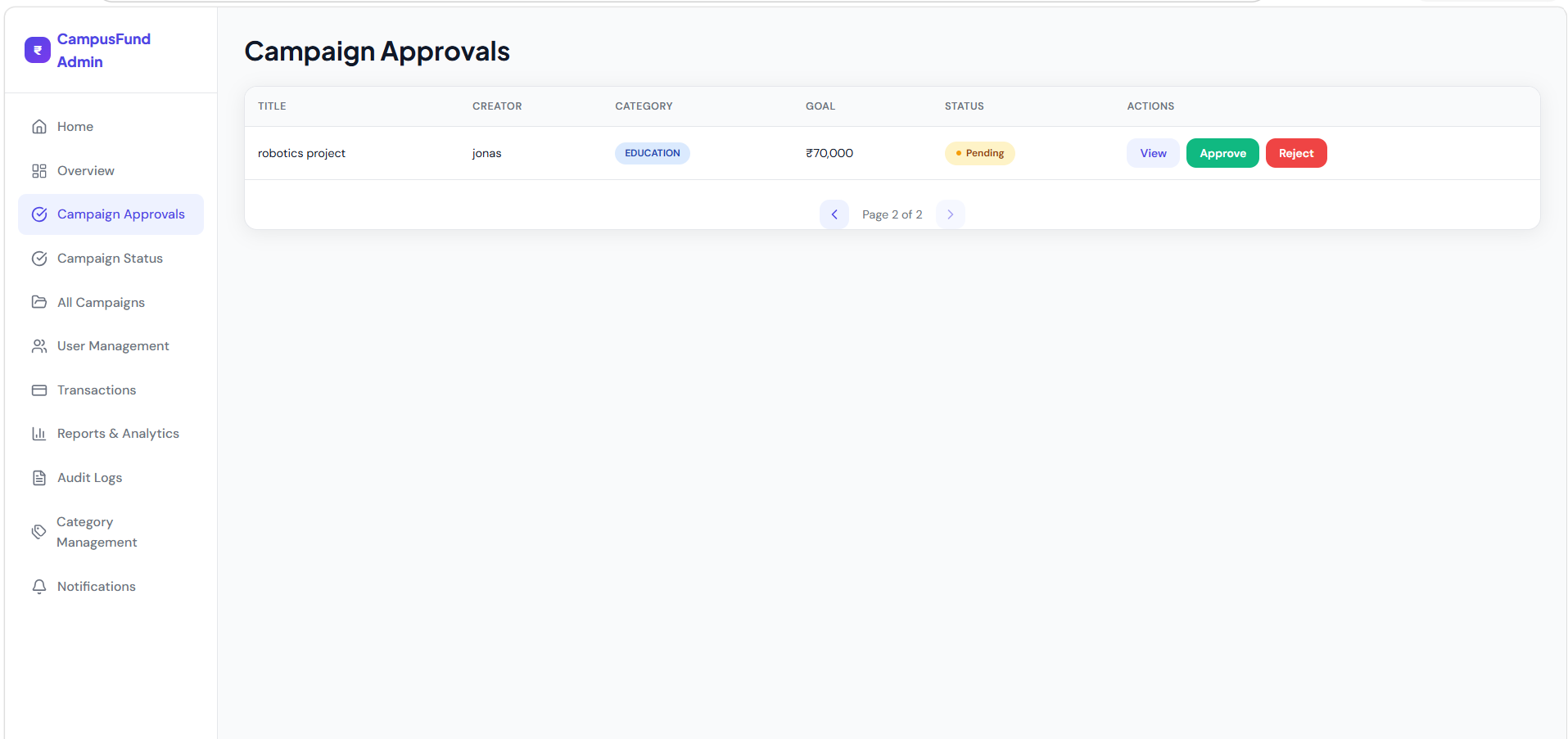
"Keeping our campus spam-free! Admins carefully review and approve every single student campaign before it goes live."
-
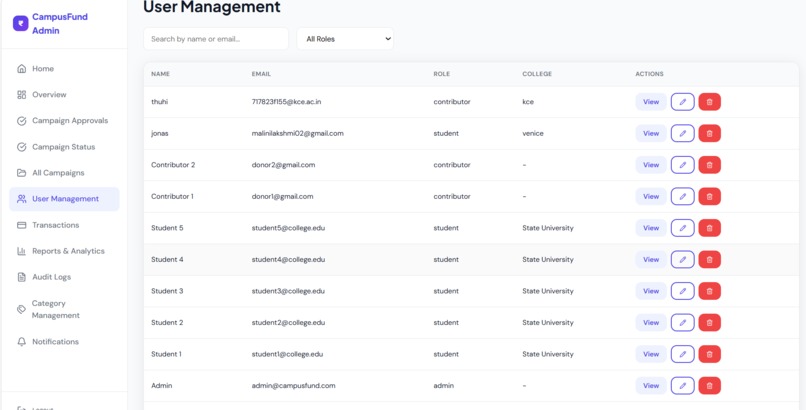
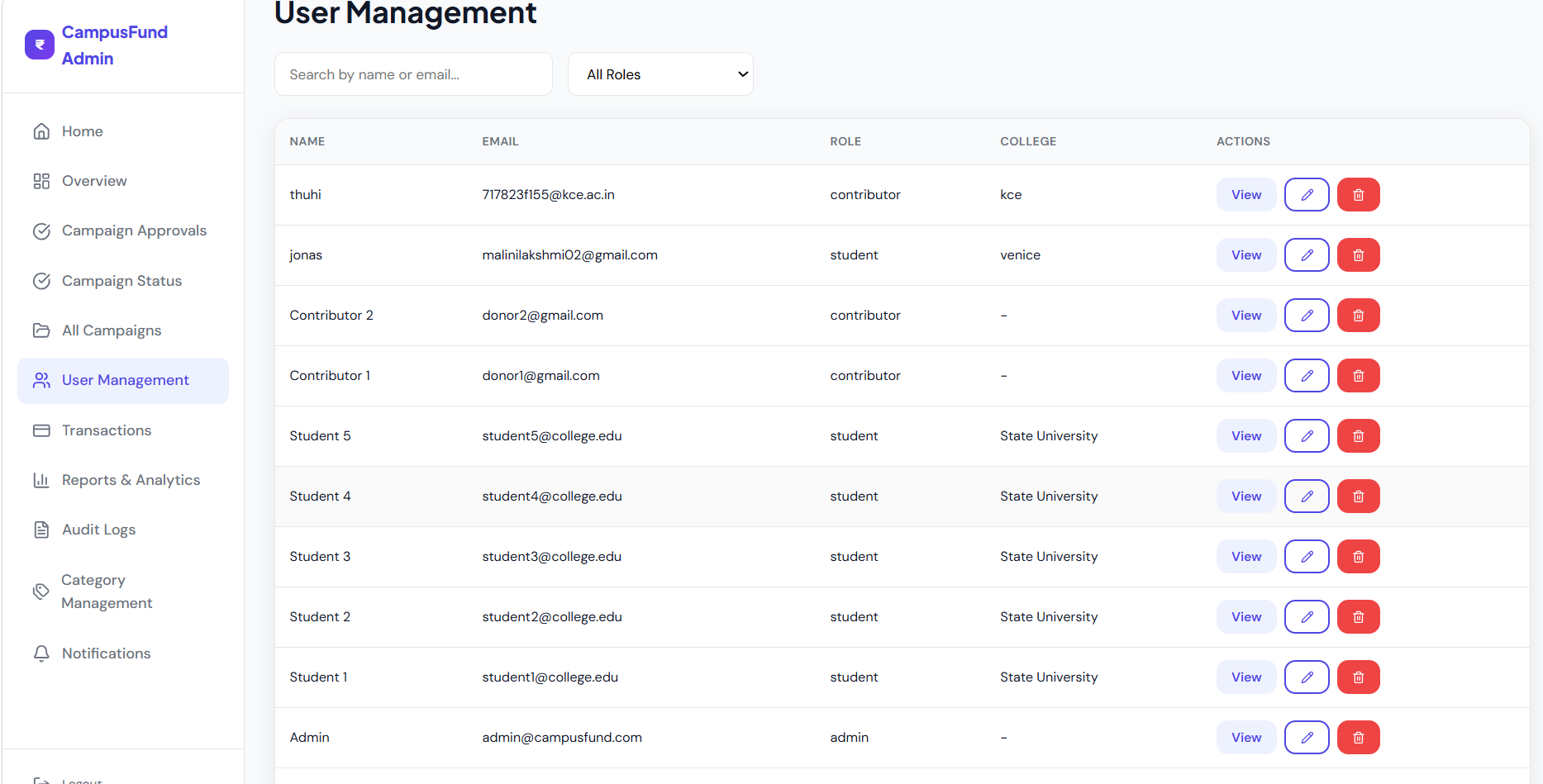
"Building a trusted community. A simple, powerful dashboard for Admins to manage all verified students and alumni contributors."
-
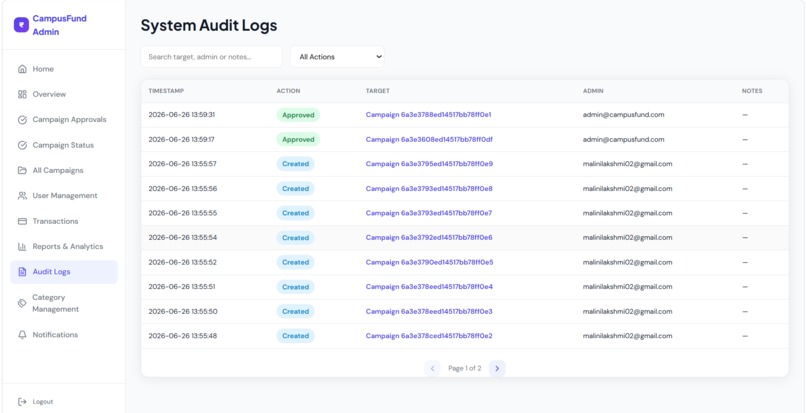
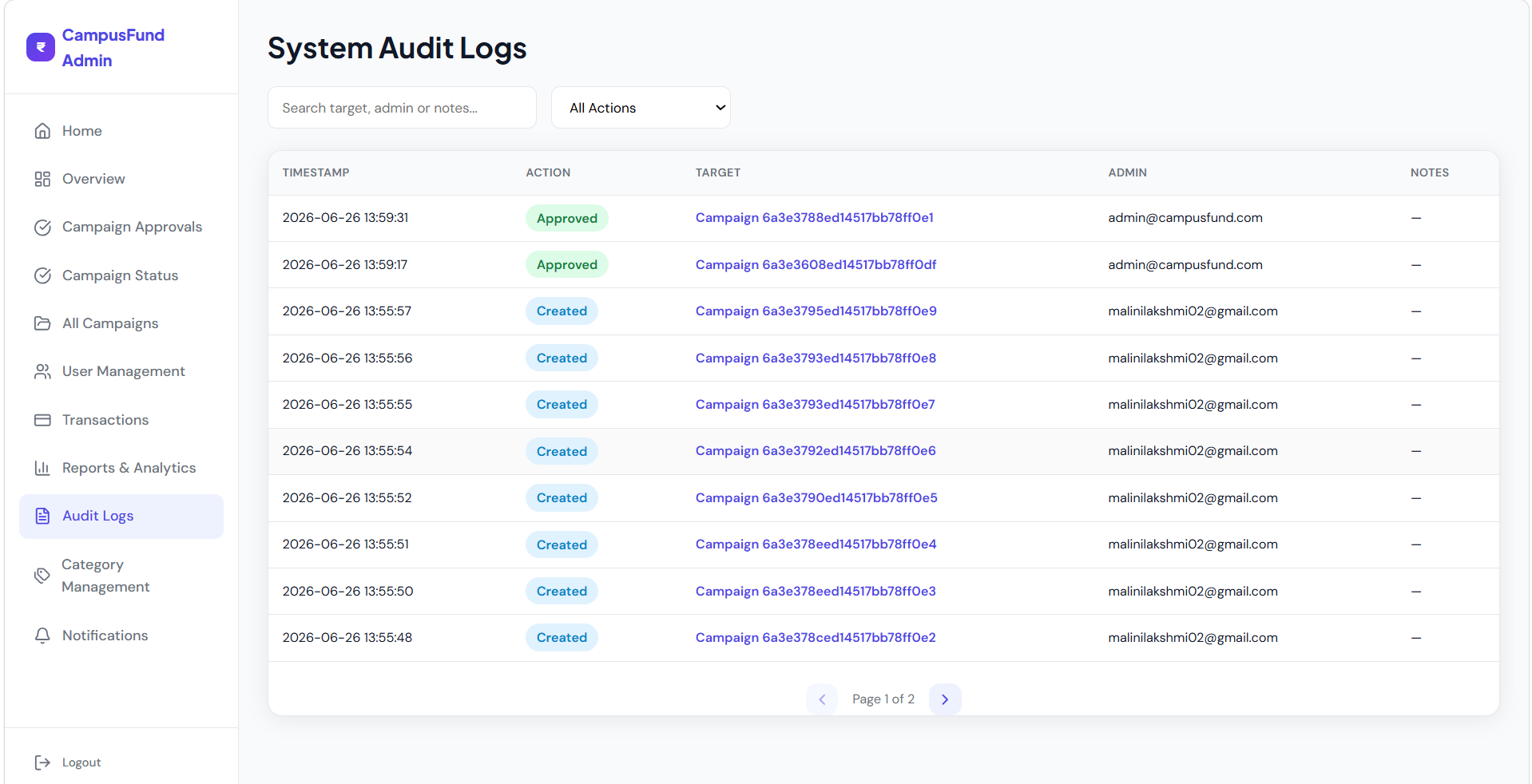
"Total transparency! Every single action on CampusFund is securely tracked and logged in real-time."
-
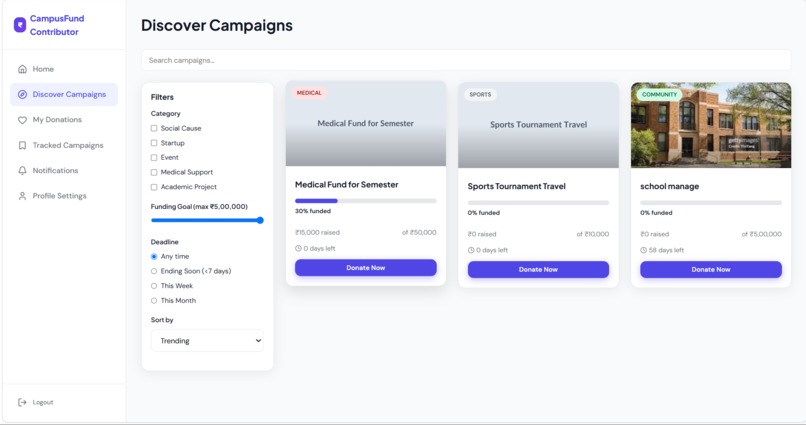
"Where kindness meets innovation! Alumni and contributors can easily track all the student projects they've supported in one place."
-
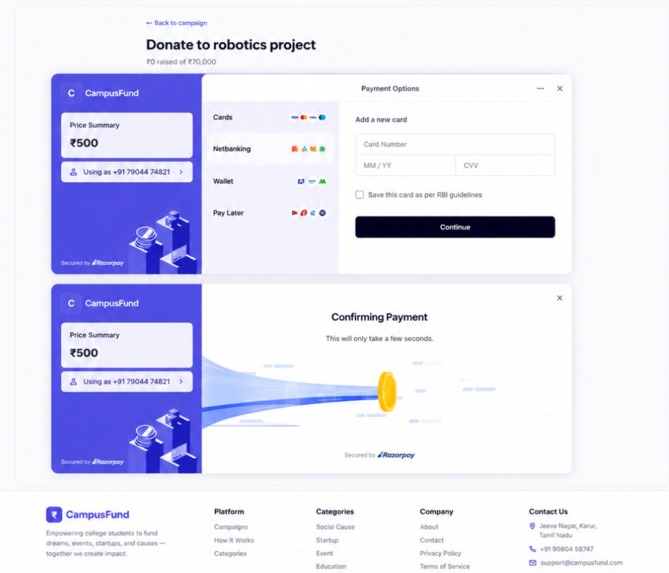
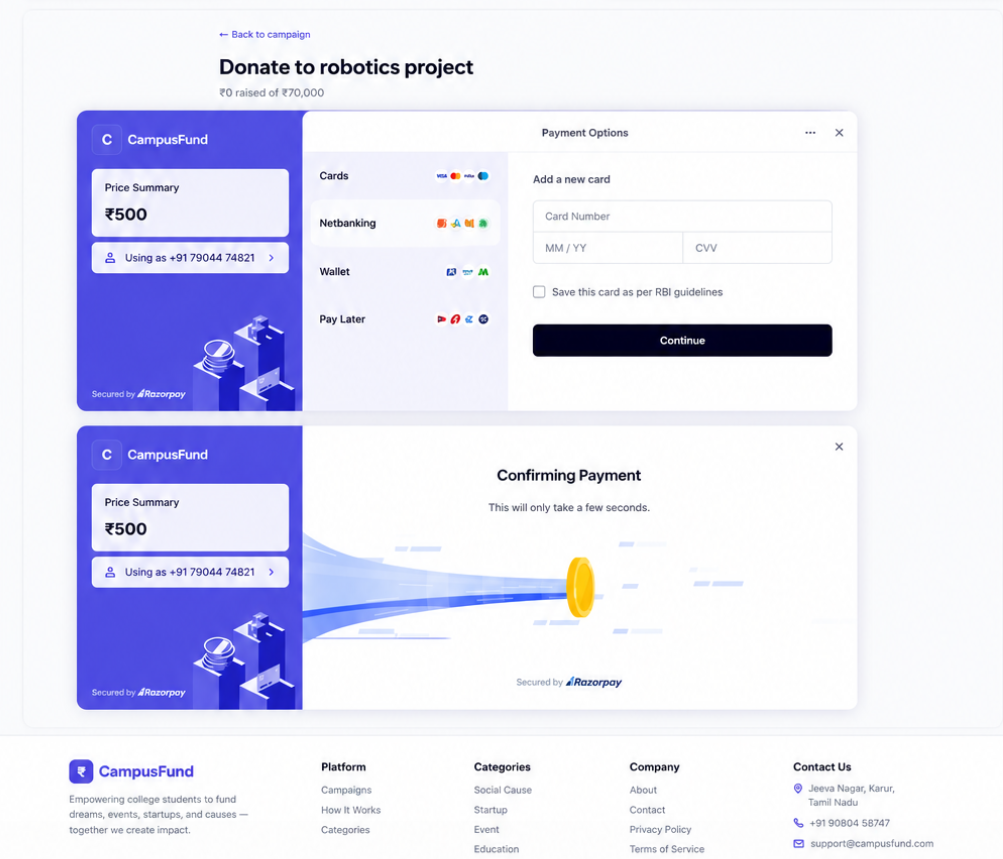
"Giving back made effortless. A seamless and 100% secure checkout experience powered by Razorpay."
-
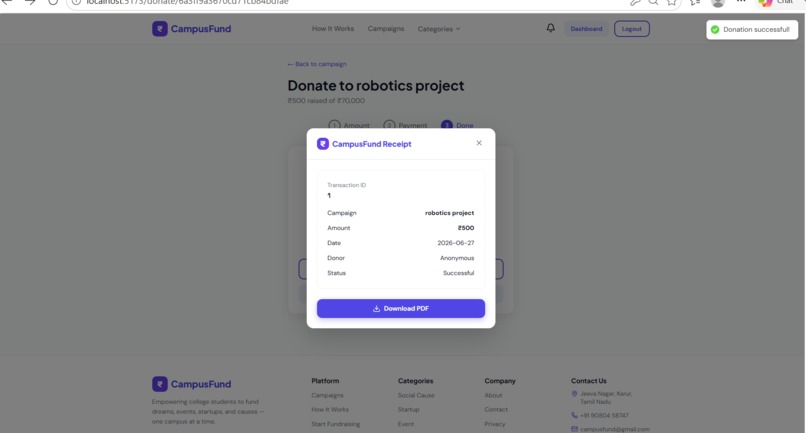
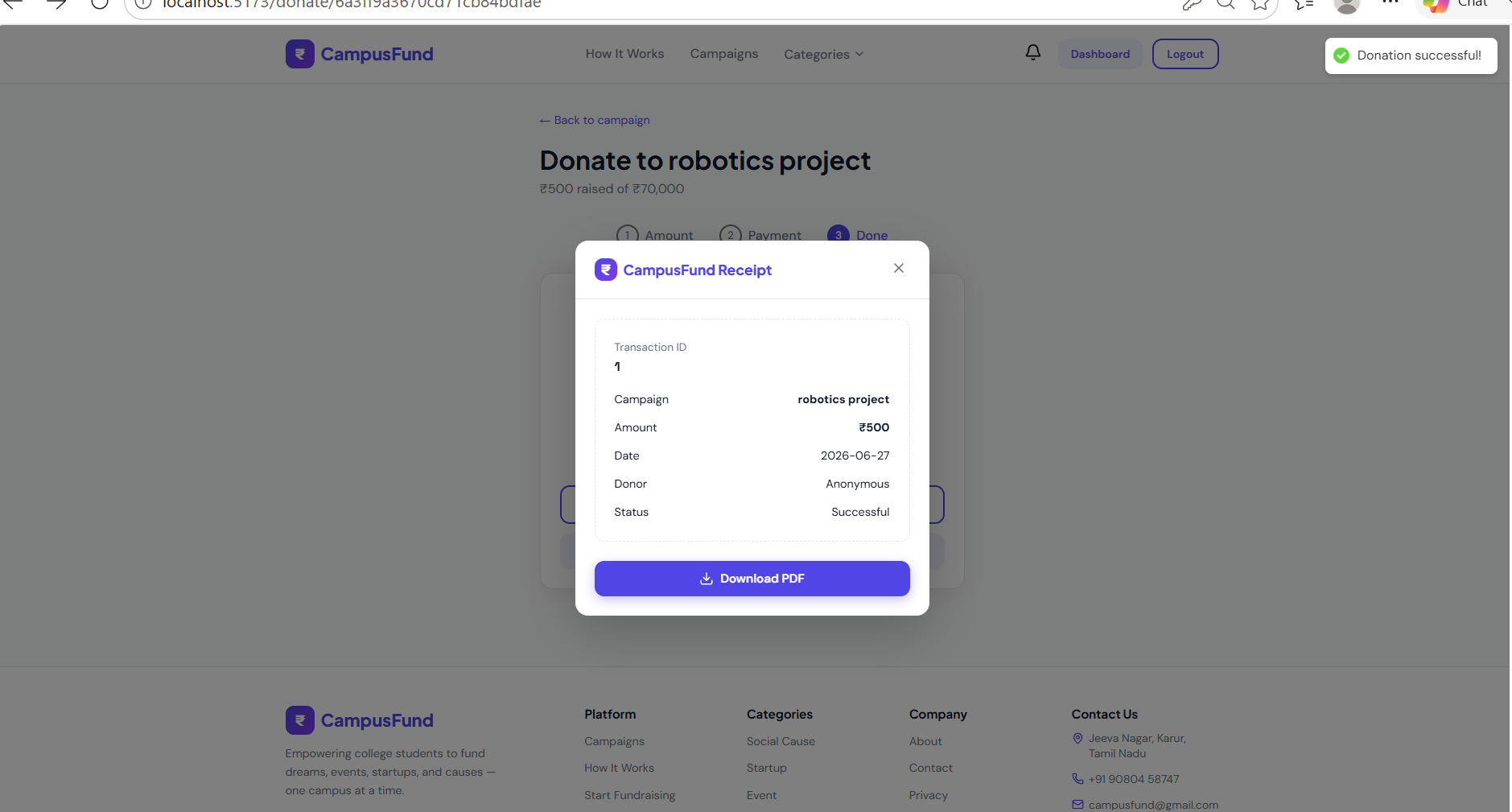
"Trust through transparency! Instant, detailed receipts are generated for every successful donation."
-
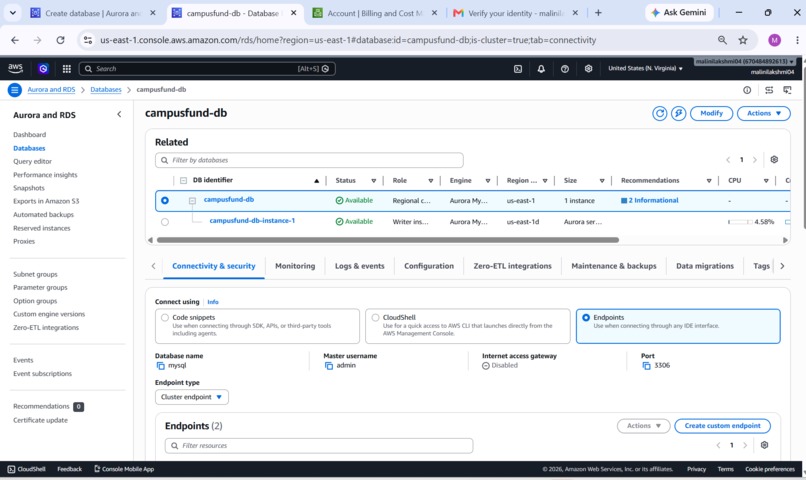
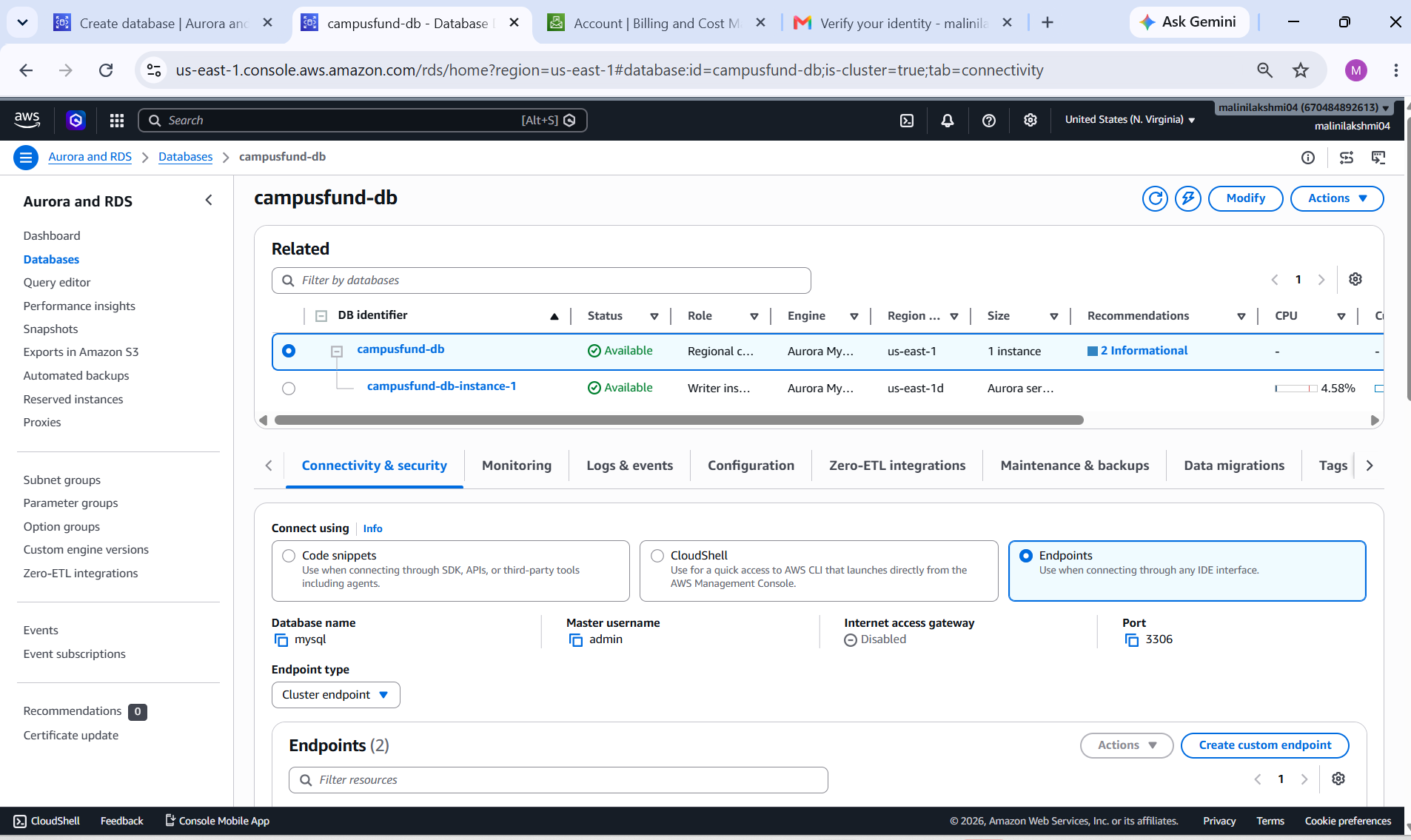
"The unbreakable backbone of our platform! We trust Amazon Aurora to securely manage and scale all our crucial user and transaction data."
-
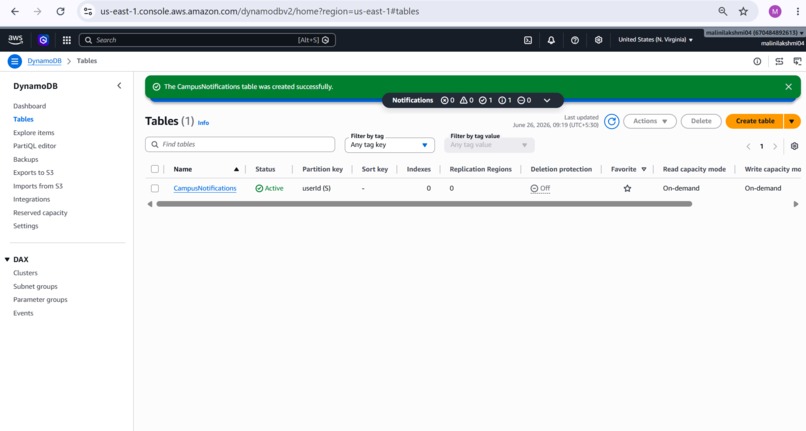
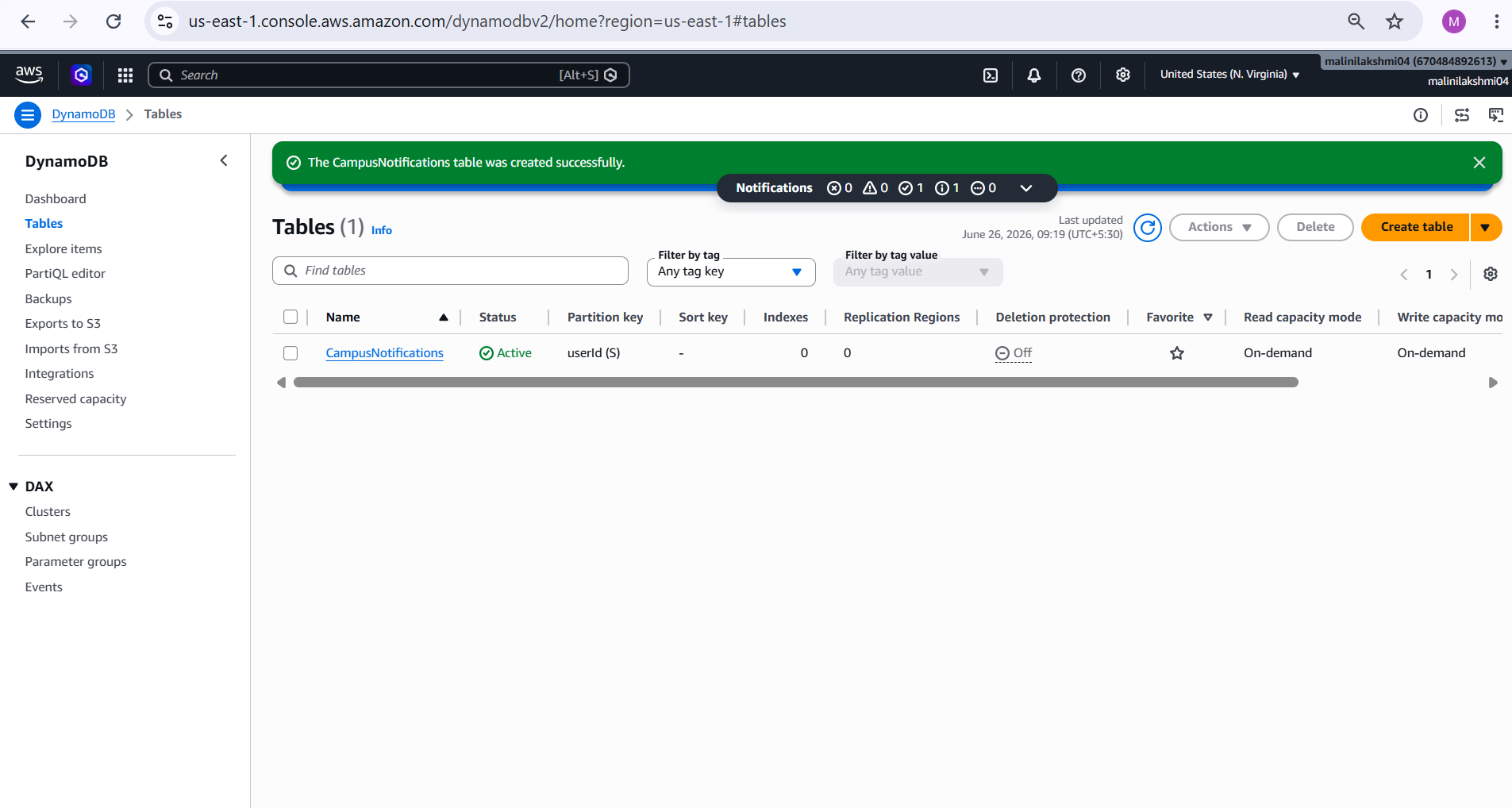
"No more waiting around! Our serverless DynamoDB table ensuring that every student notification is delivered in milliseconds."
-
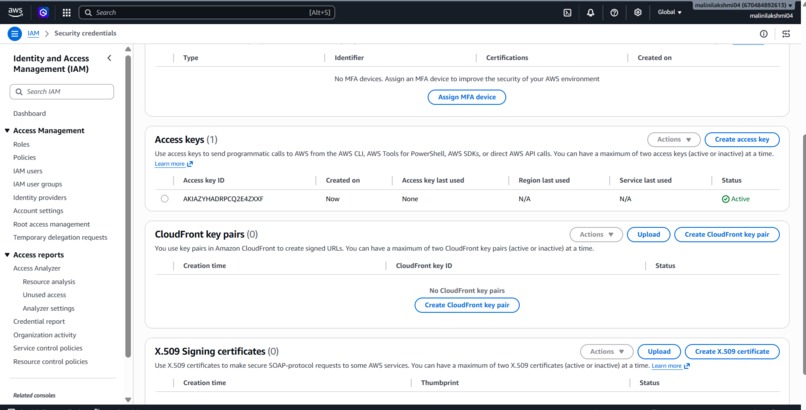
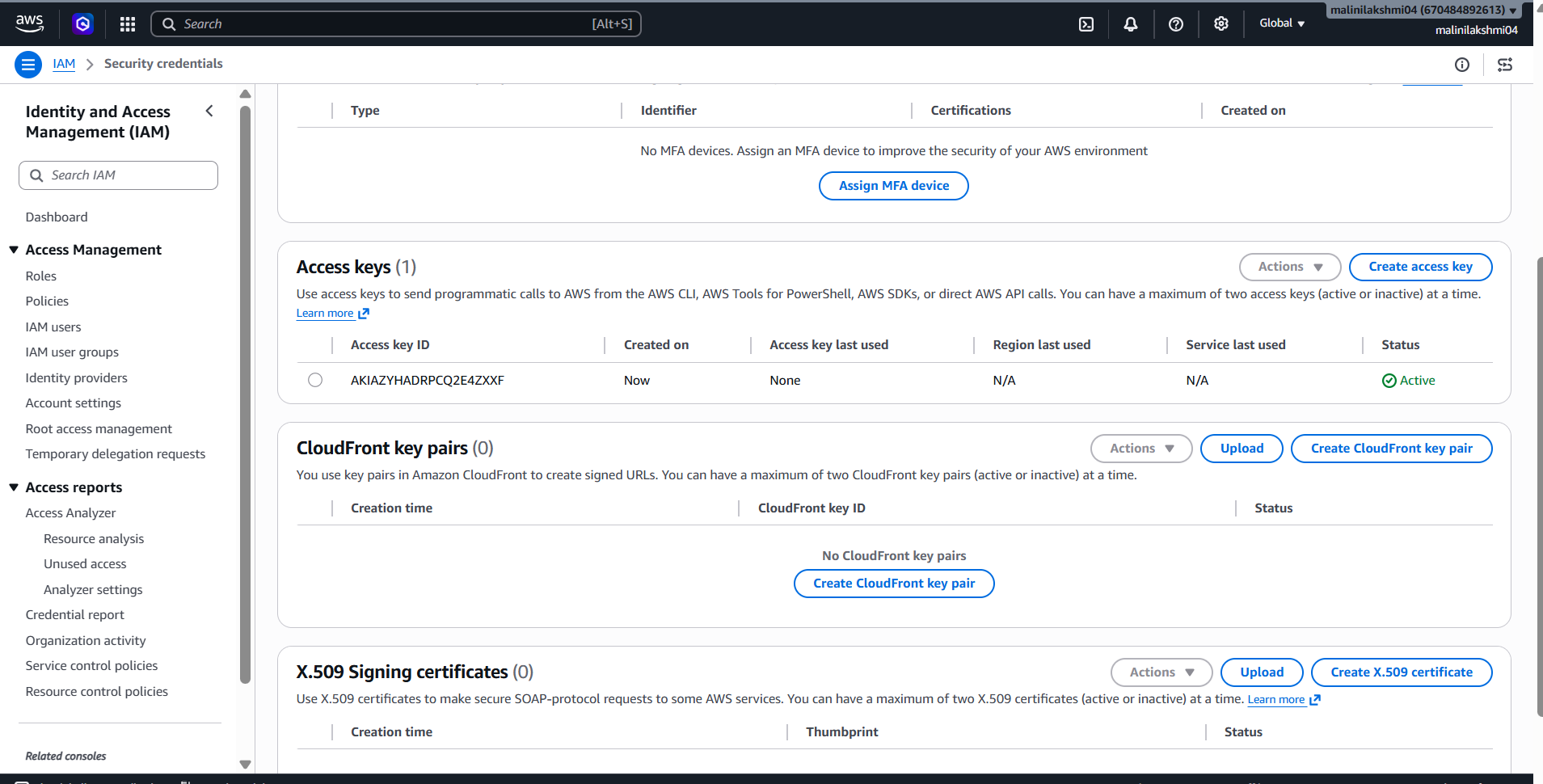
"Under the hood! Safely connecting our Spring Boot microservices to the AWS cloud."
-
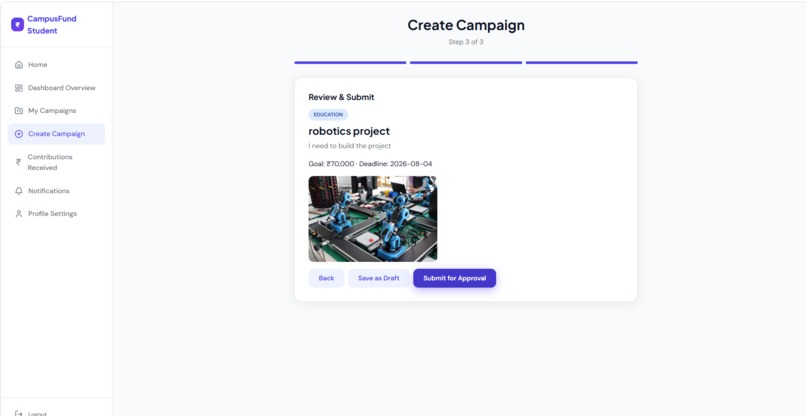
"Quality matters! Every student campaign is safely submitted for an Admin review before hitting the public."
-
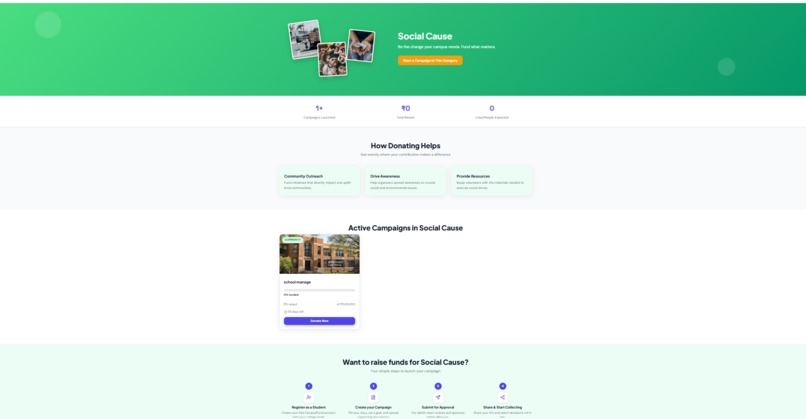
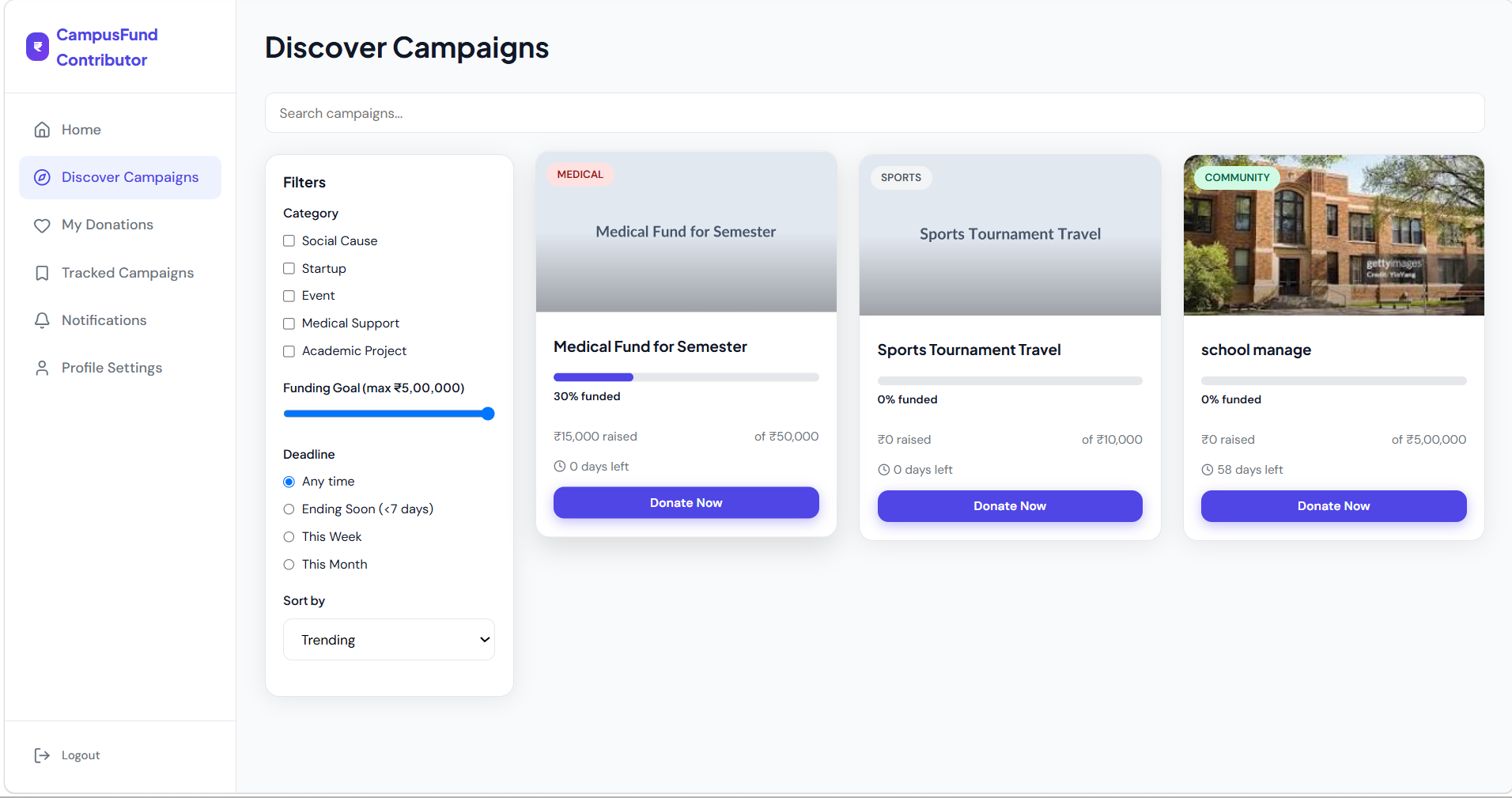
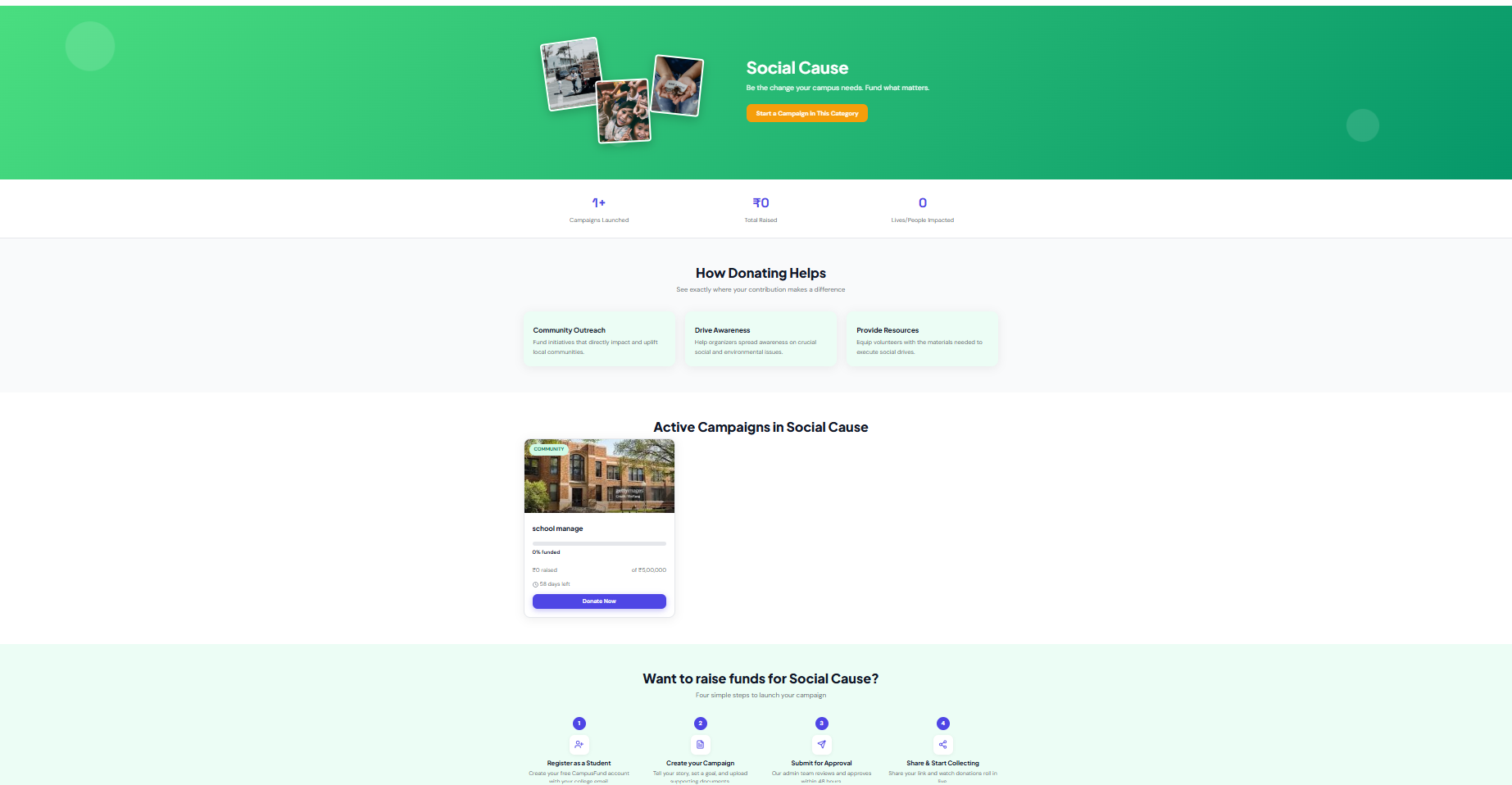
"Browsing with a purpose! Finding the right project is super easy with our organized categories."
Inspiration
If you walk around any college campus, you'll find incredible ideas—students building rovers, planning massive tech fests, or creating social impact clubs. But almost every single one of these ideas hits a massive roadblock: funding. We've seen our own friends struggle to get initial seed money or sponsorships. Traditional platforms like GoFundMe are too broad, and asking professors for money is awkward. We realized our campus needed its own micro-economy. That’s why we built CampusFund—a dedicated, transparent crowdfunding space where alumni, peers, and faculty can directly support student-led initiatives.
What it does
CampusFund is a crowdfunding platform built exclusively for the campus ecosystem. Students or club leads can pitch their ideas, set a target goal, and define a deadline. Fellow students and alumni can browse these campaigns and make secure donations. To keep the platform credible and prevent spam, we built an Admin Dashboard—every campaign has to be reviewed and approved by an admin before it goes live. We also baked in a real-time notification system so creators instantly know when their campaign gets approved or when someone makes a donation!
How we built it
Frontend: We used React with Vite for a snappy, modern user interface, heavily relying on Tailwind CSS for the design. Backend: We broke our logic into two Spring Boot microservices—auth-service for user management and campaign-service for handling campaigns and donations. The AWS Database Strategy: This is the part we loved building the most. We used a dual-database approach: AWS Aurora MySQL: We used this for our core transactional data (Users, Campaigns, Donations) because we needed strict ACID compliance when dealing with money and user data. AWS DynamoDB: We needed a lightning-fast way to store and retrieve user notifications without bogging down our main relational database. DynamoDB was the perfect NoSQL fit. We configured a Global Secondary Index (GSI) on userId to fetch notifications chronologically in milliseconds. Payments: We integrated Razorpay (Test Mode) to handle the simulated checkout process smoothly.
Challenges we ran into
The biggest hurdle was definitely the database architecture. Migrating our initial MongoDB thought-process over to AWS DynamoDB was a huge learning curve. DynamoDB's NoSQL access patterns are very strict; we couldn't just write simple SQL queries. We had to spend hours reading AWS documentation to properly understand Partition Keys, Sort Keys, and how to query a Global Secondary Index (GSI) using the AWS Java SDK v2. We also hit some roadblocks with Spring Boot dependency injections failing due to minor configuration typos, but debugging those logs taught us a lot about backend resilience.
Accomplishments that we're proud of
We are incredibly proud of successfully implementing a dual-database architecture. Getting a Spring Boot app to talk to both AWS Aurora (MySQL) and AWS DynamoDB simultaneously, while maintaining clean code separation, felt like a huge win. Also, seeing the real-time notifications actually pop up on the UI right after an admin approves a campaign was one of those "it actually works!" moments that made the late-night coding worth it.
What we learned
We learned that architecture matters just as much as the code. We realized why big companies use different databases for different things—using Aurora for financial transactions and DynamoDB for high-volume notifications taught us the concept of "using the right tool for the job." On the frontend side, we learned how to effectively manage React state and handle asynchronous API calls without crashing the UI.
What's next for CampusFund: Empowering Student Innovations
College Identity Verification: Right now, anyone can sign up using a regular Gmail account. Our next big goal is to restrict sign-ups exclusively to official college email IDs (like @yourcollege.ac.in). This way, we can build a closed, trust-based community where alumni and students know they are genuinely donating to a verified student from their own college.
Going Live with Real Payments: Once we have our legal and college approvals sorted, we want to move Razorpay out of Test Mode and integrate direct UPI payments so students can easily scan and pay right from their phones.
AI-Powered Pitch Assistant: Many students have great ideas but don't know how to write a compelling pitch. We plan to integrate an AI assistant that analyzes their campaign draft and suggests improvements to help them reach their funding goals faster.
Built With
- amazon-dynamodb
- amazon-rds-relational-database-service
- amazon-web-services
- aws-aurora
- edge
- html/css
- java
- javascript
- mysql
- razorpay
- react
- restful
- spring-boot
- tailwind-css
- vercel
- vite
- vscode

Log in or sign up for Devpost to join the conversation.