Inspiration
Students manage their academic lives through many disconnected sources: timetables, exams, assignments, attendance, syllabi, study materials, college notices, and personal reminders. Although the information is available, students still have to manually search different places, connect the information, decide what is important, and then take action.
We wanted to solve this gap with a different kind of AI experience.
Instead of building another chatbot that only answers questions, we built CampusFlow AI — an action-oriented academic agent that understands a student's goal, gathers the relevant context, uses tools, and turns the conversation into a useful action.
Our core idea is simple:
Goal → Context → Reasoning → Tools → Action → Confirmation
For example, a student can simply say:
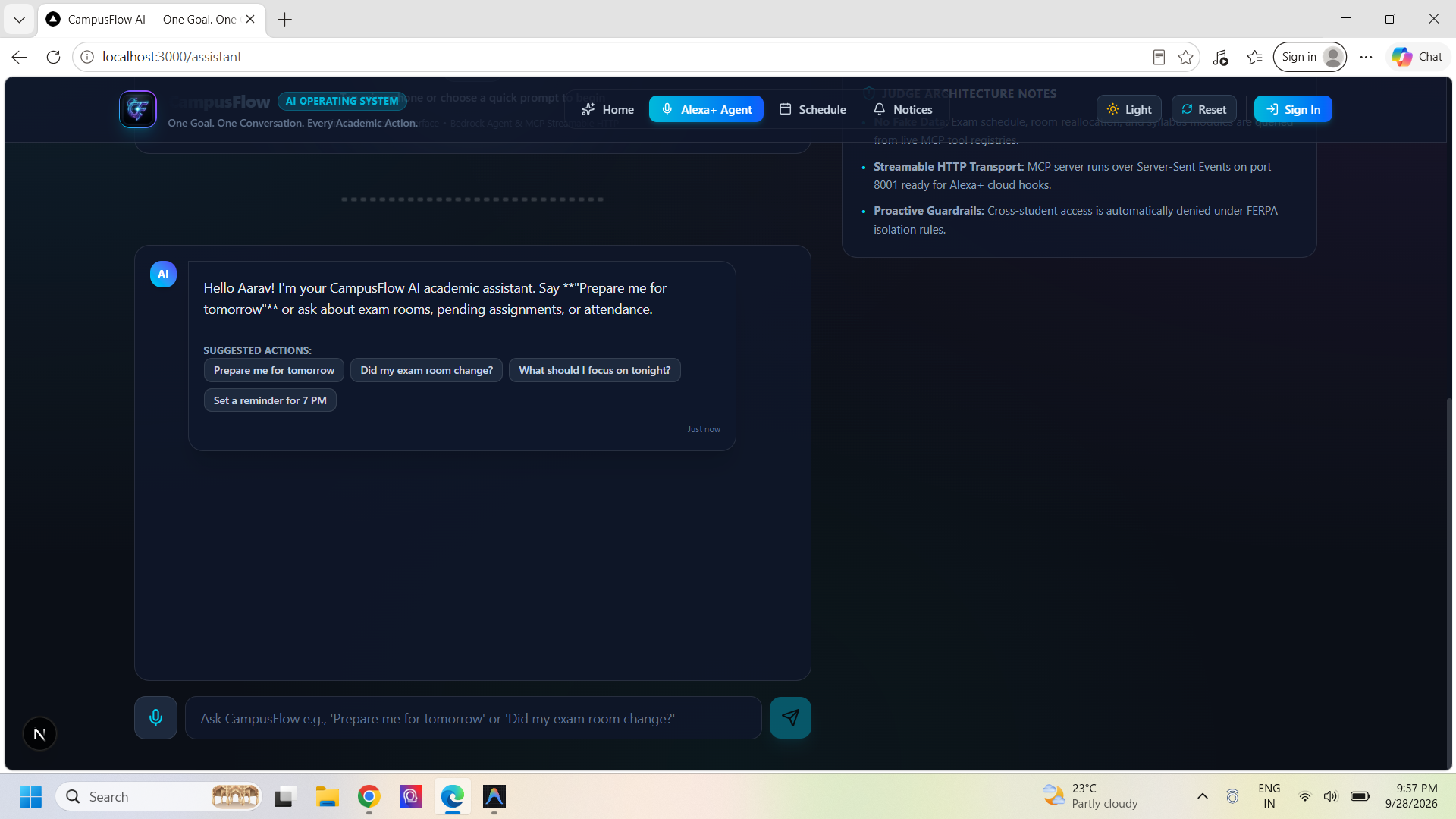
“Prepare me for tomorrow.”
CampusFlow can analyze the student's upcoming exams, assignments, syllabus, progress, and relevant notices, and then generate a personalized plan. The agent can also create a reminder after the student approves the action.
How We Built It
CampusFlow AI was designed around an agentic architecture rather than a traditional question-and-answer chatbot.
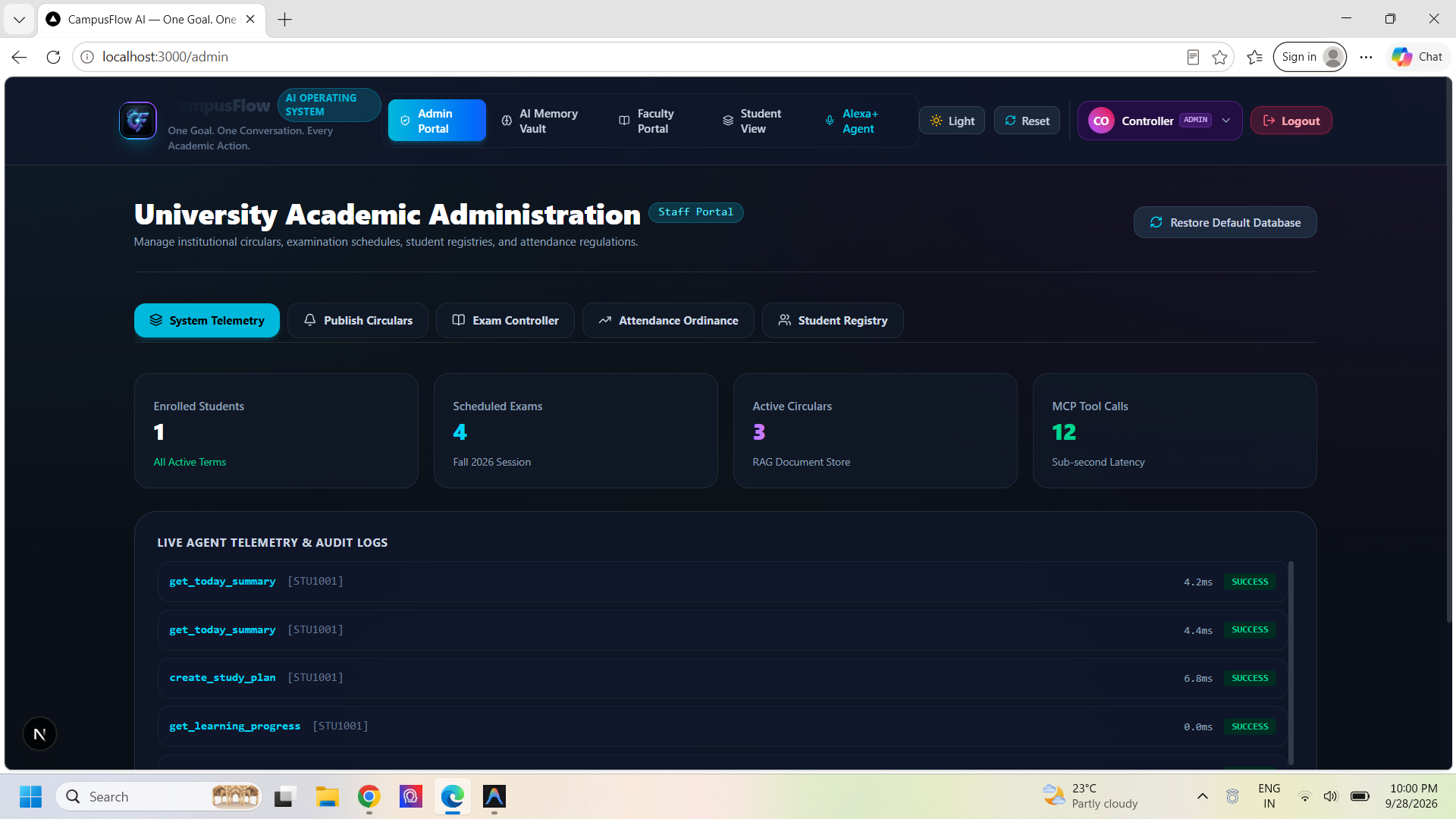
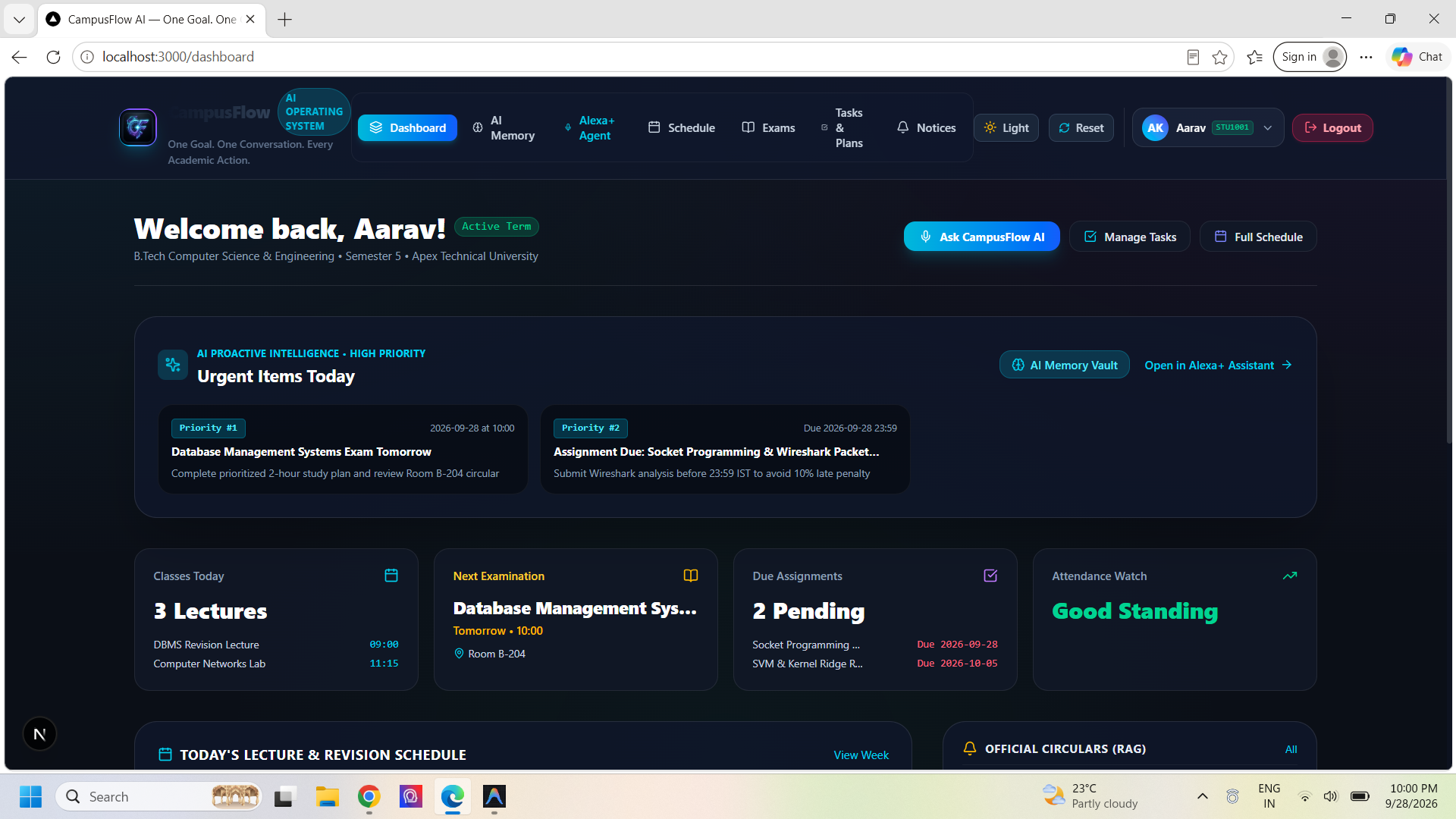
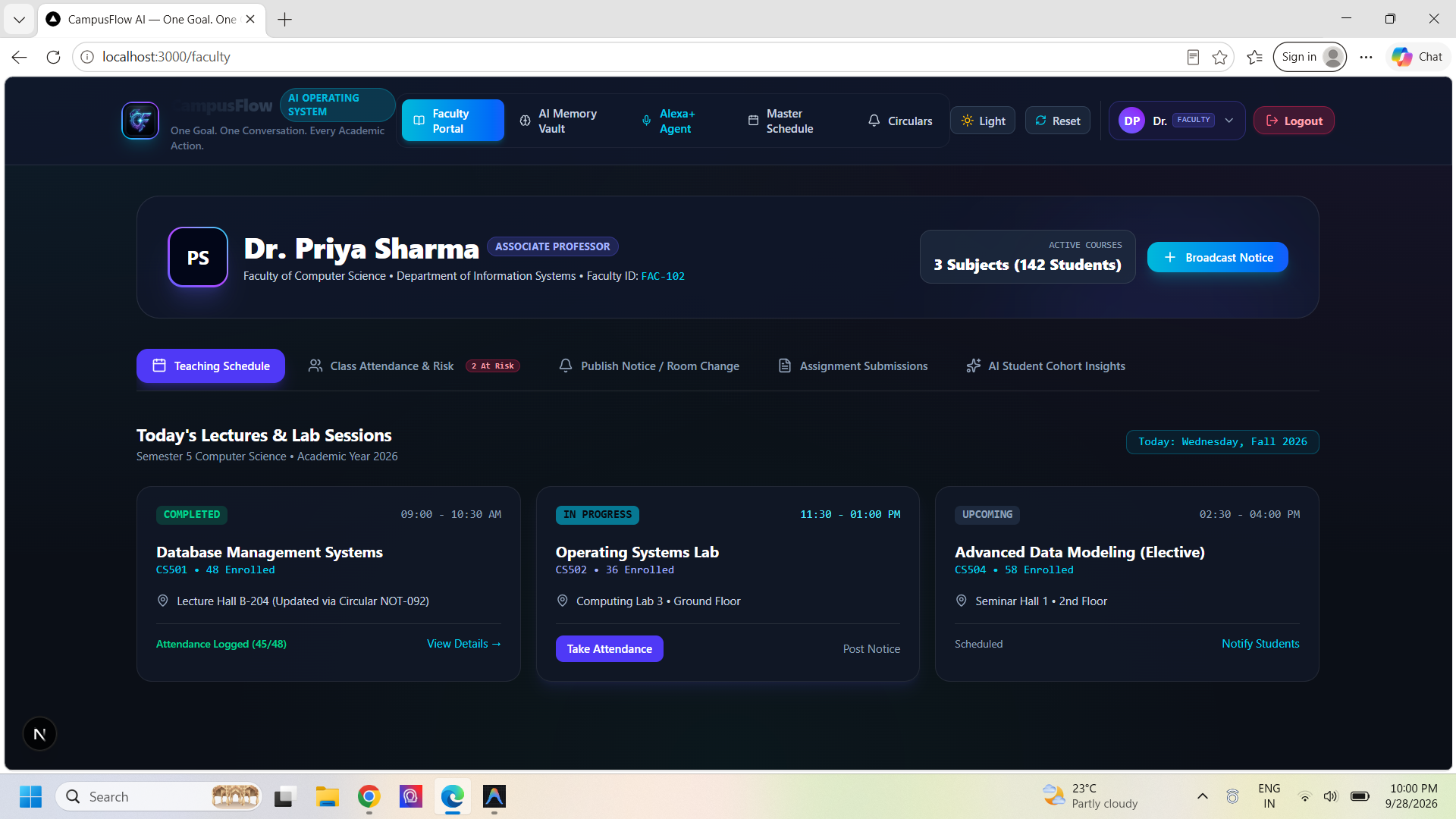
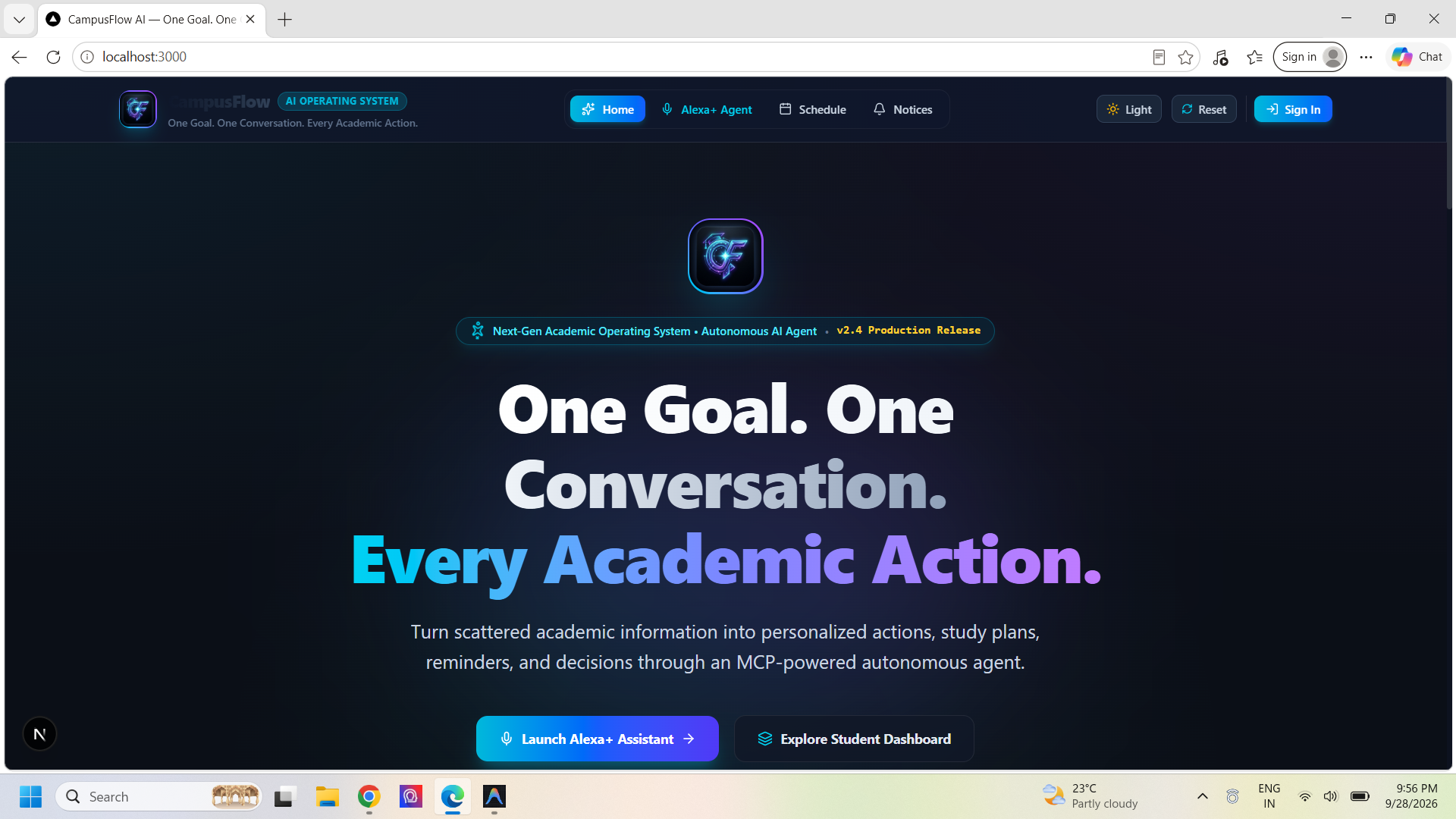
The frontend provides a modern conversational dashboard where users can interact with CampusFlow through natural language.
The AI layer uses Amazon Bedrock and Strands Agents for reasoning and agent orchestration.
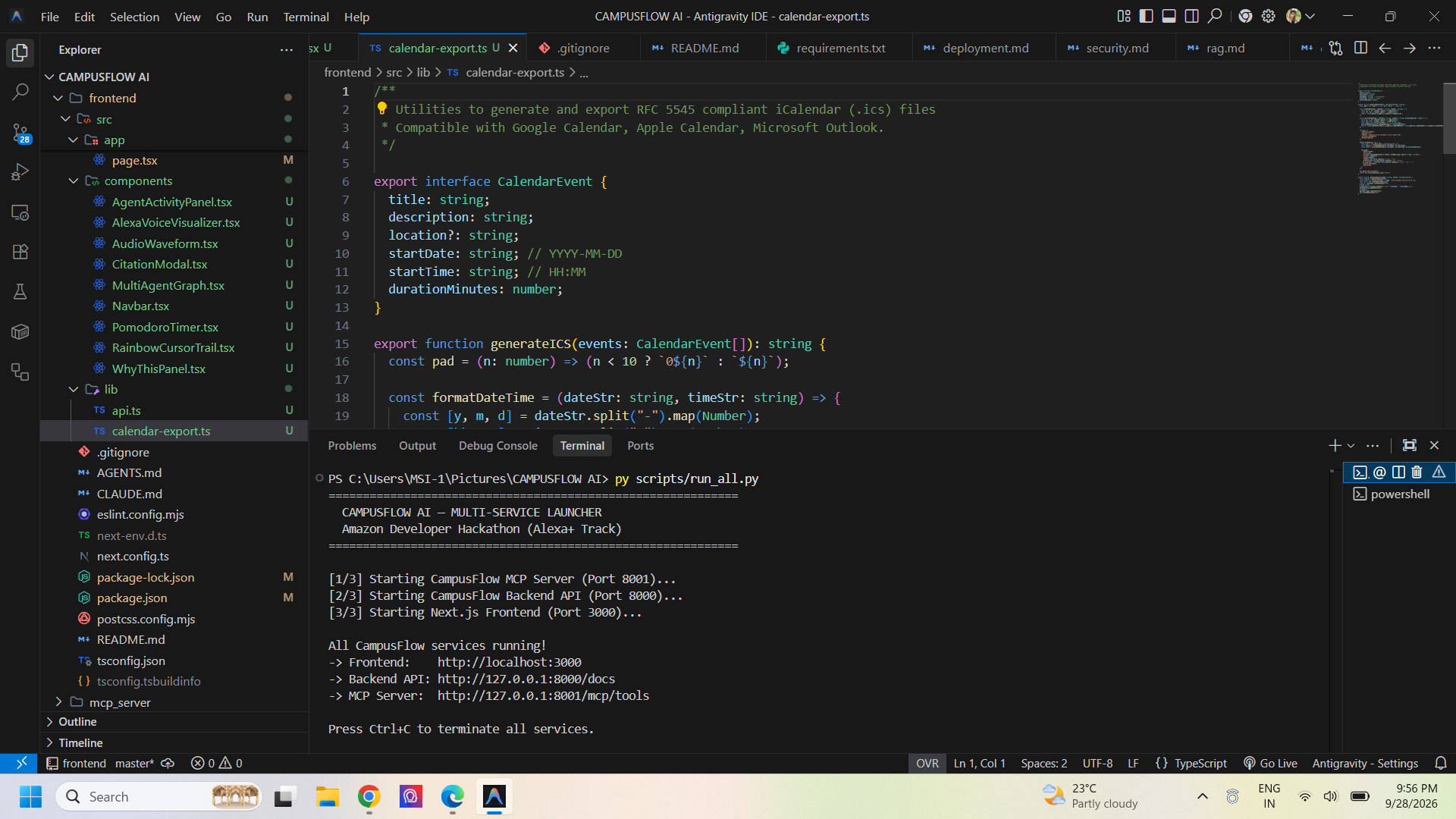
We use the Model Context Protocol (MCP) as the connectivity layer between the AI agent and specialized academic tools. These tools can retrieve exam schedules, assignments, attendance, syllabus information, learning progress, and college notices, while action tools can create tasks, reminders, and study plans.
Our MCP architecture is designed around Streamable HTTP, making the server suitable for remote agent connectivity and future Alexa+ integration.
For institution-specific information, we designed a retrieval pipeline using academic documents such as syllabi and college notices. Documents can be stored in Amazon S3 and retrieved through a knowledge/RAG layer so that answers can be grounded in relevant institutional information rather than generated blindly.
Structured information such as student data, exams, assignments, tasks, reminders, and study plans is managed through a database layer.
What We Learned
Building CampusFlow taught us that creating an AI product is not only about selecting a powerful language model.
The important part is connecting the model to reliable context and meaningful actions.
We learned how to:
design an agent around user goals instead of fixed conversation flows, connect AI agents to external tools using MCP, structure tools with clear inputs and outputs, use retrieval for institution-specific information, combine structured data with unstructured documents, design confirmation-based actions, think about authentication, authorization, and data isolation, build an AI experience that is explainable and observable.
One of our biggest lessons was that AI becomes much more useful when it can move from understanding information to actually doing something with it.
Challenges We Faced
The biggest challenge was deciding which parts of the academic ecosystem the agent should access and which tools should be invoked for different user requests.
A request such as “Prepare me for tomorrow” sounds simple, but the system may need information from several sources before it can produce a useful response.
We also had to design the MCP layer carefully so that tools remain modular, validated, secure, and independently testable.
Another challenge was preventing the agent from inventing information. For academic data and college notices, reliability is important, so the system is designed to distinguish retrieved information from AI-generated recommendations and to avoid claiming an action succeeded unless the corresponding tool confirms it.
Finally, we wanted the project to demonstrate the Alexa+ concept without depending on physical Alexa hardware, so we designed a web-based simulated conversational experience while keeping the underlying MCP architecture ready for compatible future integration.
Why It Matters
CampusFlow AI is designed around a simple principle:
Students should not have to manage disconnected information just to get things done.
By connecting academic context, AI reasoning, MCP tools, retrieval, and real actions in one interface, CampusFlow aims to turn fragmented information into personalized academic assistance.
Hackathon Alignment
CampusFlow AI is designed for the Alexa+ track of the Amazon Developer Hackathon. The hackathon allows a simulated Alexa+ experience in a web app and requires the Alexa+ track solution to use an MCP server or Agent Skill.
We also use AWS technologies meaningfully within the architecture and can demonstrate the AWS Builder direction through services such as Amazon Bedrock and the agent/MCP infrastructure.
Built With
- agents
- ai
- amazon
- amazon-web-services
- api
- cognito
- document
- dynamodb
- fastapi
- knowledge
- language
- llm
- natural
- next.js
- processing
- python
- rag
- react
- responsive
- rest
- strands
- typescript
- web

Log in or sign up for Devpost to join the conversation.