Inspiration
Students frequently lose personal belongings on campus such as ID cards, headphones, wallets, and chargers. Traditional lost-and-found systems are slow, manual, and inefficient. We wanted to build a smarter solution that uses AI to automatically suggest matches between lost and found items, making it easier for students to recover their belongings quickly.
What it does
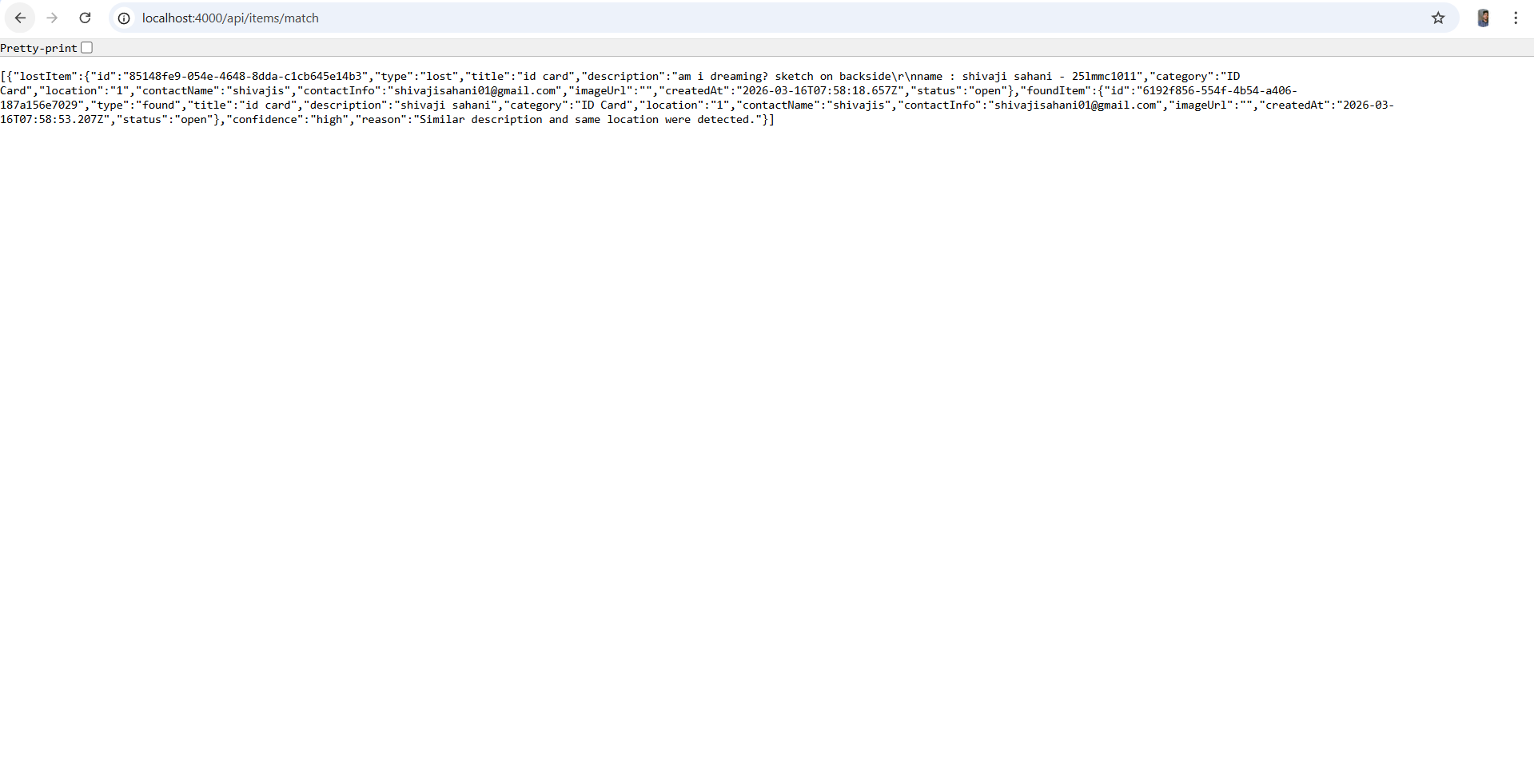
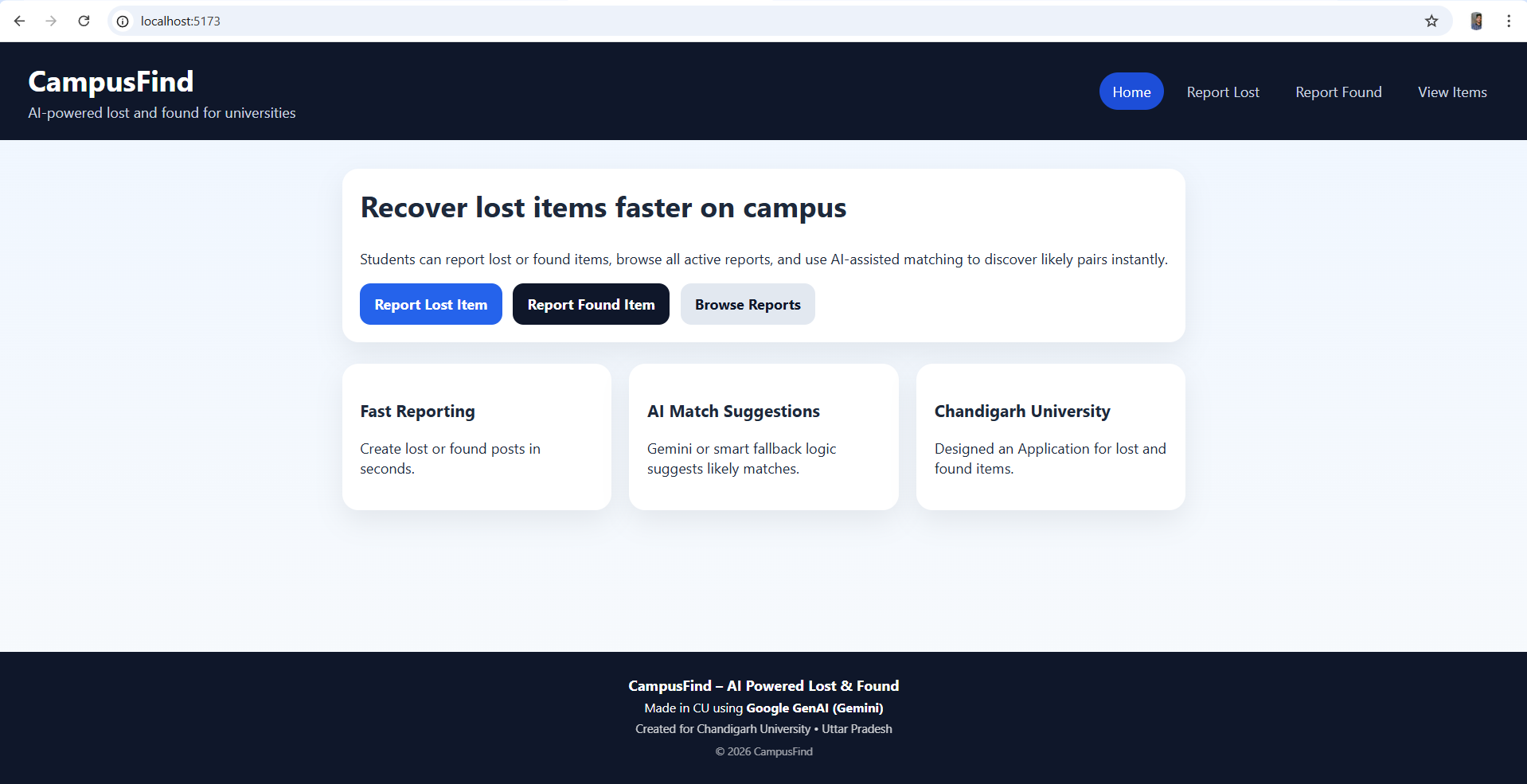
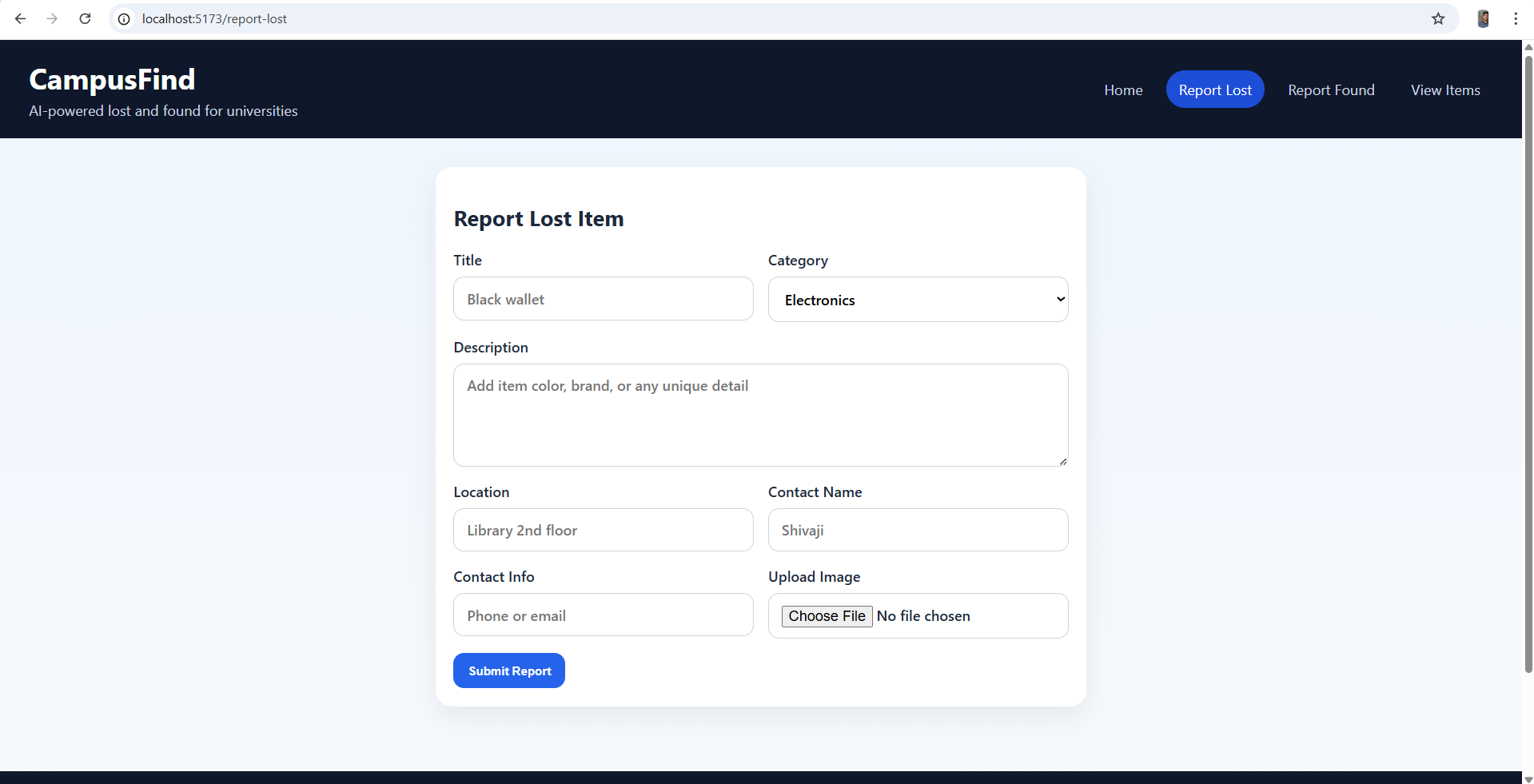
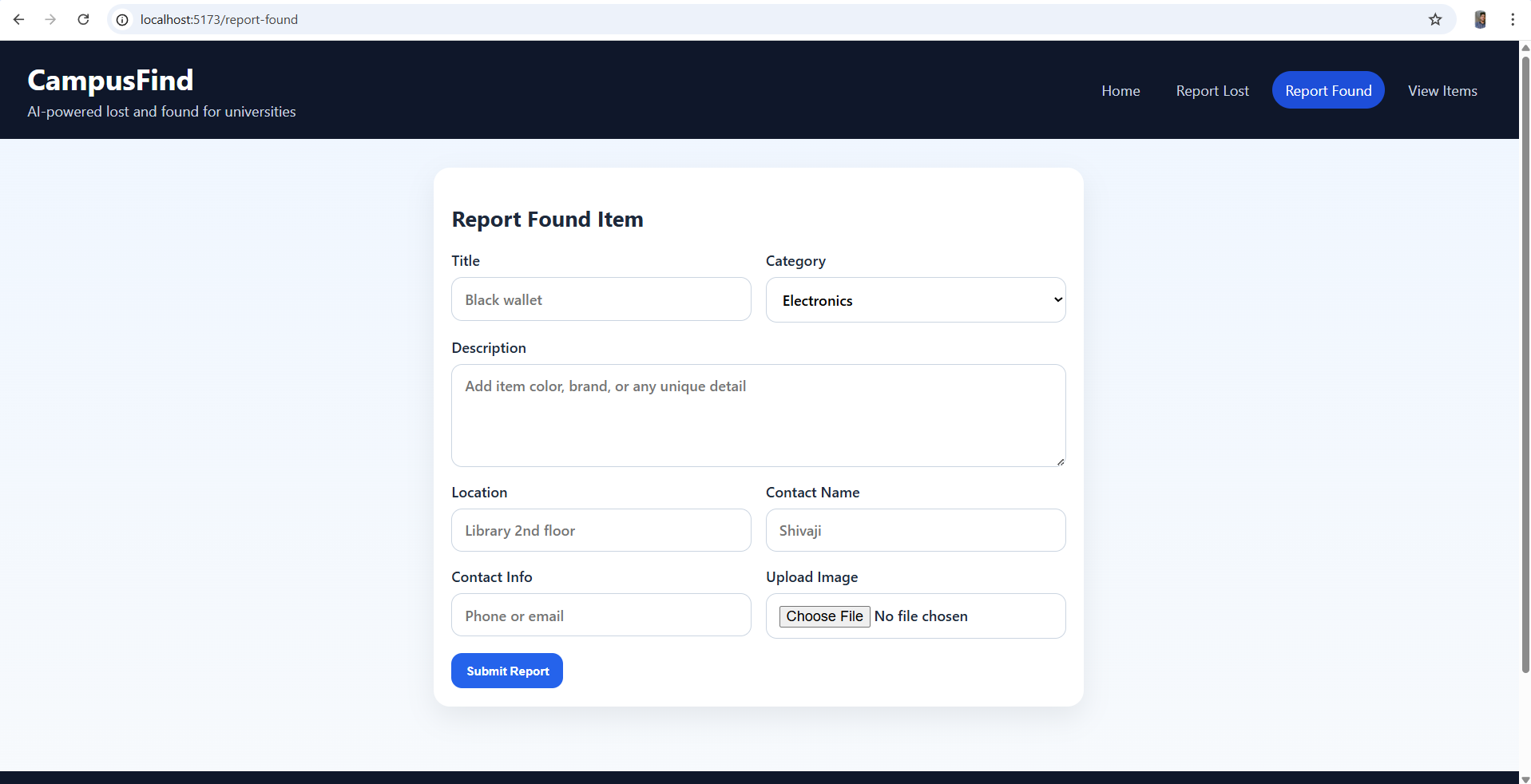
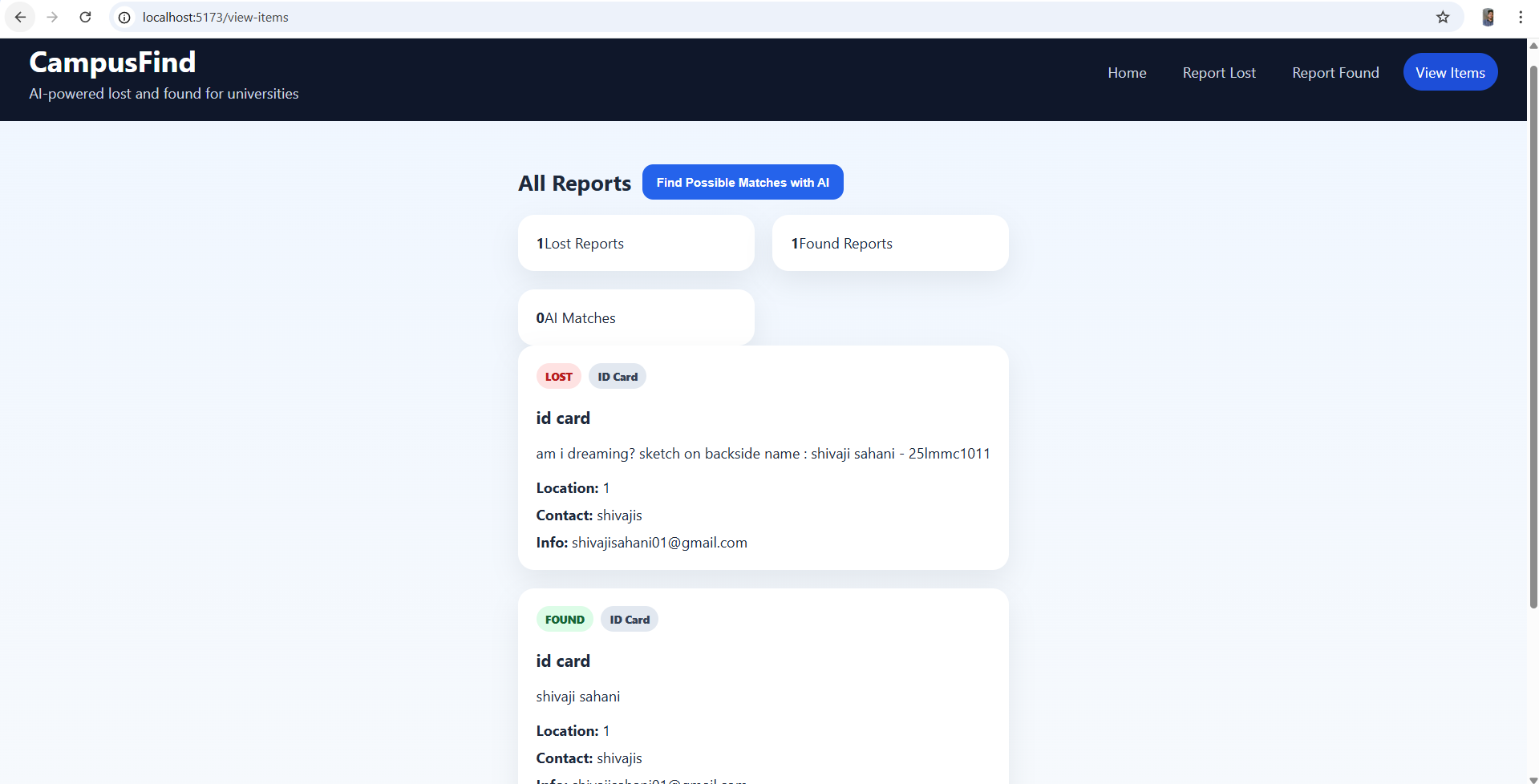
CampusFIND is an AI-powered lost and found platform for universities. Students can report lost or found items by providing a description, location, and image. The system stores these reports and uses AI to compare lost and found items to suggest possible matches. This helps users quickly identify potential matches and recover items faster.
How we built it
We built CampusFIND using a modern full-stack web architecture:
Frontend:
React with Vite for a fast and responsive user interface
Backend:
Node.js with Express to manage APIs and item reports
AI Matching:
Google Gemini API to analyze item descriptions and detect possible matches between lost and found items
Data Storage:
JSON-based storage for quick prototyping during the hackathon
Users can submit reports, browse items, and trigger AI-powered matching to discover likely pairs.
Challenges we ran into
One major challenge was integrating the Gemini AI API and designing prompts that produce structured responses for item matching. We also faced issues with handling file uploads, managing routes correctly, and ensuring the frontend and backend communicated properly. Another challenge was creating a reliable fallback matching system when AI results were unavailable.
Accomplishments that we're proud of
We successfully built a working full-stack application within the hackathon time limit. The platform allows users to report lost and found items, upload images, browse reports, and generate AI-powered match suggestions. Integrating Google Gemini to intelligently compare item descriptions was a key achievement that adds real value to the platform
What we learned
During this project, we learned how to integrate generative AI into a real-world application, manage backend APIs with Express, and build a responsive React interface. We also improved our debugging skills, learned how to structure prompts for AI responses, and practiced collaborating under hackathon time pressure.
What's next for CampusFIND
In the future, we plan to expand CampusFIND by adding image recognition to match items visually, integrating a database like MongoDB for scalable storage, implementing user authentication for secure reporting, and deploying the platform so universities can use it across their campuses. We also plan to improve the AI matching system for more accurate results.

Log in or sign up for Devpost to join the conversation.