-
-
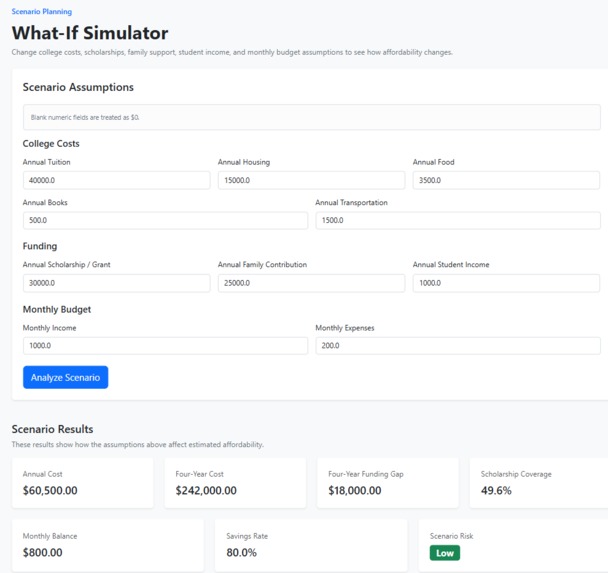
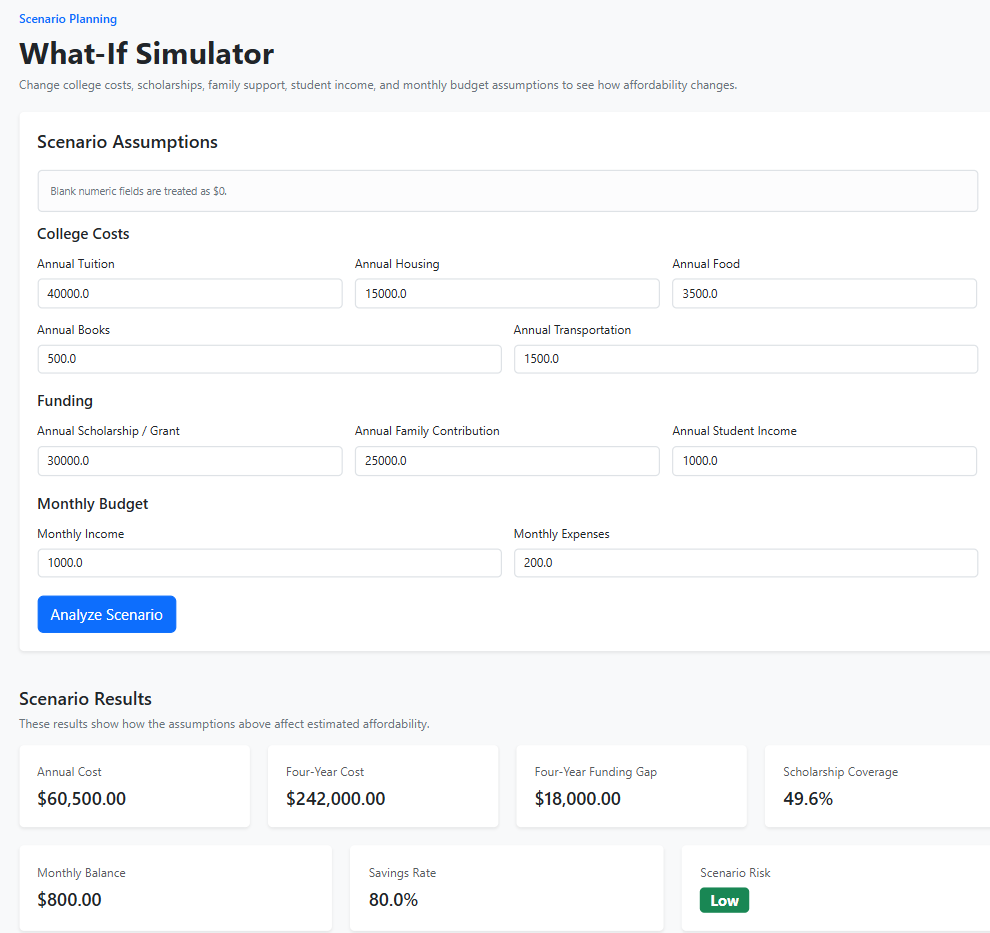
this tool helps you compare your overall budget with different scenarios
-
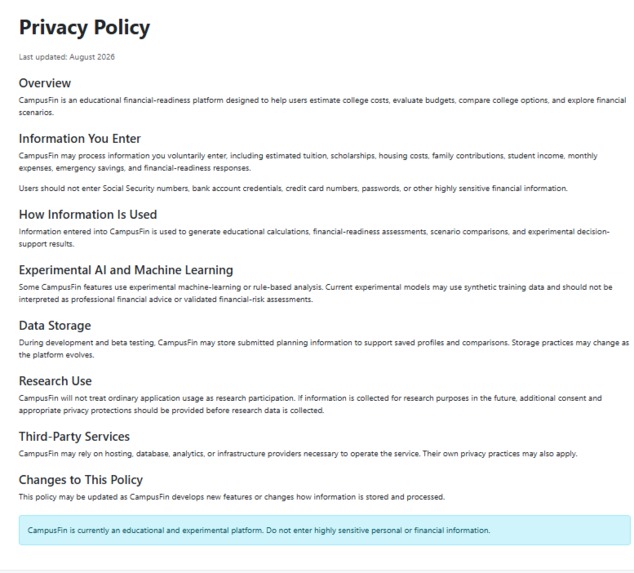
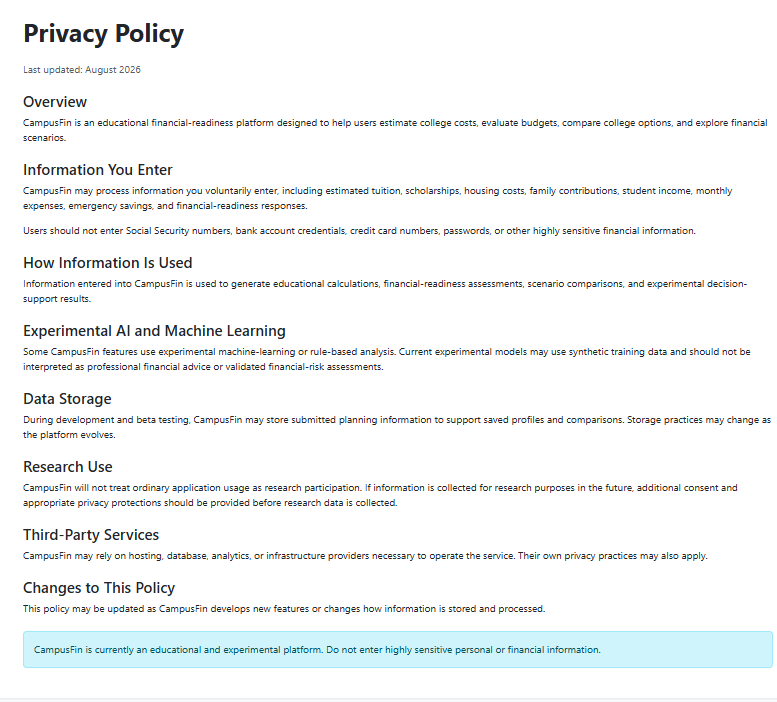
this page assures that all the financial data is only available to them and that no one else can see it.
-
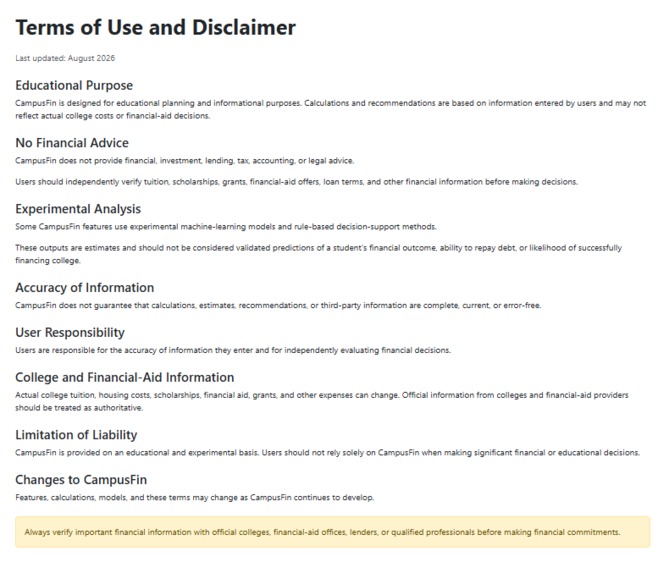
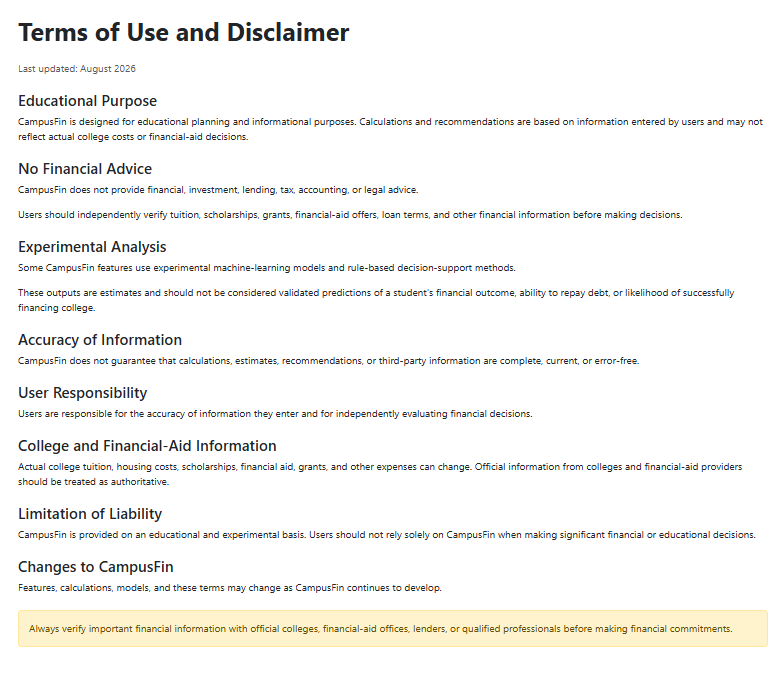
this page claims that all the AI summary and tools are for educational purposes and that you shouldn't take this as actual financial advice
-
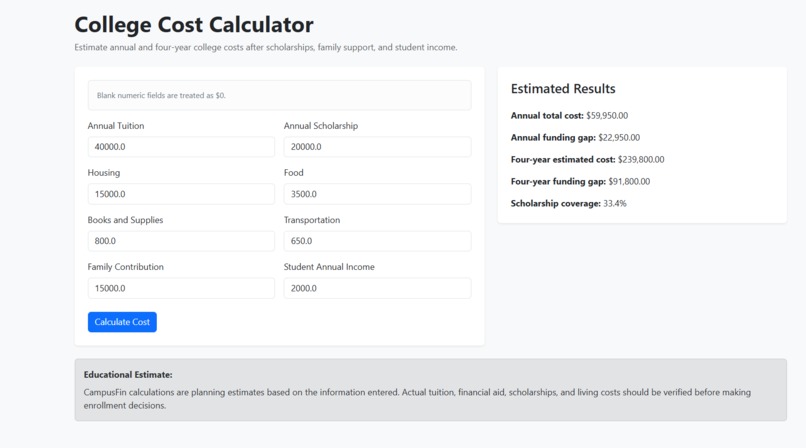
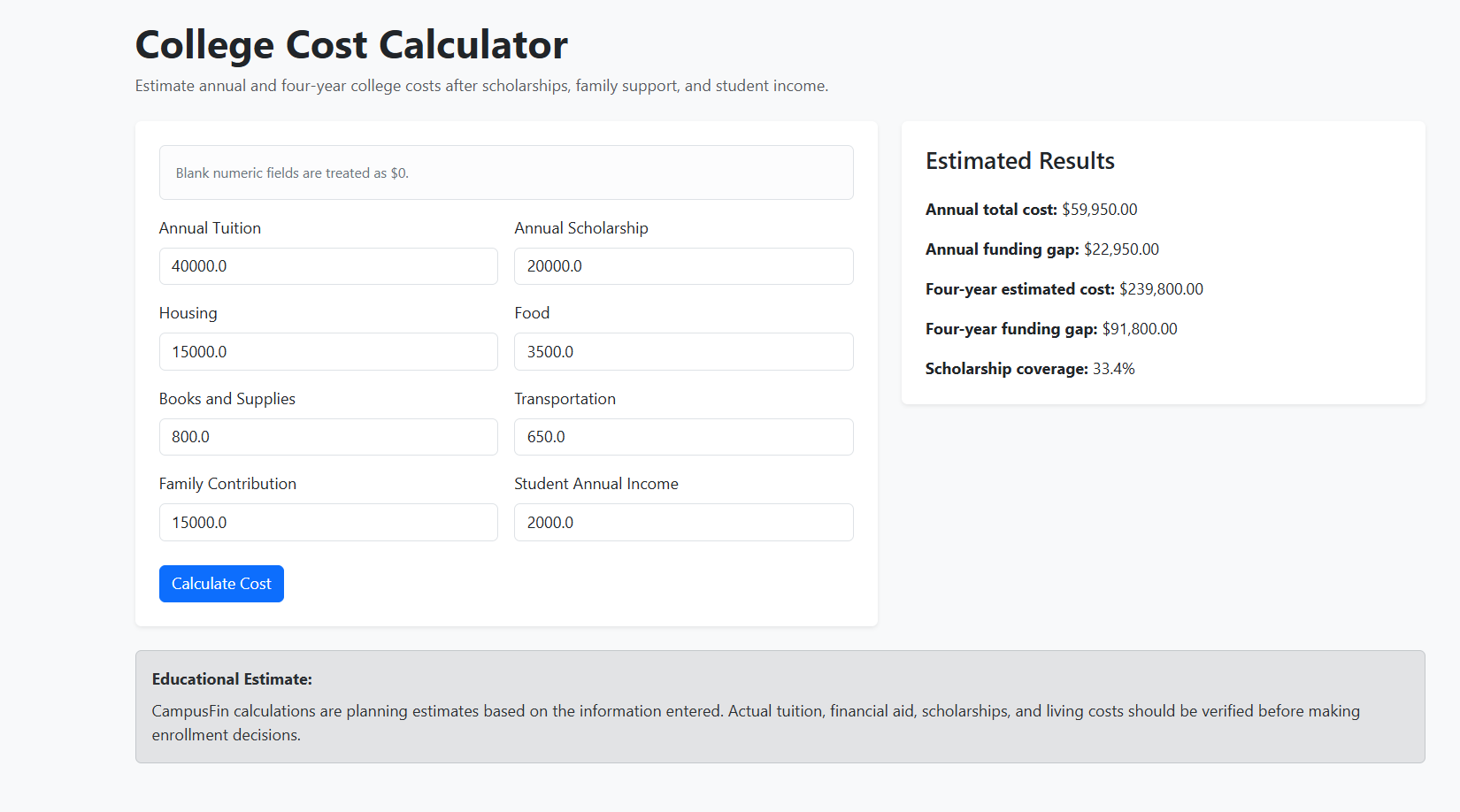
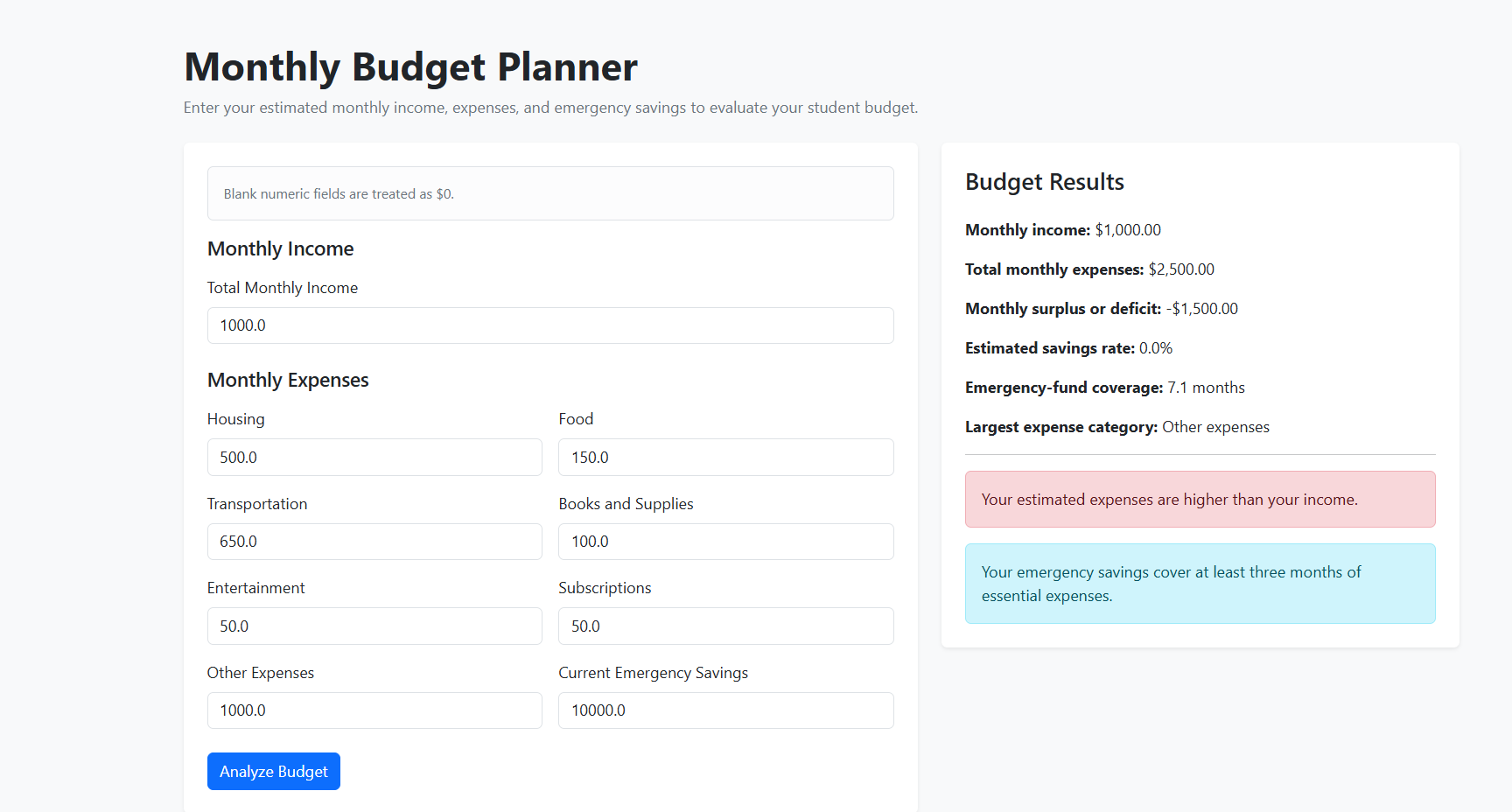
this shows how to input the values and also what the expected out come will be
-
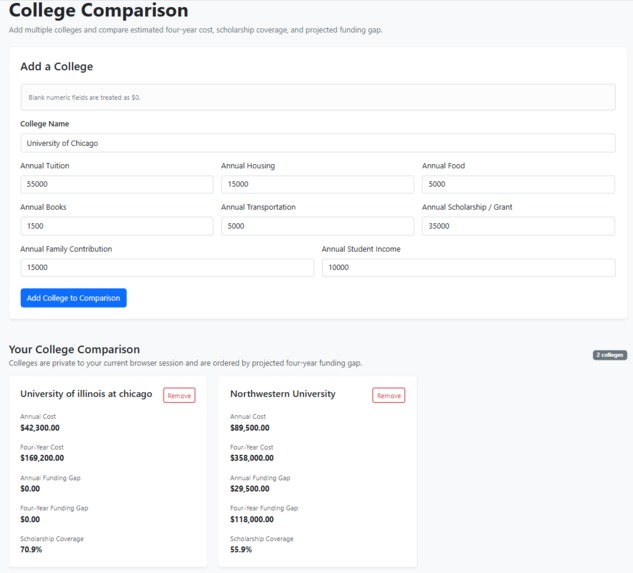
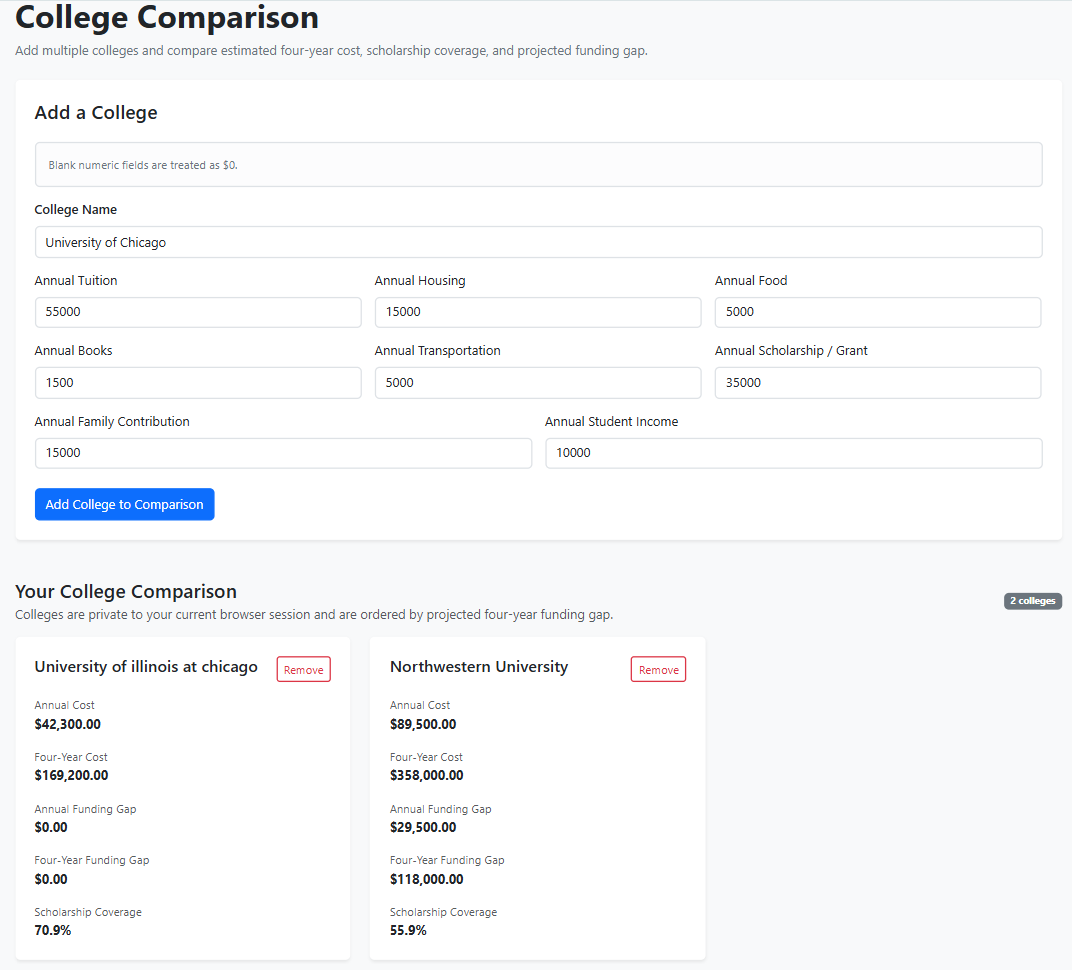
this tool can help you compare your financial standing in different colleges.
-
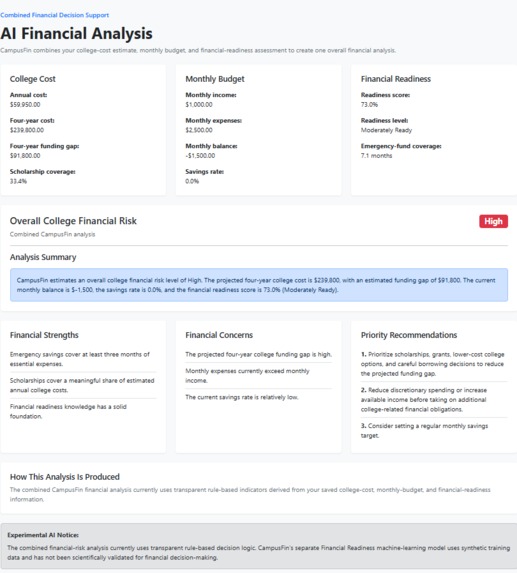
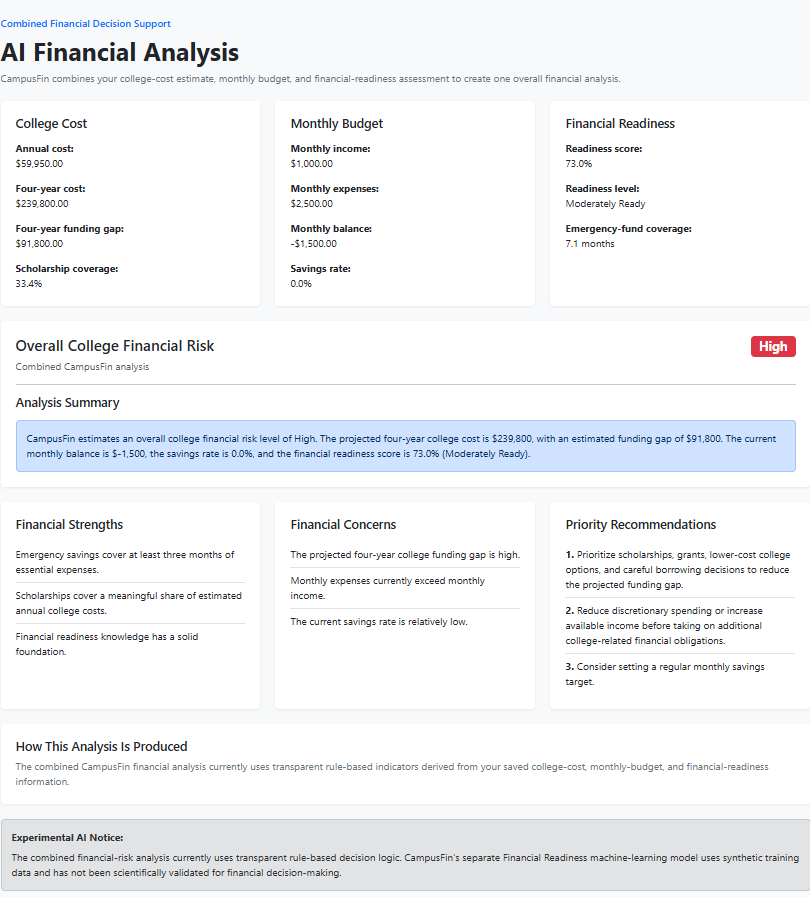
this is your final AI financial analysis where you can see your personal recommendations and understand situation with final summary
-
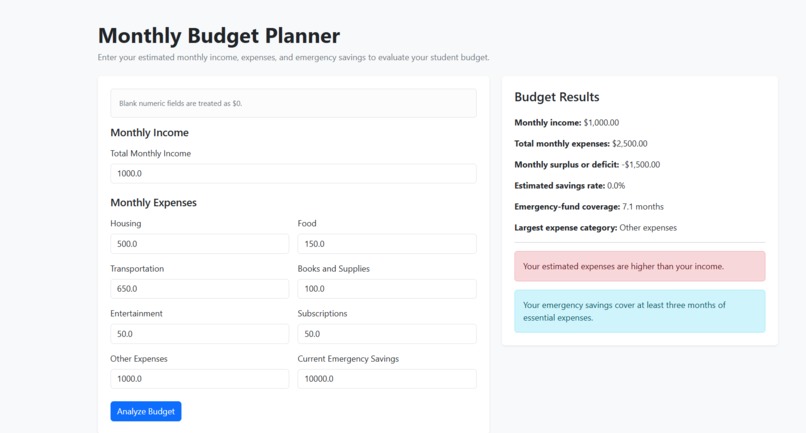
this shows how to input the values and also what the expected out come will be alongside with financial facts and tip
-
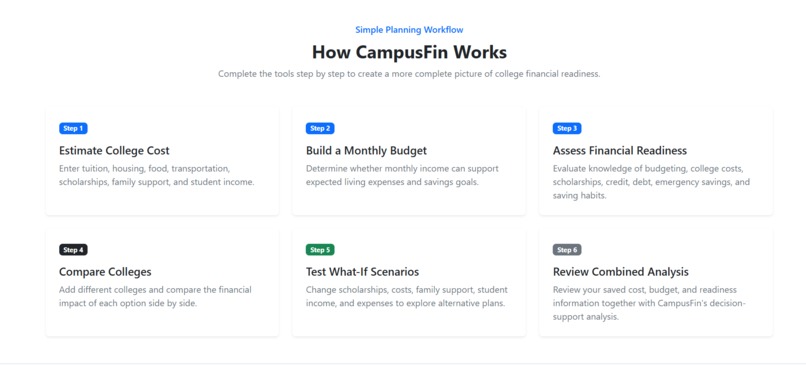
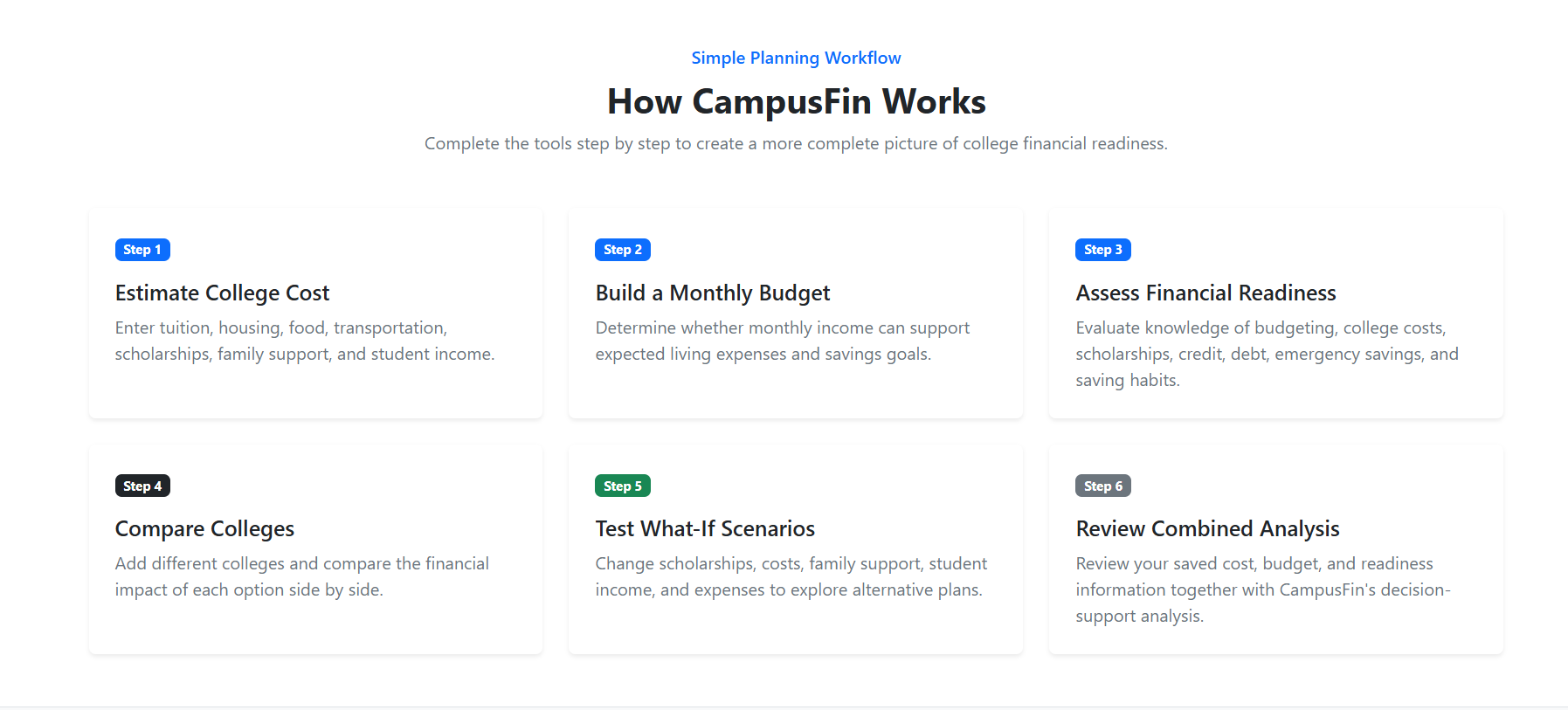
this is showing what CampusFin helps with and how to use CampusFin to its best ability
-
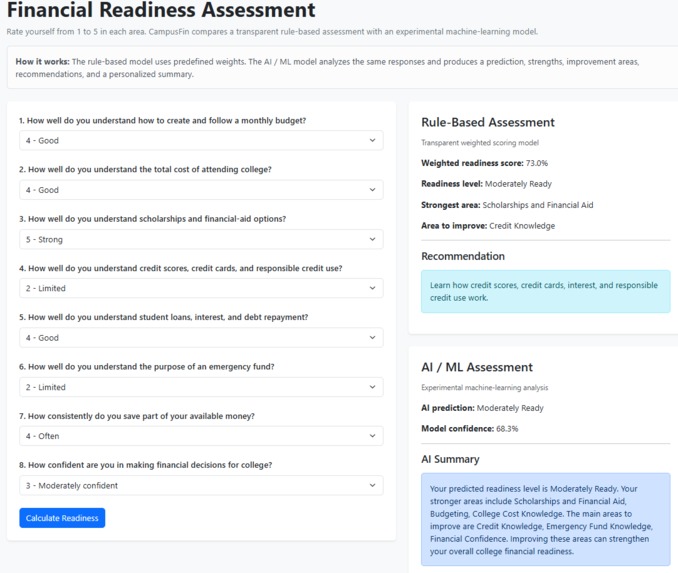
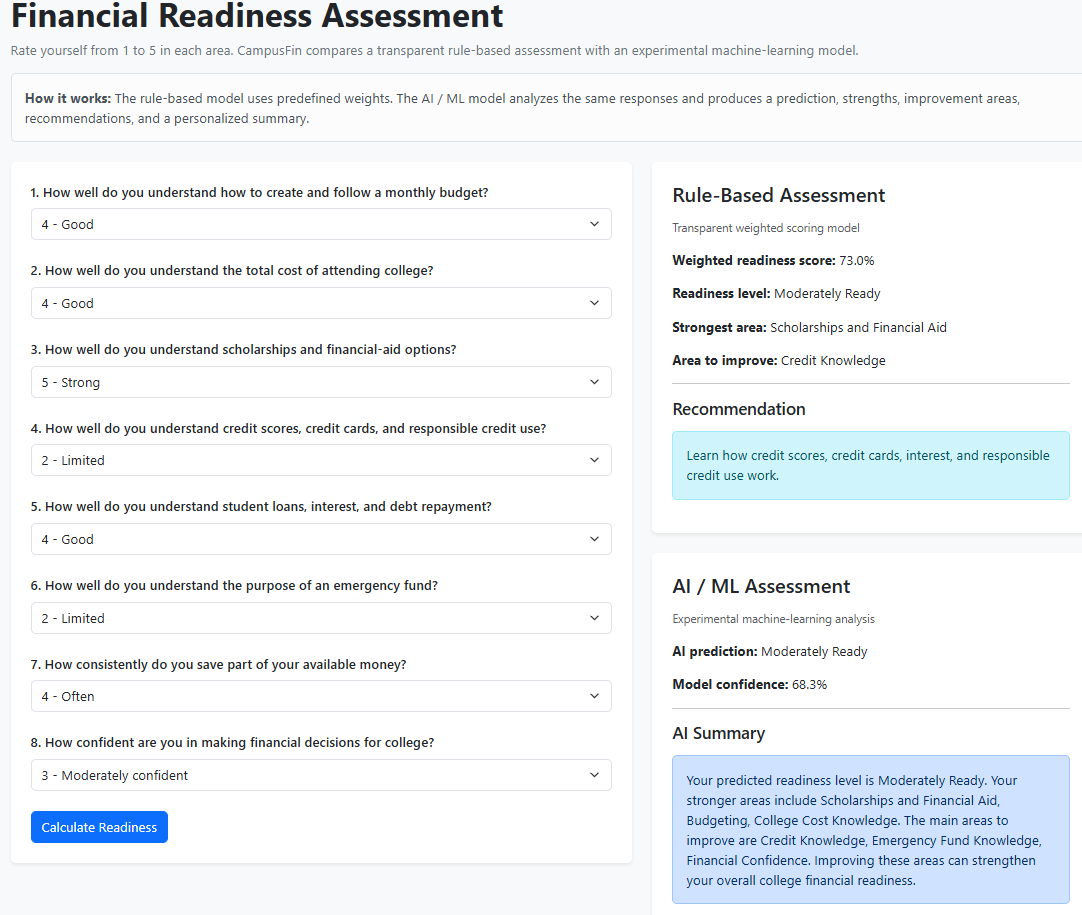
this assessment shows personal strength's and weaknesses alongside an AI summary of your financial knowledge and recommendations
-
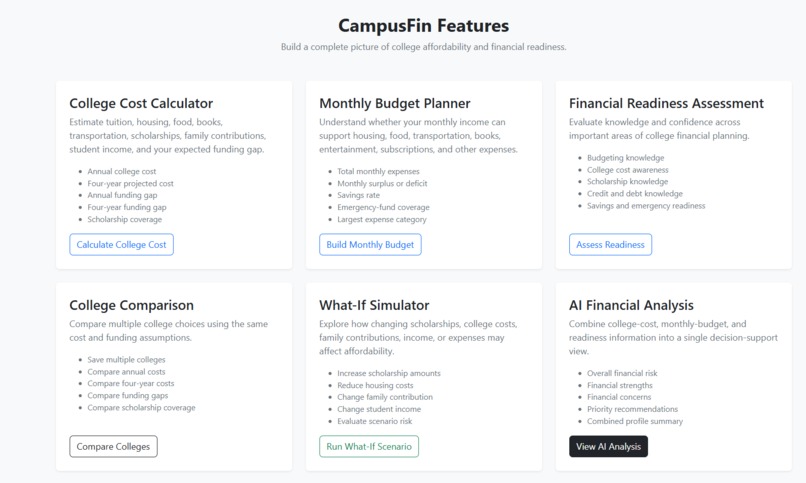
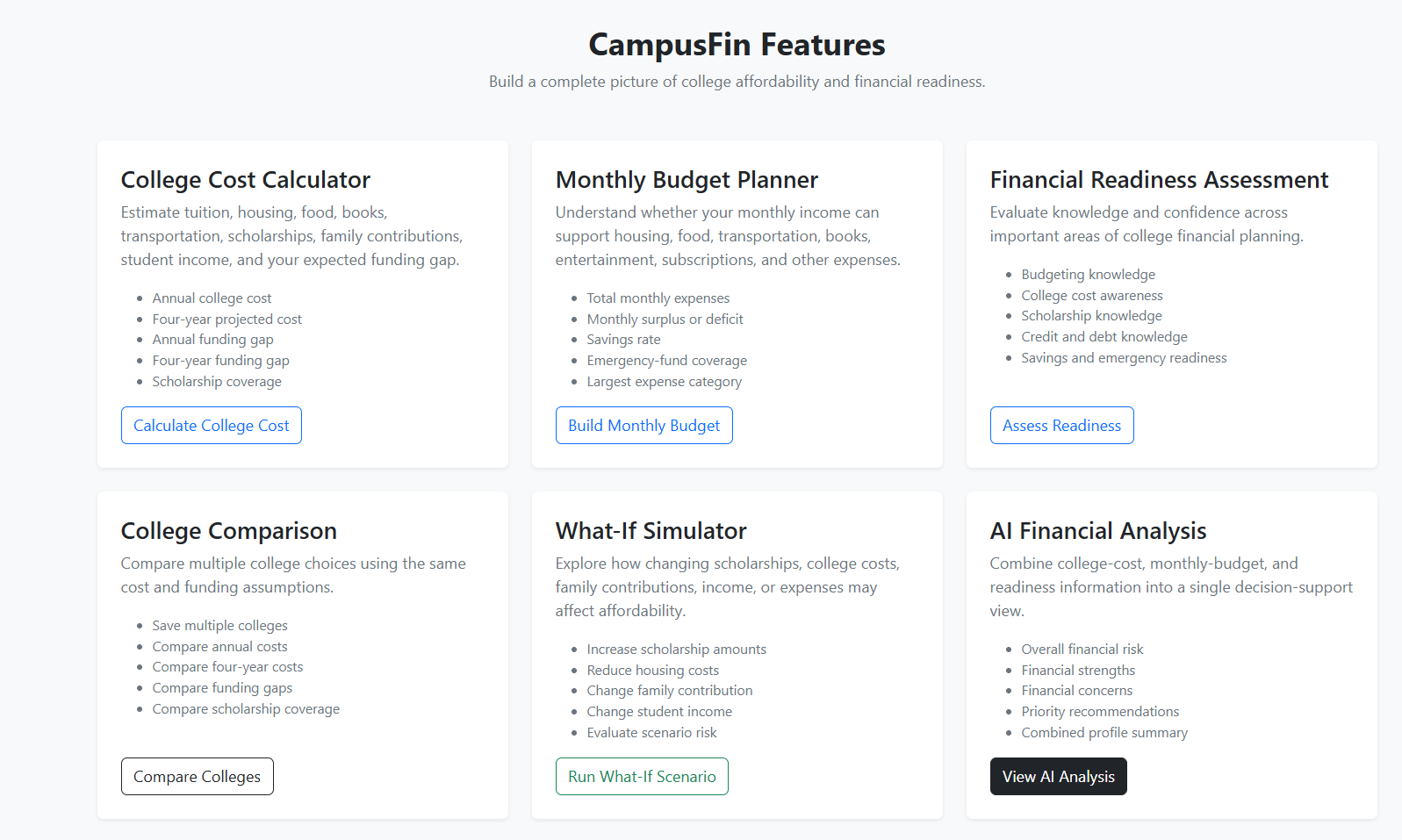
this shows the features and description of each tool
-
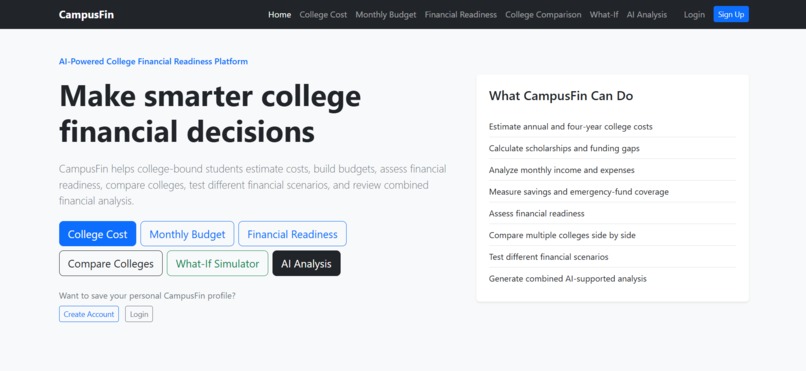
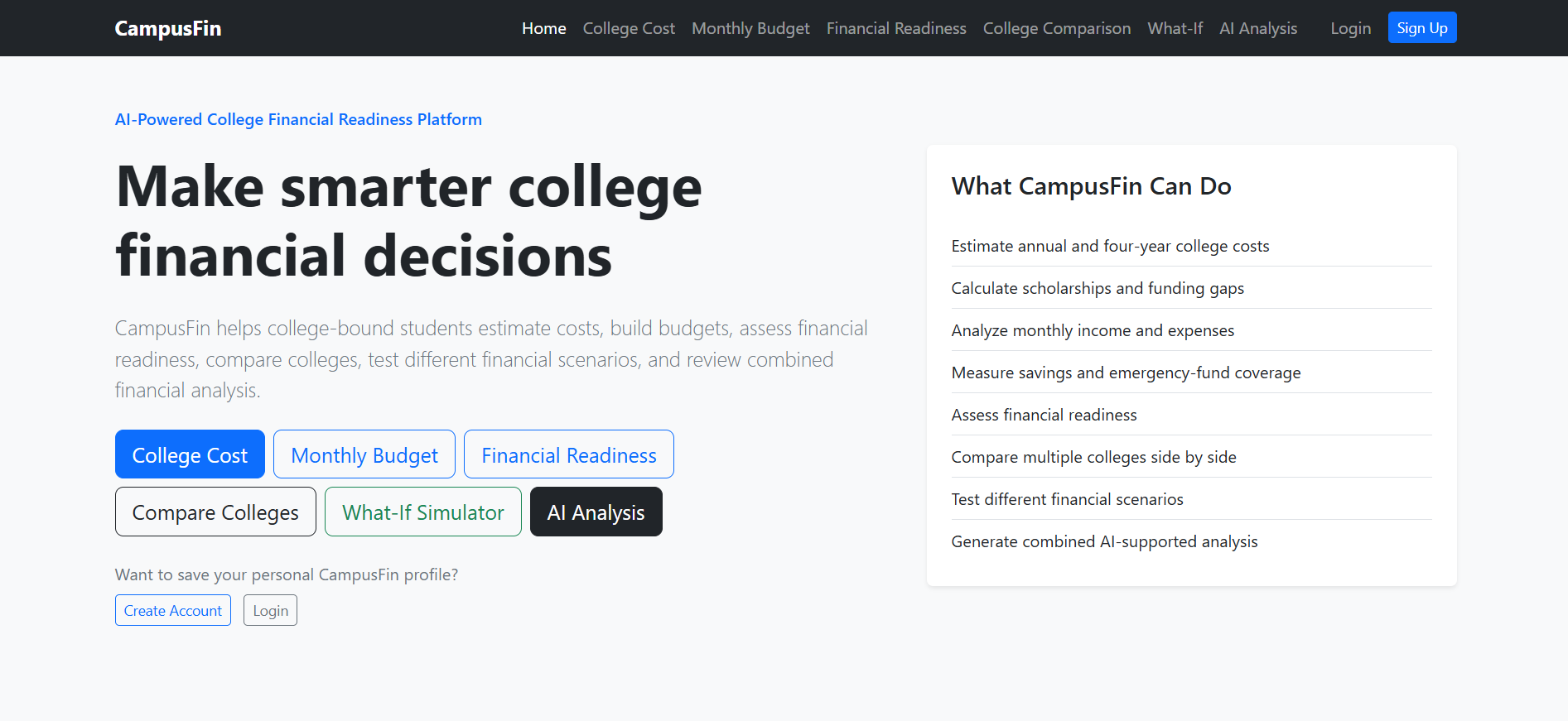
This is the home page
-
this is the login / signup page for website. but you can also use the website without having to login or signup.
Inspiration
College planning is often discussed in terms of admissions, majors, and rankings, but the financial side can be confusing for students. Tuition is only one part of the cost. Housing, food, books, transportation, scholarships, family support, income, budgeting, savings, and emergency funds all affect whether a college is actually affordable. I wanted to build a tool that could bring these factors together in one place and make them easier to understand. That became CampusFin, an AI-powered college financial readiness platform designed to help students estimate costs, compare colleges, test financial scenarios, and better understand their overall financial readiness.
What it does
CampusFin combines several financial planning tools into one platform:
- College Cost Calculator — estimates annual and four-year college costs, scholarship coverage, and funding gaps.
- Monthly Budget Planner — calculates monthly expenses, surplus or deficit, savings rate, and emergency-fund coverage.
- Financial Readiness Assessment — evaluates knowledge and confidence related to budgeting, scholarships, credit, debt, savings, and college costs. -College Comparison — compares multiple colleges using cost, scholarship coverage, and projected funding gap. -What-If Simulator — allows users to change tuition, housing, scholarships, family contribution, income, and expenses to see how affordability changes. -AI Financial Analysis — combines financial metrics and readiness information to identify strengths, concerns, overall financial risk, and possible next steps. -Experimental ML Readiness Prediction — uses a small machine learning model to generate an experimental financial-readiness prediction. Users can use most of CampusFin without creating an account. Accounts are optional and allow financial profile information to be saved securely.
How we built it
CampusFin is a full-stack application. The main web application was built using:
- Java 21
- Spring Boot
- Spring MVC
- Spring Data JPA
- Spring Security
- Thymeleaf -Bootstrap The production database uses PostgreSQL, while I used H2 during local development. For the AI and machine-learning functionality, I created a separate Python service using: -Flask -NumPy -scikit-learn -Gunicorn The Java application communicates with the Python AI service through REST endpoints. The production architecture is: User | v CampusFin Web Application | +----> Spring Boot | | | +----> PostgreSQL | +----> Python Flask AI Service | +----> scikit-learn I deployed the Spring Boot application, PostgreSQL database, and Python AI service on Railway. The source code is maintained in GitHub.
For example, CampusFin calculates annual college costs as: C=T+H+F+B+Tr where: T = tuition, H=housing, F=food, B=books, Tr = transportation Available funding is: A=S+Fc+Is where: S= scholarships, Fc= family contribution, Is = student income
Challenges we ran into
One of the biggest challenges was making CampusFin work for both anonymous and registered users. I wanted signup to remain optional, so I designed the application so anonymous users could use the tools through browser sessions while logged-in users could save financial profile information in the database. Another challenge was handling financial input fields cleanly. Initially, empty numeric fields displayed 0.0, which made the interface feel cluttered. I changed the Java models to use nullable Double values and updated the service logic so blank fields are safely interpreted as zero. Deployment also required several changes. During development, I used H2, but for production I migrated the application to PostgreSQL and created separate Spring profiles for local and production environments. I also had to deploy the Python AI service independently and configure communication between the Spring Boot application and Flask service. One deployment issue occurred when the AI service's Gunicorn command was accidentally being executed during the build phase instead of the start phase. Because Railway had not yet assigned the runtime port during the build, the deployment failed. Moving the Gunicorn command to the correct start configuration solved the problem.
What we learned
Building CampusFin taught me much more than just how to write individual features. I learned how different parts of a production application fit together, including:
- front-end and back-end integration
- REST API communication
- database persistence
- authentication and password hashing
- validation and session management
- environment variables and production configuration
- PostgreSQL deployment
- Python/Java service integration
- cloud deployment
- machine-learning integration I also learned the importance of explainability. Instead of simply producing a risk score, CampusFin attempts to explain the factors contributing to that result by showing strengths, concerns, and recommendations. Finally, I learned to distinguish between deterministic financial calculations and experimental AI/ML predictions. The current machine-learning model uses synthetic data, so I present it as an experimental component rather than a validated financial prediction system.
What's next for CampusFin
I plan to continue improving CampusFin by strengthening the research and evaluation behind the platform. I am exploring a scenario-based evaluation methodology that tests calculation accuracy, risk consistency, explainability, and system performance across controlled financial profiles. Future improvements could also include stronger account-security features, expanded college financial data, improved AI models, additional visualizations, and more advanced scenario analysis. CampusFin started as an idea for making college finances easier to understand, but building it became an opportunity to combine software engineering, AI, machine learning, finance, and decision-support design into one working platform.
Built With
- bootstrap
- clouddeployment
- explainableai
- flask
- github
- html
- java
- logisticregression
- machine-learning
- numpy
- postgresql
- python
- restapi
- skicitlearn
- springboot
- thymeleaf

Log in or sign up for Devpost to join the conversation.