-
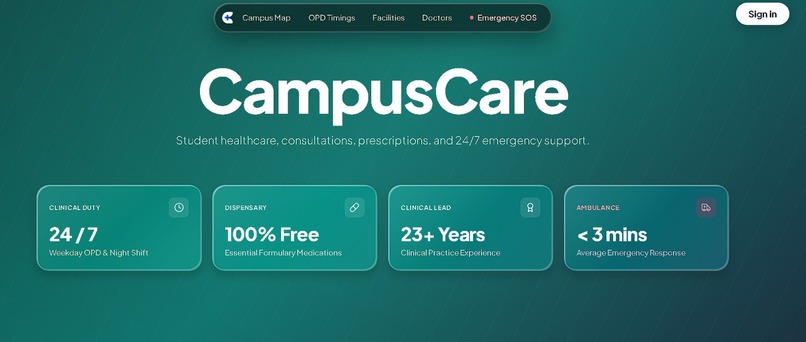
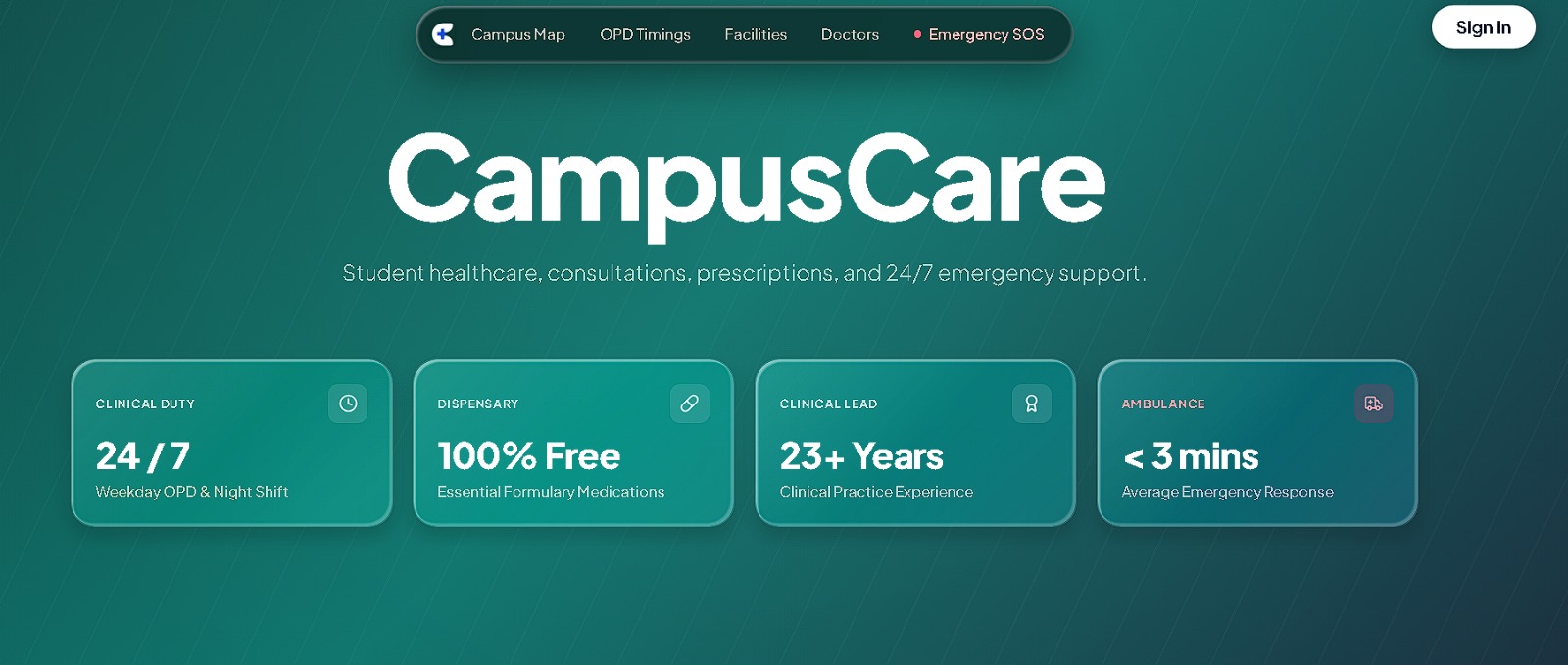
Hero Page
-
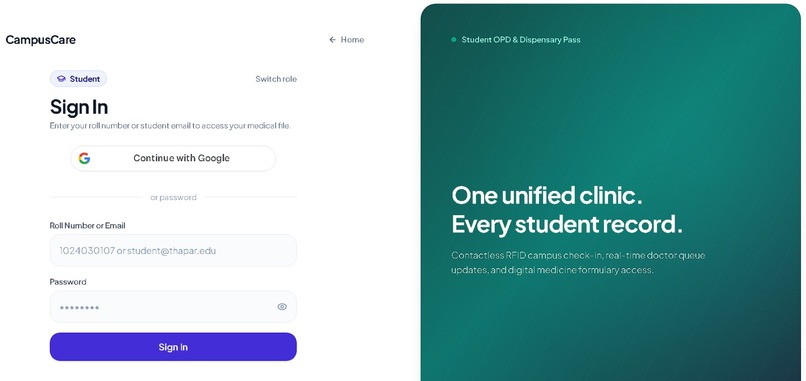
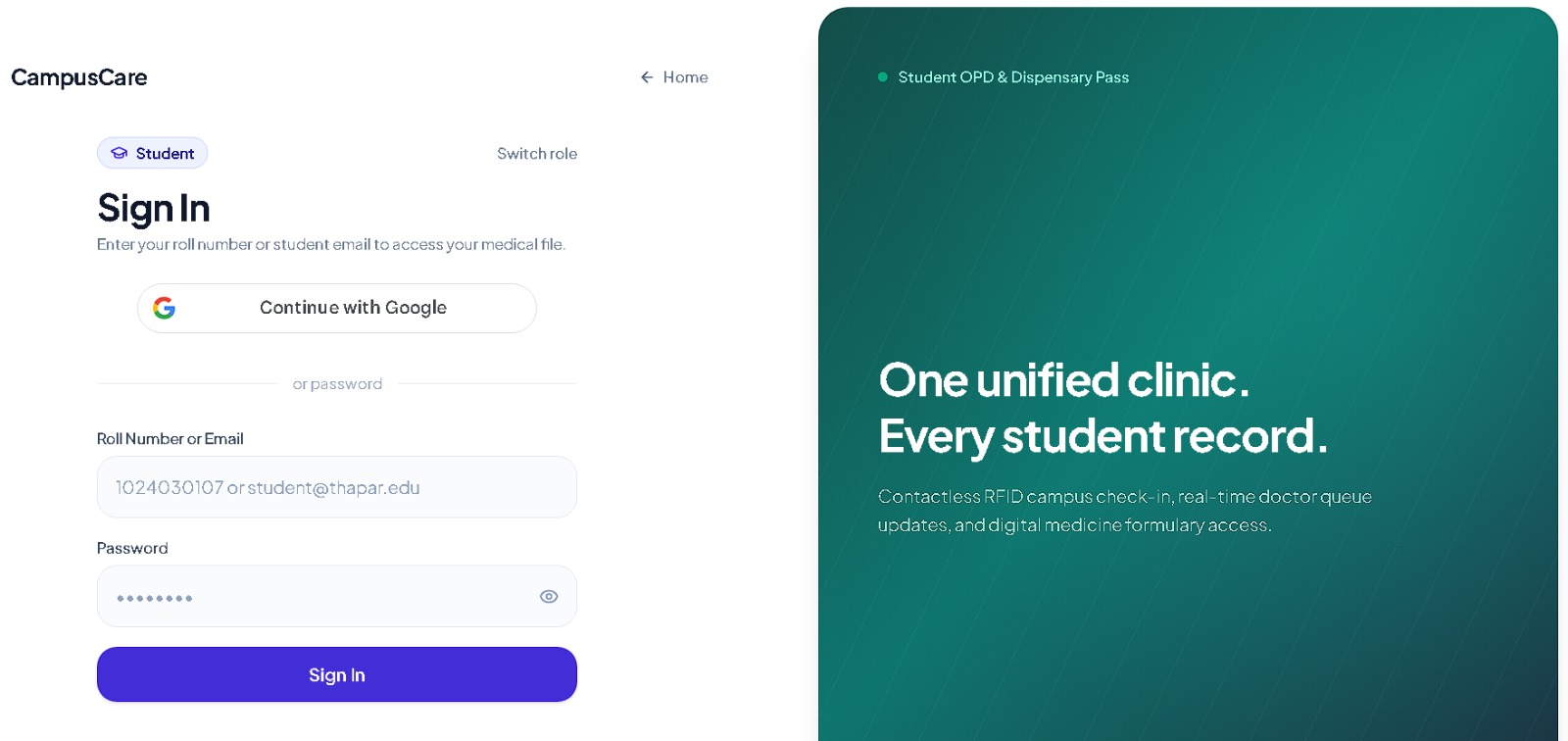
Login-in Page
-
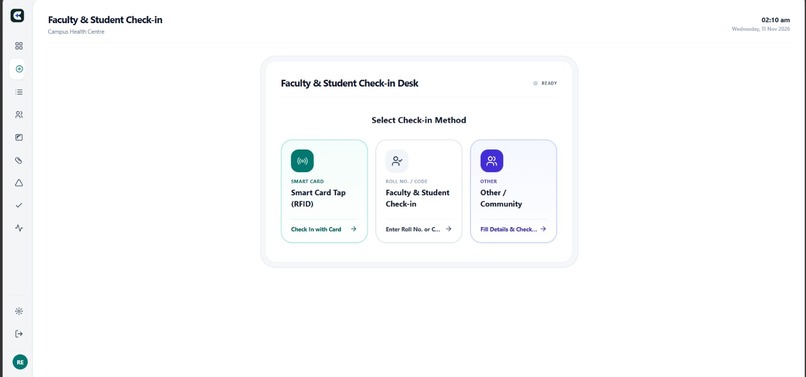
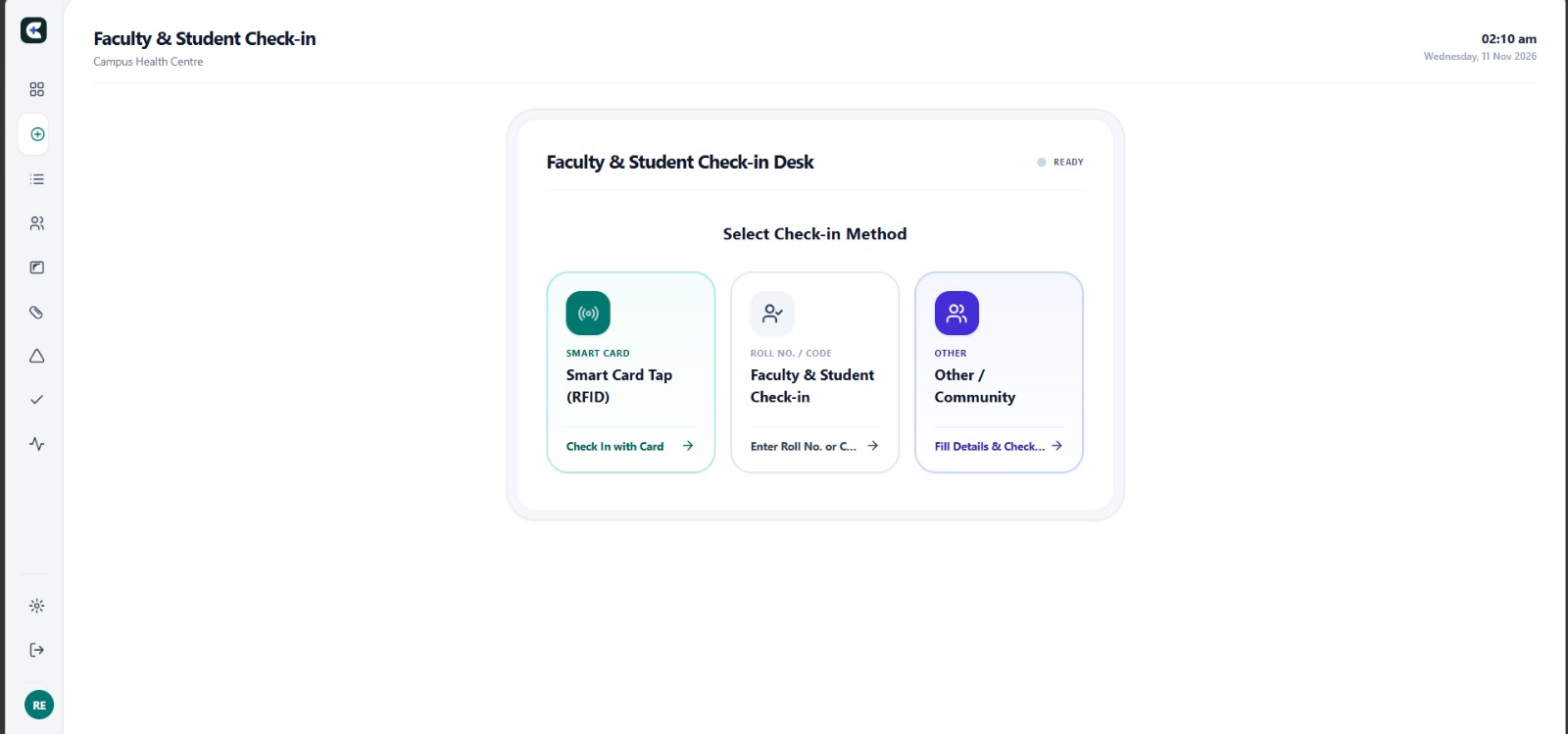
Checkin-in Page
-
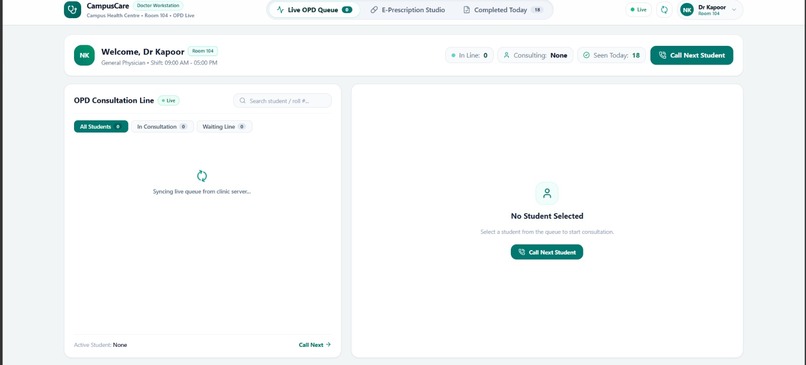
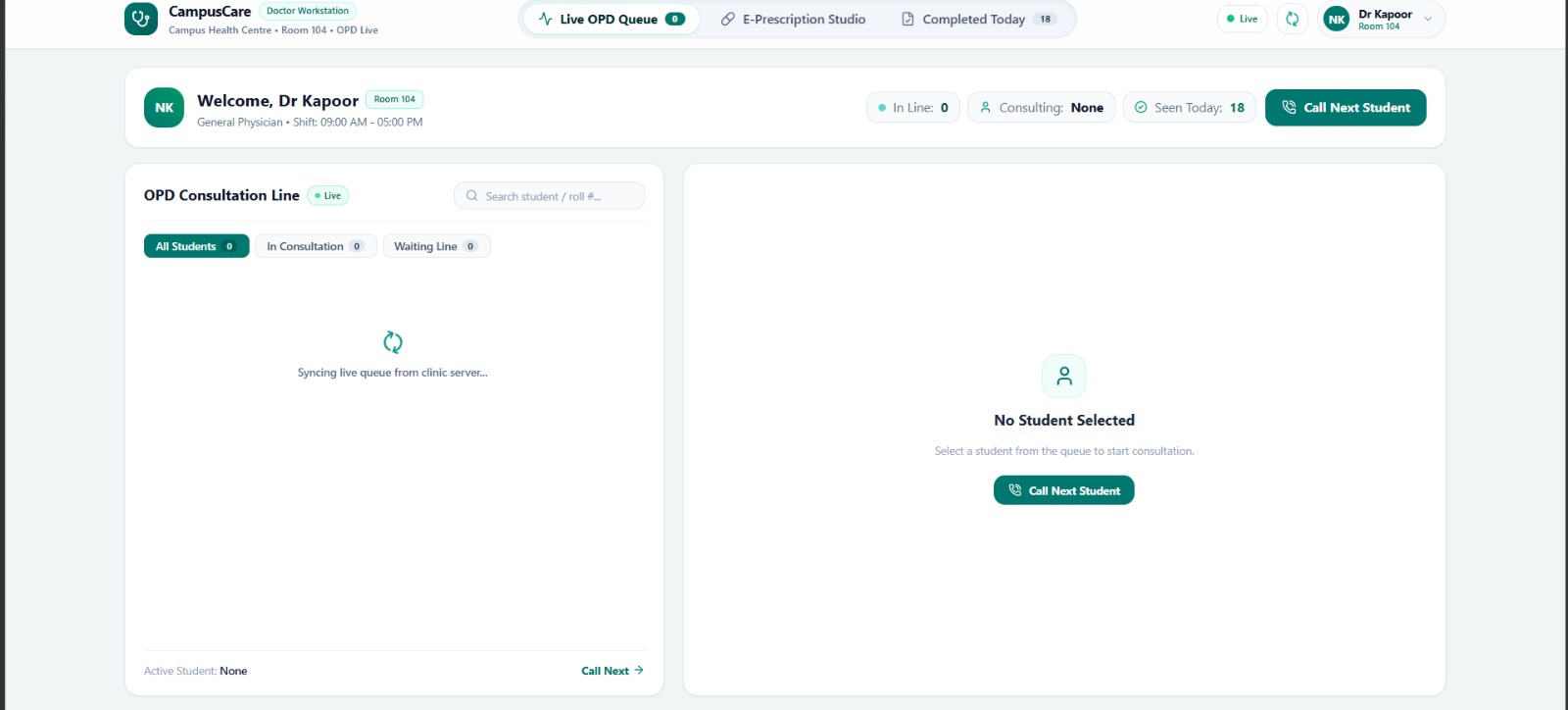
Doctor Dashboard
-
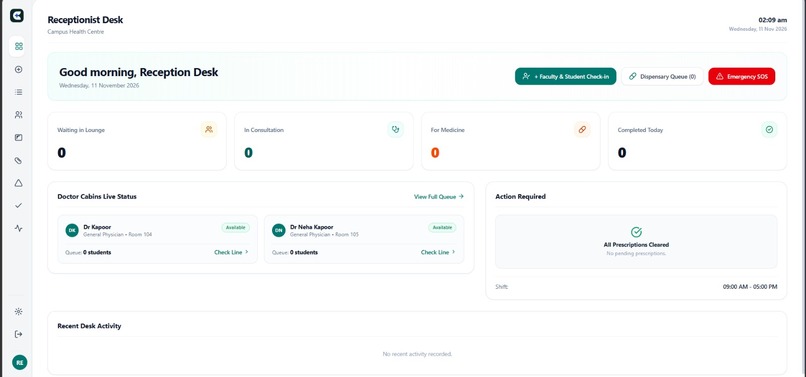
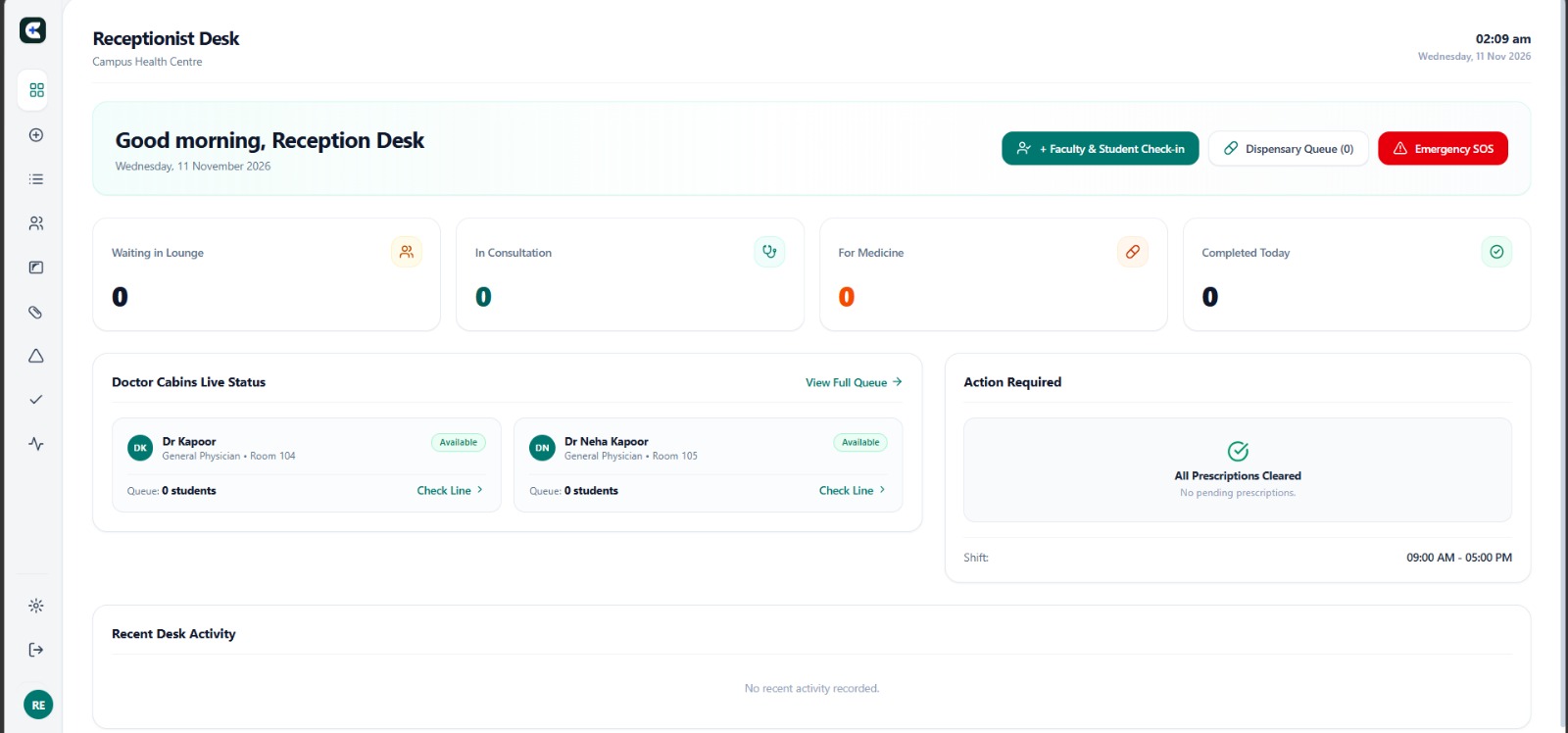
Receptionist Dashboard
Inspiration
Imagine a university student waiting in a crowded campus clinic, unaware of how long their consultation will take, while doctors struggle with fragmented medical records and paper based workflows. We realized that accessing healthcare on campus should be as seamless as accessing the university itself.
This inspired us to build CampusCare a smarter healthcare ecosystem that reimagines how universities manage student healthcare, starting with something every student already carries: their university ID card.
What it does
CampusCare transforms traditional campus healthcare into a connected digital experience.
- Smart Check in: Uses RFID/NFC enabled university ID cards for seamless student identification.
- Intelligent Queues: Provides doctor specific queues, live position tracking, and no show management.
- Digital Health Records: Maintains structured medical histories, allergies, chronic conditions, and medications.
- Smart Prescriptions: Enables doctors to create structured digital prescriptions with clear dosage schedules.
- Medicine Dispensing: Tracks actual medication dispensing separately from prescribed medication.
- Emergency Management: Maintains a dedicated workflow for emergency and trauma cases outside routine queues.
- Role Based Access: Provides dedicated interfaces for students, doctors, receptionists, and administrators. Our goal is to make campus healthcare more transparent, organized, and accessible for university communities. ##How we built it We built CampusCare using React, Vite, and Tailwind CSS for the frontend, Python and FastAPI for the backend, and MySQL for relational data management.
We used handwritten SQL queries, structured REST APIs, role based authorization, and transactional database operations to maintain data consistency.
One of our most exciting integrations was experimenting with the Web NFC API. We successfully tested our university's NFC enabled ID card using an Android device and Chrome, demonstrating the feasibility of reusing existing university identification infrastructure.
We designed the platform around real healthcare workflows rather than treating it as another generic management dashboard.
Challenges we ran into
Building CampusCare introduced challenges that required us to think beyond conventional web development.
- NFC Integration: Working with browser compatibility and hardware limitations while ensuring alternative check in methods.
- Queue Concurrency: Managing simultaneous requests, no shows, and doctor redirections without disrupting queue consistency.
- Medical Data Modelling: Designing structured and historically traceable medical records and prescriptions.
- Security: Protecting sensitive health information through authentication, authorization, and secure data handling.
- Workflow Complexity: Separating consultations, medicine dispensing, and emergency handling into distinct but connected processes. These challenges taught us that building healthcare technology requires understanding the entire ecosystem, not just individual features. Accomplishments that we're proud of Our biggest accomplishment is turning an everyday university problem into a technically grounded healthcare solution.
We are particularly proud of:
- Successfully demonstrating NFC based identification using an actual university ID card.
- Designing an integrated workflow connecting check in, doctor queues, consultations, prescriptions, and dispensing.
- Developing structured digital prescription functionality with daywise dosage schedules.
- Designing independent emergency handling rather than forcing urgent cases into routine queues.
- Creating a role based platform that considers the different needs of students and healthcare staff. Most importantly, we built CampusCare around a real world problem with the ambition of making it adaptable to university healthcare systems beyond our own campus. What we learned We learned that meaningful innovation begins with identifying friction in everyday experiences.
Throughout this project, we strengthened our understanding of full stack development, database architecture, raw SQL, API design, NFC integration, authentication, authorization, and concurrent workflow management.
Beyond technology, we learned to think about scalability, user experience, data privacy, and the importance of designing software around actual human needs.
We discovered that the best solutions are not necessarily the ones with the most features, but the ones that make complicated processes simpler.
What's next for CampusCare
We envision CampusCare evolving into a scalable healthcare platform for universities across the United States.
Our next steps include:
- Exploring integrations with existing university identity systems and campus healthcare infrastructure.
- Introducing medication reminders based on digital prescriptions.
- Developing anonymized health analytics to help administrators identify emerging campus health trends.
- Exploring interoperability with established healthcare record systems.
- Strengthening privacy, security, and compliance readiness for institutional deployment, including applicable HIPAA and FERPA requirements.
- Expanding the platform to support multiple campus clinics and healthcare providers. Our ultimate vision is simple: make accessing healthcare on campus as effortless as being part of the campus itself.
CampusCare Smarter Campuses. Healthier Futures.
Built With
- css3
- jwt
- mysql
- nfc
- pydantic
- python
- react-native
- redis
- tailwind
- three.js
- vite
- websockets
