Inspiration
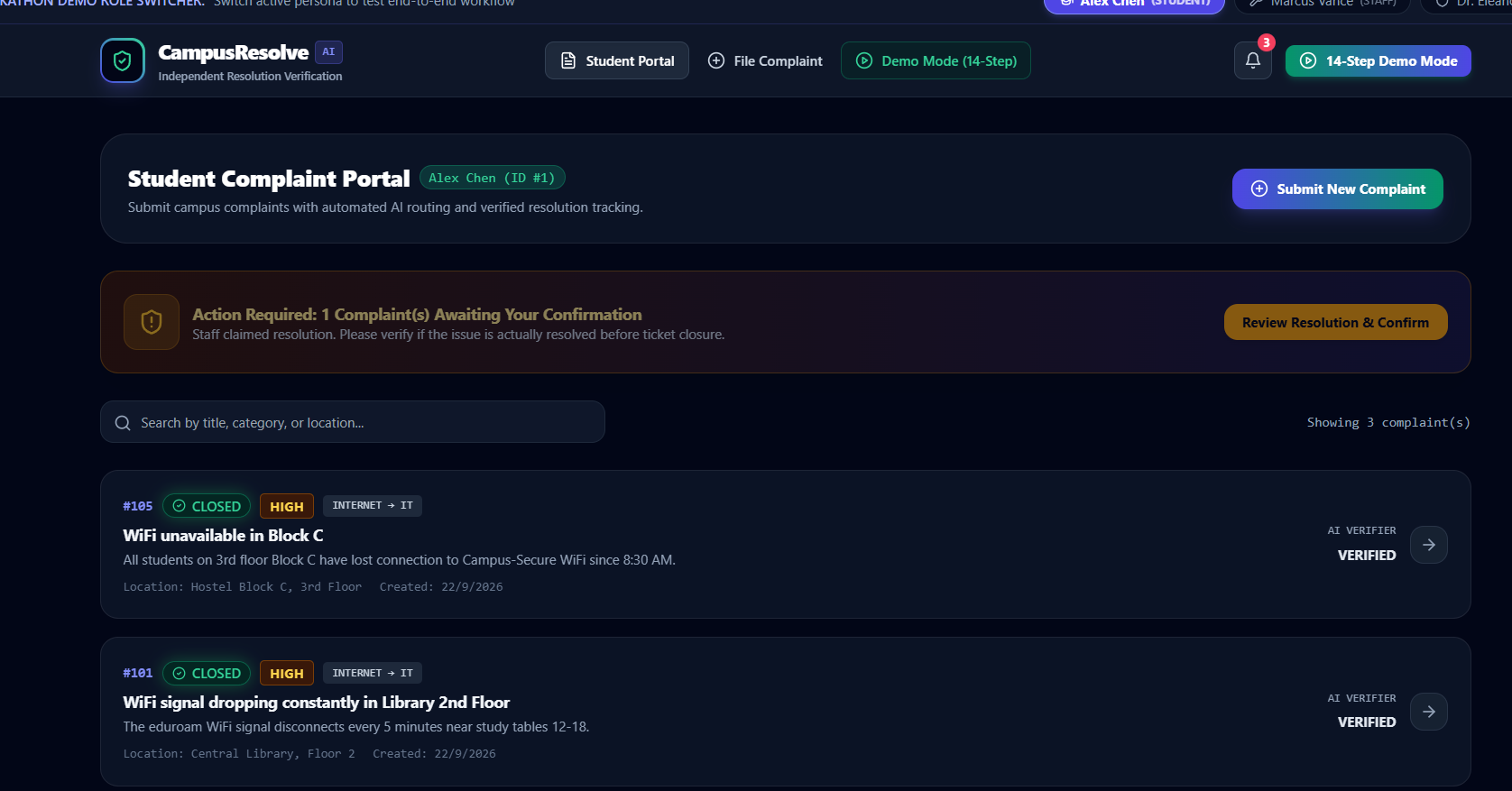
CampusBuzzer was inspired by a simple problem: students can report campus issues, but submitting a complaint does not always mean the issue is actually resolved. We wanted to build a system that focuses not only on resolving complaints, but also on verifying the outcome.
What it does
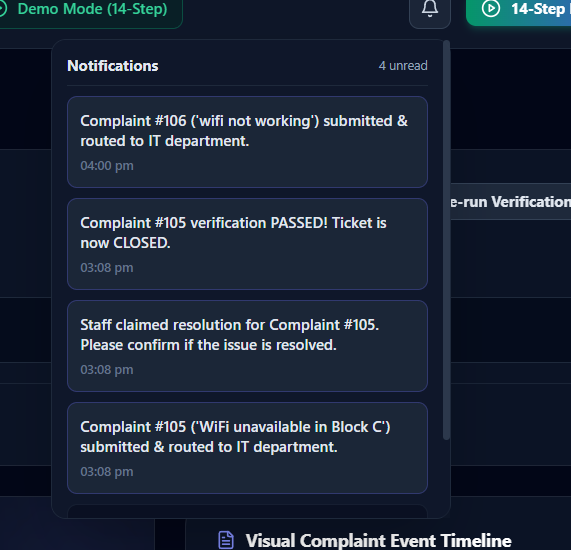
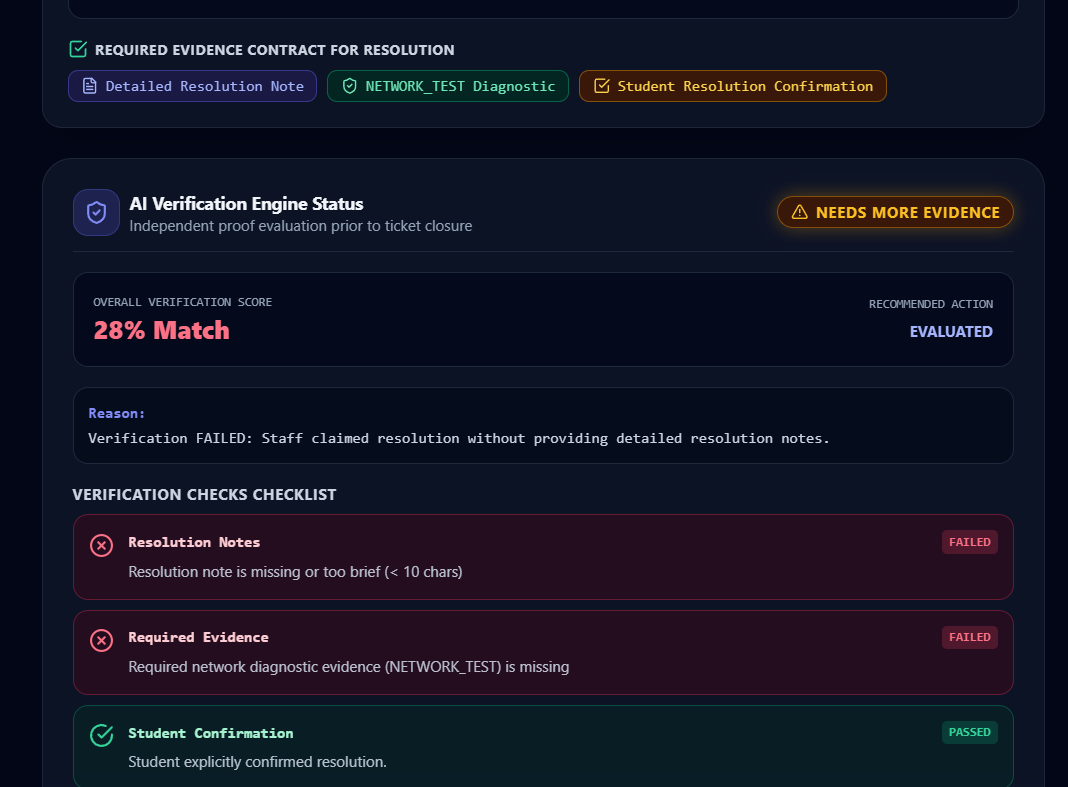
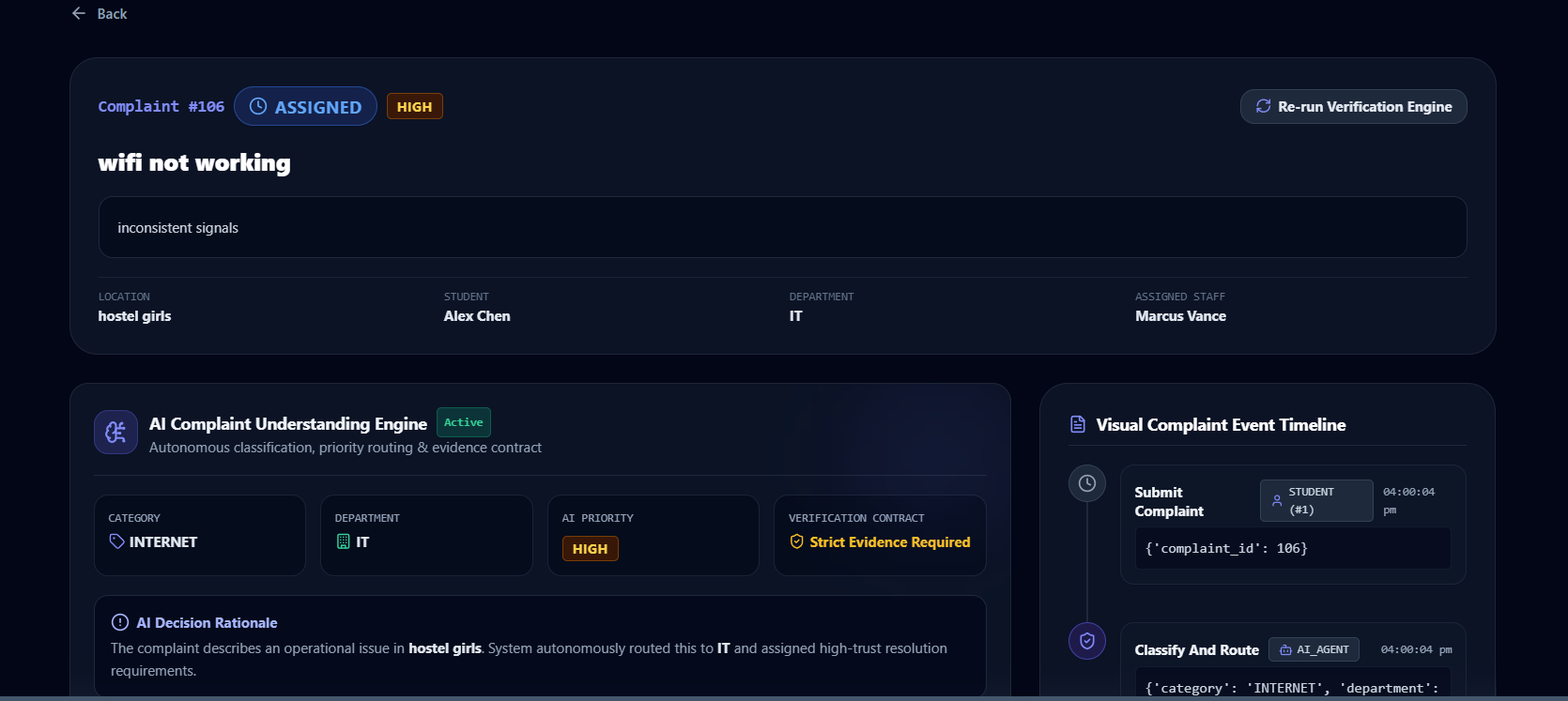
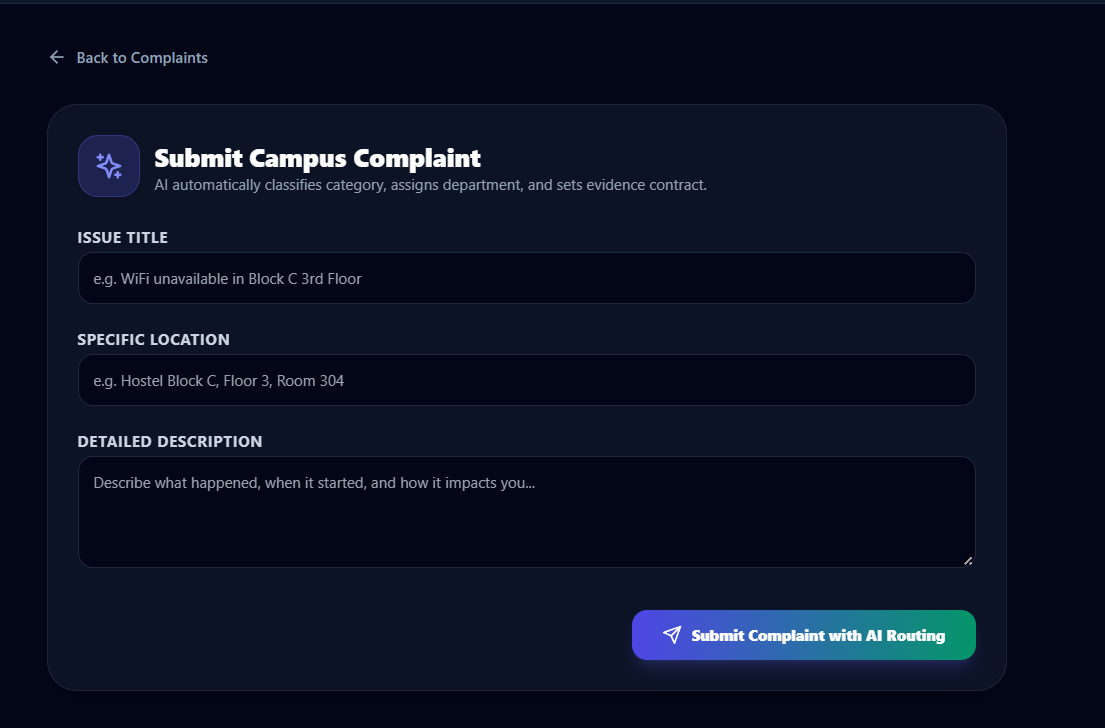
CampusBuzzer lets students submit campus complaints and uses AI to understand, categorize, prioritize, and route them to the appropriate department. Staff can manage complaints and submit resolution evidence. Instead of automatically closing a complaint when staff marks it as resolved, CampusBuzzer verifies the resolution using evidence, system checks, and student confirmation. If the resolution cannot be verified, the complaint can be reopened or escalated.
How we built it
We built CampusBuzzer as a full-stack web application with a modern frontend, backend APIs, PostgreSQL database, authentication, cloud storage, and AI-powered workflows. The system combines AI for complaint understanding and verification with deterministic backend rules for critical state transitions. Every major action is recorded in a complaint timeline so the resolution process remains traceable.
Challenges we ran into
The biggest challenge was making the AI useful without allowing it to make uncontrolled decisions. We had to design controlled AI actions, validate AI outputs, handle incomplete evidence, and ensure that a complaint could never be closed without passing verification. We also had to connect the frontend, backend, database, authentication, storage, and AI services into one reliable workflow.
Accomplishments that we're proud of
We are proud of building a complaint workflow where “resolved” and “verified” are intentionally different states. The system can detect when a resolution lacks sufficient evidence, request additional proof, incorporate student confirmation, and only then allow closure. We also built an auditable timeline and dashboards that show the actual state of campus complaints.
What we learned
We learned that building an AI application is not just about adding an LLM. Reliable AI systems need structured outputs, controlled tools, validation, backend rules, evidence, error handling, and observability. We also learned how AI can be combined with traditional software logic to create workflows that are both intelligent and controllable.
What's next for CampusBuzzer
Next, we want to expand verification with more real-world signals such as network tests, IoT data, QR-based verification, and location-aware evidence. We also want to add stronger analytics, automated SLA escalation, integrations with existing campus systems, and more sophisticated agent workflows while keeping verification and accountability at the center of the platform.


Log in or sign up for Devpost to join the conversation.