Inspiration
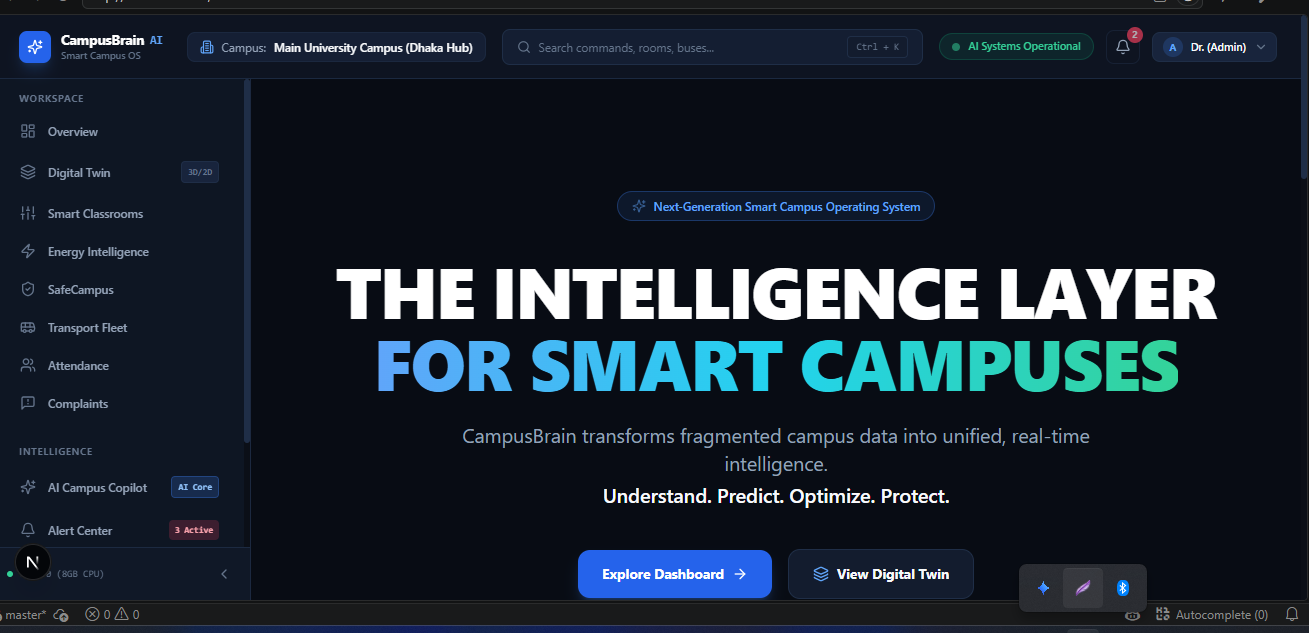
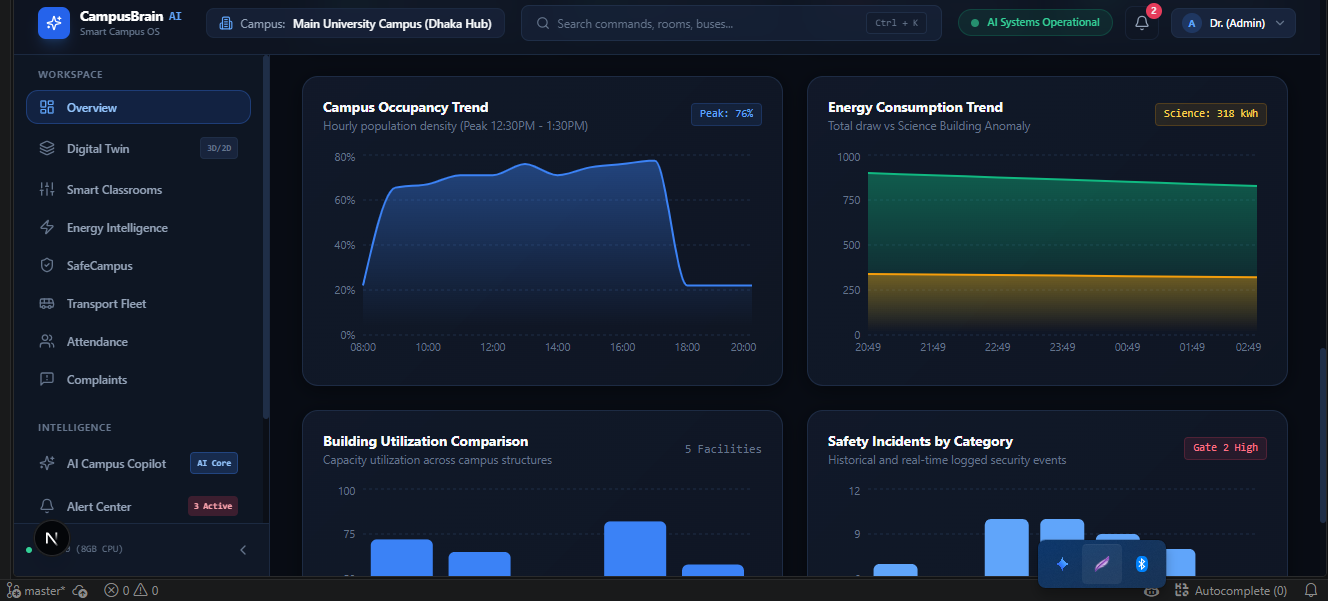
Modern educational institutions operate like miniature cities, yet campus management remains trapped in disconnected legacy silos. Energy is wasted cooling empty lecture halls, transit fleets struggle with unpredicted bottlenecks, and safety incidents are handled reactively. We built CampusBrain AI to provide a single, proactive intelligence layer that unites campus operations into an actionable, real-time command center.
What it does
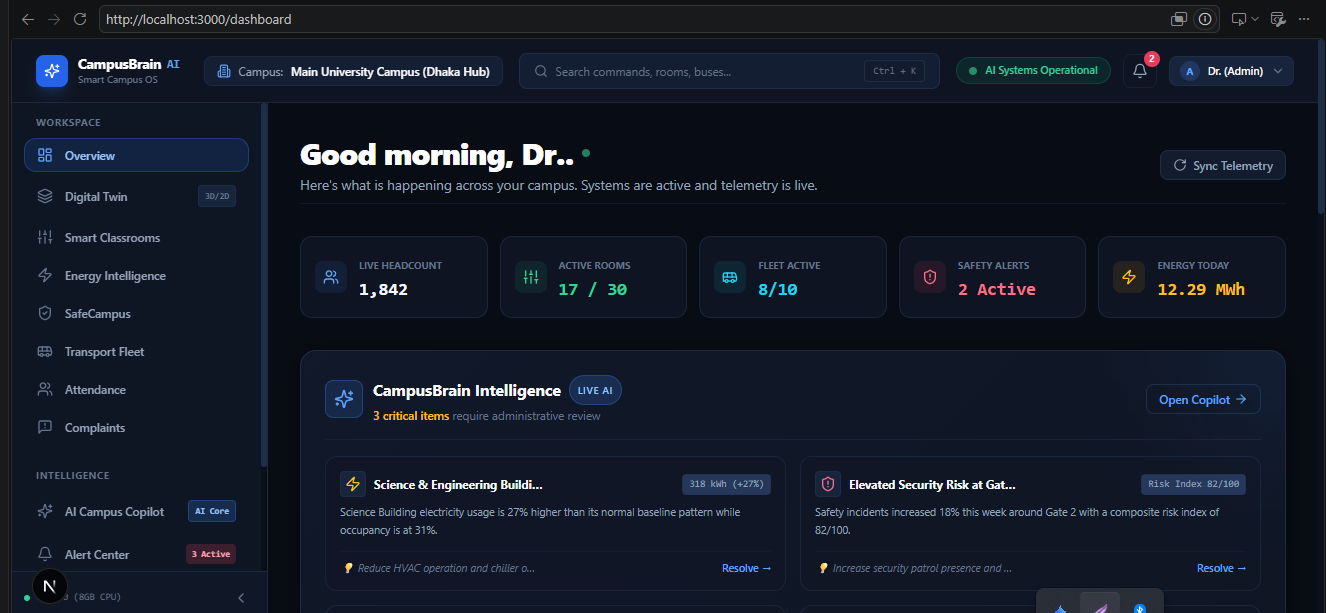
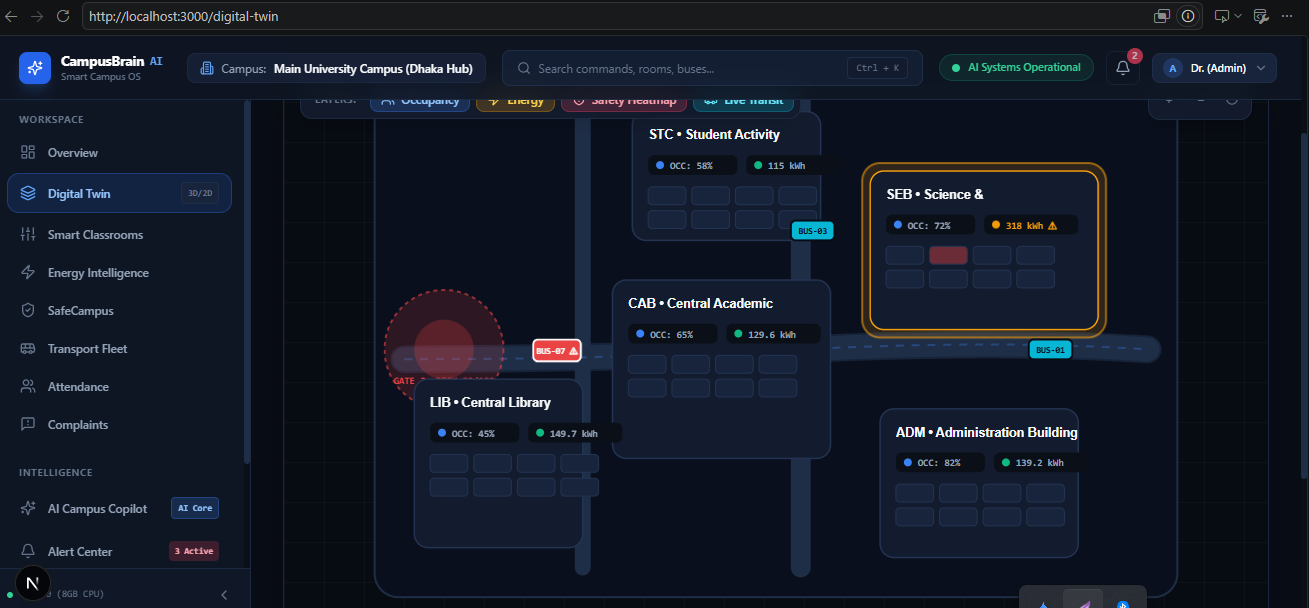
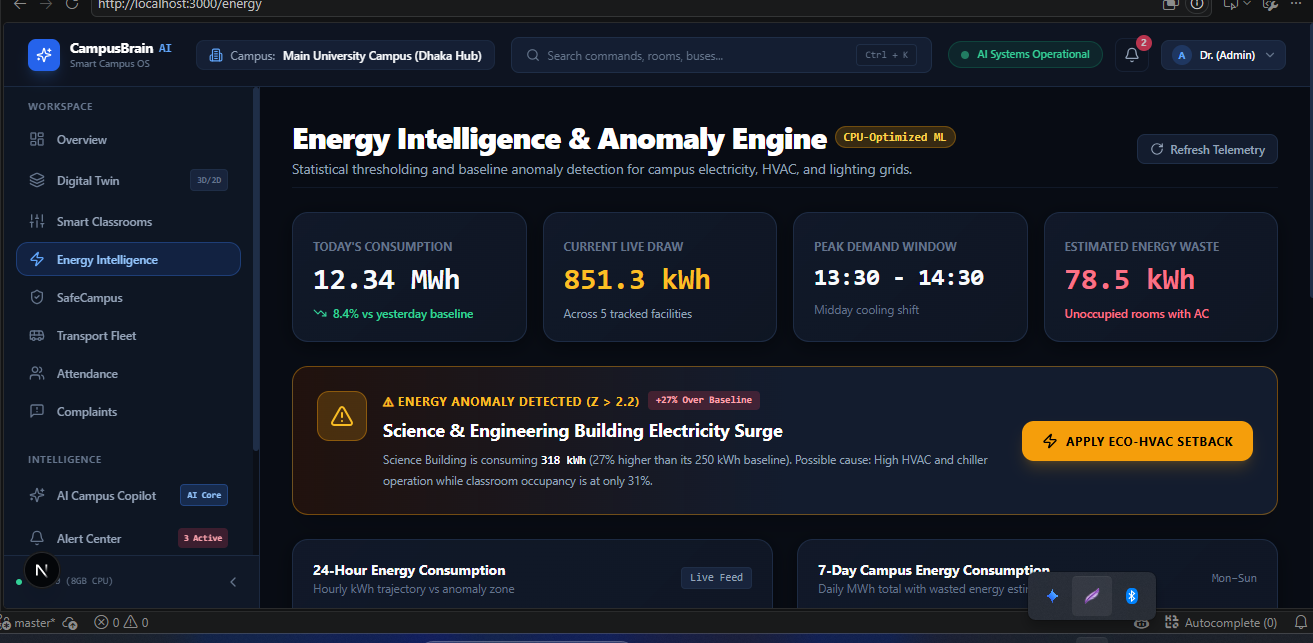
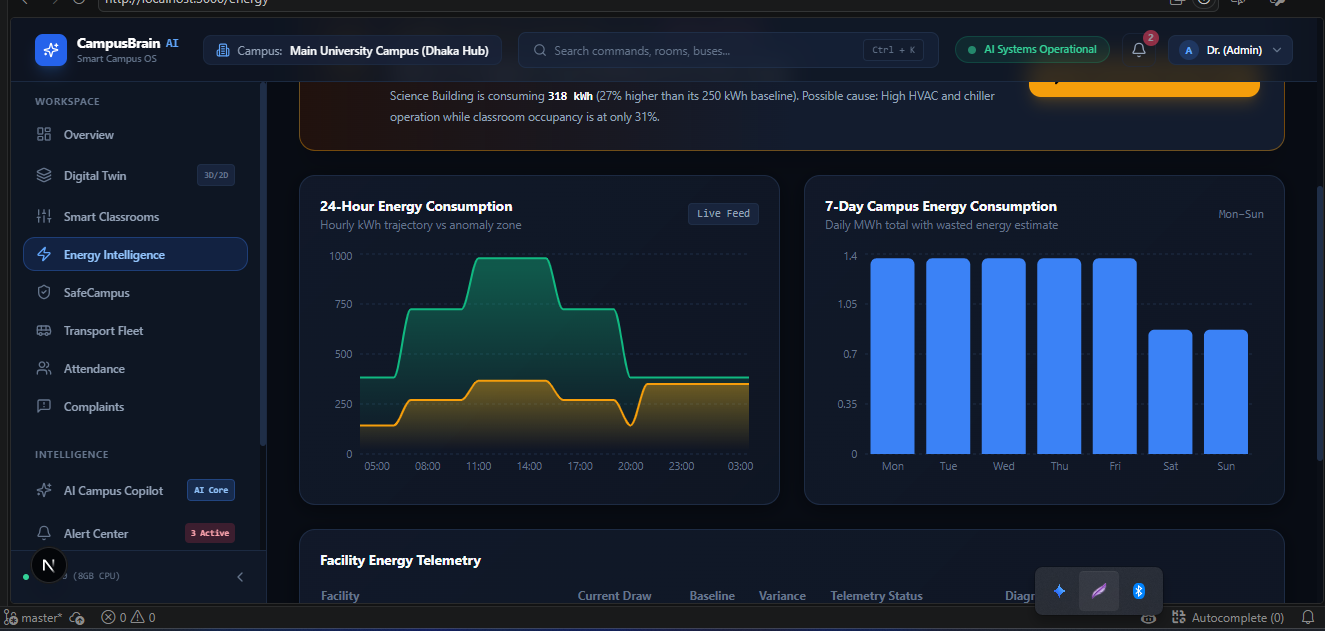
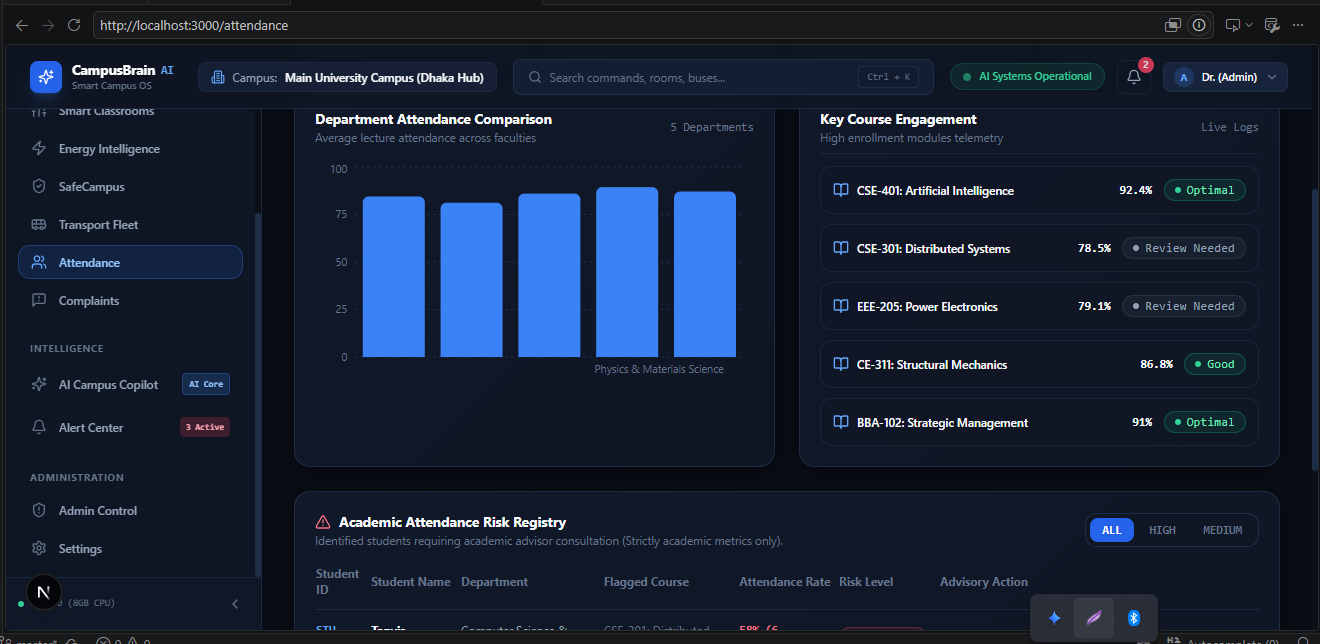
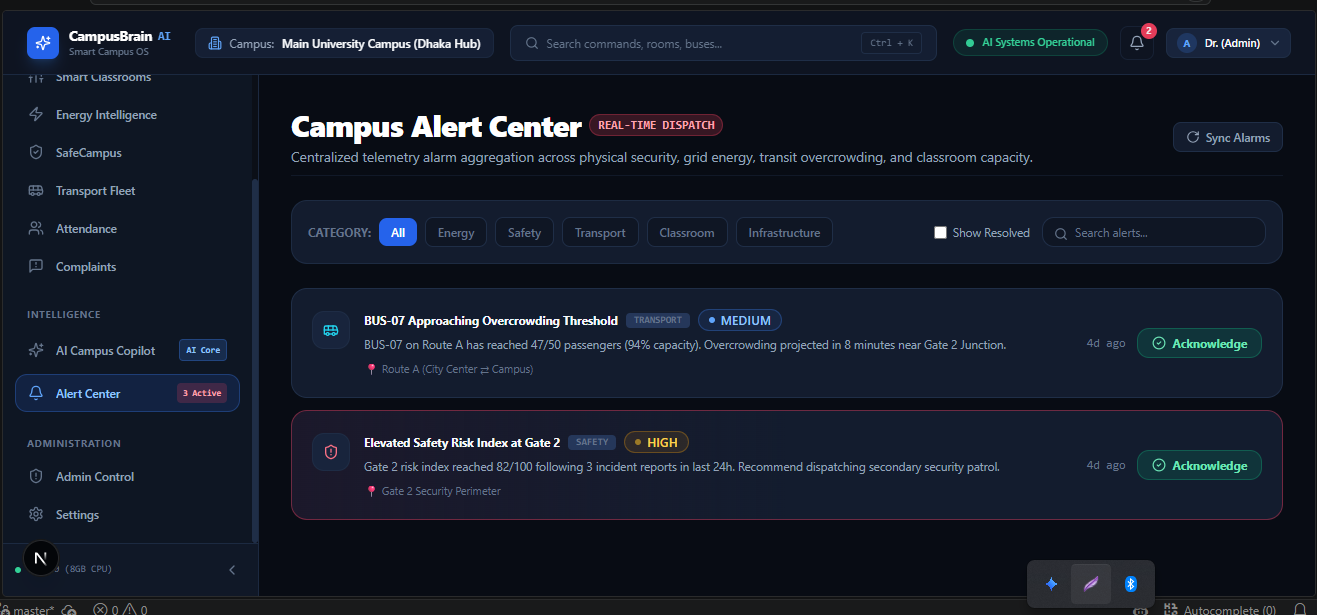
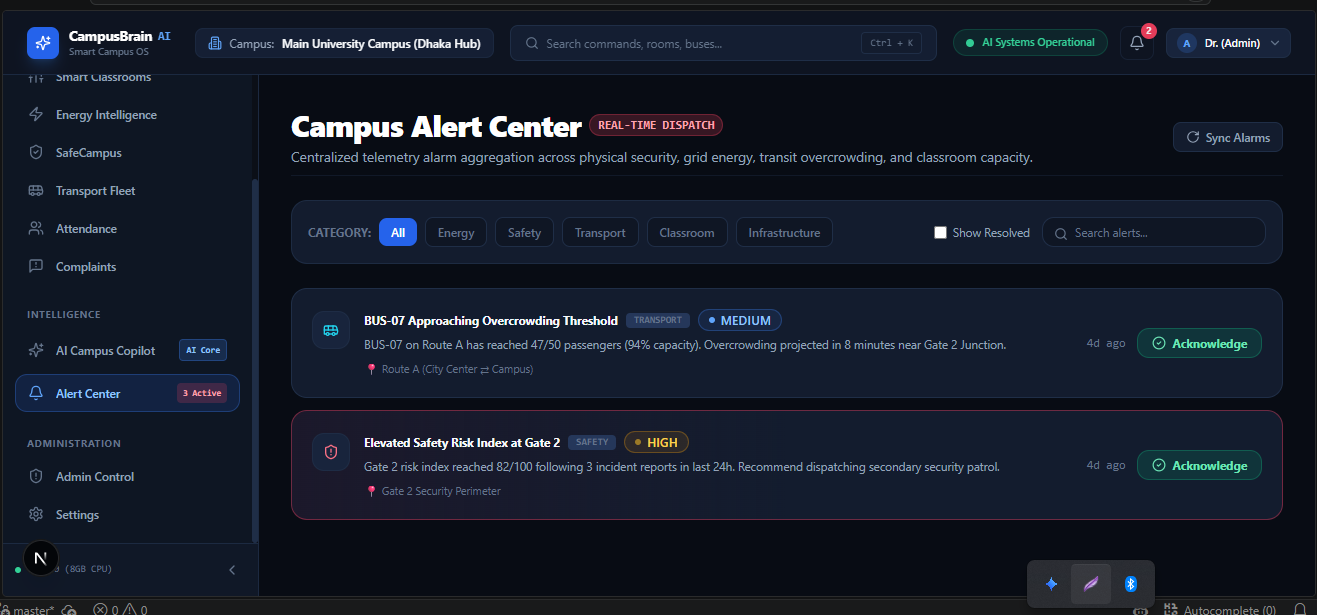
Campus Digital Twin: Provides an interactive 2D map with real-time layer toggles for occupancy, energy usage, security hotspots, and transit tracking.CPU-Friendly Anomaly Detection: Applies fast statistical $Z$-score algorithms to pinpoint energy surges and overcrowding without heavy neural network overhead.Campus Health Index: Aggregates five operational dimensions (Safety, Efficiency, Energy, Classrooms, Transit) into an actionable 0–100 composite health score.AI Campus Copilot: Offers natural language issue synthesis and 1-click operational interventions using OpenRouter LLMs with deterministic offline fallback.Automated Dispatch & Controls: Enables direct eco-HVAC setback triggers, security broadcast dispatches, and dynamic bus fleet rebalancing.
How we built it
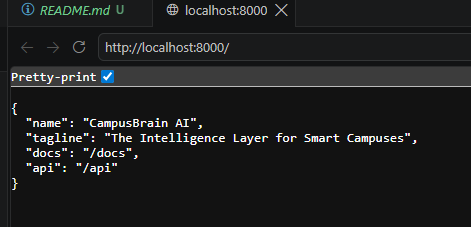
Backend: FastAPI (Python 3.12) with SQLAlchemy ORM, SQLite/PostgreSQL fallback, and lightweight statistical processing (NumPy, Scikit-learn).Frontend: Next.js 15, React 19, TailwindCSS, Lucide icons, and Recharts for live telemetry data streams.AI Engine: OpenRouter free LLM routing paired with deterministic rule-based fallback for 100% offline uptime on 8GB RAM CPU machines.
Challenges we ran into
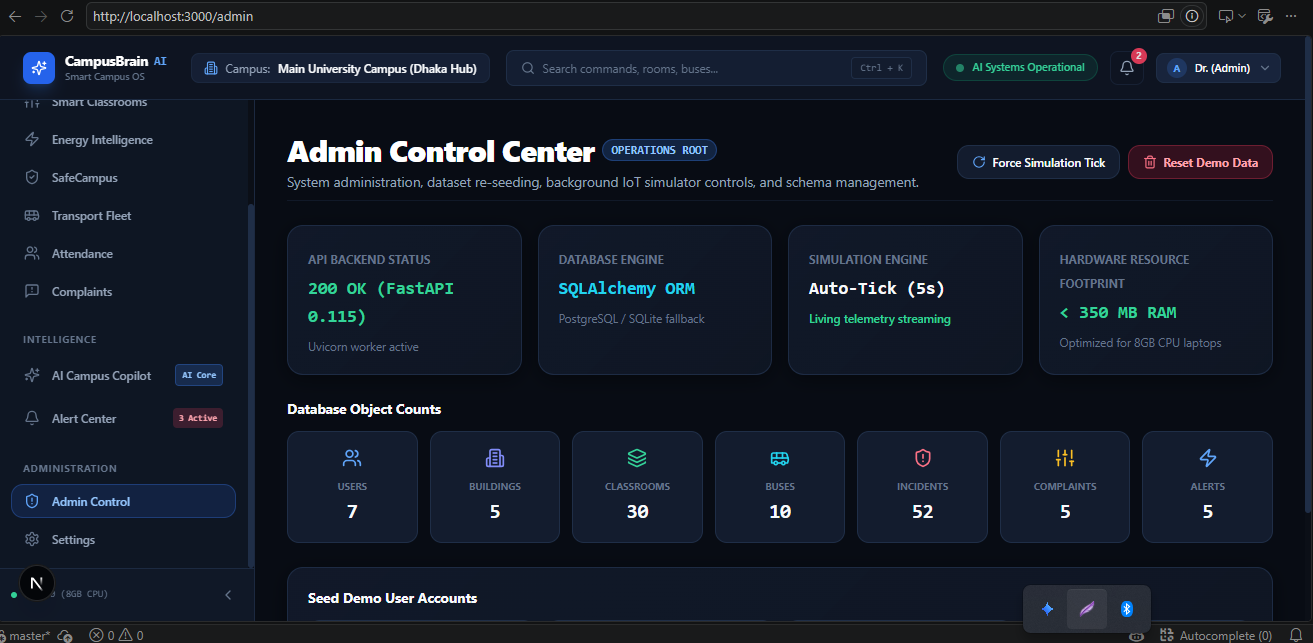
CPU & Low-Memory Optimization: Designing an anomaly detection engine that avoids heavy deep learning frameworks, keeping the entire backend and frontend footprint under 350 MB RAM to run seamlessly on standard 8GB RAM student laptops without CUDA/GPU acceleration.
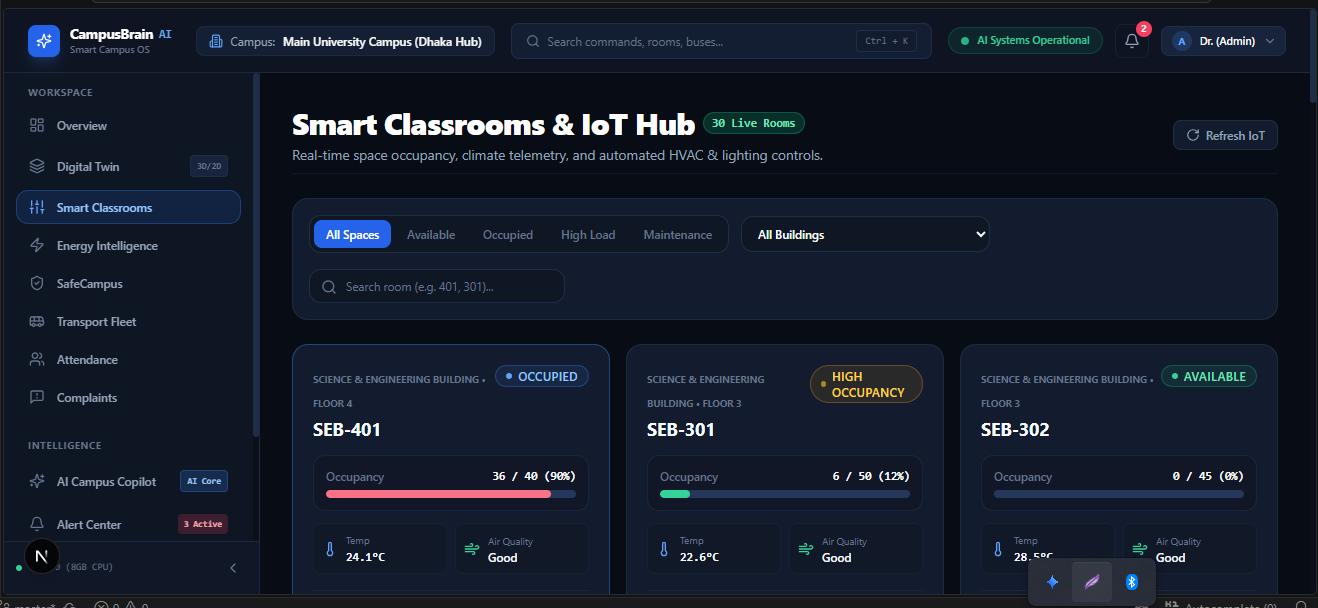
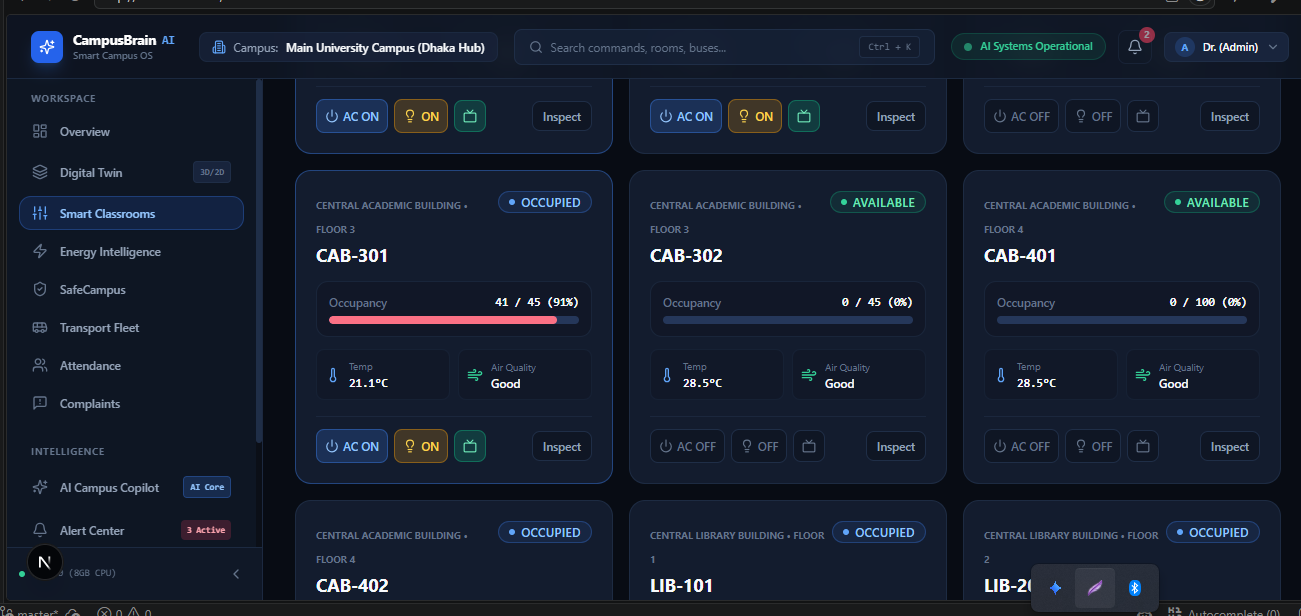
Telemetry Synchronization & State Management: Coordinating live 5-second tick simulations across 5 campus buildings, 30 smart rooms, and 10 GPS-tracked transit buses without introducing database lockups or latency across both SQLite and PostgreSQL.
Deterministic AI Reliability: Preventing cloud API failures or rate limits from breaking the campus operations flow by engineering a dual-engine architecture: an OpenRouter LLM copilot paired with an offline, rule-based fallback system.
Accomplishments that we're proud of
16/16 Verification Suite Passed: Built and passed a complete end-to-end system audit verifying all 12 frontend routes, JWT role-based access control (Admin, Faculty, Student, Security), and live telemetry engines.
Sub-350 MB Footprint: Achieved zero cloud lock-in and high-efficiency performance with pure Python 3.12, Scikit-learn, and NumPy without sacrificing interactive data visualization.
Unified Actionable Digital Twin: Created an interactive 2D Digital Twin with layer toggling (Occupancy, Energy, Safety, Transit) that connects real-time telemetry directly to 1-click operational interventions (Eco-HVAC setbacks, reserve bus dispatches, and emergency alerts).
What we learned
Statistical Pragmatism over Deep Learning Bloat: Statistical $Z$-score thresholding and IQR algorithms can deliver faster, more explainable anomaly detection for facility telemetry than heavy neural networks, with a fraction of the computational overhead.Resilient Hybrid AI Architectures: Structuring AI copilots with strict JSON action cards and deterministic local fallbacks ensures critical campus infrastructure management remains 100% operational offline.Full-Stack Telemetry Coordination: Gained deep experience integrating Next.js 15 and React 19 state with FastAPI backend event loops and SQLAlchemy 2.0 ORM schemas.
What's next for CampusBrain AI
Edge Vision Integration: Implementing lightweight, edge-based turnstile camera counting for automated gate occupancy verification and contactless attendance logging.
Predictive Timetable Balancing: Developing dynamic class rescheduling algorithms to automatically reassign lecture rooms based on real-time climate and occupancy efficiency.
Multi-Campus Federated Networks: Expanding architecture to support multi-campus federated dashboards for regional educational boards and multi-site universities.
Built With
- fastapi
- jwt
- next.js
- numpy
- openrouter
- postgresql
- python
- react
- recharts
- scikit-learn
- sqlalchemy
- sqlite
- tailwindcss


Log in or sign up for Devpost to join the conversation.