-
-
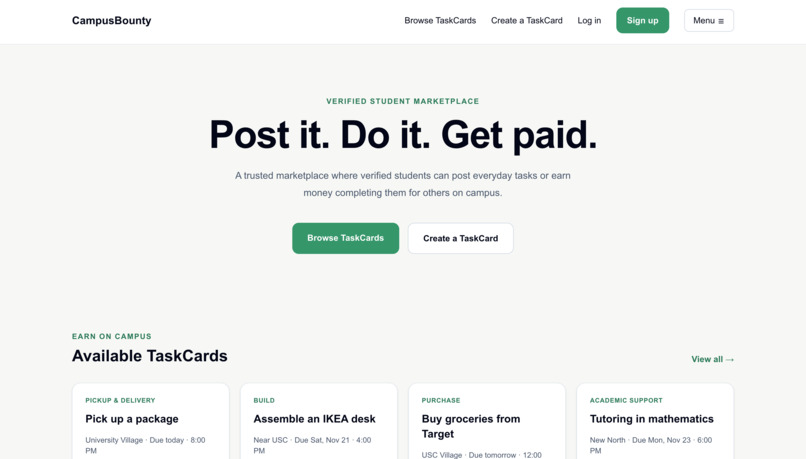
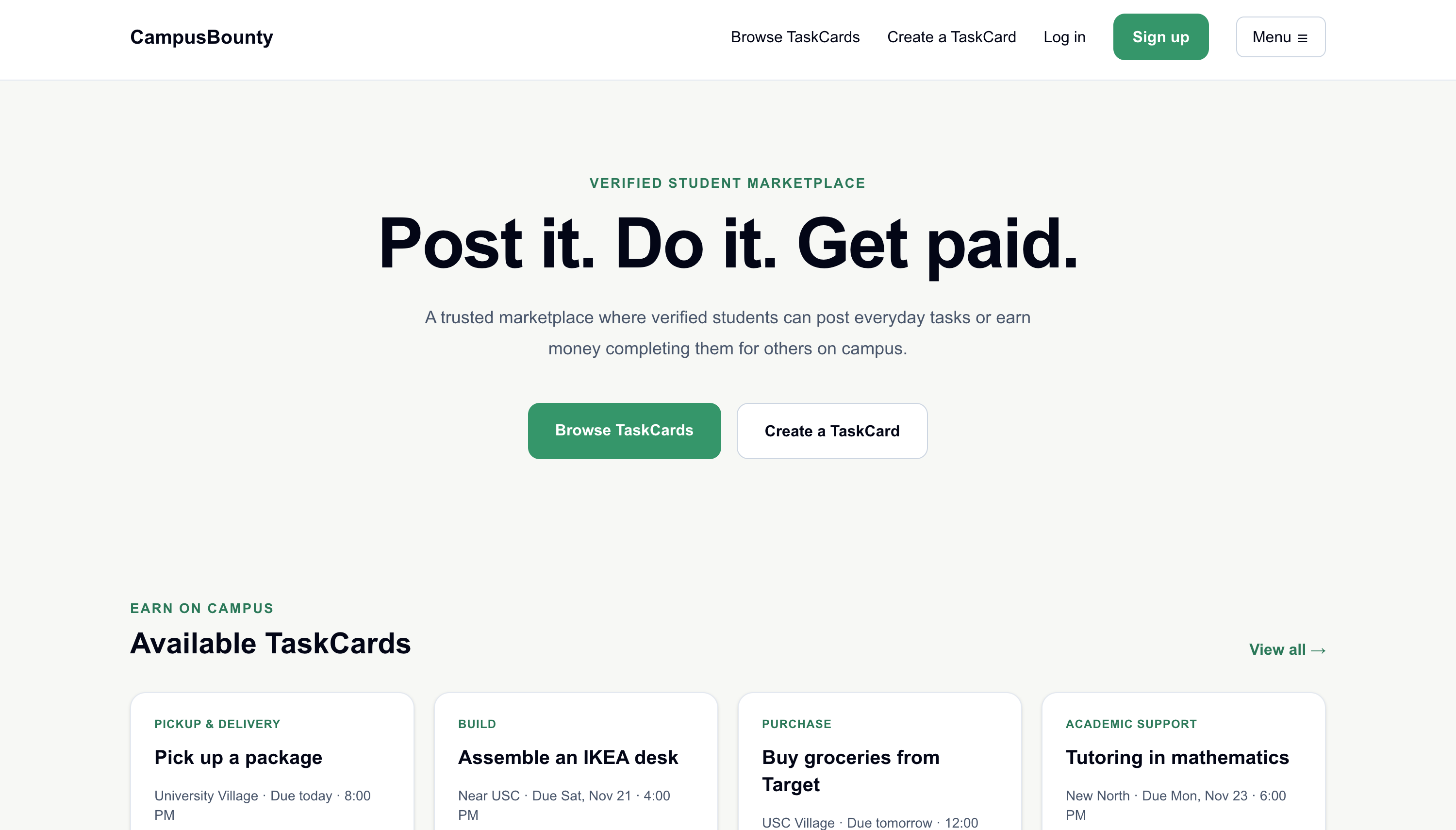
Landing Page
-
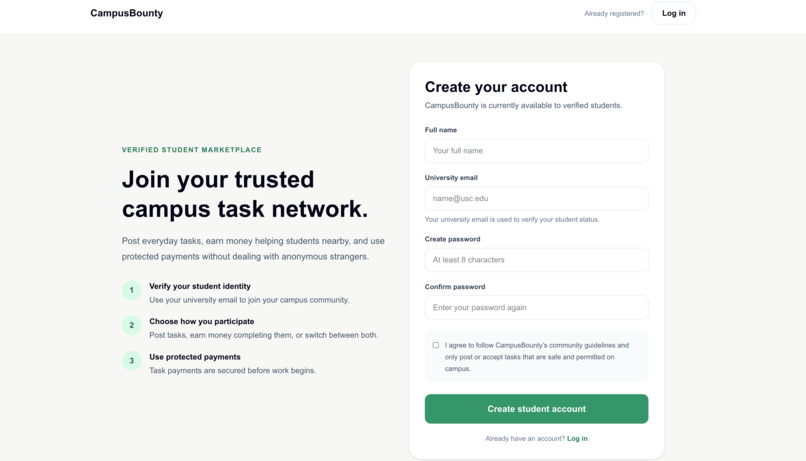
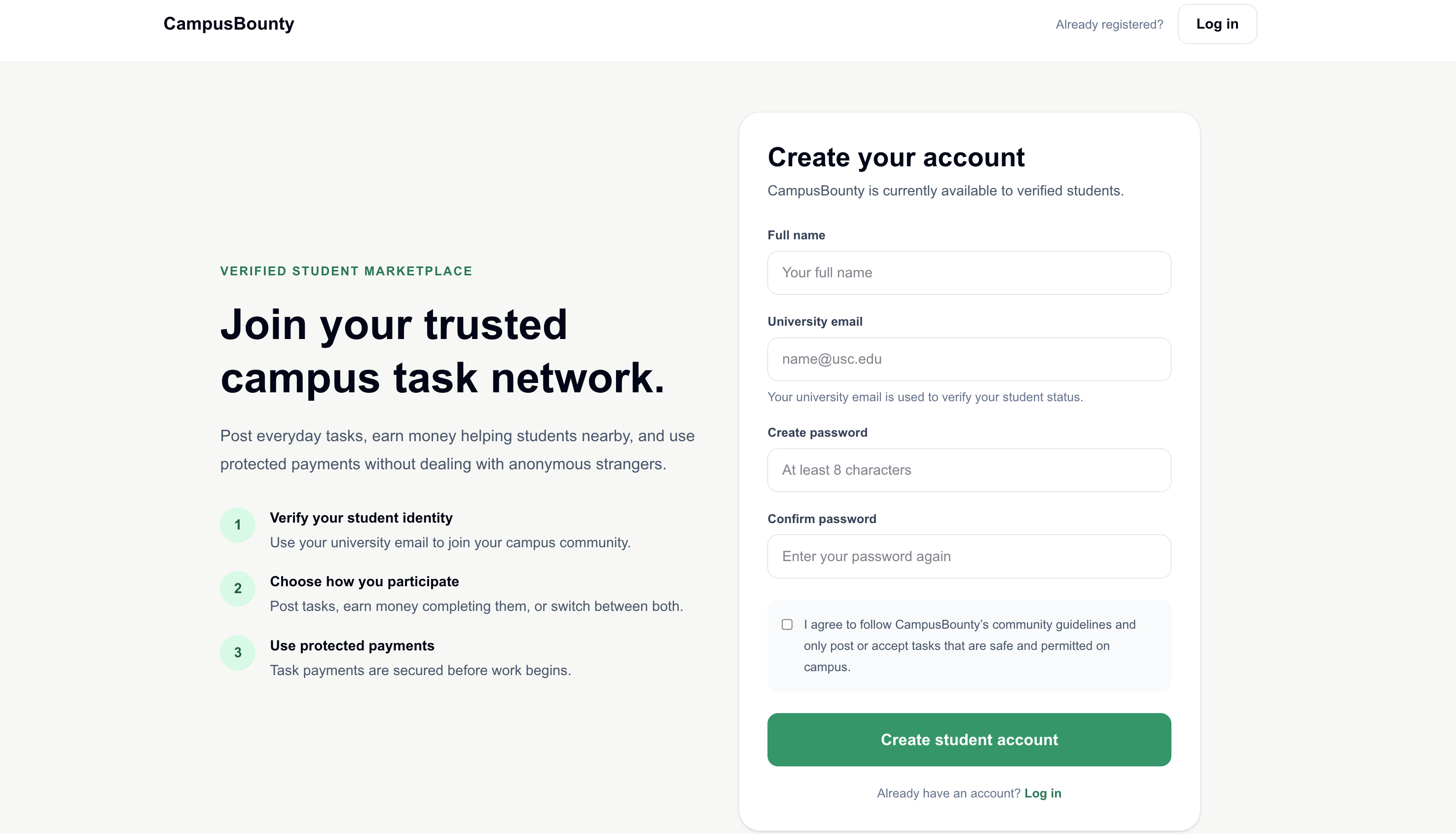
Sign up page
-
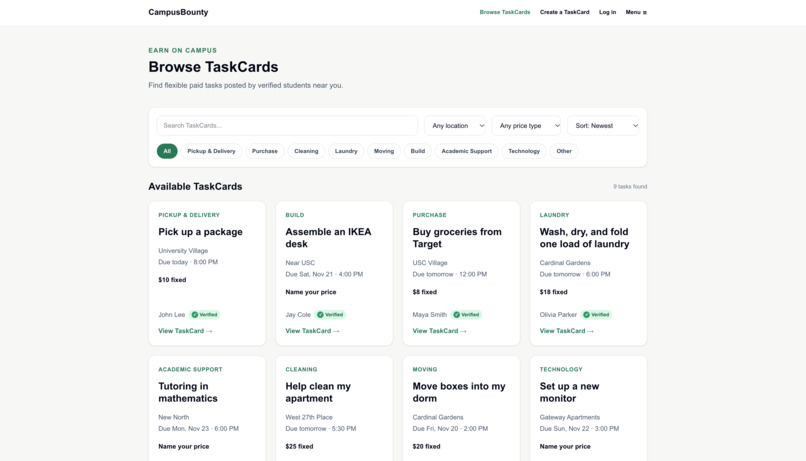
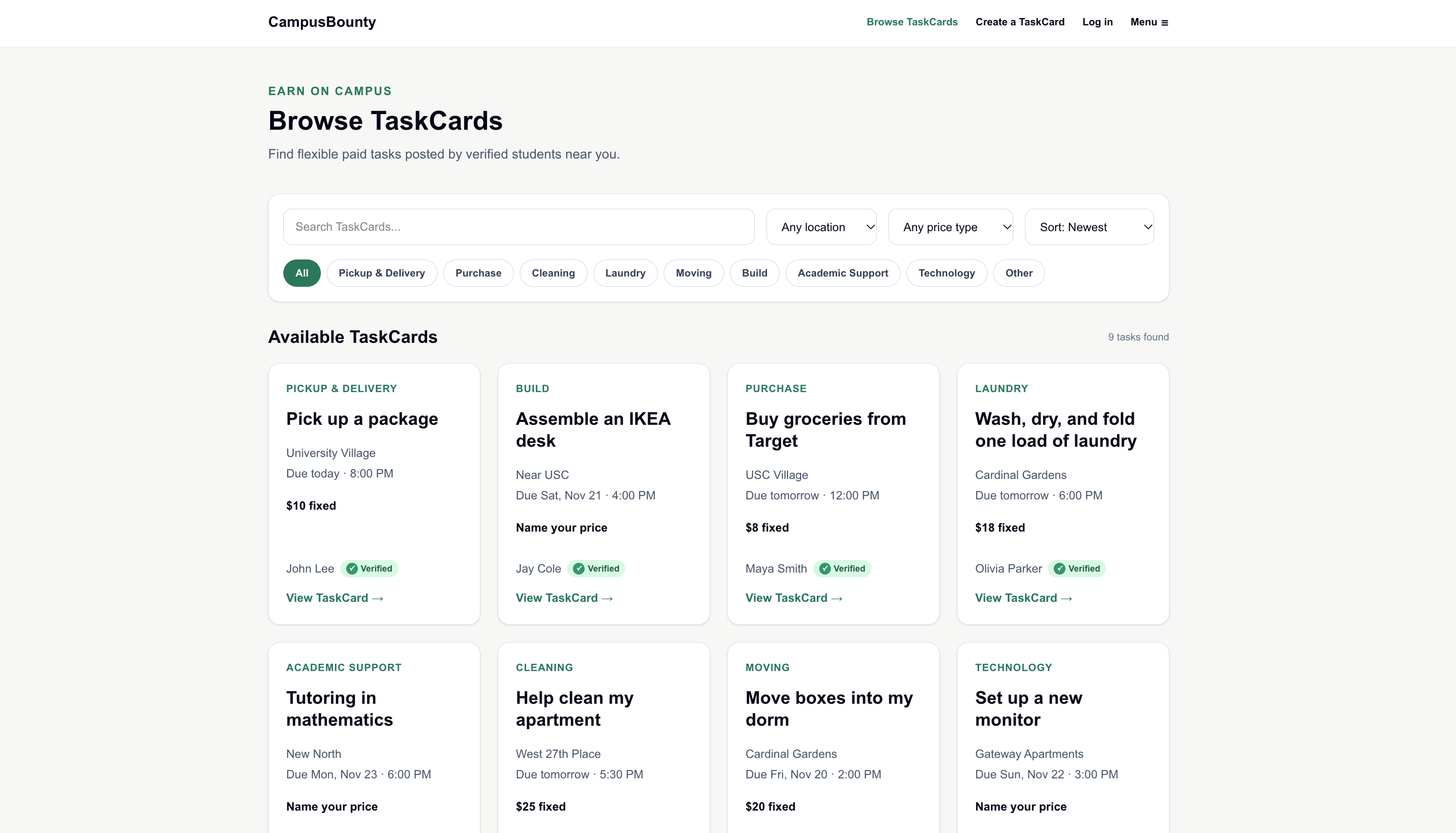
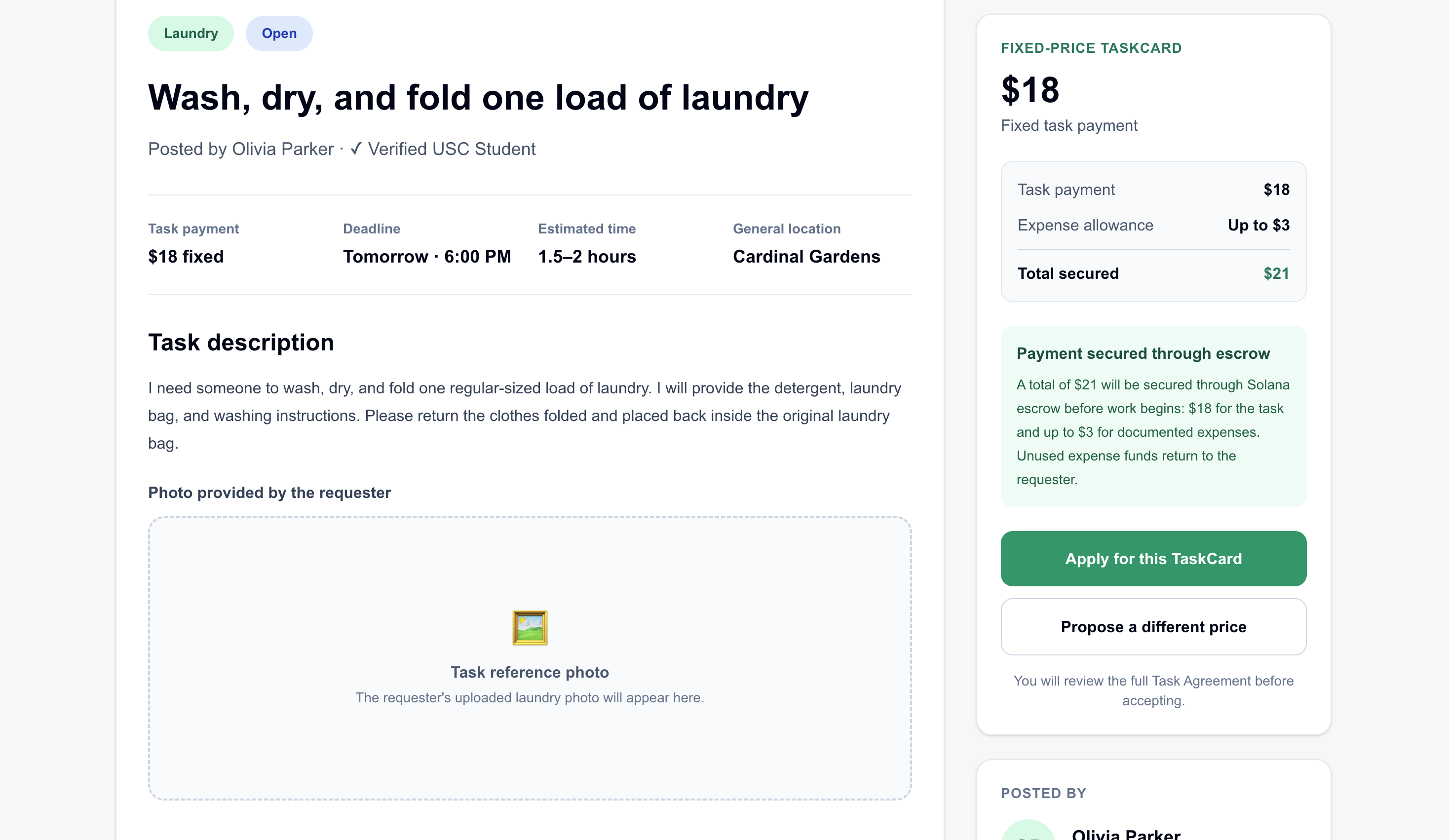
Browsing Taskcards
-
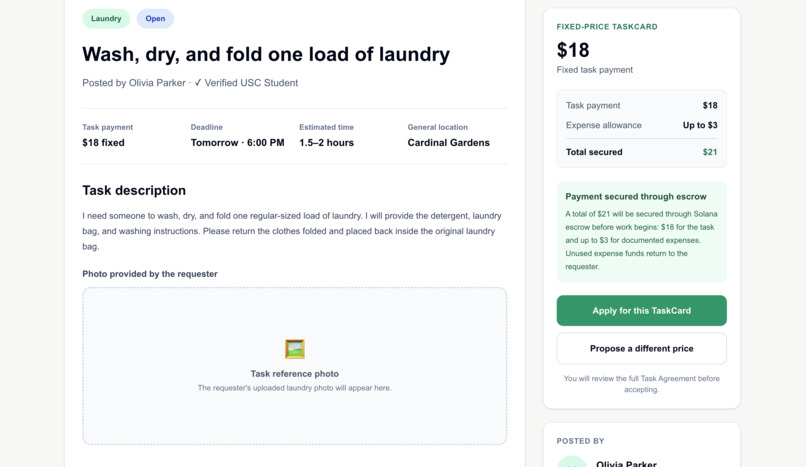
Taskcard Application
-
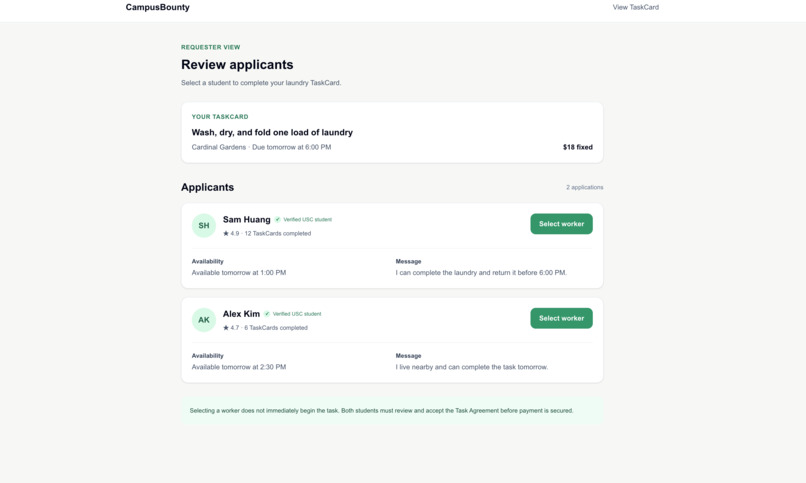
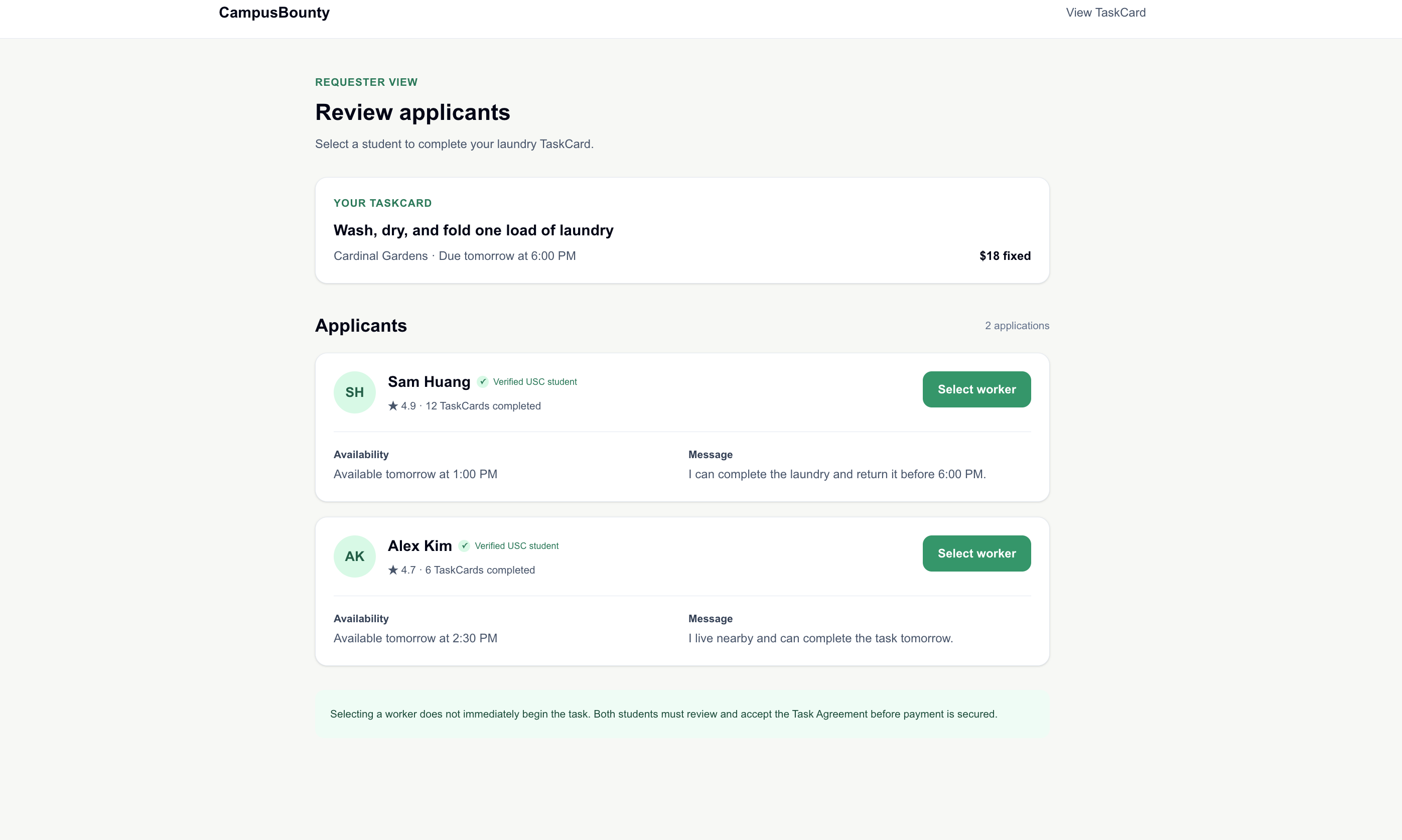
Select applicants
-
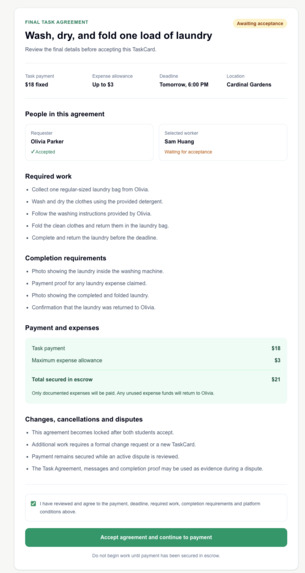
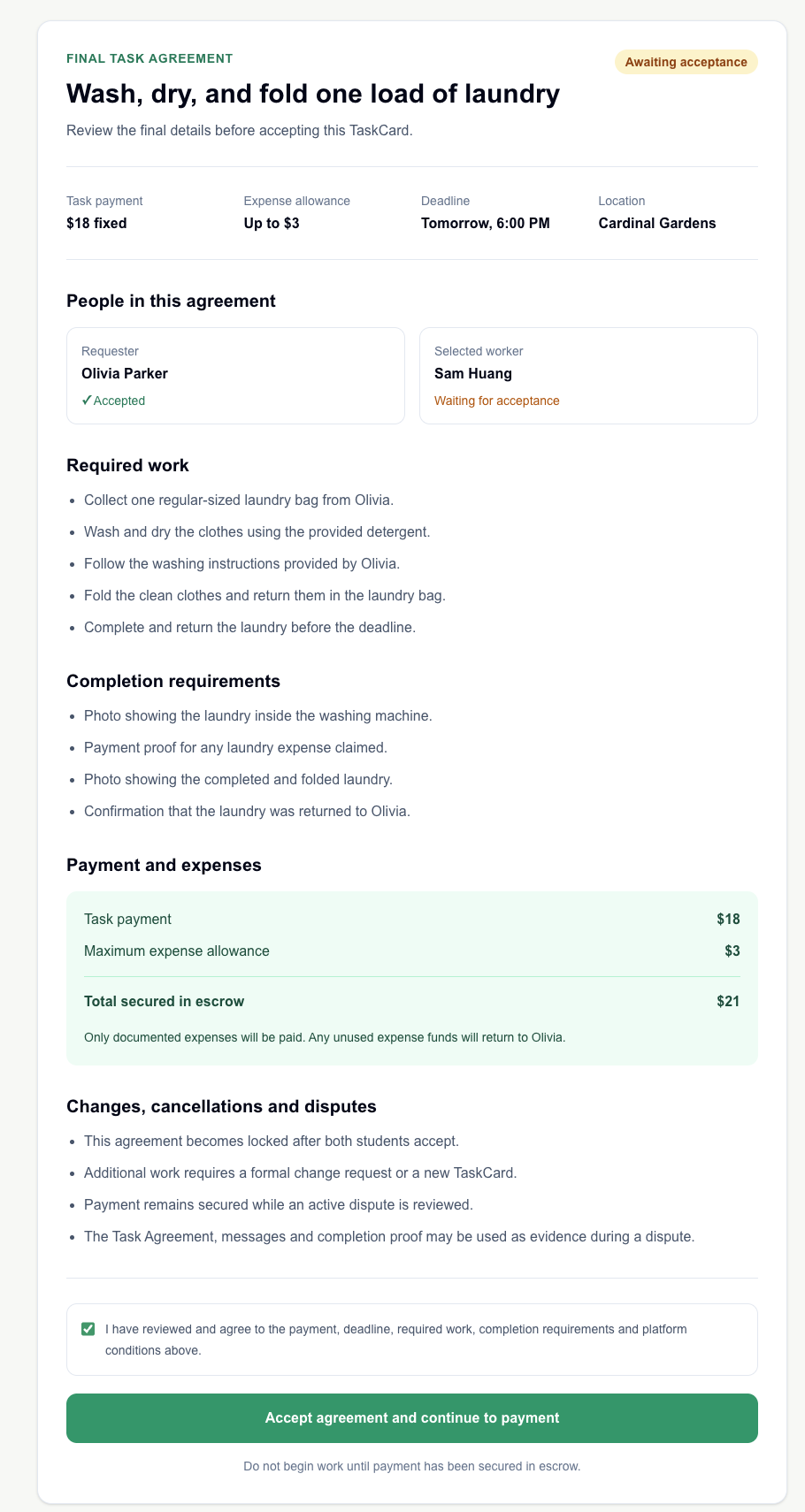
Task agreement
-
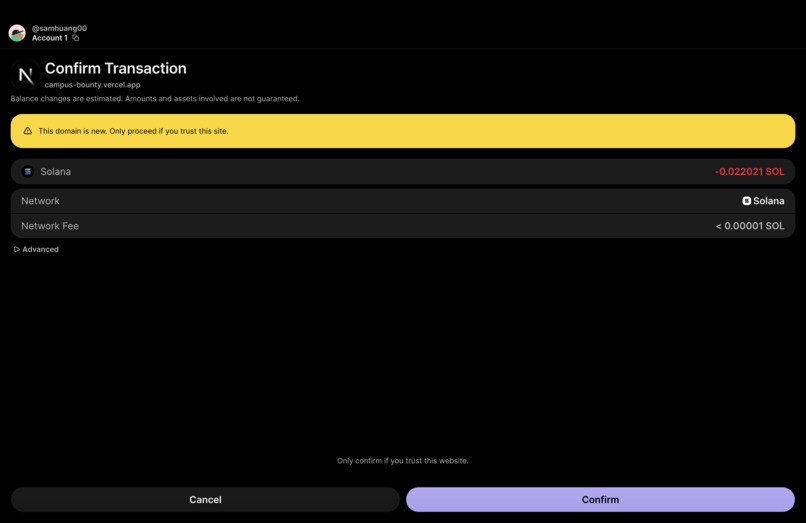
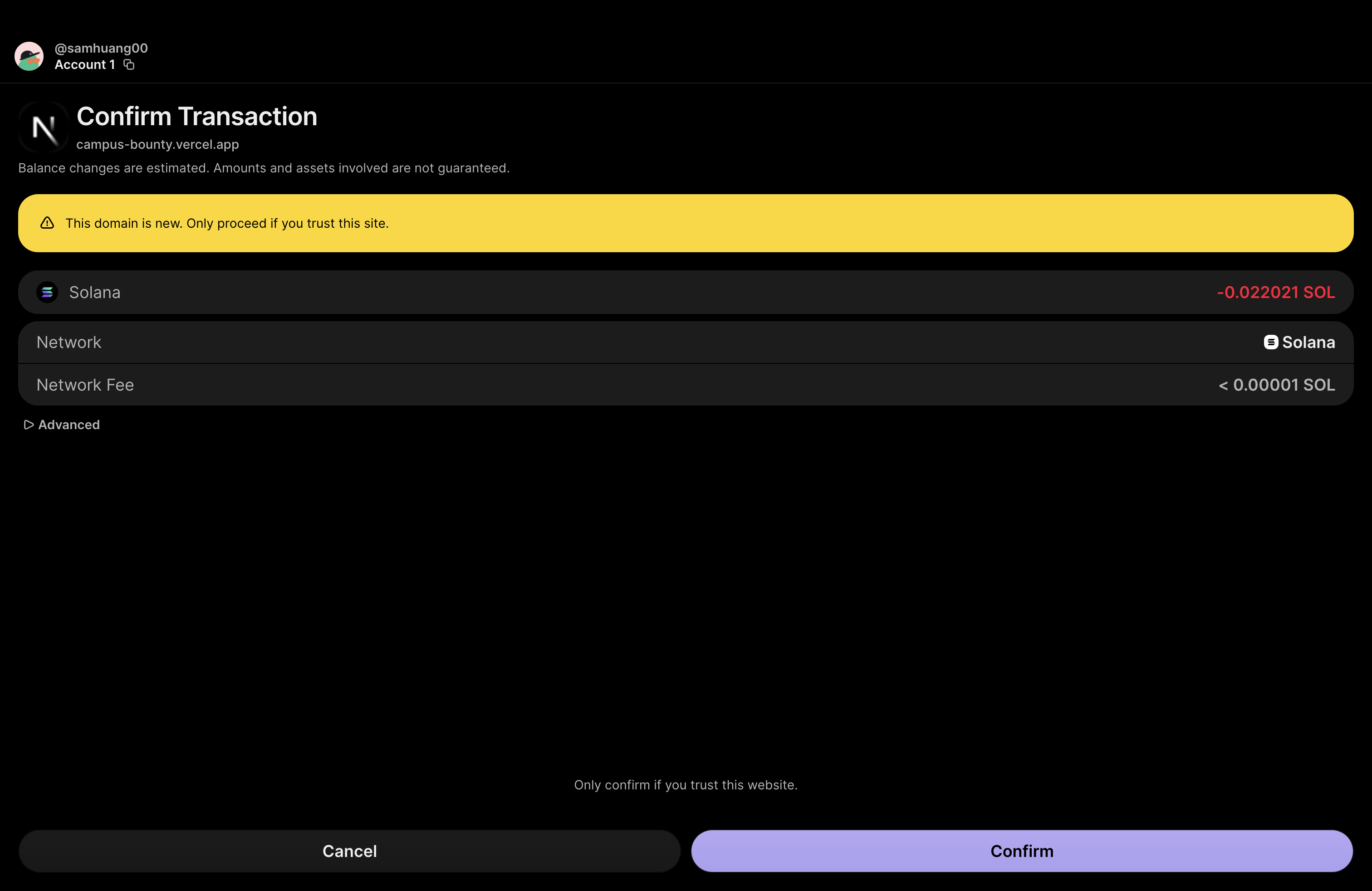
Live Phantom wallet
-
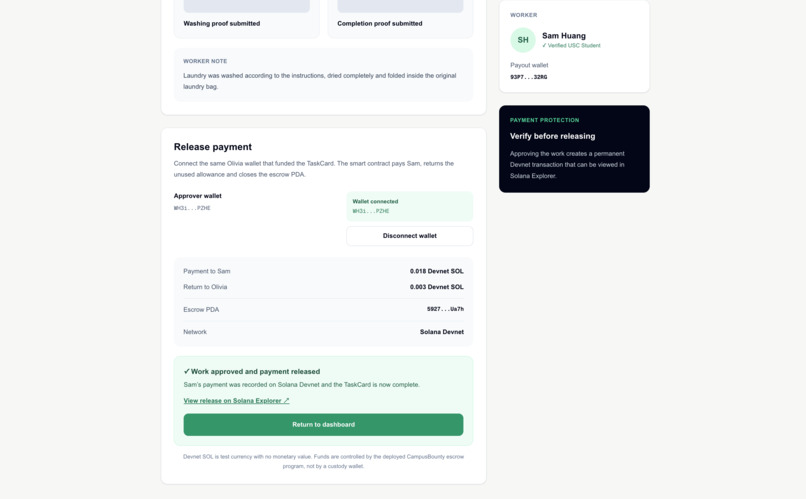
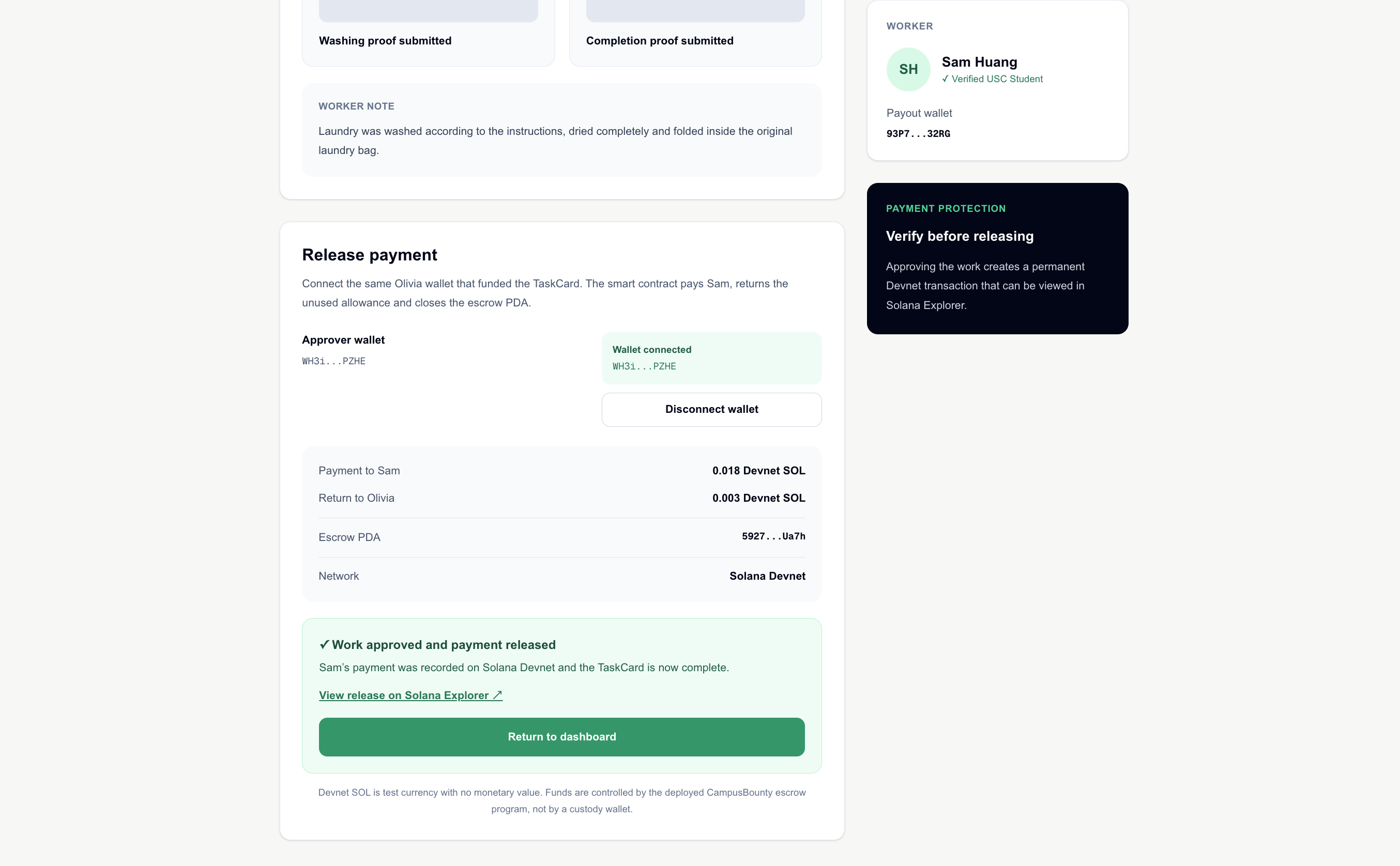
Escrow payment success
-
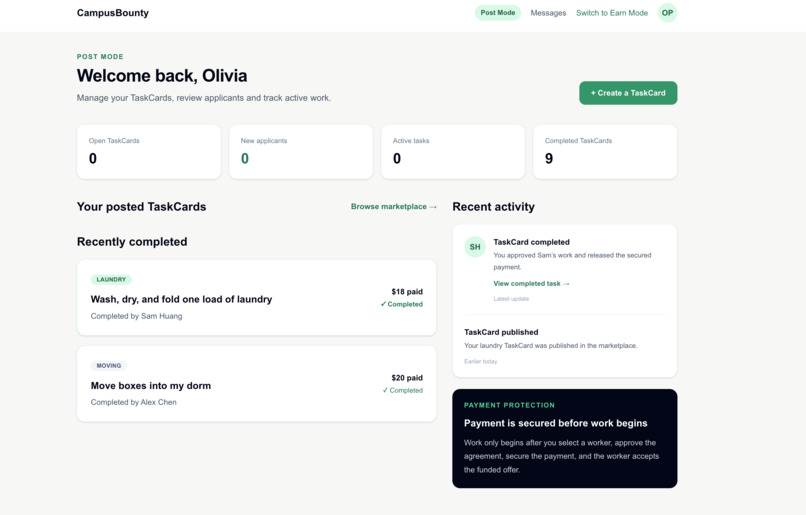
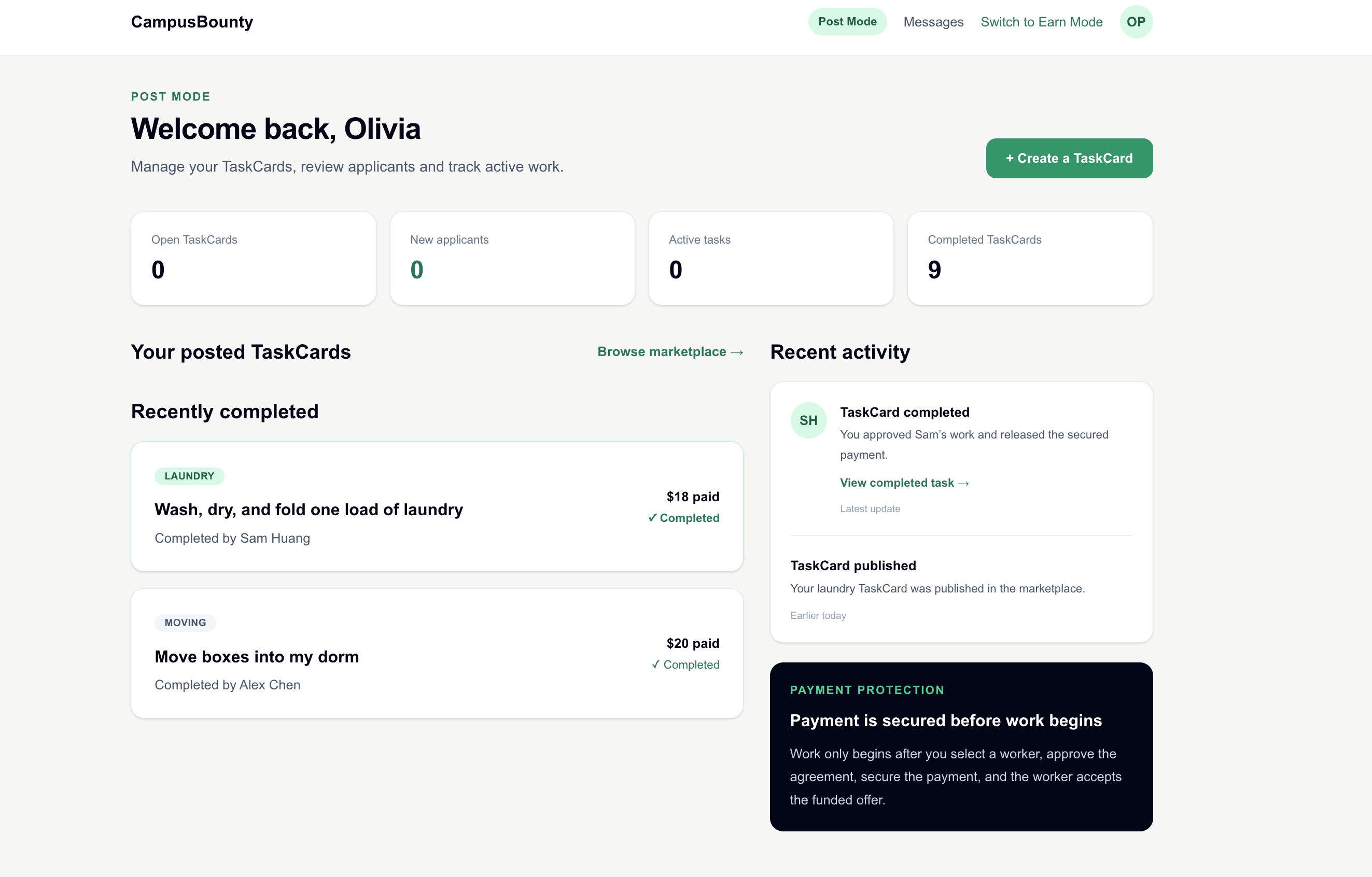
Task competion
Inspiration
Who does not want to make some extra money? Students certainly do, but traditional jobs require applications, fixed shifts and long-term commitments that do not always fit around university schedules.
At the same time, campus life gets busy. A student may be too overwhelmed to do laundry, lack the time to collect a package or simply need help moving something across campus. Professional services can be expensive, while asking strangers through group chats can feel unreliable and risky.
These two problems naturally solve each other. CampusBounty turns the informal favors already happening around universities into protected agreements: one student gets time back, while another earns money on their own schedule.
What it does
CampusBounty is a student-to-student task marketplace with two connected experiences:
- Post Mode for students who need something done
- Earn Mode for students looking for flexible income
A requester can create a structured TaskCard manually or use AI assistance to transform a plain-language request into an organized listing with a description, location, deadline, payment and completion requirements.
CampusBounty also offers more flexibility than a basic job board through two pricing methods:
- Fixed price: workers can accept the listed reward or propose a different amount.
- Name your price: workers submit private bids explaining what they would charge.
Bids are visible only to the requester, preventing workers from simply undercutting one another. The requester can compare each applicant’s offer, message and profile before choosing the best fit.
Once a worker is selected, CampusBounty generates a shared Task Agreement containing the final price, deadline, requirements and required proof of completion. Both students accept the same terms before work begins, preventing either side from changing the expectations afterward.
The requester then connects a Phantom wallet and secures the agreed payment in a task-specific escrow account controlled by the CampusBounty smart contract on Solana Devnet. The worker can begin knowing that the funds exist and have already been committed.
After completing the task, the worker submits a completion note and supporting proof, such as photographs. The requester reviews the evidence and, if the agreement has been fulfilled, approves the work and releases payment. The resulting transaction can be independently verified on Solana Explorer.
CampusBounty also demonstrates task discovery with search and category filters, task-linked communication, student profiles, ratings and completed-task histories.
In short: Post it. Do it. Get paid.
How we built it
I built CampusBounty independently as a two-sided web application using Next.js, React and TypeScript. I designed separate Post and Earn Mode interfaces while connecting them through one shared task lifecycle:
- Create and publish a TaskCard
- Browse and privately bid on available work
- Review applicants and select a worker
- Confirm the price and sign a Task Agreement
- Connect Phantom and fund the escrow
- Complete the task and submit proof
- Review the completed work
- Release payment and record the completed task
For the blockchain layer, I developed a native Rust Solana program, deployed it to Solana Devnet, and connected it to the application’s escrow experience.
Rather than transferring funds directly between strangers, the program uses a task-specific escrow account. It records the requester, selected worker and agreed payment, holds the funds while the task is active, and releases the worker’s payment after approval. Any unused balance is returned to the requester when the escrow is closed.
I used Phantom for wallet connection and transaction approval. Solana provides the transparent payment record, while the interface translates blockchain activity into simple states such as Payment Secured, Work Submitted and Payment Released.
Challenges we ran into
The largest challenge was translating a familiar marketplace experience into a secure blockchain workflow. I had to learn how Solana accounts, wallets, program-derived addresses, transaction signatures and program permissions work together while keeping the requester and worker flows synchronized.
Escrow was more complicated than simply sending a payment. The application needed to represent several distinct states: selecting a worker, agreeing on a final price, securing funds, submitting proof, approving the work and releasing payment to the correct person.
Another challenge was making the blockchain useful without making the application feel like a crypto product. Most students should not need to understand Rust programs or Solana’s account model to use CampusBounty. I therefore designed the interface around familiar actions and human-readable status updates, with the blockchain operating as the trust layer underneath.
I also had to balance the scope of a complete marketplace against the limited time available for a hackathon. As a solo builder, I focused on making one full exchange understandable and demonstrable from beginning to end.
Accomplishments that we're proud of
I am most proud that CampusBounty is more than a landing page or an isolated wallet demonstration. It presents a connected two-sided product covering TaskCard creation, AI assistance, private bidding, applicant selection, agreements, escrow funding, proof submission, approval and payout.
The private bidding system is another accomplishment I value. It gives workers control over what their time is worth while preventing a public race to the lowest possible price. This makes CampusBounty feel like a flexible student marketplace rather than a traditional job board.
I am especially proud of developing and deploying my own native Rust program to Solana Devnet. The payment is not merely represented by a button or simulated balance—the deployed program provides an on-chain foundation for securing and releasing task payments.
Finally, I am proud that I completed this entire prototype independently, including its product design, requester and worker experiences, state flow, wallet integration, smart contract and deployment.
What we learned
This project taught me how Solana programs, wallets, transactions and escrow accounts can work together inside a consumer application. I gained practical experience with Rust, Phantom integration, Devnet deployment and the design of interfaces that respond to blockchain transaction states.
I also learned that blockchain creates the most value when it solves a trust problem quietly. Students do not need CampusBounty because it uses crypto; they need it because payment is secured, the agreement is clear and the completed transaction is verifiable.
Most importantly, I learned how to reduce a broad marketplace idea into one focused exchange: one student commits payment, another completes clearly defined work, and neither side has to rely entirely on trust.
What's next for CampusBounty
The next version of CampusBounty would introduce production university-email or institutional sign-in verification, persistent database storage and production authentication.
I would expand the marketplace with real-time messaging, notifications, richer profiles, recommendations, written reviews and transaction-backed reputation. I would also develop a complete revision and dispute process in which funds remain secured while the original Task Agreement, communication history and submitted proof are reviewed.
Before handling real funds, the Solana escrow program would require comprehensive testing and a professional security audit.
The long-term vision is to launch within one university community, prove that students will exchange trusted campus services, and then expand CampusBounty to additional campuses—turning the invisible economy of student favors into a safe and flexible way to get things done and earn money.
Built With
- github
- next.js
- phantom
- react
- rust
- solana
- solana-devnet
- solana-web3.js
- typescript
- vercel
