-
-
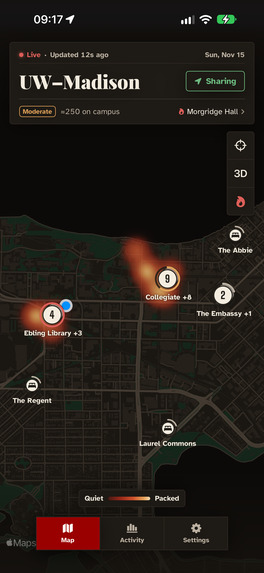
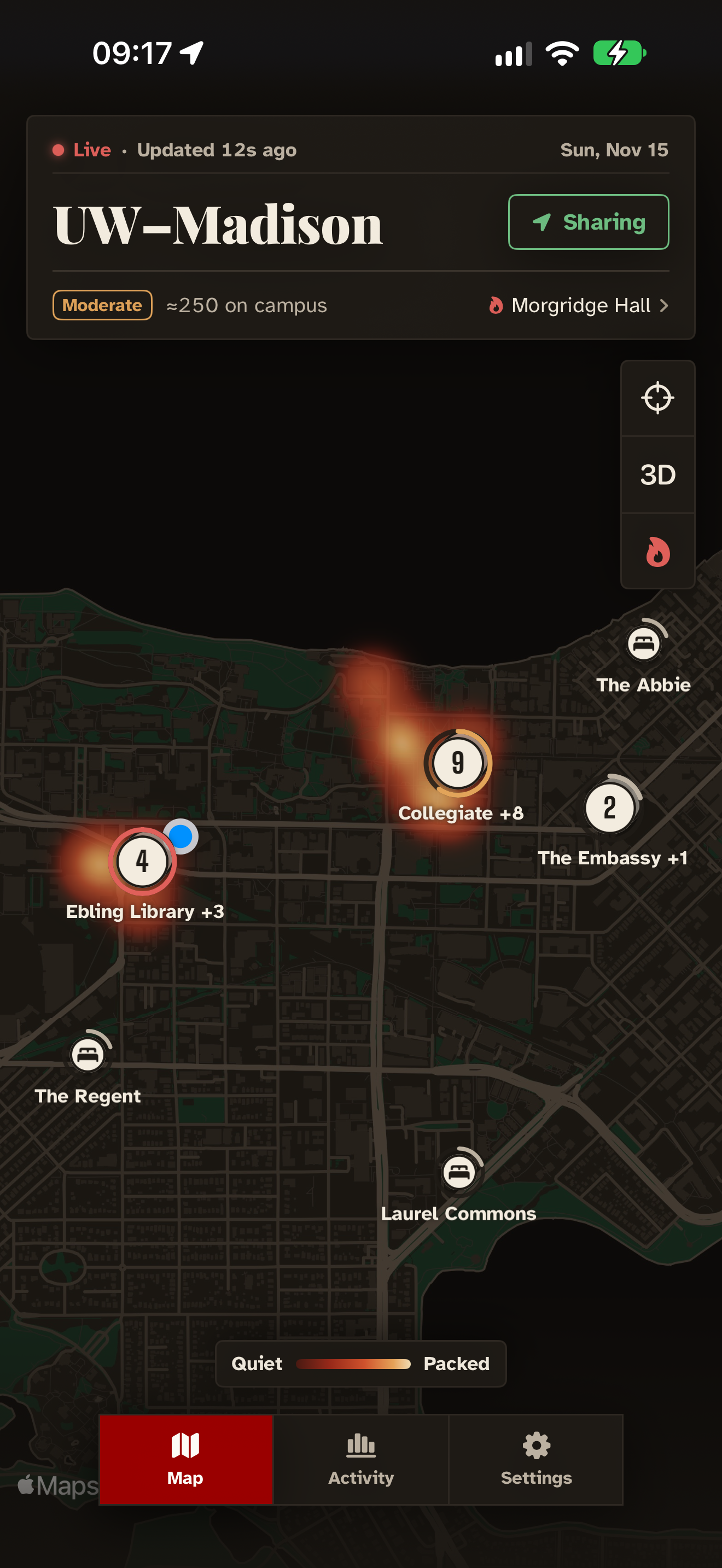
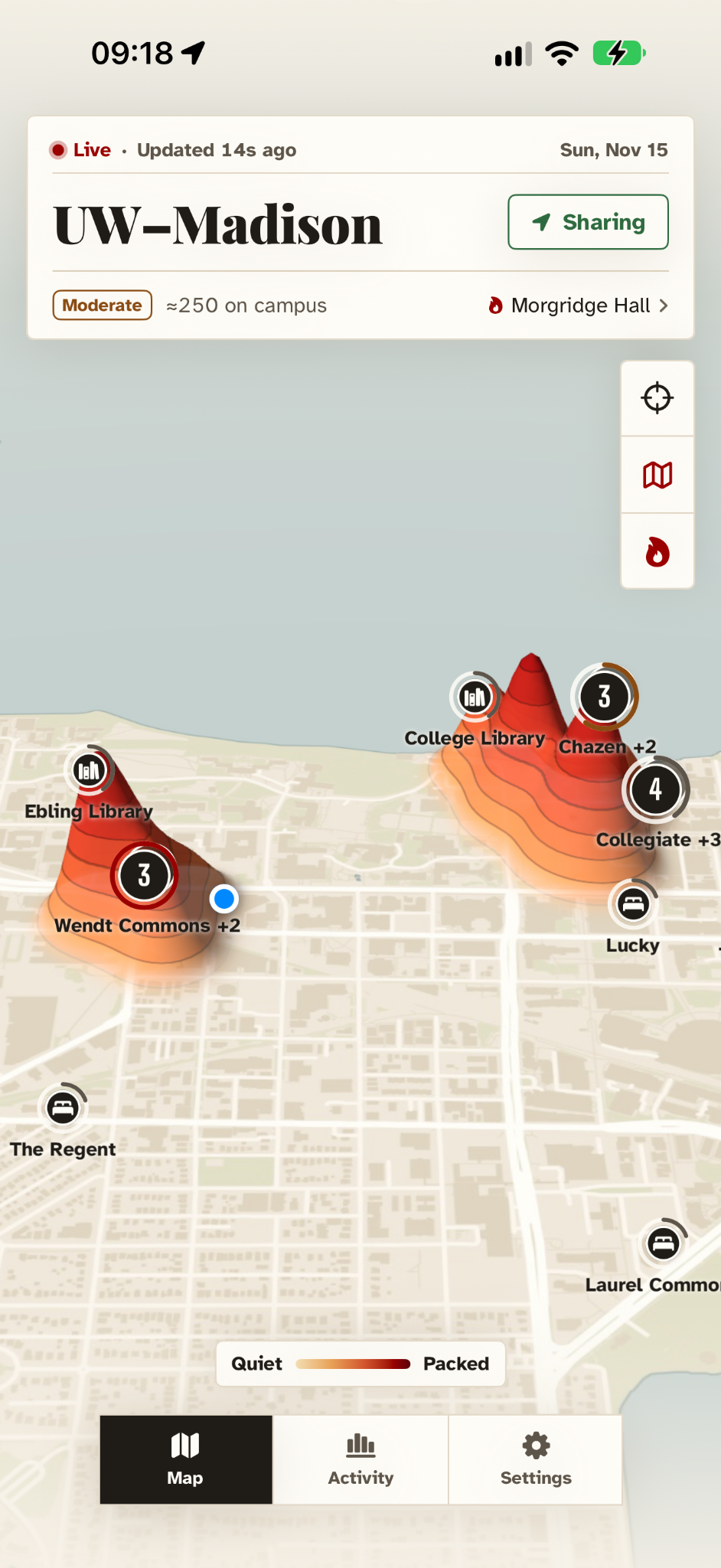
App home screen showing heatmap
-
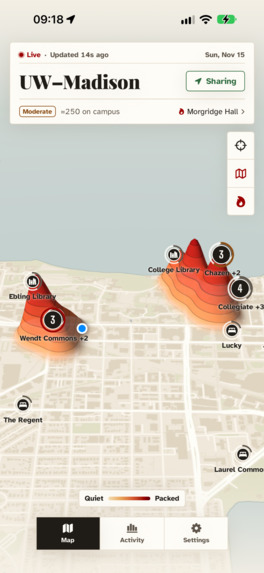
Shows the app map in 3d mode
-
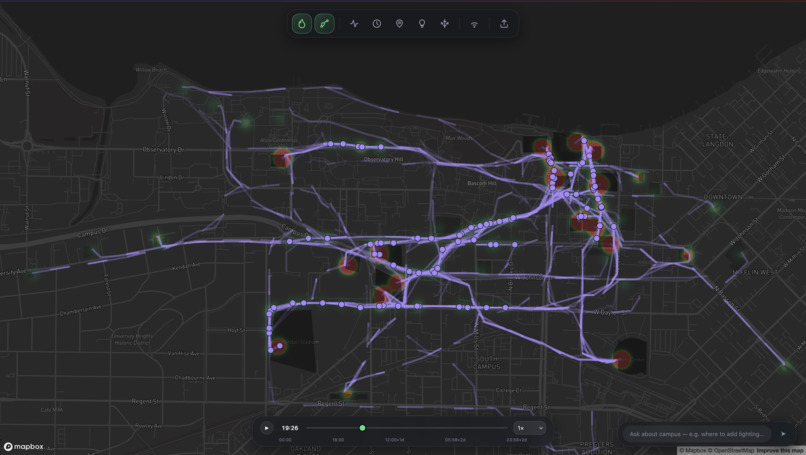
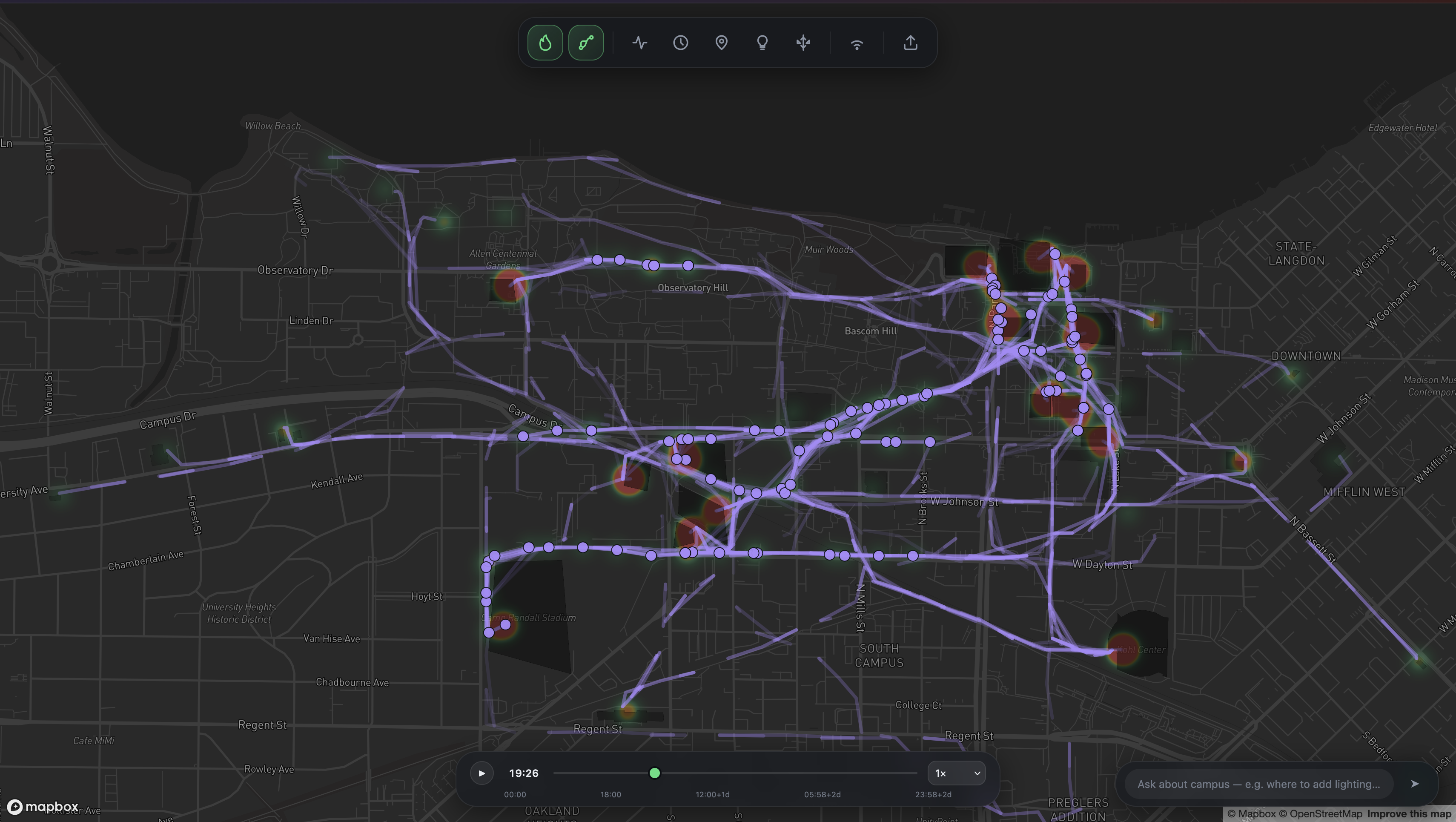
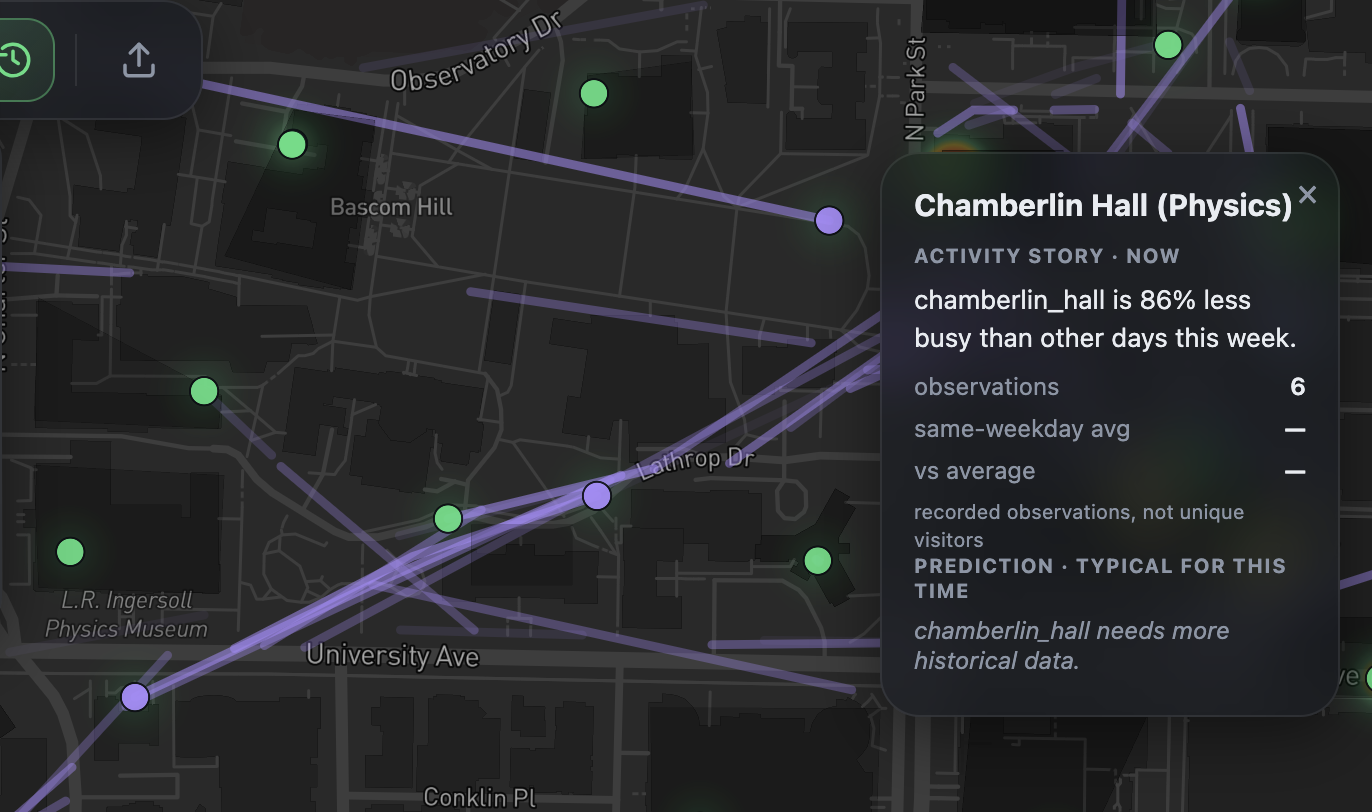
Web app showing the paths of students
-
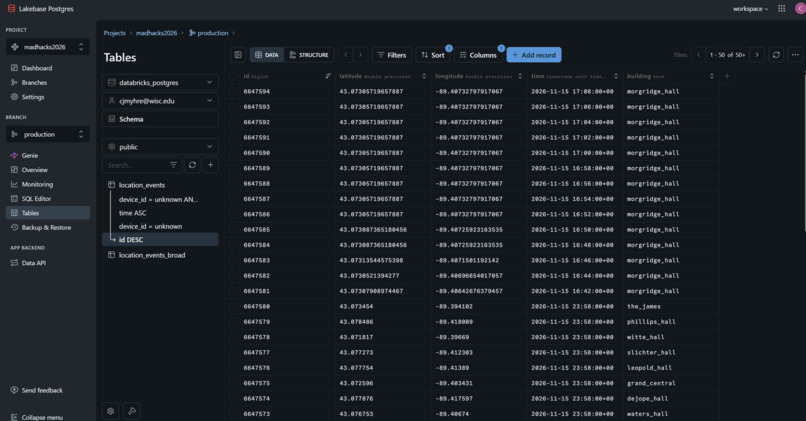
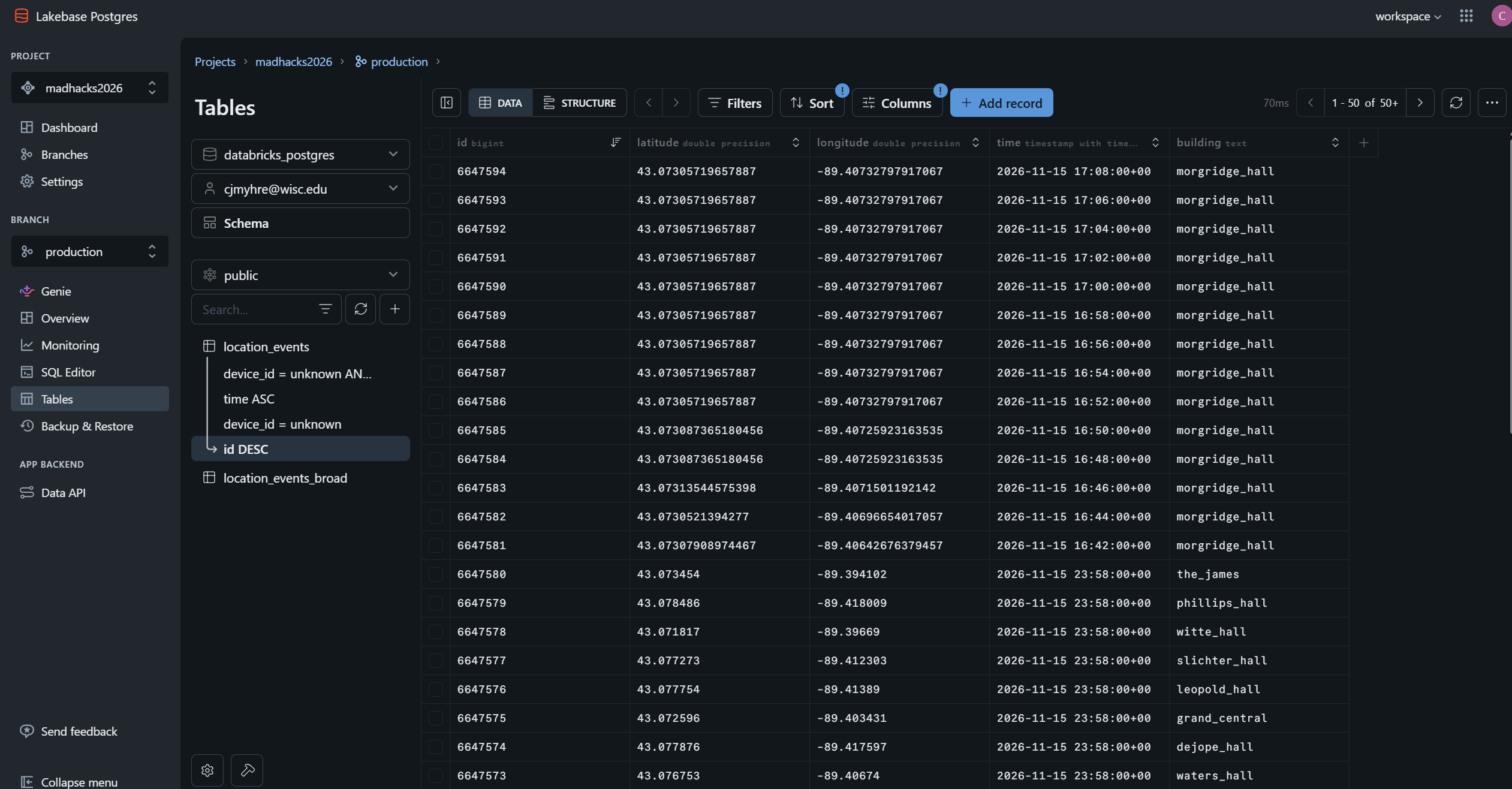
Databricks Visualization
-
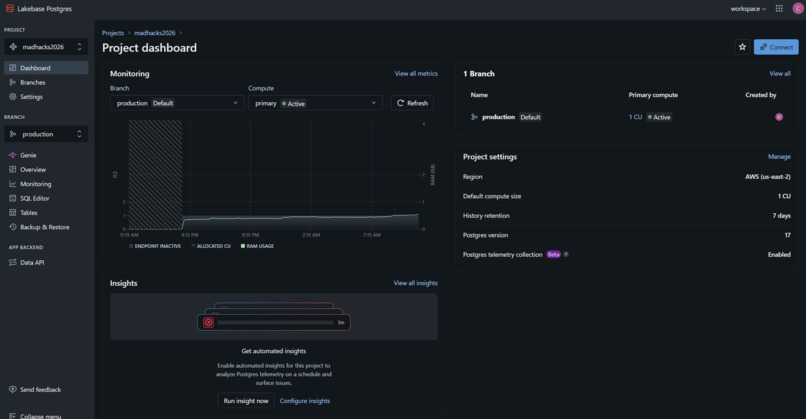
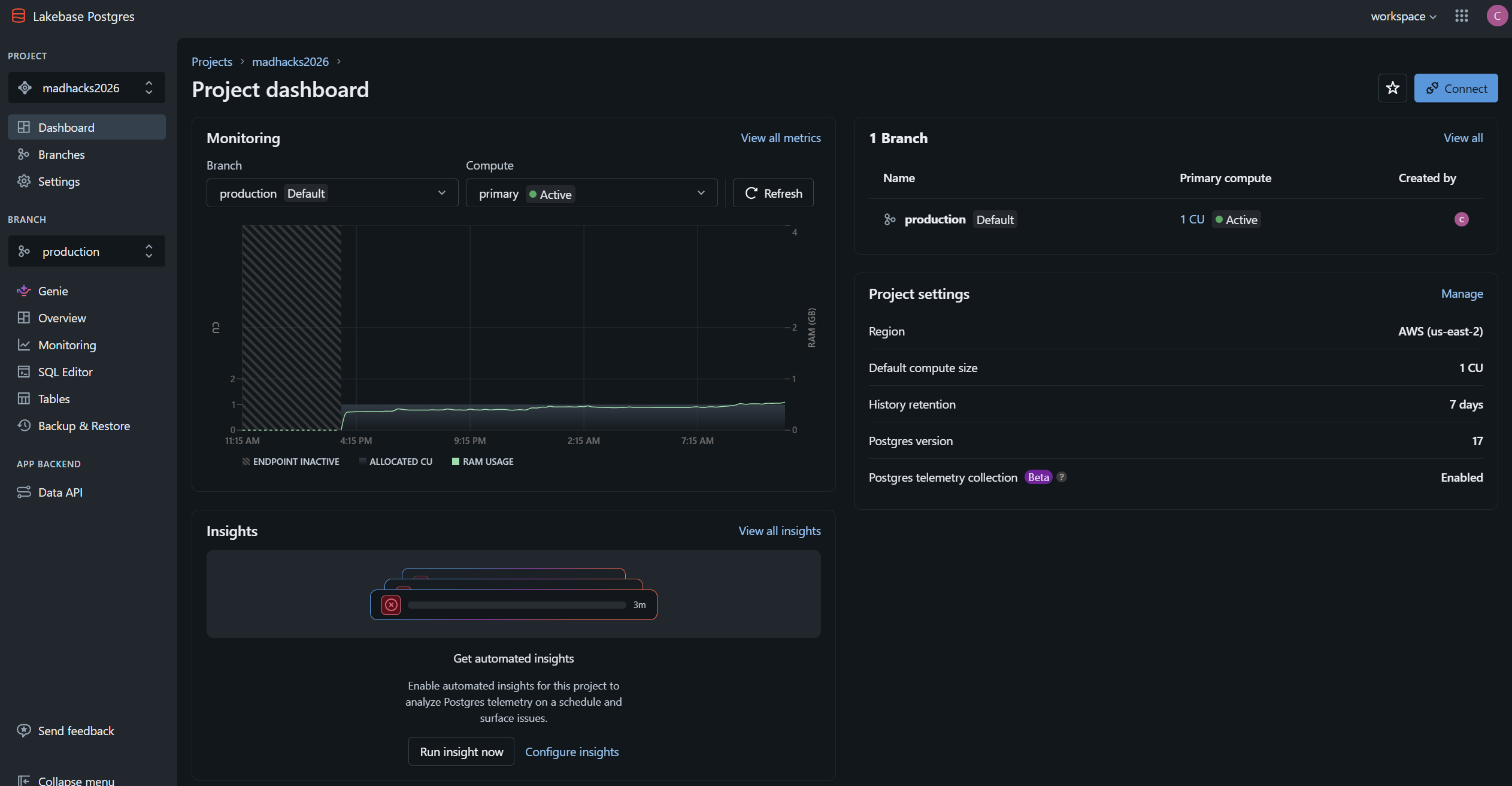
Databricks Dashboard
-
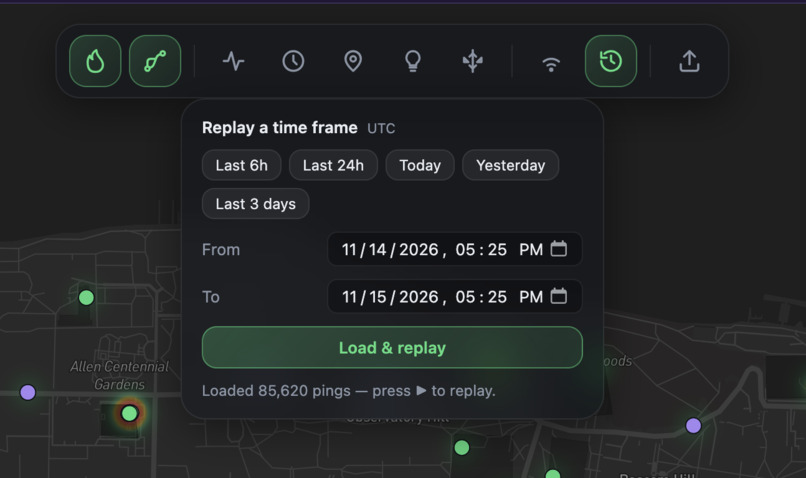
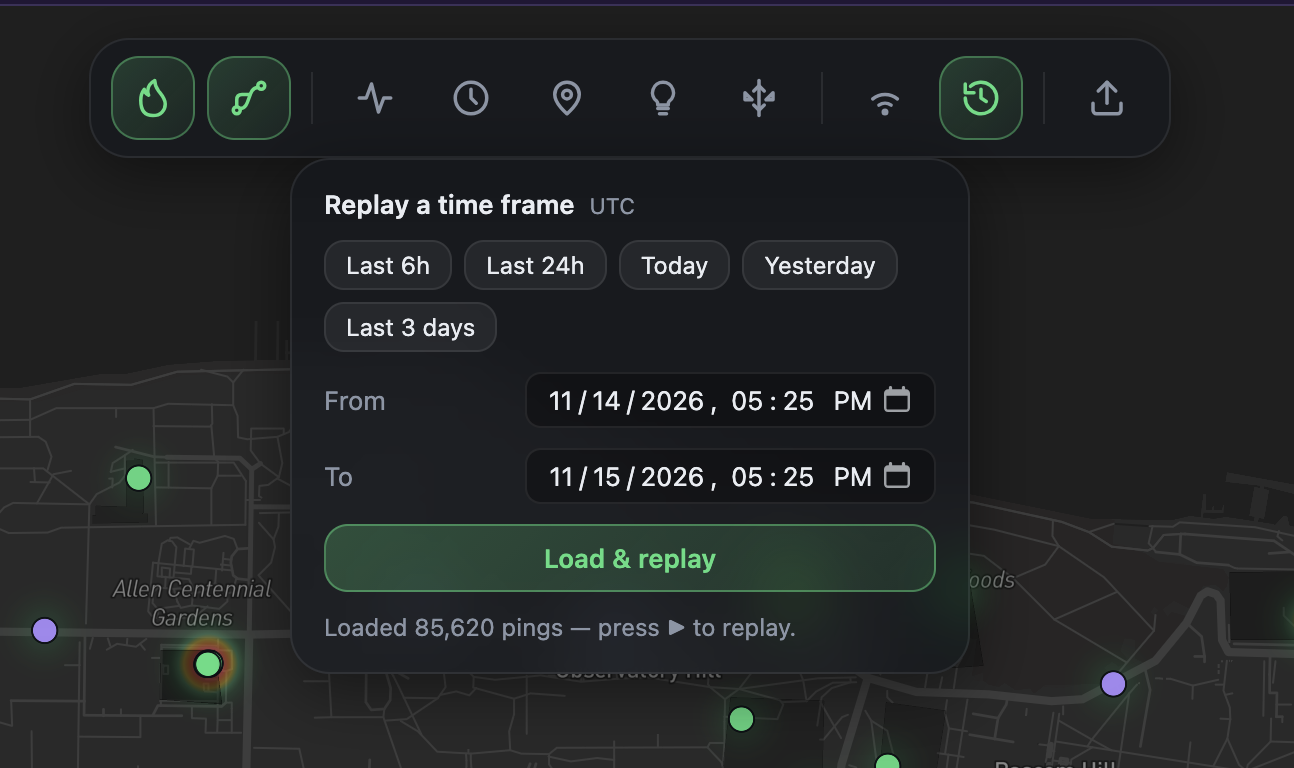
Web API Replay
-
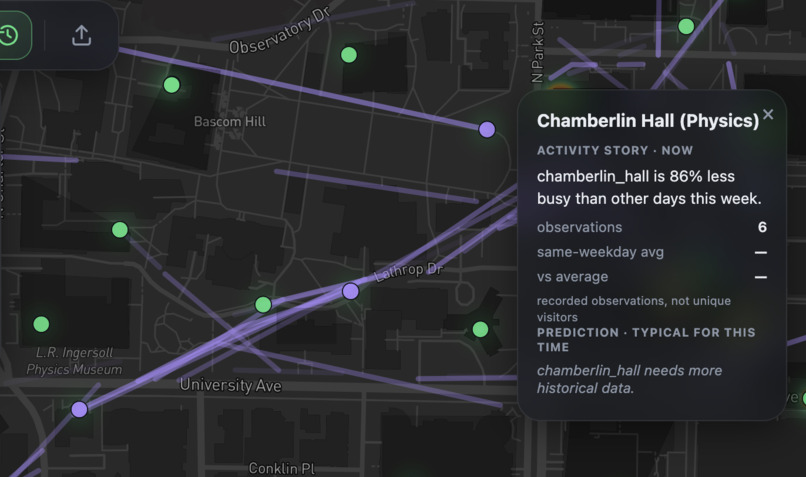
Web Analytics
Inspiration
Every day, 50,000 people move through UW-Madison unseen: where they walk, when buildings fill, which corridors go dark at midnight. Facilities has a snow budget, and safety has a lighting budget, but no one can see where people actually are. Remzi Arpaci-Dusseau, quoting Russell Lord, asked: “These miraculous machines! Do we shape them, or do they shape us?” We wanted to build a tool where we allow the students of Madison to determine exactly how technology serves them every day.
What it does
Badger Pulse is simple: it functions as an anonymous, user-supported heatmap of path and building congestion in Madison. Anyone with the app can see how busy locations on campus are at any time of day, and university officials who use the webdash can see intelligent insights on how to make campus safer and more efficient to traverse. We accomplish this by leveraging anonymized user location data, AI models, and Databricks analysis tools to predict and compare historical data, allowing users to plan out their day and where they go seamlessly.
How we built it
We began by asking ourselves in which ways technology can serve us in our daily lives, and by asking ourselves what problems we found ourselves facing on a daily basis. We spent a while on this step: after all, we sought to solve a problem for all students on campus, and we wanted to ensure we developed something that could help as many people as possible. We eventually found ourselves circling back again and again to navigation, and thus the idea of Badger Pulse was born.
We also decided to write our backend in Rust to ensure that every user interaction was as seamless as possible.
We are also heavily using Databricks to take advantage of its comprehensive data processing and visualization tools, which we use to determine long-term trends in data, detect anomalous patterns, and predict future occupancy of buildings.
In order to make our app as accessible as possible, we decided to develop a Swift-based Apple program to provide easy visualization on the go.
Challenges we ran into
Rust is... Rust. We weren't all that familiar with it, so it took a lot of getting used to, alongside a little bit of AI help. While we may or may not have had to manually specify the binary, sometimes multiple times, we still found ourselves armed with so much more than we had before.
Data overload was another problem. Never did we expect to have over a million rows of data, or as some may say, big data. It was tough having to optimize every little detail to account for all of these people. Even just formatting the apps became challenging. Databricks was a huge lifesaver here. Without their API and generous free tier, we would have been in for one heck of a grind.
Accomplishments that we’re proud of
Analysis that would take an analyst days of GIS work now sits behind one sentence. We also built a privacy model that holds up on its own, not just as a promise.
What we learned
We learned a lot about version control and cross-collaboration! We also learned so, so much about how exactly we can leverage Databricks for insights and the insane amount of data it can handle and store!
We also learned a lot about planning. We went into MadHacks with tons of ideas, but the more we discussed them, the more we found ourselves drifting away from what we originally thought out. Sometimes you can go into something feeling like you've got everything planned out: maybe it works out as you expected, or maybe you pivot! But regardless of what ends up happening, it's sure to be a blast!
What’s next for Badger Pulse?
We'd love to get the opportunity to implement Badger Pulse into the Badger Safe app: we have the functionality to determine sidewalk congestion, and we believe that we could help use this data to inform students of safe routes to travel campus later at night. Plus, it'd make for a more practical solution for navigation, as students would need to keep track of less.
If that doesn't quite work out, we hope to publish something to the app store so that real people can actually use our app. Ultimately, Badger Pulse fuses real-time data and historical predictions to help students make better decisions about when and where to go and to help universities make safer, more efficient walking environments.


