Inspiration
When a catered campus event ends with extra meals, organizers have a short window to share them. A group message can tell students where to go, but students may still arrive after the food runs out. Campus Plate started with a simple question. Could students reserve a free portion before walking over, and could organizers see how many meals were actually collected?
What Campus Plate does
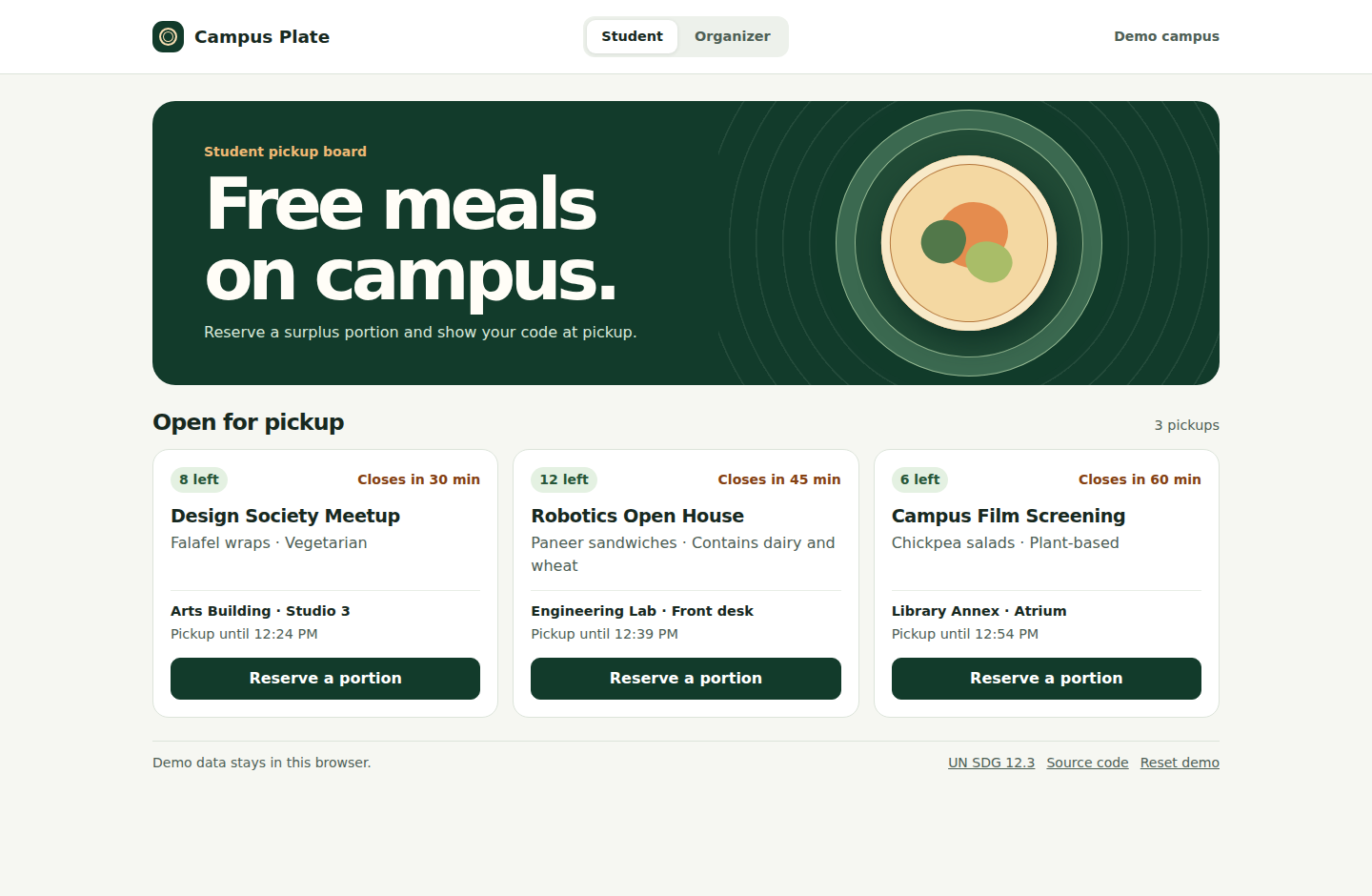
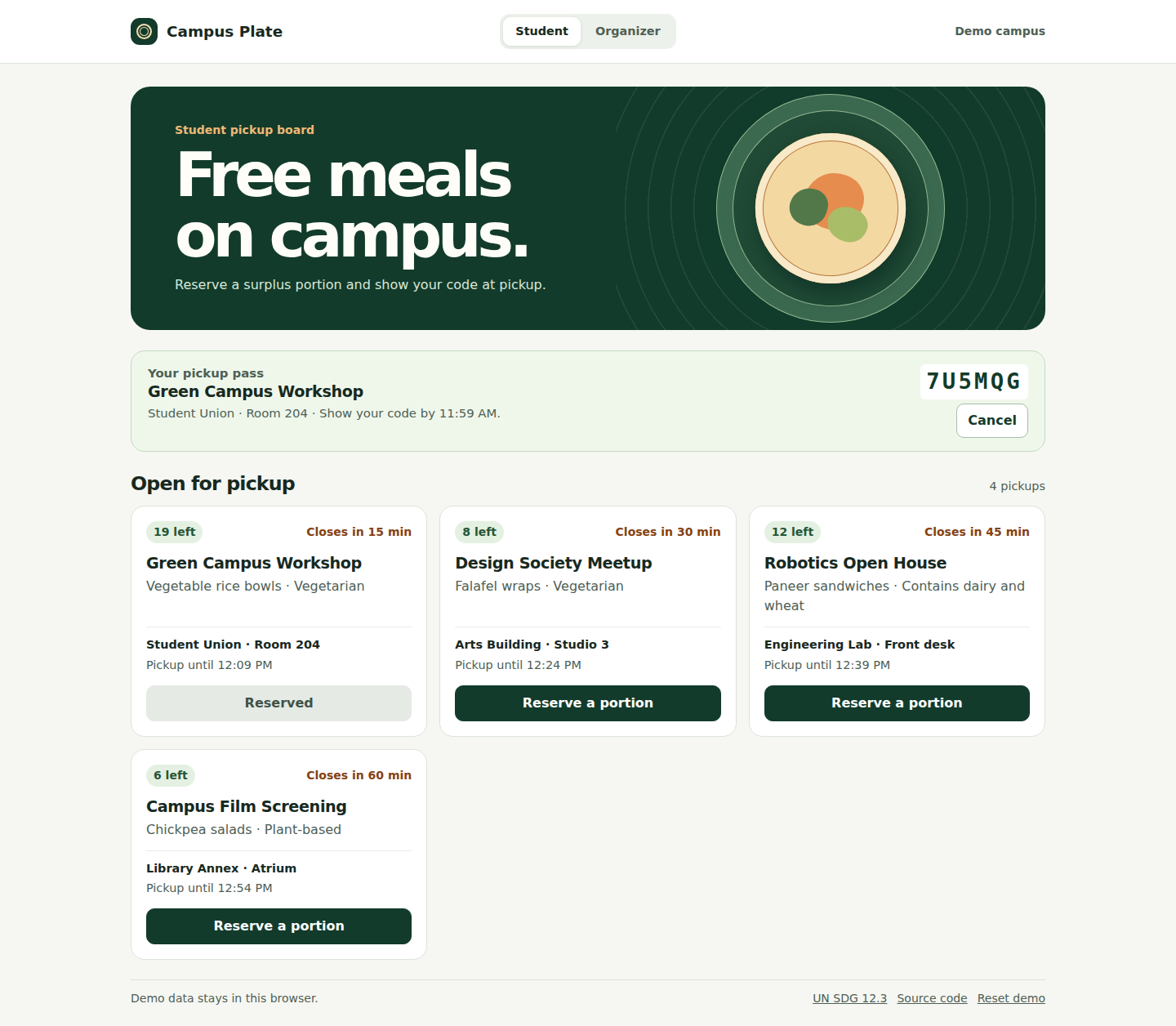
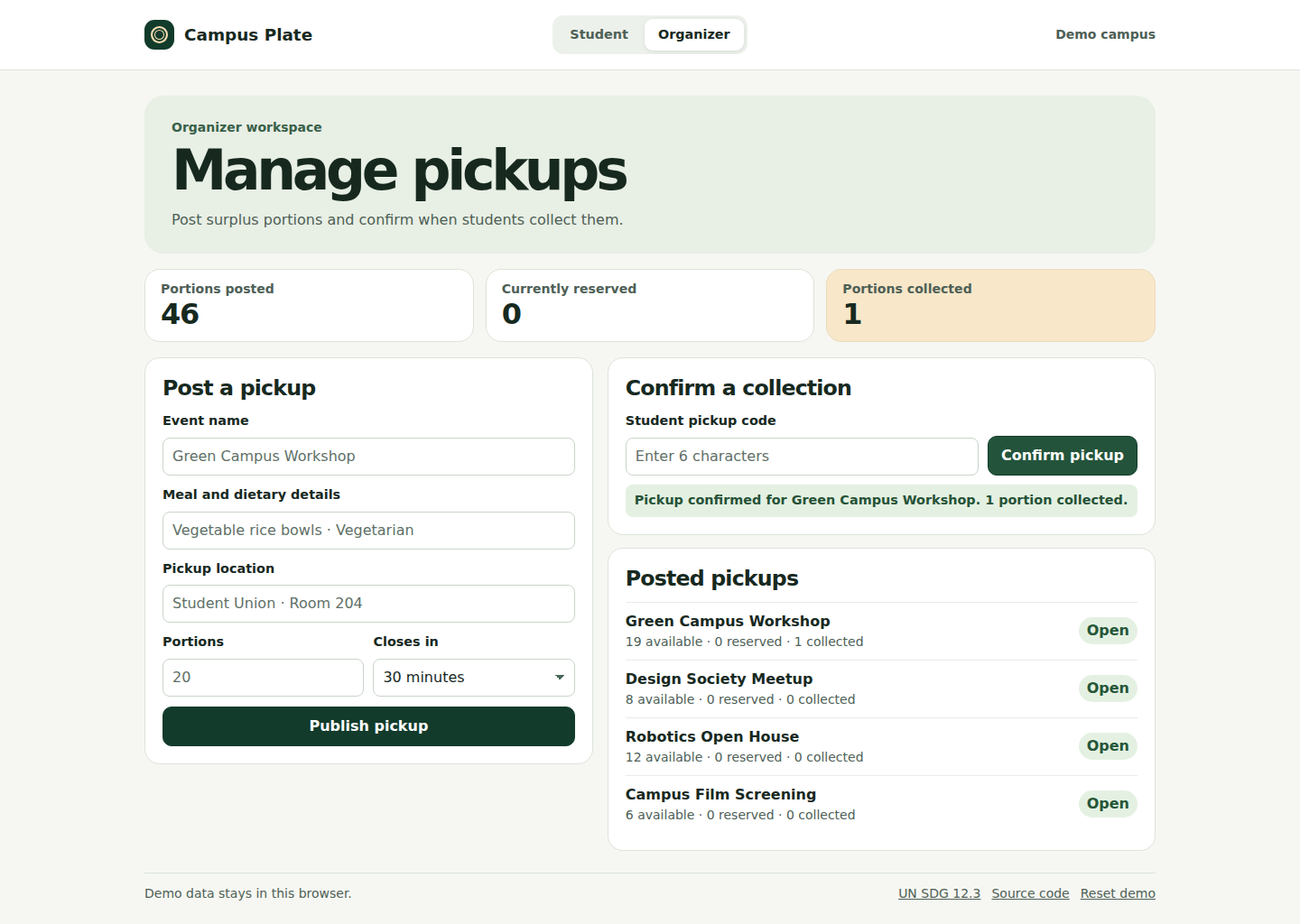
Campus Plate is a web app for students, campus event organizers, and catering teams. An organizer posts the meal, number of portions, pickup location, and closing time. A student reserves one portion and gets a six-character pickup code. The organizer enters the code at handoff, and the dashboard records one confirmed collection.
If a student cancels or their reservation expires, the portion becomes available again while the pickup window is still open.
How it was built
The prototype uses HTML, CSS, and JavaScript. It stores demo events and reservations in the browser so judges can try both roles in one session. The app runs on GitHub Pages, and the pickup flow was tested with Playwright.
Challenges and what I learned
The main challenge was keeping the portion count accurate as reservations were created, cancelled, expired, or collected. A reservation holds a portion temporarily, and a confirmed pickup uses the code once. Building this flow showed why each step matters. Students need availability they can rely on, and organizers need a count of completed handoffs.
How it could help campuses
Campus Plate supports UN Sustainable Development Goal 12, target 12.3, which addresses food waste. It gives campuses a way to offer surplus meals to students and track how many are collected. A campus pilot could compare confirmed pickups and food discarded across similar events to see whether the workflow reduces waste. The prototype demonstrates this process with fictional events. UN Goal 12
Built With
- api
- crypto
- css
- github
- html5
- javascript
- locks
- pages
- playwright
- storage
- web
