-
campus model
Inspiration
What it does
How we built it
Challenges we ran into
Accomplishments that we're proud of
What we learned
What's next for campus modelHere is a ~250 word project description you can submit:
AI-Powered Mood-Adaptive Environment Assistant
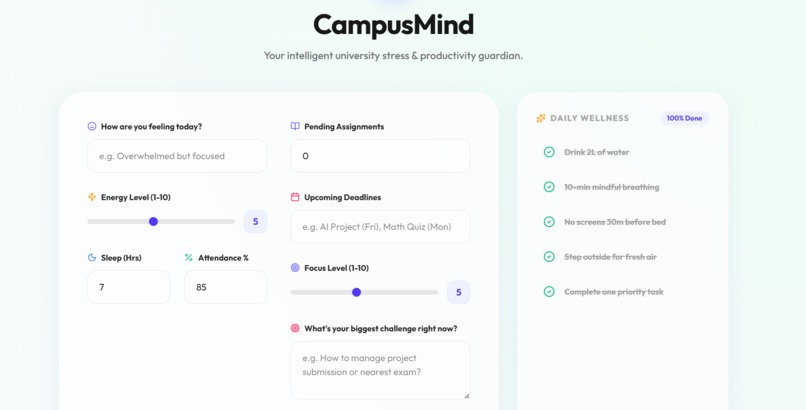
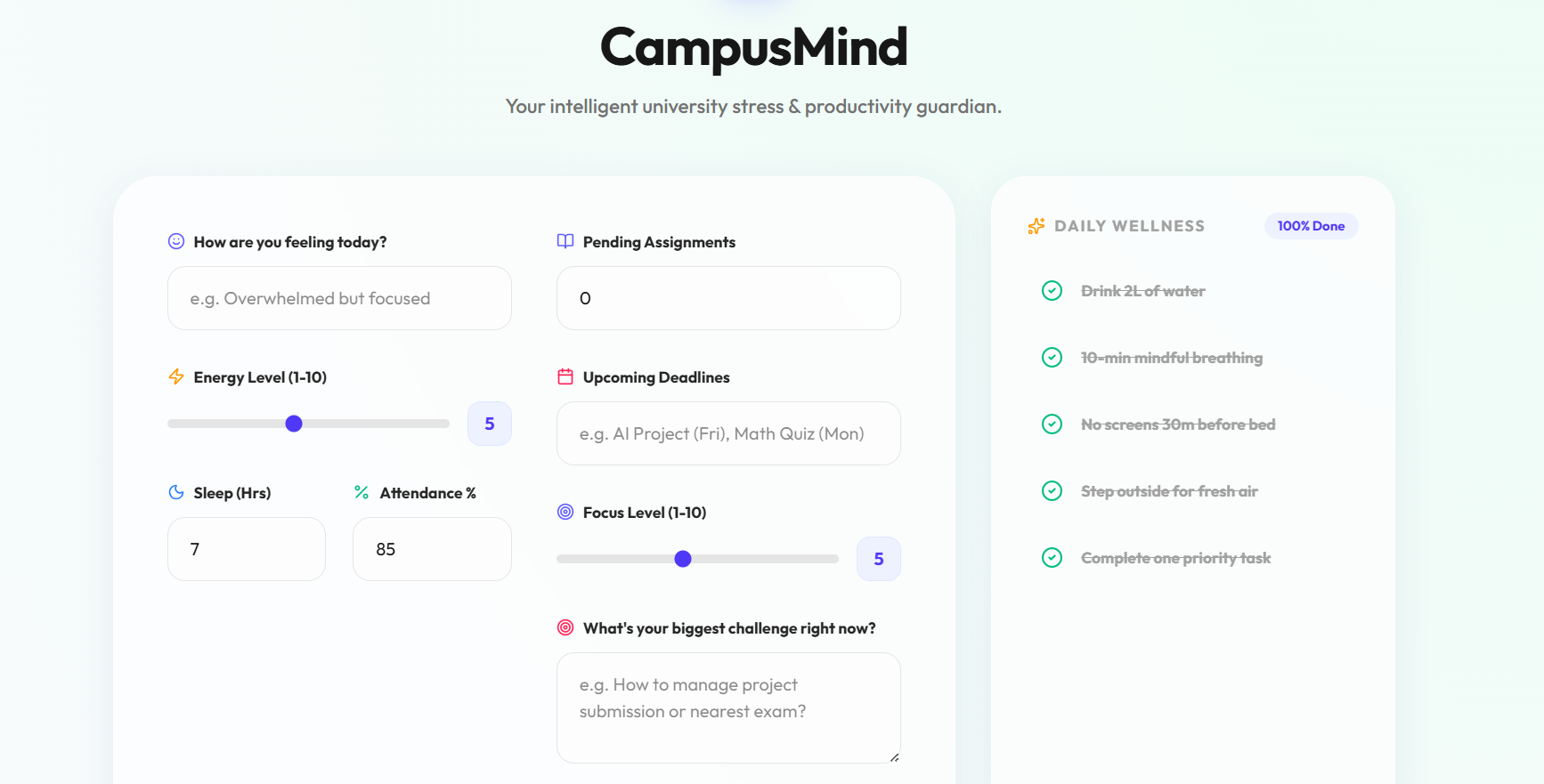
The AI-Powered Mood-Adaptive Environment Assistant is an intelligent system designed to understand and respond to a user’s emotional state in real time. The project uses computer vision, audio analysis, and environmental sensing to detect human mood through facial expressions, voice tone, and surrounding conditions such as lighting and noise levels. By combining these signals, the system can estimate whether a person is stressed, focused, relaxed, tired, or happy.
Once the mood is detected, the assistant automatically adapts the user’s digital and physical environment to improve comfort and productivity. For example, if the system detects stress, it can play calming music, reduce screen brightness, or suggest a short break. If it detects low energy or fatigue, it may increase brightness, play motivational music, or recommend focus tools. The goal is to create a smart environment that supports mental wellbeing and enhances daily performance.
The project integrates multiple AI technologies including emotion recognition models, audio sentiment analysis, and contextual environment monitoring. These components work together to provide personalized responses tailored to the user’s emotional state.
This system can be useful in workplaces, study environments, smart homes, and wellness applications. By automatically adapting the environment to human emotions, the assistant helps reduce stress, increase productivity, and create a more comfortable and responsive digital experience.
Overall, this project demonstrates how artificial intelligence can be used to build human-centered technology that improves both emotional wellbeing and everyday efficiency.
If you want, I can also give you a more powerful hackathon-winning version (250 words but much more impressive) that judges usually like.
Built With
- ai
- cloud
- gemini

Log in or sign up for Devpost to join the conversation.