-
-
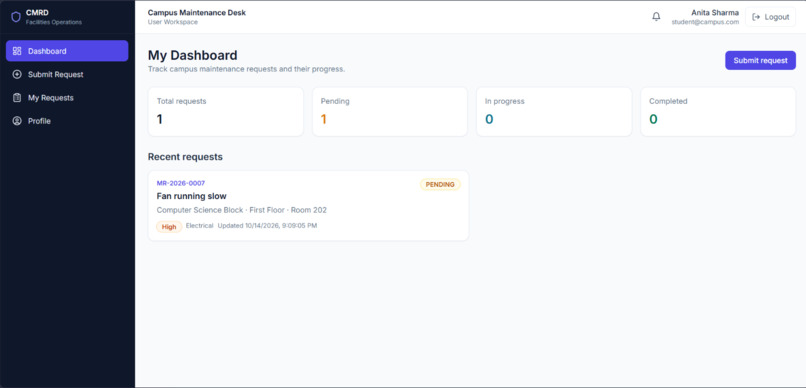
admin page
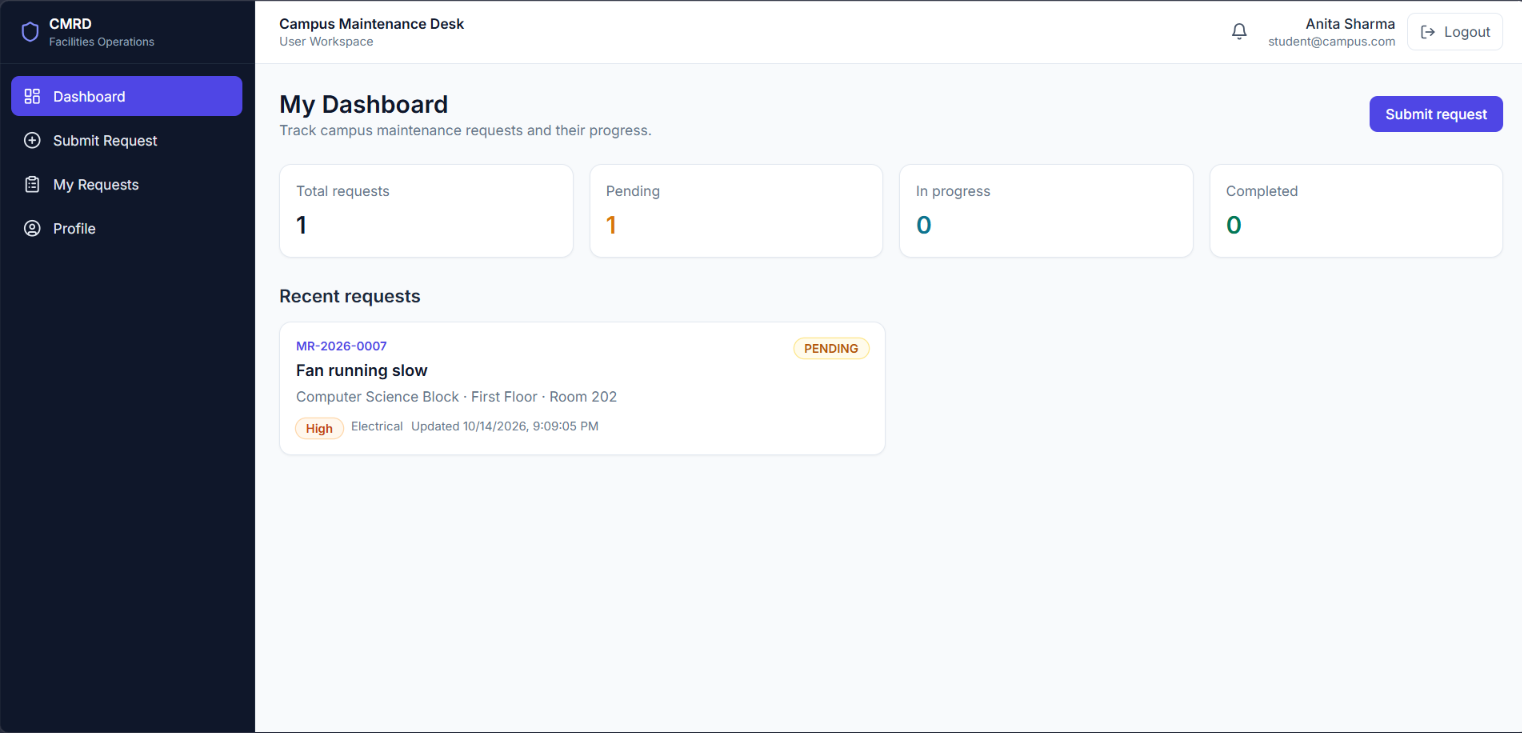
Inspiration
Campus maintenance issues such as damaged equipment, electrical faults, plumbing problems, and classroom infrastructure damage are often reported through informal methods, making it difficult to track and resolve them efficiently. We wanted to create a centralized platform that simplifies issue reporting, identifies the exact campus location, and ensures proper assignment of technicians.
What it does
The Campus Maintenance Request Desk allows students and staff to report maintenance issues by uploading photos and selecting structured locations such as block, floor, and room number. Administrators can review requests, prioritize issues, and assign technicians. Technicians can update the status of assigned tasks from Assigned to In Progress and Completed, with supporting evidence. Users can track the progress of their requests.
How we built it
We designed the system using the MERN stack:
- Frontend: React.js for the user interface.
- Backend: Node.js and Express.js for APIs and application logic.
- Database: MongoDB for storing maintenance requests, user details, technician information, and status updates.
- Core modules: User issue reporting, structured location identification, administrator verification, technician assignment, and maintenance status tracking.
Challenges we ran into
One of our main challenges was identifying precise locations within the campus, as GPS-based locations may not accurately identify specific classrooms or laboratories. We addressed this by using structured location selection, including block, floor, and room number, along with photo uploads. We also considered how to prevent duplicate requests, prioritize urgent issues, and maintain clear communication between users, administrators, and technicians.
Accomplishments that we're proud of
We developed a clear workflow for managing campus maintenance requests from submission to resolution. Our proposed system combines photo-based reporting, structured campus locations, administrator-controlled technician dispatch, and status tracking in one platform. This approach can improve transparency, accountability, and maintenance coordination across the campus.
What we learned
We learned how to design a full
