-
-
-
-
Hardware
-
3D Model
-

Logo

College students are one of the most vulnerable groups to theft, and USC students have been a big target over the past years. The campus does not feel like a safe learning environment when a student can't even leave their things in the library, for example, without the constant worry of it being stolen. All of us share this sentiment, and after interviewing our friends, class mates, and people across the school, we realize its a problem worth solving.
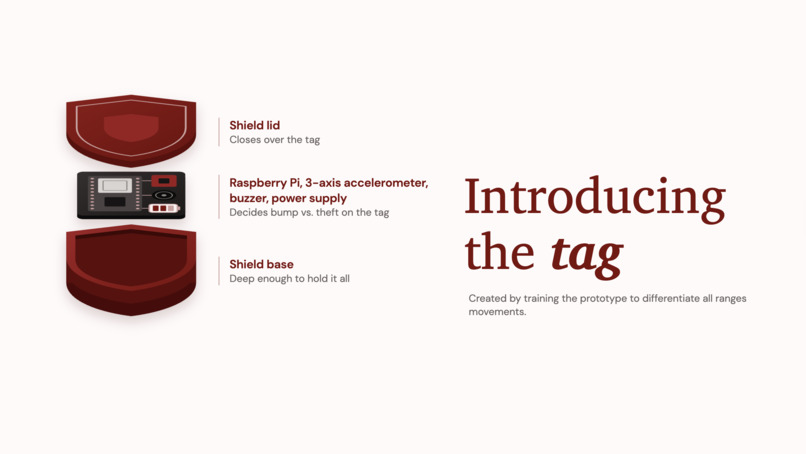
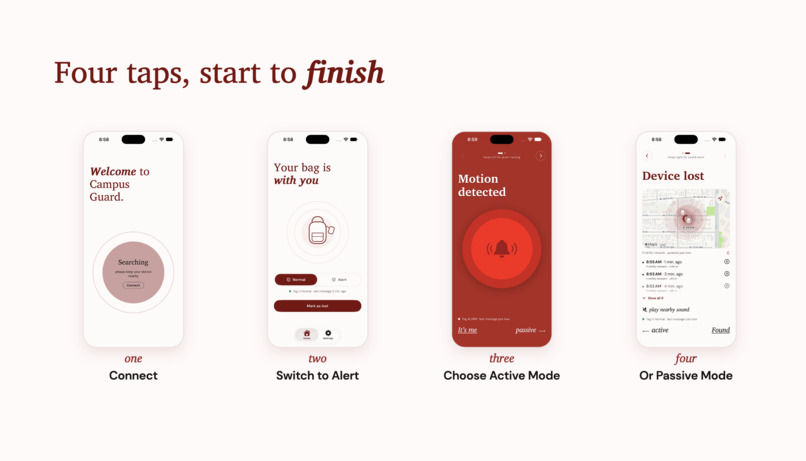
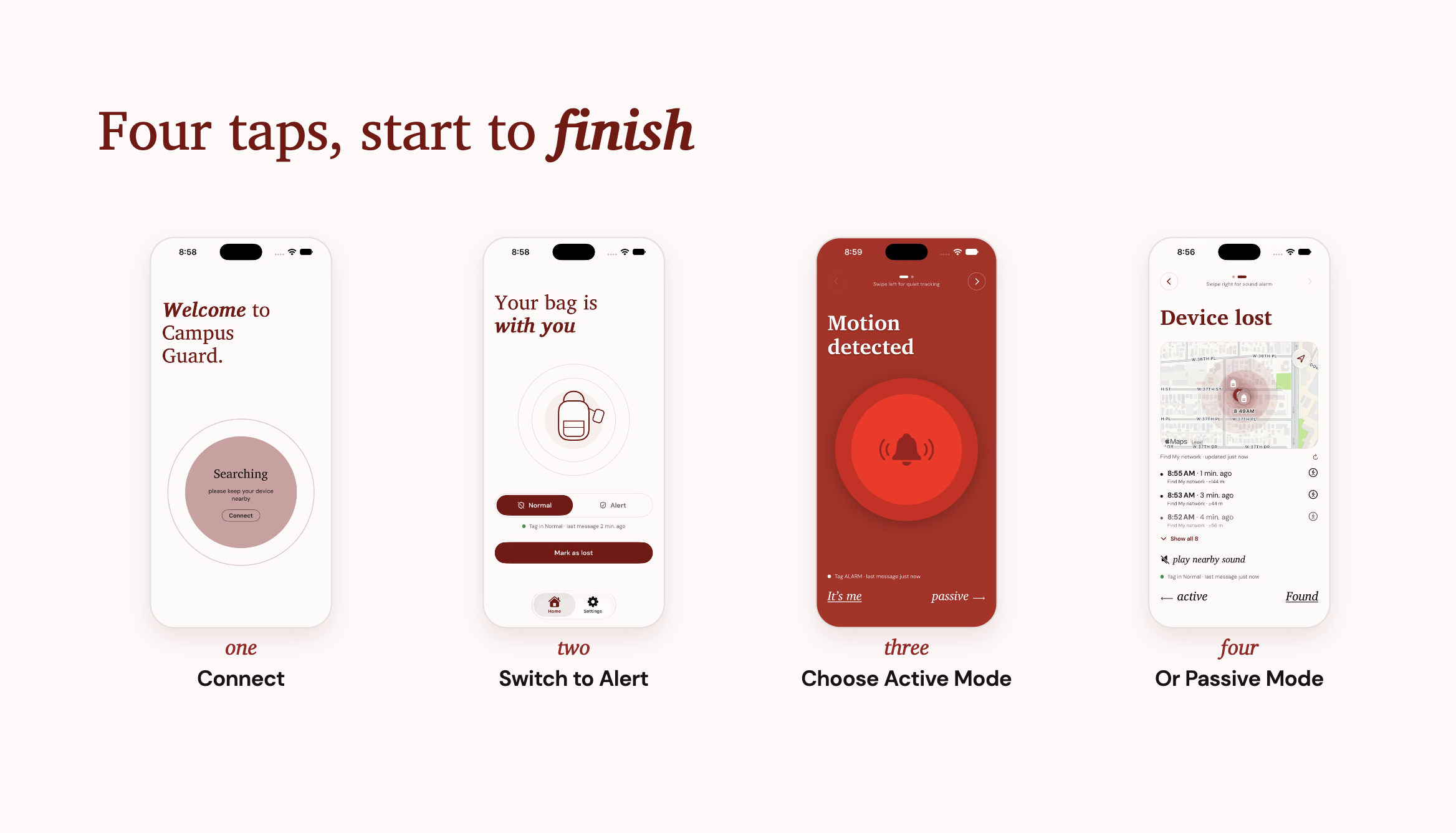
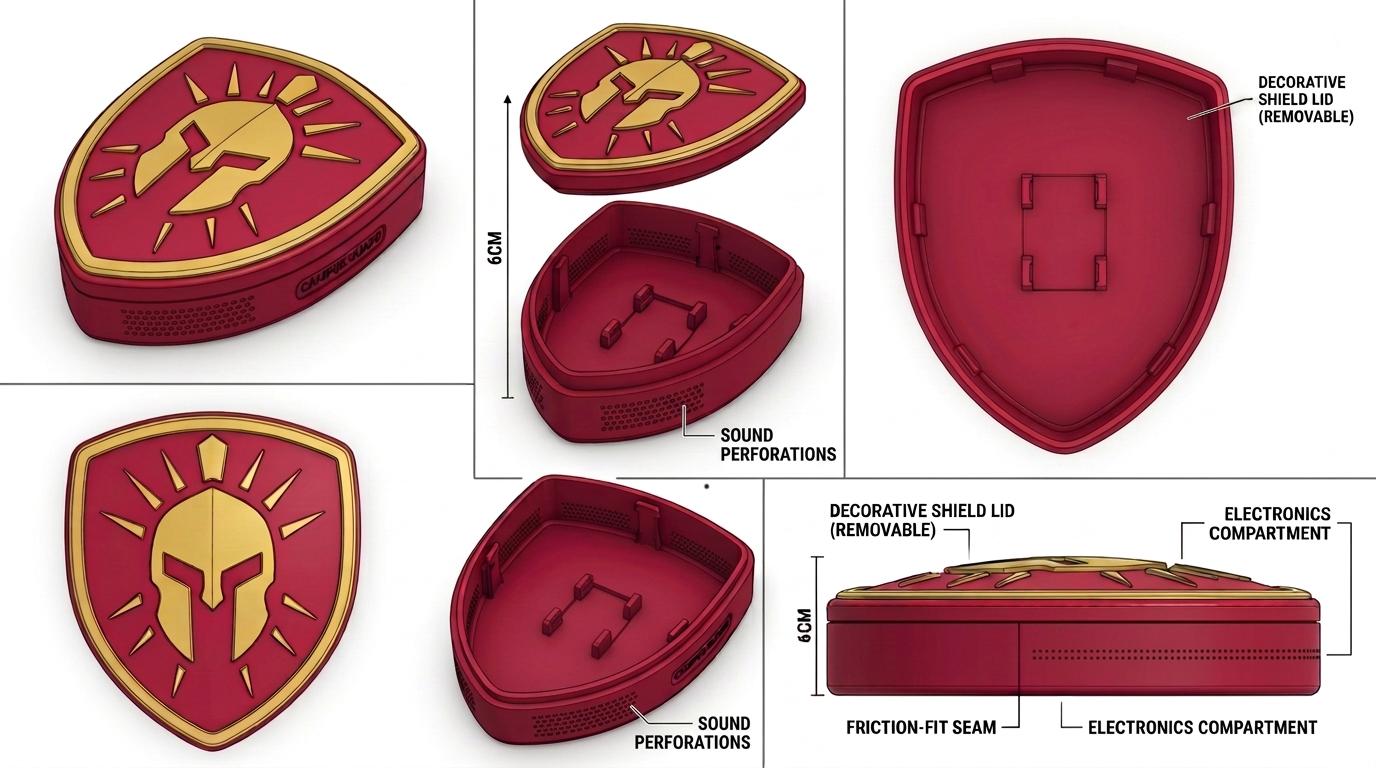
Instead of building something completely software-based, we choose to incorporate hardware because we realize the importance of making sure your things are safe when you're not around. Our product -- the Campus Guard tag stays in your bag throughout your day and automatically reminds you when you're away and there is unusual movements eg. your bag being rummaged, carried away. It has two main modes of theft prevention: active and passive. In active mode, a loud alarm is triggered from our device, getting the attention of people around the thief and hence detering the operation. In passive mode, when nobody's around to alert, the device stays quiet and it's tracking system tells you the exact trail of your item.
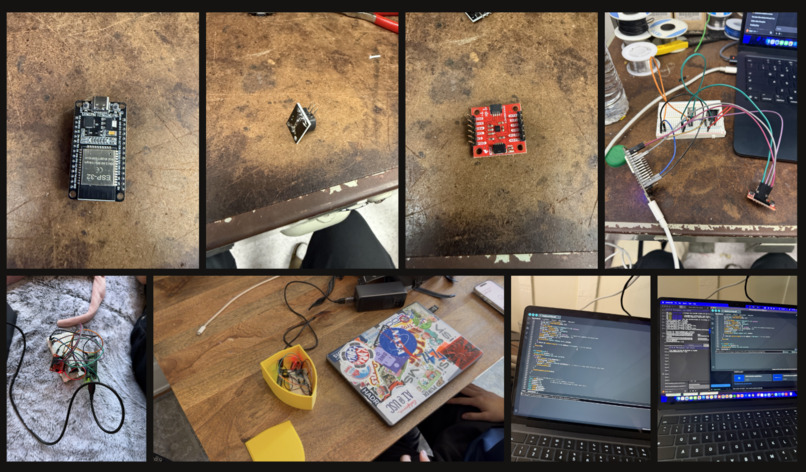
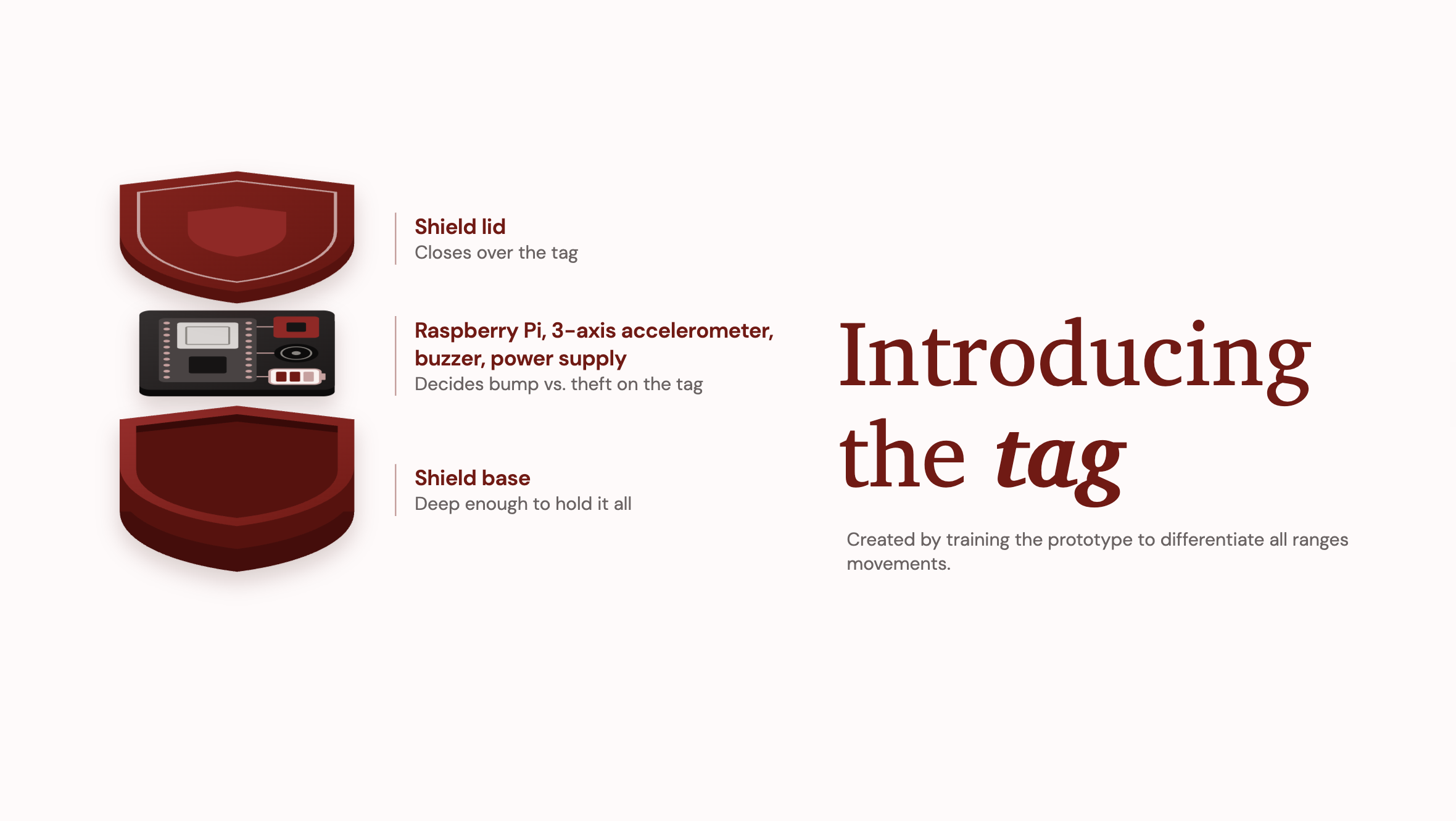
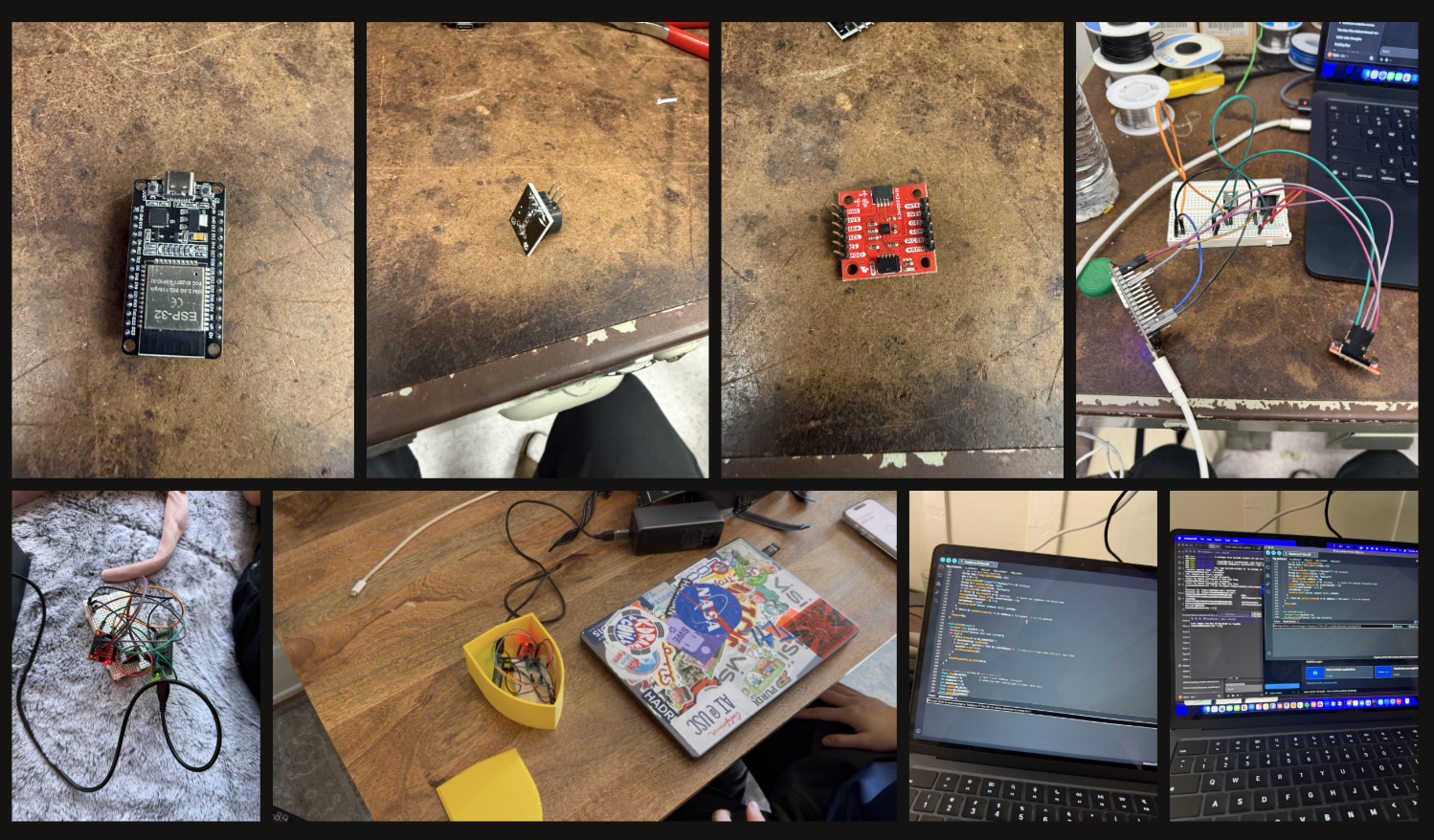
We designed the hardware from scratch, starting with a bunch of components that we had lying around, especially a breadboard, various male-to-male and male-to-female jumper wires, and an ESP32. We also used an accelerometer and an active buzzer to produce the actual output. We quickly found out that the ESP32 wasn't compatible with merging all of the data that we were trying to put in it, which made us switch to a Raspberry Pi. The biggest part here is that the hardware is pretty large and not very efficient, I would say. We envision, for future models, scaling it down to a smaller size. We trained the model to learn differentiations in movements, such as rummaging or picking up the bag. We trained it using an AI model with machine learning. Quickly, we found out that for the passive model, it would be hard to actually find the real location of where it would be. That's why we resorted to a Find My system connecting with an Apple iPhone.
Built With
- ai
- c++
- hardware
- learning
- machine
- project
- python
- raspberry-pi
- software
- sparkfun
