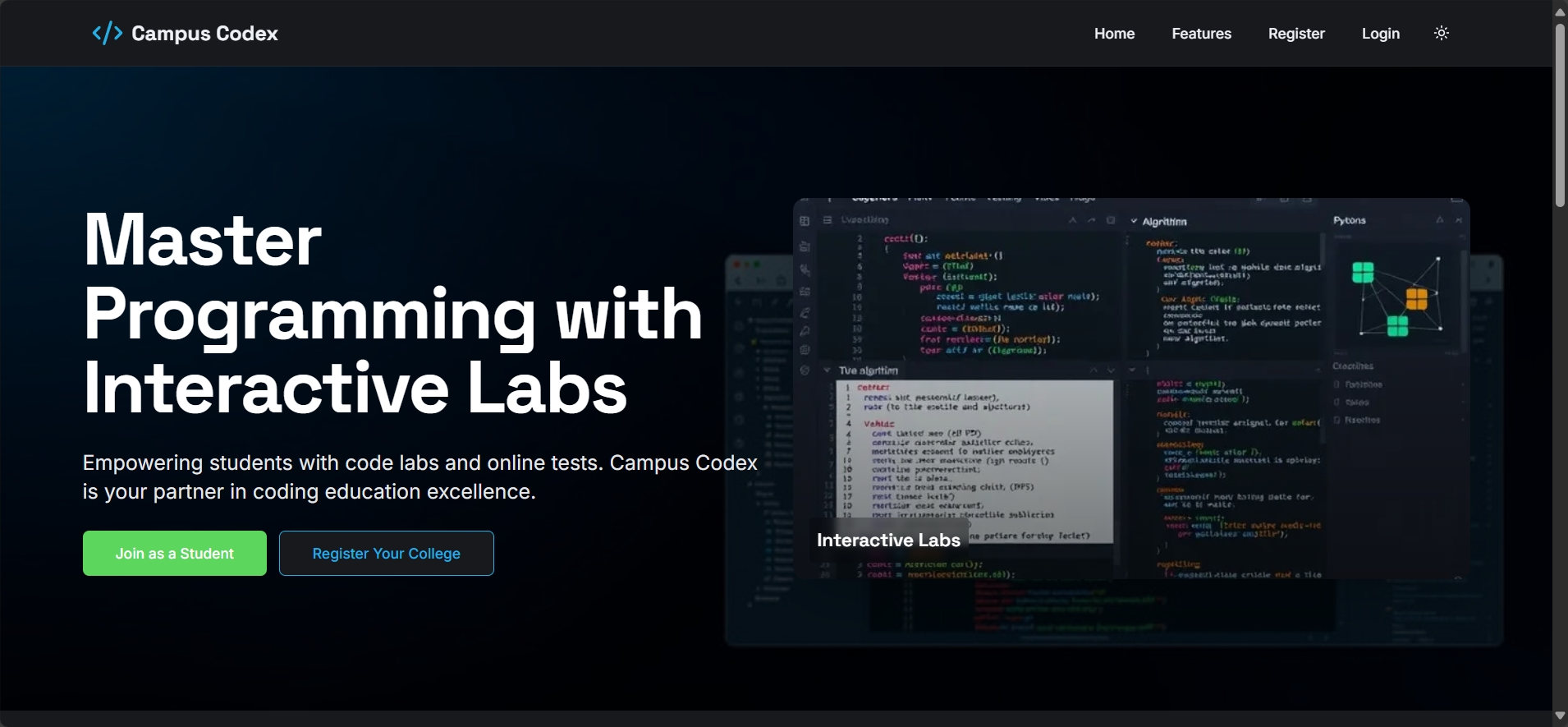
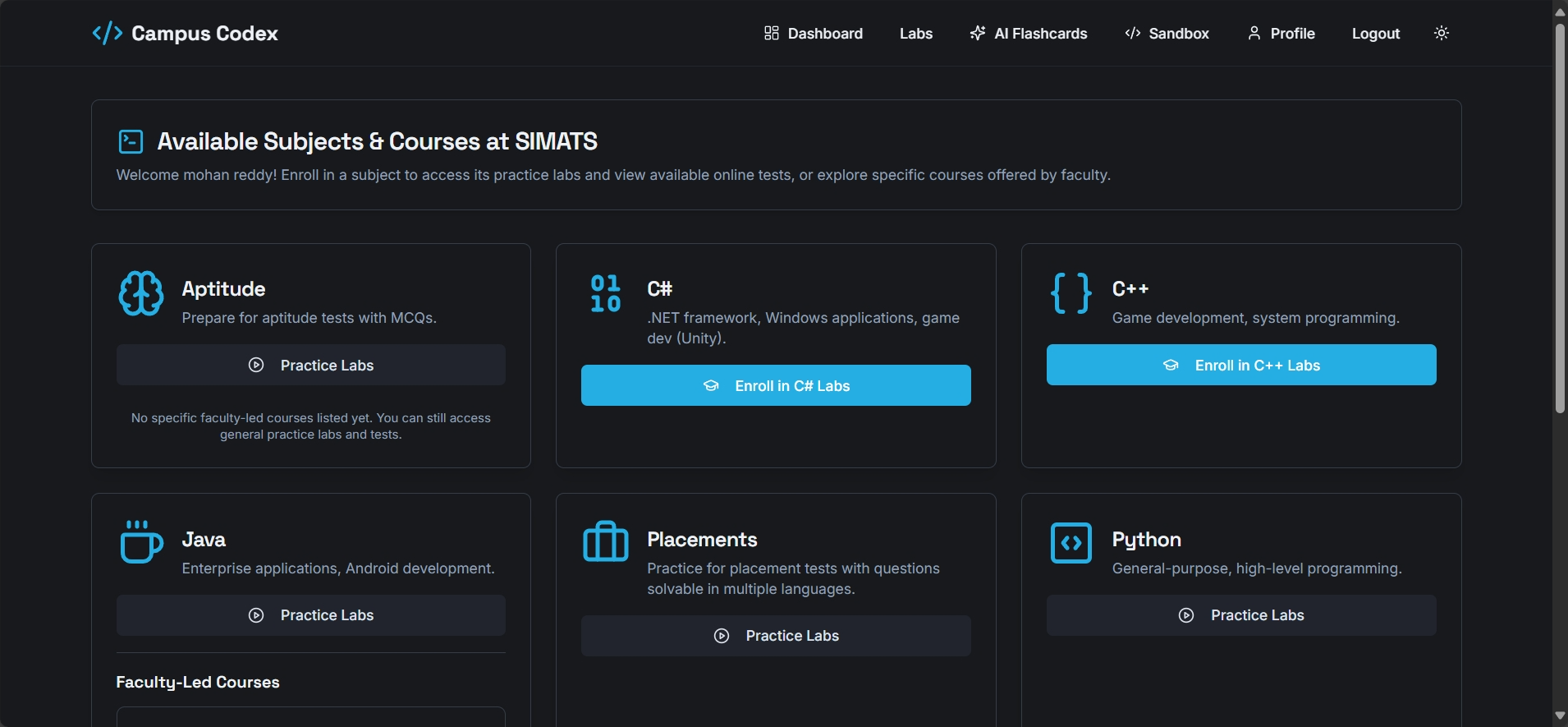
Campus Codex: Revolutionizing Educational Programming Platforms About the Project Inspiration The inspiration for Campus Codex came from witnessing the challenges students face when learning programming in traditional educational settings. As a student myself, I noticed several pain points in the current educational ecosystem:
Disconnected Learning Environments: Students often struggled to navigate between different tools for learning, practicing, and getting feedback on their code.
Limited Real-time Support: Many students needed immediate assistance while coding but had to wait for office hours or peer help.
Assessment Inefficiencies: Faculty members spent countless hours manually grading coding assignments, limiting the time for meaningful teaching.
Lack of Personalized Learning Paths: Traditional programming education often followed a one-size-fits-all approach, not accounting for different learning paces and styles.
These observations sparked the idea to create a comprehensive platform that integrates all aspects of programming education with AI assistance, benefiting students, faculty, and administrators alike.
What I Learned Developing Campus Codex was an incredible learning journey that expanded my skills across multiple dimensions:
Full-Stack Development: I gained profound experience in both frontend and backend technologies, working with modern frameworks to create a responsive and intuitive user interface while building a robust backend that handles complex operations.
AI Integration: I learned how to effectively integrate AI technologies for code assistance, automated grading, and personalized learning recommendations.
Educational Technology Design: I developed a deeper understanding of pedagogical approaches to teaching programming and how technology can enhance learning outcomes.
User Experience Research: Through extensive testing with students and faculty, I discovered the importance of intuitive design in educational platforms and how small UX improvements can significantly impact learning efficiency.
Scalable System Architecture: I learned to design systems that can handle varying loads of users, from small classrooms to large institutions, while maintaining performance and reliability.
How I Built It The development of Campus Codex involved a systematic approach that combined modern web technologies with educational best practices:
Technology Stack:
Frontend: React.js with Material UI for responsive design Backend: Node.js with Express for API services Database: MongoDB for flexible data modeling AI Services: Integration with OpenAI Codex for programming assistance Deployment: Netlify for frontend hosting with continuous integration Development Phases:
Research Phase: I conducted extensive interviews with students, faculty, and administrators to understand their specific needs and pain points.
Design Phase: Using the insights gathered, I created wireframes and prototypes focusing on user experience, accessibility, and educational workflows.
Development Phase: I implemented the core features incrementally, starting with the coding environment, then assessment systems, and finally analytics dashboards.
Testing Phase: Multiple rounds of user testing with actual students and faculty provided valuable feedback that shaped the final product.
Deployment Phase: I set up CI/CD pipelines using GitHub and Netlify to streamline the deployment process.
Core Features Implementation:
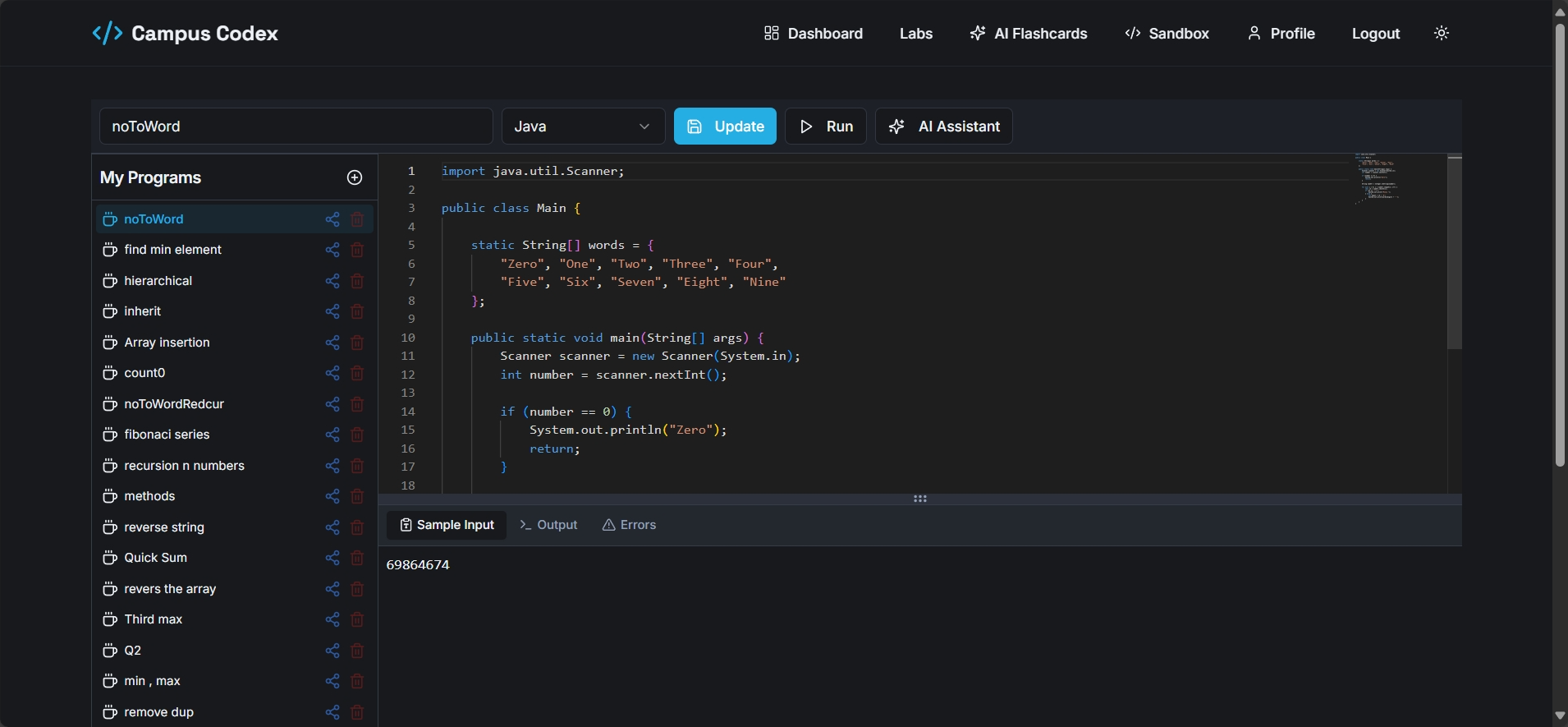
Interactive Coding Environment: Built a browser-based IDE with syntax highlighting, code completion, and real-time error checking.
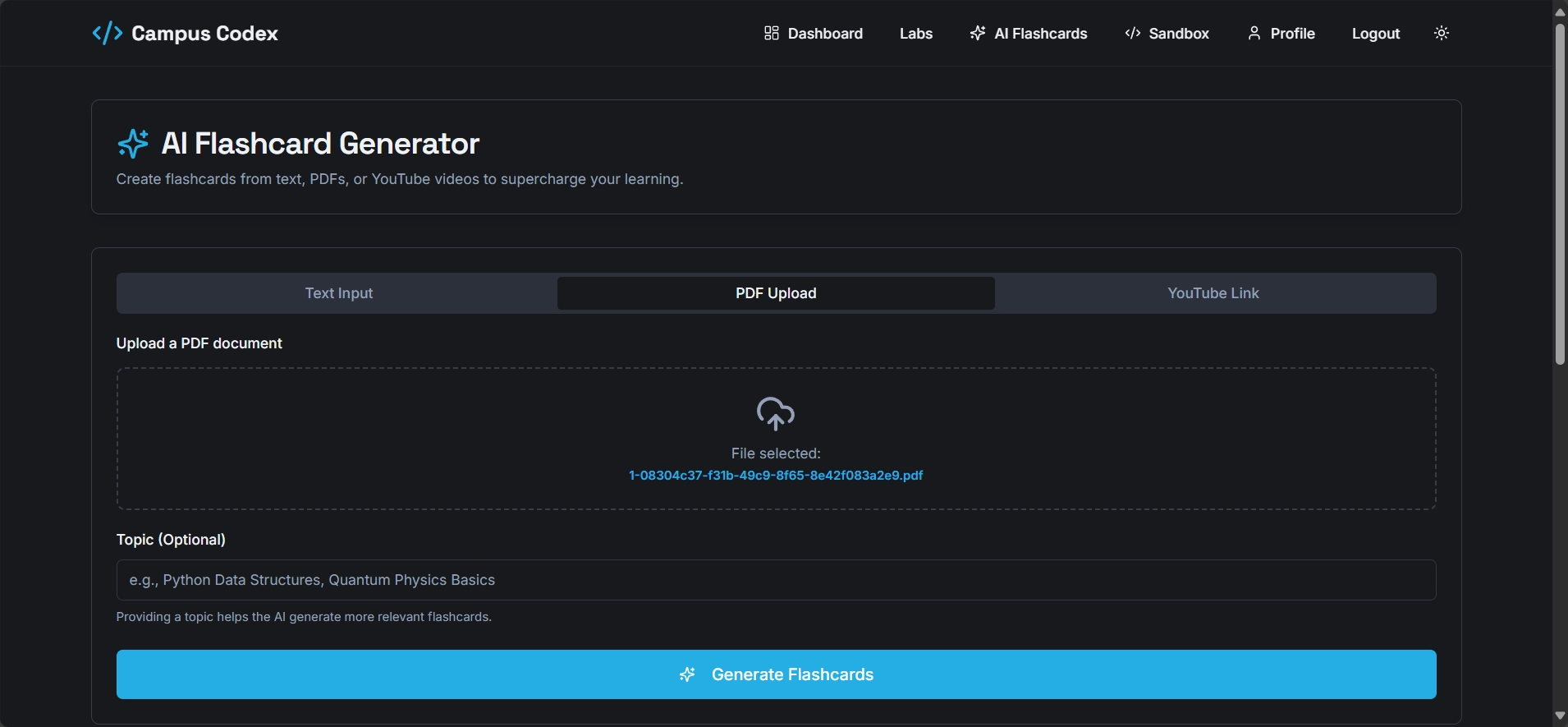
AI-Assisted Learning: Integrated AI to provide contextual help, code suggestions, and personalized learning paths.
Assessment System: Developed automated testing frameworks that evaluate student code against predefined criteria.
Analytics Dashboard: Created comprehensive visualization tools that track student progress and identify learning patterns.
Challenges Faced The journey to build Campus Codex wasn't without its obstacles, each presenting valuable learning opportunities:
AI Integration Complexity: Balancing helpful AI assistance without solving problems for students required careful calibration of the AI systems. I had to develop a nuanced approach that provides guidance while still encouraging learning.
Scalability Issues: Early versions of the platform experienced performance degradation under load, especially when multiple students submitted assignments simultaneously. This required a complete rethinking of the backend architecture to implement more efficient processing and caching strategies.
User Interface Simplicity vs. Power: Creating an interface that was intuitive for beginners yet powerful enough for advanced users posed a significant design challenge. Through multiple iterations and user testing, I developed a progressive disclosure approach that adapts to the user's expertise level.
Security Concerns: Building a platform that executes user-submitted code presented serious security considerations. I implemented sandboxed execution environments and strict permission models to ensure code couldn't access sensitive data or impact system performance.
Cross-Platform Compatibility: Ensuring a consistent experience across different devices and browsers required extensive testing and responsive design considerations. I developed a component-based architecture that adapts to different screen sizes and input methods.
Automated Assessment Accuracy: Creating an automated grading system that fairly evaluates code beyond simple correctness (considering factors like efficiency, readability, and best practices) was particularly challenging. I developed a multi-dimensional evaluation model that considers various aspects of code quality.
Future Enhancements Looking ahead, I envision several enhancements for Campus Codex:
Expanded Language Support: Adding support for more programming languages and frameworks to cater to diverse educational needs.
Collaborative Coding Features: Implementing real-time collaboration tools that allow students to work together on projects.
Enhanced Analytics: Developing more sophisticated learning analytics that can predict student struggles before they occur.
Mobile Application: Creating a companion mobile app for on-the-go learning and progress tracking.
Integration Ecosystem: Building a plugin system that allows integration with other educational platforms and tools.
Peer Learning Networks: Implementing features that facilitate peer review and community-based learning among students.
Campus Codex represents my vision for the future of programming education—where technology seamlessly supports the learning journey, making coding more accessible, engaging, and effective for students of all backgrounds and skill levels.
Built With
- firebase
- firestore
- react.js
- tailwind

Log in or sign up for Devpost to join the conversation.