Inspiration
The idea for ACADSYNC came from a simple but frustrating college reality: students constantly chase faculty for doubt-clearing, project reviews, or academic guidance, while teachers juggle classes, paper correction, meetings, and research work. Most interactions start with messages like “Ma’am, are you free today?” and end in long delays, missed opportunities, or overcrowded office hours. We realized that a timetable alone does not represent real availability—because faculty work extends far beyond classroom hours. This gap between perceived free time and actual workload inspired us to build a smarter, more respectful scheduling system.
What it does
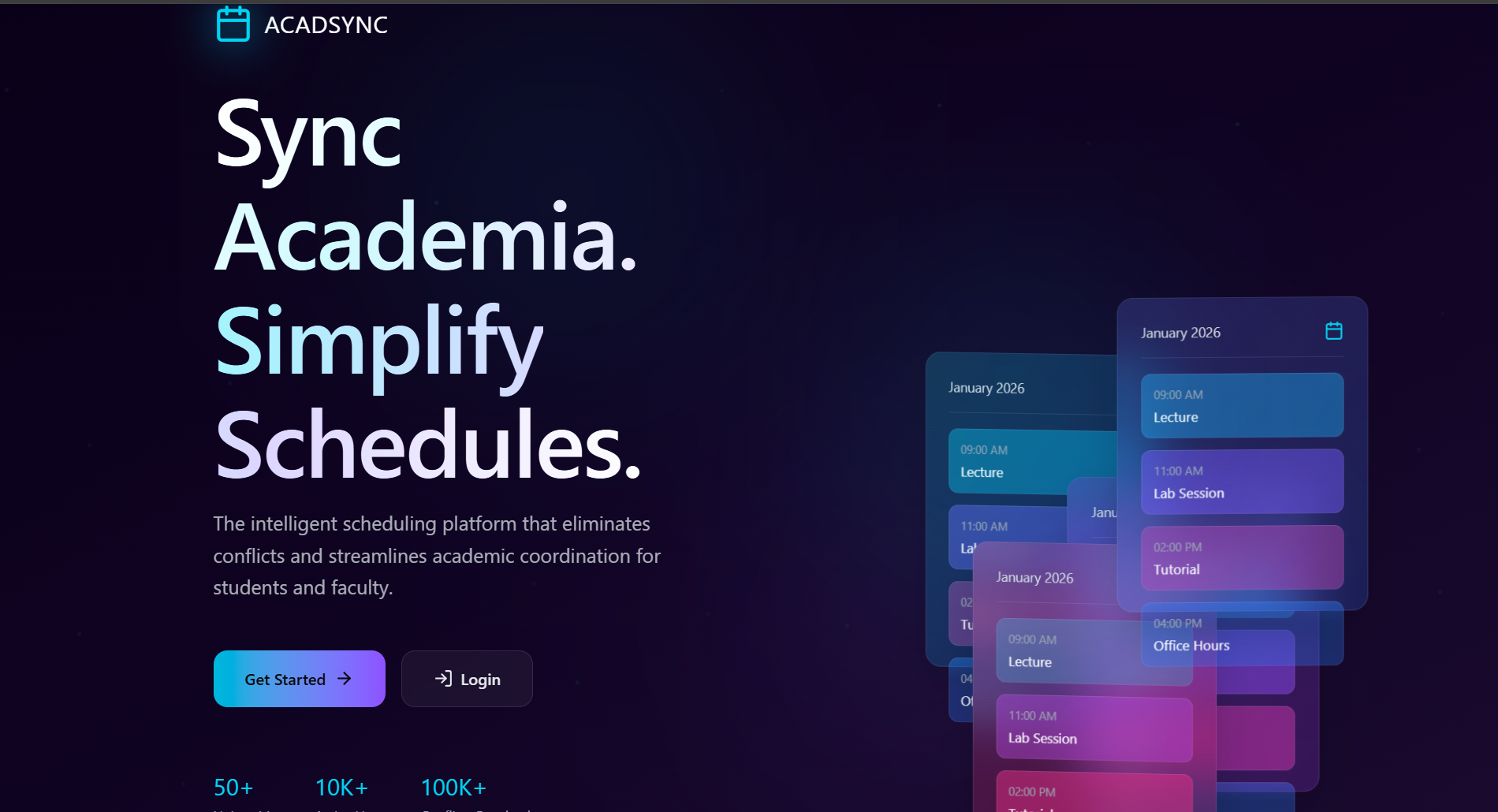
AcadSync is a work-aware academic scheduling platform that intelligently matches student appointment requests with faculty availability, while accounting for non-teaching responsibilities such as paper correction, meetings, and research.
Unlike traditional calendar tools, AcadSync understands why time is blocked and prioritizes bookings based on urgency, purpose, and workload fairness.
How we built it
Architecture Overview Frontend: React.js Backend: Node.js + Express Database: Firebase Firestore Authentication: Firebase Auth (role-based) Notifications: Firebase Cloud Messaging Calendar Sync: Google Calendar API At the heart of AcadSync is a rule-based scheduling engine that evaluates time slots using weighted priorities:
Slot Score
𝑤 1 ( Availability ) + 𝑤 2 ( Urgency ) − 𝑤 3 ( Workload ) Slot Score=w 1
(Availability)+w 2
(Urgency)−w 3
(Workload)
Where:
Availability ensures no timetable clash
Urgency considers deadlines and exam proximity
Workload protects faculty focus time
Only slots with optimal scores are shown to students.
👨🏫 Faculty Workflow
Upload class timetable
Add work blocks (e.g., paper correction, meetings)
Set flexibility levels (fixed / semi-flexible)
View upcoming appointments with agendas
👩🎓 Student Workflow
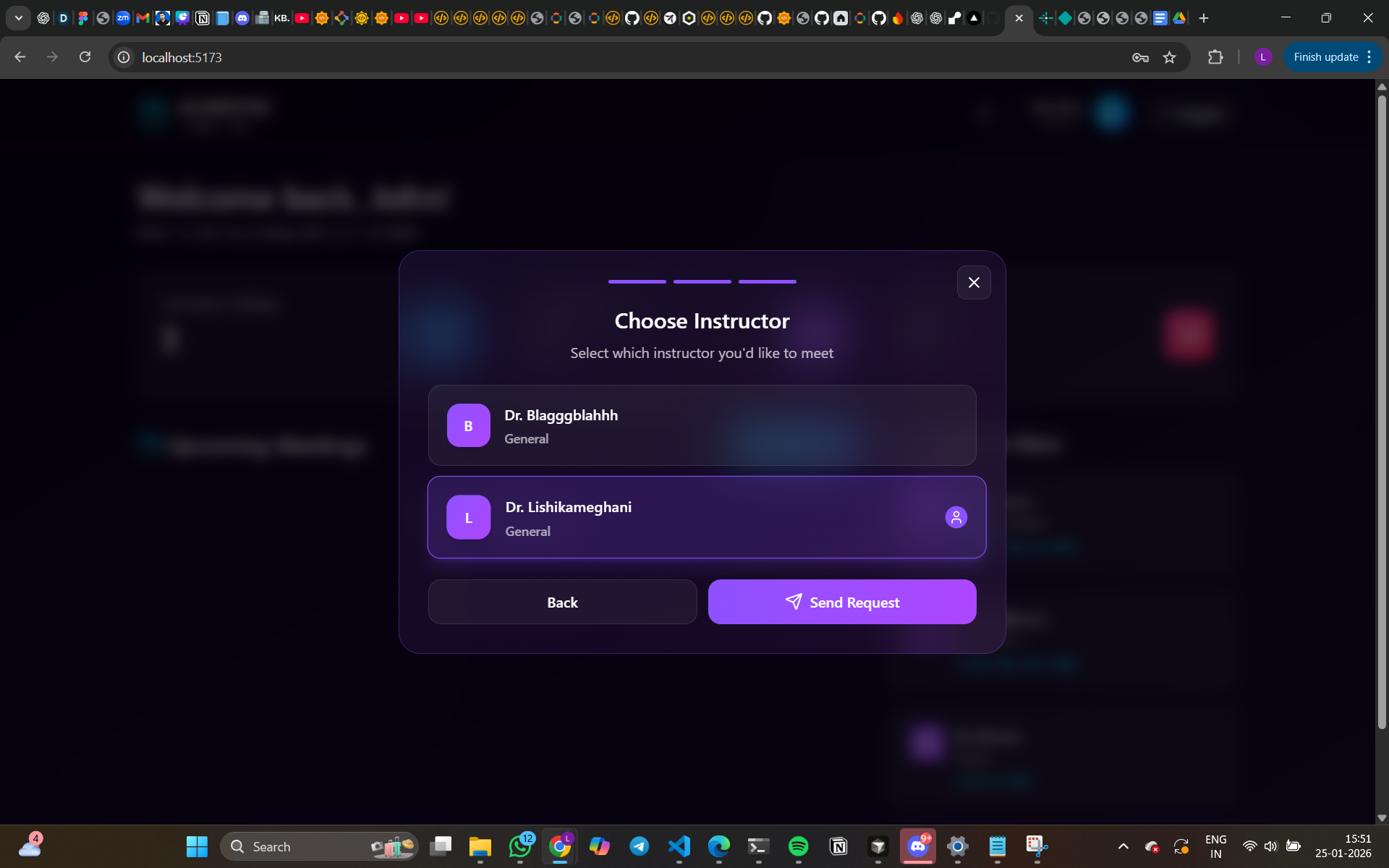
Choose faculty
Select purpose (doubt, project, mentoring)
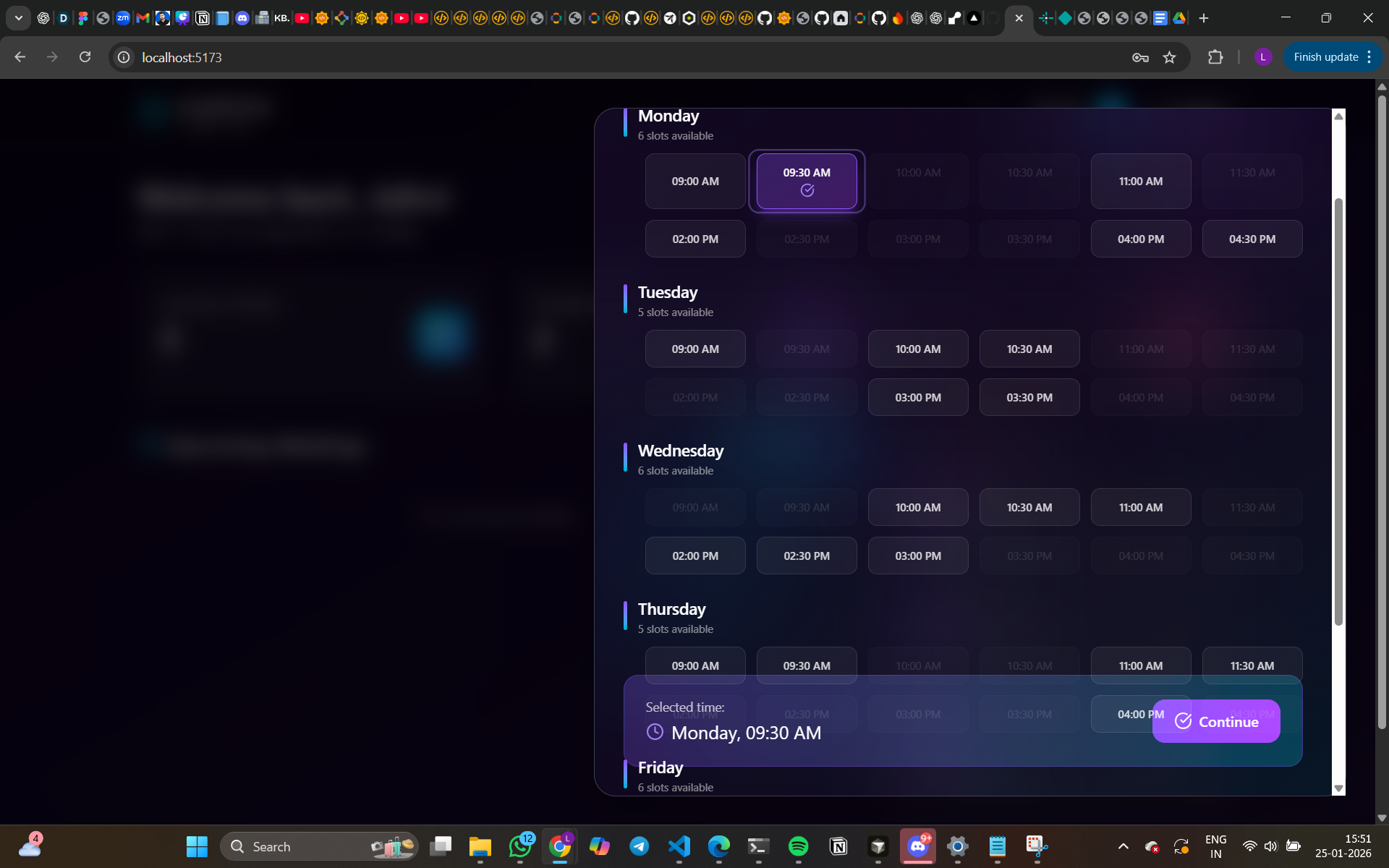
Receive smart slot suggestions
Book instantly without back-and-forth
Challenges we ran into
1️⃣ Availability ≠ Free Time
Designing a system that respects faculty workload without exposing private work details was a major challenge. We solved this by abstracting time into bookable states instead of raw calendar data.
2️⃣ Fair Slot Allocation
Preventing slot hoarding while still prioritizing urgent academic needs required careful balancing of scheduling rules.
3️⃣ Time Constraints
Building an intelligent system within hackathon time limits meant choosing rule-based logic over heavy ML — a trade-off that improved reliability and explainability.
Accomplishments that we're proud of
We’re proud of building a work-aware scheduling system that goes beyond basic calendars and actually reflects real academic workflows.
Successfully implementing role-based access for students and faculty, along with smart slot suggestions and agenda-based bookings, was a major milestone for our team.
Most importantly, we’re proud that ACADSYNC solves a problem every student and teacher immediately relates to, making the solution intuitive, practical, and scalable across campuses.
What we learned
We learned that solving real-world problems requires understanding human constraints, not just technical ones.
We also learned that simplicity with clarity often beats over-engineering—especially in systems that need trust and adoption from both students and faculty.
From a technical perspective, we gained hands-on experience in system design, scheduling logic, role-based authentication, and building user flows that respect privacy and fairness.
What's next for ACADSYNC
Next, we plan to enhance ACADSYNC with AI-assisted workload prediction, allowing the system to estimate time required for tasks like paper correction and automatically protect faculty focus time.
We also aim to integrate ACADSYNC with Learning Management Systems (LMS) and campus portals for seamless adoption.
In the long term, we envision ACADSYNC becoming a standard academic coordination layer—syncing time, effort, and intent across entire institutions.
Built With
- css
- css-backend-node.js-express.js-database-firebase-firestore-(nosql)-authentication-firebase-authentication-(role-based-access-for-students-and-faculty)-cloud-&-hosting-firebase-(auth
- express.js
- firebase
- firestore
- github
- google-calendar
- html
- javascript
- node.js
- react.js
- vercel


Log in or sign up for Devpost to join the conversation.