-
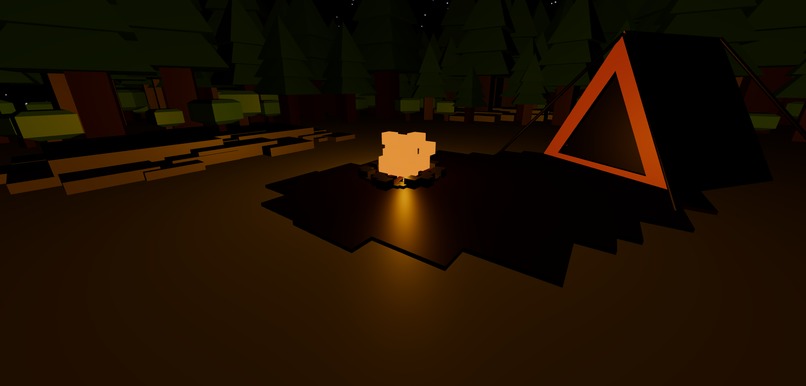
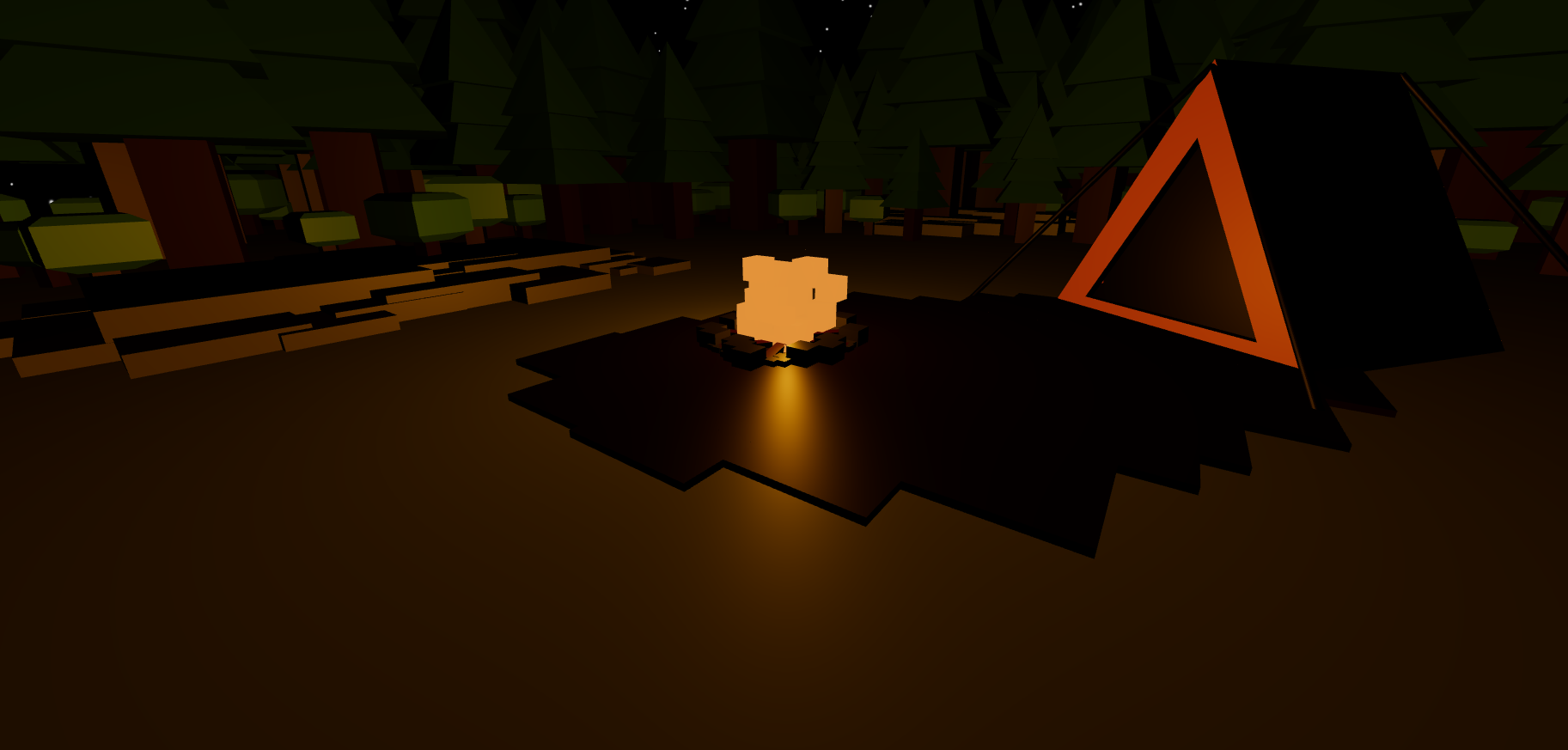
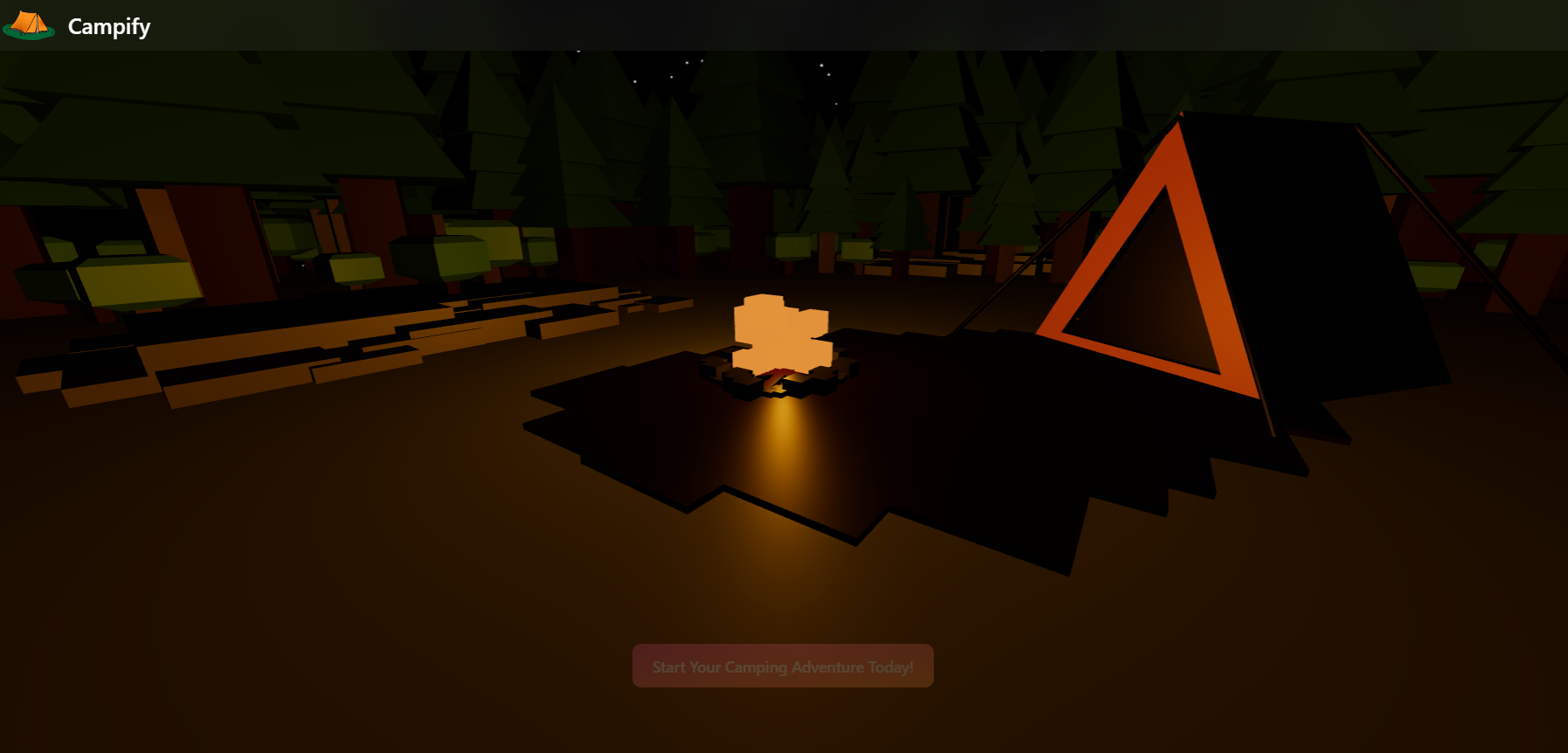
The front page's interactive model, rendered in three.js
-
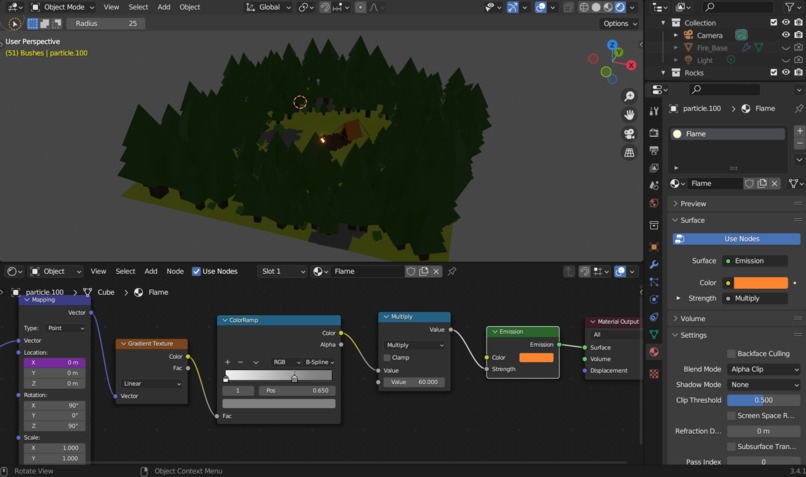
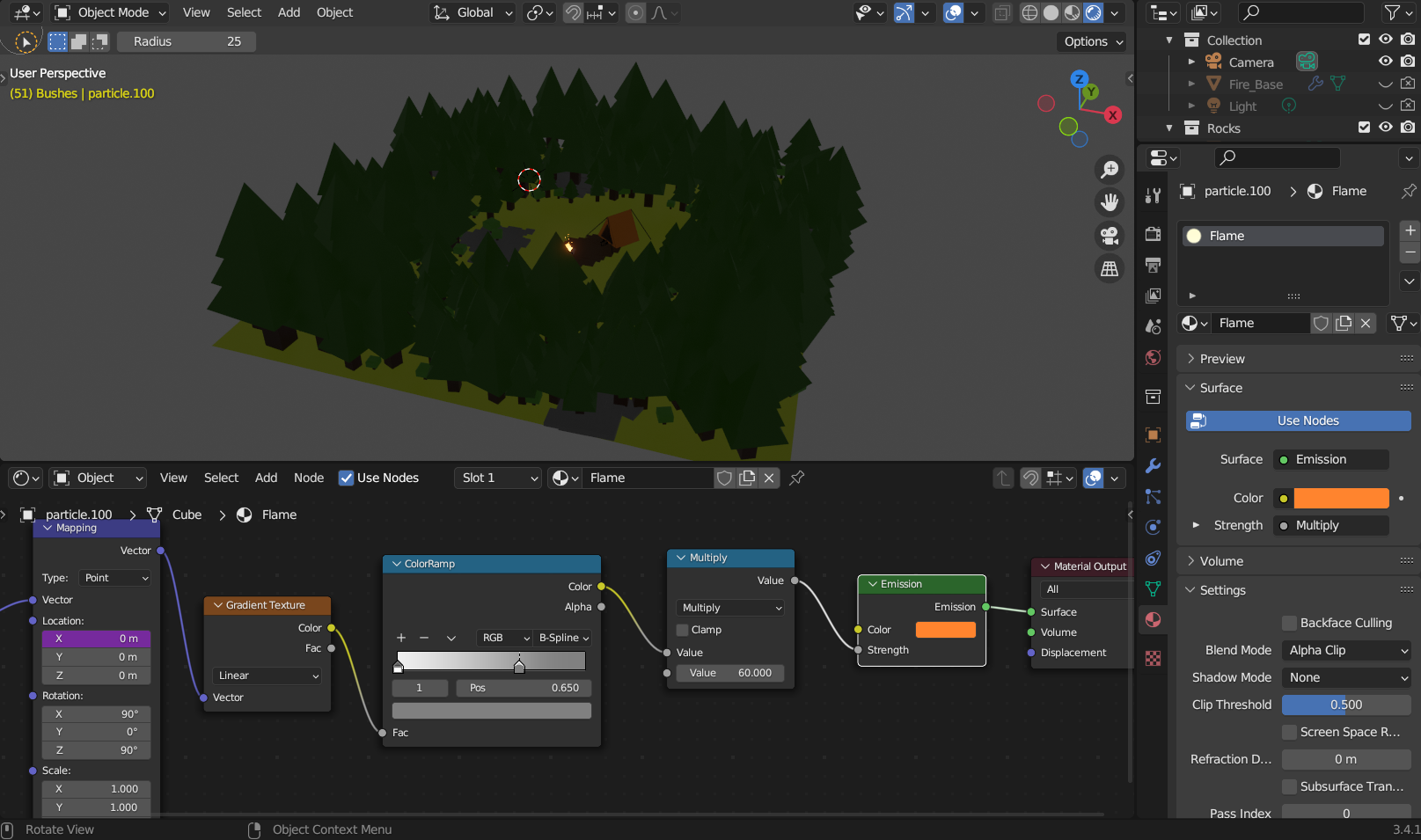
Behind the scenes of our front page's interactive model, created in Blender
-
Our logo
-
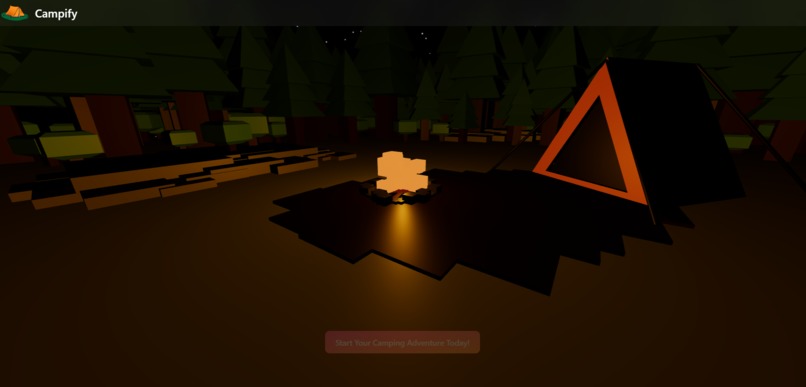
The front page as it appears on rentacamp.site
-
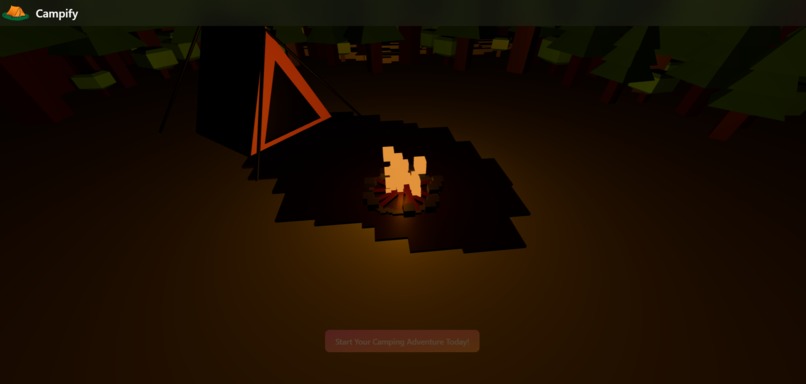
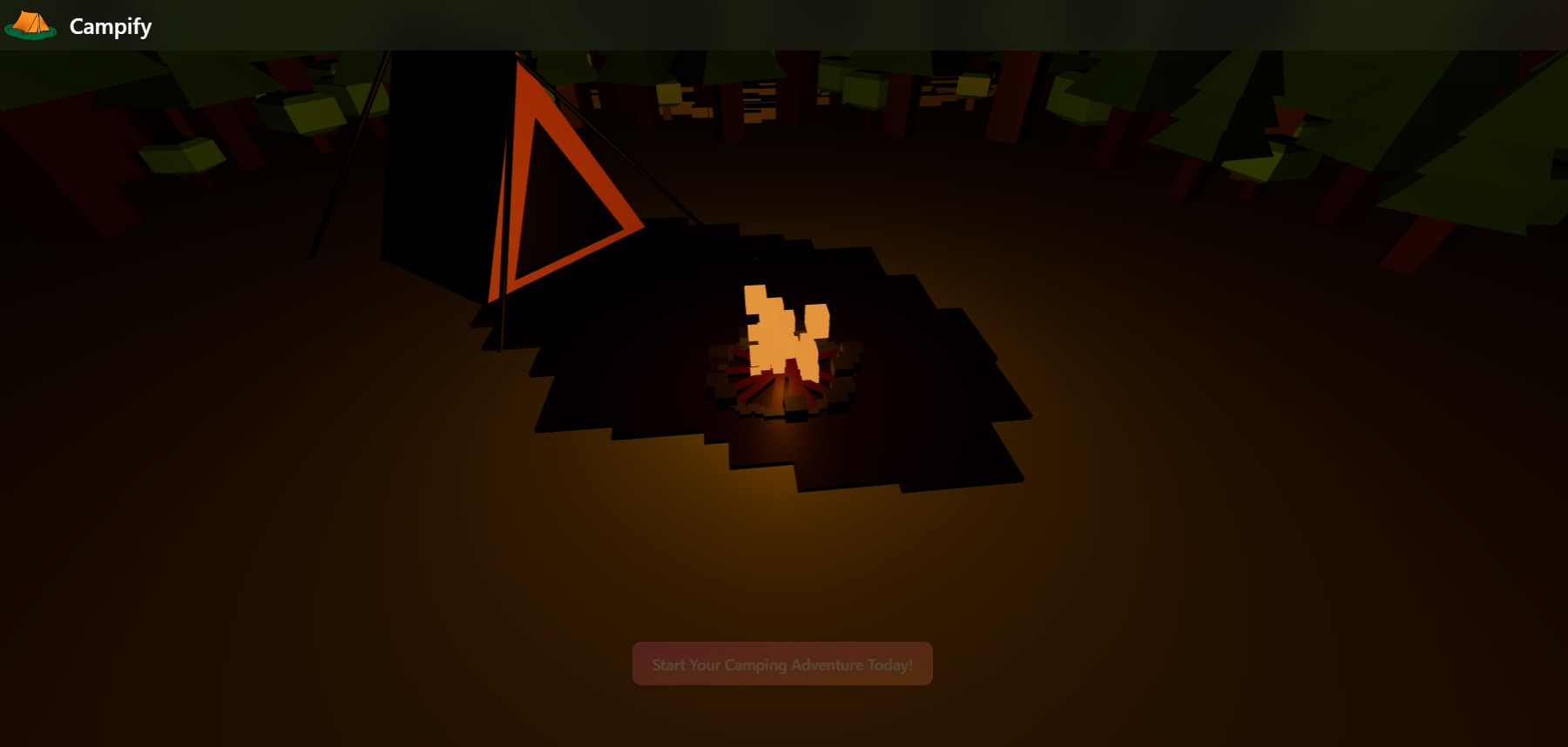
Interacting with the model on our front page
-
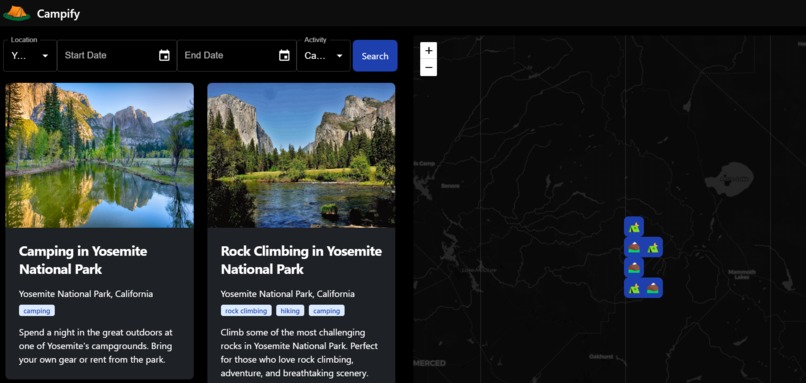
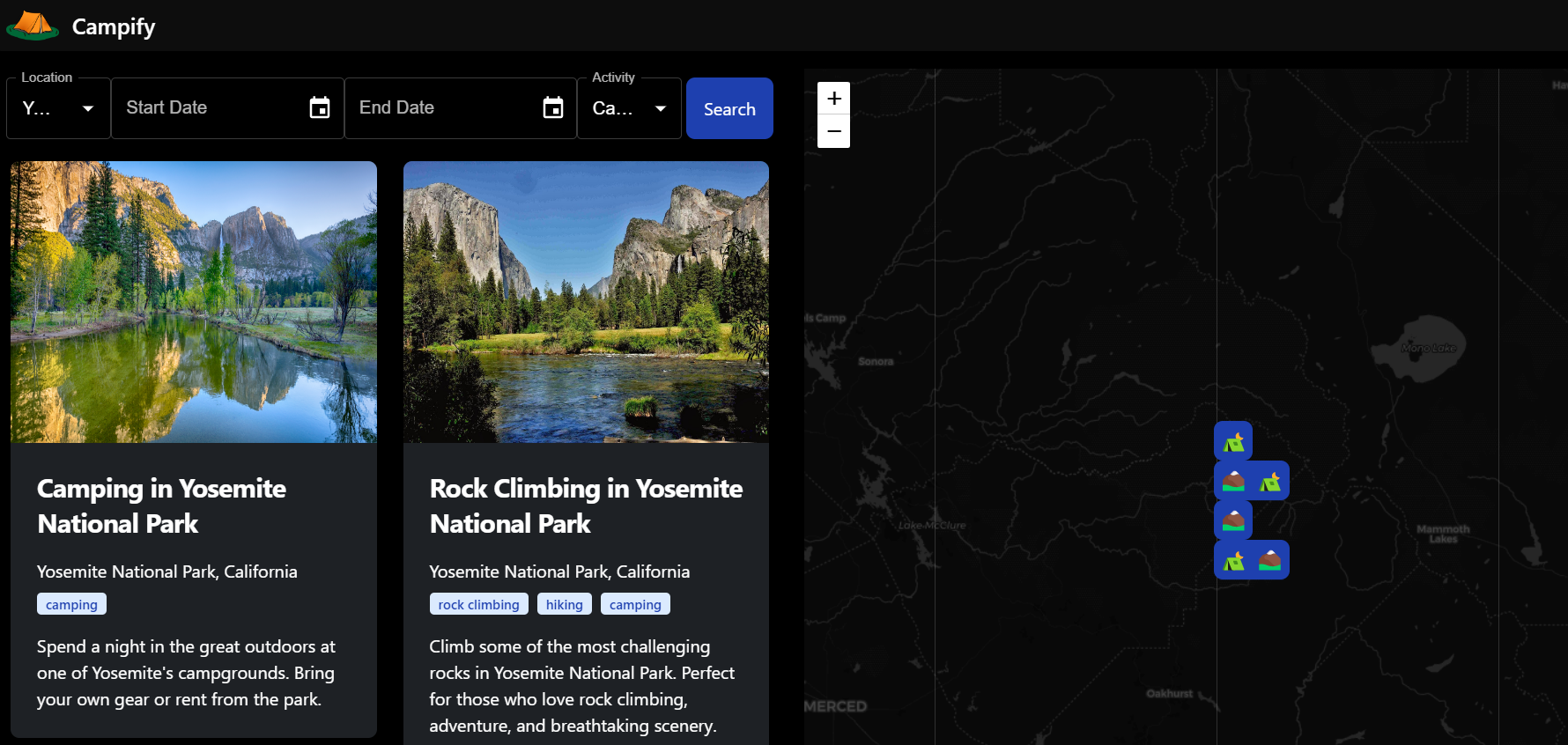
Searching for experiences in Yosemite using Campify's map feature

The Story of Campify's Development
We originally conceived Campify as a platform for individuals to rent out and/or sell camping equipment. We developed this idea after Ed talked about some of his camping experiences with the Boy Scouts that often involved specialized equipment such as backpacks specifically made for overnight backpacking or microspikes for winter hikes. However, this specialized equipment came at a (literal) price. A 4-person tent might cost around $50, but backpacking backpacks could easily be twice that at the minimum. That's a steep cost for gear you would only use once, making just preparing for interesting camping trips prohibitive. At this point, we had an idea of the problem we wanted to solve. Remedying accessibility problems caused by pricey gear.
While this gear was (and still in) expensive, Ed's Boy Scout Troop made these outings happen by maintaining a collection of Troop gear which could be freely swapped between different scouts for different trips. (Fun fact: Ed was his Troop's quartermaster for multiple years!) This led us to our idea behind Campify as a platform to facilitate a similar gear exchange. Renting out gear to people would lower the barrier to entry associated with buying expensive equipment you'd use only once, maybe twice, in addition to connecting people with fellow adventurers in their communities.
However, this initial idea also ran into problems. As we soon realized, equipment wasn't the only barrier to camping. Many of the trips that required this specialized equipment, such as backpacking or winter hikes, required experience as well. Google tutorials can only go so far, and in most cases, are often insufficient to guarantee safety. Drawing parallel's to Ed's time in the Boy Scouts, he often learned important skills from the older scouts, who learned the same knowledge from the older scouts before them.
We had to transition. Then, Rob came up with an excellent idea. Campify wasn't just for renting gear. Campify could sell the entire outdoor experience, coupling gear with the knowledge of how to use it safely. This led us to the Campify you see today. A platform that allows anyone to go on a variety of local outdoor trips--no gear or experience required! We hope Campify can connect local communities and make adventuring outside more accessible to everyone.
What Campify Does
As a client, Campify lets you search for curated outdoor adventures led by local, experienced guides. You'll have the opportunity to specify location, times, and activities you'd like to search for, then Campify will return you a list of experiences that match your preferences. You can then browse these experiences to find one you're interested in or read more and connect about the people offering to take you on them.
As a guide, Campify gives you the opportunity to share your passion for outdoor adventures with others, as well as get more usage out of camping gear you have lying around. Campify lets you do what you love. Plus, you get paid for it!
Features
Campify has the following features:
- Experiences Listing. Includes details of location, and experience description
- Ability to search for experiences by Location, Start/End Date, Experience Type
- Map to show the location of the experiences, which can also be used for searching
- A beautiful low-poly interactive 3D animation on the main page of a campsite
Campfire
The theme of the 2023 Hack@Brown event is Campfire. We address the theme in at least two of the following ways:
- We provide opportunities for camping, along with other activities
- Our technology stack has the acronym CAMPFIRE:
- Chat GPT (Data generation) - In order to populate some data for our hosts and experience, we used ChatGPT to generate some data, including legitimate locations and approximate latitude and longitude coordinates, which was vital for our map interface to make sense.
- Azure (Bing Search API) - After we generated some data using ChatGPT, we used the names and latitude-longitude pairs to query the Bind Search API (hosted by Azure) to get image links that were related to the experiences themselves.
- MongoDB (Database) - The MongoDb nosql database is a great tool for lightweight databases like ours, and the ease of deployment.
- Prisma (ORM) - Prisma is an elegant ORM for managing database schema and querying with type safety. As included in the t3js stack that we were largely baed off of, Prisma was an invaluable tool for managing out database models.
- Flowbite (Front-end Components) - Flowbite is a Tailwind UI library containing a variety of simple, lightweight components that we used to make components for our app.
- Immer - To manage state within our react app, we use the
zustandlightweight state management library, which is aided greatly by the introduction ofimmer, a tool for managing nested state in a clean, concise fashion. - React - Like many small apps (on a tight schedule), we built on
Next.js, which is a client/serverReactlibrary that allows for simple page and API generation. We also heavily relied ontRPCto API communication. - Ed's Blender Models (Animation) - Ed (group member) made some super cool models and scenes in Blender that we were able to import into our app through
three.jsand create an awesome front page.

Log in or sign up for Devpost to join the conversation.