Tagline : Calmly — one thing at a time, for brains that learn differently.
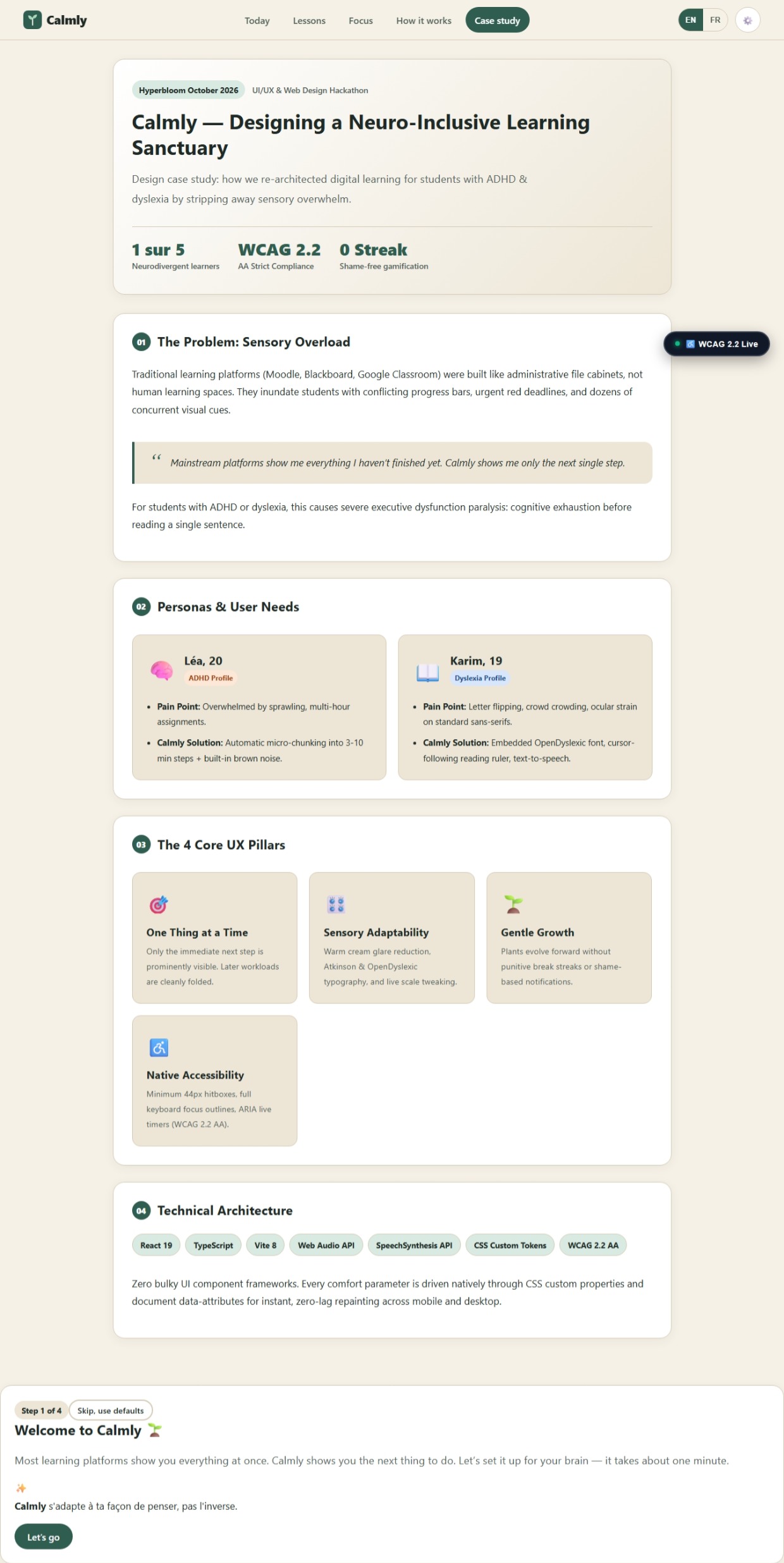
Inspiration Moodle, Canvas and Google Classroom look like filing cabinets: dozens of deadlines, red badges and progress bars competing for attention. For students with ADHD, dyslexia or executive dysfunction, this overload causes decision paralysis before any learning starts. Streak counters that reset to zero add shame on top. We asked: what if a learning space showed only the next small step?
What it does
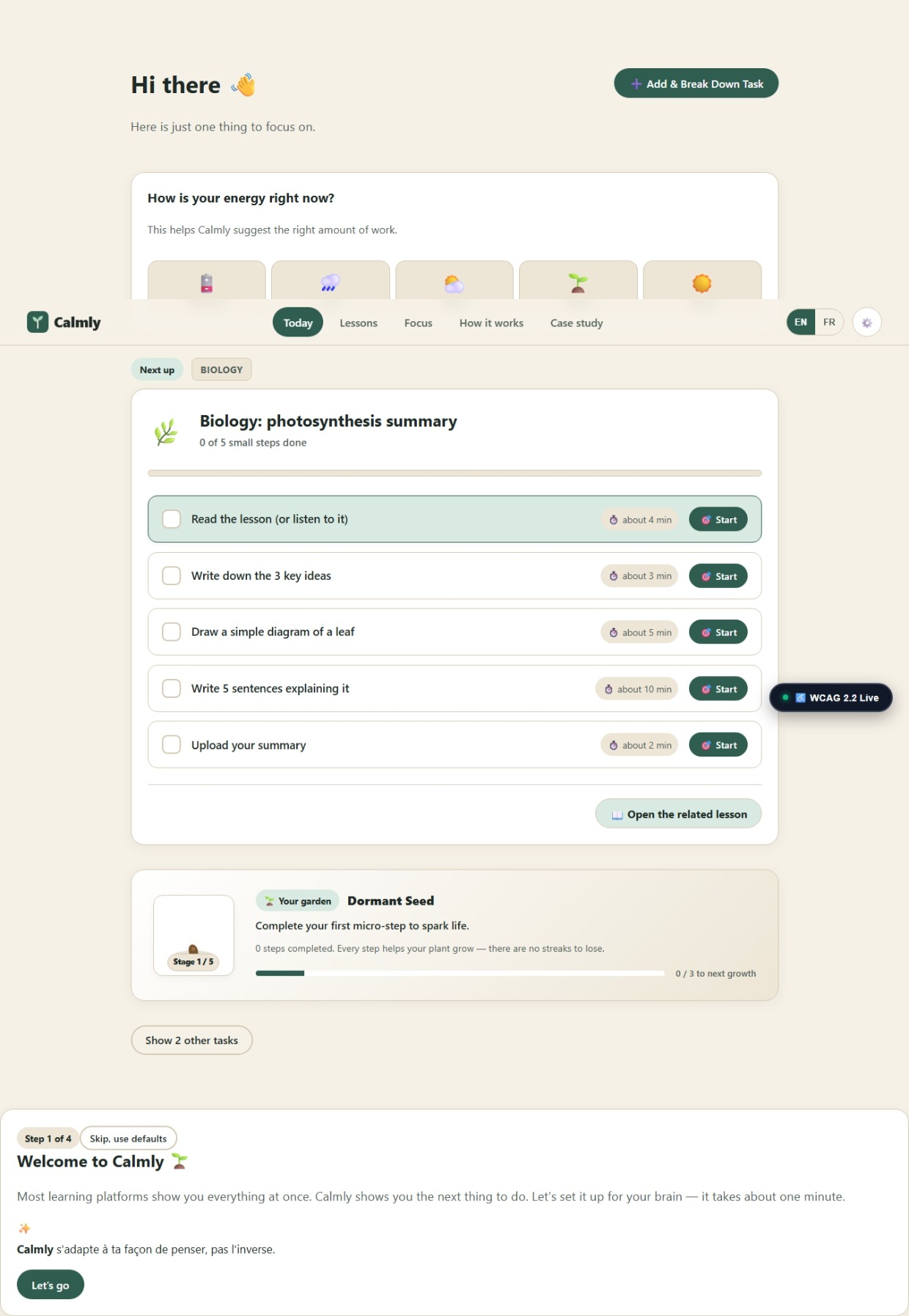
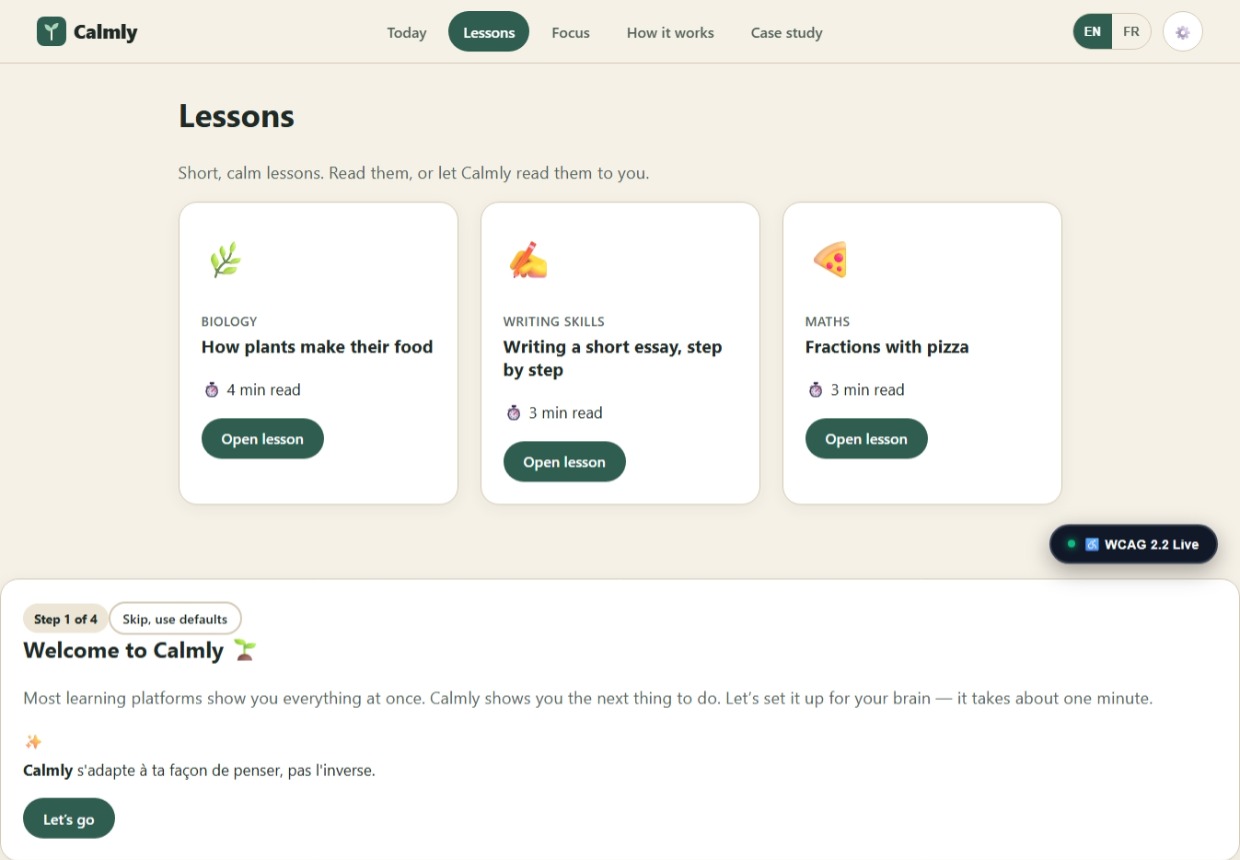
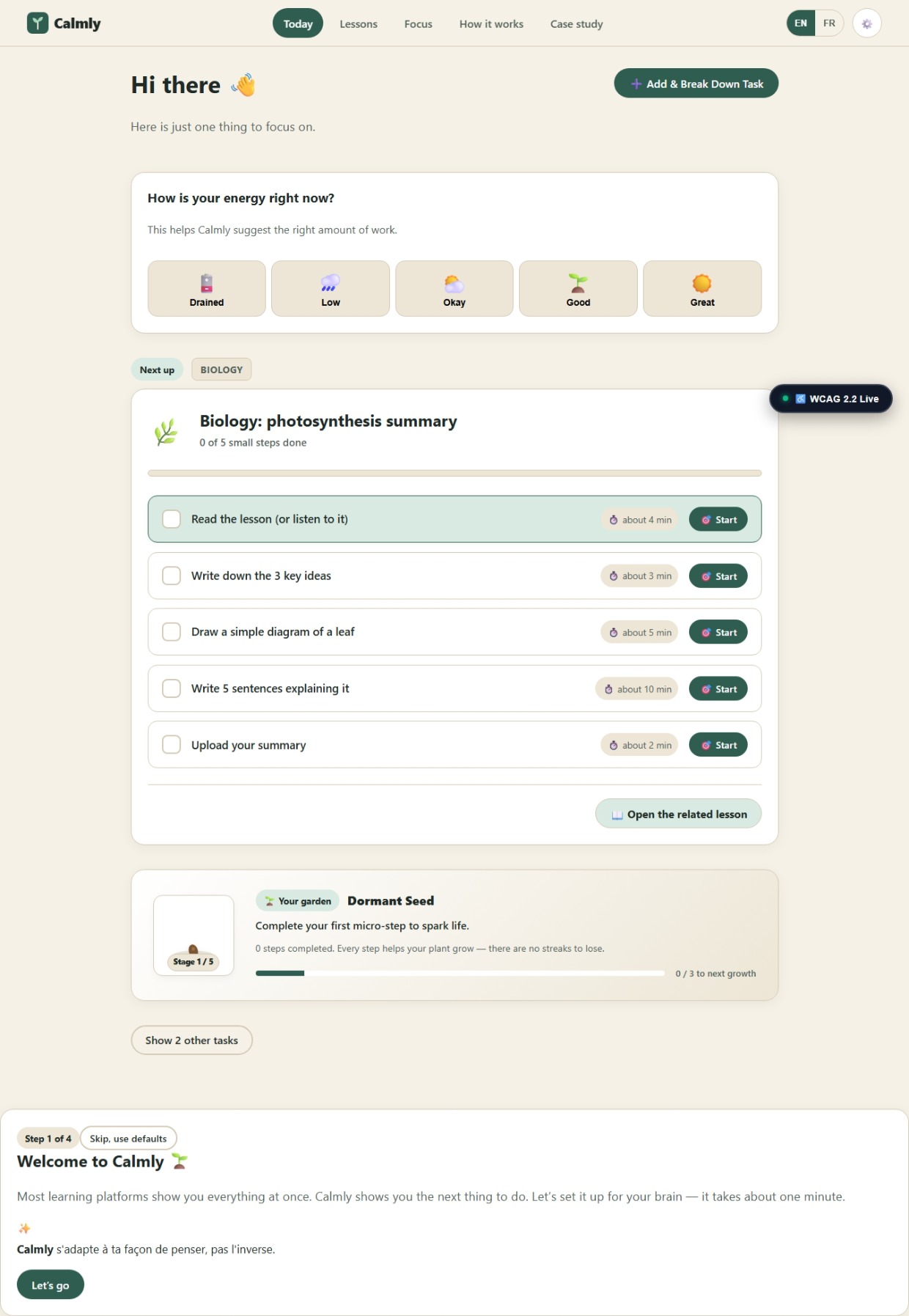
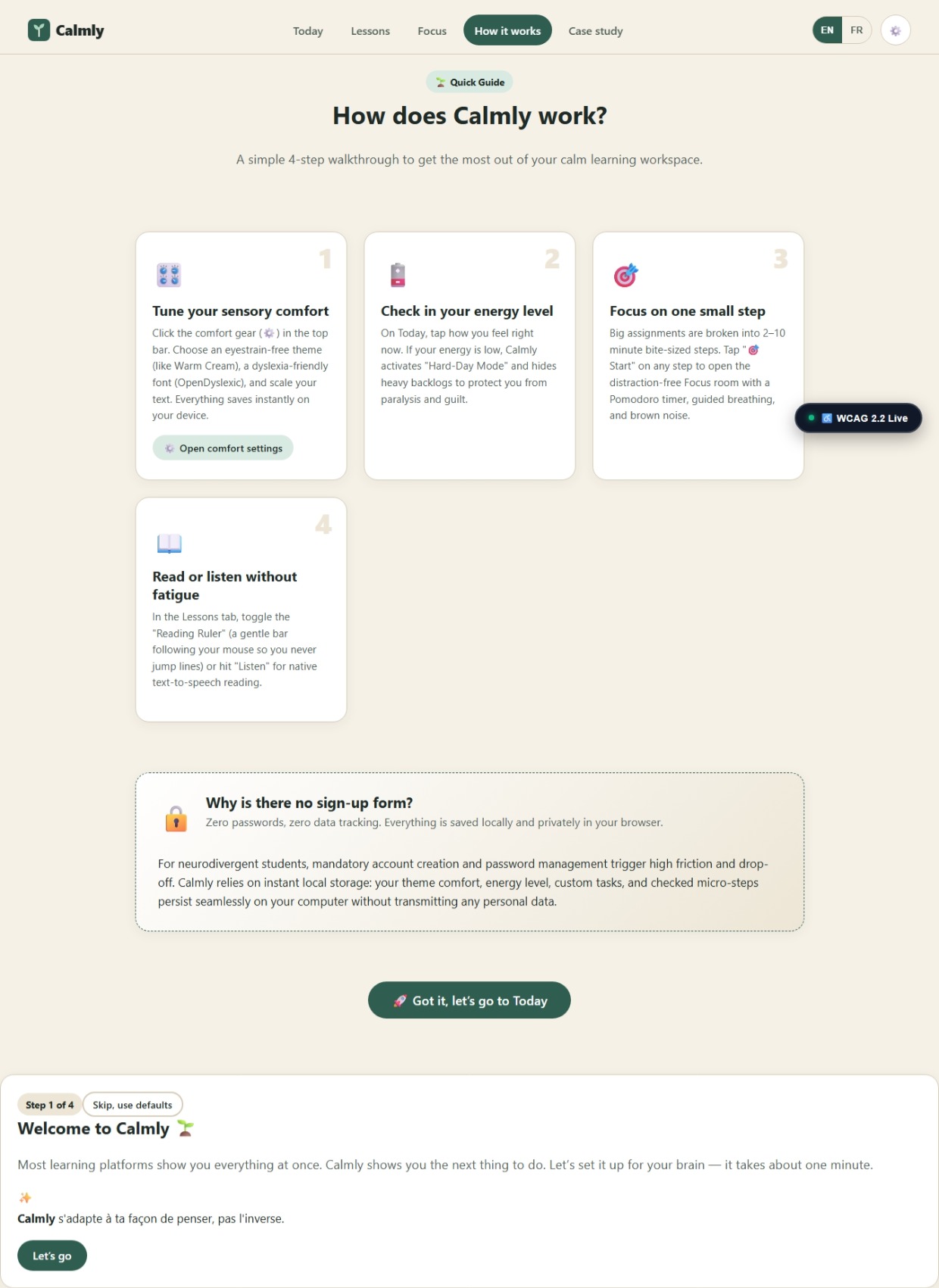
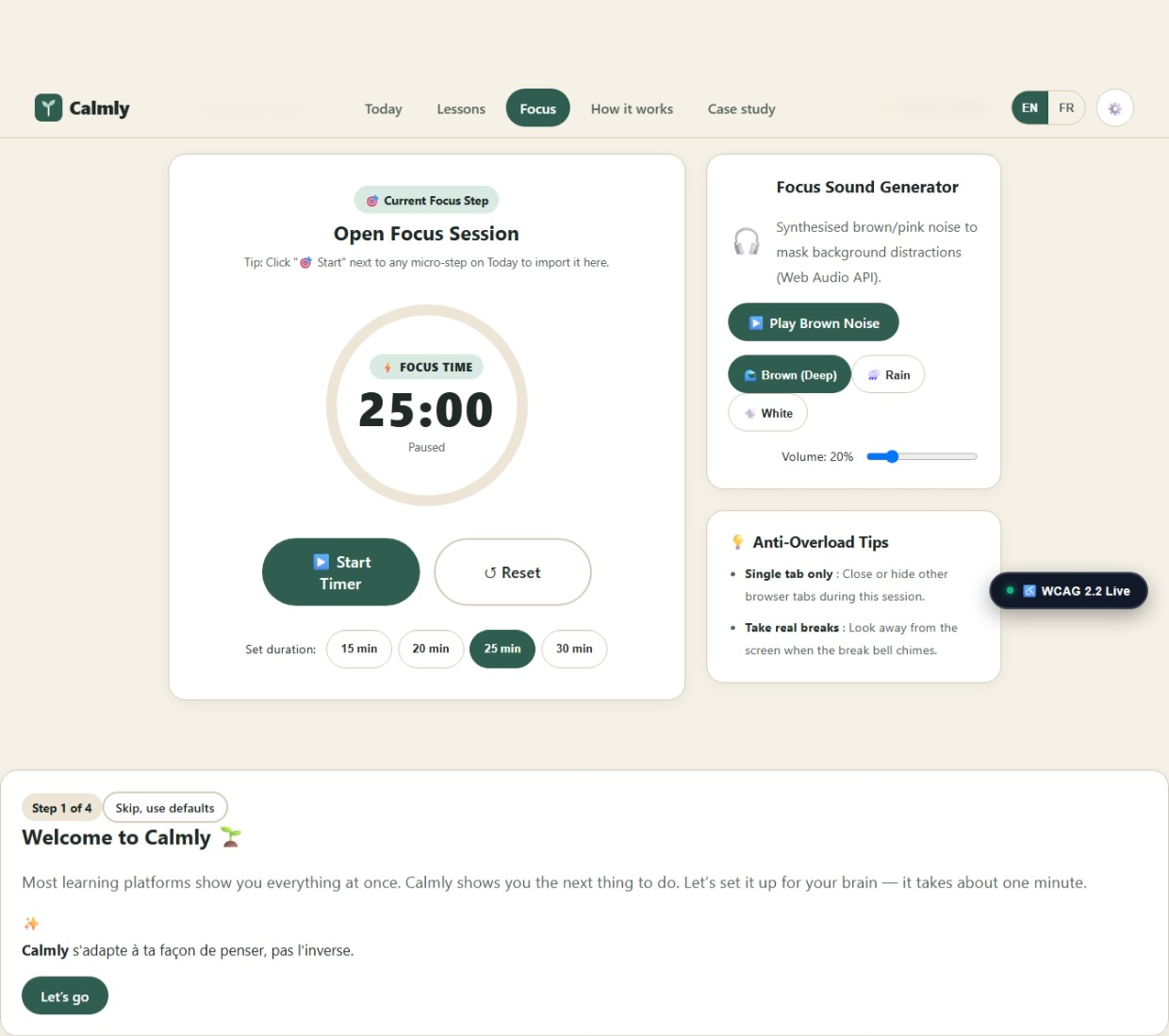
Today view: only the immediate next micro-step is shown. Later tasks are tucked away. Magic De-Chunker: turns a big, vague assignment into 3–12 minute steps (rule-based in this prototype, EN/FR). Students can also write their own steps. Reader: Bionic Reading, a reading ruler, and text-to-speech with adjustable speed. Focus room: fullscreen Pomodoro with guided breathing on breaks, and a built-in brown/pink/white noise generator (Web Audio API, no audio files). Botanical growth: a plant that grows through 5 stages. It never withers: no streaks, no guilt. Comfort settings: OpenDyslexic and Atkinson Hyperlegible, four themes, text and spacing controls, reduced motion, 44px touch targets, full keyboard navigation. Live accessibility inspector: check contrast levels and preview the interface under colour-vision simulations. Private by design: no account, no tracking. Everything stays in local storage. English and French.
How we built it React 19 + TypeScript + Vite, native CSS custom properties (no UI library), Web Audio API, Web Speech API and a lightweight custom i18n layer. It’s a static site with no backend and no environment variables, deployed on Deployxa.
Challenges Designing less: every feature had to lower cognitive load, not add to it. We also had to balance rich comfort settings against a calm default screen, and keep a bilingual interface consistent, including the generated steps.
Accomplishments A complete, polished, keyboard-accessible experience from onboarding to focus session, with the accessibility tooling visible instead of only claimed.
What we learned Accessibility is a design input, not a checklist. Removing choices (one task, one action) helped more than adding features.
What’s next Replace the rule-based de-chunker with a language model, import tasks from school LMS calendars, test with neurodivergent students and teachers, and ship a PWA for offline use.
Built with: react, typescript, vite, css, web-audio-api, web-speech-api, deployxa
Try it: https://calmly-2026-4a5de4b9.deployxa.online/ Code: https://github.com/Leandre99/Calmly_2026
Built With
- css3
- html5
- opendyslexic
- react
- speechapi
- typescript
- vite

Log in or sign up for Devpost to join the conversation.