

Inspiration
Calma was born from a moment of helplessness. One day, I was with someone who was experiencing a severe anxiety attack. They were trembling, unable to speak, their breath shallow and rapid. I felt frozen, useless. I kept thinking: "What if I say the wrong thing?" "What if I make it worse?" "How do I help someone when words don’t work anymore?" That moment stayed with me, a mix of fear, frustration, and sadness. It made me realize that emotional emergencies are real, and yet we often don’t have the right tools, or words, to deal with them.
Calma is the tool I wish I had that day. A gentle, human-first space for people going through emotional distress, and for the ones trying to support them.
What it does
Calma is a web app that supports individuals during moments of anxiety or emotional overwhelm. It offers three main interaction modes:
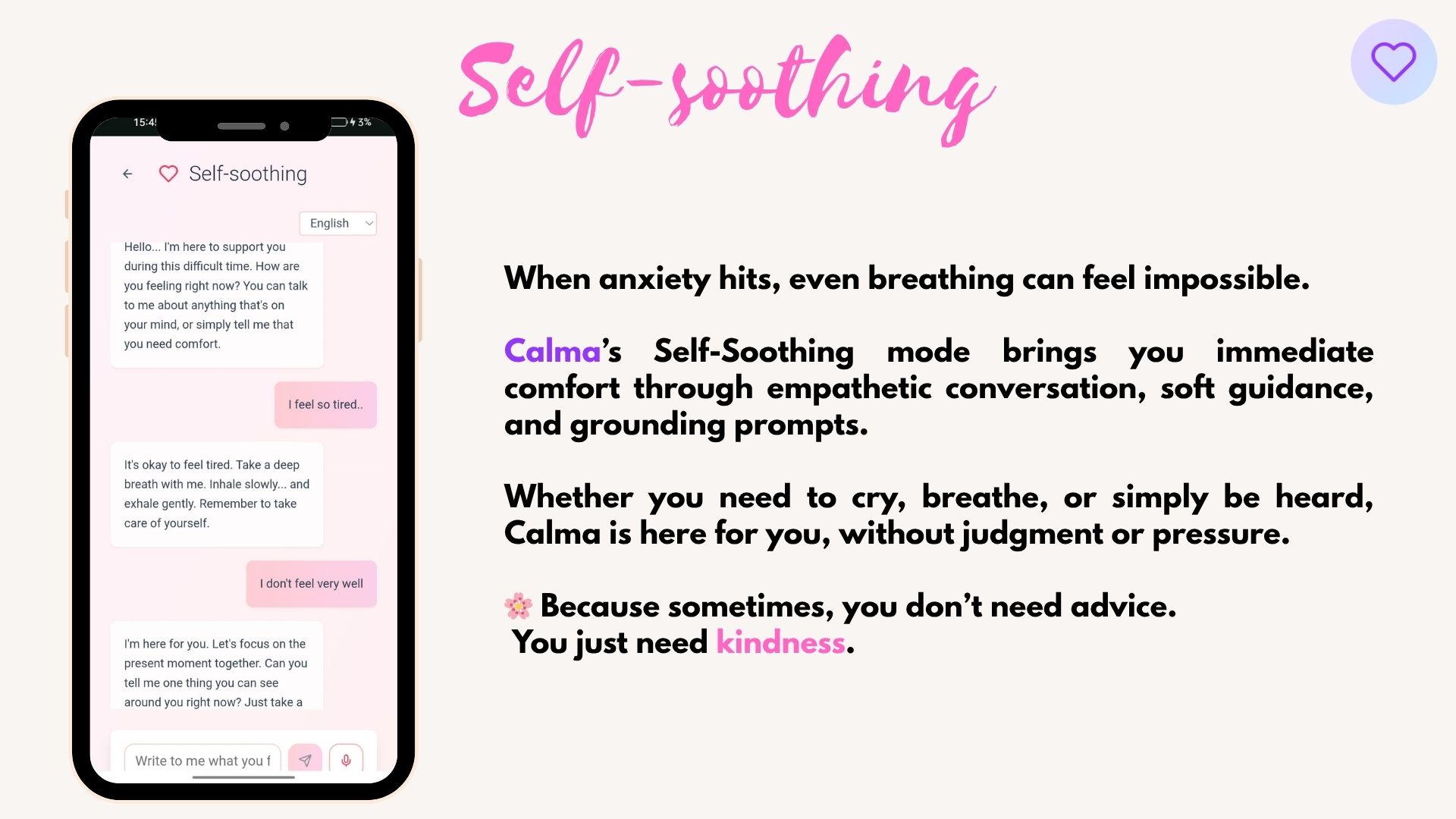
Self-Soothing (Auto-Apaisement): Calma becomes your gentle companion, asking how you feel and replying with calming messages using AI and speech synthesis, even when you can’t type much.
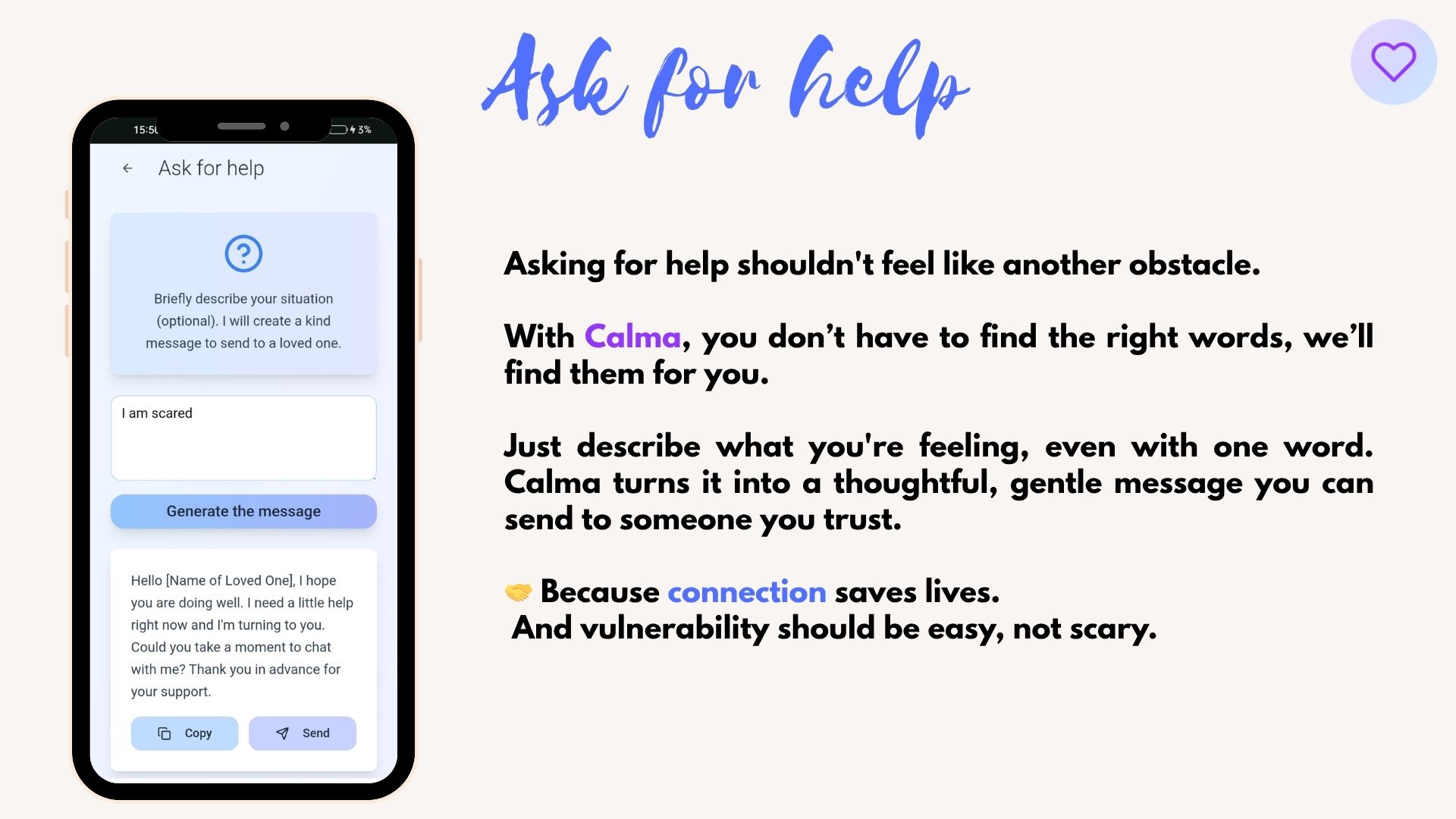
Ask for help (Demander de l’aide) : Generate a message to send to a loved one.
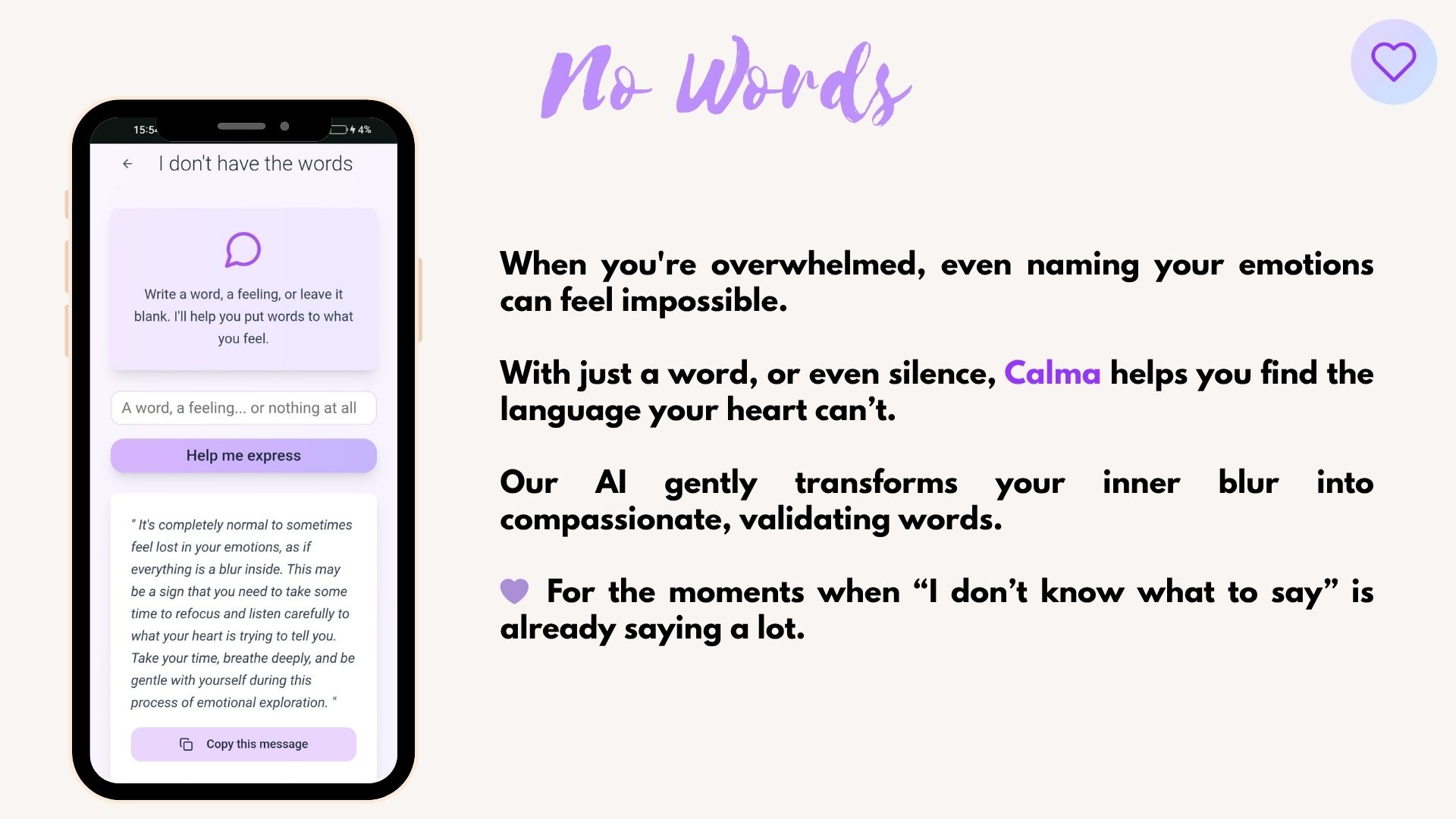
I have no words (Pas les mots) : When words fail, users can communicate through emotions, emojis, and minimal prompts. Calma "feels" their distress and replies compassionately.
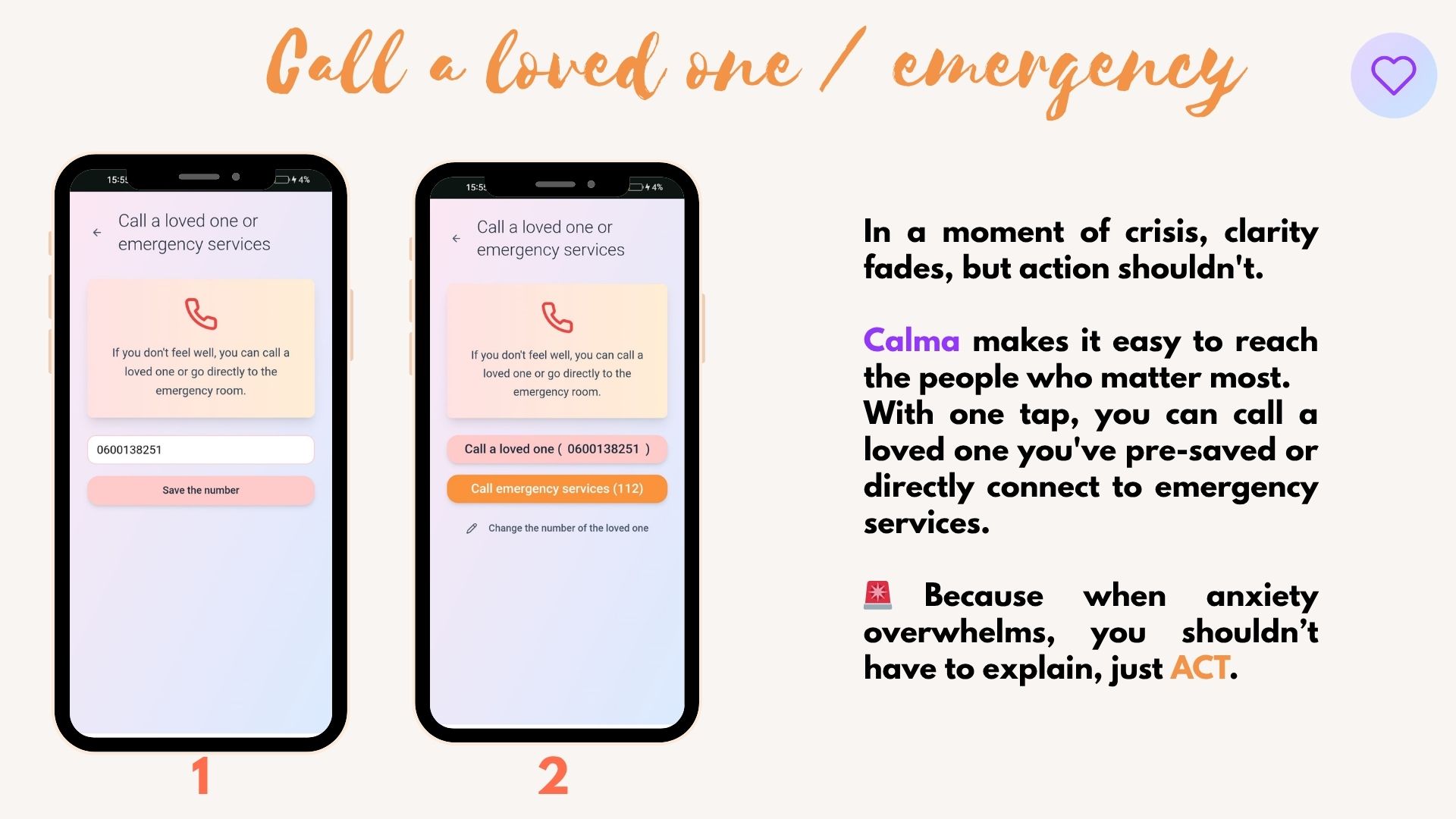
Call a loved one / emergency (Appeler un proche / urgence) : Allows users to add emergency contacts (e.g., mom, dad), and if they don't respond, Calma escalates to emergency services.
All of this is wrapped in a warm, soft UI designed to soothe rather than stimulate.
How we built it
Frontend: Built with Next.js and React, using TailwindCSS and Radix UI for a gentle, accessible UI. AI/LLM: Integrated OpenAI's SDK via @ai-sdk/openai to generate empathetic responses tailored to emotional states. Voice: Text-to-speech to read calming responses, so users don’t even have to read.
Challenges we ran into
Designing an AI system that feels truly human, not robotic or clinical, required deep prompt tuning and emotional nuance. Balancing simplicity with functionality: we didn’t want to overwhelm users in crisis with too many options. Building a non-triggering interface: colors, words, tone, and even button shapes had to be carefully considered. And honestly… building all of this in 48 hours 😅
Accomplishments that we're proud of
Created a working prototype that feels like a hug, many of my friends described it as “soothing,” “gentle,” and “comforting.” Developed a real use-case for AI beyond productivity or entertainment, something with emotional depth. Added an emergency escalation feature that could save lives in real-world use cases. Managed to craft a safe, minimalist UI that matches the emotional intent of the app.
What we learned
AI can be powerful not when it imitates humans, but when it amplifies our humanity, with empathy, presence, and patience. Designing for emotions is an entirely different skill set. Every button, word, and color carries emotional weight. Simplicity is hard. Especially when it needs to feel soft, warm, and supportive.
What's next for Calma
- Turn the web app into a mobile app, with offline-first capabilities.
- Integrate mood tracking and journaling features to spot patterns in emotional health.
- Add multilingual support to make Calma more accessible globally (since French is my primary foreign language, I naturally built it in French first).
- Adding data location and refining privacy and data safety
- Partner with mental health organizations to deploy Calma as a companion tool.
Built With
- next.js
- openai
- react
- tailwindcss
- typescript


Log in or sign up for Devpost to join the conversation.