Inspiration
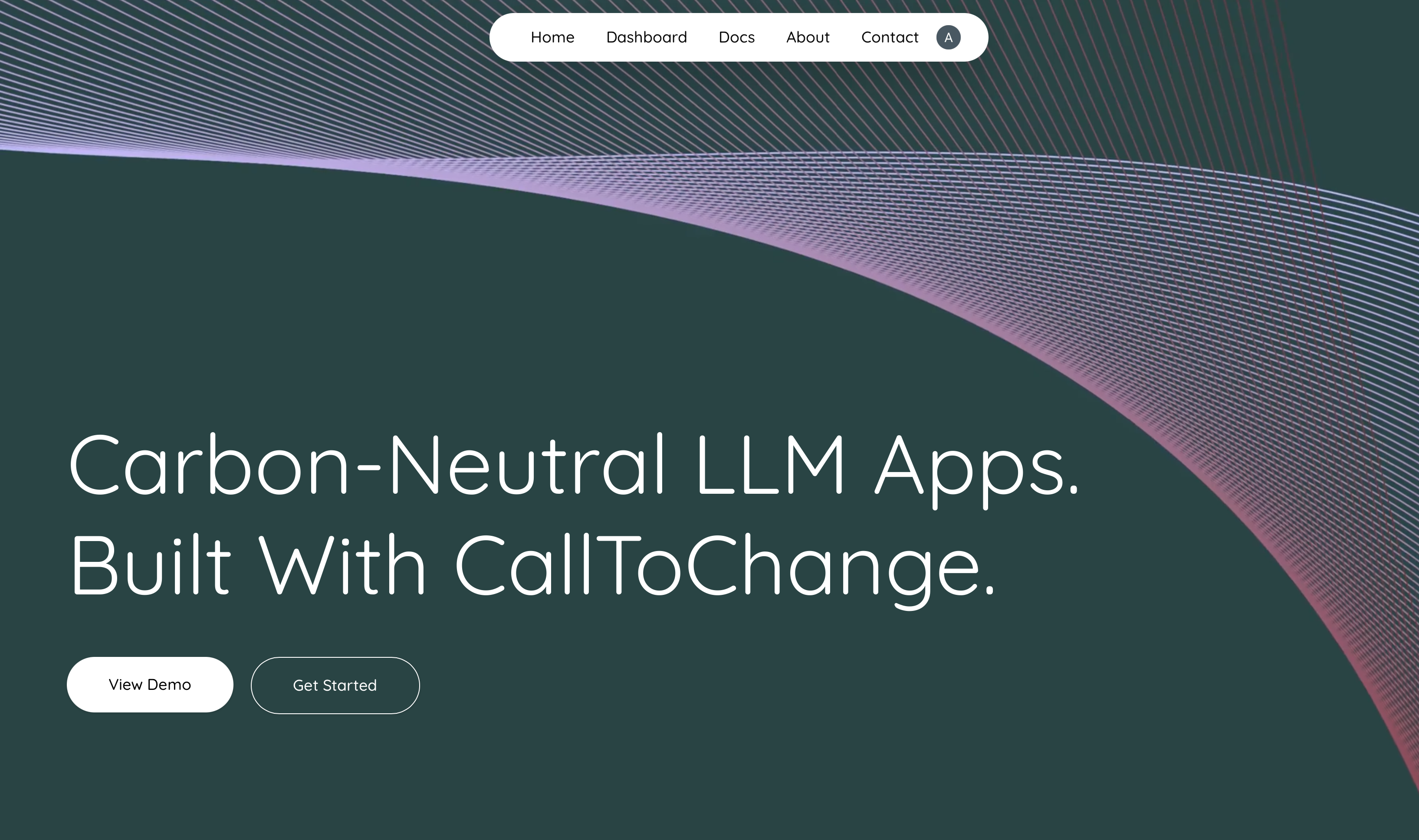
When we landed in SF, we knew we wanted to tackle climate change with LLMs.
We spent a while thinking about it.
But then, we realized something—LLMs are (in a sense) furthering climate change. It takes significant amounts of energy to train and run these models, especially multimodal tools.
What it does
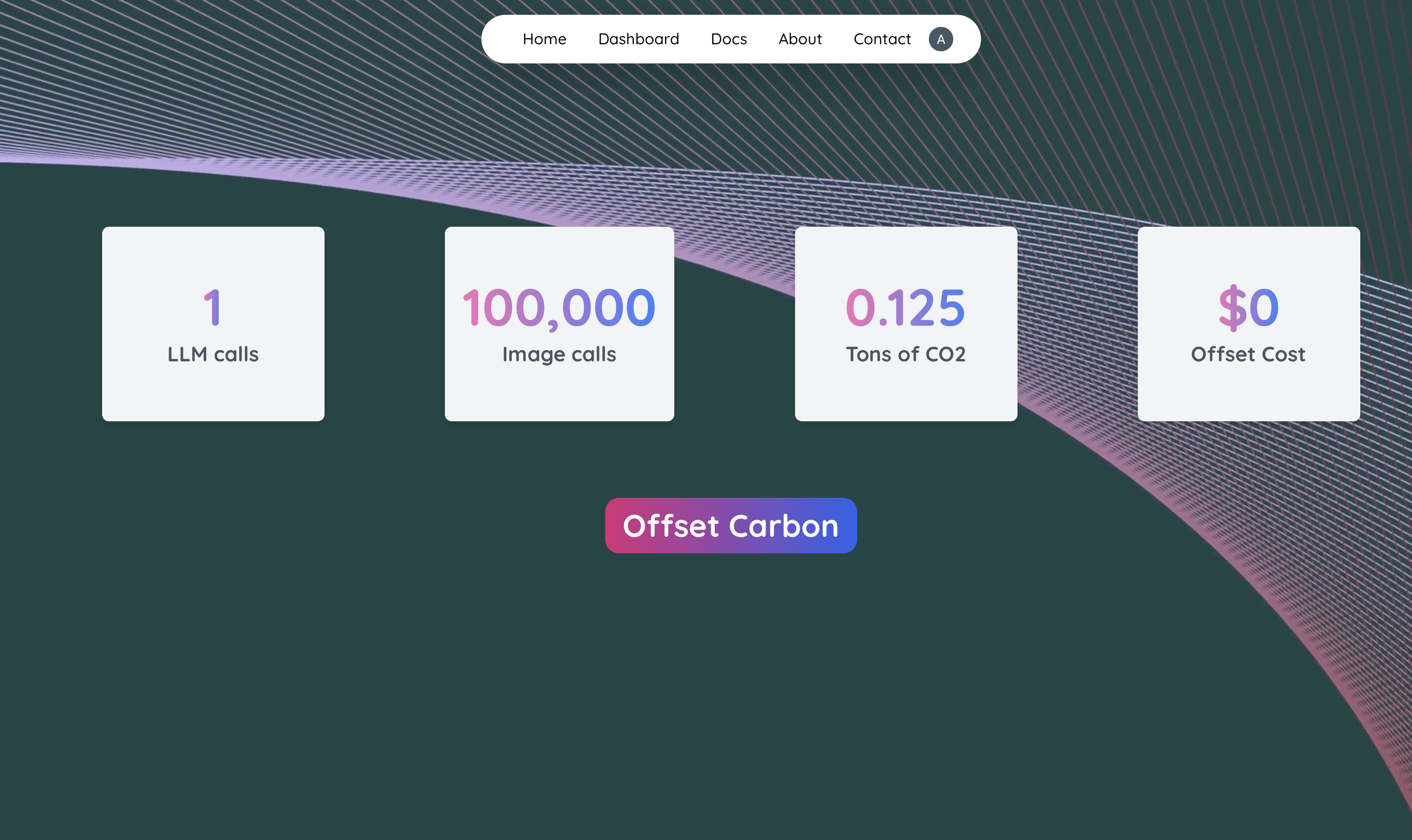
Users can log text and image generation calls using our Python library. They can view how many of each call they've made in our dashboard, along with CO2 emissions generated and the cost to offset them.
If users choose, they can offset their emissions using Sui.
The general public can also verify whether or not a company has offset their emissions through a dynamic page.
How we built it
We built our web app with Next.js. Our frontend was supported by Tailwind CSS and shadcn/ui, while our backend utilized MongoDB to track each user's LLM calls. We used Suiet Wallet kit to enable Sui Wallet integrations into our app.
We also developed and published our custom Python library using PyPI.
Challenges we ran into
- Setting up blockchain transactions (no prior experience)
- Connecting to a Chrome extension (no prior experience)
- Organizing MongoDB functions (wrote 250+ lines of helper functions in <4 hours)
Accomplishments that we're proud of
- Getting everything deployed on Vercel
- Configuring blockchain transactions with Sui
- Getting the Python library to work with our backend API routes
- Engineering dynamic routes to give the general public transparency into carbon offsetting progress
What we learned
- How to work with Sui blockchain transactions
- How to write optimized functions to fetch and write data to MongoDB
- How to deploy a Python library
- That SF is an awesome city
What's next for CallToChange
- Building out enterprise-ready code
- Adding smart contract-esque functionality with Sui
- Developing carbon credit tokens with Sui
Built With
- javascript
- mongodb
- next.js
- pypi
- python
- sui
- tailwindcss
- typescript
- vercel


Log in or sign up for Devpost to join the conversation.