-
-
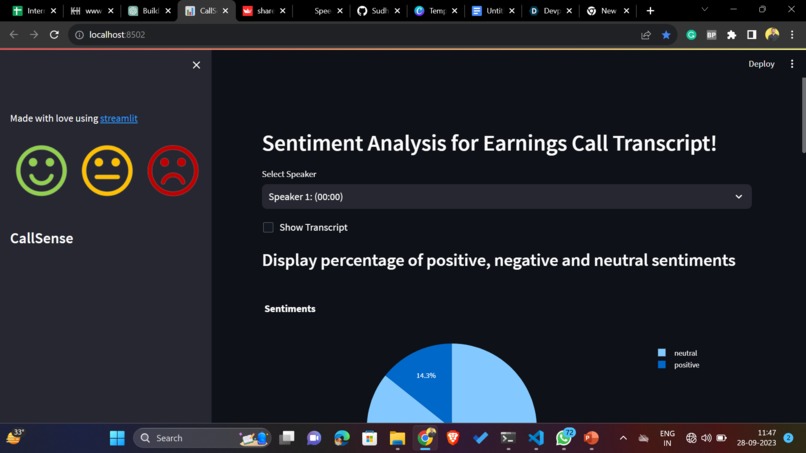
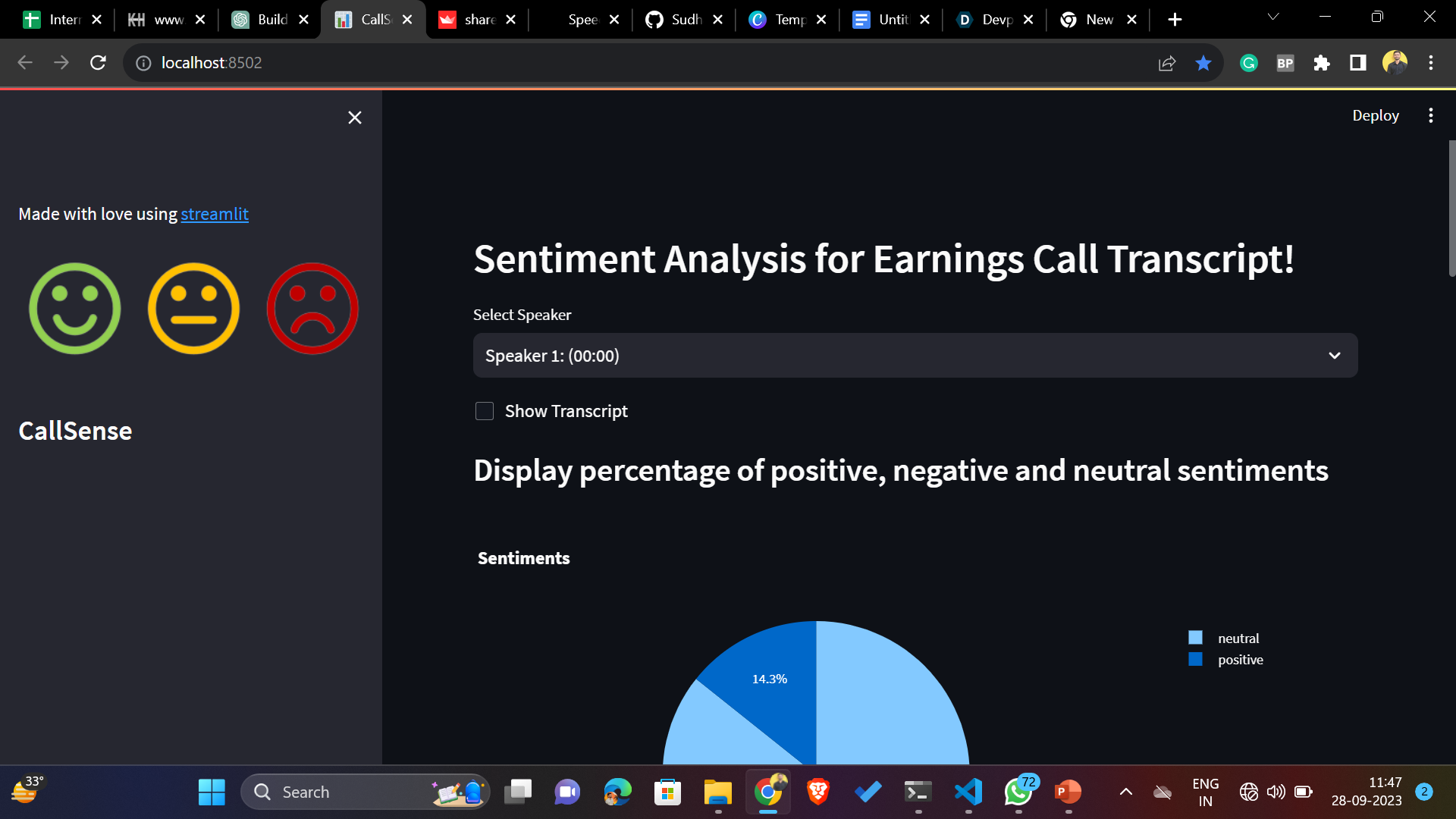
webpage
Sure, here are the project details for "CallSense" explained in college student-friendly language:
Inspiration
We were inspired by the need for better customer service in call centers and helpdesks. Many times, customers are unhappy, but companies don't know why. We wanted to create a tool that can listen to customer calls and tell if they're happy or not, so companies can improve.
What it does
CallSense is like a detective for phone calls. It listens to what people are saying during calls and figures out if they're feeling good, bad, or just okay. It then gives this information to companies so they can make customers happier.
How we built it
We used some cool technology like AssemblyAI to understand what's being said on the calls. We also used Streamlit to make a user-friendly website where people can upload their call recordings and get feedback.
Challenges we ran into
There were a few bumps along the way. Sometimes the technology didn't understand what people were saying, and we had to figure out why. Also, making everything work smoothly in our website was a bit tricky, but we did it!
Accomplishments that we're proud of
We're really proud that we made a tool that can help companies make their customers happier. It's pretty cool to see our website in action, listening to calls and giving feedback.
What we learned
We learned a lot about how to work with speech recognition technology and build user-friendly websites. We also learned that making customers happy is a big deal for businesses.
What's next for CallSense
In the future, we want to make CallSense even smarter. We're thinking of adding more features like suggesting solutions to problems during calls. We also want to make it work for more languages and different types of businesses. The sky's the limit!
Built With
- assemblyaiapi
- css3
- flask
- natural-language-processing
- openai
- python
- speech-to-text
- streamlit

Log in or sign up for Devpost to join the conversation.