-
-
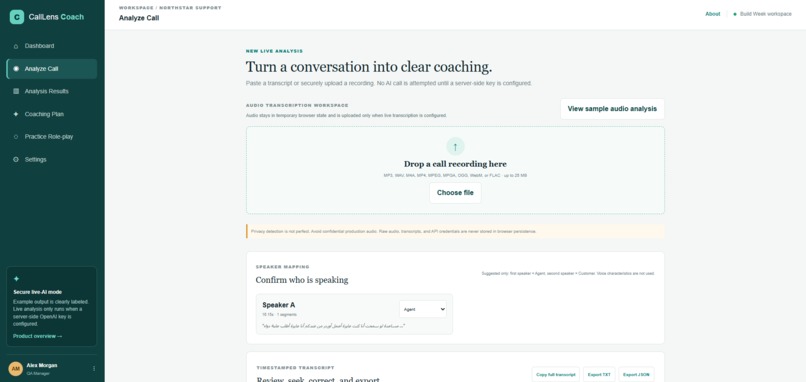
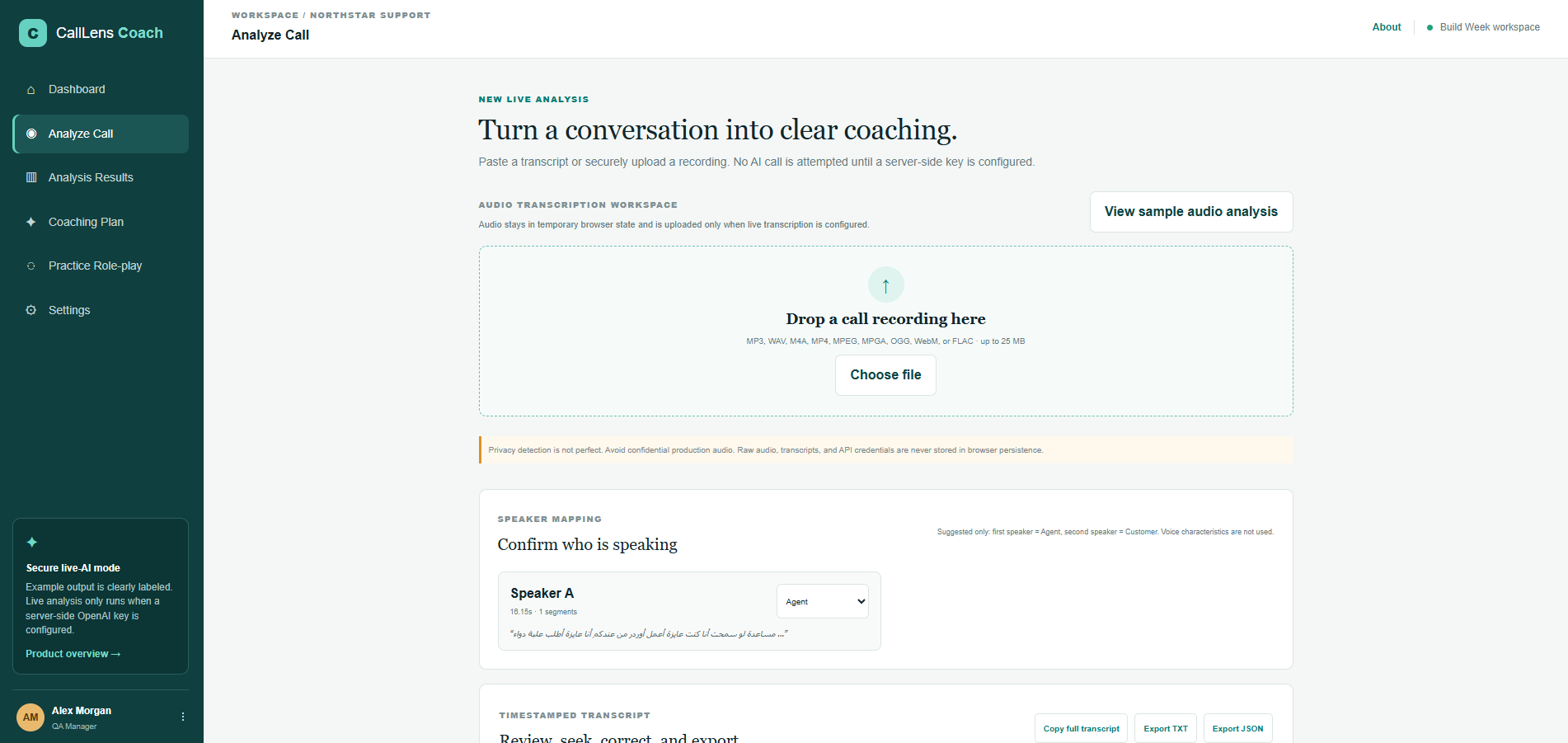
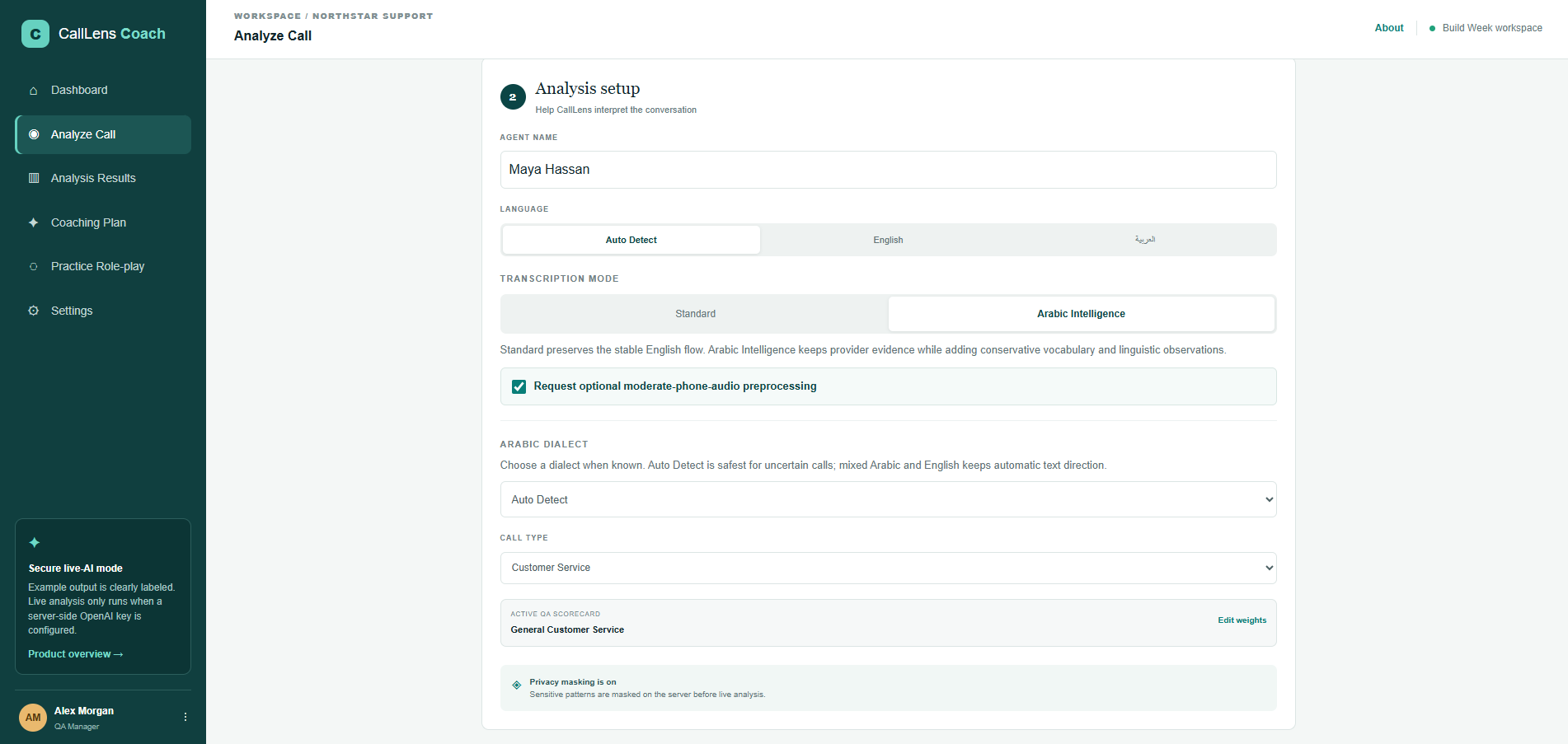
call upload page
-
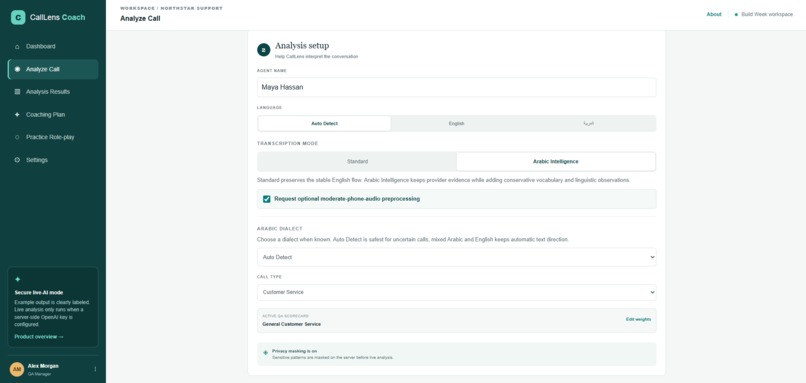
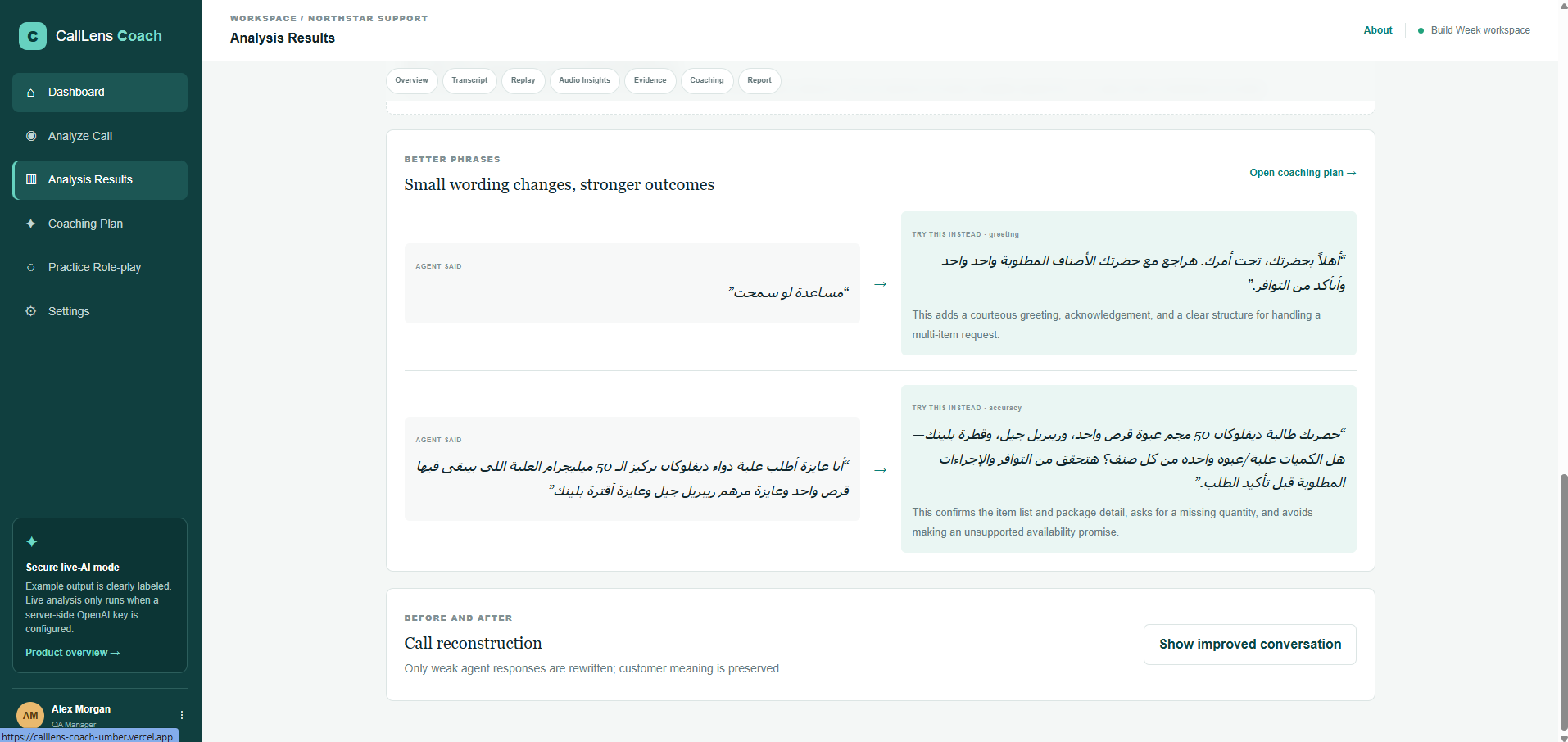
analysis page
-
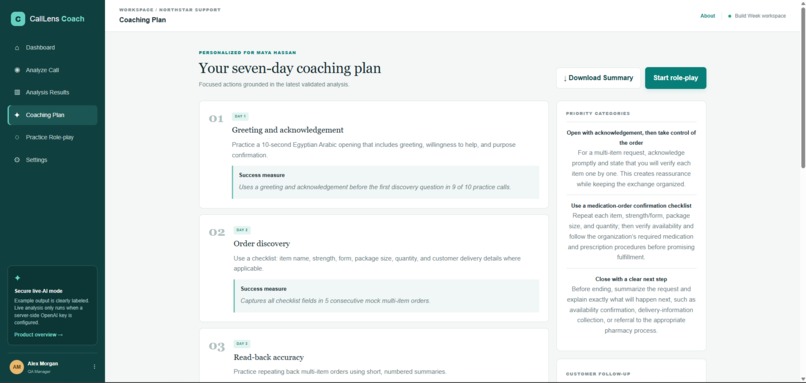
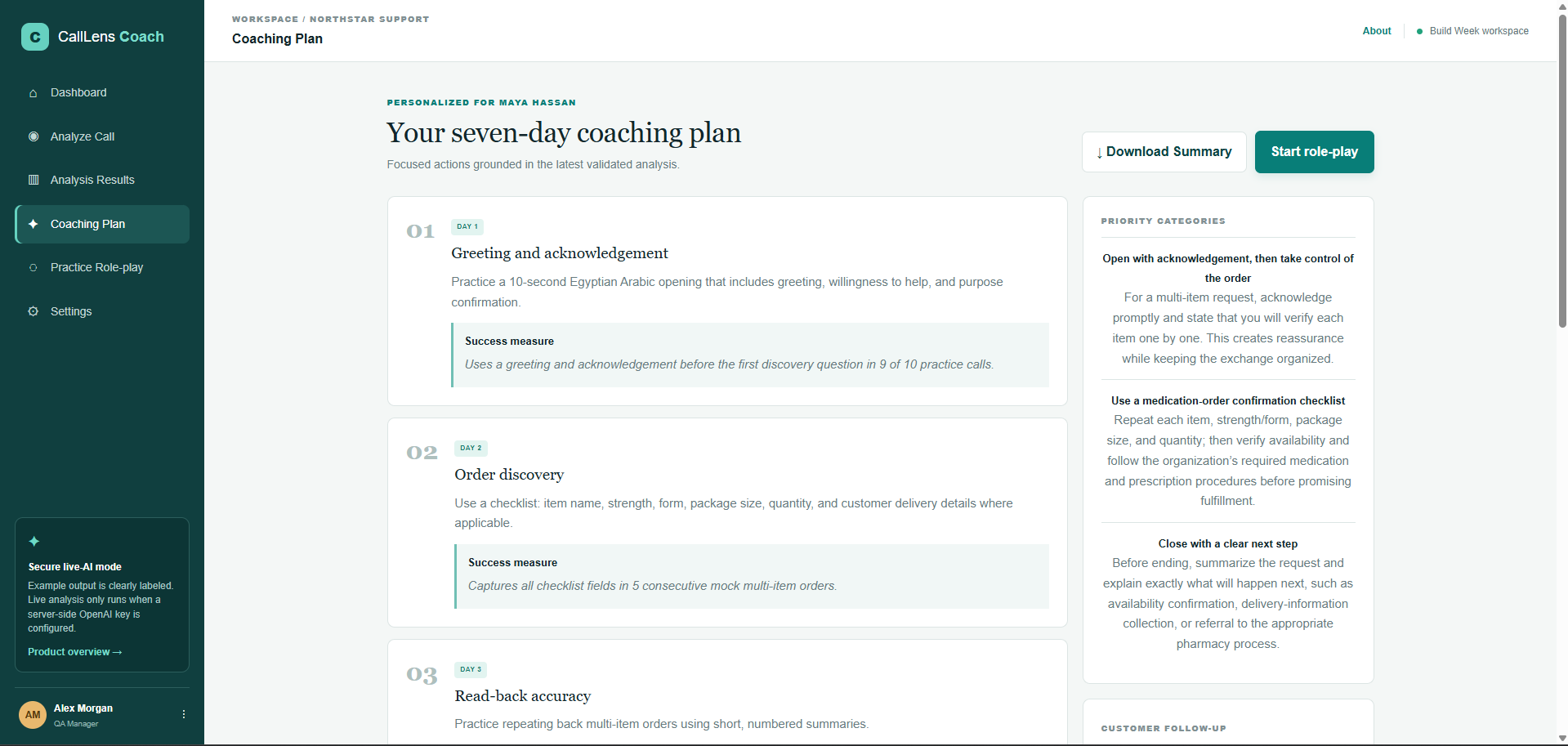
coaching page
-
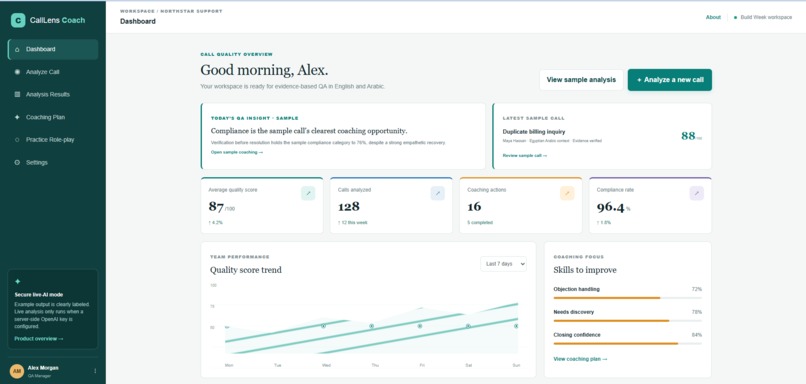
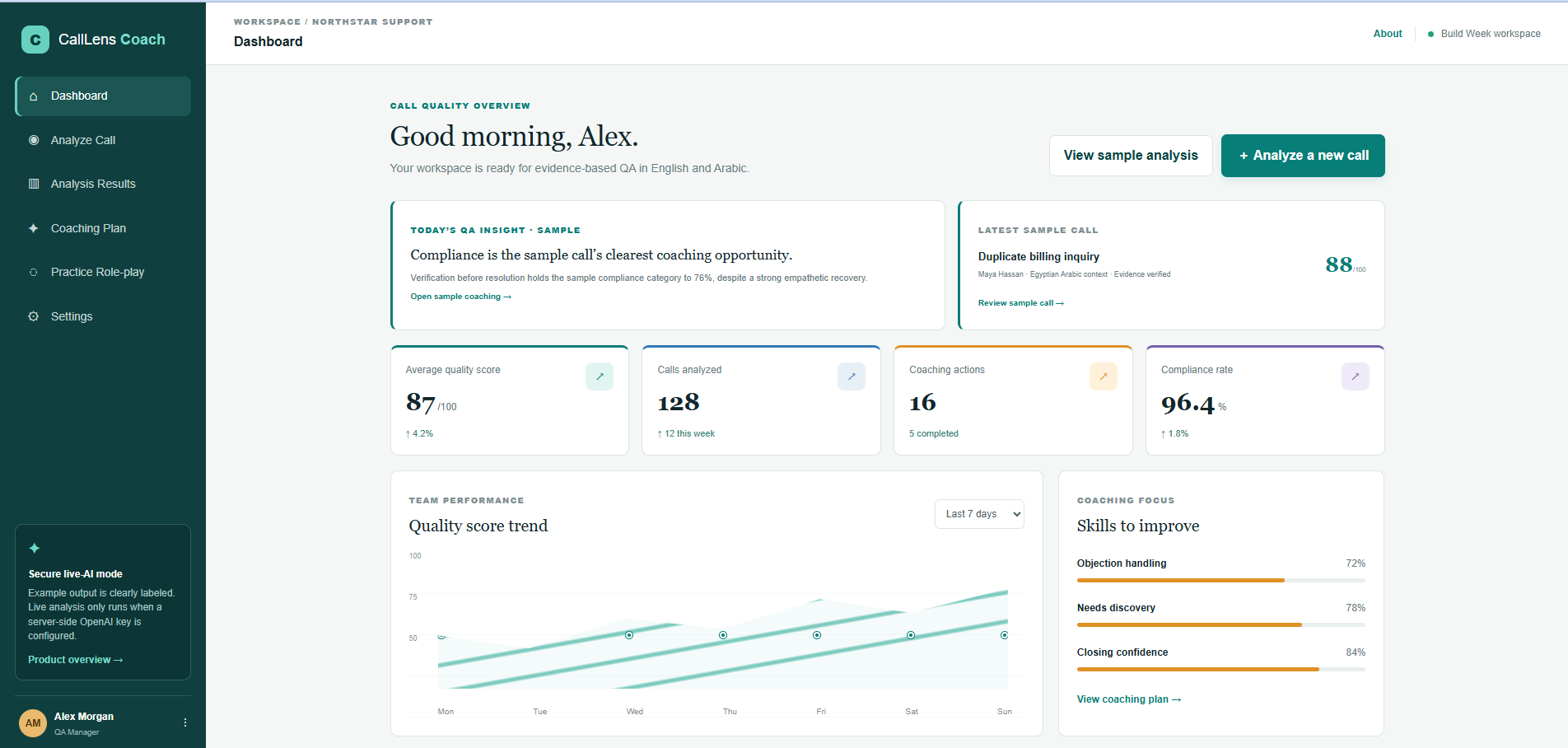
dashboard page
-
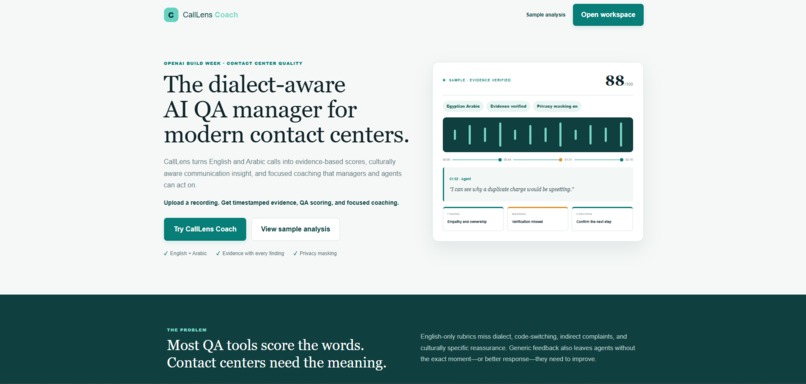
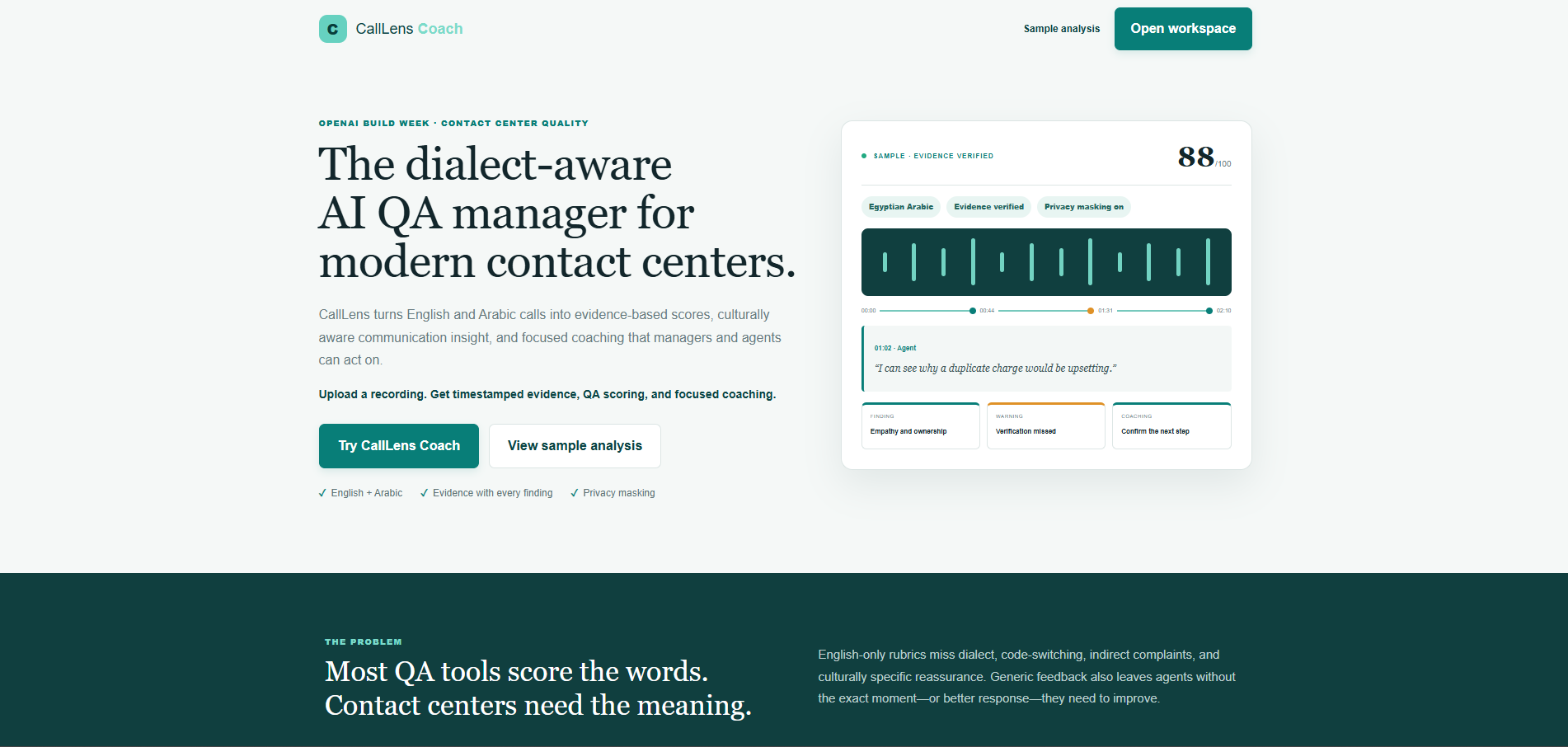
landing page
-
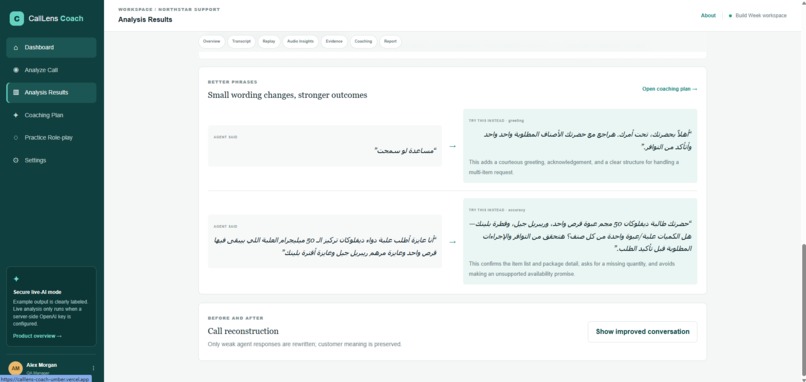
quality analysis page
Inspiration
Customer service teams spend countless hours manually reviewing calls, scoring agent performance, and providing coaching. The process is often inconsistent, time-consuming, and makes it difficult to review more than a small percentage of customer interactions.
Having experience working in call center operations and quality assurance, I wanted to build a platform that helps supervisors analyze conversations in minutes instead of hours while providing consistent quality scoring and personalized coaching. I also wanted to create a solution that better supports Arabic conversations, where dialects and conversational context can make analysis more challenging.
What it does
CallLens Coach is an AI-powered quality assurance and coaching platform for customer service teams.
Users can upload a call recording or provide a transcript, and the platform automatically:
- Generates a timestamped transcript with speaker separation
- Performs dialect-aware Arabic conversation analysis
- Detects customer intent and sentiment
- Identifies quality, compliance, and communication issues
- Generates a quality assurance score
- Highlights strengths and improvement opportunities
- Creates personalized coaching recommendations
- Provides AI-powered role-play for agent training
- Displays performance insights through dashboards
The goal is to reduce manual quality assurance work while helping managers coach agents more effectively.
How I built it
CallLens Coach was built as a modern web application using:
- Next.js
- TypeScript
- Tailwind CSS
- OpenAI APIs
- Supabase
- Vercel
The application combines transcription, AI analysis, quality assurance scoring, coaching generation, role-play, and analytics into a single workflow designed for customer support teams.
Throughout development I continuously tested the application, refined the user experience, improved accessibility, optimized the interface, and deployed updates until the complete workflow was working from upload through coaching.
How I used Codex
OpenAI Codex was my primary software engineering assistant throughout development.
I used Codex to:
- Implement new application features
- Generate and refactor TypeScript and React code
- Debug production issues
- Resolve deployment problems on Vercel
- Improve the user interface and responsiveness
- Review and optimize the codebase
- Accelerate development while maintaining a working application
Codex significantly reduced development time by helping solve implementation problems and iterate quickly on new features.
How I used GPT-5.6
GPT-5.6 supported the product throughout the entire development process.
I used GPT-5.6 for:
- Product planning
- System architecture
- Feature design
- Prompt engineering
- Quality assurance framework design
- User experience improvements
- Documentation
- Demo preparation
- Final project refinement
Using GPT-5.6 alongside Codex allowed me to move quickly from an initial concept to a polished working product.
Challenges I ran into
Some of the biggest challenges included:
- Handling Arabic speech and dialect-specific conversations
- Building a complete quality assurance workflow instead of simple transcription
- Synchronizing transcription, scoring, coaching, and analytics into one experience
- Debugging deployment issues during production releases
- Improving transcription quality for compressed audio recordings
- Creating a polished demonstration suitable for Build Week
Each challenge resulted in improvements to both the application's functionality and user experience.
Accomplishments that I'm proud of
I'm proud that CallLens Coach became much more than a transcription tool.
The finished application provides a complete workflow that takes a customer conversation from upload through transcription, AI analysis, quality evaluation, coaching recommendations, role-play, and performance analytics.
I'm also proud of creating a polished, production-style interface that demonstrates how AI can improve real customer support operations.
What I learned
This project reinforced the importance of combining strong product design with AI capabilities.
I learned how valuable iterative development can be when using Codex for implementation and GPT-5.6 for planning, architecture, and refinement. I also gained a deeper understanding of designing AI-powered workflows that solve practical business problems rather than showcasing AI for its own sake.
What's next for CallLens Coach
Future improvements include:
- Higher-accuracy multilingual transcription
- Live call monitoring
- Team collaboration features
- Custom quality assurance templates
- CRM and help desk integrations
- Trend analysis across thousands of calls
- Enterprise reporting and administration
- Real-time coaching suggestions during customer conversations
The long-term vision is to make CallLens Coach an end-to-end AI platform for customer service quality management and agent development.
Built With
- ai
- analytics
- api
- assurance
- call
- center
- cloudflare-workers
- codex
- customer
- drizzle
- gpt-5.6
- learning
- machine
- next.js
- node.js
- openai
- openaid
- quality
- react
- service
- speech-to-text
- sqlite
- tailwind
- typescript
- whisper

Log in or sign up for Devpost to join the conversation.