-
-
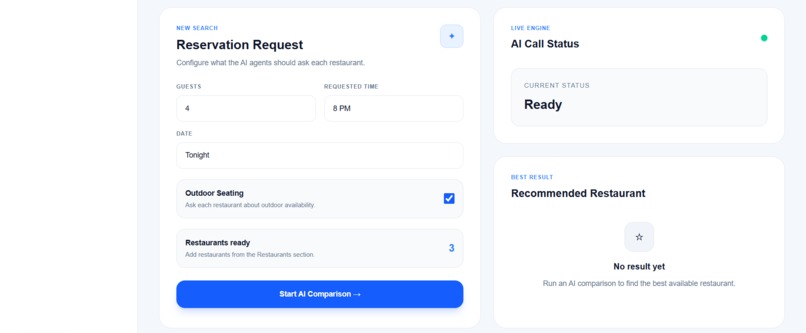
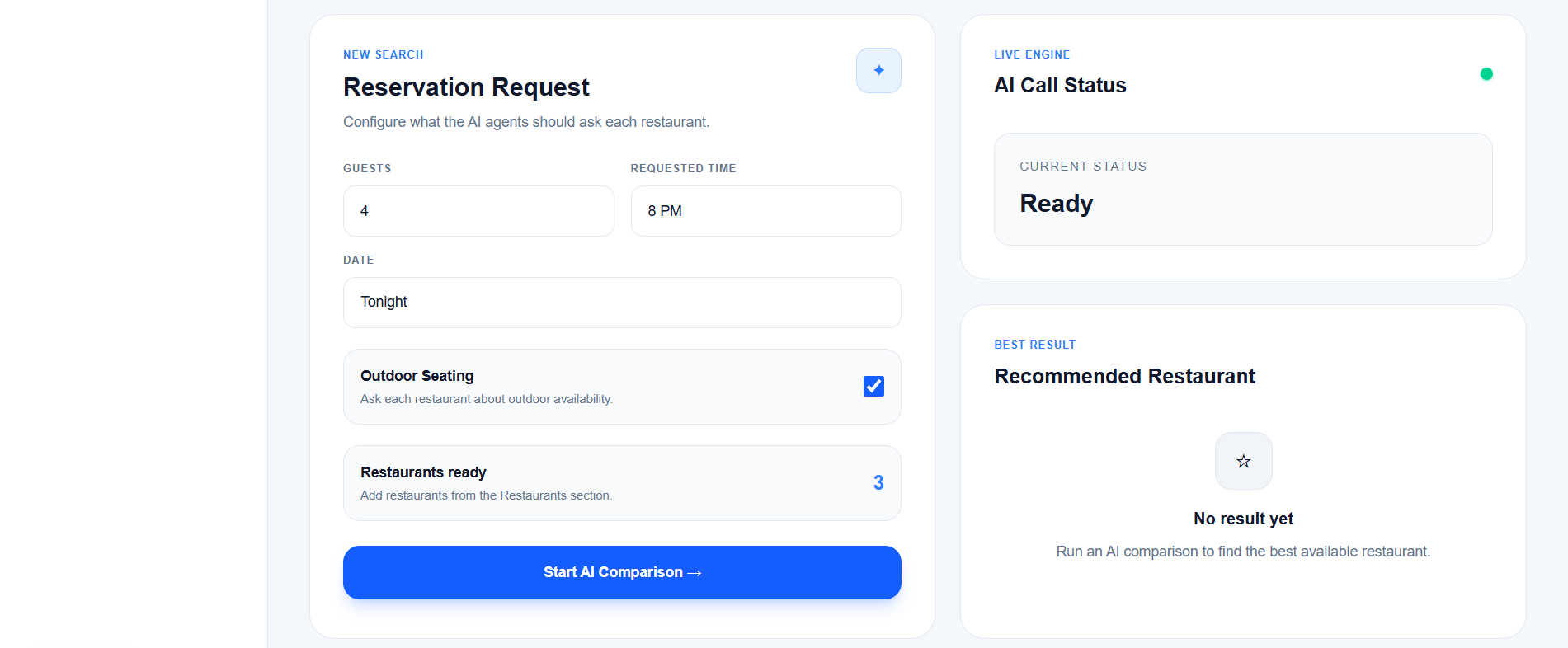
Set the reservation requirements once 4 guests, tonight at 8 PM, with outdoor seating and CallForge AI is ready to contact the restaurants.
-
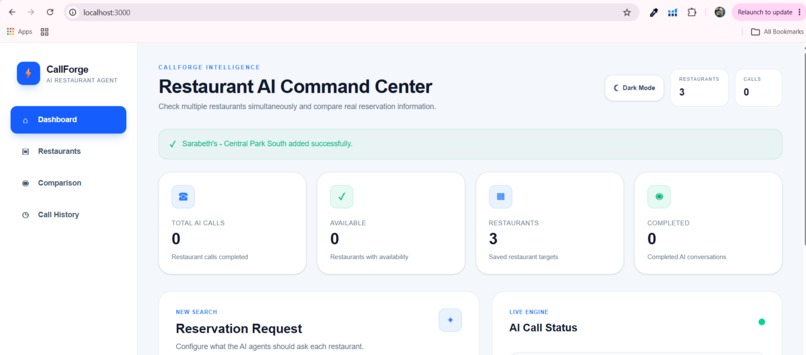
CallForge AI lets users set reservation needs and have AI agents call restaurants, check availability, and recommend the best option.
-
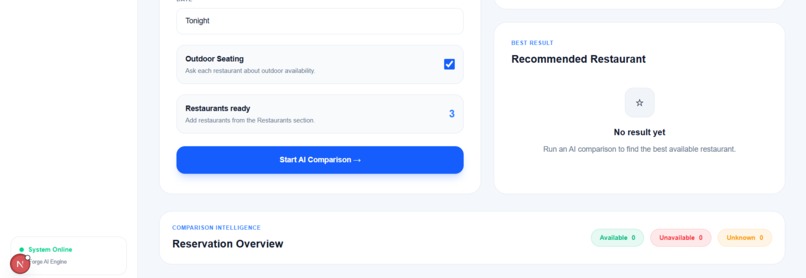
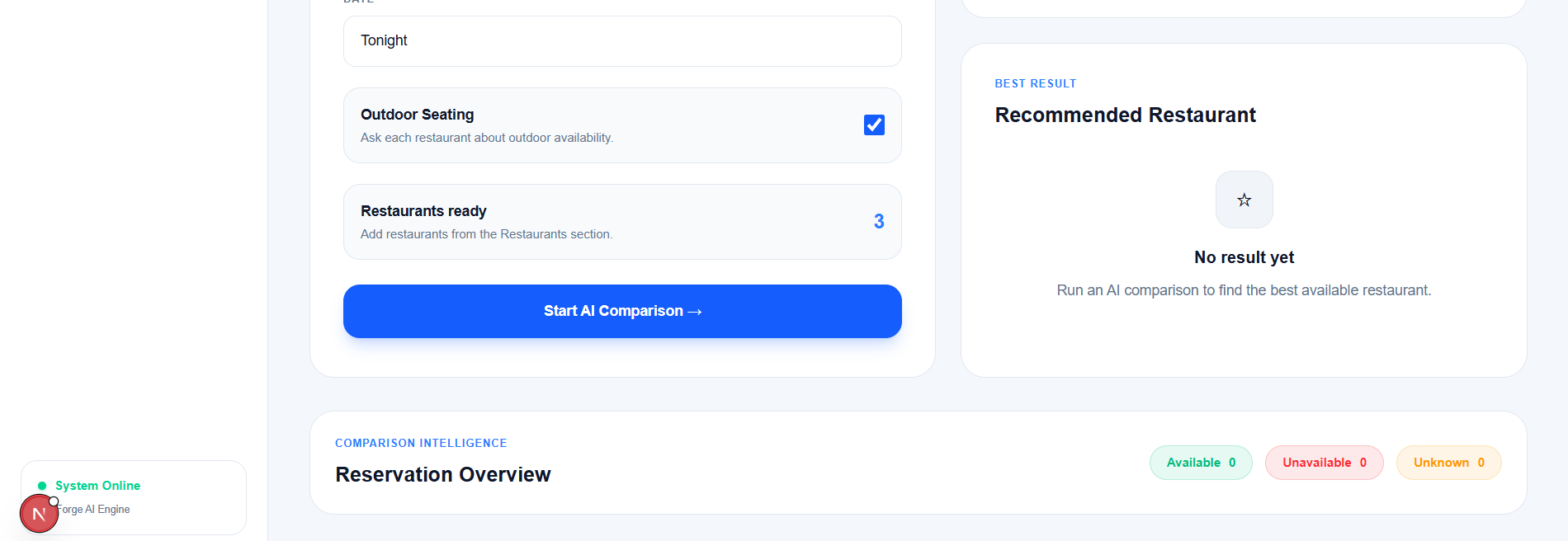
CallForge AI gives users a clear reservation overview, showing restaurant availability, unavailable options.
-
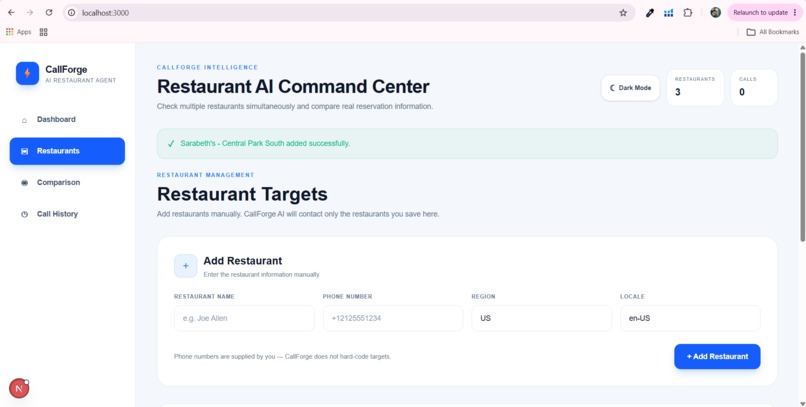
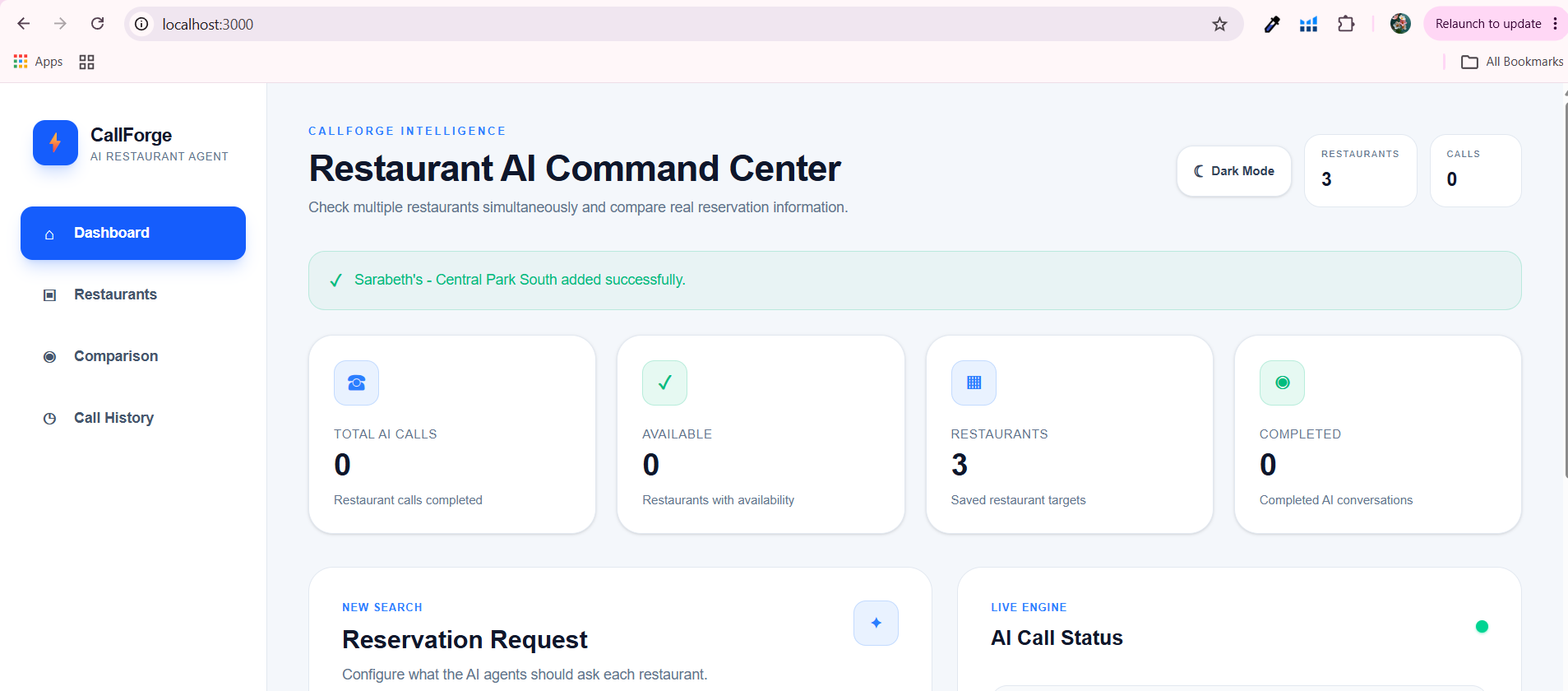
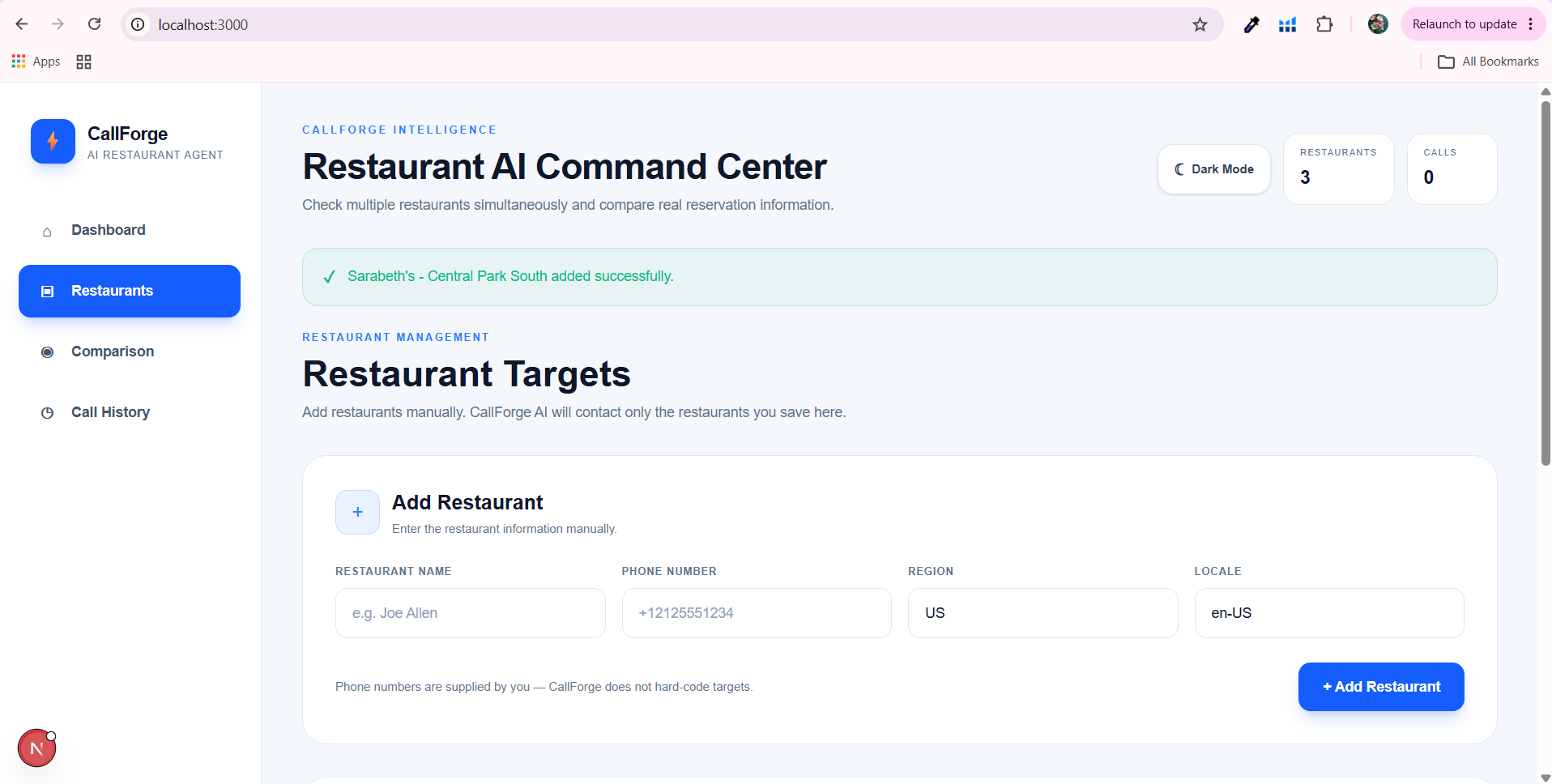
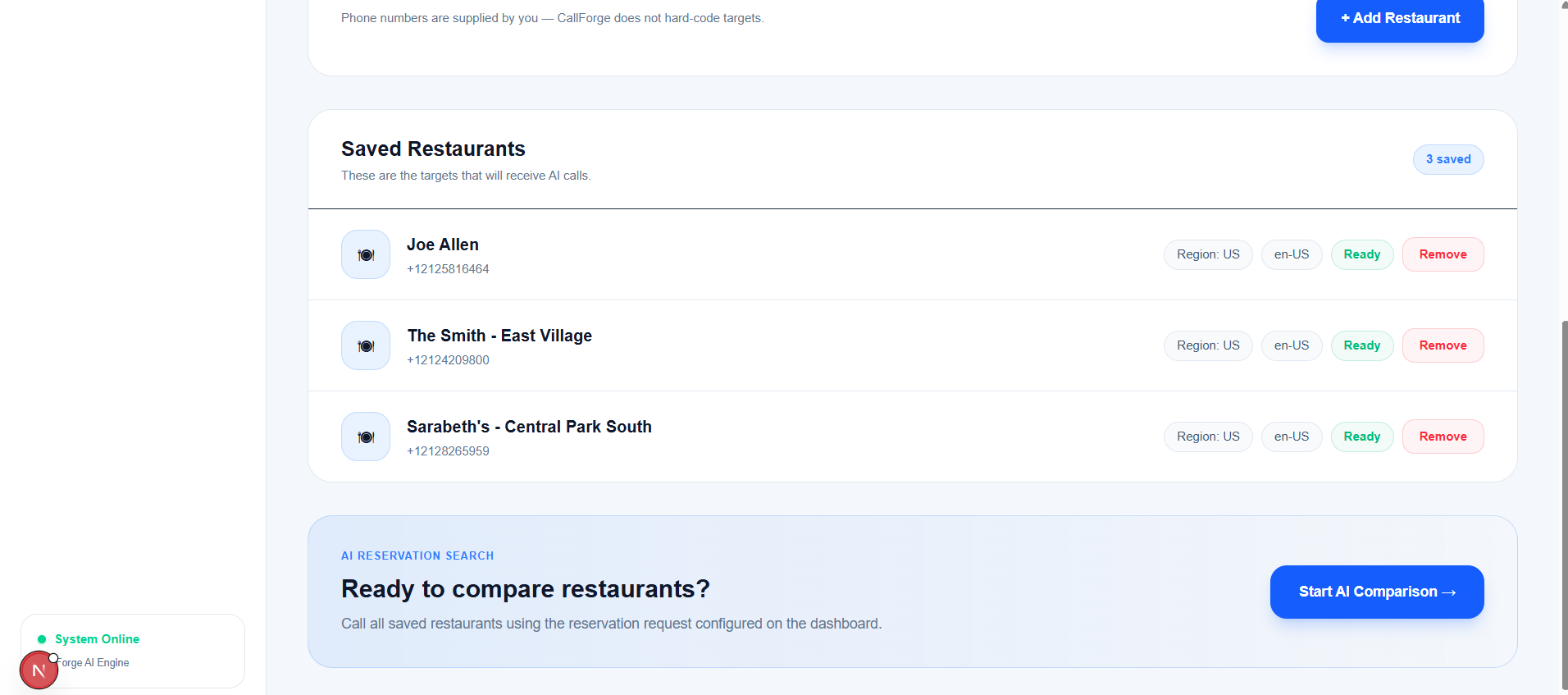
CallForge AI makes restaurant management simple: add restaurant targets manually, save their contact details.
-
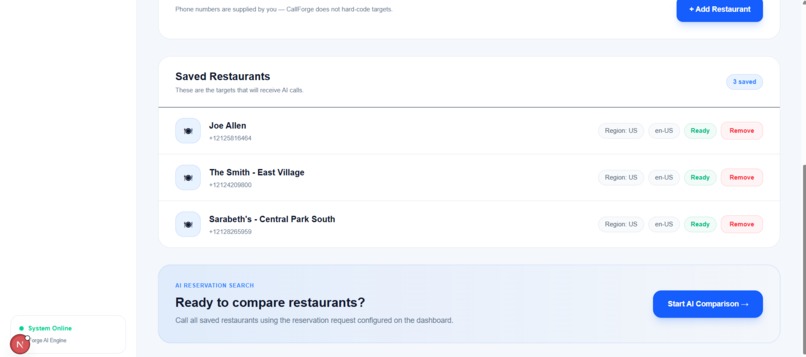
AI-powered phone agents that call multiple restaurants, collect real-time reservation information and compare the results in command center.
-
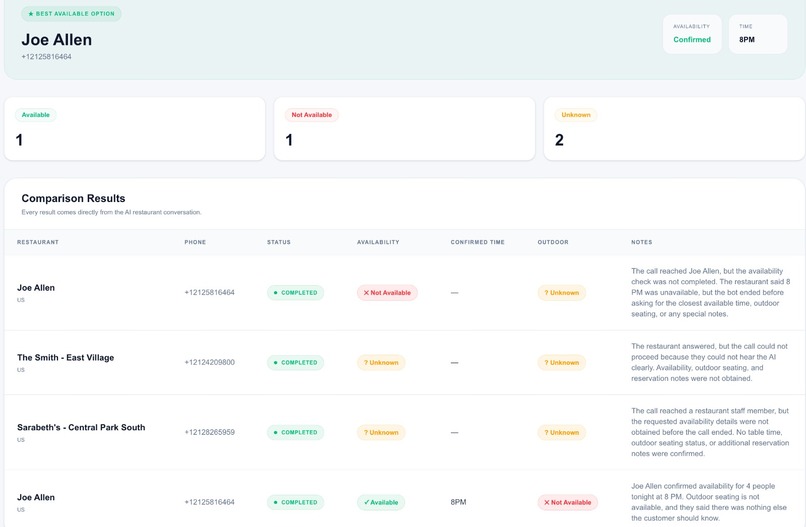
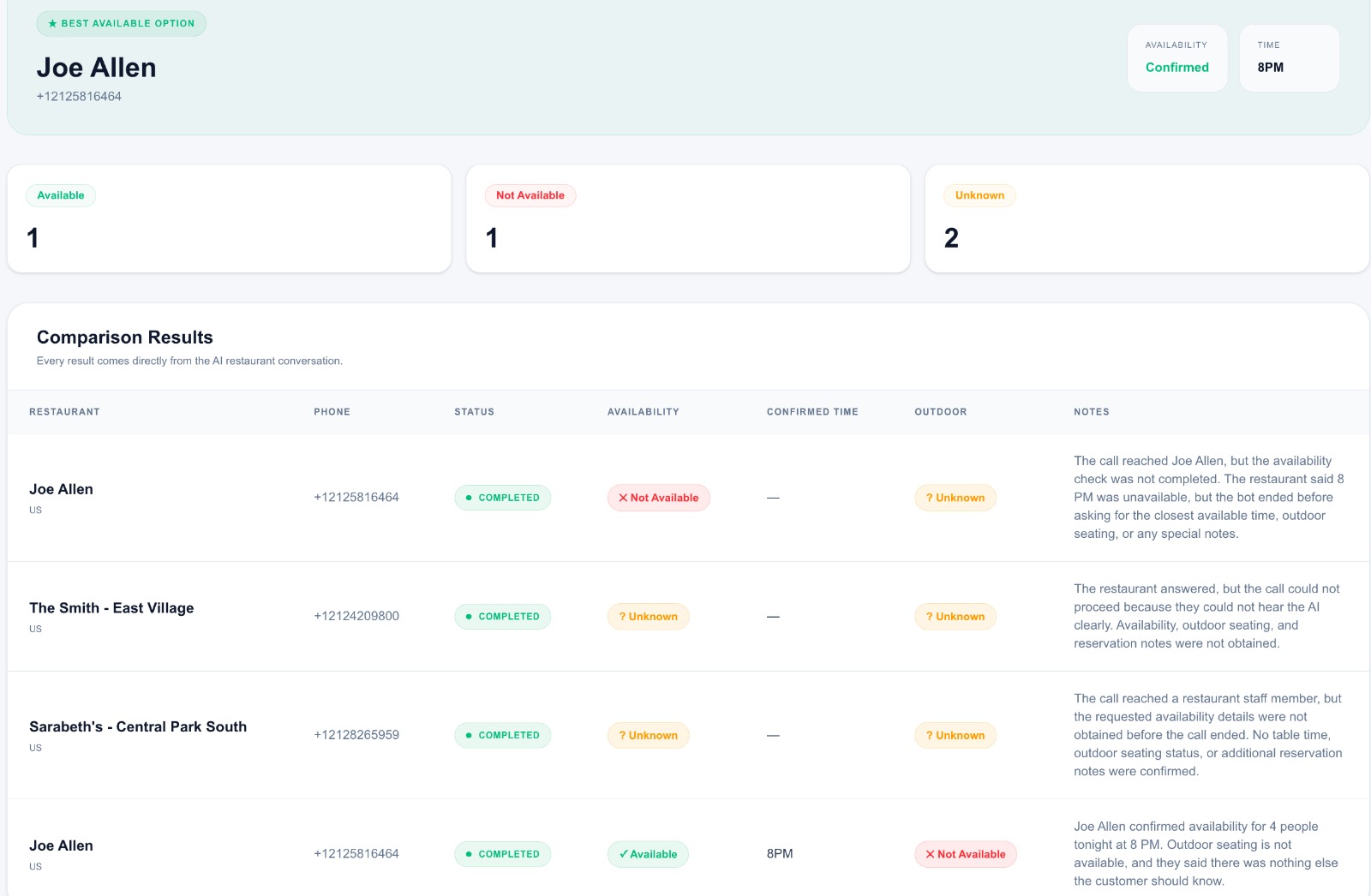
Comparision Results with best available options
-
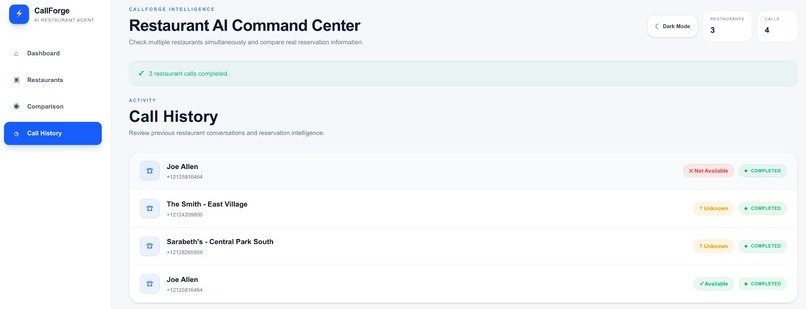
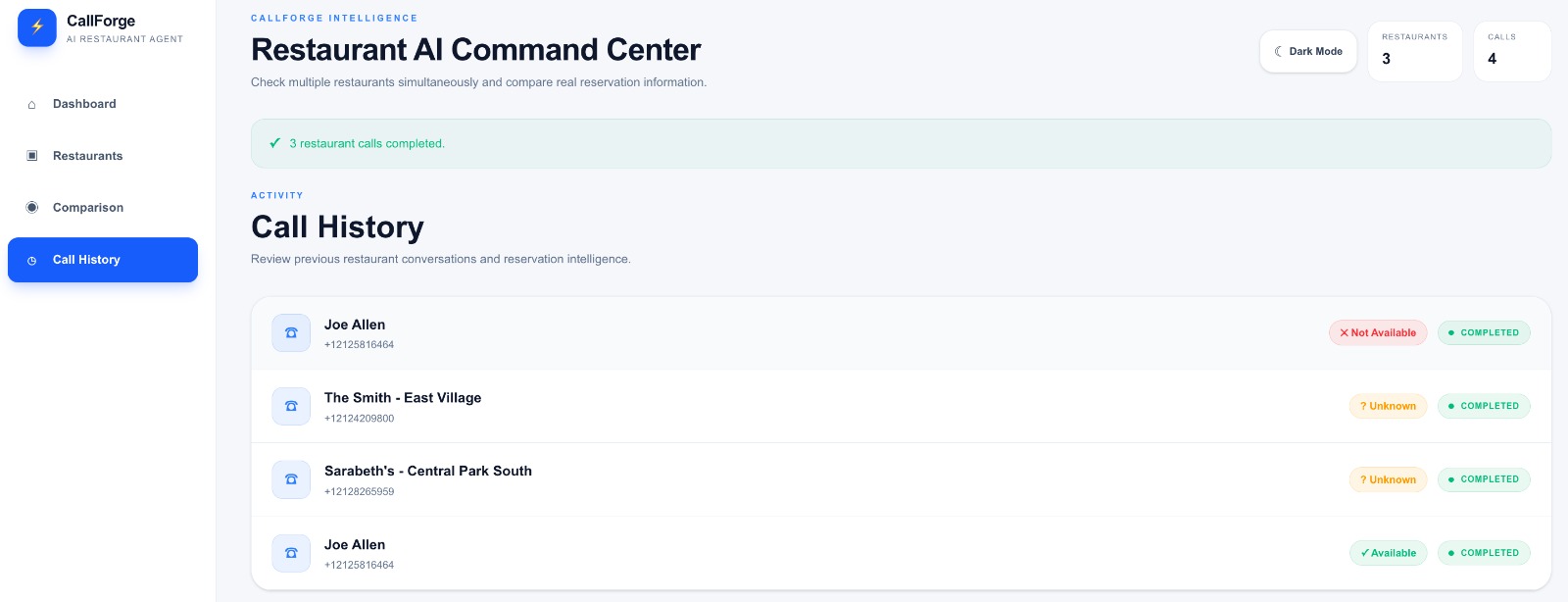
Call History of previously made calls
-
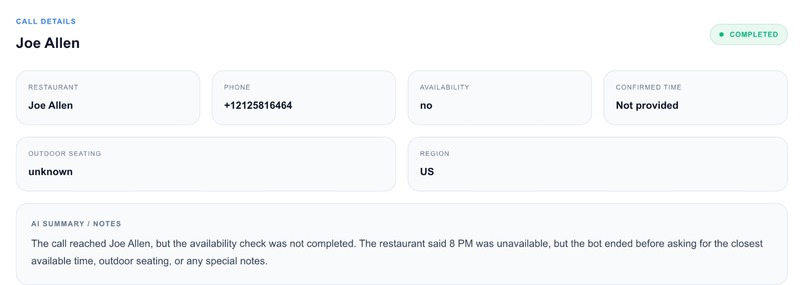
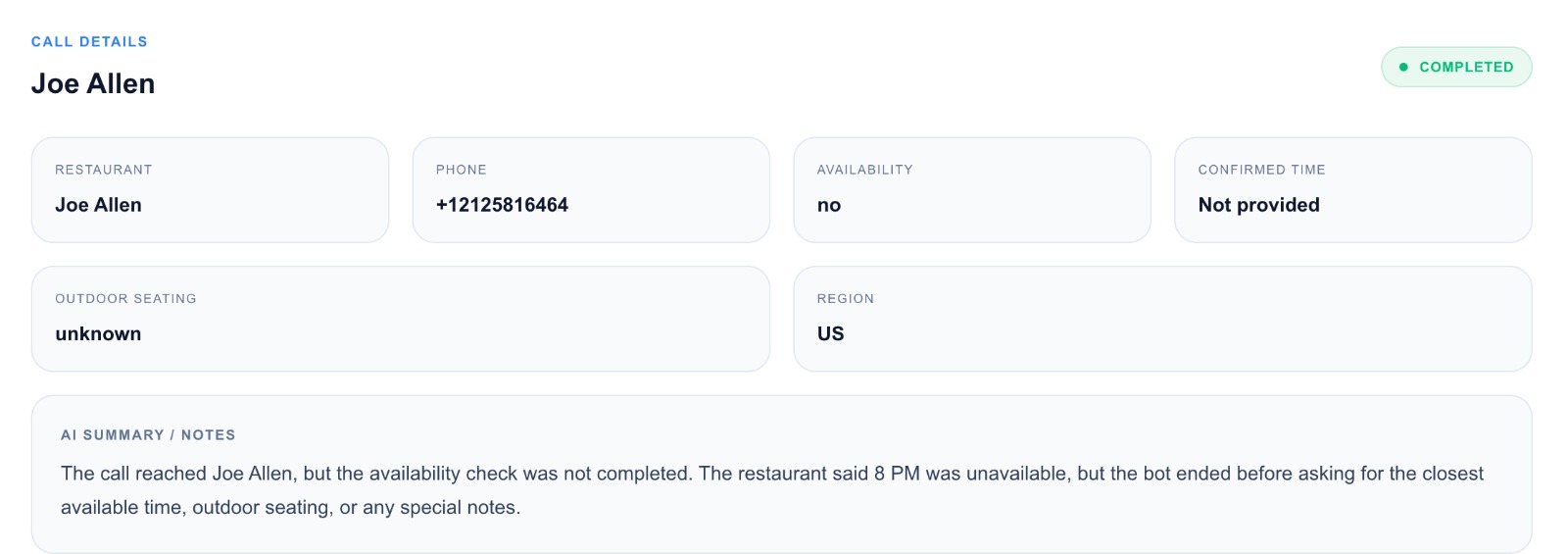
Call Details
-
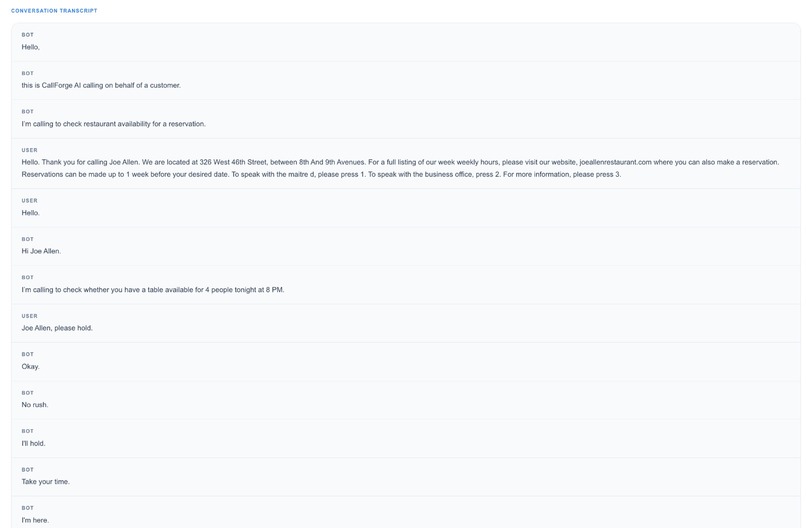
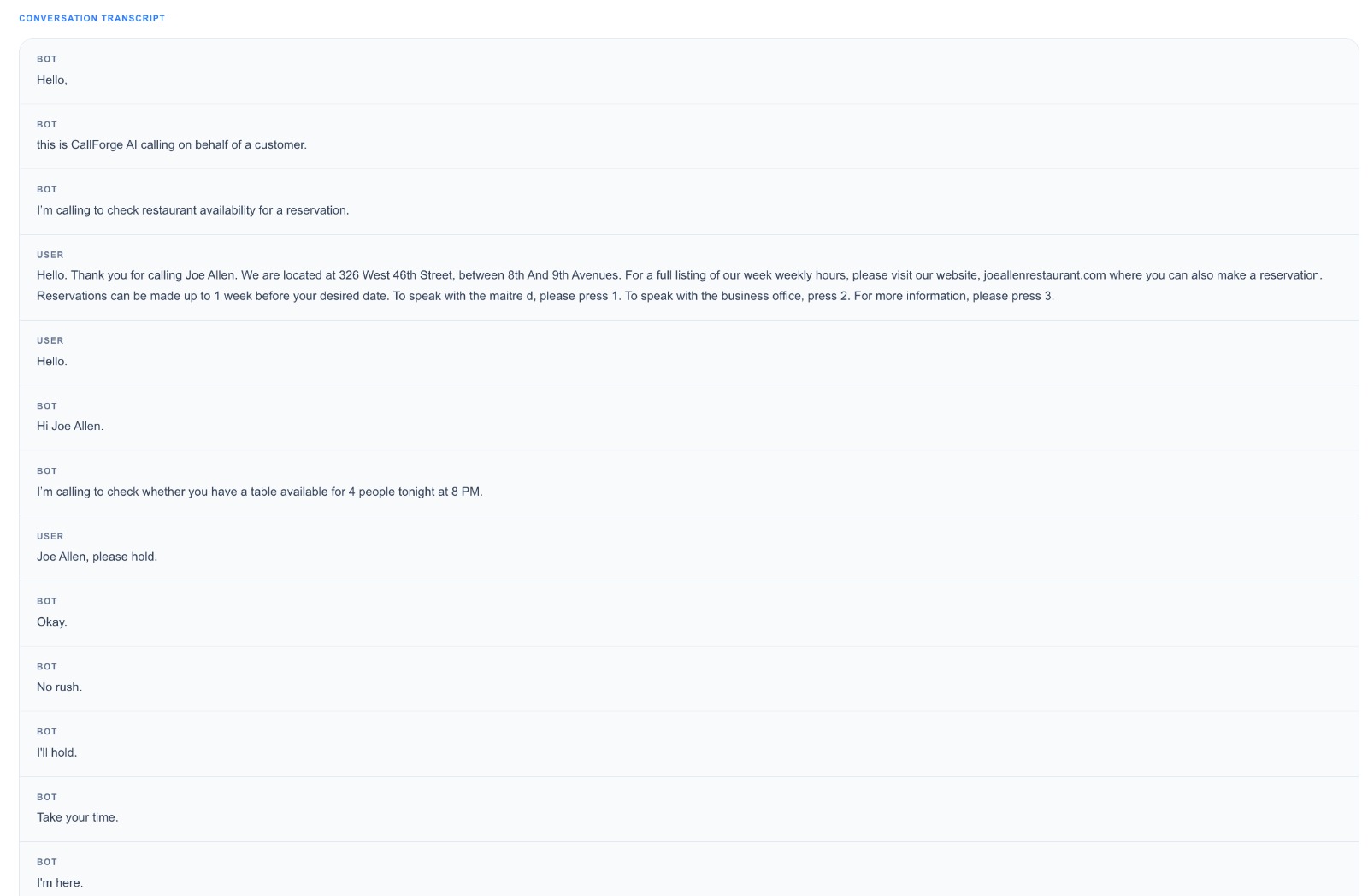
Conversation Transcript
Inspiration
We were inspired by the frustration of making restaurant reservations through phone calls. Users often have to call multiple restaurants, repeat the same requirements, wait for responses, and manually compare availability. We wanted to solve this repetitive process using AI voice agents that can communicate with restaurants and collect reservation information automatically.
What it does
CallForge AI is an AI-powered Restaurant Reservation Agent that makes phone calls to restaurants on behalf of users. The user enters the number of guests, date, requested time, and restaurant details. The AI agent then contacts the restaurants, asks about reservation availability and requirements, and returns the information in a structured format.
Users can compare multiple restaurants from one dashboard, view availability, confirmed times, seating information, call status, summaries, and conversation history without having to manually make every call.
How we built it
We built CallForge AI using Next.js, React, TypeScript, Tailwind CSS, Node.js, REST APIs, and AI voice-agent technology. The frontend provides a command-center interface where users can add restaurants, configure reservation requests, start calls, and compare results.
The backend API manages the calling workflow and processes the information returned from AI conversations. Each call is tracked through different states such as queued, calling, completed, or failed. The results are then converted into structured reservation data and displayed through the comparison and call-history interfaces.
Challenges we ran into
One of our biggest challenges was connecting the frontend, backend, and AI voice-calling workflow into one reliable system. We needed to make sure that restaurant information and reservation requirements were correctly passed to the calling process and that the AI responses could be converted into useful structured information.
Another challenge was presenting complex conversation results in a simple way. Instead of forcing users to read complete transcripts, we designed the system to highlight the most important reservation information so users can quickly compare restaurants and make a decision.
Accomplishments that we're proud of
We are proud of transforming a manual phone-based reservation process into an AI-powered workflow. CallForge AI doesn't simply provide information through a chatbot; it is designed to perform an actual task by communicating with restaurants through phone conversations.
We built a complete workflow where users can add restaurants, configure their reservation requirements, initiate AI calls, monitor call status, compare restaurant responses, and review previous conversations from a single command center.
What we learned
During this project, we learned that building an effective AI agent requires much more than connecting an AI model to an interface. The frontend, backend, APIs, asynchronous call states, structured data, and user experience all need to work together.
We also learned that raw AI conversations are not enough. The information collected by an AI agent becomes much more useful when it is transformed into structured, actionable data that helps users make decisions quickly.
What's next for CallForge AI — Restaurant Reservation Agent
Our next step is to make CallForge AI more production-ready by adding persistent database storage, automated call-status updates, improved conversation transcripts, smarter restaurant selection, reservation confirmation, and more advanced comparison features.
In the future, we want to expand CallForge beyond restaurant reservations. The same AI calling infrastructure could be used for appointment scheduling, supplier verification, price collection, availability checks, customer support, and other real-world tasks that normally require repetitive phone calls.
Built With
- agents
- ai
- api
- artificial
- automation
- css
- development
- full-stack
- git
- github
- integration
- intelligence
- javascript
- language
- management
- next.js
- node.js
- react
- rest
- speech-to-text
- text-to-speech
- typescript
- voice
- web


Log in or sign up for Devpost to join the conversation.