Most customers pay for Caller ID (CID), but few know it can be spoofed or that additional information (the address of the caller and more) is made available to phones with an toll-free number. You call a toll-free number and your phone number, name and address is provided to them. If you think you are making a private call using *67, you are not when you call a toll-free number.
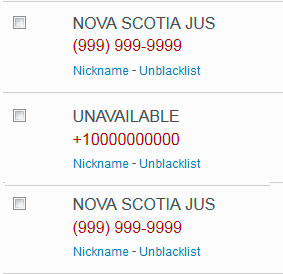
There is a company providing a service for a monthly fee where you forward rejected or unanswered calls (if you can do this) to their toll-free number and they send you a text message with the complete information about the call. You can see some snippets in my image.
You can see some spoofed robocalls from all 9s and all 0s. I did not show calls with names and addresses, but they are on this page from the provider's site. You can also see that they are blacklisted by this service at my direction. For these calls, the service provides a simulated "this number is no longer in service" tone and recording, hopefully fooling the caller into believing my number is no longer in service.
You can see that by making use of existing technology third-party companies can provide a limited, but effective method for eliminating most robocalls, at least repetitive ones. However, one must pay for this service. One can also pay for (with some phone companies) call blocking, but they will not let me block invalid numbers such as all zeroes or all nines and that is not so smart. A more comprehensive service can be provided by the phone companies and it must be done at no charge.
Using existing technology, the following must be done:
Make spoofing illegal, or better, make it impossible. . Minimally, the phone companies must reject any call from numbers that are all zeroes or nines. Better, reject all calls from invalid NPA/NXX (area code / exchange) combinations. This alone would eliminate most calls from "unknown". This data is updated live by Telcordia (or whoever performs that function now) and would be easy to implement. It could be on an opt in or opt out (better) basis.
All phone providers must provide a * feature that can be entered during or just after a call that registers the caller's number, the called number, date and time (name and address can be derived later). This file would be uploaded daily, weekly, etc. to an FTC or contractor site for analysis. When uploaded, additional customer information would be appended to the record identifying the numbers with names and addresses.
Analysis of this data, voluntarily provided by the customer signaling a robocall, can easily spot robocallers. It can also identify called numbers that appear to be identifying too many calls and statistically reject those records.
Enforcement: This is more difficult. The data will easily identify the worst offenders. They can be dealt with as resources permit. Most phone companies provide for blacklisting for a fee. They could be force to provide this as a free service for any customers (not numbers) that have been rejected a specified, say 5, times.
This is not perfect, but it does not have to be. From a technology point of view, I know it is not complicated and it should not be made complicated. It does not matter so much if some data is lost or some companies cannot get on board quickly. It depends only on having a statically valid body of rejected calls and making currently available information and features available in a slightly new way. Analysis of the data is also not complicated. I have done this kind of work before retirement. It is simple!

Log in or sign up for Devpost to join the conversation.