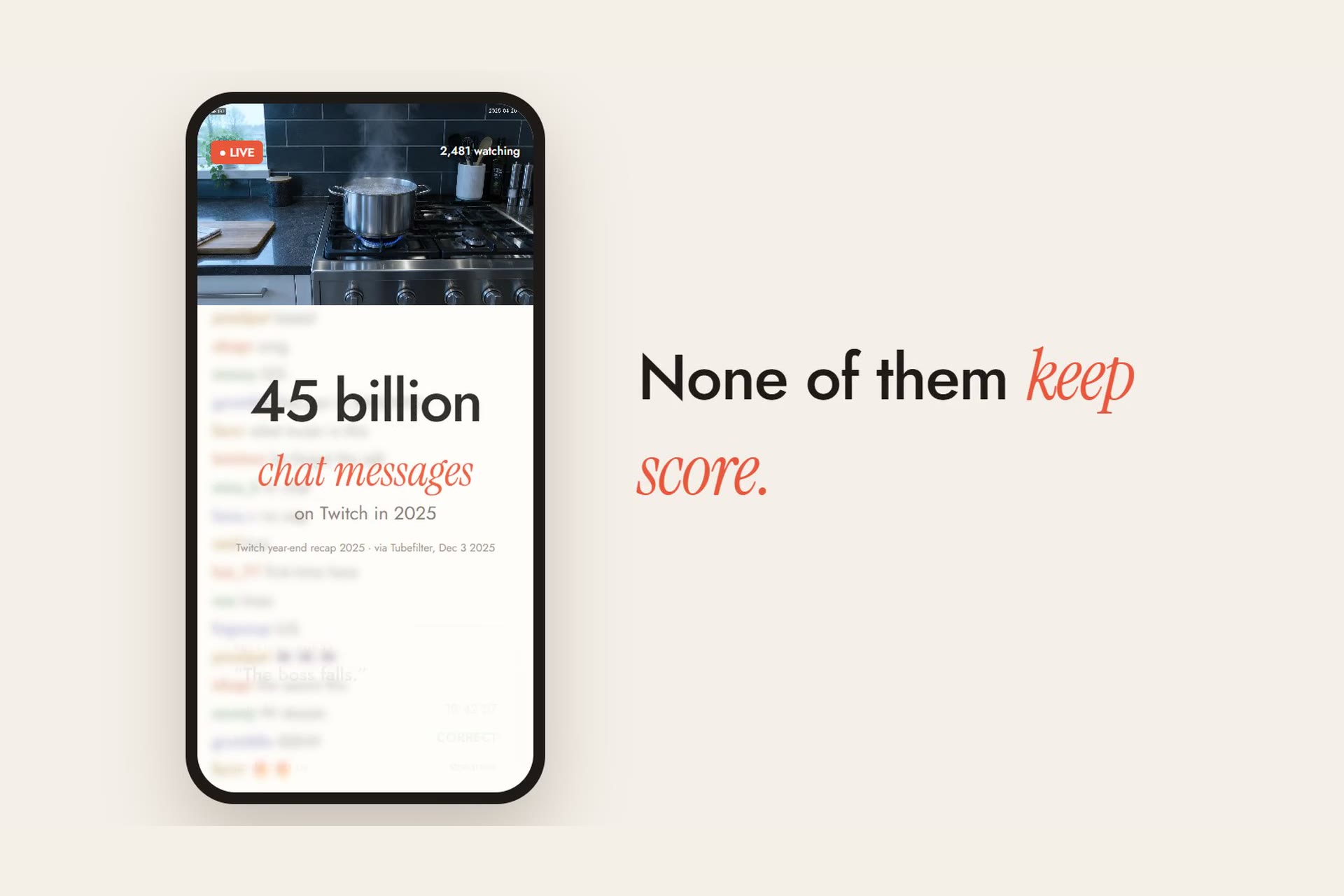
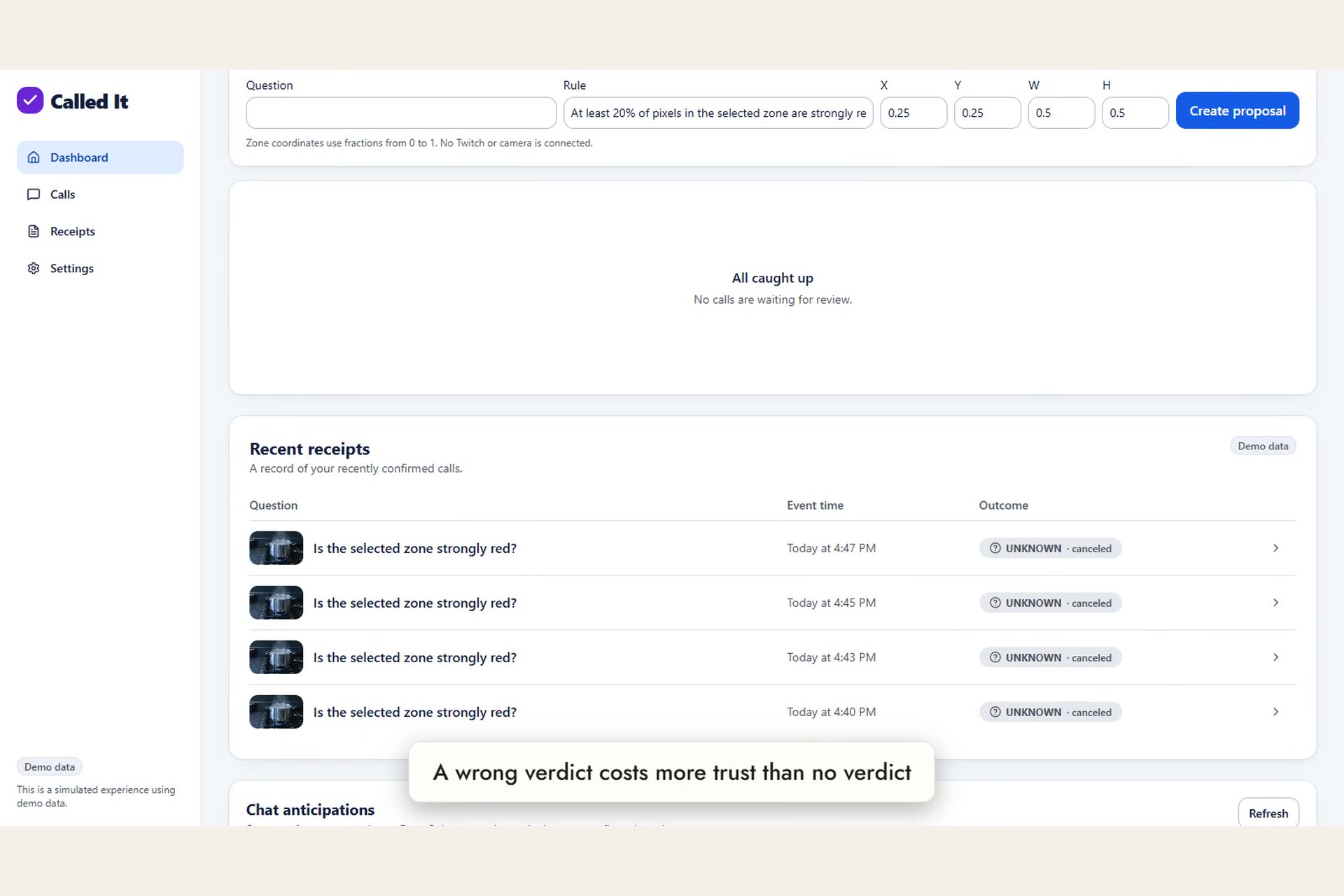
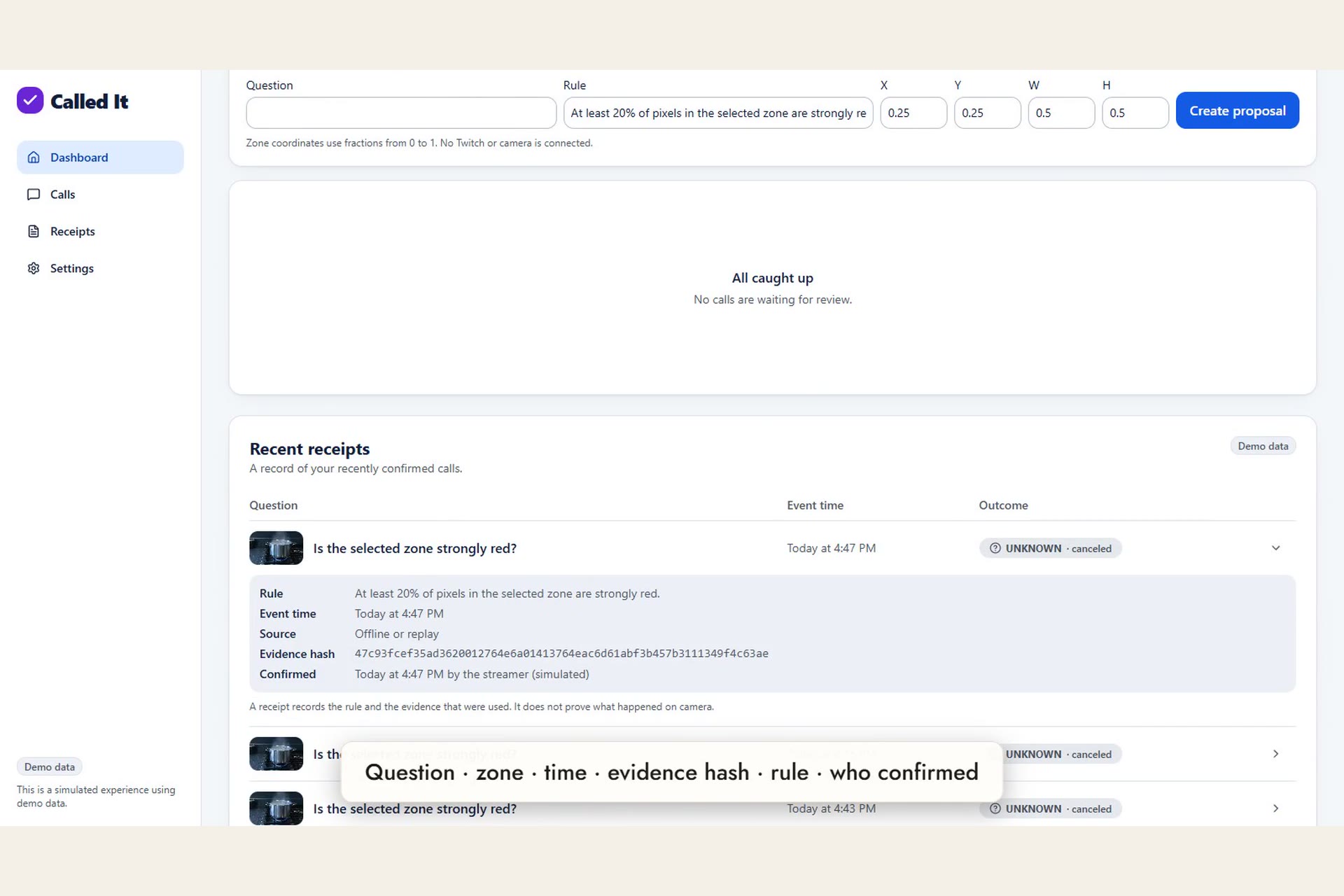
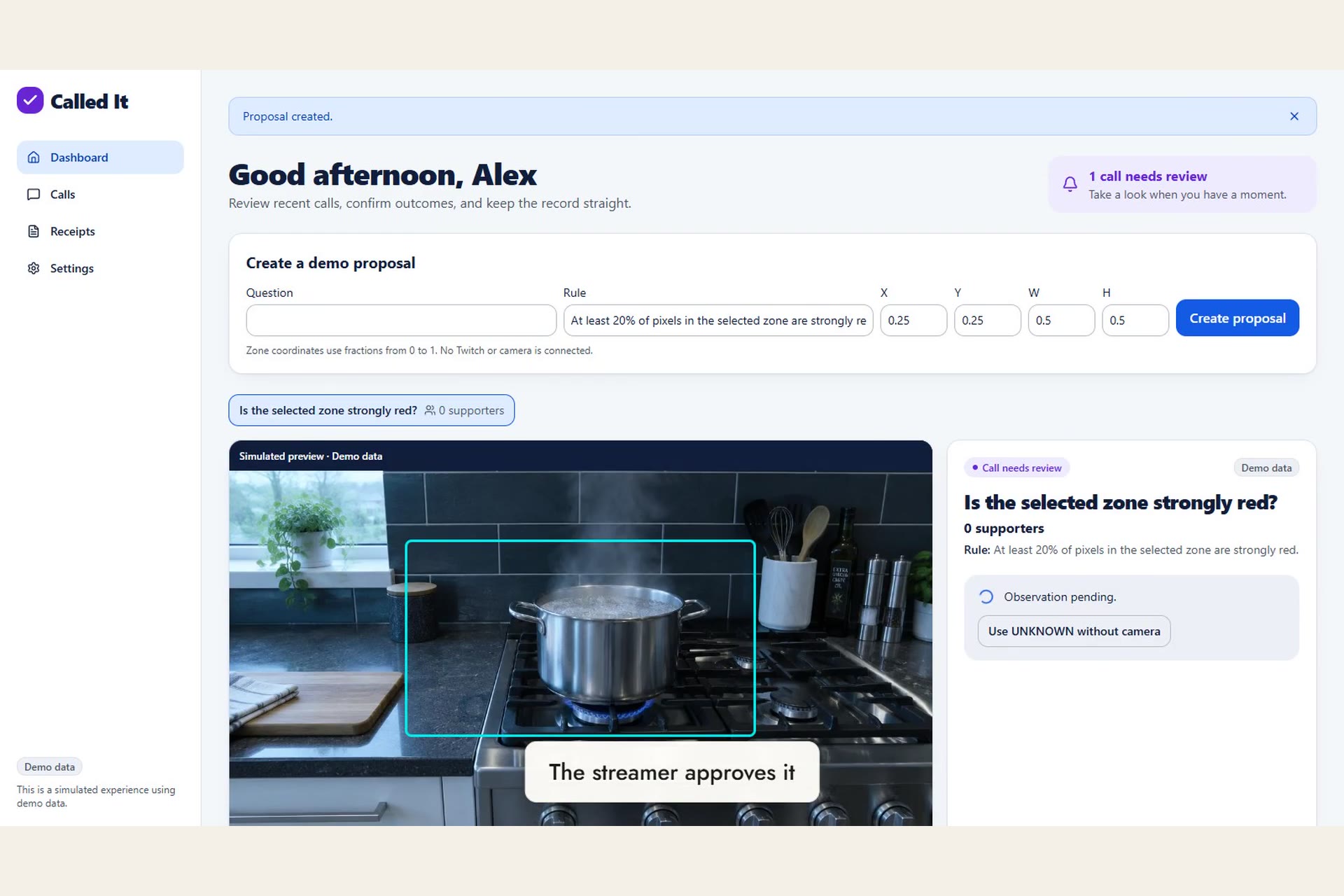
Inspiration. Chat already predicts what is about to happen on stream ("he's going to burn it", "the boss falls"). Those calls vanish in the scroll, and nobody can prove who called it. Native Twitch Predictions need the broadcaster to type every question by hand.
What it does. Called It turns a chat message into a tracked call with a receipt:
- A viewer types
!call <prediction>in chat. A signed EventSubchannel.chat.messagenotification creates a proposal. - The streamer (or a configured moderator) accepts or rejects it from an operator panel, opens participation and closes it before the outcome.
- The outcome is declared
CORRECT,INCORRECTorUNCLEAR, always confirmed by a human. - A receipt stores the accepted text, close time, declaration time and confirmer role. Viewer IDs are stored only as deterministic pseudonyms.
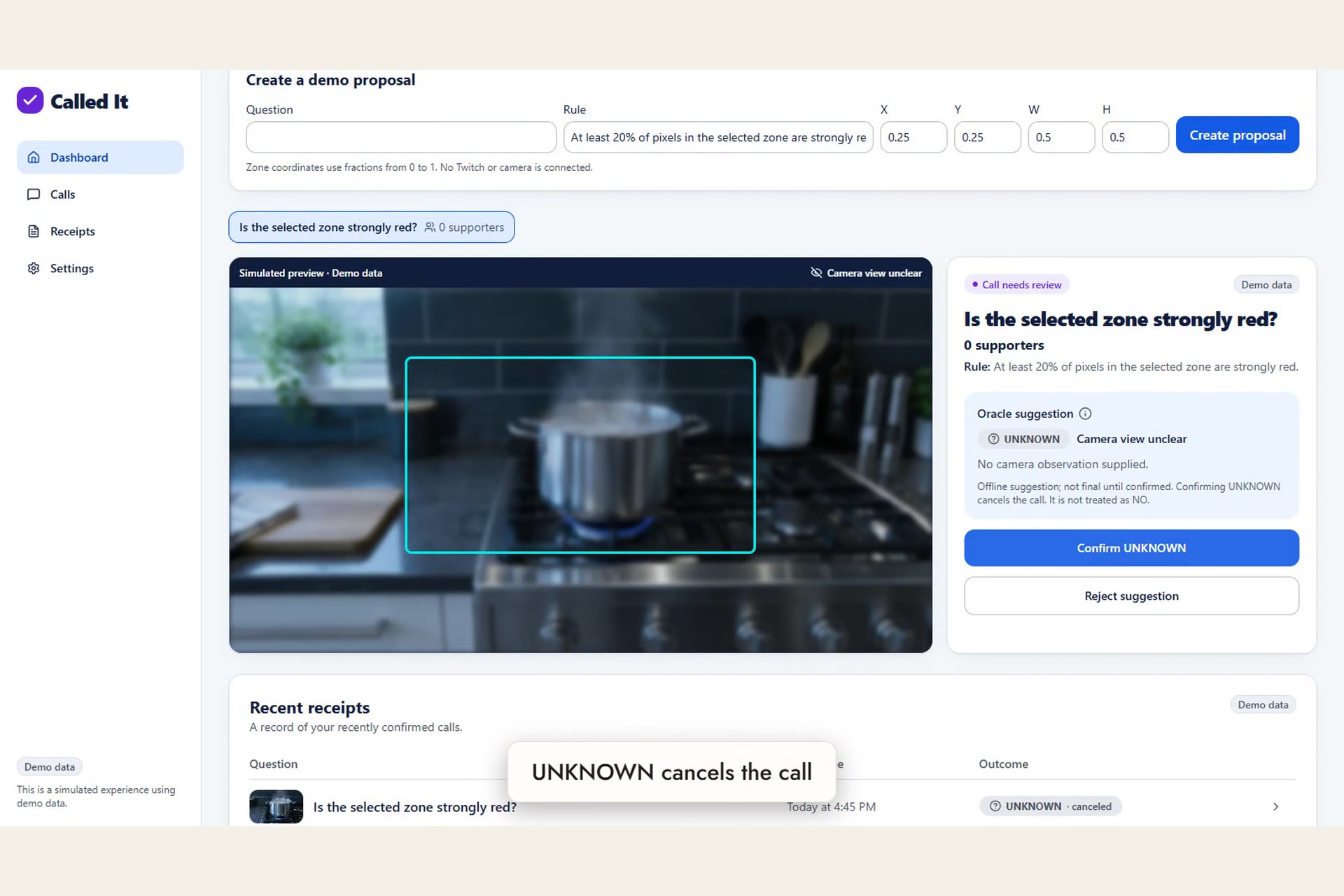
A second, local track lets the camera help: the streamer selects a zone of a fixed camera, the
browser samples only that crop, and a deterministic rule suggests YES or UNKNOWN. The image
never leaves the browser; only metrics and a SHA-256 hash are sent. UNKNOWN cancels the call and
is never turned into NO.
How we built it. Node 20 server with no runtime dependencies, a React + Vite streamer
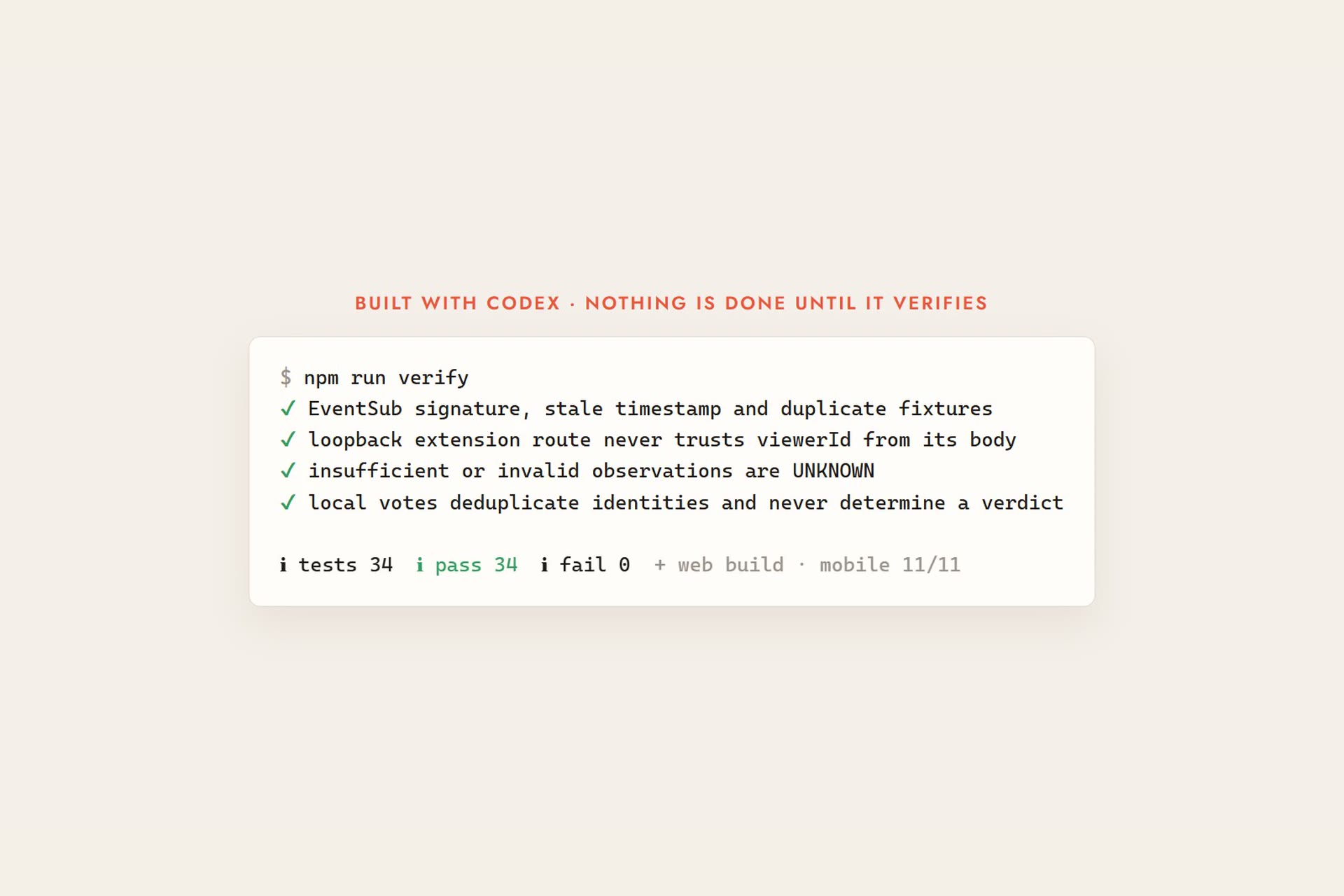
dashboard and an Expo client, all built in Codex threads with a npm run verify gate on every
cycle. Twitch adapters cover Helix token validation and Predictions, Extension JWT verification,
OAuth authorization code flow and EventSub webhook signature verification (HMAC over ID +
timestamp + raw body, replay window, deduplication, revocation handling).
Challenges. Being honest about what a camera can prove. A hash and a receipt record the
evidence and the rule used; they do not prove the scene was real. That is why every resolution
needs streamer confirmation and doubt resolves to UNKNOWN.
Accomplishments. A judge can clone the repo and run the full flow offline: npm run verify
replays recorded calls without a camera, network or Twitch account. 34 server tests plus web and
mobile suites cover signatures, duplicates, stale timestamps, cross-channel events, restarts and
concurrency.
What's next. Phase 2 anchors the call zone to an object with AR instead of a fixed camera, and calibrates the vision rule against held-out human-reviewed cases before any automatic resolution.
