Inspiration
Millions of students still face a simple but important problem: access to learning is not equal.
Not every student has a smartphone, reliable internet, nearby schools, or easy access to teachers. Even when a teacher is available, many students hesitate to ask questions because they are afraid of being judged or embarrassed in front of others. And after a lesson, students often have to figure out how to revise, practice, and organize what they learned on their own.
We wanted to build something that removes these barriers instead of adding another app to the problem.
That idea led to Call2Learn — a voice-first AI tutor that works through a simple phone conversation and turns that conversation into useful, personalized learning resources.
What Call2Learn Does
A student simply talks to an AI tutor about a topic, asks questions, explains what they understand, or discusses where they are struggling.
After the conversation, Call2Learn transforms the interaction into a personalized study pack containing:
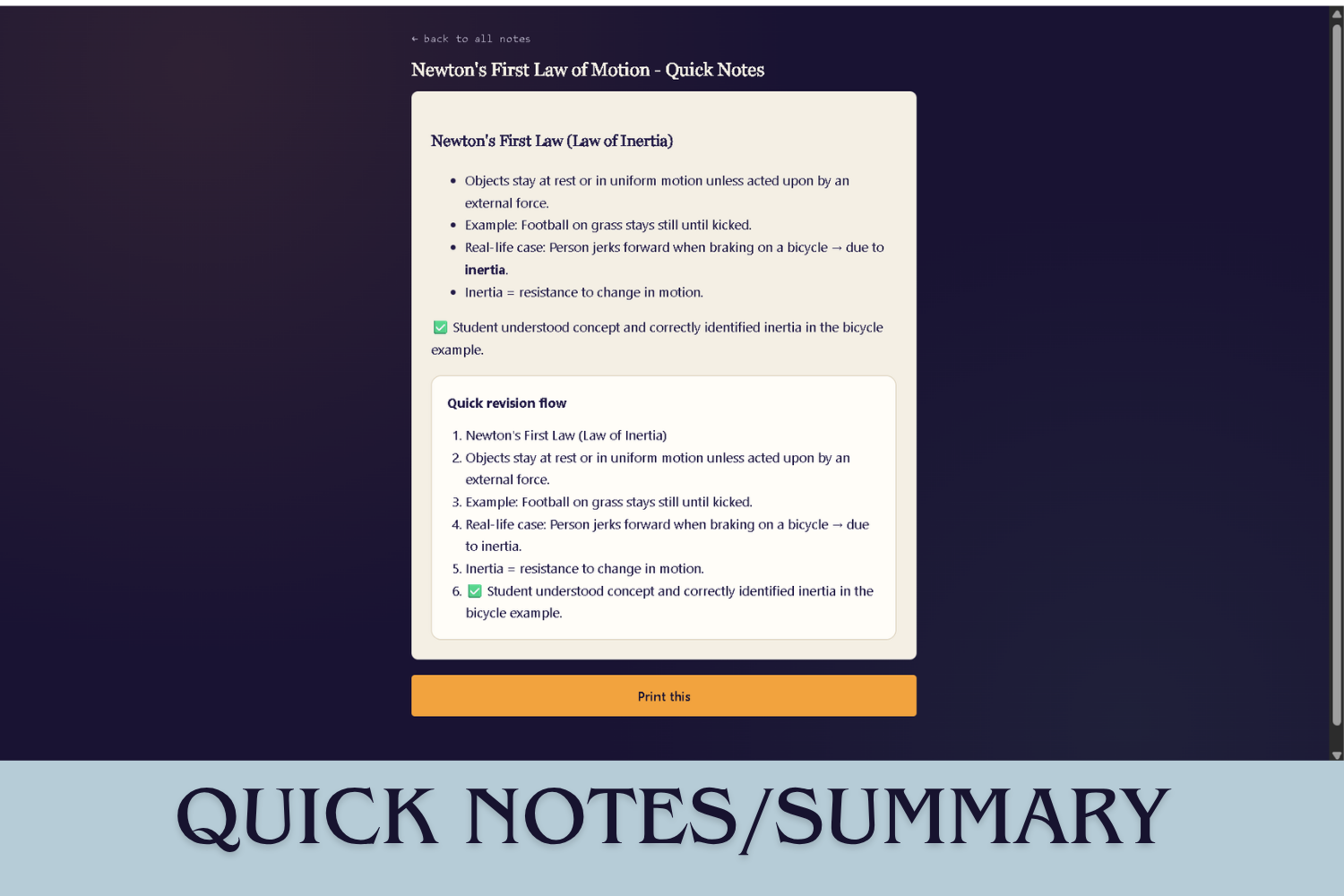
- Quick Notes — a concise summary of what was discussed
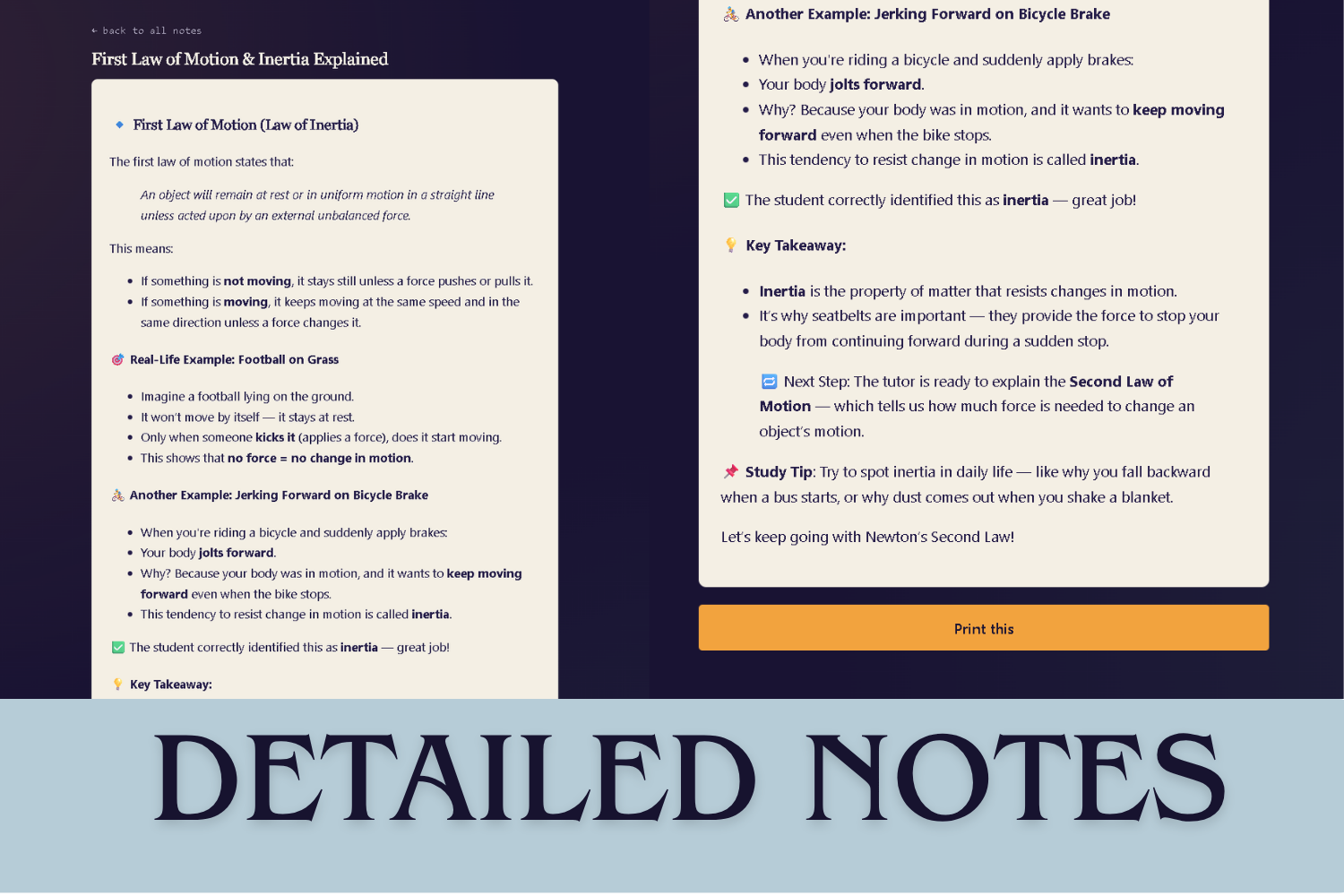
- Detailed Notes — deeper explanations of the concepts
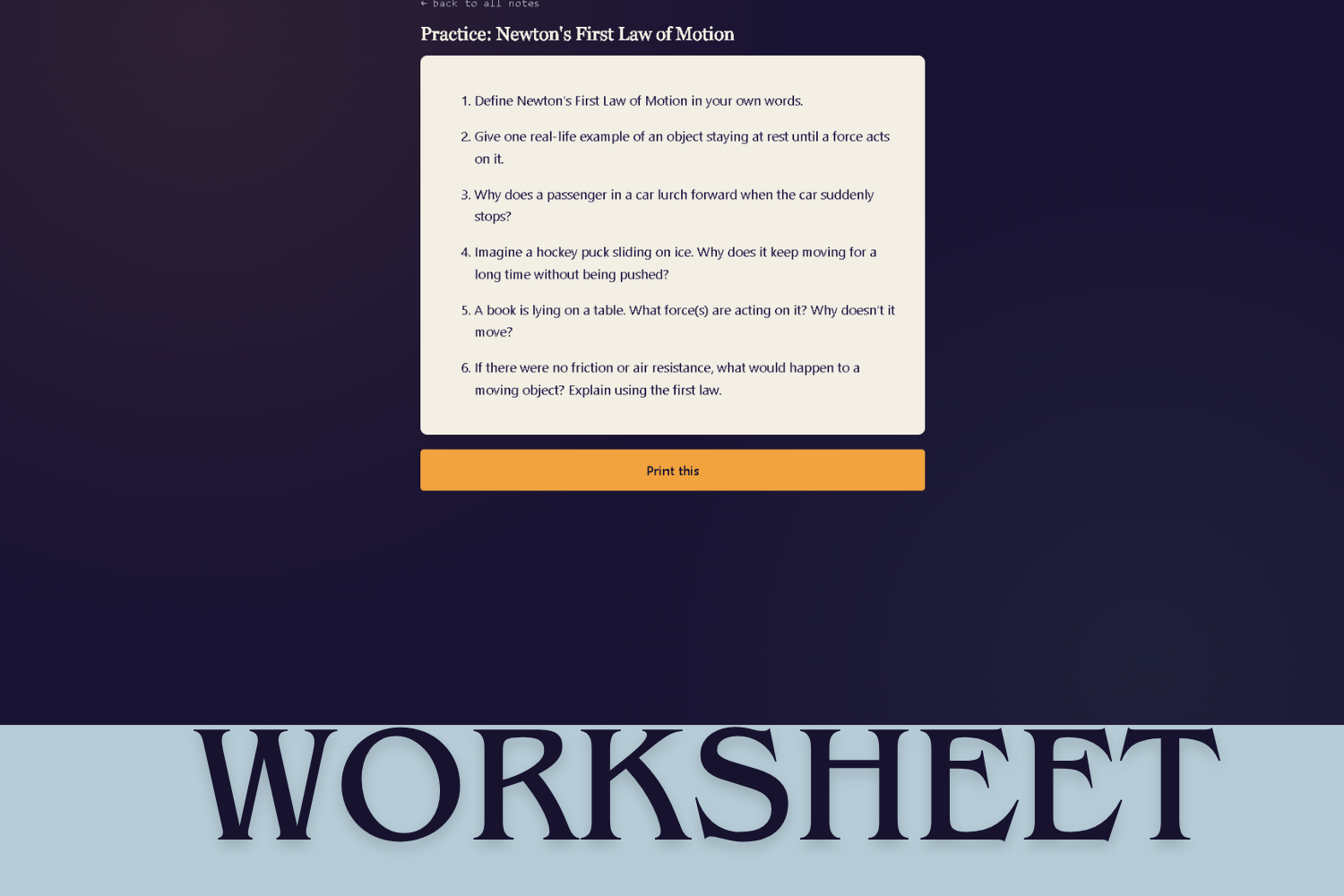
- Worksheet — practice questions based on the learning session
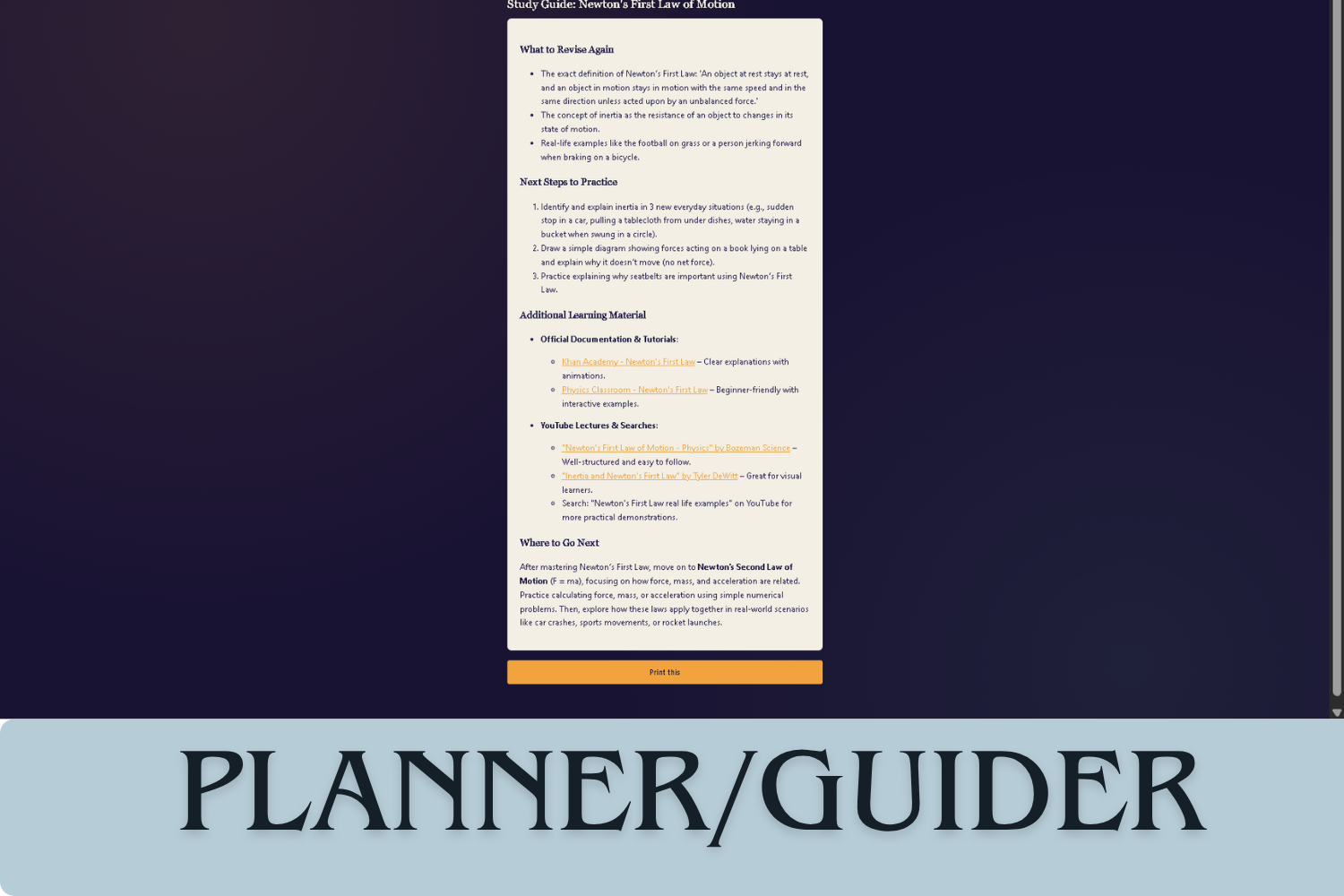
- Study Planner — a structured way to continue learning and revise
The goal is simple: learn by talking, then leave with something you can actually study from.
Because the experience is voice-first, students don't need a smartphone, a complicated learning platform, or constant internet-based interaction with a teacher.
How We Built It
Call2Learn combines voice AI, a backend processing pipeline, generative AI, and a web-based notes portal.
The voice interaction is handled through Sarvam's voice/agent infrastructure. Once a tutoring session ends, the conversation data is sent to our backend.
Our Node.js + Express.js backend receives and processes the call data, securely handles the internal API flow, and stores generated learning resources.
For AI generation, we use Featherless AI with Qwen3-30B-A3B-Instruct-2507. Instead of asking the model for one large response, we generate four dedicated outputs — summary, detailed notes, worksheet, and planner — so each resource can be optimized for its specific purpose.
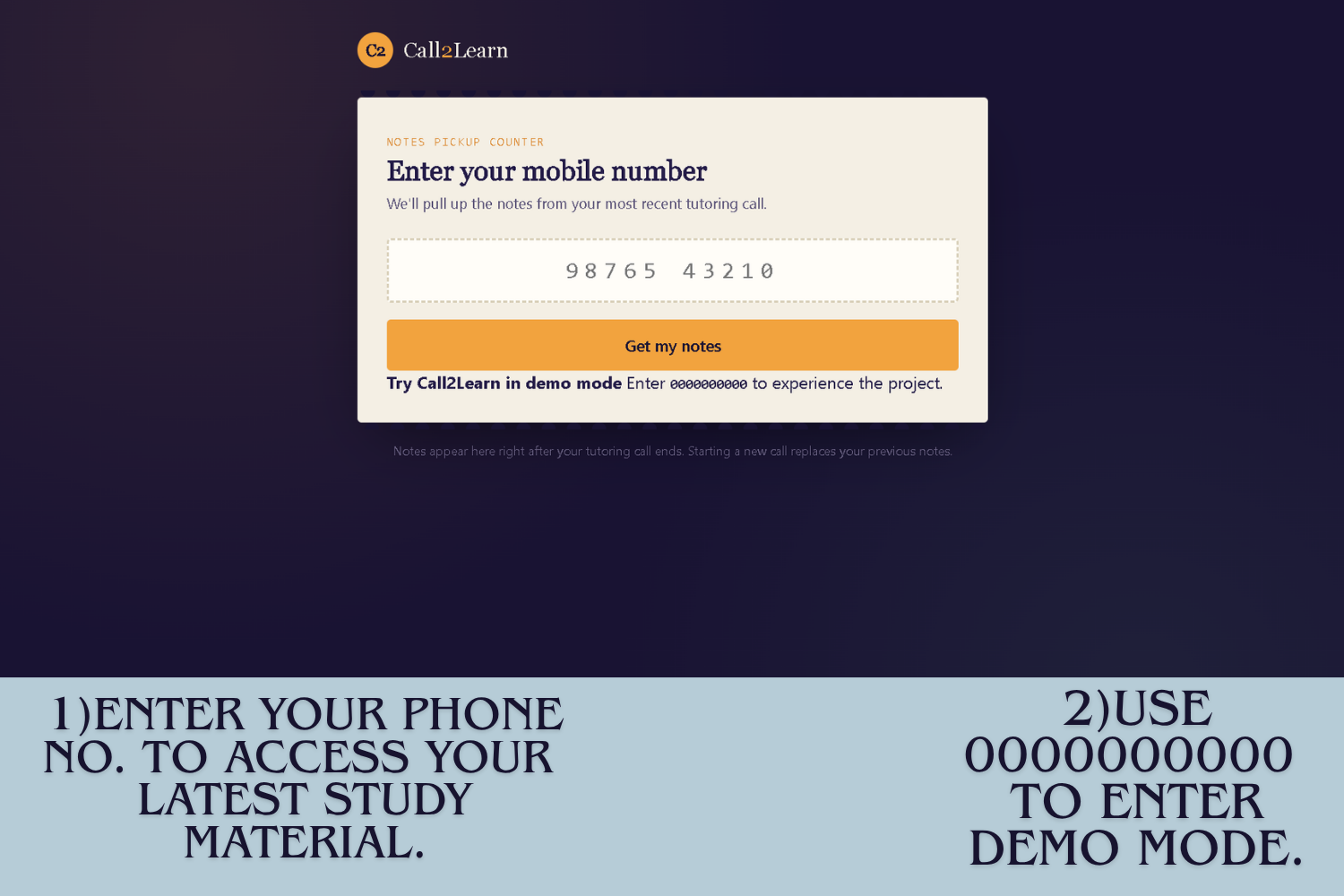
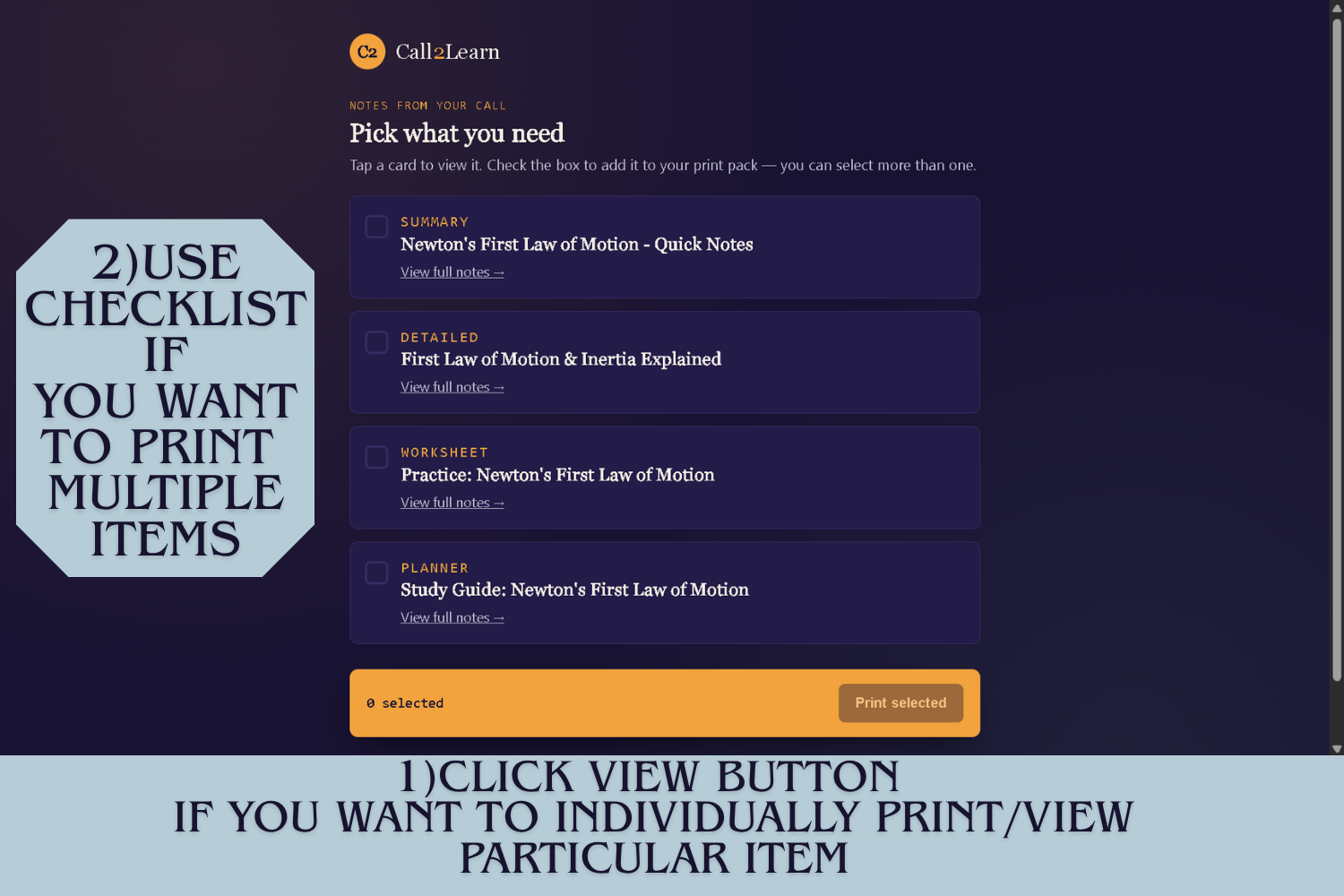
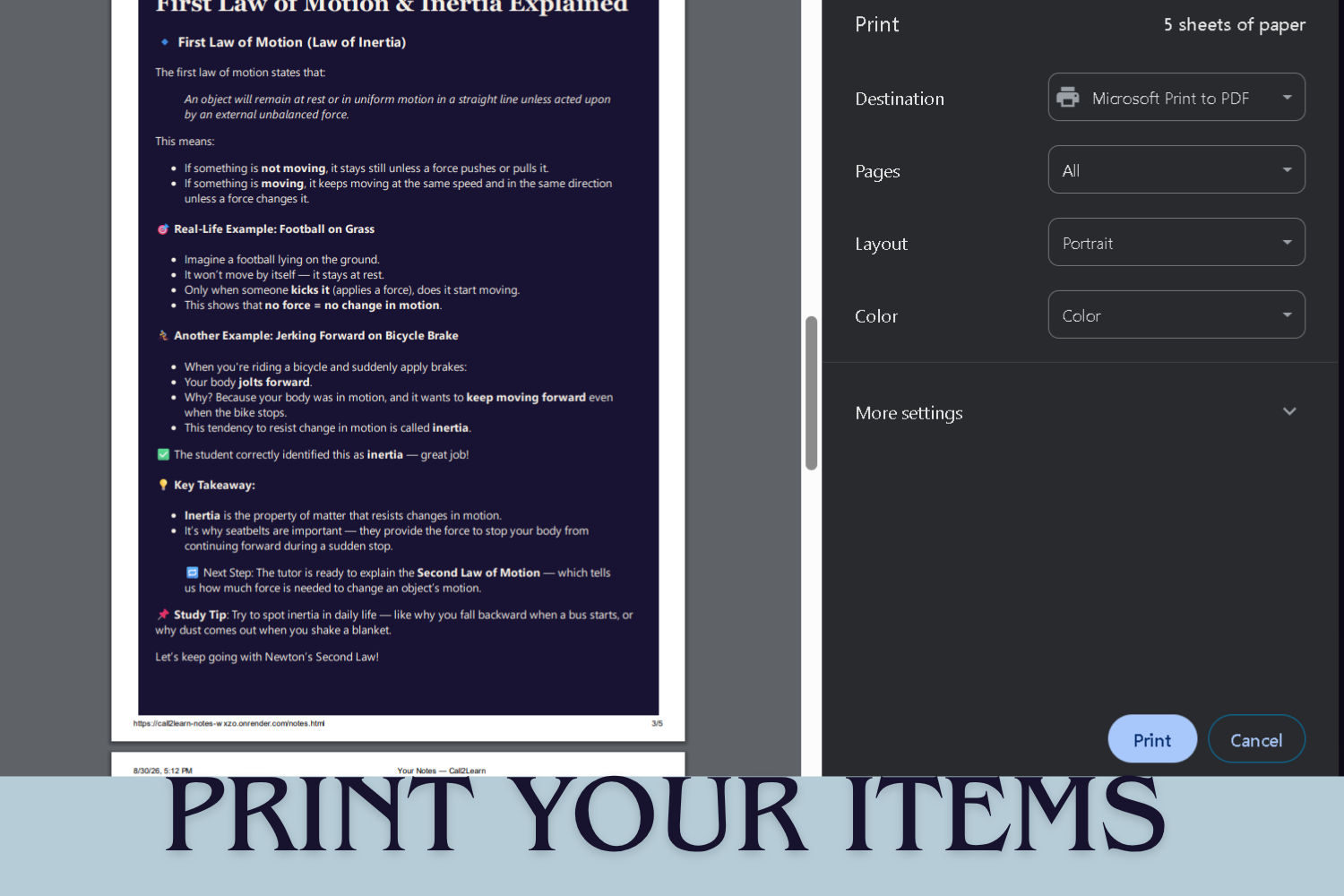
The generated resources are stored using PostgreSQL and presented through a web-based Call2Learn Notes Portal, where students can view individual resources, select multiple resources, and create a printable study pack.
The project is deployed using Render, allowing the backend and notes portal to run as a live web service.
Challenges We Faced
Building Call2Learn required connecting several different systems into one reliable workflow.
One of the biggest challenges was making the voice interaction, post-call processing, AI generation, database storage, and notes portal work together without losing information between steps.
We also had to design the system around AI generation constraints and make the four resource-generation requests reliable while keeping the experience practical for a hackathon-scale deployment.
Testing real calls helped us uncover integration issues that were not obvious during development, particularly around passing call data correctly from the voice agent to the backend.
Solving these issues taught us that building an AI product is not only about choosing a powerful model — the surrounding engineering, data flow, error handling, and user experience are equally important.
What We Learned
We learned how to build an end-to-end AI product rather than just an AI-powered feature.
Call2Learn gave us hands-on experience with voice AI, API integration, backend development, AI prompting, structured generation, databases, deployment, debugging, and designing a product around a real-world accessibility problem.
Most importantly, we learned that good technology is not always about adding more technology — sometimes it is about making technology simpler and more accessible.
What's Next
Call2Learn is only the beginning.
Future versions could support multiple languages and regional languages, richer student profiles, adaptive learning based on previous sessions, stronger personalization, progress tracking, automated revision reminders, and more advanced worksheets and assessments.
We also want to explore making the system more accessible in areas with limited connectivity and expanding beyond a single tutoring session into a continuous learning companion.
Our long-term vision is to make quality AI-powered learning accessible through something almost every student can use:
a phone call.
Built With
- ai-tutor
- css
- express.js
- featherless-ai
- html
- javascript
- node.js
- postgresql
- python
- qwen3
- render
- rest-api
- sarvam-ai
- voice-ai


Log in or sign up for Devpost to join the conversation.