Inspiration
Americans reported $1.1B lost to scam calls in 2025 alone (FTC). It's unjust how many of these victims were targeted because they're vulnerable, especially the elderly.
Clearly, the old ways aren't enough: blocklists are too dumb, contact-harvesting apps are too brittle, etc etc. If only, say, your grandma, just knew the best ways to defend herself against sophisticated attackers! Meet: Call Me Maybe... Not!
What it does
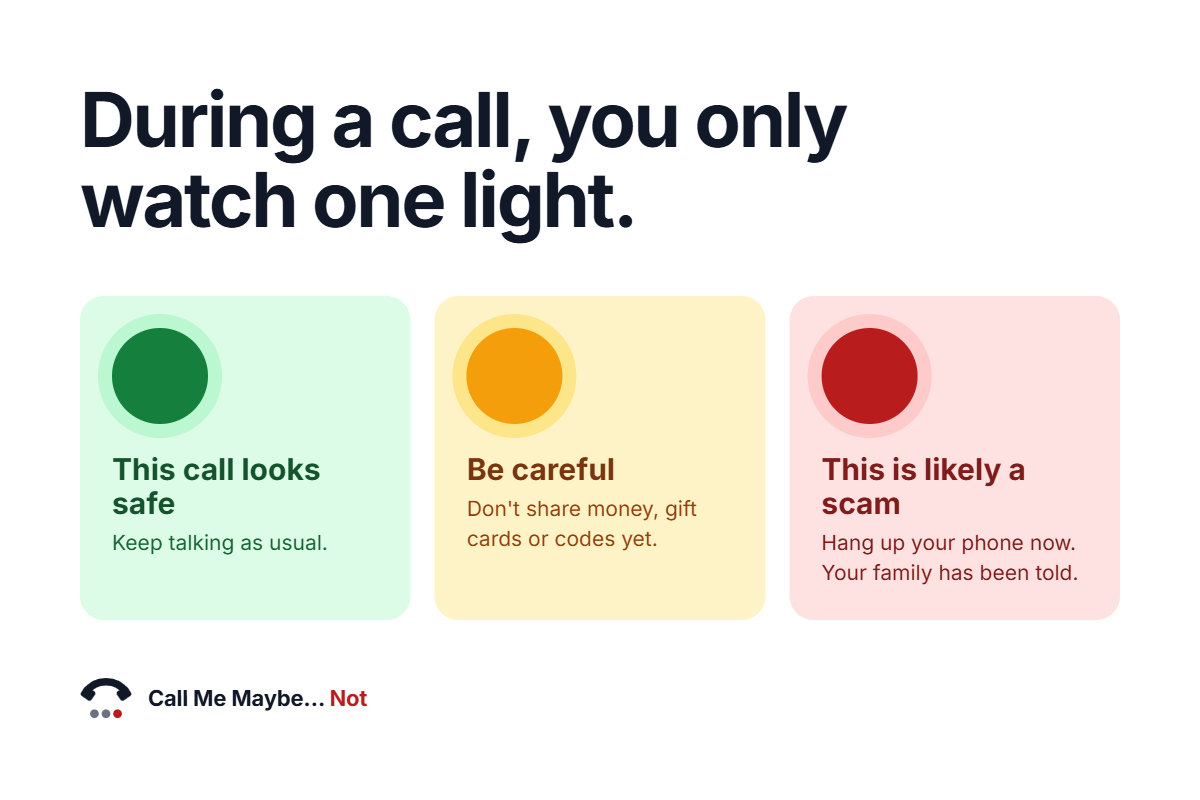
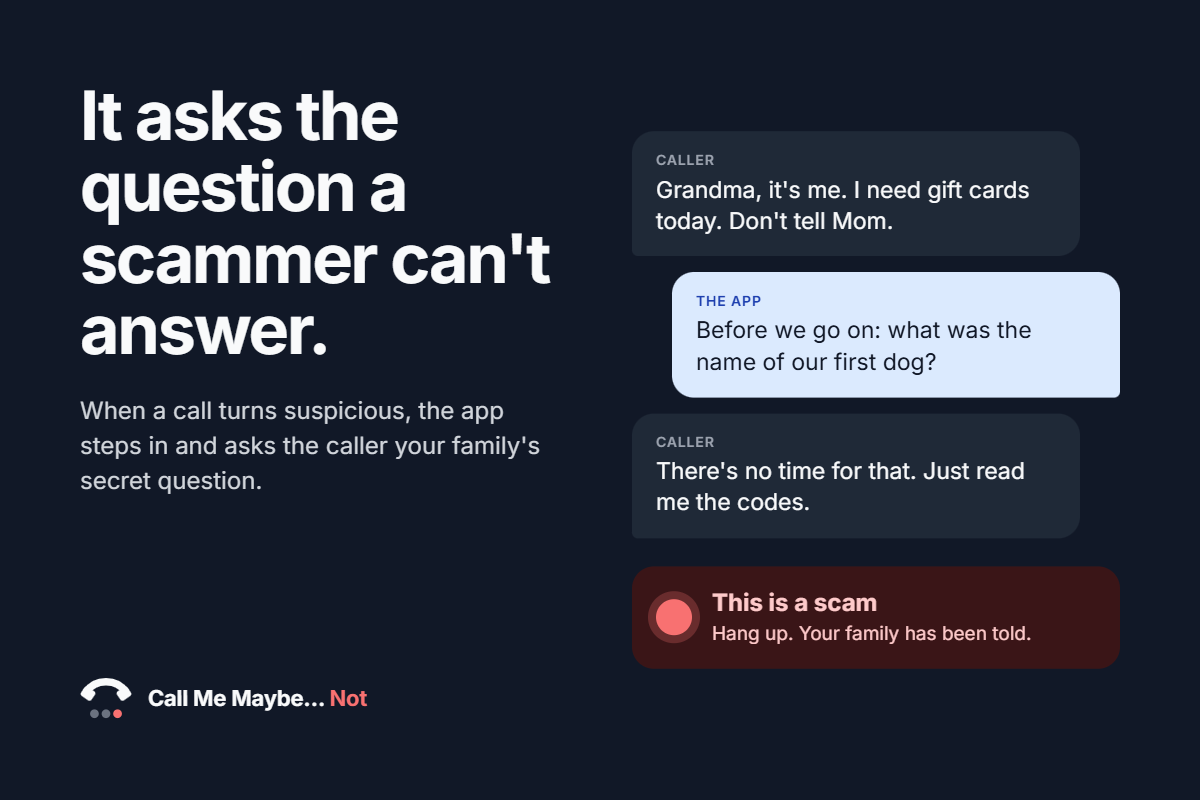
If you're called by an unknown number, the conversation is protected by a real-time assistant scanning for subtle scam signals. If a potential scam is detected, the real-time voice assistant deploys, pretends to be a family member, and gathers more information from the caller. If a scam is confirmed, the call is dropped. Otherwise, the assistant goes back in the background and lets the call continue.
This unique approach prevents scams since early detection is vital. The assistant hops in before any real damage is done, thus saving the poor victim.
How we built it
We leveraged a tech stack mostly consisting of AWS services. We forward the scammers call to AWS via Twilio, which allows us to stream the audio to AWS Transcribe. We also implemented a call bridge via a docker image and run on ECS Fargate. The endpoint to this was done through Amazon Cloudfront + a VPC and a load balancer (ALB). For voicing, we used Amazon Nova Sonic.
The LLM was run on AWS Bedrock (claude haiku 4.5), and a lambda kicks it off based off conversational switches. We store all the data related to the app on DynamoDB and implemented Amazon SNS for sending messages to the family of the victim. Secrets were stored in SSM and we had logs in Cloudwatch for debugging.
Challenges we faced
- We struggled a lot with mocking a scammer and shrouding their cell number as something completely different. Twilio was able to do this, but it was an intensive process that required lots of research.
- We also trained a hidden Markov model (HMM) on the ASU Sol supercomputer, which required intensive labor in acquiring good data.
Improvements in the future
- We intend to work security hardening, and a way to offload the work---particularly AI inference---from the cloud to the local device for privacy-conscious users. We understand that not everyone wants their conversations saved and ran through the cloud so we felt this was an important next step.


