-
-
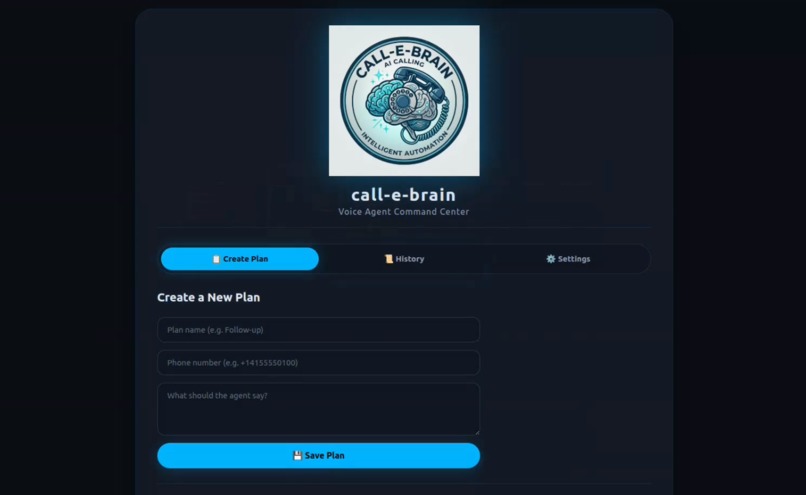
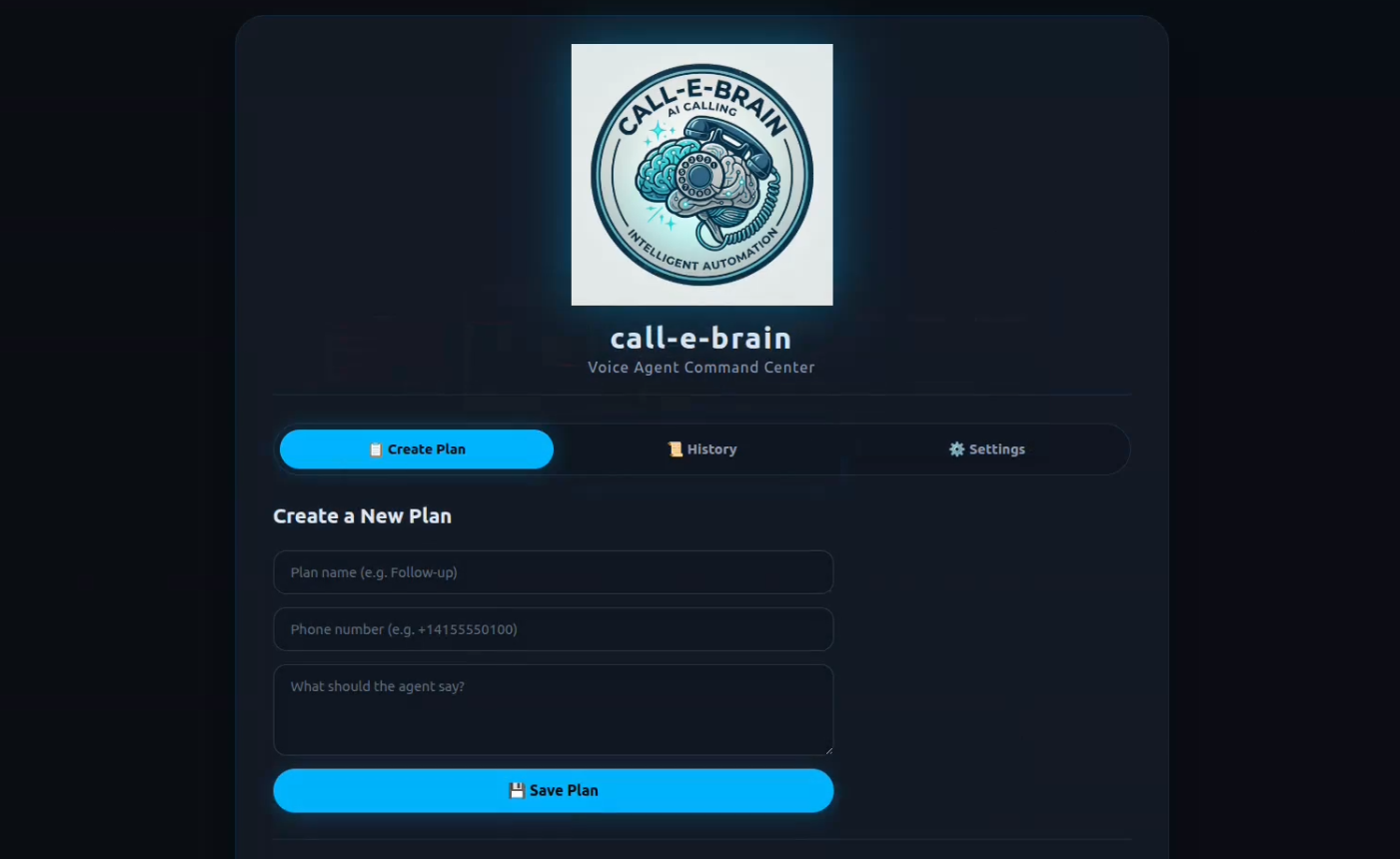
The main page
-
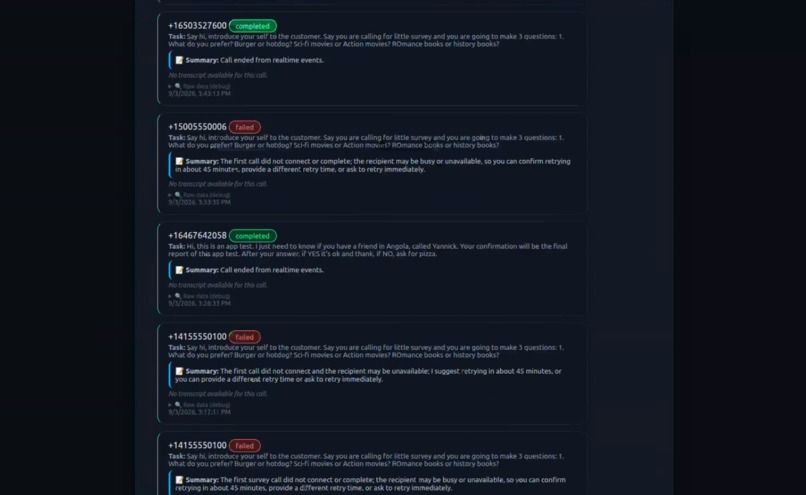
The history
-
The logo
Inspiration
The idea for call-e-brain came from a simple observation: many businesses still rely on phone calls for customer outreach, follow-ups, and surveys, but these tasks are time-consuming and hard to scale. I wanted to build a tool that would allow anyone – from small business owners to enterprise teams – to automate phone-based tasks using AI voice agents, without needing a deep technical background.
Living in Angola, I also faced the challenge of limited support for local phone numbers on some platforms. This pushed me to build a robust application that could handle different scenarios gracefully, and to rely on structured data like transcripts and summaries to prove that the integration works, even when calls go to voicemail.
What it does
call-e-brain is a voice agent command center built with CALL-E. It allows users to:
- 📋 Create Plans – Save phone numbers and scripts for repeated use.
- ✏️ Edit Plans – Update any saved plan inline.
- 📞 One-Click Calls – Execute a plan with real CALL-E voice agents.
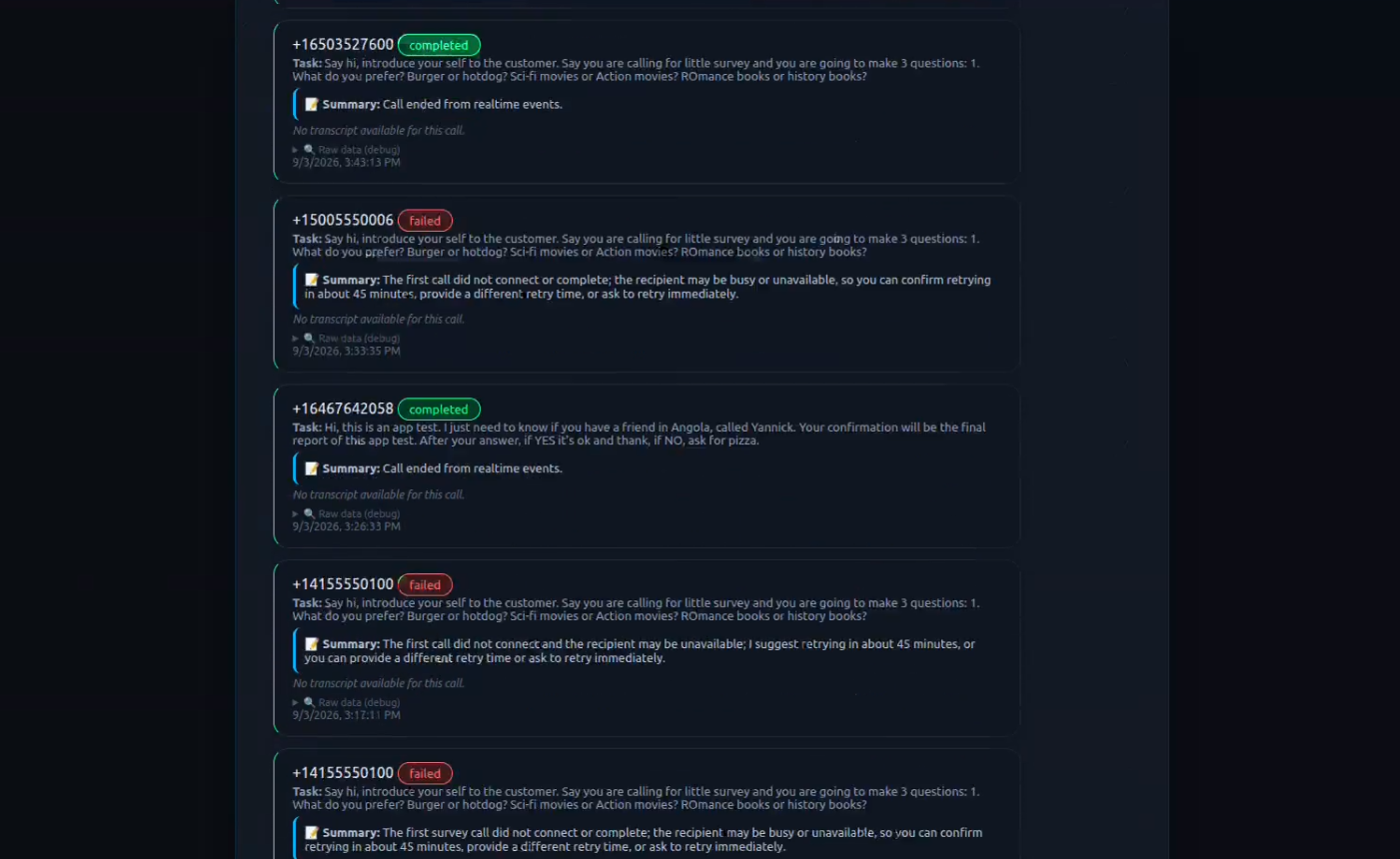
- 📜 Call History – View status, summary, and full transcript of every call.
- 🗑️ Clear History – Reset call logs with one click.
The app provides a complete dashboard where users can manage their calling campaigns, view conversation transcripts, and analyze results – all from a single interface.
How I built it
I built call-e-brain using:
- Node.js + Express – Backend server and API routes.
- SQLite – Lightweight database for storing users, plans, and call history.
- CALL-E SDK (
@call-e/calle) – Voice API for making real phone calls with AI agents. - Vanilla JavaScript + CSS – Frontend with a cyberpunk-inspired dark theme.
The architecture is simple but effective: the frontend communicates with the backend via REST API, and the backend orchestrates calls through the CALL-E SDK. All call data – including transcripts and summaries – is stored in SQLite and displayed in the history section.
Challenges I faced
One of the biggest challenges was testing the application with real phone numbers. Since I'm based in Angola, where CALL-E doesn't yet support local numbers, I had to rely on US-based test numbers and a friend's number for validation. Even when calls went to voicemail, the app still captured the transcript and summary, proving that the integration worked correctly.
Another challenge was ensuring the application could handle different call outcomes gracefully – from successful live conversations to voicemail and failed calls. I implemented robust error handling and data extraction logic to display the most relevant information in the history section.
Accomplishments I'm proud of
- ✅ A fully functional web application that integrates with CALL-E to make real phone calls.
- ✅ A clean, modern cyberpunk-themed interface that is both functional and visually appealing.
- ✅ Comprehensive call history with summaries, transcripts, and raw data for debugging.
- ✅ Inline editing of plans, allowing users to update scripts and numbers without recreating plans.
- ✅ The app works entirely without authentication – users can start using it immediately.
What I learned
This project taught me a lot about working with voice AI platforms and building production-ready applications. I learned:
- How to integrate with the CALL-E SDK and handle asynchronous call workflows.
- How to parse and display structured data from API responses.
- The importance of robust error handling and providing clear feedback to users.
- How to design a UI that is both functional and visually engaging.
I also gained a deeper appreciation for the power of voice AI in automating real-world tasks – and I'm excited to see how platforms like CALL-E evolve to support more regions and languages.
What's next for call-e-brain
- 🌍 More region support – As CALL-E expands to more countries, I'll add support for local numbers in Angola, Portugal, and other Portuguese-speaking regions.
- 🔔 Scheduled calls – Allow users to schedule calls for specific dates and times.
- 📊 Analytics dashboard – Visual insights into call success rates, conversation patterns, and user engagement.
- 🔄 Webhook integration – Connect call outcomes to external systems like CRMs and databases.
- 📱 Mobile-friendly UI – Further improve the responsive design for seamless use on smartphones.
Built With
- call-e
- css
- express.js
- html
- javascript
- node.js
- rest-api
- sqlite
- voice


Log in or sign up for Devpost to join the conversation.