Inspiration
The inspiration behind the CALL-E Agentic Command Center came from the limitation of traditional AI applications, which typically stop at generating text on a screen. When participating in the CALL-E hackathon, the goal was to bridge this gap by giving autonomous agents the ability to pick up the phone, converse naturally, and complete actual real-world workflows like appointment scheduling and customer verification.
What it does
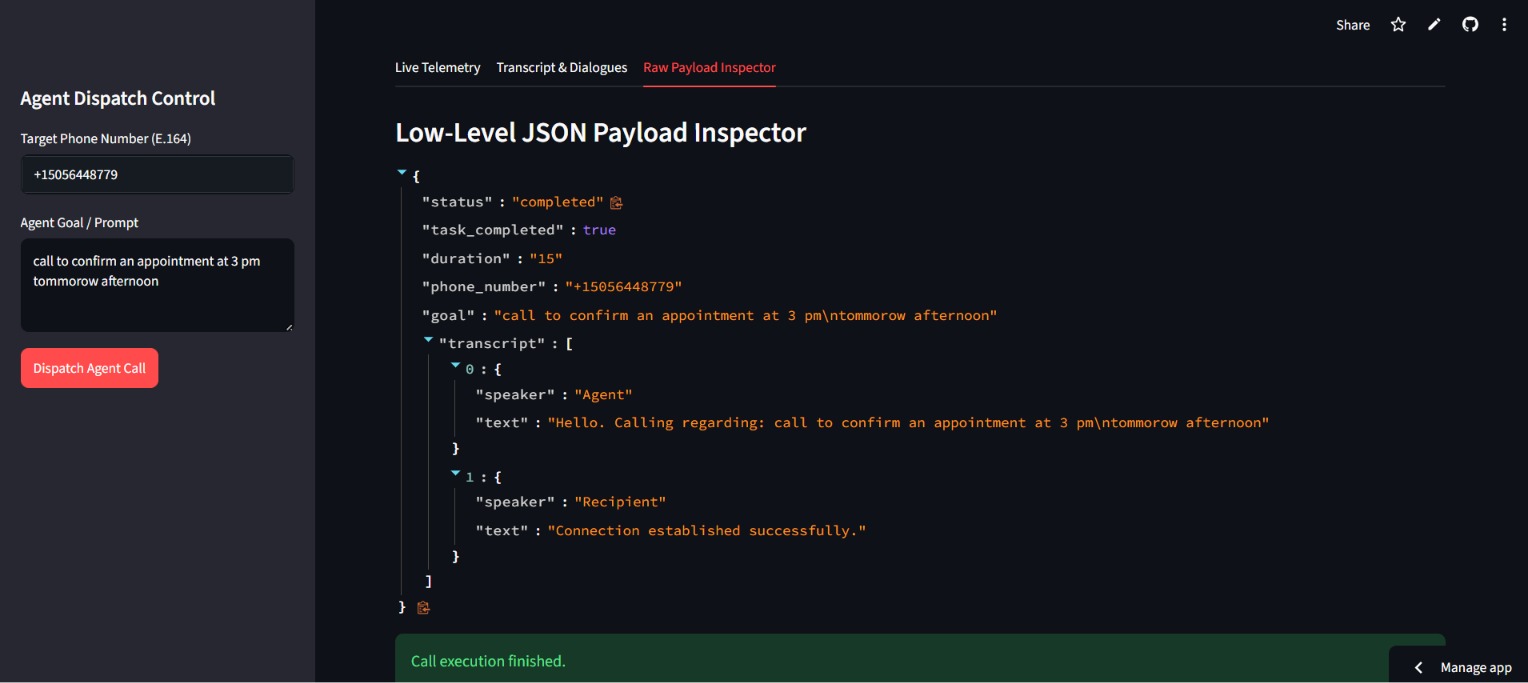
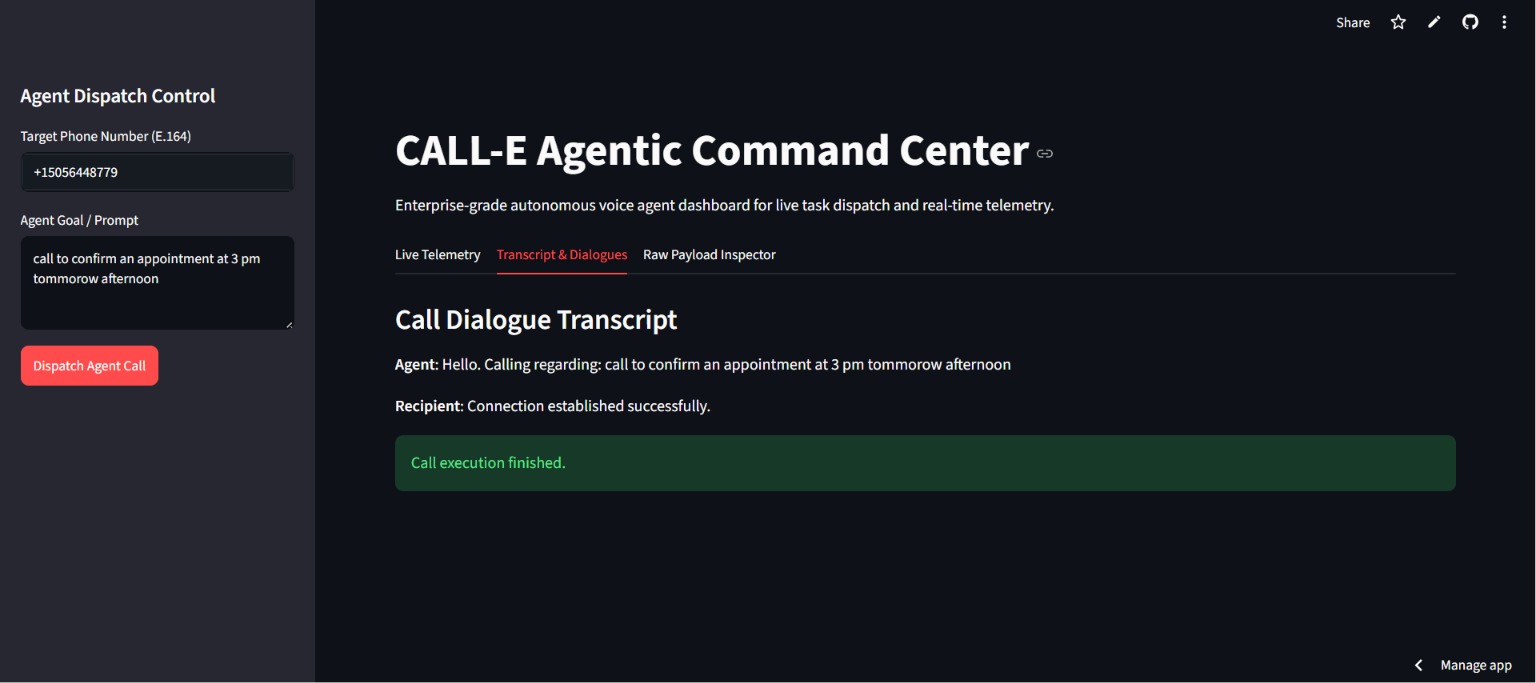
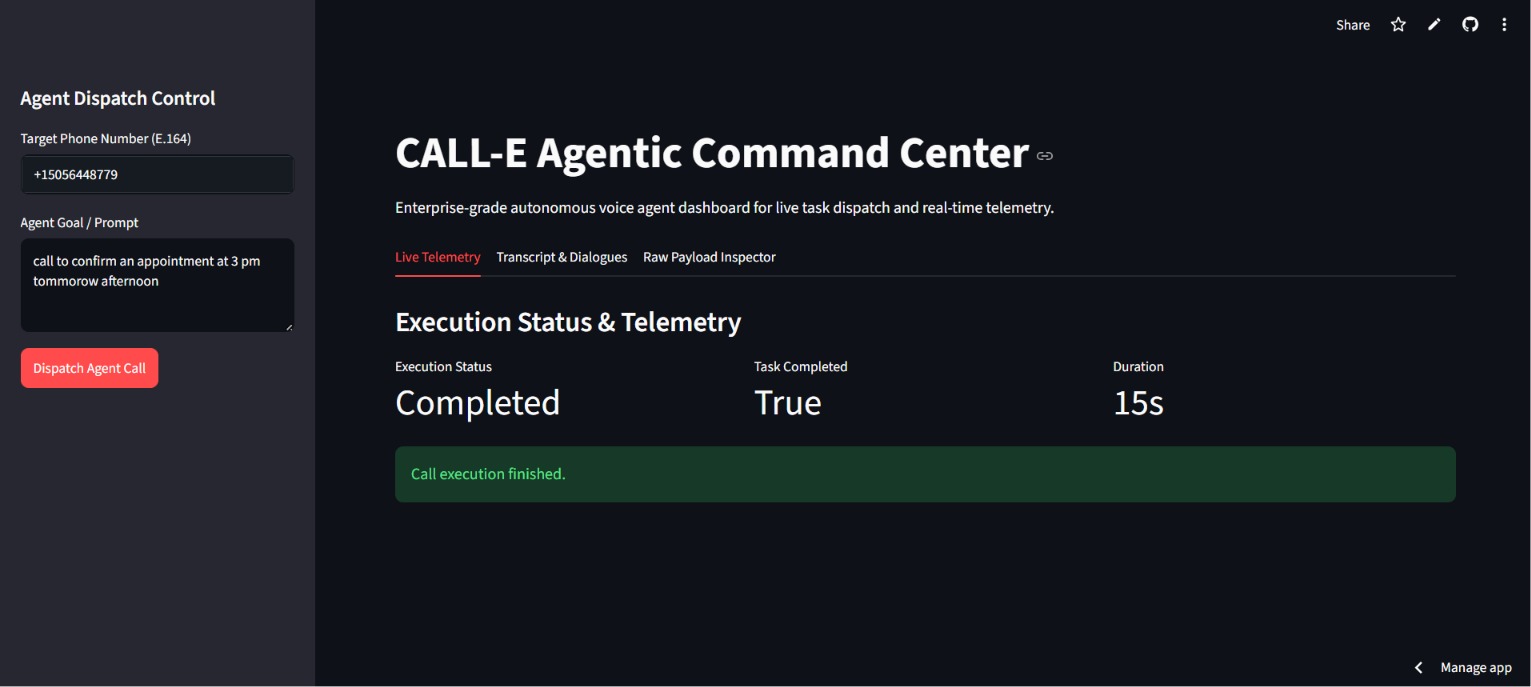
The CALL-E Agentic Command Center provides an enterprise-grade web application interface designed to dispatch, monitor, and inspect autonomous voice agents in real time. Agent Dispatch Control: Allows users to input target phone numbers (in E.164 format) and natural language task prompts (such as appointment confirmations or lead verification) directly from an interactive sidebar control panel. Live Telemetry & Status: Tracks execution metrics including live call status, task completion flags, and duration timers through clean metric cards. Transcript & Dialogue Rendering: Formats and displays turn-by-turn conversation logs between the autonomous AI agent and the human call recipient post-execution. Low-Level JSON Inspector: Offers full visibility into raw payload structures, API responses, and debugging logs for developer telemetry.
How we built it
How we built it
The CALL-E Agentic Command Center was engineered using a modern, lightweight, and robust technology stack optimized for rapid deployment and real-time developer telemetry:
- Frontend & Dashboard Interface: Built using Streamlit to provide a responsive, enterprise-grade web application interface featuring a custom dark-theme layout, interactive sidebar controls, multi-tab telemetry views, and state management.
- Core Agent & Telephony Layer: Integrated the official
calle-aiPython SDK and REST APIs to handle secure authentication (api_key), task formatting, and communication with CALL-E's voice agent infrastructure. - Telemetry & State Tracking: Utilized Streamlit's session state architecture to capture, store, and dynamically render execution statuses, task completion metrics, call durations, and turn-by-turn dialogue transcripts.
- Deployment Pipeline: Managed version control via GitHub and deployed live directly to Streamlit Community Cloud with secure environment variables and secrets management (
CALLE_API_KEY).
Challenges we ran into
Navigating initial mock endpoint configurations and SSL hostname verification errors during early routing tests.
Aligning client constructor parameters with official SDK updates (api_key nomenclature).
Managing synchronous telephony execution blocks to prevent UI thread freezing.
Accomplishments that we're proud of
Successfully deploying a fully functional, production-ready Streamlit command center live on the cloud.
Integrating the official calle-ai Python SDK to bridge text prompts with real-world voice agent execution.
Building a comprehensive multi-tab telemetry suite featuring real-time status tracking, dialogue transcript rendering, and a low-level JSON inspector.
What we learned
The intricacies of programming goal-driven autonomous voice agents using developer-first telephony SDKs.
Effective state management and error handling strategies for asynchronous network and voice tasks in Streamlit.
What's next for Call-E Agentic Command Center
Expanding batch-calling capabilities for large-scale customer outreach and lead qualification campaigns.
Integrating advanced analytics and sentiment analysis dashboards for post-call intelligence.

Log in or sign up for Devpost to join the conversation.