-
-
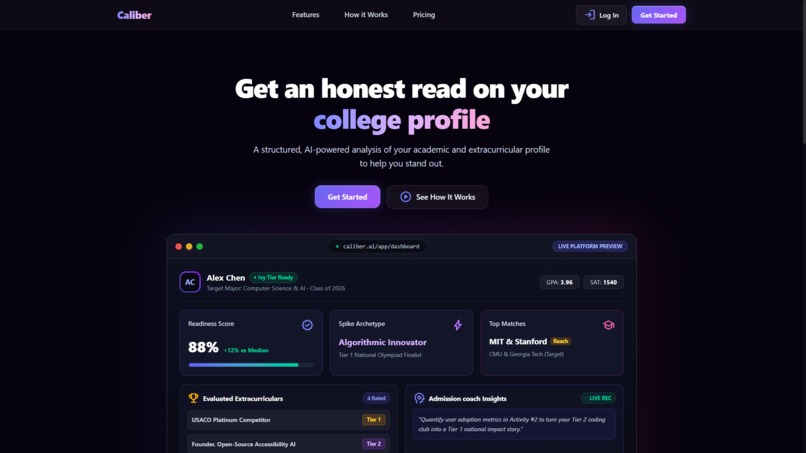
Landing Page
-
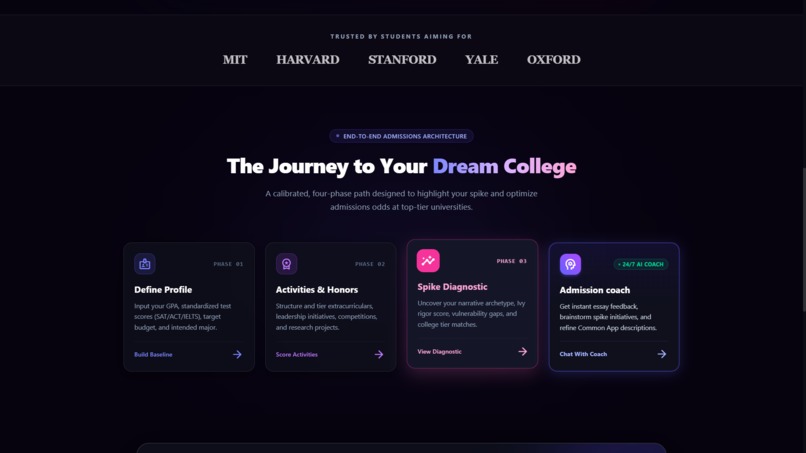
Landing page
-
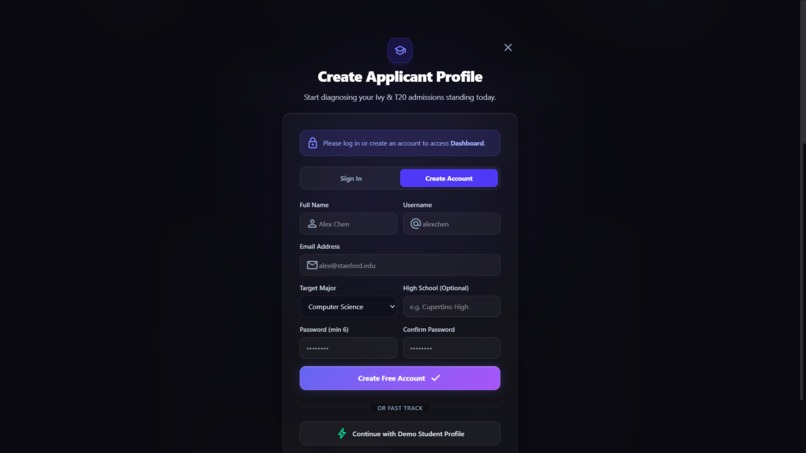
Auth page
-
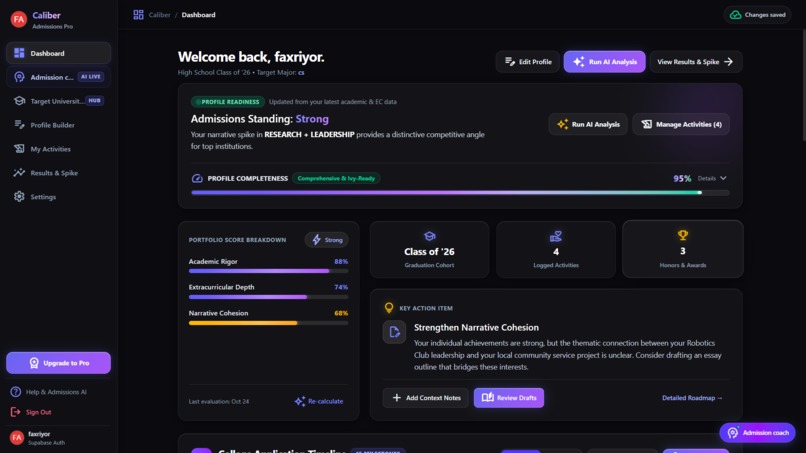
Dashboard
-
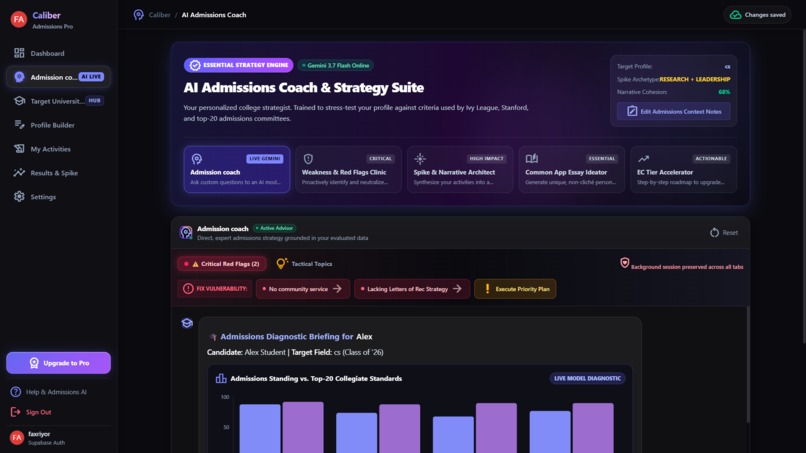
Real-time AI admission coach
-
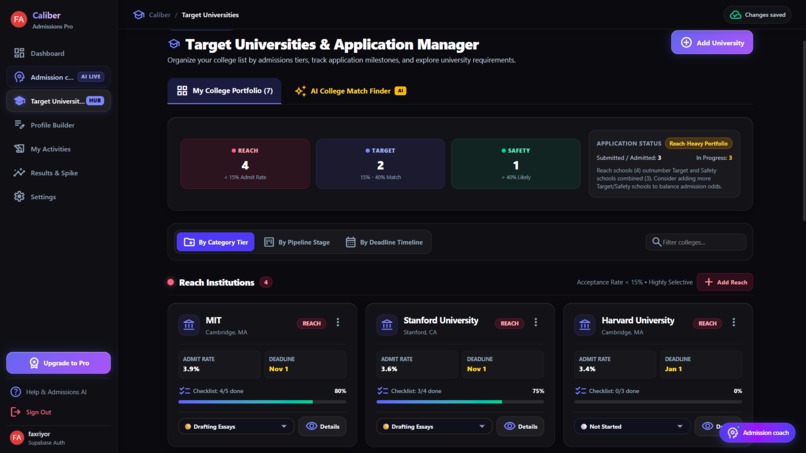
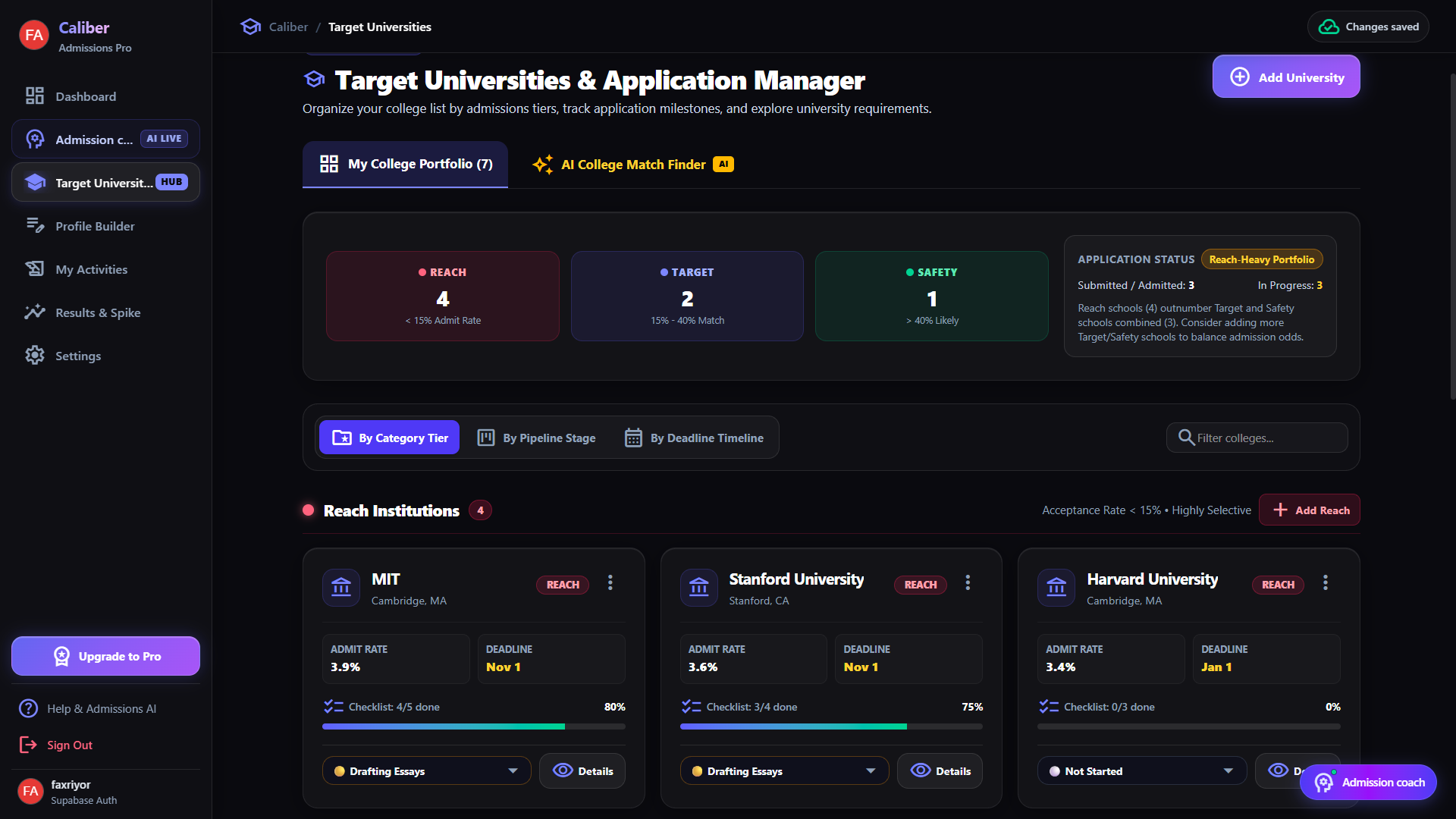
Target university
-
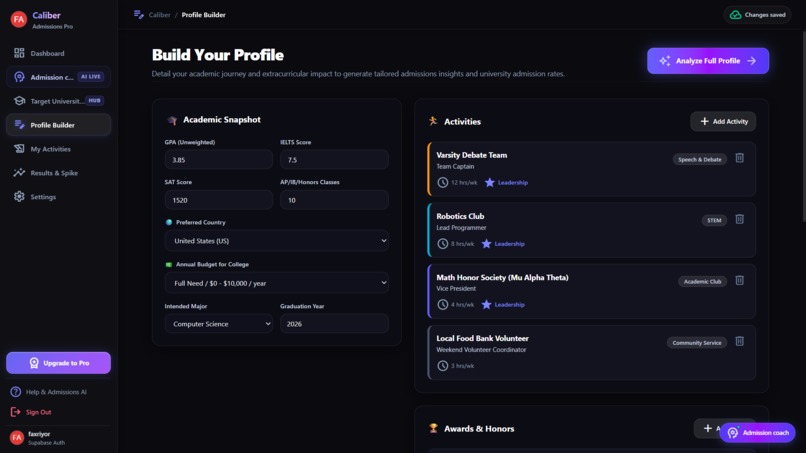
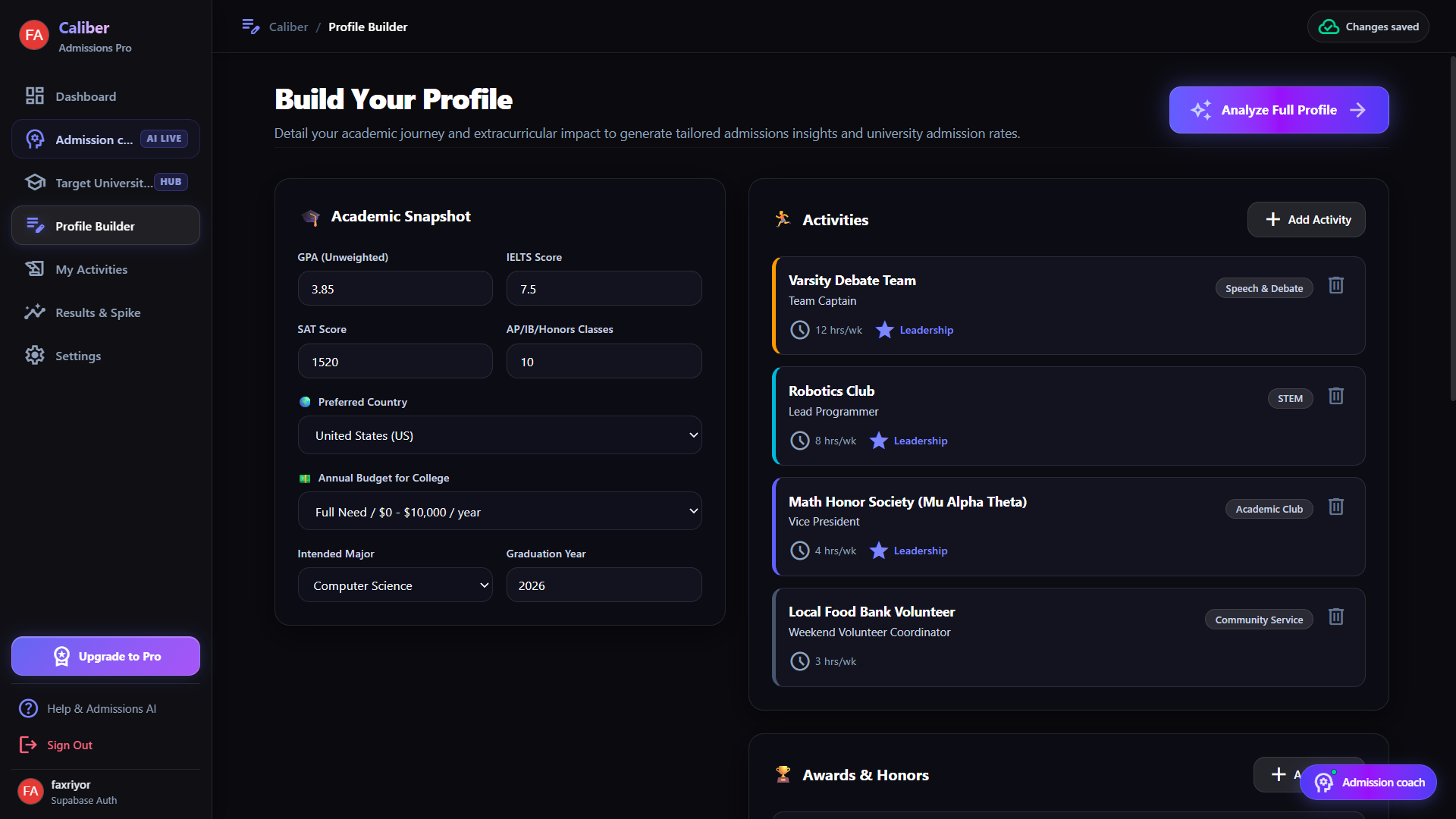
Profile builder section
-
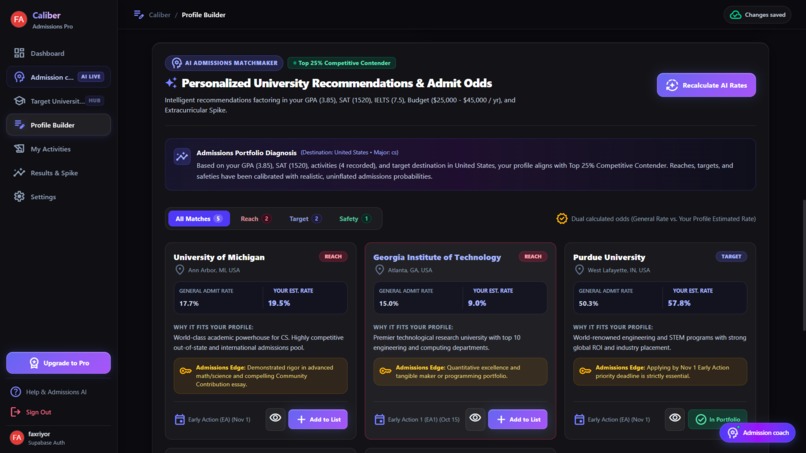
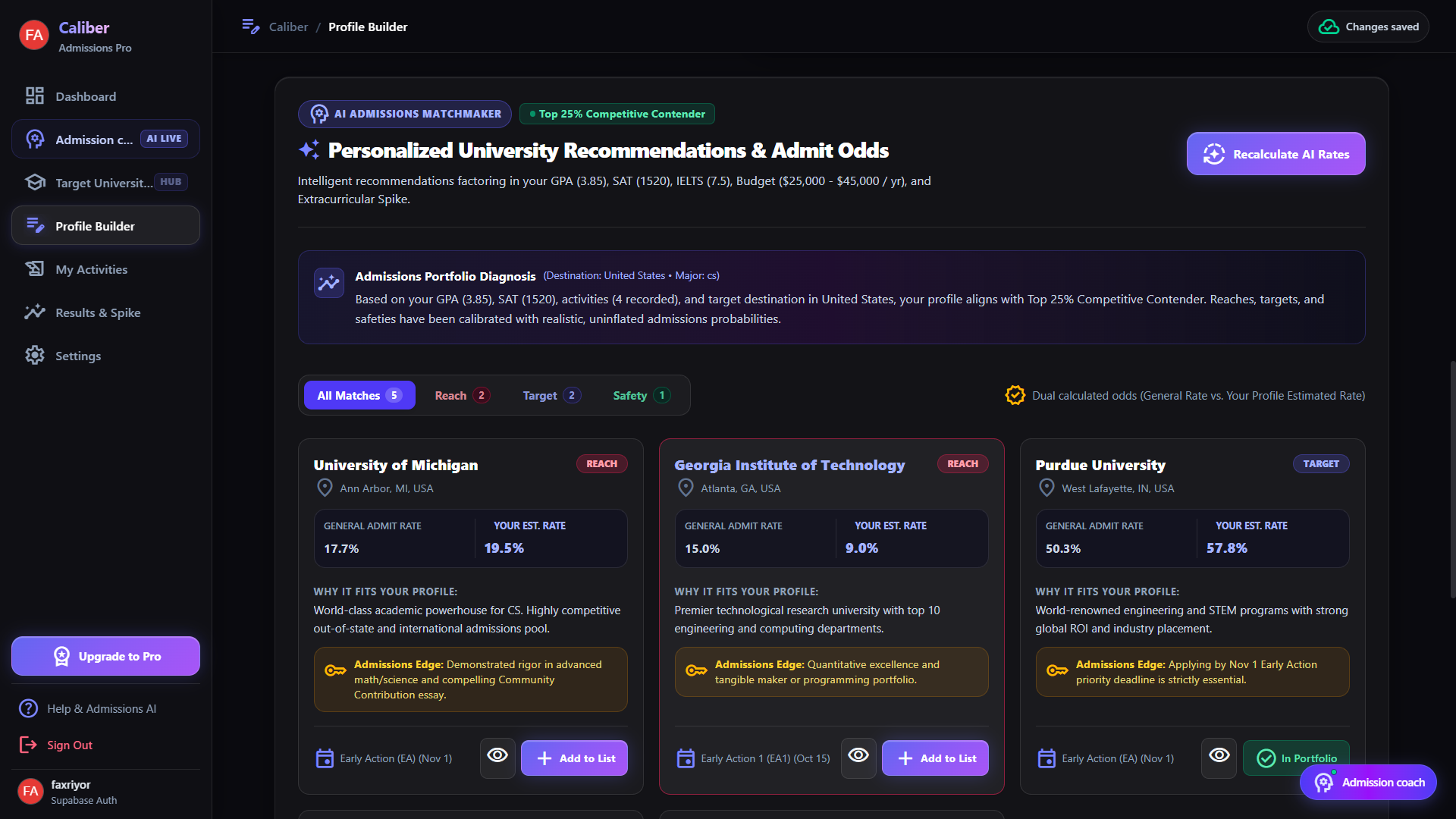
AI university recommendation
-
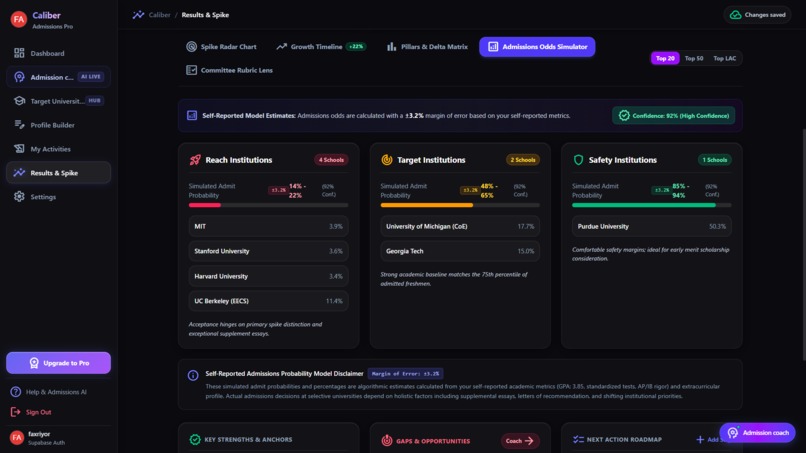
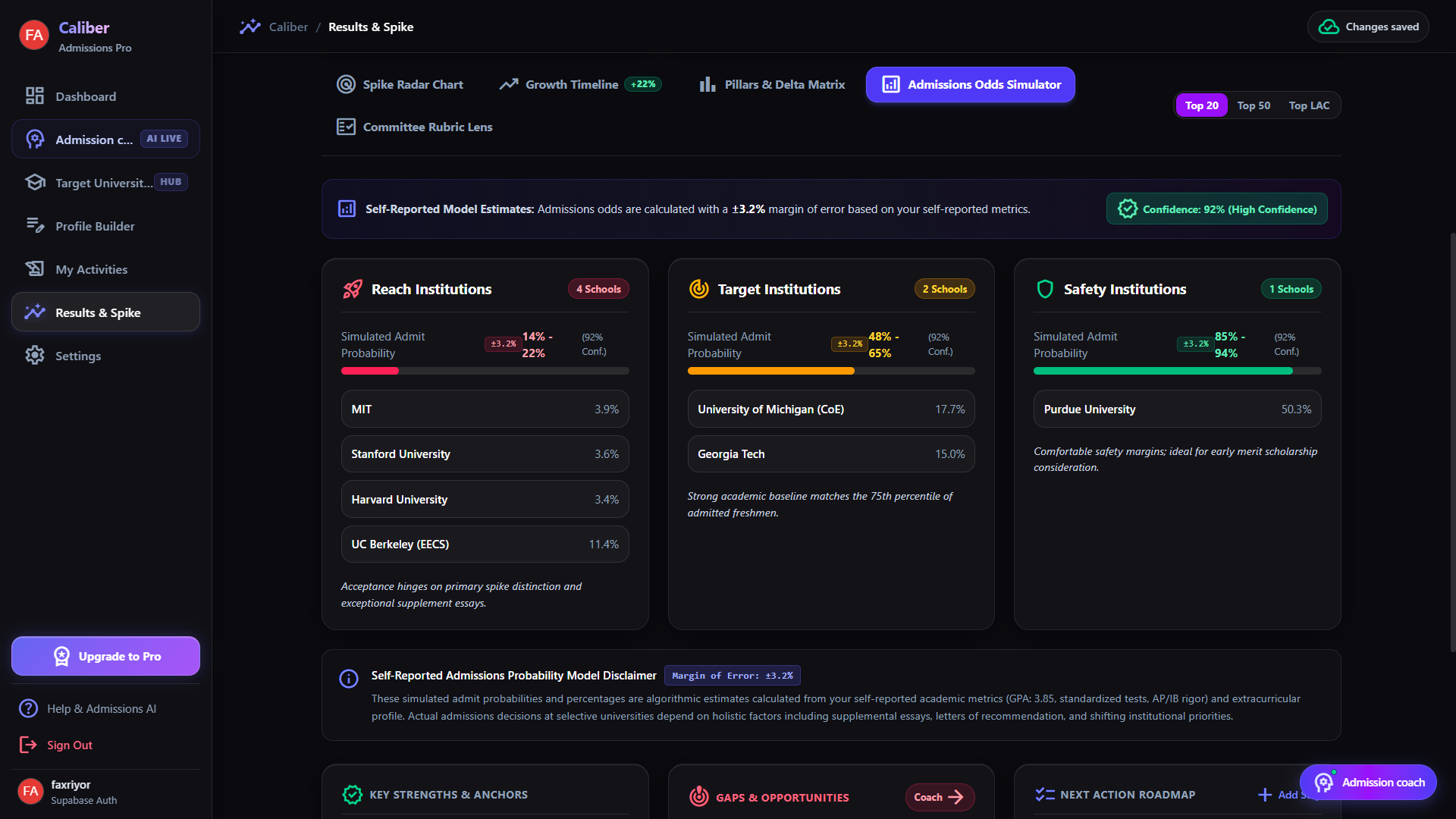
Results & Spike section
-
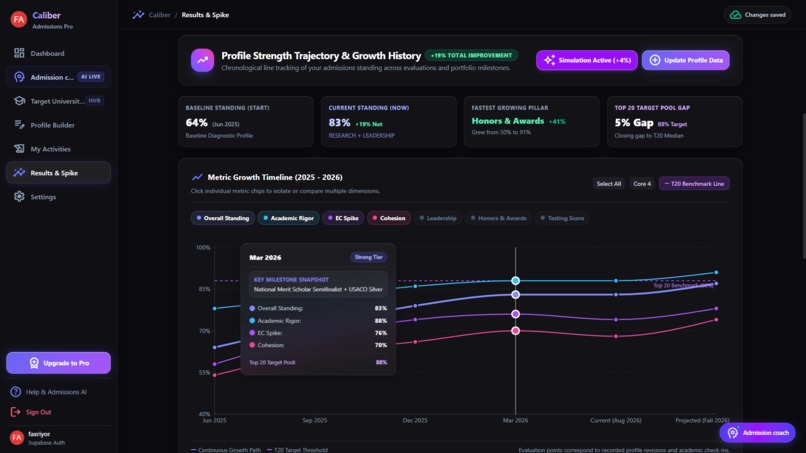
Results & Spike section
-
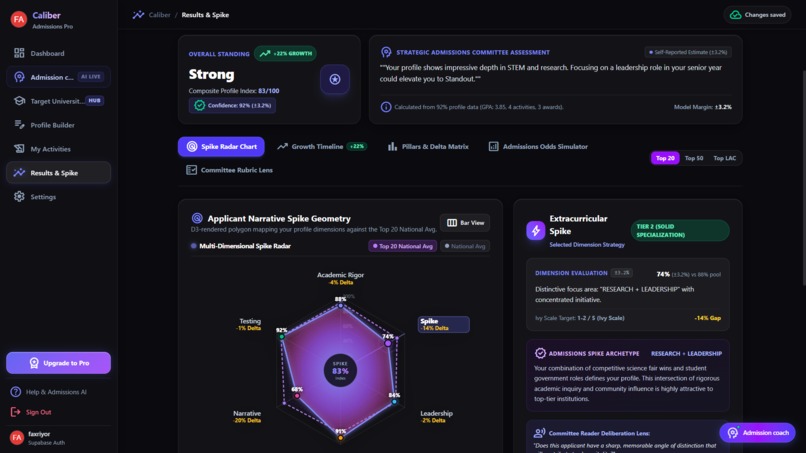
Results & Spike section
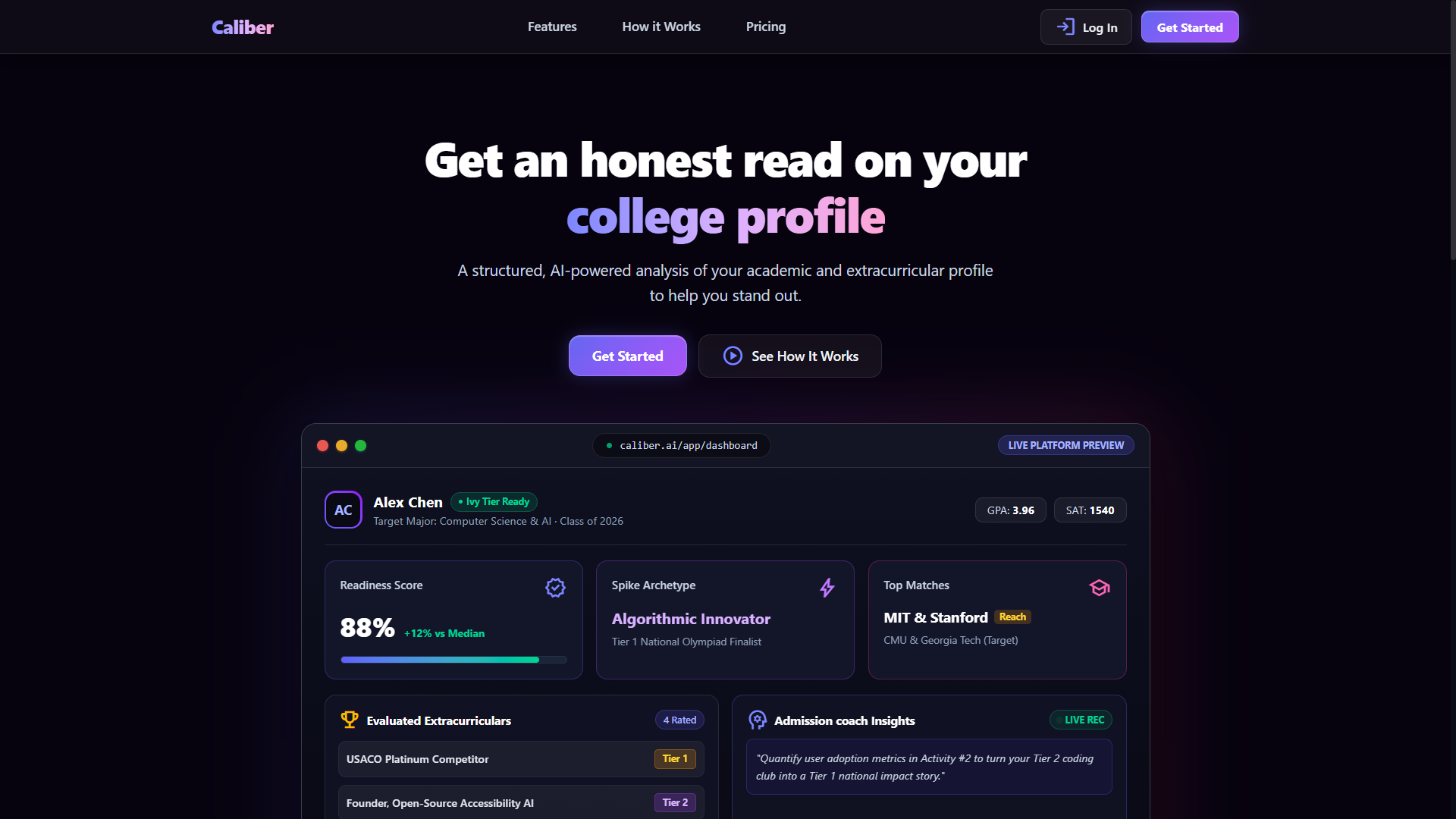
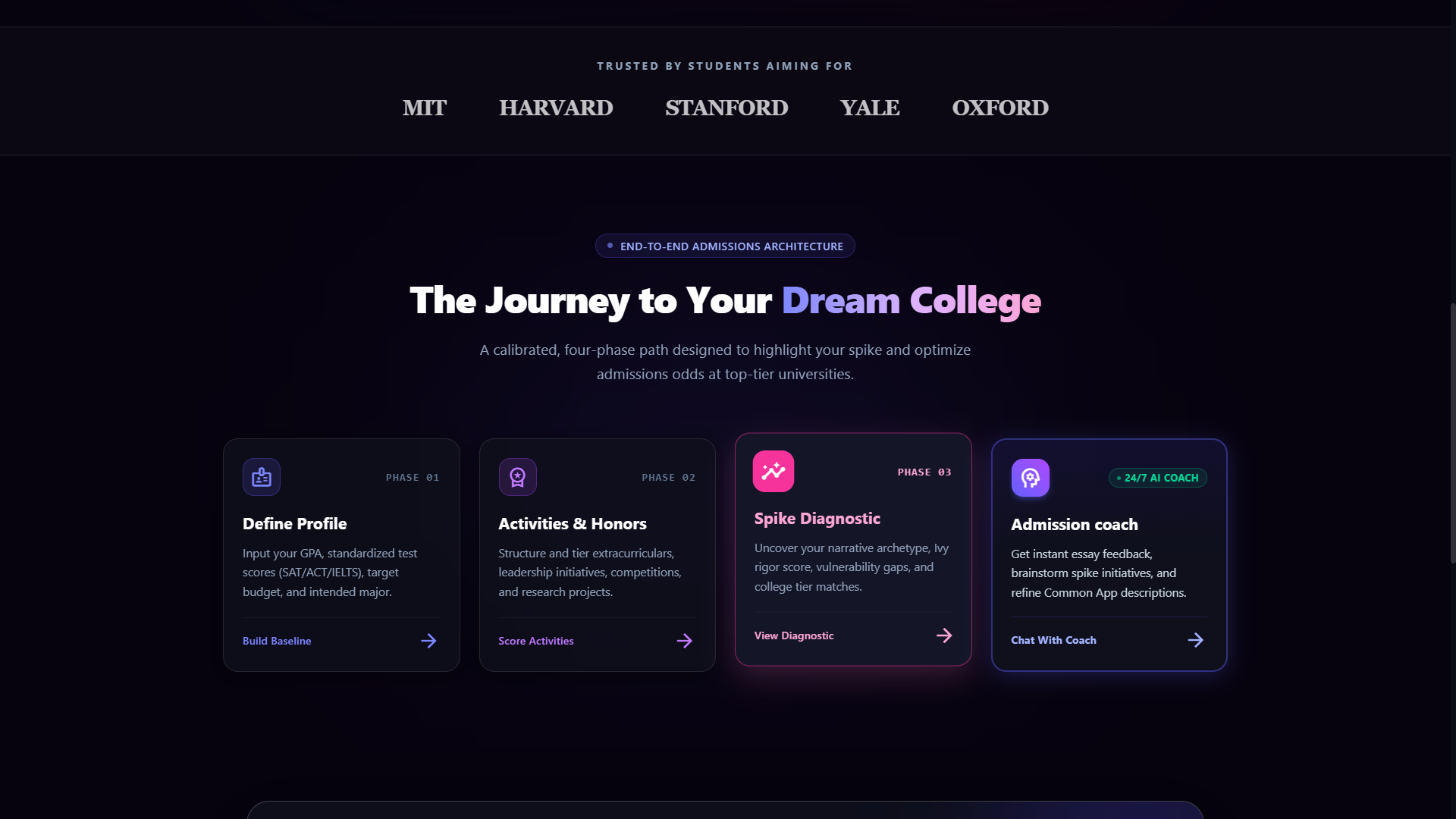
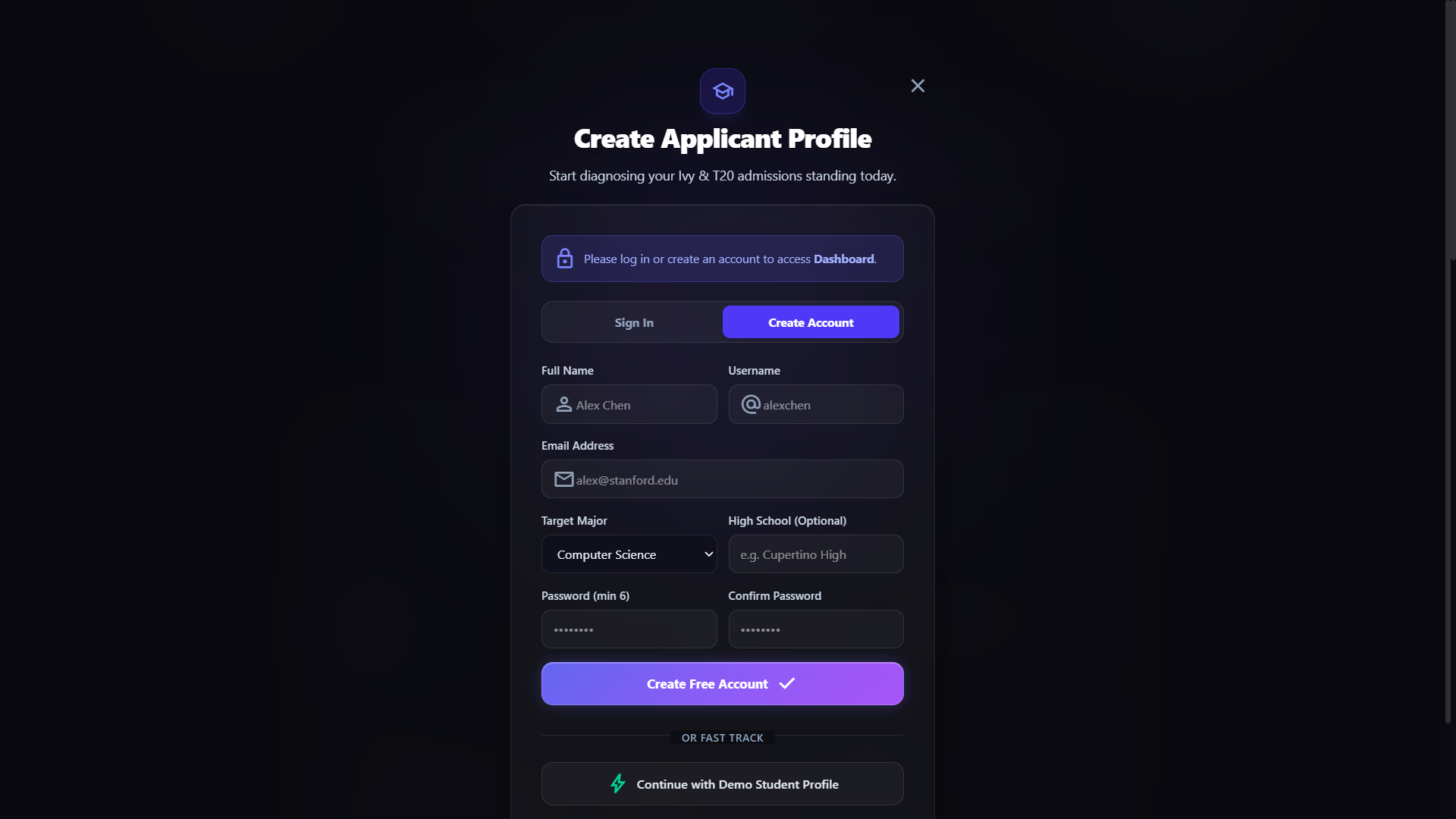
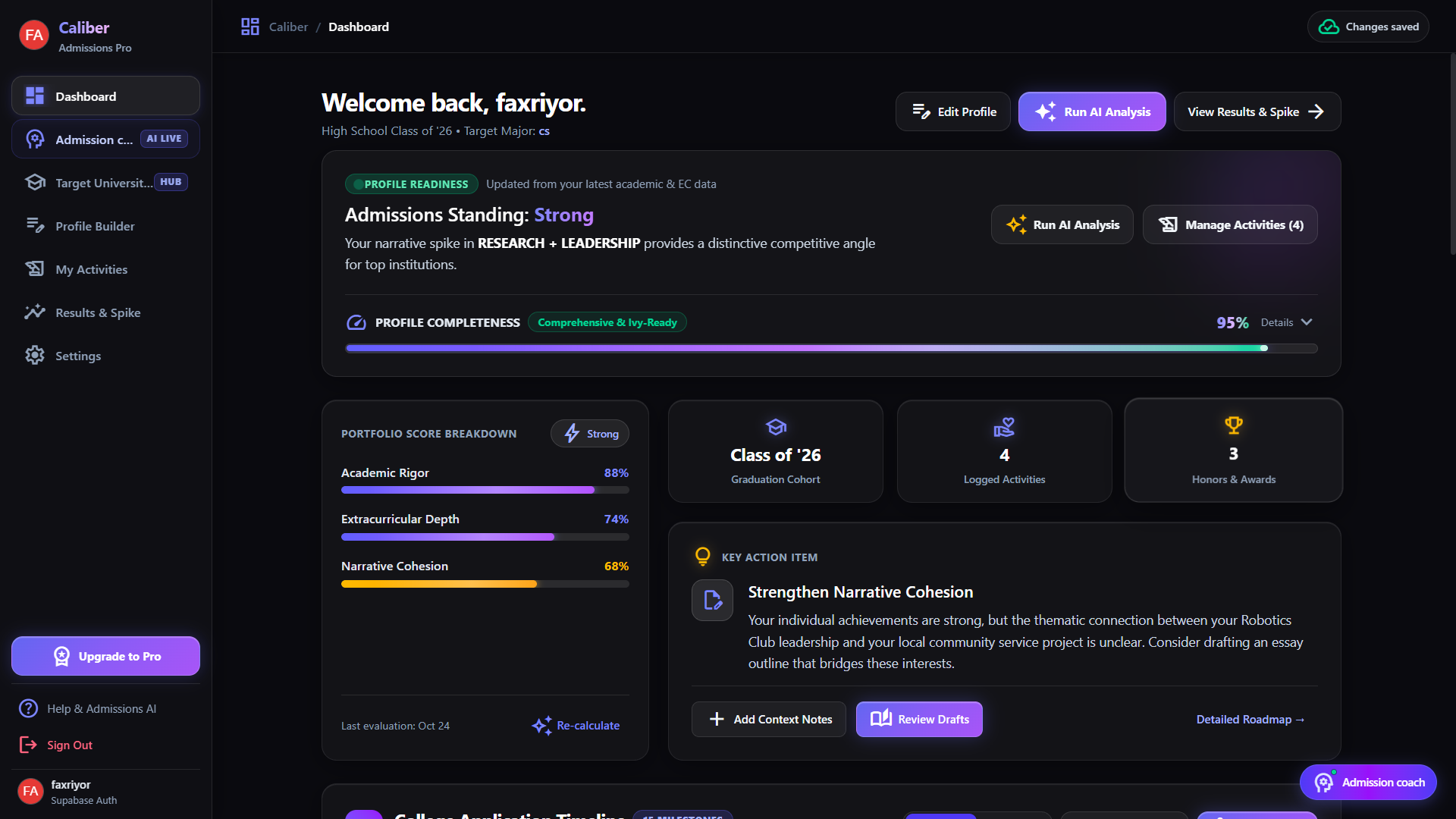
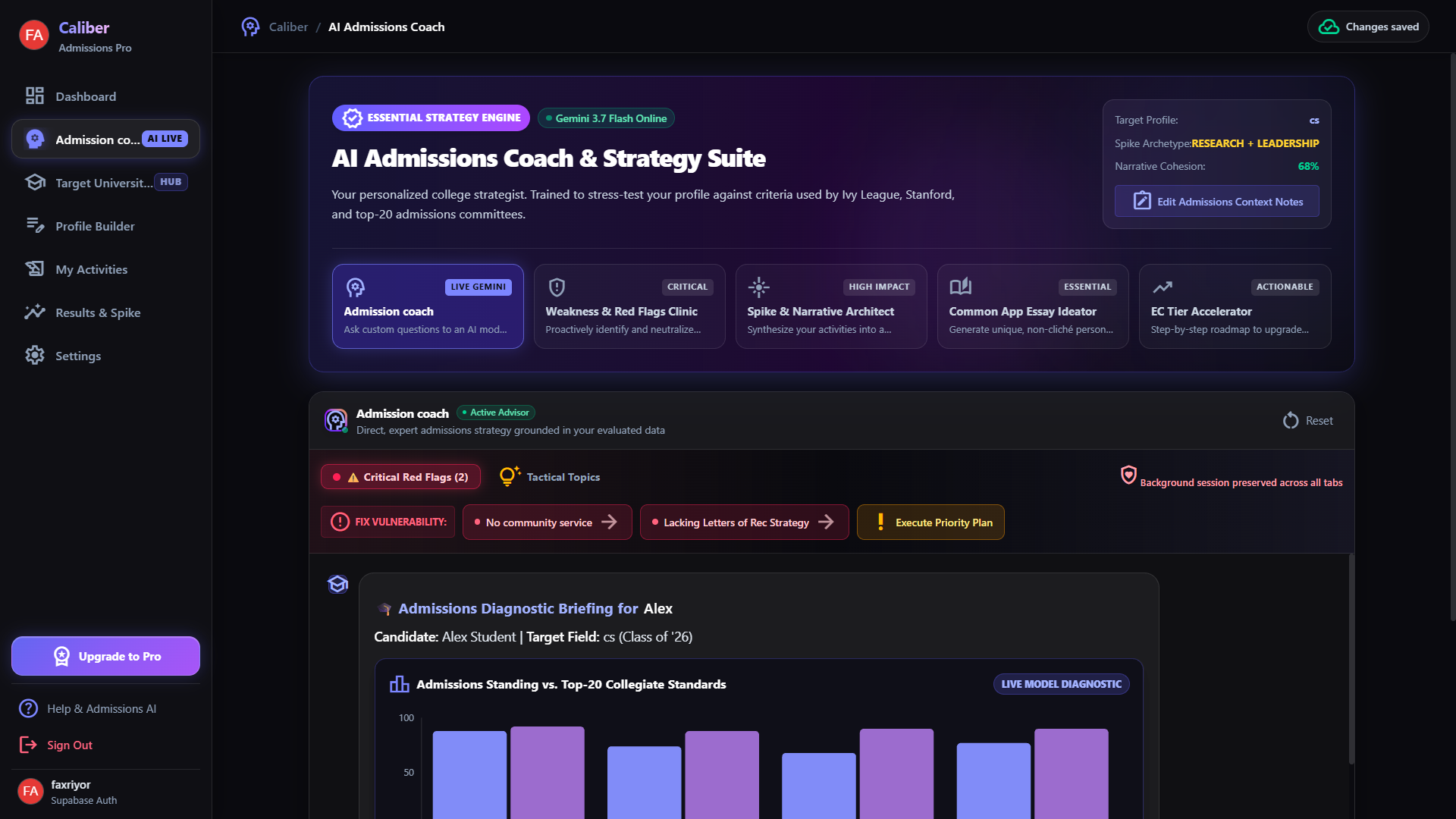
College admissions feels like a black box. Private counselors charge thousands of dollars just to tell students how they actually stack up. We wanted to give any student that same honest read, for free.
What it does
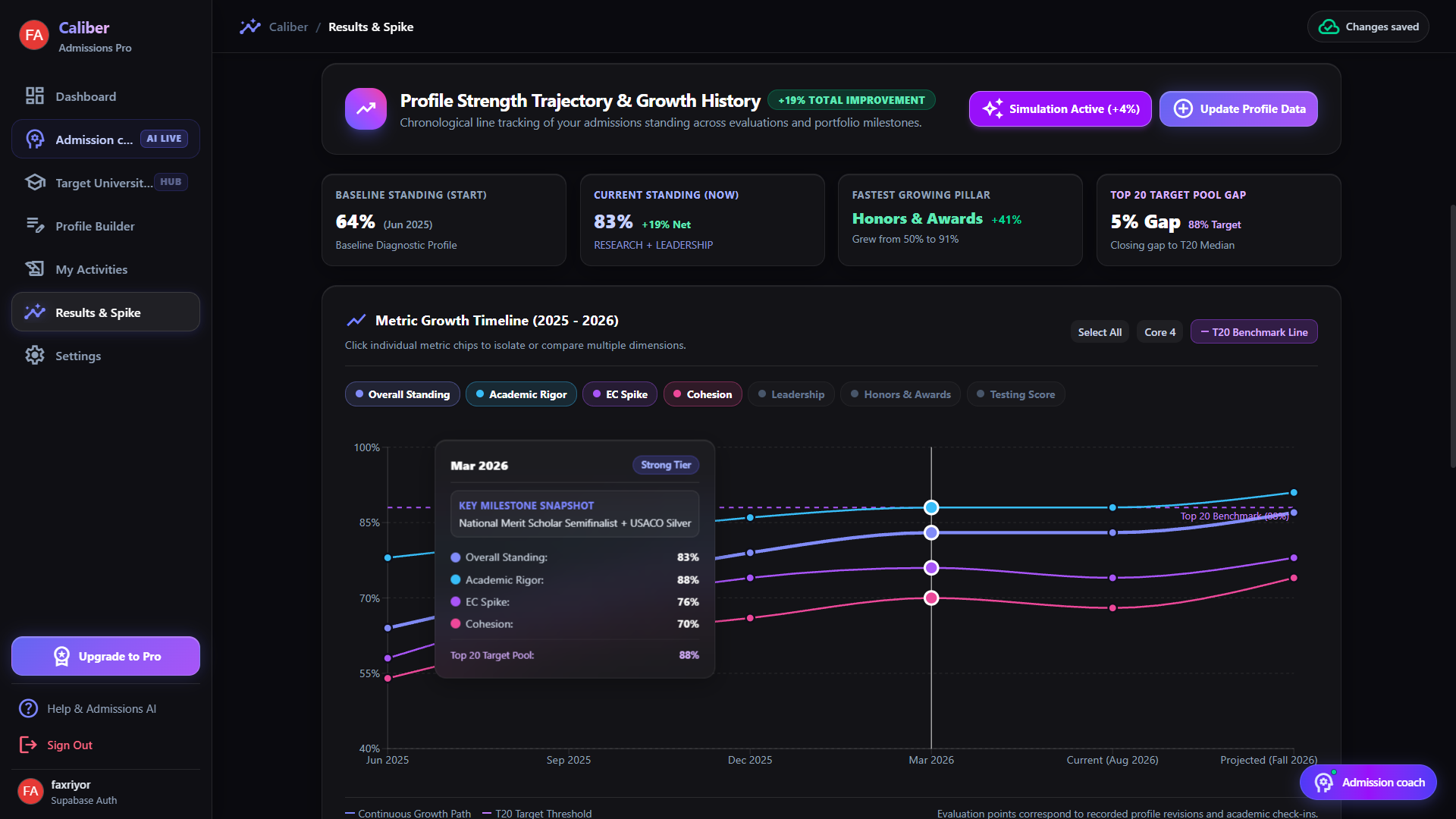
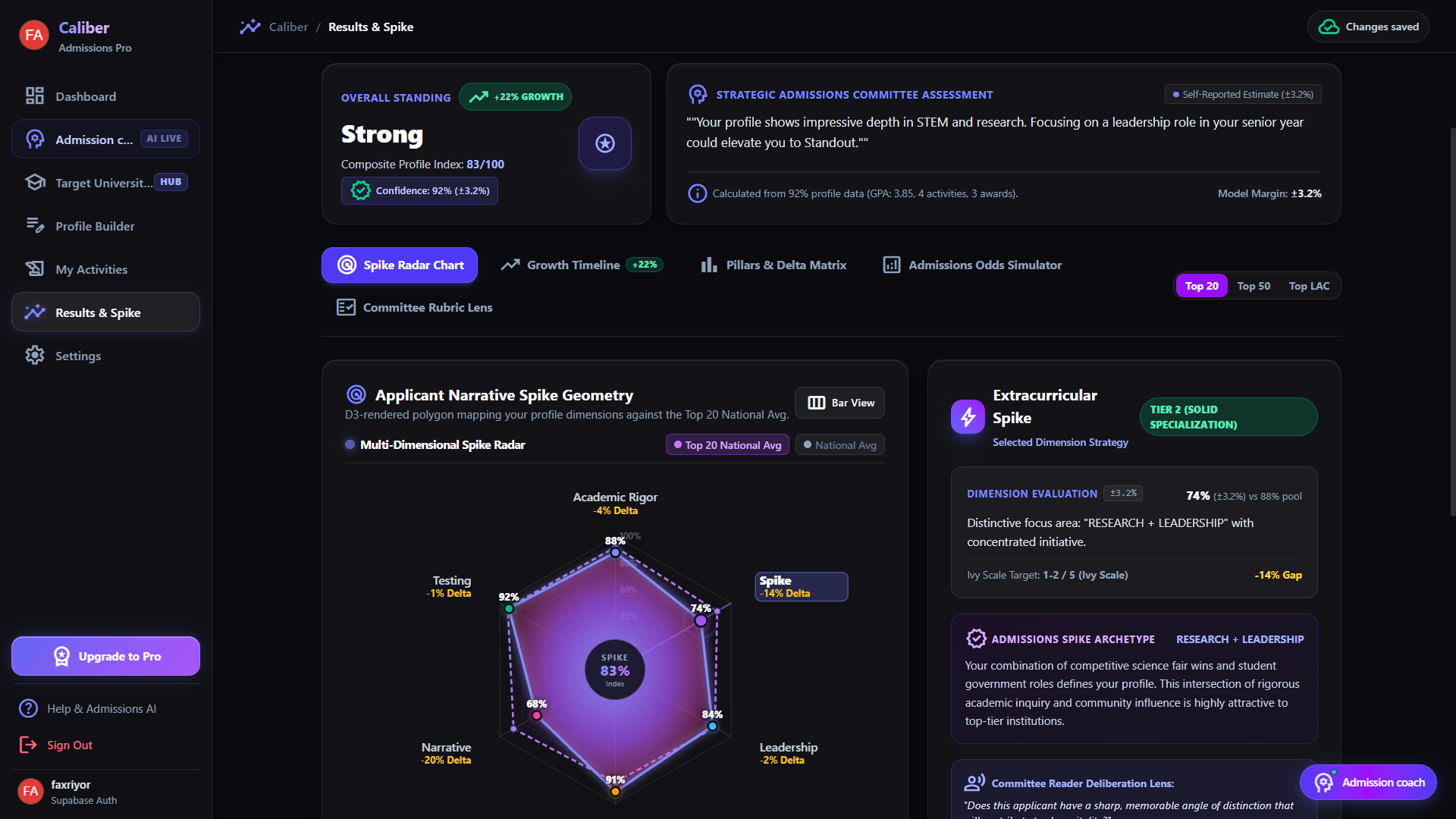
Caliber scores a student's profile — academics and extracurriculars — using a deterministic algorithm, not just AI vibes. It shows exactly where you stand against national and top-20 applicant pools with a radar chart, helps you build a balanced Reach/Target/Safety college list, and flags real gaps like missing leadership or shallow activity commitments. An AI counselor chat gives personalized next steps based on your actual data.
How we built it
React, TypeScript, Vite, and Tailwind on the frontend, with D3 and Recharts for the visualizations. Express + Supabase handle the backend and auth. Gemini powers the narrative insights and chat, but the actual scoring is a hand-built TypeScript function — we wanted the numbers to be explainable, not a black box.
Challenges we ran into
The AI kept giving confident, polished verdicts even off almost no data — one logged activity and it'd still sound like it knew you. We had to build confidence scoring that scales with how complete your profile actually is, so it stops pretending to know more than it does.
Accomplishments that we're proud of
A scoring engine you can actually explain, not a black box. And catching the overconfidence problem before it made the whole thing feel dishonest.
What we learned
Good AI output still needs guardrails. A model will happily narrate conclusions from thin data unless you force it not to.
What's next for Caliber
Deeper essay analysis, more admissions data feeding the scoring model, and turning the AI counselor into something students actually come back to throughout the application season.
Built With
- css
- d3.js
- express.js
- react
- recharts
- supabase
- tailwind
- typescript
- vite


Log in or sign up for Devpost to join the conversation.