-
-
-
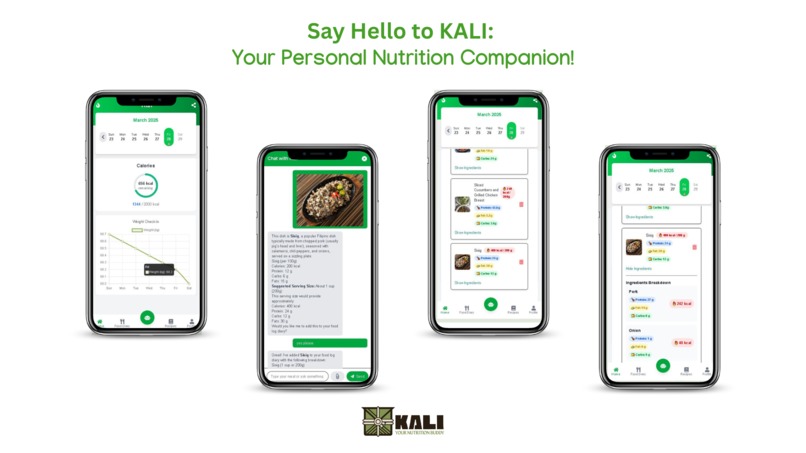
Kali your personal nutrition buddy!
-
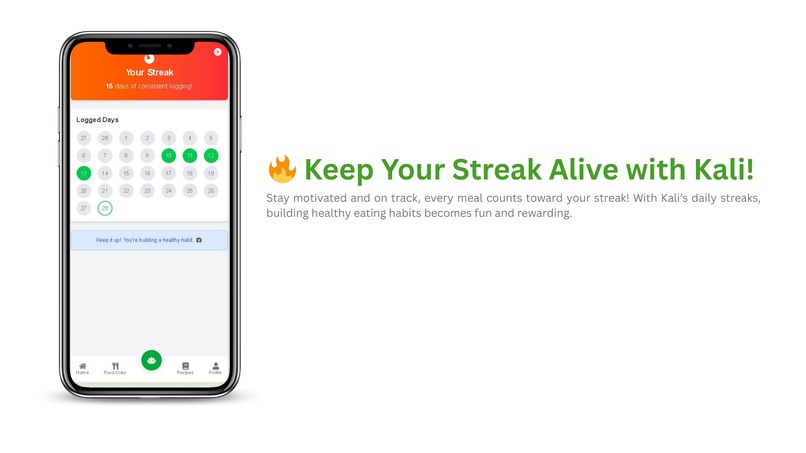
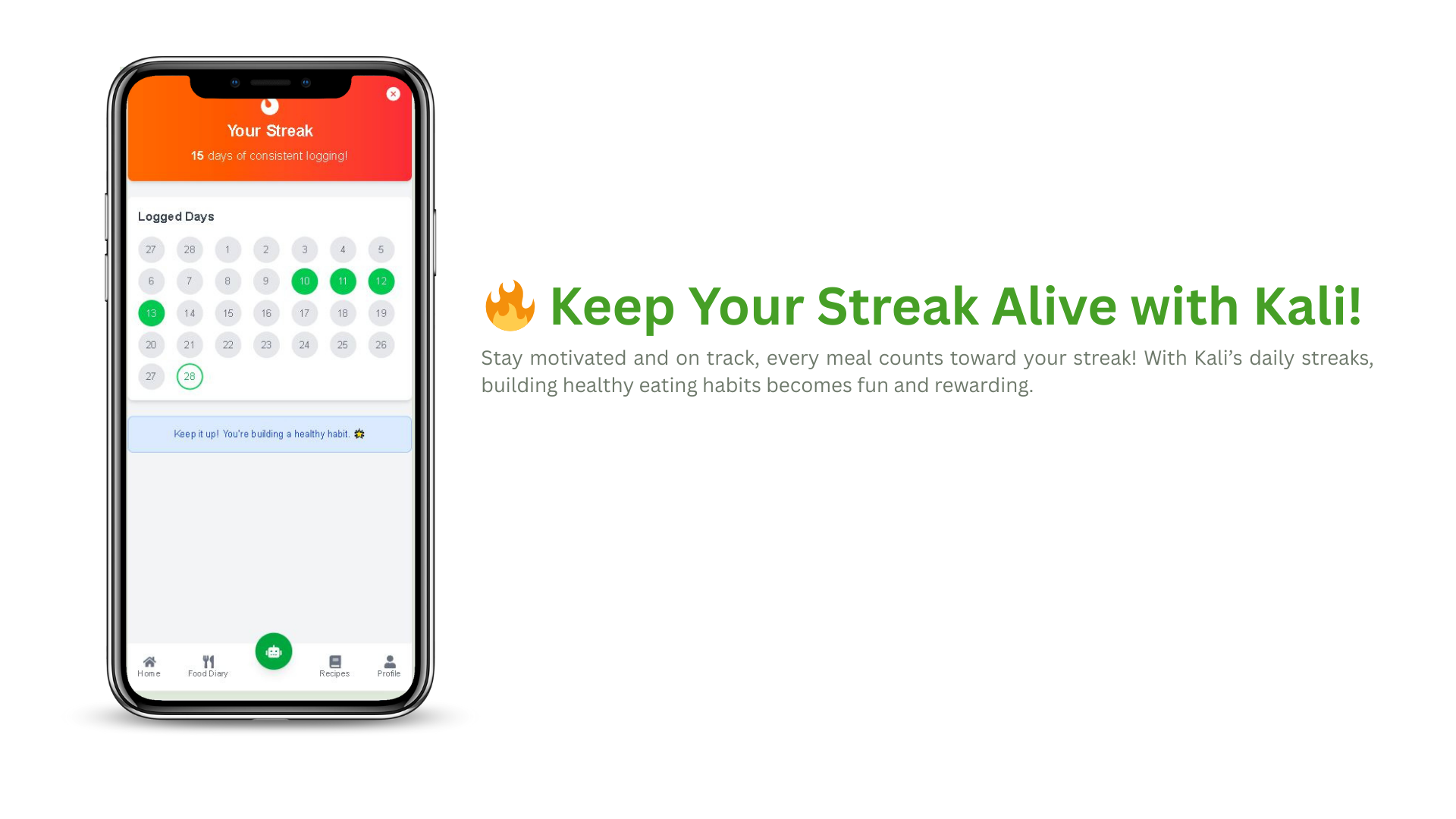
Streaks!!
-
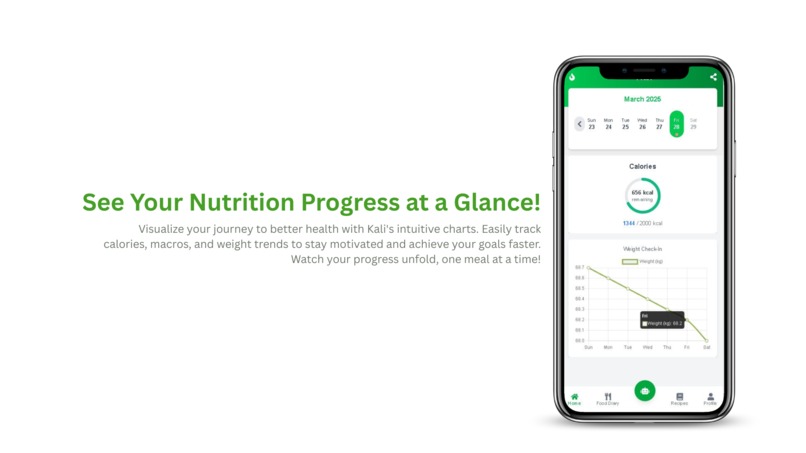
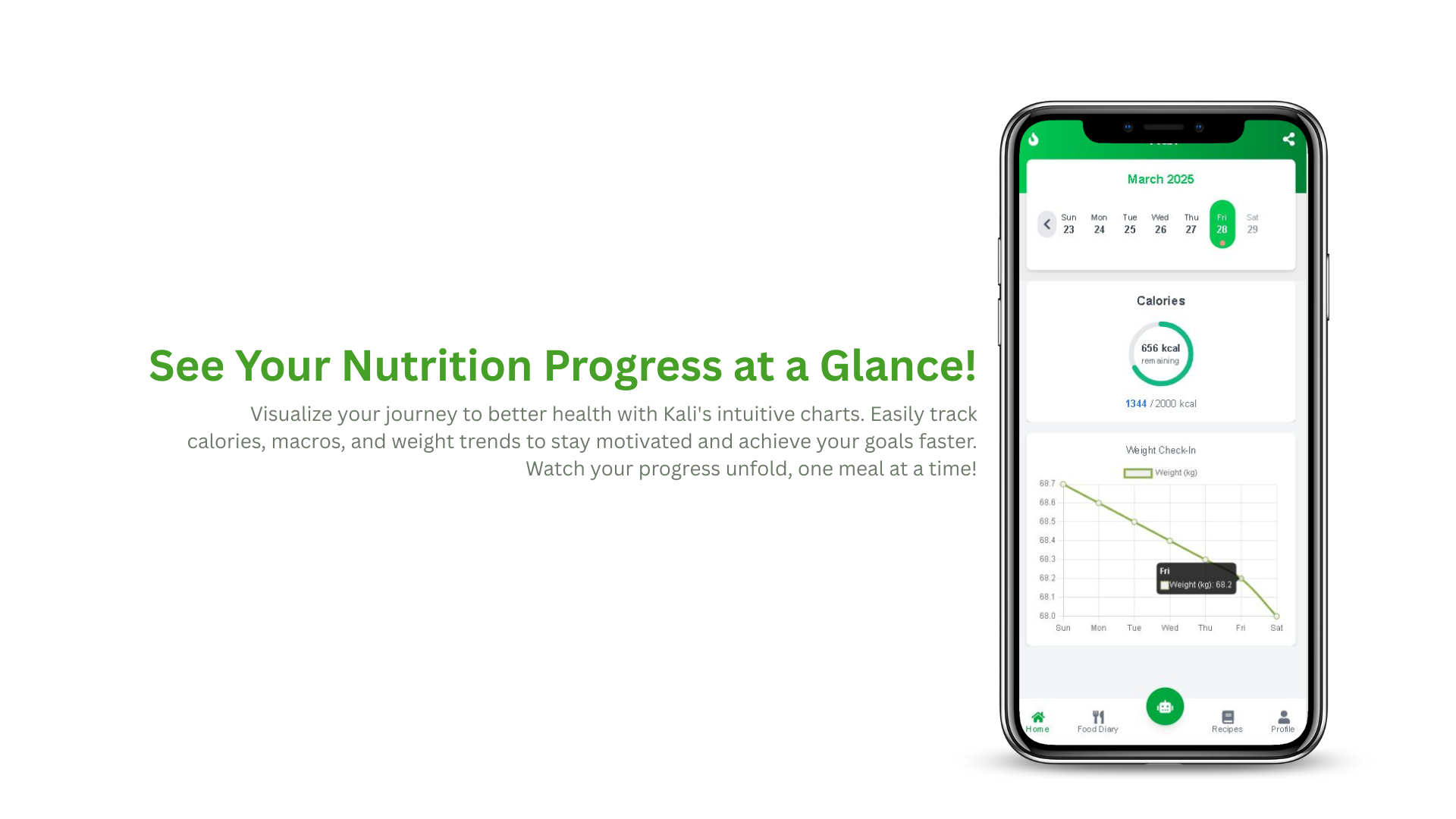
Visual Tracking!
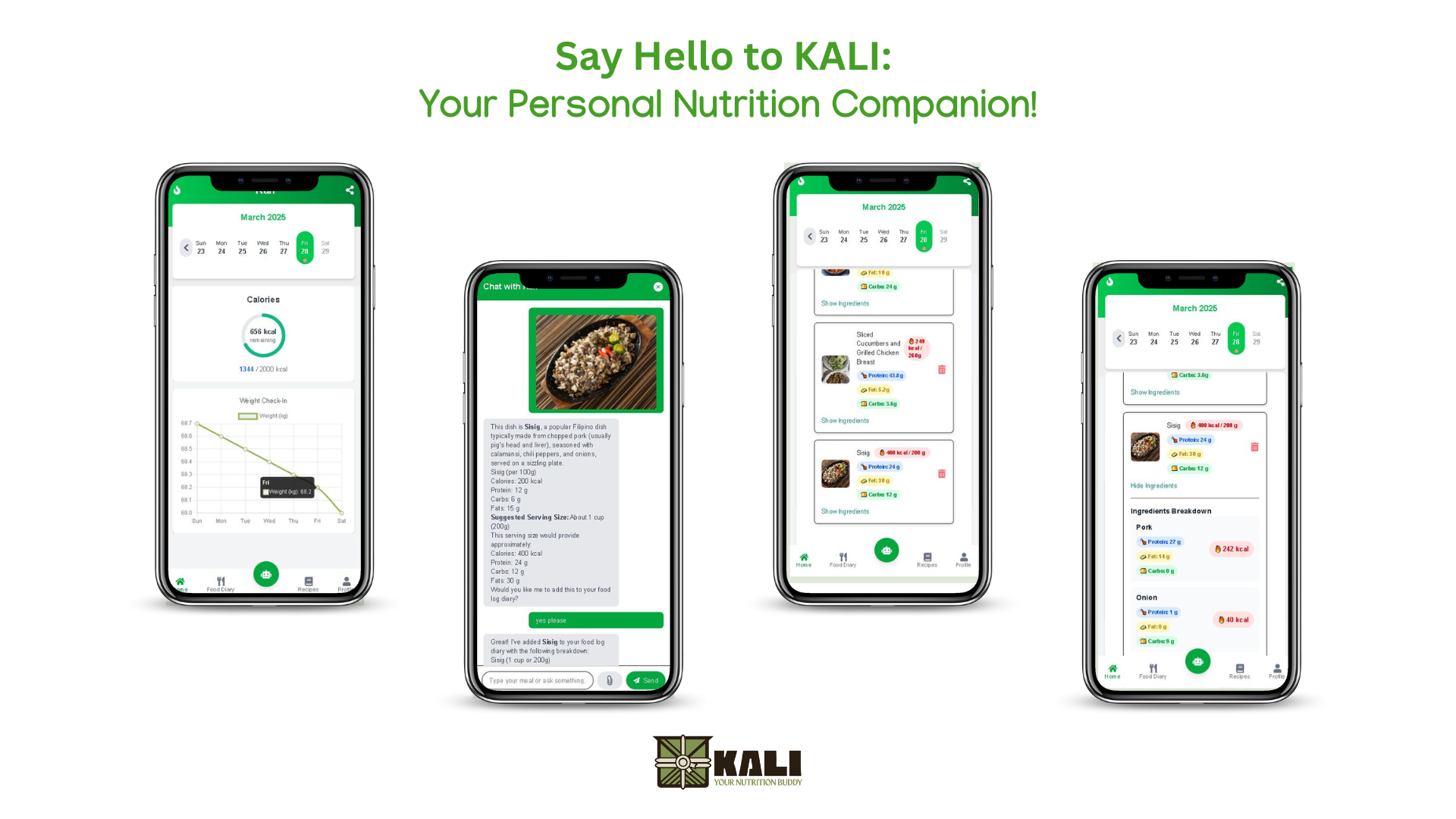
Kali: AI that gets your Filipino tastes and cravings 🇵🇭
In a world of fad diets and one-size-fits-all apps, Kali reimagines what it means to eat well—without sacrificing culture, joy, or real human connection. Designed by Filipinos, for Filipinos (and food lovers everywhere), we blend AI-powered simplicity with the warmth of community and expert guidance. Think of it as your techie relative in a family reunion: smart enough to track your sinigang, wise enough to say “Okay lang ang lechon, basta balanced!”
The story behind Kali
Picture this: Maria stares at her baon or packed lunch of sinigang and rice, wondering how to track it in her diet app. The app suggests “generic stew (250 calories)”—but sinigang is not just “stew.” It’s tamarind-rich, packed with kangkong, and a lifeline on hectic days. Frustrated, she quits tracking.
We have also met a lot of Marias in their healthy-living journey. Existing apps felt like they were built for kale salads, not karinderias or local canteens. So we asked: What if technology respected our plates, routines, and need for real human support? That is how Kali was born—not just as an app, but as a love letter to Filipino food culture and the people who want to enjoy it mindfully.
What it does
Kali is your ally in localized nutrition—supportive, culturally savvy, and always in your corner. Here’s how it works:
- Snap, Scan, Smile: Point your camera at lechon kawali or turon, and our AI—trained with Pinoy dishes—estimates calories and nutrients. No more guessing if 1 cup of rice means puso or a mug.
- Chat with a Nutritionist: Licensed Filipino RNDs (Registered Nutritionist-Dietitians) answer questions like “Is bibingka okay for my blood sugar?” or “How do I balance silog meals?”
- Join Your Fitness Barkada: Swap meal hacks with #PlantBasedPinas, vent about cravings, or celebrate logging adobo for five days straight.
How we built it
We started by listening—to our local communities who cook their daily dinners, students surviving on siomai rice, and gym-goers torn between protein shakes and puto bumbong. Then, we blended tech with tender loving care:
- AI with a Pinoy Palate: We fed our machine learning model local dishes and cross-referenced them with local dietitian tools like the Philippine Food Exchange List and Food Composition Tables.
- Design That Feels Like Home: No confusing charts. Just a clean diary where you log meals as easily as texting a friend.
- Nutritionists on Speed Dial: Partnered with local RNDs to fine-tune technicalities because no algorithm can replace a pro saying, “You can eat those chips—in moderation!”
- Smarter Conversations with Azure: Using Azure OpenAI’s chat capabilities and Agent Assist, Kali can search through our custom nutrition files via vector search—so when users ask questions, Kali responds with answers grounded in actual local nutrition data, not just generic info.
Challenges we ran into
Our journey wasn’t all smoothie bowls.
- When AI Mistook Kare-Kare for “Peanut Soup”: Early tests were… humbling. Fix? We used standardized recipes and available dietary tools to teach the AI Filipino portion sizes and cooking styles.
- Keeping It Real: People quit when progress felt slow. So we added a rewards systems to celebrate each nutrition milestone users reach.
Accomplishments that we're proud of
Technical Precision:
Statistically, we found that the app outputs were not significantly different from calorie counts produced by Registered Nutritionist-Dietitians.Cultural Sensitivity:
With an initial large dataset of local dishes, the application has growing accuracy in identifying Filipino cuisine—a milestone in nutrition technology.Production-Ready Infrastructure:
We successfully set up Kali using Azure Web Services, deploying the app with a fully managed backend stack:
- Azure Static Web Apps for hosting our React + Vite frontend
- Azure Functions for scalable serverless API logic
- Cosmos DB for secure and flexible data storage
- Blob Storage for image uploads and meal snapshots
- Azure AD for robust user authentication
- Azure OpenAI with vector search to enable intelligent, localized nutrition conversations
With CI/CD pipelines in place, seamless scaling, and secure data handling, Kali is ready to launch as a real-world startup. We’ve built not just a demo, but a solid foundation for future growth and continuous improvement.
What we learned
Over the course of development, we could think of three key insights reshaped our approach:
- Cultural context drives compliance. Test users engaged more when prompts suggested locally-sensitive food instead of those catered towards a Western demographic.
- Human oversight is non-negotiable. While AI accelerates tracking, RNDs resolve edge cases and built trust.
- Small victories sustain habits. Celebrating streaks like "5 Days of Consistent Tracking" proved more motivating than weight metrics alone.
What's next for Kali
We are definitely just warming up with the potential of Kali. We see it doing more in the future as we build more users and support, like:
- Fitness meets fiesta: Sync your wearables to see how your meals fuel your day-to-day.
- Telehealth for all: Video consultations with RNDs, plus mental health professionals for disordered eating.
- Regional Customization: Add local languages and hyper-local dishes to the growing database.
- Policy advocacy: Partner with DOH and LGUs to promote Kali as a tool for good nutrition and fighting health problems like diabetes and malnutrition.




Log in or sign up for Devpost to join the conversation.