-
-

Main Logo
-
-
-

##About the project
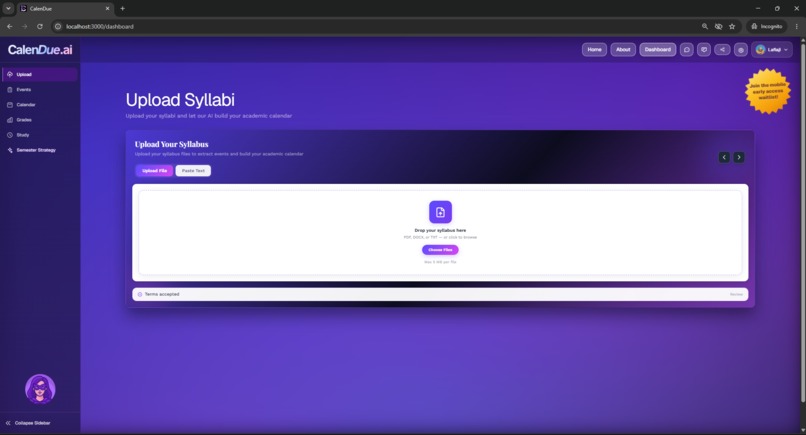
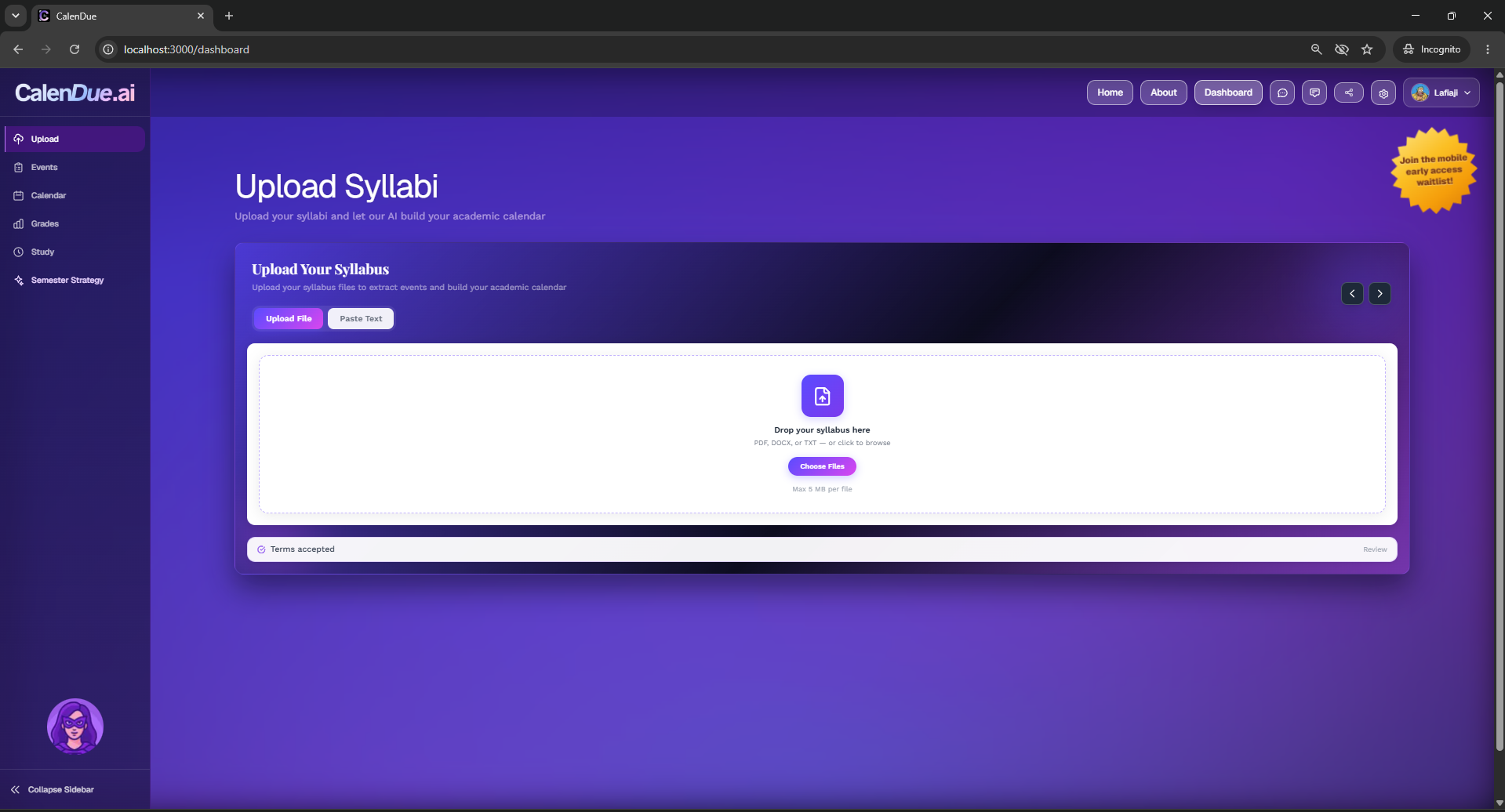
CalenDue is an AI-powered academic calendar that turns course syllabi into deadlines, classes, reminders, and calendar events. For OpenAI Build Week, we built Academic Copilot: a proactive semester-planning agent that helps students spot an upcoming academic crunch before it becomes overwhelming, then turns that insight into realistic study time on their own calendar.
Most academic tools tell students what is due. Academic Copilot focuses on a more useful question:
What can I do now to prevent next week from becoming a scramble?
It analyzes deadlines across every course, detects collisions such as three deliverables landing within 48 hours, identifies the next preventable crunch, and creates a reviewable study plan in the student’s actual free time.
## What inspired us
The idea came from a familiar student experience: uploading five syllabi at the start of a semester, seeing dozens of assignments and exams appear, and still not understanding when work will become unmanageable.
Students already know finals are important. They do not need another app to tell them that December is stressful. The more valuable intervention is earlier: noticing that an assignment, lab, and project proposal converge in the same week in November, then helping the student reserve time before that collision happens.
We also wanted to account for a real university-specific problem. Final exams are often listed in syllabi as broad exam periods, such as “December 7–22,” before official exam times are released. Treating every final as due on the first day of that range creates a misleading workload spike. Academic Copilot recognizes unresolved exam windows as important, while excluding them from false deadline-collision and workload calculations until an actual date is available.
## What it does
Academic Copilot includes:
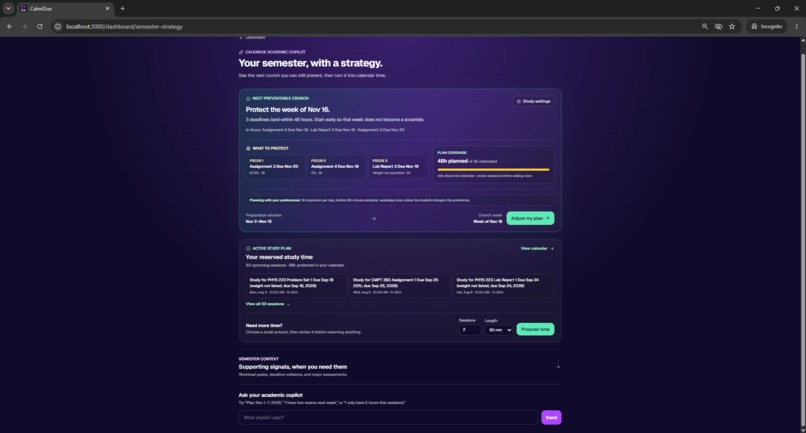
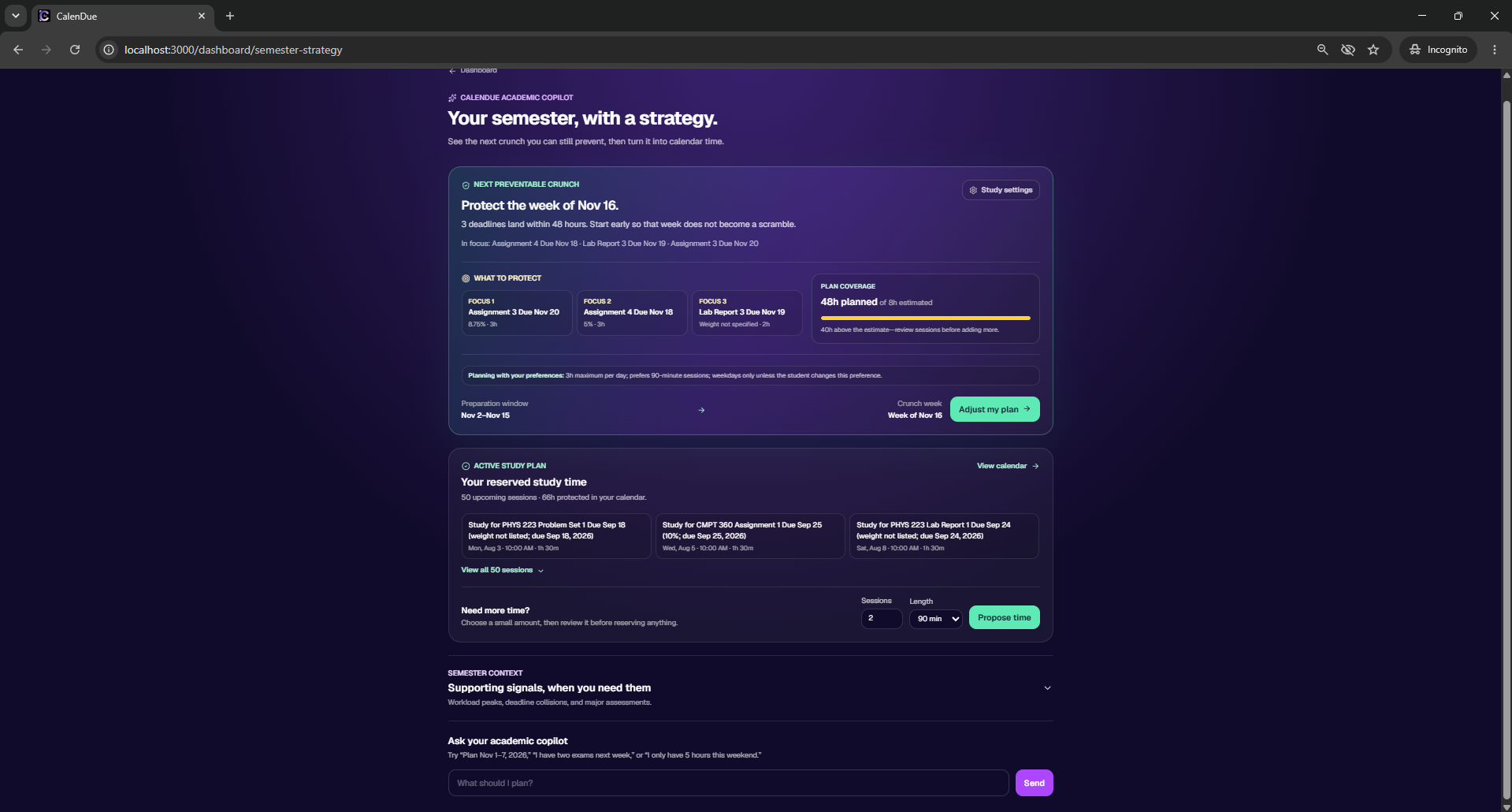
- A Semester Strategy view that detects deadline collisions, workload peaks, burnout-risk weeks, and high-stakes assessments across all uploaded courses.
- A Next Preventable Crunch command center that identifies the earliest upcoming risk the student can still act on.
- Focus 3, which highlights the assessments most worth protecting before that crunch.
- Plan Coverage, which compares reserved study time with estimated effort and warns when a student has over-planned instead of encouraging more work.
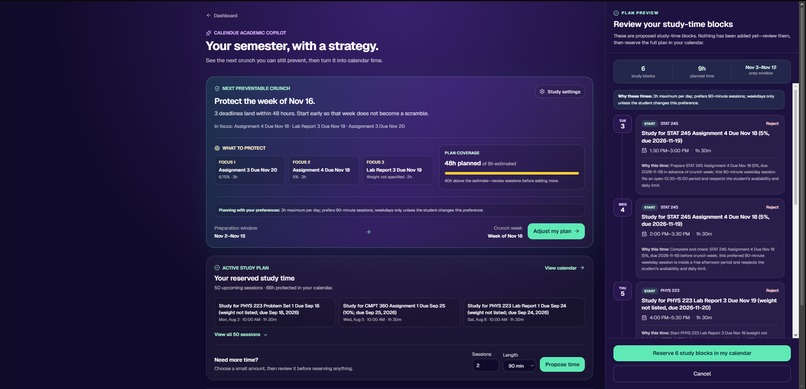
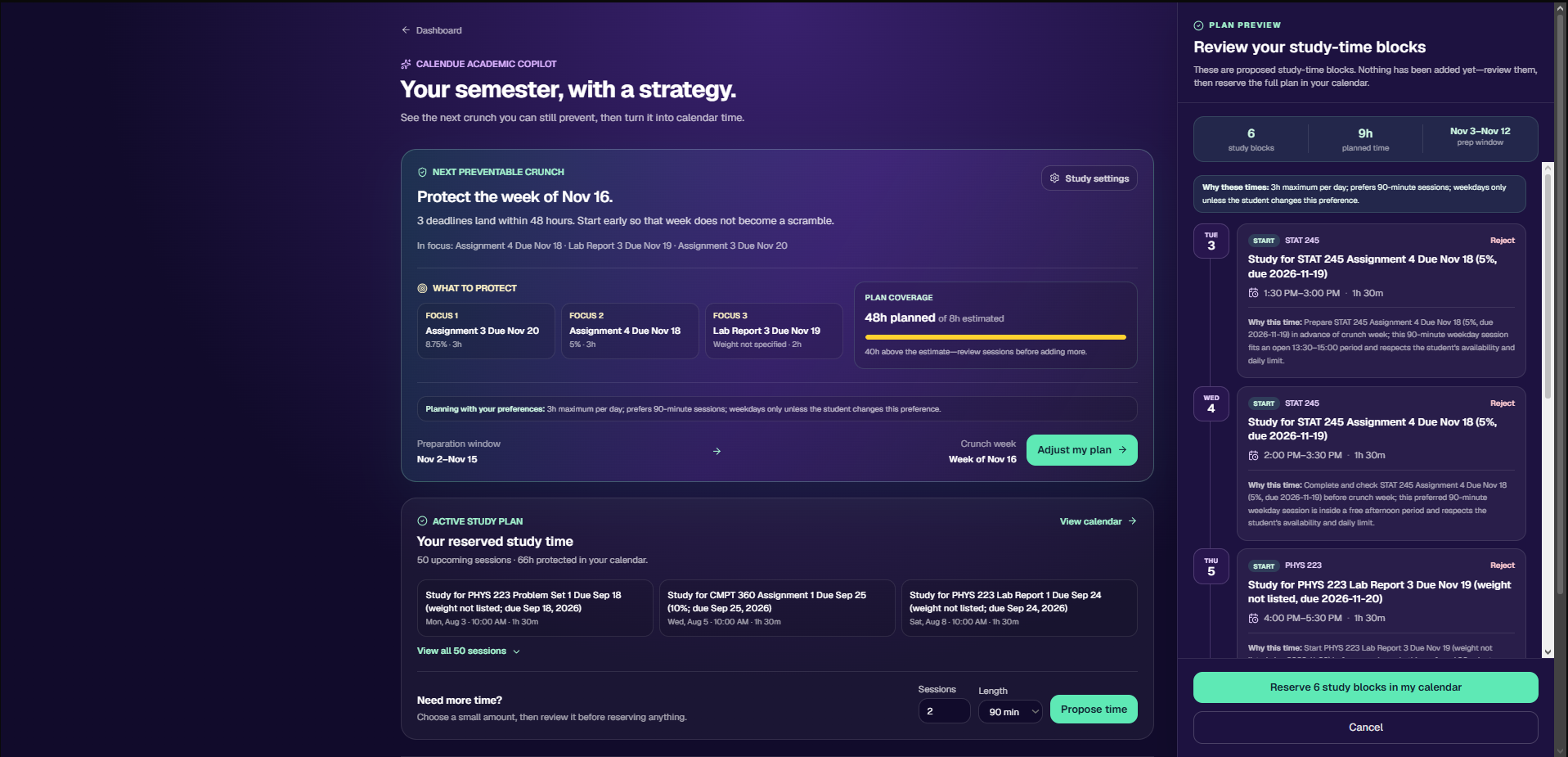
- A GPT-5.6-powered planning agent that checks Google Calendar availability and proposes study-time blocks around classes, work, gym, and other commitments.
- A safe review flow: students can inspect every proposed session, reject individual sessions, request replacements, and approve only the blocks they want.
- Personal study preferences for session length, daily capacity, weekend availability, and quiet hours.
- Persistent active study plans, distinct calendar colors, assignment-style reminders, and direct handoff back to the calendar after approval.
## How we built it
We built Academic Copilot into the existing CalenDue product using Next.js, Prisma, Supabase, Clerk, Google Calendar, Luxon, and OpenAI.
We first created a normalized Semester Model from the student’s real CalenDue events and syllabus data. This gives the Copilot structured information about courses, assessments, due dates, weights, estimated effort, and uncertain exam windows.
GPT-5.6 powers the agent through the Responses API and a set of purpose-built tools:
- Get semester overview
- Get assessments
- Find free time in Google Calendar
- Create study blocks
- Move Copilot-owned events safely
- Detect calendar conflicts
The model decides what to investigate and proposes a plan, while deterministic code handles critical safeguards: timezone normalization, daily study caps, 8 AM–9 PM boundaries, weekday/weekend preferences, conflict checks, and calendar-event ownership.
Every AI-created event is tagged as a copilot-study-block, which prevents the agent from accidentally moving or modifying a student’s unrelated calendar events. Calendar
writes are preview-first: nothing is added until the student approves it.
Codex was used throughout the build process for implementation, testing, UI iteration, debugging, and documenting the development workflow.
## Challenges we faced
The hardest challenge was making the Copilot genuinely useful instead of just visually impressive.
We found that raw “busiest week” charts often told students things they already knew, especially around finals. We redesigned the experience around preventable action rather than passive analysis.
We also encountered several practical calendar-planning challenges:
- Syllabus dates and Google Calendar timestamps required careful timezone handling.
- Broad final-exam windows initially created misleading workload spikes.
- An empty calendar made free-time planning look unrealistic, so we tested against a realistic demo calendar with classes, gym, and other commitments.
- Early versions of the planning flow could return free time without creating a useful preview, so we strengthened the agent loop and preview requirement.
- We added guardrails so the Copilot does not propose study sessions at unreasonable hours or overload one day.
## What we learned
We learned that the best educational agent is not the one that produces the most analysis. It is the one that helps a student make one good decision at the right time.
We also learned that trust is a product feature. Calendar actions need clear explanations, user review, reversibility, and strong boundaries. Academic Copilot does not assume it knows a student’s life better than they do—it proposes a plan, explains why, and keeps the student in control!
Built With
- css
- gpt
- html
- nextjs
- rag
- supabase
- typescript


Log in or sign up for Devpost to join the conversation.