-
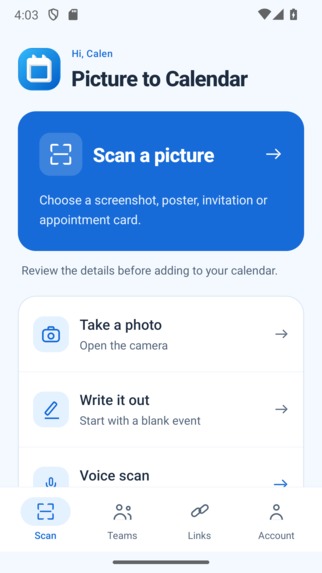
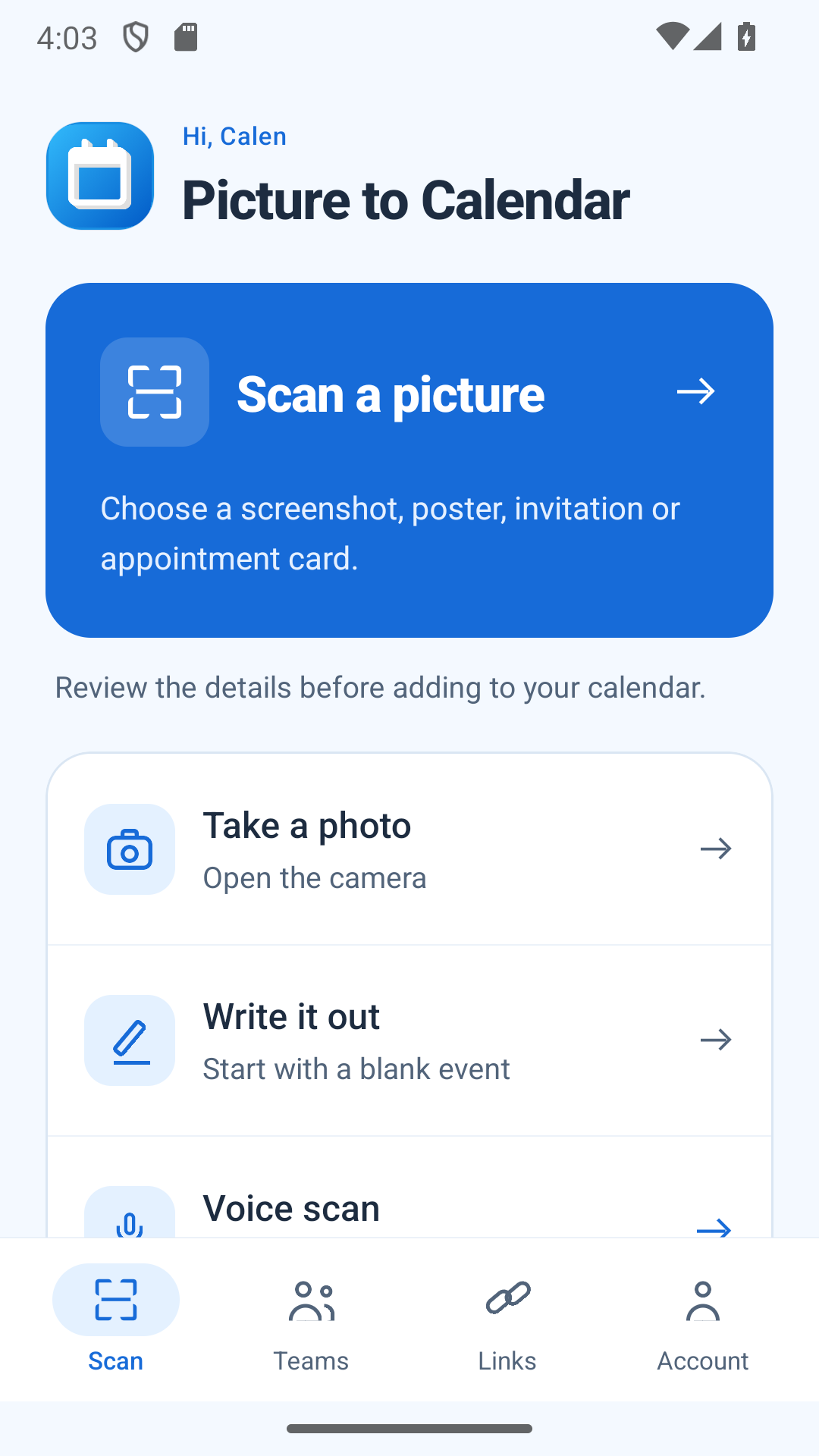
Native Android scan screen, 1080 × 1920. Supporting capture; the required 1179 × 2556 screenshot remains to be added.
-

Calen app icon — original 1024 × 1024 image.

Inspiration
Picture this: you have a child with your partner, and school is giving you appointments for your child each week, events of all sorts, medical scheduling, all in papers that they gave you and you need to manage the calendar of you and your partner. Wouldn't it be cool to make just a picture of those flyers and the event be saved for you AND your partner?
That's the inspiration; it came to me that it would be useful.
What it does
Calen turns information into an editable calendar event:
- Share an image to Calen, choose a screenshot, take a photo, record a voice note, or enter an event manually.
- Extract the event details into structured fields.
- Review and edit the title, location, date, time, and description.
- Confirm the event for Google Calendar or Microsoft Calendar.
- Coordinate with consenting teammates or share a public event link with an ICS calendar download.
An event is added to another member's calendar only after that person accepts the invitation. Unfinished drafts can be kept on the device for later.
How we built it
The backend uses Laravel, PHP, MySQL, and a Blade/PWA interface. Images are resized before upload, then an OpenAI vision model returns structured event data. Google Calendar uses the Google API client; Microsoft Calendar uses Microsoft Graph with delegated OAuth and refresh-token handling.
The native app uses Expo, React Native, and a WebView bridge for purchases, restores, premium state, and native capabilities. The mobile workflow includes image sharing, voice input, editable review, and draft recovery.
RevenueCat and monetization
Every account includes five free scans each week. RevenueCat powers the Calen Pro entitlement for unlimited scanning through weekly, monthly, or yearly subscriptions. Calen's own paywall displays localized native store prices, sends the selected package to the purchase bridge, and supports restoring purchases.
A free weekly allowance lets occasional users keep using the product. Recurring plans fit regular scanning and the ongoing cost of extraction and service operation.
Challenges we ran into
The central challenge was turning probabilistic extraction into a trustworthy calendar workflow. Users need editable fields, clear date and time handling, and explicit confirmation before creating an event. Shared calendars add consent and partial-failure cases. Web and native purchase state also need to stay synchronized so access changes reach the interface reliably.
Accomplishments that we're proud of
One review-first workflow for Google and Microsoft calendars, consent-based team coordination, public sharing with ICS downloads, a native RevenueCat purchase bridge, and a useful free tier with a clear premium boundary.
What we learned
The value is not just recognizing text. People need to correct ambiguous details, understand who will receive an event, and recover an unfinished draft without starting again.
Current status
The repository includes the extraction, review, calendar, sharing, quota, draft, and purchase flows, plus native QA captures. Store publication and end-to-end calendar and purchase verification remain release checks; this draft does not claim a fresh test run or growth metrics.
What's next
Complete release verification and demo materials, improve extraction and recovery from real usage, and make coordinating everyday plans easier for individuals, couples, and teams.

Log in or sign up for Devpost to join the conversation.