-
-
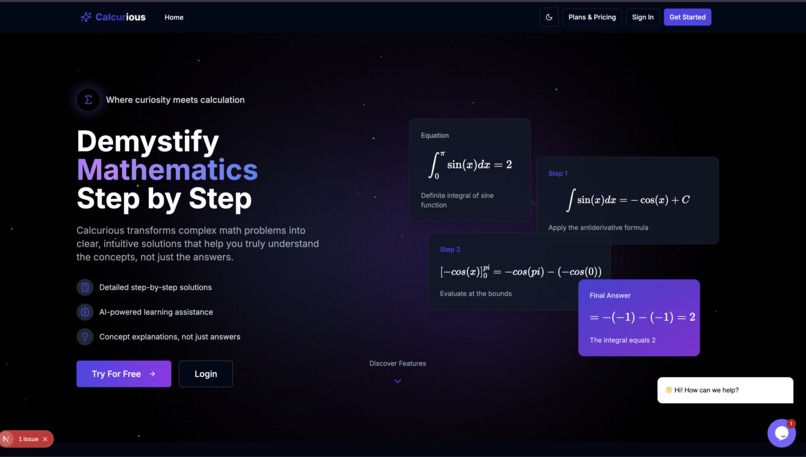
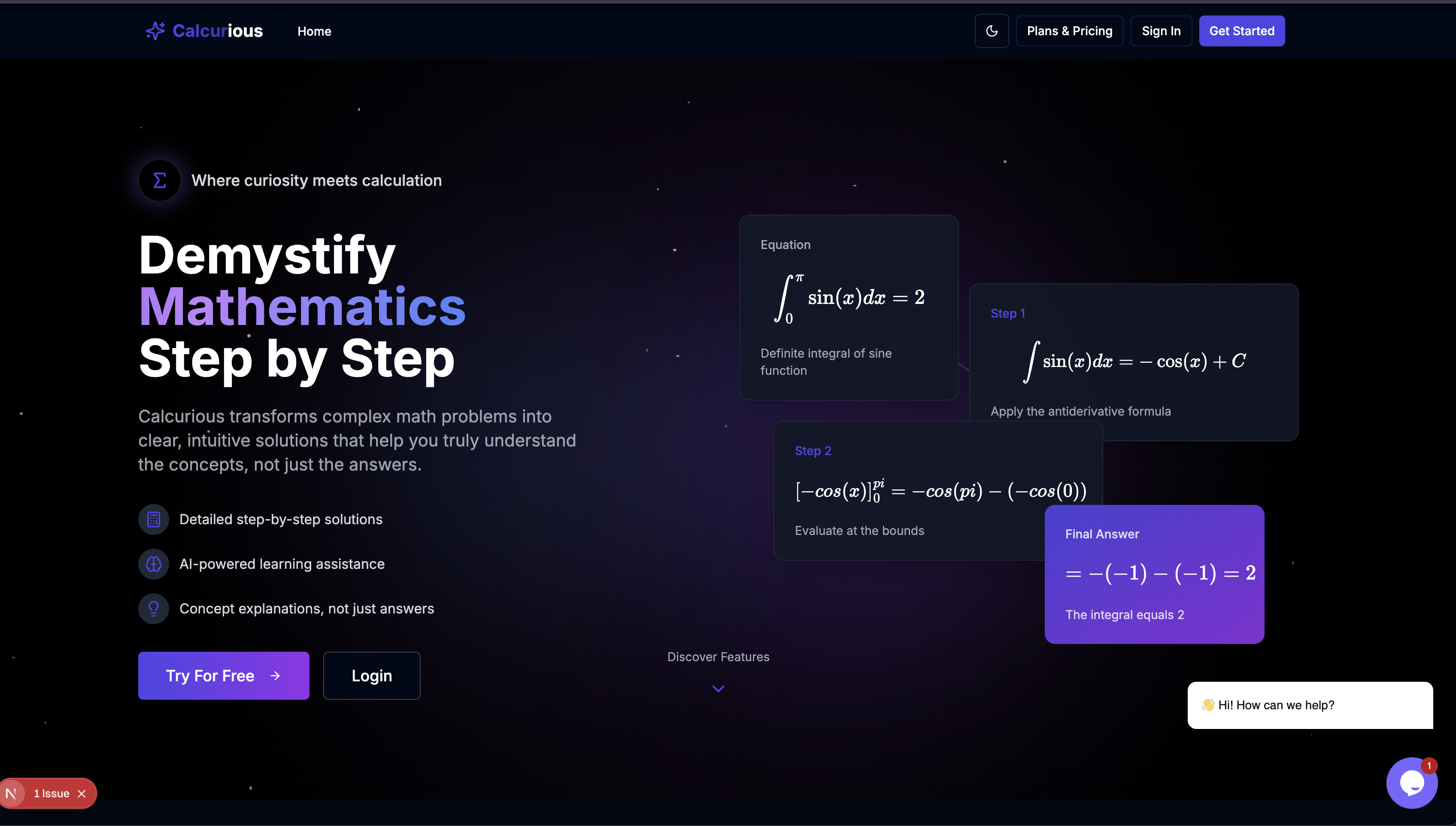
Home page
-

Dashboard with recent tracking
-
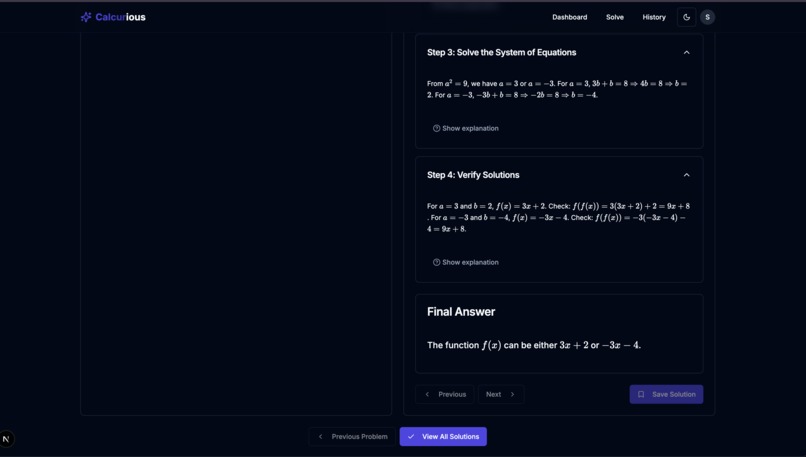
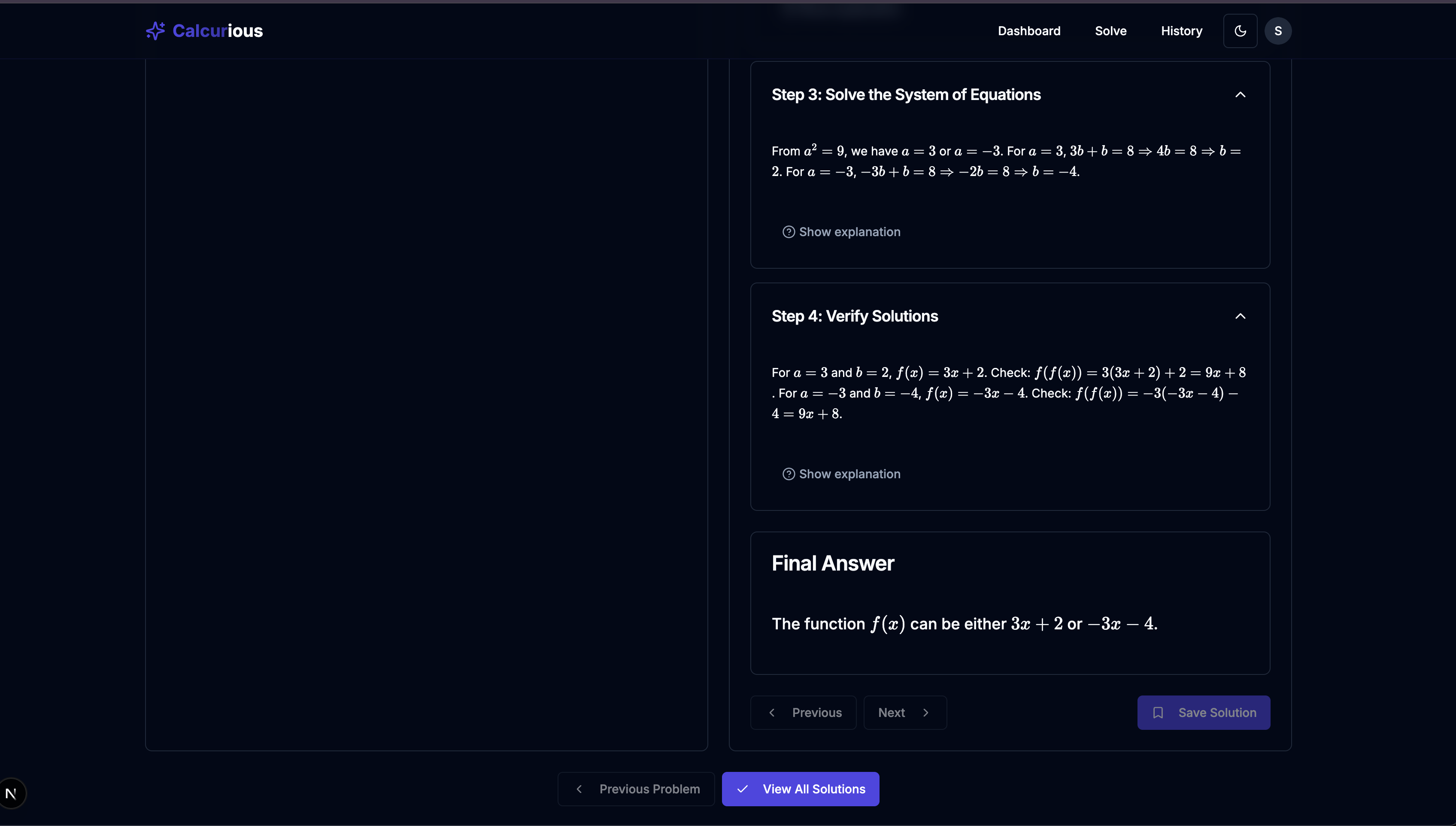
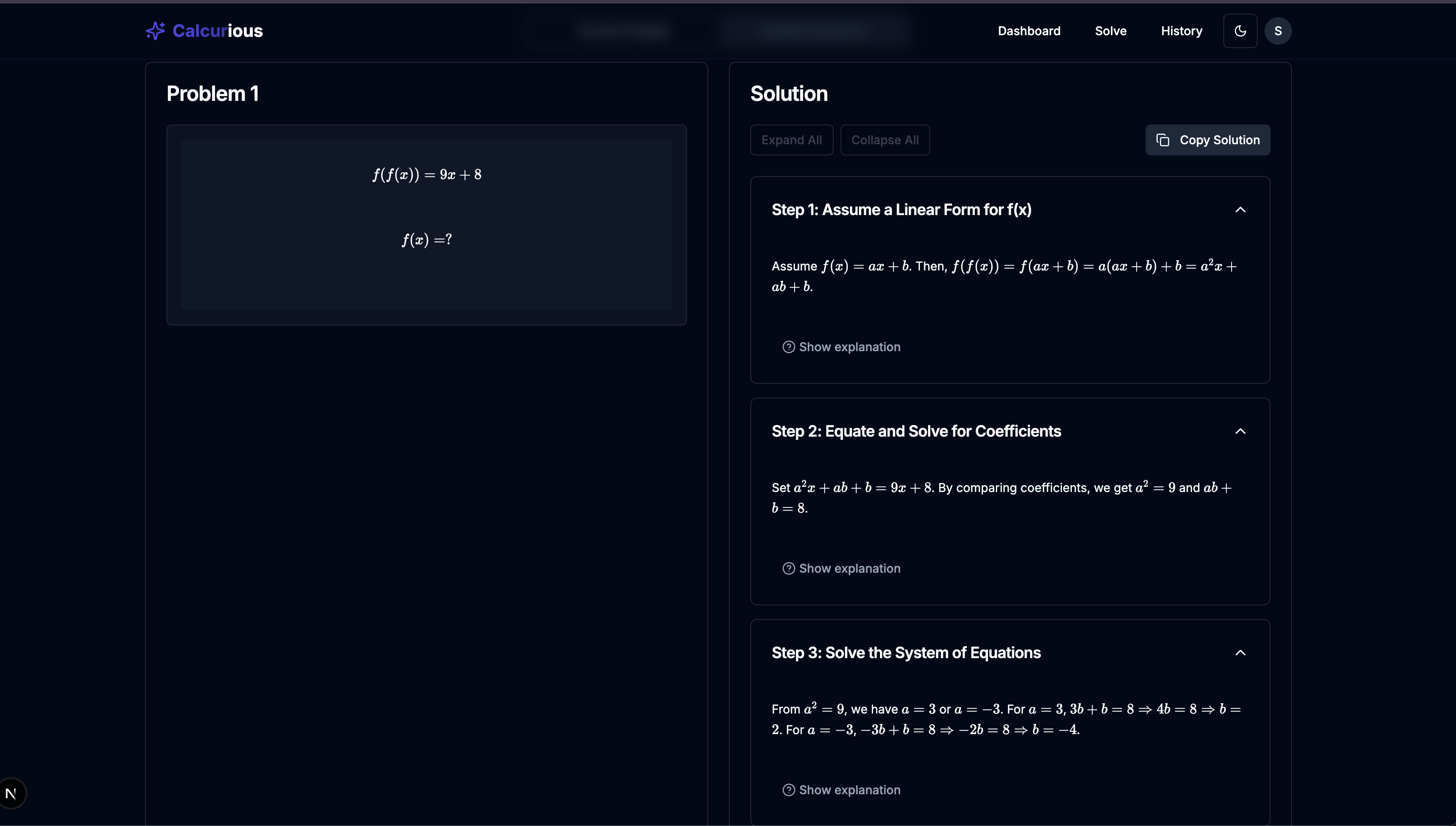
More solutions steps and final answer
-

Text solve with Mathjax helpers
-
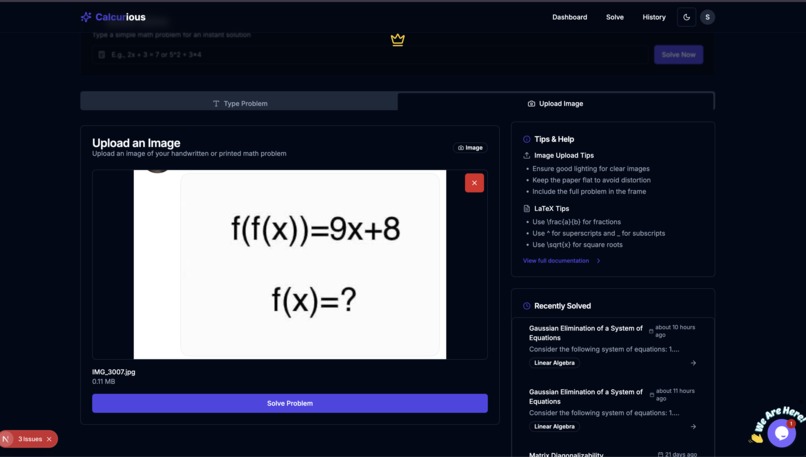
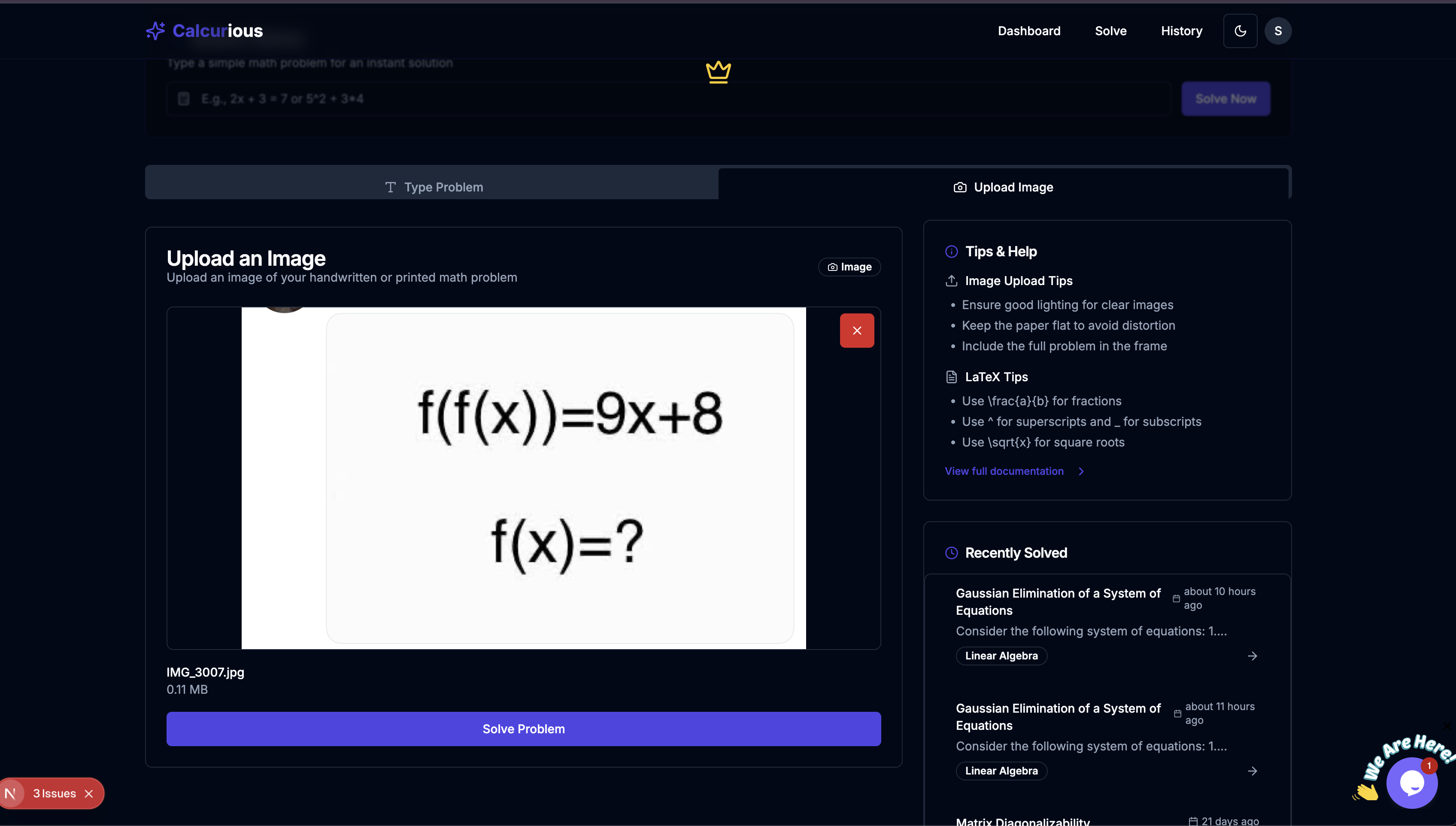
Image upload
-
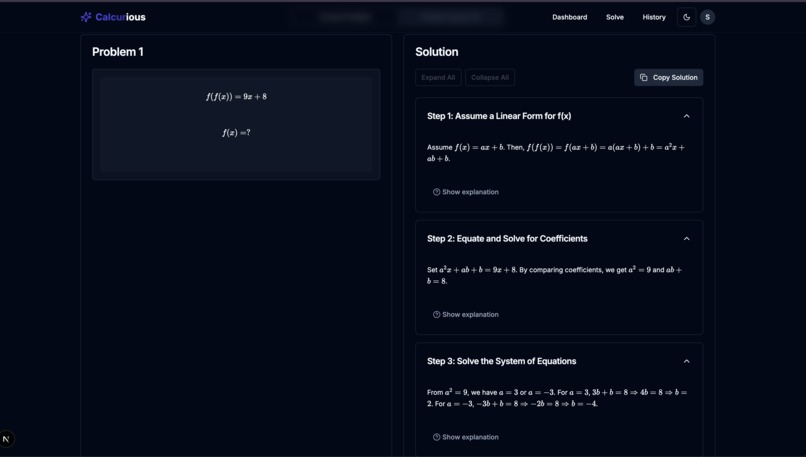
Solutions page after image analyis
-
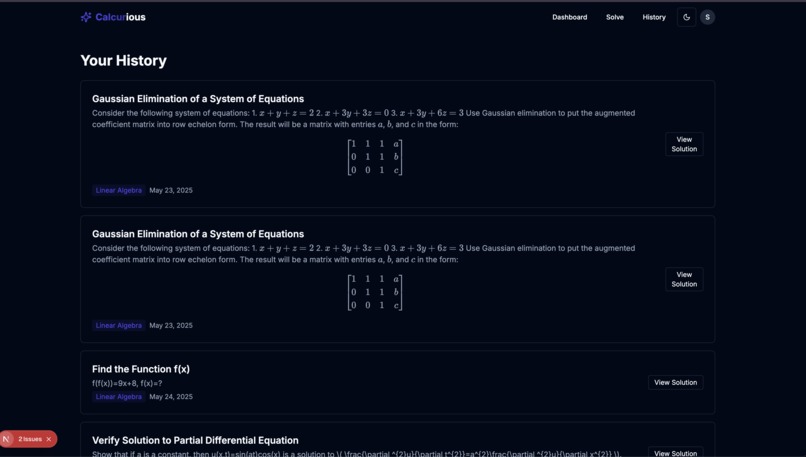
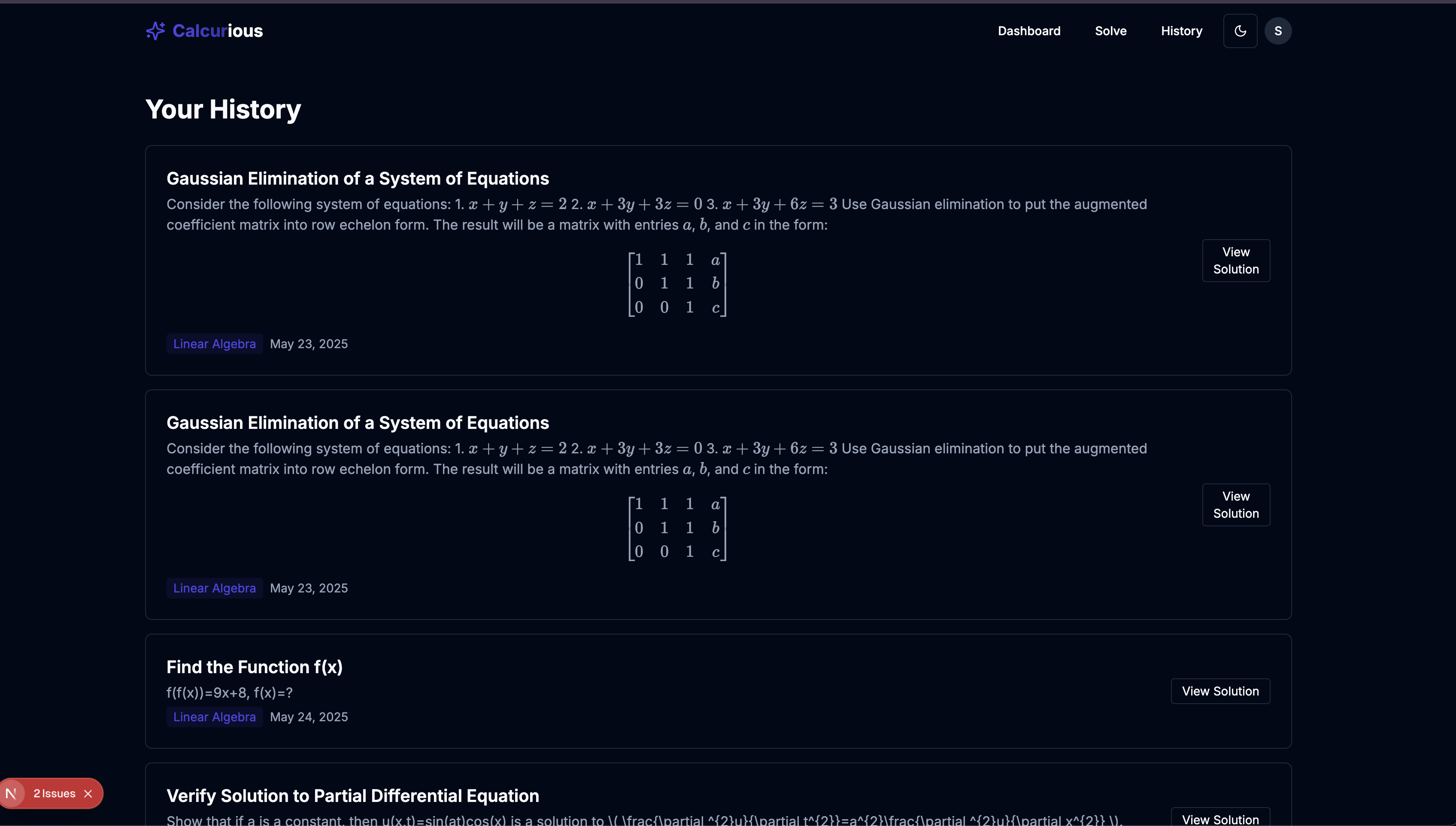
Historical view of past problems
-

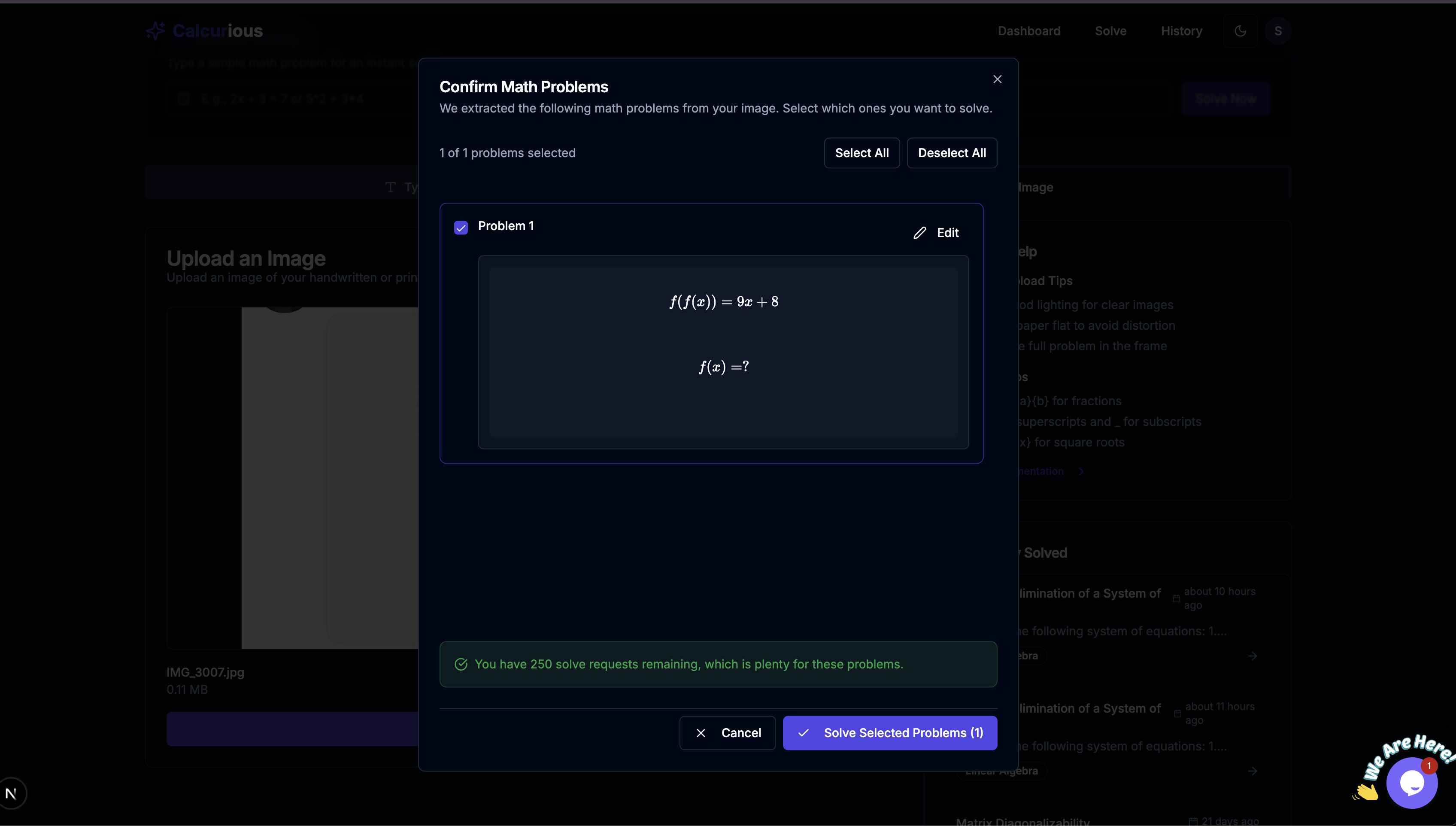
Image analysis of a mathematical problem
-
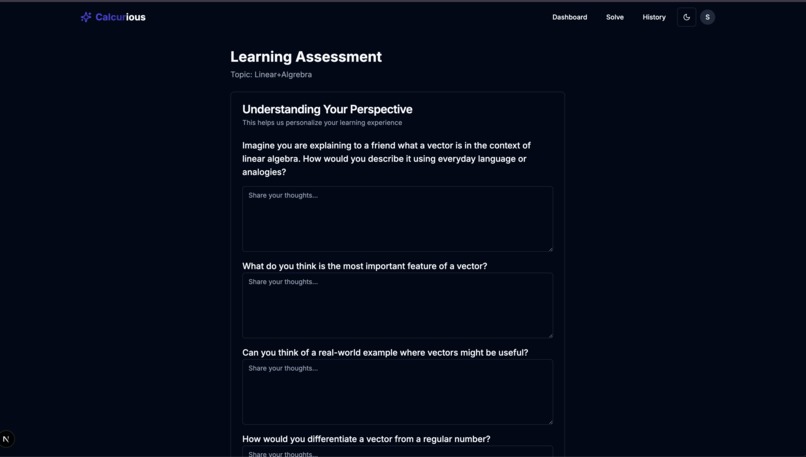
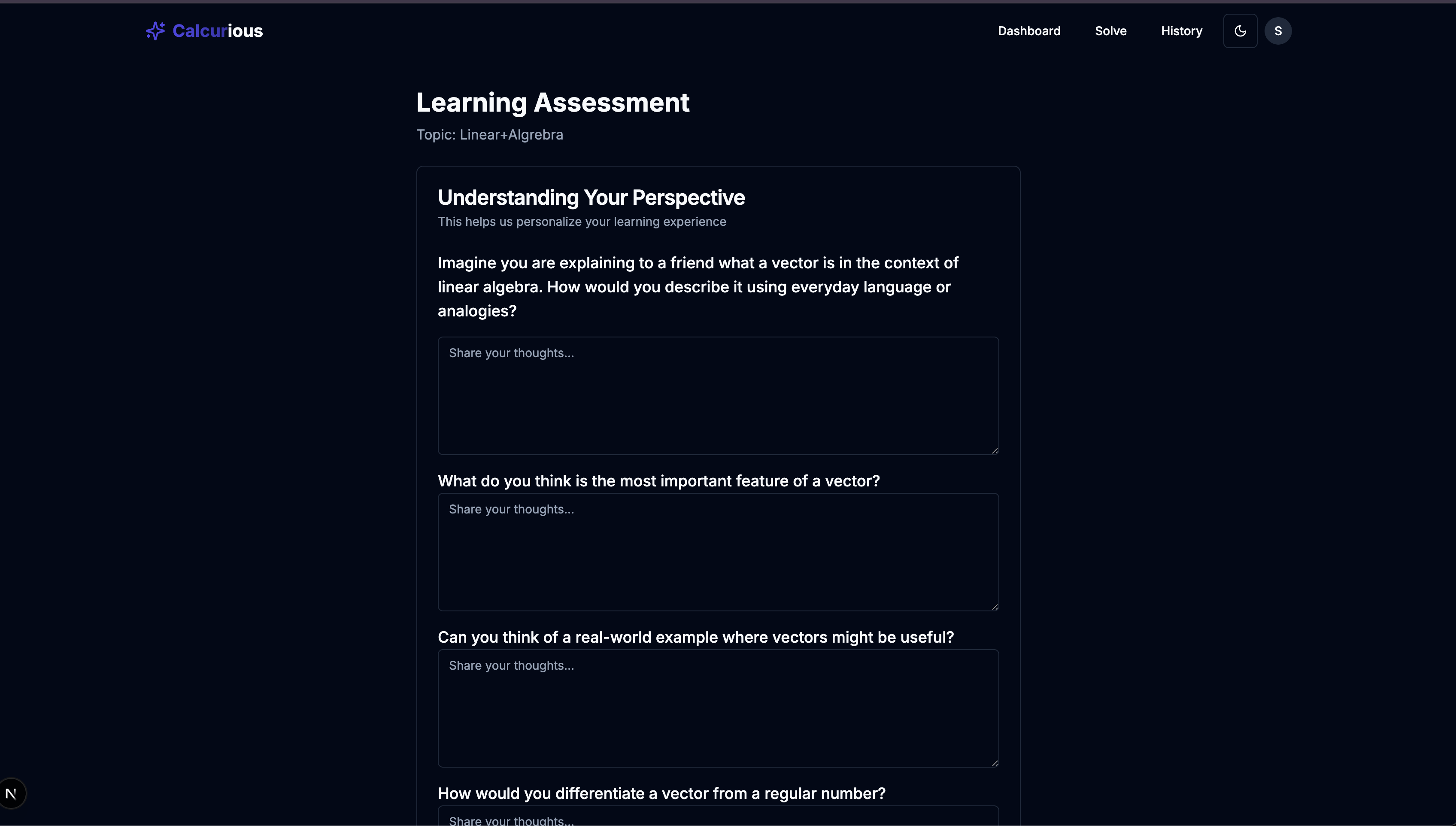
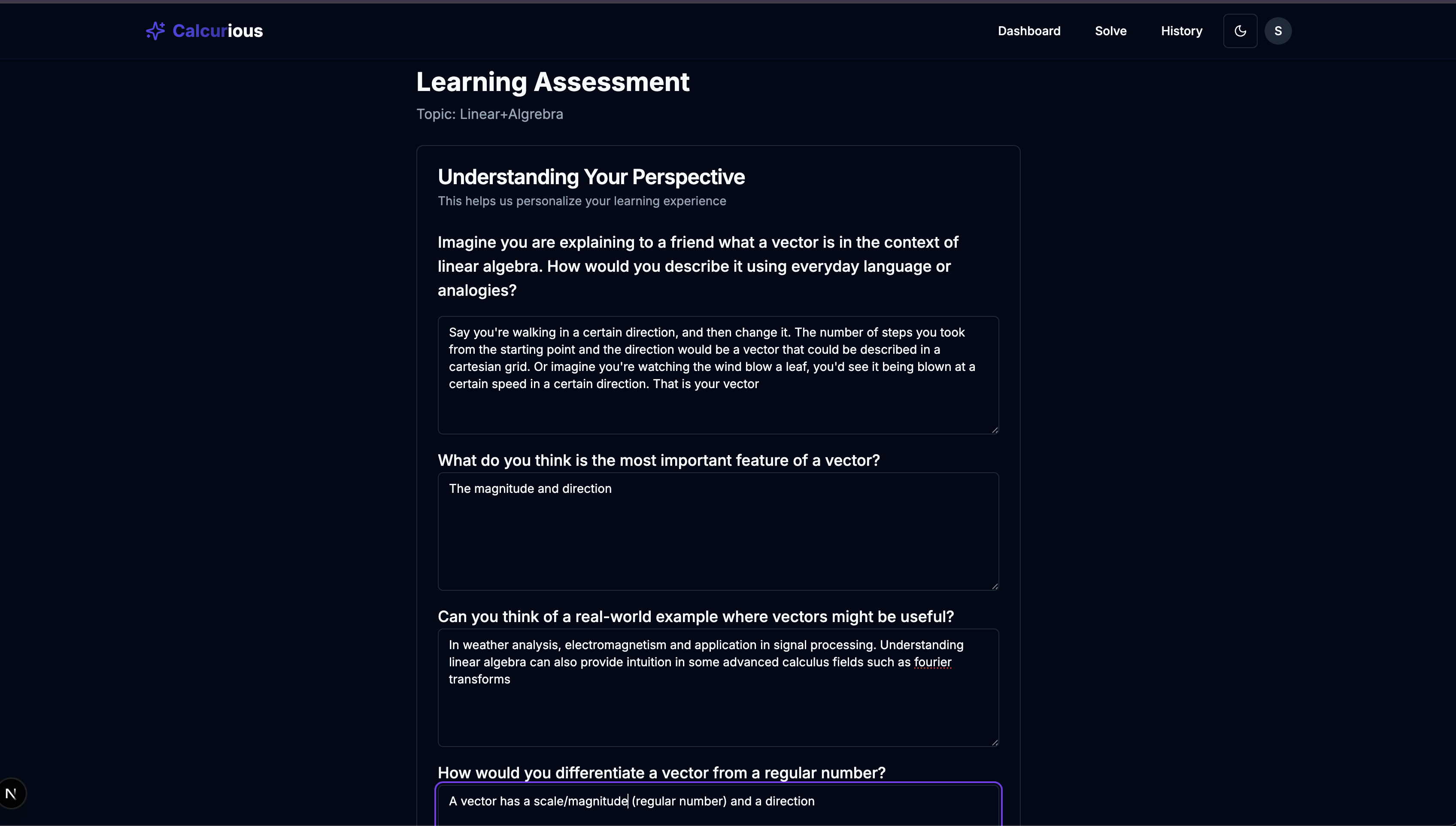
Assessment page with natural language questions
-
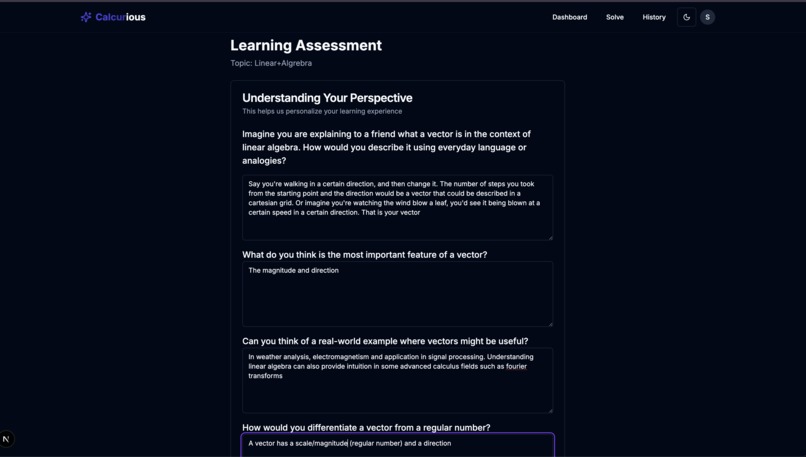
Learning assessment determining the concept association
-
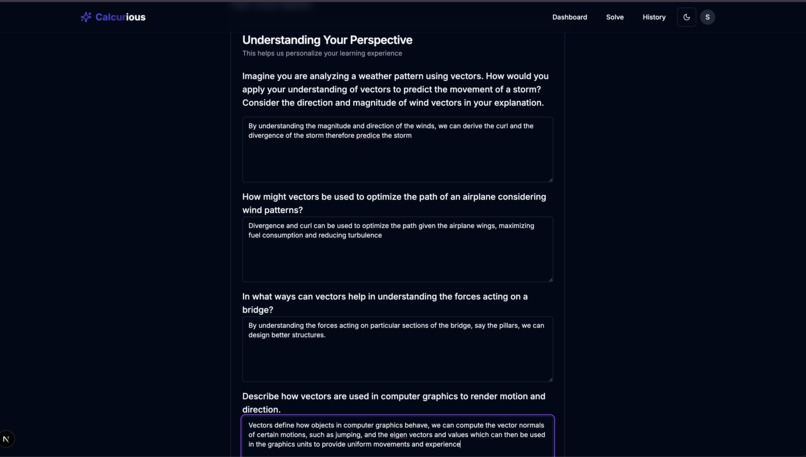
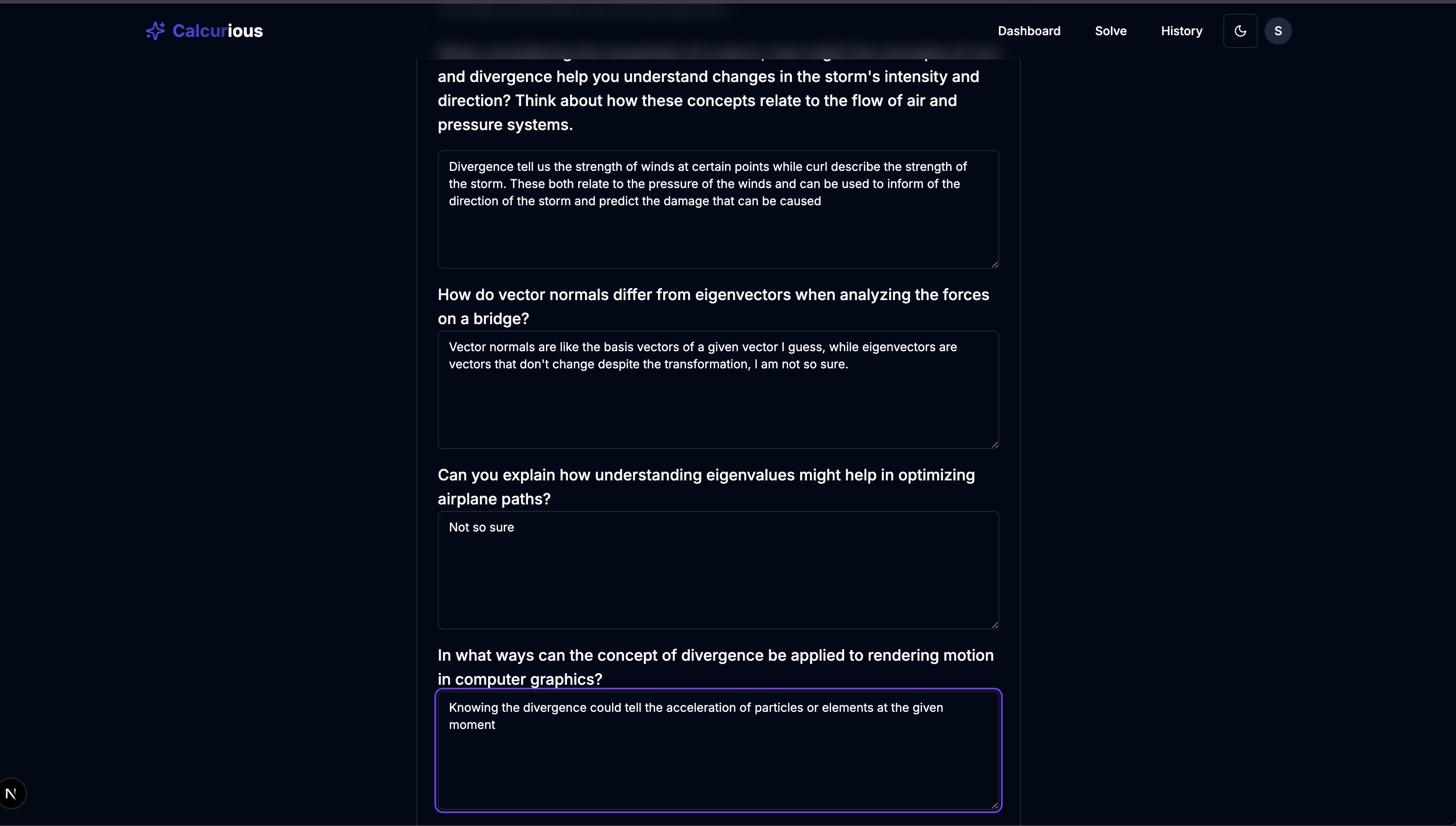
Trying to assess mental models and any misconceptions
-

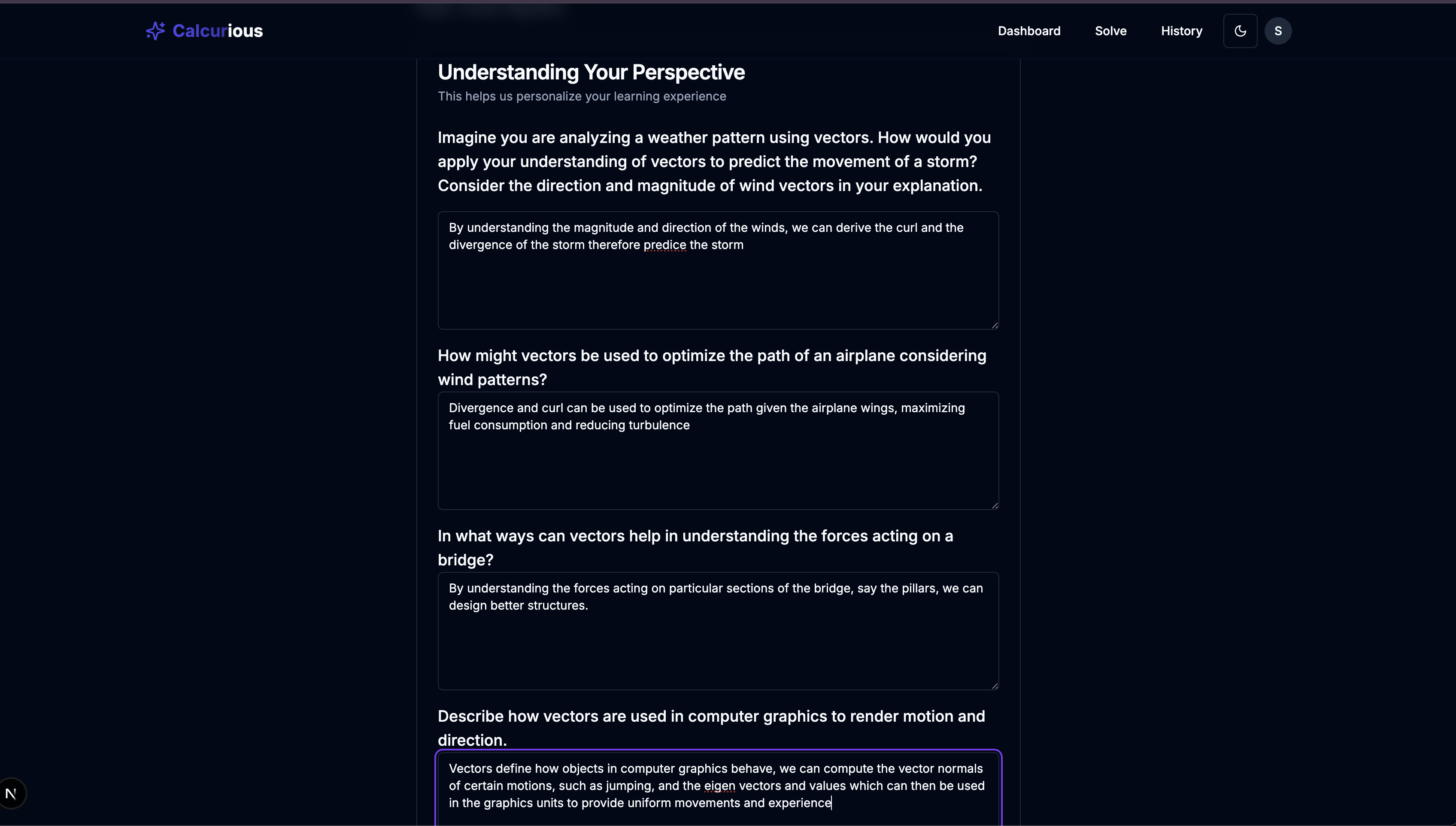
Proficiency assessment
-
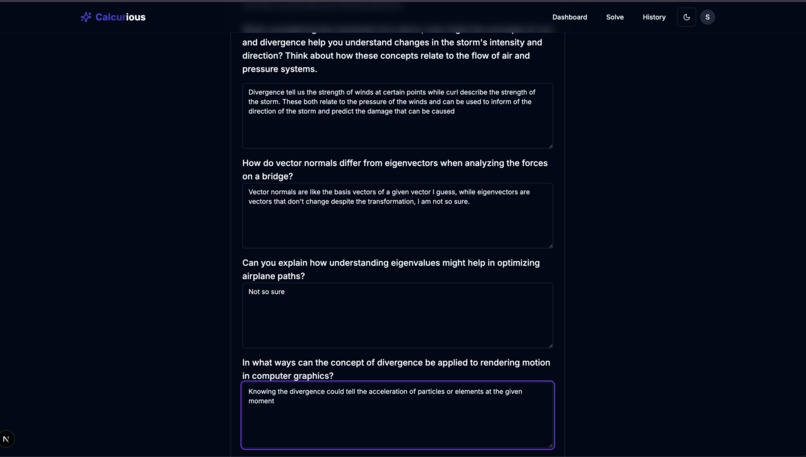
Trying to assess application domain recognition
-

Personalized learning path and materials




Inspiration
Even to the curious mind, mathematics offers a great barrier to entrance. It has been traditionally considered a subject for the bright, intelligent and hardworking mind, but it is the language underpinning our innovation and advancement as a species. When a curious mind can intuitively understand the language, the mind realizes great power hidden behind the vague abstractions and goes forth to innovate. The outcome is an unlimited potential and a variety of career choices.
What it does
Initially, we would allow students and users to capture a mathematics problem, as text or an image, and using our tech, get step by step solution to the problem. With features such as follow up chats, students and users could highlight sections that are yet unclear about any step of the solution and request more information. Besides that, we provide visualizations about various concepts and models such as function plots, vectors visualization, we aim to provide each student with a complete arsenal against any mathematical problem.
Furthermore, allowing students to submit a problem not only in the text format (using the Latex and Tex commands for formatting), we allow them to capture images that are then parsed and the problems extracted. To make this whole process even more hassle free, we provide a chrome extensions that students can use on any website in their curiosity journey.
But we wanted more, solving problems was just the tip of the ice berg, intuitively understanding the concepts was the layer beneath. So we came up with the personalized learning experience where we:
- Assess a students grasp on any mathematics concept
- By using natural language and AI assessment, we generate a series of questions to assess a students concept association of a topic, their mental models while working with the tools and the application recognition while solving real world problems and any misconceptions about the underlying topic
- Using the generated assessment, we determine a students proficiency on the concept
- With the previous tools, we're able to generate tailor made tutorials and materials to help the student increase their grasp on the topic and cover any misconception thereof
How we built it
We created a very user friendly interface to upload a problem, whether using text input, with MathJax helpers to aid in the formatting, as well as an image input to upload a problem or a series of problem. We then parse these using AI, and MathPix for the images to extract the text, which we then use AI to generate step by step solutions to the given problem. In addition, we also created user friendly ways to assess a students proficiency, with problems that require only natural language interactions to our 4 dimension assessment model (concept association, mental models, application recognition, misconceptions) and proficiency assessments followed by our custom generated learning path for the student.
Challenges we ran into
- Analyzing handwritting We really wanted to allow natural input to our system, and handwriting is one of them. We tried several developer friendly tools such as AWS Textract, OpenAI and Claude before settling on Mathpix which is affordable and custom made for mathematical challenges.
- A functional assessment model To really provide students the greatest value on their learning journey, we needed a complete assessment model that would allow us to assess the proficiency level hassle free. We wanted to truly use natural language as a tool as opposed to providing mathematics challenges which can be biased and incomplete if not exhaustive. After research, we settled on the 4 dimension model. By generating a few questions in each model and building it step by step, we get a somewhat complete image of the students comprehension of the topic and are able to generate materials best suited for each proficiency level. Also, integrating a graph storage on different knowledge nodes, we are able to speed up the process, at the same time gaining immense knowledge graph about our student.
- UX Everything had to be done in a user friendly manner, we didn't want unnecessary clicks and typing for our user hence our introduction of Mathjax helpers, image uploads, chrome context menus and extensions which would allow our students to get solutions at a click or with a few clicks.
Accomplishments that we're proud of
Our students are now taking a stab at problems they would not even dare before. Some encounter small challenges on social media and blogs and instead of skipping them as boring, bring them to our engine and start a beautiful journey of exploration.
What we learned
Mathematics, when taught well can be fun. No topic, however advanced is beyond anyones grasp.
What's next for Calcurious
We really need to get students excited about maths, as they are about other topics and areas. So we'll continue innovating better ways of capturing their attention, providing intuitive materials and continually assessing their growth
Built With
- mathpix
- neo4j
- next.js
- openai
- supabase


Log in or sign up for Devpost to join the conversation.